How Canada Contributed to the Himalayan
For anyone who has ever fallen in love with the serene gaze and plush coat of a Himalayan cat, you've probably wondered about their origins. It's a breed that feels so quintessentially American in its recognized history, yet the threads of its development stretch across continents. While Harvard geneticists laid some of the earliest scientific groundwork, and British breeders certainly made significant strides, it's easy to overlook the vital role played by our neighbors to the North. Canadian cat fanciers didn't just passively adopt the breed; they actively shaped its destiny, contributing significantly to the beautiful, distinctive cats we adore today. This guide will explore the often-understated, yet profoundly important, contributions Canada made to the Himalayan cat breed.
The Global Aspirations for a Pointed Persian
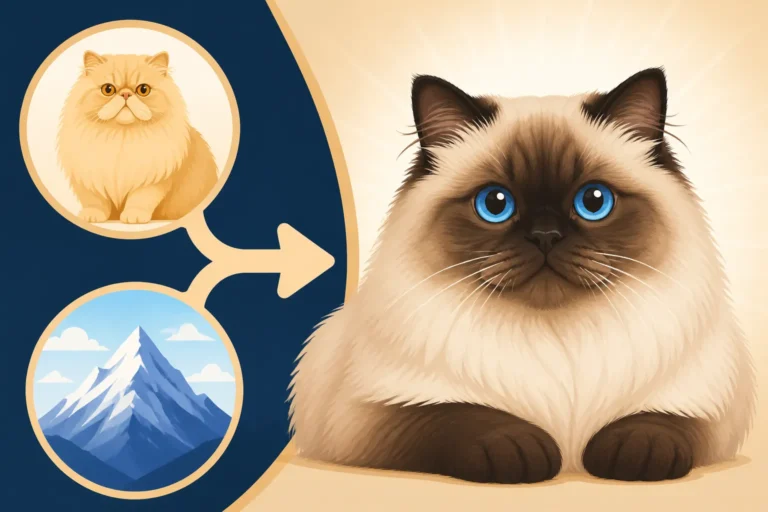
The idea of a long-haired cat with the striking "pointed" coloration of a Siamese wasn't a sudden flash of genius; it was a vision shared by many cat enthusiasts and geneticists across the globe. Imagine the excitement of combining the luxurious, doll-like charm of a Persian with the captivating blue eyes and distinctive color pattern of a Siamese. It was a challenge that captivated minds from the scientific community in the United States to dedicated hobby breeders in Europe and, crucially, Canada. They weren't just breeding cats; they were attempting a genetic masterpiece, trying to unlock and stabilize a new phenotype.
Transatlantic Breeding Efforts
In the 1930s, American researchers like Clyde Keeler and Virginia Cobb at Harvard University were already delving into the genetics behind this dream cat. Their experiments, documented in a 1936 paper, were groundbreaking, proving that the point coloration could indeed be introduced into a long-haired cat. This scientific validation set the stage, but transforming a laboratory concept into a consistent, thriving breed was a monumental task requiring widespread effort. Simultaneously, in the UK, breeders like Brian Sterling-Webb were meticulously working on their own lines, facing similar challenges in marrying the Persian's coat type and conformation with the Siamese's color gene. Each region brought its own unique perspective and genetic pools to the table, creating a diverse, albeit fragmented, development process.
The early efforts were far from easy. Breeders weren't simply mixing two existing breeds and hoping for the best; they were navigating complex genetic pathways, trying to ensure health, temperament, and conformity to a desirable physical standard. It required immense patience, meticulous record-keeping, and a keen eye for both aesthetic and genetic quality. Many early crosses resulted in cats that were either too much like one parent or the other, or failed to produce the consistent "pointed Persian" look everyone was striving for. It was a true labor of love, driven by a shared passion that transcended national borders.
Early Challenges in Establishing the Look
One of the biggest hurdles in those formative years was achieving consistency in type. You see, it wasn't enough just to get a long-haired, pointed cat. The ideal was a cat with the cobby body, round head, small ears, and luxurious coat of a Persian, combined with the clear, vibrant blue eyes and distinct point coloration of a Siamese. Getting that balance right, and then being able to reproduce it reliably generation after generation, was incredibly difficult. Early breeding attempts often produced cats that were either too slender, too long in the nose, or had less-than-ideal coat density.
Furthermore, ensuring the health and vigor of these new lines was paramount. Any time you're combining breeds, you risk introducing or intensifying certain genetic predispositions. Breeders had to be vigilant, selecting for robust health alongside the desired aesthetic traits. This meant careful selection, often with setbacks, as they refined their understanding of the genetic lottery they were playing. The journey from initial concept to a recognized breed was paved with countless hours of dedication, many litters, and a deep commitment to perfecting what would eventually become the Himalayan. The 1936 Paper That Started the Himalayan marked a scientific beginning, but the real work was just starting.
Ben Borrett and the Canadian Connection
While the academic groundwork was laid in the US and passionate breeders worked in Britain, Canada had its own visionary who became instrumental in solidifying the Himalayan as a recognized and beloved breed. This was Ben Borrett, a name that resonates deeply within the breed's history. His commitment and methodical approach were precisely what the breed needed at a critical juncture.
Borrett's Vision and Dedication
Ben Borrett, operating out of Canada, saw the immense potential in the developing Himalayan lines. He understood that to move beyond novelty and achieve widespread recognition, the breed needed consistent type and a robust genetic foundation. Borrett wasn't just breeding; he was planning, observing, and advocating. He recognized the pitfalls of a fragmented approach and sought to standardize the characteristics that would define the Himalayan. His dedication went beyond his own cattery; he collaborated with other breeders, sharing knowledge and working towards a unified goal.
His efforts were particularly significant because they helped bridge the gap between early experimental crosses and the established, recognizable show cat. Borrett’s vision for the Himalayan was clear: a Persian, through and through, but adorned with the stunning colorpoint pattern. This unwavering focus on the Persian type, even while integrating Siamese genetics, was crucial for the breed’s eventual acceptance within the larger cat fancy. It ensured that the emerging Himalayans truly looked like colorpoint Persians, rather than simply mixed-breed cats.
Establishing Lines and Recognition
Borrett’s work was instrumental in establishing strong, stable Himalayan lines. He meticulously selected breeding cats, aiming to consistently produce kittens with the desired cobby body, round head, and rich, long coat, all while maintaining the brilliant blue eyes and clear points. This wasn't a quick process; it involved multiple generations of careful breeding, tracking pedigrees, and sometimes making difficult decisions about which cats to continue with and which to retire from breeding programs. His systematic approach provided a blueprint for other breeders.
Crucially, Ben Borrett was also a vocal advocate for the Himalayan's recognition by various cat registries. It's one thing to breed a beautiful cat, it's another to get it officially accepted, with its own standard and the ability to compete in shows. He played a key role in lobbying for the breed, presenting compelling arguments and showcasing the stunning results of his and others' careful breeding. This advocacy was vital, laying the groundwork for the breed to move from an experimental curiosity to a legitimate, championship-status cat. It was through these concerted efforts that the Himalayan began to gain traction and respect within the North American cat community.
Unique Contributions of Canadian Breeders
Beyond the foundational work of individuals like Ben Borrett, the broader Canadian breeding community made specific contributions that influenced the Himalayan's trajectory and its eventual form. They weren't just replicating what was happening elsewhere; they were refining and specializing.
Focus on Health and Type
Canadian breeders, perhaps due to a slightly different cultural emphasis or simply individual philosophy, often placed a strong focus on the health and overall robustness of their Himalayan lines, alongside the desired aesthetic traits. They understood that a beautiful cat with a short lifespan or chronic health issues wasn't truly a success. This meant prioritizing genetic health screening and carefully selecting for vitality. This commitment to health helped to ensure that the Canadian lines were not just pretty faces, but sound animals that could live long, happy lives.
This focus also extended to refining the "type" – the specific physical characteristics that define the breed. While the Persian influence was always strong, Canadian breeders worked diligently to achieve the iconic round head, full cheeks, and short, sturdy body without compromising the cat’s overall well-being. This often meant carefully navigating the nuances of the brachycephalic (flat-faced) characteristic, aiming for the "sweet" expression without the extreme flattening that can lead to breathing difficulties. Their meticulous attention to detail helped carve out a specific, desirable look that contributed significantly to the breed's overall appeal. What a Well Built Himalayan's Breathing Sounds Like was a key consideration.
Influence on Breed Standards
The standards set by cat registries are the blueprints for a breed, dictating what is considered ideal in terms of appearance, temperament, and structure. Canadian breeders, through their successful lines and active participation in cat fancy organizations, had a tangible influence on the development and refinement of these breed standards for the Himalayan. Their experience in consistently producing cats that embodied the desired traits provided real-world examples that shaped the written descriptions.
When you look at the characteristics emphasized in the breed standard – things like the luxurious coat, the deep blue eyes, the compact body, and the gentle expression – many of these were honed and established through the consistent output of dedicated Canadian catteries. They demonstrated what was achievable and desirable, helping to solidify the ideal image of the Himalayan. This practical application of breeding principles directly fed back into the formal definitions of the breed, ensuring that the standards were not just theoretical, but grounded in the reality of successful breeding programs. These contributions were crucial in defining the Himalayan's identity on paper, as much as in the show ring.
The Himalayan's Place in Canadian Cat Fancies
The acceptance and integration of the Himalayan into Canadian cat organizations wasn't just a formality; it was a testament to the hard work of its proponents and a sign of the breed's growing popularity. How Canadian registries chose to classify and promote the Himalayan speaks volumes about its journey.
Canadian Registries and Early Recognition
While global recognition often followed the efforts in the United States, Canadian cat registries played their own significant role in the Himalayan's journey to championship status. Organizations like the Canadian Cat Association (CCA) would have evaluated the emerging breed on its merits, considering the genetic stability, consistency of type, and overall health of the cats presented by breeders like Ben Borrett. This process involved careful scrutiny, often requiring a certain number of generations to demonstrate that the breed could reproduce true to type.
Early recognition within Canadian circuits provided a vital platform for the breed. It allowed Himalayans bred in Canada to compete, earn titles, and gain exposure, further solidifying their presence and appeal. This local acceptance often paved the way for broader, international recognition, as successful Canadian lines could then be exported and showcased in other countries. The journey through national registries is a crucial step for any breed, affirming its legitimacy and providing a framework for its ongoing development. The success of Canadian breeders in achieving this recognition was a cornerstone of the Himalayan's ascent.
Evolution of the Breed in Canada
Over the decades, the Himalayan in Canada has continued to evolve, reflecting both global trends and the specific preferences of Canadian breeders and fanciers. Just as with any popular breed, there are subtle variations in type that can emerge based on regional breeding goals. Some Canadian lines might have placed a particular emphasis on certain point colors, or perhaps a slightly different interpretation of the facial structure. The beauty of a widely adopted breed is its capacity for subtle regional interpretations while still adhering to a core standard.
Today, the Himalayan remains a cherished breed in Canada, celebrated for its docile temperament, stunning appearance, and loving nature. Many Canadian breeders continue the legacy established by their predecessors, focusing on health, temperament, and conformation. Whether you're looking for a companion or a show cat, you'll find dedicated breeders who are passionate about preserving and improving the Himalayan, ensuring that the careful work started so many years ago continues to thrive. When browsing for cat supplies on a site like Chewy, you'll find many products catering to the unique needs of long-haired, brachycephalic breeds, reflecting the widespread care for Himalayans.
The Lasting Legacy of Canadian Himalayan Breeding
The contributions from Canada didn't just stay within its borders; they rippled out, affecting the breed on an international scale and leaving an indelible mark on its genetic heritage and global perception.
Impact on International Lines
The strong, healthy lines developed by Canadian breeders were highly sought after internationally. When breeders in other countries were looking to enhance their own programs, introduce new genetic diversity, or improve specific traits, they often turned to successful Canadian catteries. This cross-pollination of genetics was crucial for strengthening the global Himalayan gene pool, helping to reduce the incidence of certain health issues and to consistently improve conformation. A good example might be a breeder in Europe importing a Canadian-bred cat to refine their flat face type, ensuring desirable features while maintaining healthy breathing. What a Doll Face Himalayan's Profile Measures was often a key trait in such exchanges.
This international exchange wasn't just about individual cats; it was about the sharing of breeding philosophies and best practices. Canadian breeders, through their success, demonstrated effective strategies for selecting breeding pairs, managing litters, and maintaining health records. Their approach helped to set benchmarks and standards that influenced how Himalayans were bred and cared for worldwide. The impact can still be seen today in pedigrees that trace back to significant Canadian foundation cats, demonstrating the long-reaching influence of their initial dedication.
Continuing the Tradition
The legacy of Canadian contributions lives on in the current generation of Himalayan breeders. Many still adhere to the rigorous standards of health, temperament, and type that were established decades ago. Modern breeders are armed with advanced genetic testing, better veterinary care, and a deeper understanding of feline nutrition, all of which contribute to the continued improvement of the breed. However, the core principles of careful selection and dedication to the breed's integrity remain paramount.
The Canadian commitment to the Himalayan cat reminds us that breed development is rarely the work of a single nation or individual. It's a collaborative, evolving journey spanning generations and geographies. The beautiful, distinctive Himalayan cat that graces homes and show rings today owes a significant debt to the passionate breeders who, from Canada, helped to shape its destiny. From specialized grooming tools you might find on Chewy to specific dietary needs, the modern care of a Himalayan reflects the careful breeding that brought it to us. The Nine to Fifteen Years a Himalayan Usually Gets is a testament to breeders who prioritized health and longevity.
A Cat Like No Other
The Himalayan cat, with its stunning sapphire eyes and luxurious coat, truly stands as a testament to the dedicated breeders who brought it into being. It represents a beautiful blend of two distinct breeds, creating something truly unique and captivating. But getting there was no small feat, requiring meticulous attention to detail and unwavering commitment from breeders across the globe, with Canada playing a central role in solidifying the breed's identity.
| Key Contributors to Himalayan Development | Primary Contribution | Geographical Focus |
|---|---|---|
| Clyde Keeler & Virginia Cobb | Genetic proof | USA |
| Ben Borrett | Line stabilization | Canada |
| Brian Sterling-Webb | Early breeding lines | UK |
| Marguerita Goforth | Breed recognition | USA |
From the early scientific experiments validating the possibility of a pointed Persian, to the painstaking work of establishing consistent lines, the journey of the Himalayan has been a fascinating one. Canadian breeders, led by figures like Ben Borrett, were not just participants but pioneers, ensuring the breed developed with a strong emphasis on health, temperament, and adherence to a clear type. This dedication helped the Himalayan gain crucial recognition and allowed its genetic legacy to spread internationally, influencing countless lines and shaping the cat we know and love today. So, the next time you admire a Himalayan, remember the global village of enthusiasts, including those in Canada, who poured their hearts into creating this magnificent feline. It’s a story of passion, persistence, and the enduring love for cats that brings out the very best in people. You can find everything from specialized brushes to sensitive skin food for Himalayans on retailers like Chewy, a reflection of the breed's lasting popularity and specific care needs.
Disclaimer
This article is for general informational purposes only and does not constitute professional advice. Laws, prices and regulations vary by location and change over time. Consult a qualified professional for guidance on your specific situation.