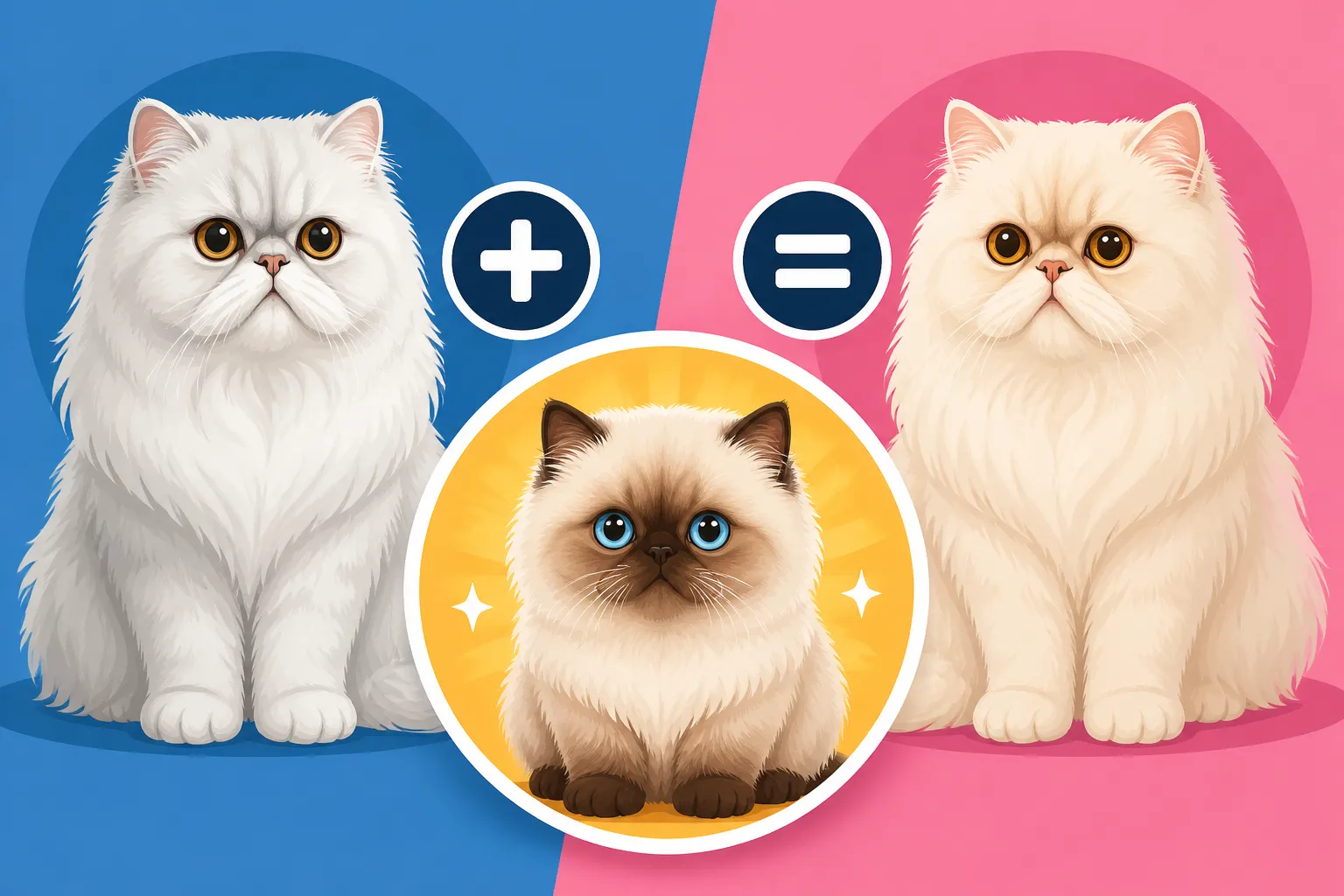
Whether Two Persians Can Produce a Himalayan
It's easy to get tangled up in the family tree of the Himalayan cat. With their stunning point coloration and plush coats, they often look like a unique blend, and many people wonder about their exact lineage. Specifically, a common question pops up: can two Persian cats, seemingly purebred in every other way, actually produce a Himalayan kitten? The answer might surprise you, and it delves deep into genetics, breed history, and even registry classifications. This guide will unravel the mystery, explaining the genetic mechanisms at play and clarifying precisely how a gorgeous Himalayan can indeed emerge from a litter of Persian parents, sometimes quite unexpectedly!
Understanding the Himalayan's Unique Lineage
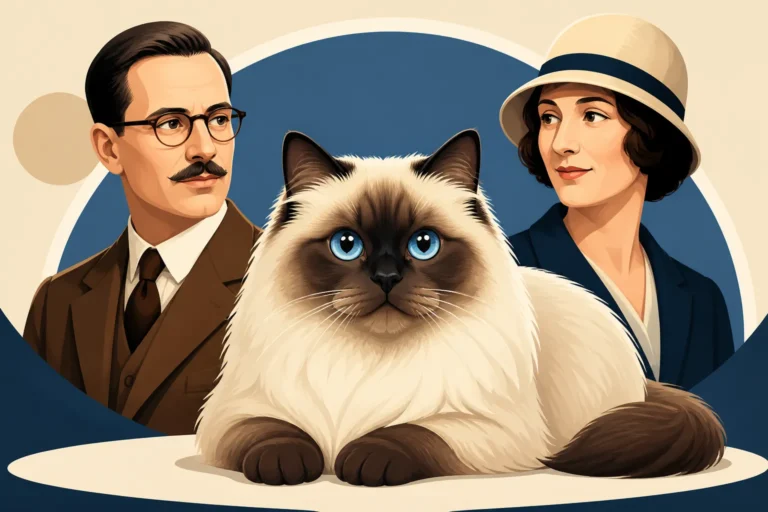
The Himalayan is a truly distinctive breed, instantly recognizable by its striking colorpoint pattern and magnificent long coat. However, its history is deeply intertwined with two other beloved cat breeds: the elegant Siamese and the luxurious Persian. The story begins in the 1930s when dedicated researchers and breeders embarked on an ambitious project. They weren't just trying to make a pretty cat; they were genuinely curious about feline genetics and specifically, how certain desirable traits, like the Siamese's captivating point coloration and piercing blue eyes, could be successfully introduced into other breeds. This scientific curiosity and careful experimentation marked the beginning of the Himalayan breed as we know it today.
The core objective of these early breeding programs was clear: to create a cat that possessed the Persian's signature long, flowing coat, stocky, cobby body, and wonderfully docile temperament, but with the distinctive colorpoint pattern and brilliant blue eyes that are hallmarks of the Siamese. This involved meticulous, selective breeding over several generations, a process that demanded immense patience and a profound understanding of genetic inheritance. It was far from an overnight success story; stabilizing these desired traits, ensuring good health, and maintaining breed type took considerable time and dedication. The resulting cats, ultimately named Himalayans, effectively inherited the best of both worlds – the serene disposition and magnificent physical characteristics of the Persian, combined with the striking coloring and an often more vocal, intelligent personality inherited from the Siamese.
The point coloration itself is a truly fascinating genetic phenomenon, often scientifically referred to as temperature-sensitive albinism. This genetic mutation means that the enzyme responsible for pigment production in the cat's fur is only active in cooler areas of the body. Consequently, areas like the ears, face, paws, and tail (the "points") tend to be cooler, allowing pigment to develop and resulting in darker fur, while the warmer core body remains a paler shade. This unique trait is the primary visual characteristic that defines a Himalayan and distinguishes it from a solid-colored Persian. Critically, the Persian side of the family tree brought the essential attributes of the long, dense coat, the characteristic cobby body type, the charmingly round face, and that wonderfully sweet, laid-back nature that makes Himalayans such cherished and affectionate companions. Without the significant genetic contribution from the Persian, you simply wouldn't have the plush density of coat, the characteristic facial structure, or the overall physical majesty that are all quintessential hallmarks of the breed.
The Role of the Point Gene in Persian Breeding
For two full-color Persian cats to produce a Himalayan kitten, we absolutely need to talk about genetics, specifically the concept of recessive genes. Think of it in terms of a genetic blueprint: every cat, just like every human, inherits two copies of each gene, one copy from their mother and one from their father. For certain traits, such as the exquisite point coloration seen in Himalayans, a cat needs to inherit two specific copies of what we call the "point gene" (let's use 'c' to denote the recessive colorpoint gene) in order to actually express that trait. If a cat inherits one normal, dominant gene for full color (let's denote this as 'C') and one recessive point gene 'c', that cat will appear as a full-color cat, exhibiting no visible signs of point coloration, but it will undoubtedly carry the point gene. This is precisely what we refer to as a "Himalayan carrier Persian." How a Persian Can Carry the Himalayan Gene Hidden is a great read if you want to understand the specifics of this genetic marvel.
A full-color Persian that carries the hidden point gene might look identical to any other Persian with a solid, non-pointed coat. For example, they could be a majestic black Persian, a soft cream Persian, a striking blue Persian, or even a calico or tortie. There is absolutely no outward or visible indication in their appearance that they are secretly carrying the recessive gene for point coloration. They simply present as their full-color, non-pointed selves, living proof that genetics can be wonderfully intricate and sometimes full of surprises! This is why, for many generations, a line of beautiful, solid-colored Persians could exist, with breeders completely unaware that a hidden, recessive gene for point coloration was quietly lurking within their genetic lineage, just waiting for the right pairing to express itself.
The principle of recessive inheritance is absolutely fundamental here. Much like humans can carry genes for certain traits or predispositions without ever expressing them personally, cats also carry a vast array of genes, some of which are recessive. When a Persian cat carries one copy of the recessive point gene, they are, in essence, a crucial genetic bridge. They do not show the point coloration themselves because the dominant full-color gene masks it, but they possess the undeniable potential to pass that recessive gene on to their offspring. If two such carrier Persians happen to be bred together, there is a statistically predictable chance that some of their kittens will inherit two copies of that recessive point gene ('cc'), thus displaying the classic and breathtaking Himalayan colorpoint pattern. This genetic outcome is why many reputable breeders rely heavily on genetic tests, such as those available through various pet supply platforms like Chewy, which can help accurately identify carriers of specific genes. These tests allow breeders to fully understand their cats' complete genetic makeup, which is an invaluable tool for responsible breeding, especially before planning any pairings. Understanding Which Gene Makes a Himalayan Pointed truly illuminates this whole process.
When Two Persians Can Produce a Himalayan
So, after all that talk about genetics, can two Persians actually produce a Himalayan? The definitive and exciting answer is yes, absolutely, but only under very specific genetic conditions. This isn't some random fluke or a magical transformation of coat color; it's a perfectly predictable outcome of Mendelian genetics. For this genetic marvel to occur, both parent Persians must unequivocally be carriers of the recessive colorpoint gene. What this means in practice is that neither parent will display the point pattern themselves – they will both look, to all outward appearances, like standard, full-color Persians. However, each of them carries that hidden, recessive 'c' gene in their genetic code.
When two such carrier Persians are bred together, the possibilities for their kittens' genetic makeup follow a precise statistical probability. Each kitten in the litter has a 25% chance of inheriting two copies of the recessive 'c' gene (one from each parent). If a kitten receives 'cc', it will be a true Himalayan, complete with the signature points and blue eyes. There is also a 50% chance that a kitten will inherit one dominant 'C' gene and one recessive 'c' gene, which means it will be a carrier Persian, just like its parents, appearing full-colored but capable of passing on the point gene. Finally, there's a 25% chance that a kitten will inherit two dominant 'C' genes, making it a full-color Persian who does not carry the point gene at all. It's essentially a genetic lottery, but one with predictable and consistent odds for each individual kitten born in that litter! How a Himalayan Kitten Can Appear in a Persian Litter is a perfect example of this.
Imagine a hypothetical scenario: you have a litter of kittens born to a magnificent blue tabby Persian queen and a handsome cream Persian stud, both of whom, unbeknownst to many, carry the hidden point gene. Among their adorable, fluffy, solid-colored kittens, you might suddenly notice a tiny, almost entirely white kitten that, as it matures over the first few weeks, begins to develop distinct darker points on its ears, nose, and paws. This little one, despite having two Persian parents, is undeniably a Himalayan. These kittens will possess the characteristic cobby body, the luxurious long coat, and the sweet, gentle disposition inherited from their Persian lineage, combined with the signature blue eyes and captivating point coloration. This phenomenon often occurs in catteries where breeders are either intentionally working to produce Himalayans by pairing known carriers, or where they might be breeding what they believed were pure solid Persians and are greeted with a delightful, albeit unexpected, surprise!
The Different Registry Perspectives on Himalayan Identity
Now, while the science of genetics offers us a clear and unambiguous answer regarding the Himalayan's origins, the fascinating world of cat registries introduces another layer of complexity to the Himalayan's identity. This is precisely where the official paperwork can become a source of confusion, particularly for new owners or aspiring breeders trying to navigate the sometimes convoluted landscape of breed recognition. Different cat organizations around the globe have adopted varying approaches to how they classify the Himalayan, and these distinct classifications directly influence what will be printed on their official registration certificates.
For example, the Cat Fanciers' Association (CFA), which stands as one of the oldest and largest cat registries in the world, holds a very specific view on the Himalayan. Since 1984, CFA officially integrated the Himalayan into the Persian breed, designating it not as a separate breed, but rather as a "Colorpoint Persian Division." What this classification means for a CFA-registered cat owner or breeder is that if your cat is registered with CFA, its official papers will not explicitly state "Himalayan." Instead, they will proudly declare "Persian (Himalayan Division)." This pivotal decision was made to formally acknowledge the Himalayan as fundamentally a Persian cat, but one that possesses the distinct and beautiful colorpoint pattern. Therefore, if you are ever examining CFA registration papers for a cat you know to be a Himalayan, there's no need to be alarmed if you see "Persian" prominently displayed on them; this is exactly as it should be under CFA's rules. For those interested in the historical context of this decision, What CFA Decided About the Himalayan in 1984 provides a thorough explanation.
Conversely, The International Cat Association (TICA), another prominent global cat registry, maintains a different perspective and recognizes the Himalayan as a separate and distinct breed in its own right. If your cherished Himalayan is registered with TICA, its official paperwork will indeed explicitly specify "Himalayan." This fundamental difference in classification between major registries often leads to considerable confusion, especially for individuals who are new to the breed or are attempting to understand a cat's exact heritage and official status. This is a key reason why it is absolutely critical to understand which specific registry your potential kitten's parents are registered with and how that particular registry's rules will impact your cat's official designation and documentation. This distinction also influences how these magnificent cats might compete in cat shows; a CFA-registered Himalayan will compete against other Persians within its designated division, whereas a TICA-registered Himalayan might compete as its own unique breed. Regardless of the registry's administrative classification, the enchanting physical characteristics and the delightfully sweet, affectionate personality of the Himalayan remain consistently wonderful. For more details on TICA's approach, How the Himalayan Is Registered by TICA Today offers an in-depth look.
Why Knowing the Genetics Matters for Breeders and Owners
Understanding the genetic possibilities, particularly the concept of "carrier Persians," isn't just an interesting scientific tidbit for enthusiasts; it carries very real and practical implications for both responsible breeders and prospective cat owners alike. For breeders, this genetic knowledge forms the absolute cornerstone of ethical and successful breeding practices. If a breeder owns a Persian cat that they suspect might be a carrier of the colorpoint gene, or if they are deliberately working with established Himalayan lines, genetic testing becomes an indispensable tool.
Genetic tests can accurately and definitively identify whether a seemingly full-color Persian carries the recessive colorpoint gene, even if the cat shows no outward signs of the trait. This invaluable information empowers breeders to make highly informed decisions about breeding pairings, helping them to predict litter outcomes with greater accuracy and ensuring the continued health, vitality, and genetic diversity of their breeding lines. Without such testing, breeding two carrier Persians could lead to unexpected Himalayan kittens. While often a delightful surprise, it means the breeder wasn't fully aware of their cat's complete genetic potential. More critically, genetic testing helps significantly in tracing and mitigating the risk of inherited health conditions. It's important to remember that the Persian side of the Himalayan lineage can carry genes for certain conditions, such as Polycystic Kidney Disease (PKD1). Knowing a cat's full genetic profile helps breeders avoid passing on such conditions, contributing to healthier feline generations. Which Two Tests Belong on Every Himalayan Pedigree is an absolutely essential resource for any serious breeder or conscientious owner.
For prospective owners, even if you have no intentions of breeding, understanding this genetic background provides invaluable insight into your cat's heritage and the breed's complexities. If you acquire a Himalayan that, perhaps surprisingly, came from two outwardly "Persian" parents, this genetic knowledge clarifies precisely how that happened. It also powerfully underscores the paramount importance of choosing a reputable breeder who prioritizes and conducts comprehensive genetic health screenings for all their breeding cats. A trustworthy breeder should be able and willing to provide clear documentation of their cats' genetic status, especially concerning the point gene and any known health concerns prevalent in Persian lines, such as PKD. Always, always ask to see those genetic test results and registration papers! A truly good breeder will be transparent about their lines, their breeding practices, and will be more than happy to discuss the genetics with you, whether your primary interest lies in the gorgeous coat color or specific health markers. Products and services that support feline health and genetic testing, like those offered by reputable online pet supply retailers such as Chewy, provide accessible resources for informed pet care.
Here’s a summary table illustrating the genetic possibilities when breeding for point coloration:
| Parent 1 Genetic Status | Parent 2 Genetic Status | Kitten Outcome Possibilities | Likelihood (Approx.) |
|---|---|---|---|
| Full Color (CC) | Full Color (CC) | All Full Color (CC) kittens | 100% Full Color |
| Full Color (CC) | Carrier Persian (Cc) | 50% Full Color (CC) kittens, 50% Carrier Persian (Cc) kittens | 50% Full, 50% Carrier |
| Full Color (CC) | Himalayan (cc) | All Carrier Persian (Cc) kittens | 100% Carrier |
| Carrier Persian (Cc) | Carrier Persian (Cc) | 25% Full Color (CC) kittens, 50% Carrier Persian (Cc) kittens, 25% Himalayan (cc) kittens | 25% Full, 50% Carrier, 25% Himalayan |
| Carrier Persian (Cc) | Himalayan (cc) | 50% Carrier Persian (Cc) kittens, 50% Himalayan (cc) kittens | 50% Carrier, 50% Himalayan |
| Himalayan (cc) | Himalayan (cc) | All Himalayan (cc) kittens | 100% Himalayan |
Conclusion
So, to finally and definitively put the common question to rest: yes, two outwardly full-colored Persians can indeed produce a Himalayan kitten. This fascinating genetic phenomenon all comes down to the hidden, recessive 'point gene' that some full-color Persians can carry within their DNA without ever showing any outward signs of it themselves. It's a truly beautiful testament to the intricate complexities of feline genetics and a wonderful reminder of the rich, blended heritage that defines the Himalayan cat. This deeper understanding not only helps to clear up common confusions surrounding the breed's origins but also empowers both dedicated breeders and future owners to fully appreciate the profound depth of this magnificent breed's history and its remarkable genetic makeup. Whether your cherished Himalayan comes from two parents who already display the distinctive points or, more surprisingly, emerges as a delightful gem from a litter of solid-colored Persian parents, their inherent charm, captivating character, and stunning beauty are undeniably enchanting and truly make them one of a kind.
Disclaimer
This article is for general informational purposes only and does not constitute professional advice. Laws, prices and regulations vary by location and change over time. Consult a qualified professional for guidance on your specific situation.