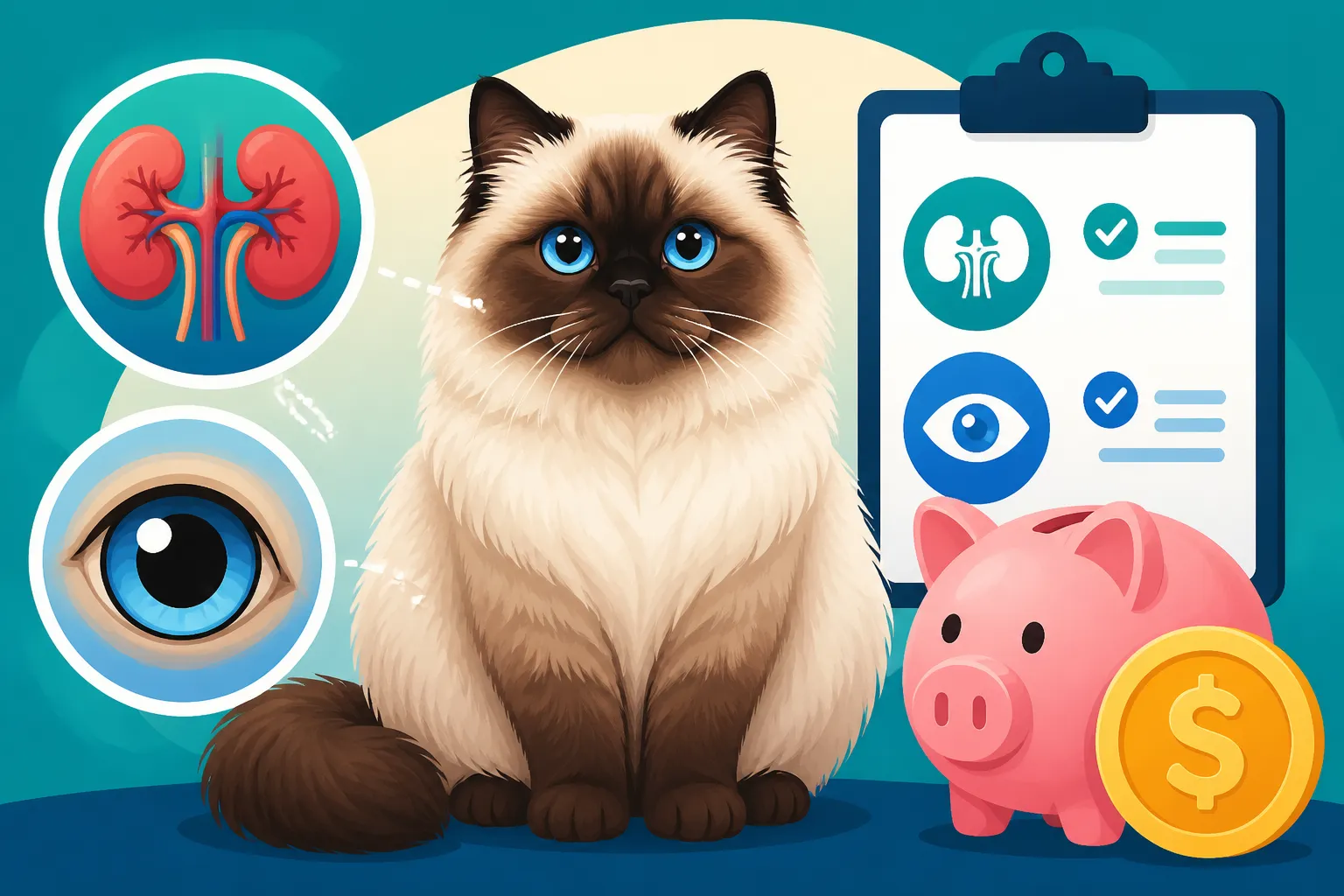
What Testing a Himalayan for PKD and the Eyes Costs
Bringing a beautiful Himalayan cat into your life is an absolute joy, but like any cherished family member, they come with a responsibility to ensure their well-being. One of the biggest worries for new or prospective owners often revolves around understanding the potential health challenges and, more specifically, the financial commitment involved in preventative health screening. This guide aims to shed light on the real costs associated with testing your Himalayan for common inherited conditions like Polycystic Kidney Disease (PKD) and various eye issues, so you can plan effectively and ensure your beloved feline lives its healthiest, happiest life.
Understanding the Cost of Polycystic Kidney Disease PKD Testing
Polycystic Kidney Disease, or PKD, is a condition that can affect Himalayans, primarily inherited from their Persian lineage. It involves the growth of fluid-filled cysts within the kidneys, which can eventually lead to kidney failure. Fortunately, we have genetic tests available today that make screening for PKD much simpler and more reliable than it once was. Knowing the cost upfront helps you make informed decisions about your cat's health.
The Genetic Test: A Simple Cheek Swab
The most straightforward and definitive way to test for PKD is a genetic test. This usually involves a buccal swab, which is just a fancy way of saying a cheek swab. A small brush or cotton swab is used to collect cells from inside your cat's mouth. This sample is then sent to a specialized laboratory for analysis. The beauty of this test is its non-invasiveness and accuracy. Once a cat tests clear, it's clear for life and will not pass the gene on to its offspring.
The cost for a PKD genetic test typically ranges from $40 to $80 per cat. This price usually covers the swab kit, the lab analysis, and the return of results to your veterinarian or directly to you, depending on the lab and how you order the test. Many breeders will perform this test on their breeding stock to ensure they are only producing PKD-free kittens. If you're acquiring a kitten, always ask to see the parents' PKD certificates. For more on this, you might find "Why a Cheek Swab Clears a Himalayan for PKD" to be a helpful read. This relatively low cost makes it an accessible and essential part of responsible Himalayan ownership, especially given the severity of the disease if left undetected. It's a small price for immense peace of mind.
Ultrasound Screening: An Additional Layer of Detection
While the genetic test is highly reliable, some veterinarians and experienced owners might still recommend an ultrasound, particularly if there's any ambiguity or a desire for a more comprehensive kidney health check. An ultrasound can physically visualize the kidneys and detect the presence of cysts, even very small ones, at an early age. This was the primary method of diagnosis before genetic testing became widely available.
The cost for a kidney ultrasound is significantly higher than a genetic test due to the need for specialized equipment and a trained veterinary technician or radiologist. You can expect an ultrasound to cost anywhere from $200 to $500, depending on your location and the specific veterinary clinic. For instance, a specialist veterinary imaging center in a major city like Los Angeles or New York might charge towards the higher end of that scale, while a general practice in a smaller town might be more affordable. Some vets still advocate for an ultrasound, even after a clear gene test, to establish a baseline for kidney health and rule out other potential, non-genetic kidney issues. You can explore "Why an Ultrasound Still Backs Up a Himalayan's Gene Test" for more details on its continued relevance.
Investigating the Expenses of Eye Health Screening
Himalayans, with their stunning blue eyes, are also prone to certain inherited eye conditions. The most significant of these is Progressive Retinal Atrophy (PRA), particularly the rdAc form common in Persians and, by extension, Himalayans. Early detection is vital for managing these conditions and, for breeders, preventing their spread.
Genetic Testing for Progressive Retinal Atrophy (PRA/rdAc)
Similar to PKD, there's a genetic test available for PRA/rdAc. This test can identify whether your Himalayan carries the gene responsible for this form of retinal atrophy. The test is also typically performed using a buccal swab, much like the PKD test. This genetic test determines if a cat is clear, a carrier, or affected by the condition. Knowing this status is crucial because affected cats will eventually lose their vision, and carriers can pass the gene to their offspring if bred with another carrier or affected cat.
The cost for a PRA/rdAc genetic test is usually in a similar range to the PKD test, typically between $40 and $70. Some laboratories offer combination panels where you can test for several inherited diseases, including PKD and PRA, at a slightly reduced overall cost if done together. This can be a smart way to get comprehensive screening without breaking the bank. Understanding "Which Test Clears a Himalayan's Eyes" is key for any prospective owner.
Comprehensive Ophthalmic Examination by a Specialist
Beyond genetic testing for specific conditions like PRA, a comprehensive ophthalmic examination by a board-certified veterinary ophthalmologist can detect a wider range of eye issues. This might include checking for cataracts, glaucoma, entropion (inward-rolling eyelids), or other structural abnormalities that are prevalent in flat-faced breeds. These conditions might not always be genetic in the same way as PRA but can be exacerbated by the unique facial structure of a Himalayan.
The cost for a specialist ophthalmic exam can vary widely, often ranging from $150 to $350 for the initial consultation and examination. If additional diagnostic tests are needed, such as tonometry (to measure eye pressure for glaucoma), electroretinography (ERG) for retinal function, or further imaging, these costs will be added. An ERG, for example, can cost an additional $300-$600. While not always necessary for every Himalayan, an ophthalmic exam is highly recommended if you notice any changes in your cat's vision, excessive tearing, or discomfort. You might wonder "How Often a Himalayan's Eyes Should Be Examined", and a specialist can provide tailored advice.
Factors Influencing Testing Costs and How to Manage Them
The prices mentioned above are general ranges, and several factors can cause them to fluctuate. Being aware of these can help you budget and potentially save money on your Himalayan's health care.
Geographic Location and Veterinary Clinic Type
Where you live plays a significant role in veterinary costs. Vet services in large metropolitan areas like New York City, San Francisco, or London are generally more expensive than those in rural or less populated regions. This often reflects the higher cost of living, overheads, and specialist availability in those areas. Additionally, whether you go to a general practice veterinarian or a specialized veterinary clinic (e.g., a veterinary ophthalmologist or internal medicine specialist) will impact the price. Specialists, with their advanced training and equipment, naturally charge more for their expertise.
For instance, a PKD ultrasound at a university veterinary teaching hospital might be on the higher end, but you're also getting access to cutting-edge technology and specialists. Meanwhile, your trusted local vet in a smaller town might offer the genetic swab kits at a slightly lower markup. It's always worth calling a few different clinics in your area to compare prices, but remember that quality of care and the vet's experience are paramount.
| Test Type | Average Cost Range (USD) | Notes |
|---|---|---|
| PKD Genetic Test (Swab) | $40 – $80 | Non-invasive, definitive for genetic status. |
| PRA/rdAc Genetic Test (Swab) | $40 – $70 | Non-invasive, definitive for genetic status. |
| Combined Genetic Panel | $80 – $150 | Often slightly cheaper per test when done together. |
| Kidney Ultrasound | $200 – $500 | Requires specialized equipment, good for physical cyst detection. |
| Ophthalmic Specialist Exam | $150 – $350 | Initial consultation, may require additional diagnostics (extra cost). |
| Electroretinography (ERG) | $300 – $600 | Advanced eye function test, often done by specialists. |
Breeder Testing and Health Guarantees
One of the most impactful ways to reduce your testing costs as an owner is to choose a responsible breeder who performs these tests on their breeding cats. Reputable Himalayan breeders will readily provide proof of PKD negative status (often from both parents) and, increasingly, PRA test results for their breeding lines. They understand that "Which Two Certificates a Himalayan Breeder Owes You" includes these crucial health clearances.
If you purchase a kitten from parents who have been tested and certified clear, your kitten is highly unlikely to develop these inherited conditions, and you won't need to repeat the genetic tests yourself. This doesn't mean you skip all vet visits, of course, but it significantly reduces the burden of initial health screening for inherited diseases. Always insist on seeing official documentation from the lab, not just a breeder's word. A good breeder will also offer a health guarantee that covers inherited conditions for a certain period, which can provide financial protection if a problem arises.
Pet Insurance and Wellness Plans
Pet insurance can be a game-changer when it comes to managing unexpected veterinary costs, and it can sometimes cover diagnostic testing. Companies like Healthy Paws offer comprehensive plans that could help with the costs of ultrasounds or specialist ophthalmic exams if they are deemed medically necessary due to symptoms. However, it's crucial to understand that most pet insurance policies do not cover routine wellness exams or preventative genetic testing if there are no existing symptoms or a diagnosis. Some insurance providers do offer optional "wellness add-ons" that might cover a portion of routine check-ups or preventative care.
It’s always wise to thoroughly read the policy details and ask specific questions about what is covered before enrolling. For instance, if you get a Himalayan kitten and then decide to have a preventative ultrasound for PKD, that might not be covered. However, if your cat starts showing signs of kidney disease, and an ultrasound is then required for diagnosis, a good insurance plan could step in to help. It's about planning for the "what ifs" rather than relying on it for every single preventative test.
The Long-Term Value of Early Screening
While the costs of testing can seem like a lot upfront, consider the long-term value. Early screening for conditions like PKD and PRA can save you immense heartache and potentially far greater expenses down the line. Managing a cat in kidney failure, for example, involves ongoing veterinary visits, specialized diets, medications, and potentially subcutaneous fluids, which can quickly add up to thousands of dollars over months or years. Living with a Himalayan that inherited the Persian Kidney Gene requires diligent management, and knowing early allows you to start preventative measures.
Knowing your Himalayan's genetic predispositions allows you to work proactively with your vet. You can implement early dietary changes, monitor blood work more closely, or simply be prepared for potential challenges. This proactive approach not only improves your cat's quality of life but can also be more economically sound than reacting to a crisis. It's an investment in your cherished companion's future.
Disclaimer
This article is intended for informational purposes only and does not constitute professional veterinary advice. Always consult with a qualified veterinarian for any health concerns or before making any decisions about your pet's care. Costs mentioned are estimates and can vary by location and clinic.