Why a Cheek Swab Clears a Himalayan for PKD
There’s nothing quite as heartbreaking as the thought of your beloved Himalayan cat facing a debilitating health condition, especially when it’s something silent and insidious like Polycystic Kidney Disease (PKD). The worry can be immense, wondering if your sweet companion might carry a hidden genetic predisposition. This guide will walk you through exactly why a simple, non-invasive cheek swab offers a definitive answer, giving you invaluable peace of mind about your Himalayan's genetic health.
Understanding Polycystic Kidney Disease in Himalayans
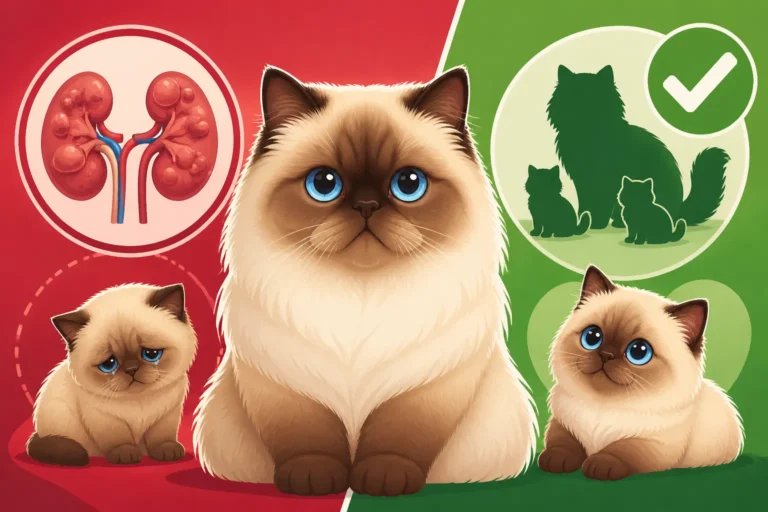
Let's be real, hearing "Polycystic Kidney Disease" can sound like a mouthful of scary medical jargon. But for us Himalayan lovers, it's a term we need to understand because it's a condition deeply rooted in their lineage. PKD is a progressive, inherited kidney disease that leads to the development of fluid-filled cysts within the kidneys. These aren't just little harmless bumps; they grow over time, slowly taking over healthy kidney tissue and eventually impairing kidney function. The sad reality is that these cysts can become so numerous and large that they lead to kidney failure, often in mid-to-late life, though sometimes tragically earlier.
How PKD Affects Himalayans Specifically
Our beautiful Himalayans inherited this particular genetic vulnerability primarily from their Persian ancestry. It’s a dominant inherited condition, which means a cat only needs to receive one copy of the faulty gene from either parent to develop PKD. This is a critical point that makes genetic testing so vital. If a Himalayan inherits just one copy, those cysts will start to form, even if they remain small and asymptomatic for years. Unlike some conditions where a cat might just be a "carrier" without showing symptoms, with PKD, if they have the gene, they will have the disease to some degree. This is why understanding PKD1 Came Down the Persian Side of a Himalayan is so important for owners and breeders alike.
The Dominant Inheritance Pattern of PKD
Imagine a family tree. If one parent carries the PKD gene, each kitten in their litter has a 50% chance of inheriting it. It doesn't skip generations; if a cat has the gene, it will eventually manifest. This is why it’s so crucial for breeders to test their breeding cats. Before genetic testing became widely available, PKD tragically ran rampant through many Persian and Himalayan lines. Many wonderful cats were unknowingly breeding and passing on this devastating gene. The good news is that with responsible breeding practices and the advent of reliable genetic tests, it’s now possible to eradicate PKD from a breeding program entirely. Understanding Why PKD Needs Only One Copy in a Himalayan really drives home the importance of this testing.
The Science Behind Genetic Testing for PKD
Now, how can a tiny swab from inside your cat's mouth tell us something so significant about their kidneys? It all comes down to DNA, the blueprint of life found in almost every cell of your cat's body. Genetic testing for PKD isn't guessing; it's looking directly at that blueprint for a specific, known error.
How DNA Testing Pinpoints the PKD Gene
At its heart, genetic testing for PKD identifies a specific mutation in a gene called PKD1. Scientists discovered that this particular mutation is responsible for the disease in Persians, Himalayans, and related breeds. When a lab receives a sample, they extract the DNA and then use a process called Polymerase Chain Reaction (PCR) to amplify, or make many copies of, the specific section of the PKD1 gene they want to examine. Then, they look for the presence or absence of that known mutation. It’s like finding a specific typo in a very long book – once you know what the typo looks like and where to look, it's very easy to spot. This direct examination of the genetic code is what makes the test so definitive and reliable. It’s not looking at symptoms or possibilities; it's looking at the fundamental cause.
Why a Genetic Test Is More Definitive Than an Ultrasound for Diagnosis
For many years before genetic tests were widespread, the primary method for diagnosing PKD was ultrasound. An ultrasound can visualize the cysts in the kidneys, but there are limitations. Cysts can be very small in young cats and might not be visible until the cat is older, typically around 7-10 months, and sometimes even later. This meant a cat could be carrying the gene, developing cysts, and even breeding, all before those cysts were detectable on a scan.
A genetic test, however, looks for the gene itself, not the physical manifestation of the disease. Your Himalayan's DNA is the same from the moment of conception, so the gene can be detected even in a tiny kitten, long before any cysts might appear. This makes genetic testing the gold standard for diagnosis and, crucially, for screening breeding animals. It tells you with certainty whether the cat has the genetic predisposition to develop PKD, regardless of whether cysts are visible yet. It allows for proactive breeding decisions and eliminates the guesswork. While an ultrasound can confirm the presence of cysts, the genetic test confirms the cause. You can learn more about this by reading How Early Cysts Show on a Himalayan's Kidney Scan and Why an Ultrasound Still Backs Up a Himalayan's Gene Test.
The Simplicity and Effectiveness of the Cheek Swab
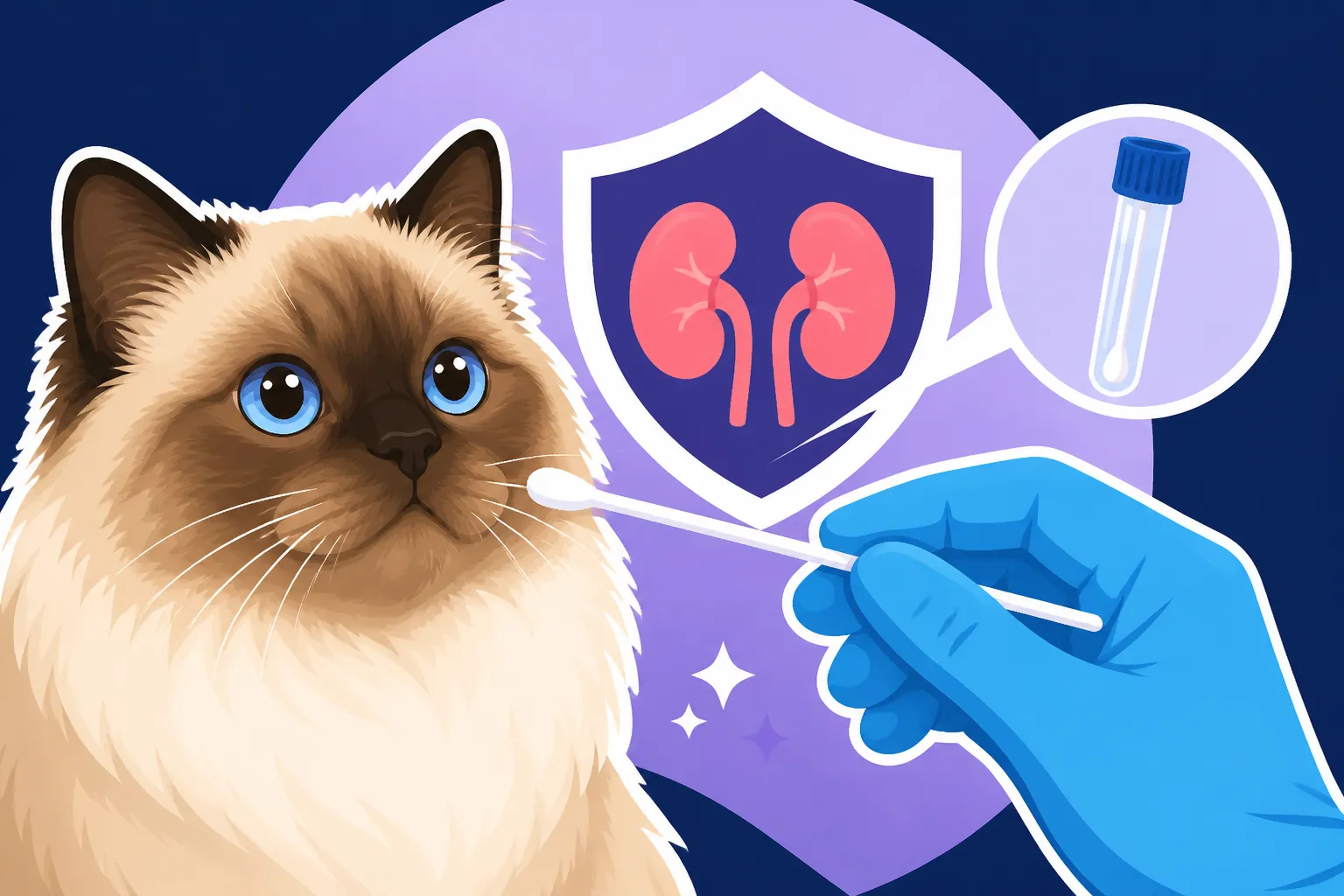
One of the greatest benefits of PKD genetic testing for pet owners is how incredibly easy and non-invasive the sample collection is. No stressful vet visits just for a blood draw, no need for sedation. All it takes is a simple cheek swab you can usually do right in the comfort of your own home.
The Easy Process of Collecting a Cheek Swab
Collecting a cheek swab is remarkably straightforward, and most cats tolerate it surprisingly well. You'll typically receive a kit from a reputable genetic testing lab, which includes sterile cotton swabs or specialized brushes. The process usually involves these steps:
- Preparation: Make sure your cat hasn't eaten or nursed for at least an hour prior to collection. This helps ensure the sample isn't contaminated with food particles, which could affect the DNA extraction.
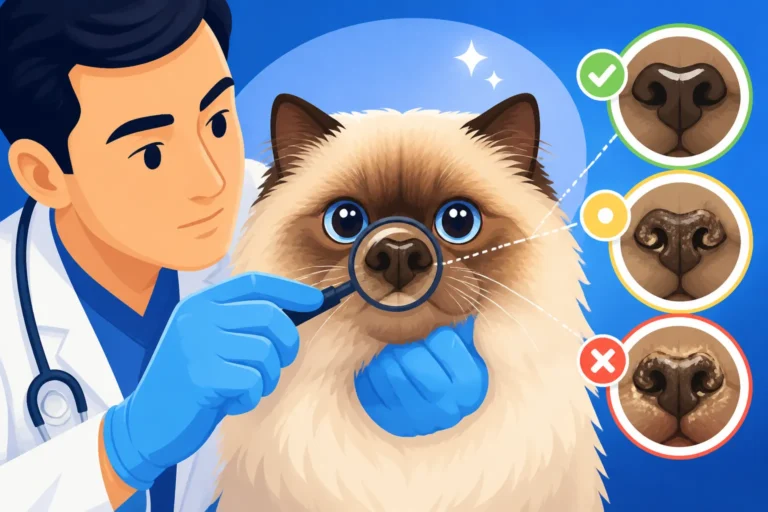
- Swabbing: Gently hold your Himalayan and, using the sterile swab, rub the inside of their cheek and gums firmly for about 10-20 seconds. You want to collect epithelial cells, which are constantly shedding from the inner lining of the mouth. Don't be afraid to apply a little pressure – you're not trying to hurt them, just gather enough cells. Many owners find it easiest to do this when their cat is relaxed, perhaps even purring on their lap.
- Drying: It’s crucial to let the swab air dry completely for several minutes before placing it back into its protective sleeve or envelope. Moisture can promote bacterial growth, which can degrade the DNA sample.
- Sending: Once dry, seal the swab according to the kit's instructions and mail it back to the lab.
That's it! It’s really that simple. This ease of collection means less stress for your cat and for you, making genetic health screening accessible to more Himalayan families.
Why a Cheek Swab Provides Sufficient DNA for Testing
You might wonder how such a seemingly small amount of material from a swab can provide enough DNA. The truth is, every single nucleated cell in your cat's body contains a complete copy of their genome. The epithelial cells lining the inside of their mouth are constantly shedding, and even a firm swipe collects thousands of these cells. Genetic testing labs have highly sensitive techniques that can extract and amplify even tiny amounts of DNA, making the cheek swab a perfectly adequate and reliable sample source.
The DNA collected from a cheek swab is genetically identical to the DNA found in a blood sample or any other tissue sample. Therefore, the results derived from a cheek swab are just as accurate and definitive as those from a more invasive method. This reliability is a huge win for feline health, empowering owners and breeders to make informed decisions without putting their cats through unnecessary stress. It's a key reason why Which Two Certificates a Himalayan Breeder Owes You, including a PKD certificate, should be standard practice.
Interpreting Your Himalayan's PKD Test Results
Getting those test results back can be a nerve-wracking moment, but understanding what they mean is empowering. For PKD, the results are usually quite clear-cut, leading to one of three possible outcomes.
What a "Clear" Result Truly Means for Your Himalayan
If your Himalayan's cheek swab test comes back as "clear" (often reported as N/N, meaning normal/normal, or homozygous normal), congratulations! This is the best possible outcome. A "clear" result means that your cat does not possess the specific genetic mutation responsible for Polycystic Kidney Disease.
This is huge for a few reasons:
- No PKD Risk: Your Himalayan will not develop PKD as a result of this specific genetic mutation. You can breathe a sigh of relief on that front.
- No Transmission: If you have a breeding cat, a "clear" result means they cannot pass the PKD gene to their offspring. This is absolutely critical for responsible breeding and for gradually eliminating the disease from the breed. Breeders using only clear cats can confidently say that their kittens will be free of the PKD gene, offering immense value to new owners. This aligns with the principle that Why Two Clear Parents End PKD in a Himalayan Line.
- Peace of Mind: For pet owners, it means you don't have this particular genetic ticking time bomb to worry about. You can focus on other aspects of their health and well-being, knowing their kidneys aren't compromised by PKD.
Remember, a clear result for PKD doesn't mean your cat is immune to all kidney issues (like age-related kidney decline, for example), but it definitively rules out this specific, inherited disease. This is where comprehensive pet insurance like Healthy Paws can still be invaluable for covering unforeseen health challenges down the road.
Understanding Other Possible Results: Carrier or Affected
While "clear" is the ideal result, it's also important to understand the other possibilities:
- Carrier (N/P or Heterozygous Positive): This means your cat has one copy of the normal gene (N) and one copy of the PKD gene (P). Because PKD is an autosomal dominant condition, a cat with one copy will develop PKD. The term "carrier" can be a bit misleading here compared to other genetic diseases where carriers might not show symptoms. In the context of PKD in Himalayans, N/P means they are genetically affected, will develop cysts, and will potentially suffer from kidney disease. They also have a 50% chance of passing the gene to each of their kittens. This is why it’s imperative to know Whether a PKD Positive Himalayan Should Ever Be Bred.
- Affected (P/P or Homozygous Positive): This means your cat has inherited two copies of the PKD gene, one from each parent. Cats with P/P results will also develop PKD, and usually with a more severe, earlier onset. This outcome is less common now in responsibly bred lines because reputable breeders would not breed two N/P cats together, given the risk of producing P/P kittens. All offspring from a P/P cat would inherit at least one copy of the PKD gene, meaning all would be affected.
Knowing these distinctions is crucial for breeders aiming to improve the health of the Himalayan breed. For pet owners, if you discover your cat is N/P or P/P, it means working closely with your veterinarian to monitor their kidney health, establish a renal-friendly diet, and manage any symptoms that arise. This proactive approach can significantly improve their quality of life, and having pet insurance from a provider like Healthy Paws can help manage the costs of ongoing veterinary care and specialized diets that may become necessary if your cat lives with PKD.
The Long-Term Impact of Genetic Testing on Himalayan Health
The widespread availability and affordability of PKD genetic testing have been a game-changer for Himalayan cats. Thanks to breeders who are committed to testing their cats and making informed breeding choices, the incidence of PKD has dramatically decreased in well-established lines. This means future generations of Himalayans have a much higher chance of living full, healthy lives free from this particular inherited disease.
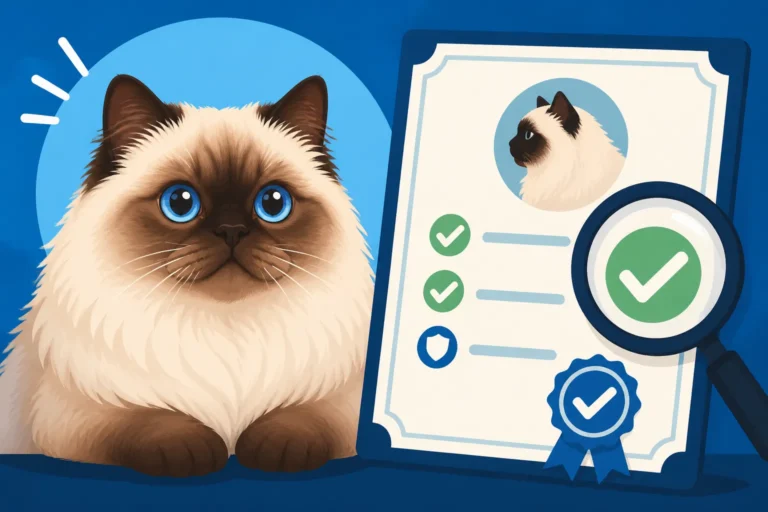
For any prospective Himalayan owner, insisting on seeing proof of PKD genetic testing for both parents of a kitten is non-negotiable. Reputable breeders will be transparent and provide certificates for their cats, clearly showing "N/N" results. This commitment to genetic health ensures that the joy and companionship a Himalayan brings are not overshadowed by preventable genetic illnesses. When considering the lifespan of your furry friend, knowing they're clear of PKD certainly contributes to The Nine to Fifteen Years a Himalayan Usually Gets. Investing in a cat from tested lines, and potentially insurance from Healthy Paws for broader coverage, sets the foundation for a happy, healthy life together.
| PKD Genetic Test Result | Genetic Makeup | Will Develop PKD? | Can Pass Gene to Offspring? | Implications for Breeding |
|---|---|---|---|---|
| Clear (N/N) | Normal/Normal | No | No | Ideal for breeding; no risk of passing PKD. |
| Carrier (N/P) | Normal/Positive | Yes | Yes (50% chance per kitten) | Should not be bred with another N/P cat; ideally removed from breeding program to eliminate disease. |
| Affected (P/P) | Positive/Positive | Yes | Yes (100% chance per kitten) | Should absolutely not be bred. |
Disclaimer
This article is intended for informational purposes only and does not constitute veterinary advice. Always consult with a qualified veterinarian for any health concerns or before making any decisions about your pet's care.