How Early Cysts Show on a Himalayan’s Kidney Scan
It’s a heartbreaking moment for any Himalayan parent when you first hear the words "polycystic kidney disease" or "PKD." The fear, the uncertainty, the worry about your precious furball's future—it's completely natural. This guide is here to walk you through exactly what an early kidney scan for your Himalayan involves, how those tiny, insidious cysts are detected, and what it all means for managing your cat's health.
The Shadow of Polycystic Kidney Disease PKD on Himalayans
Living with a Himalayan cat brings so much joy—their beautiful coats, their striking blue eyes, and their generally serene, affectionate nature. But beneath that plush exterior lies a genetic predisposition that many owners are sadly unaware of until it's too late: Polycystic Kidney Disease, or PKD. It's a condition that can cast a long shadow, causing immense distress for both the cat and their loving family. Understanding what PKD is and how it manifests is the first crucial step in protecting your companion.
How PKD Impacts Our Beloved Fluffy Friends
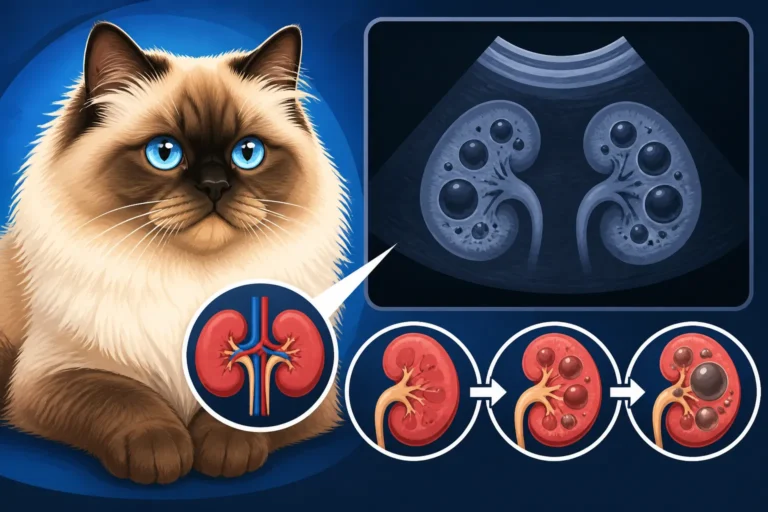
PKD is an inherited kidney disorder characterized by the development of multiple fluid-filled cysts within the kidneys. These aren't just harmless little bubbles; they grow over time, slowly but surely replacing healthy kidney tissue. Imagine your cat's kidneys, vital organs responsible for filtering waste from the blood, becoming less and less efficient because their normal structure is being overtaken by these expanding sacs. Initially, these cysts are microscopic, causing no noticeable issues. Your cat might seem perfectly healthy, playing, eating, and purring as usual. However, as the cysts enlarge, they reduce the kidneys' ability to function, leading to a progressive decline in kidney health. This often culminates in kidney failure, a serious and life-threatening condition. The cruel reality is that by the time you see outward signs of illness—increased thirst, frequent urination, weight loss, or lethargy—the disease is often quite advanced, and significant kidney damage has already occurred. This silent progression makes early detection through screening absolutely vital.
The Genetic Link: Why Himalayans Are Prone to PKD
Himalayans, being a crossbreed primarily derived from Persians and Siamese, unfortunately inherited a specific genetic mutation from their Persian lineage. This mutation is responsible for PKD. It’s a dominant genetic trait, which means a cat only needs to inherit one copy of the faulty gene from either parent to develop the disease. This is a critical piece of information because it tells us that even if one parent is clear and the other carries the gene, there’s still a 50% chance each kitten in the litter will be affected. This is why responsible breeders are so diligent about testing their breeding stock. We know that PKD1 Came Down the Persian Side of a Himalayan, making genetic testing a cornerstone of preventing the spread of this devastating illness. If breeders don't test, the problem continues to persist, leaving unwitting new owners to face difficult diagnoses later on.
The Silent Progression of Kidney Cysts
The term "silent progression" truly describes the insidious nature of PKD. For many years, your Himalayan might show no external symptoms at all. Those tiny cysts are there, perhaps from birth, gradually enlarging. They don't typically cause pain or discomfort in their early stages, which makes it incredibly challenging for owners to realize something is wrong. You might observe your playful, content cat and never suspect that their kidneys are undergoing a slow, degenerative process. This lack of overt signs is precisely why relying on symptoms alone is a dangerous game to play with PKD. By the time symptoms like increased water consumption or appetite changes become apparent, the kidney damage is often extensive, and the options for treatment become more limited to managing chronic kidney disease rather than early intervention. It underscores the urgent need for proactive screening measures to catch these cysts when they are still small and manageable.
Why Early Kidney Scans Are Non-Negotiable for Himalayans
Given the silent nature of PKD and its strong genetic component in Himalayans, early and regular kidney screening isn't just a good idea—it's an absolute necessity. Waiting until symptoms appear is often too late, leaving both you and your cat in a reactive, rather than proactive, position. The goal of early scanning is to identify the presence of cysts long before they impact kidney function, allowing for informed decisions about health management and breeding practices.
The Critical Window for Detection
The best time to screen a Himalayan for PKD via ultrasound is generally between 8 months and one year of age. Some vets even recommend screening as early as 6 months. Why this window? Because while cysts can be present from birth, they are often too small to detect reliably in very young kittens. By 6-12 months, if cysts are present, they are typically large enough to be visualized by an experienced sonographer, even if still small. This timing also provides crucial information for breeders, allowing them to make informed decisions about their cats' breeding potential before they are integrated into a breeding program. Catching cysts early means you can begin to monitor your cat's kidney health, make dietary adjustments, and work with your vet to slow the progression of the disease, potentially extending their quality of life significantly.
Beyond Gene Testing: The Role of Ultrasound
It's common for breeders to genetically test their Himalayans for the PKD1 gene mutation, which is fantastic and a crucial step. A cheek swab can confirm if a cat carries the gene, and How a Himalayan Is Swabbed for the Persian Kidney Gene is a relatively simple procedure. However, the genetic test only tells you if the gene is present. It doesn't tell you the extent of the disease or how many cysts are developing. This is where ultrasound comes in. While a cat can be genetically positive for PKD, the expression of the disease (how many cysts, how large) can vary. More importantly, in rare cases, a cat might have cysts for other reasons, or the genetic test could have a false negative if there's a very rare, different mutation. Therefore, many vets and breeders advocate for ultrasound screening even in genetically clear cats, or at least for those whose lineage might not be fully known. As we discussed in Why an Ultrasound Still Backs Up a Himalayan's Gene Test, the two methods complement each other, offering the most comprehensive picture of your cat's kidney health. Genetic testing tells you if they're predisposed; ultrasound tells you what's actually happening in their kidneys.
Understanding the Limitations of Clinical Signs
The biggest frustration for Himalayan owners facing a PKD diagnosis is often the realization that their cat appeared completely normal for so long. They were eating, playing, grooming—everything seemed fine. This is the unfortunate reality of kidney disease, especially PKD in its early stages. The kidneys have a remarkable compensatory capacity; they can lose a significant portion of their function before any outward signs of illness become apparent. This means that by the time you notice symptoms like increased thirst (polydipsia), increased urination (polyuria), weight loss, or changes in appetite, the disease has usually progressed to a point where intervention is more about managing chronic kidney disease than preventing its onset. Waiting for these symptoms means waiting for your cat to be unwell. Early scanning aims to bypass this waiting game, detecting problems before they become crises, allowing you to partner with your vet to give your Himalayan the longest, healthiest life possible.
What a Kidney Scan Looks For: Visualizing Early Cysts
When your vet recommends a kidney scan for your Himalayan, it's typically an ultrasound. This non-invasive imaging technique allows the veterinarian to get a real-time look inside your cat's abdomen, specifically at the kidneys. It's a far cry from exploratory surgery and gives immediate answers to concerns about cysts. The precision and detail offered by ultrasound make it the gold standard for diagnosing PKD in living animals.
The Ultrasound Process: What to Expect at the Vet
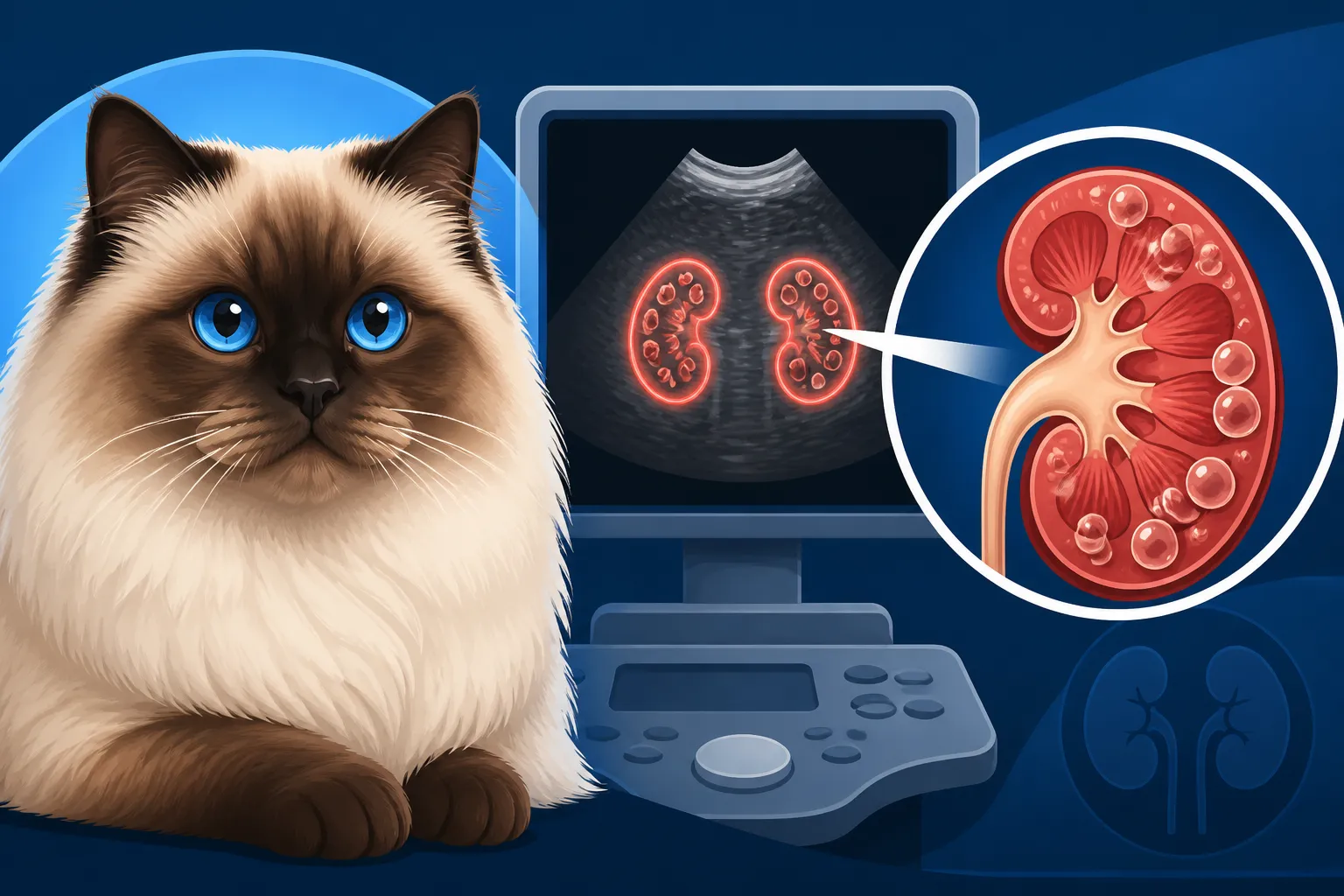
Taking your beloved Himalayan for an ultrasound might sound daunting, but it's generally a straightforward and stress-free procedure. Your cat will typically need to have a small area on their belly shaved to allow for good contact between the ultrasound probe and the skin. This ensures clear images. Most Himalayans are quite calm, but some may need mild sedation to ensure they lie still for the duration of the scan, which usually takes about 20-30 minutes. A trained veterinary sonographer or a veterinarian with specialized ultrasound training will apply a special gel to the shaved area (it's often warm, which helps!). They then move a transducer—a small, handheld probe—over the skin. This probe emits sound waves that bounce off internal organs and structures, sending signals back to the machine, which then creates a detailed image on a monitor. There's no radiation involved, making it a very safe diagnostic tool. During the scan, the vet will carefully examine both kidneys, looking for any abnormalities, particularly the presence and characteristics of cysts.
Identifying Tiny Cysts: What a Sonographer Sees
The skill of the sonographer is paramount when looking for early cysts. On an ultrasound screen, healthy kidney tissue has a specific, uniform texture. Cysts, however, appear as distinct, dark, fluid-filled sacs within the kidney tissue. In the early stages of PKD, these cysts can be incredibly small—sometimes just a millimeter or two in diameter. An experienced eye knows exactly At What Age a Himalayan's Cysts Become Visible and what to look for. They’ll systematically scan the entire kidney, making sure not to miss any area where tiny cysts might be hiding. The goal isn't just to see a cyst, but to identify all of them, even the microscopic ones, and to characterize their size, number, and location. This detailed assessment helps to gauge the progression of the disease and provides a baseline for future monitoring. It’s an art as much as a science, requiring patience and a keen understanding of feline kidney anatomy.
Differentiating Cysts from Other Renal Structures
Sometimes, what looks like a cyst on an initial glance might be something else entirely. The sonographer’s expertise is crucial here. They are trained to differentiate genuine cysts from other normal or abnormal renal structures. For example, the renal pelvis, where urine collects before traveling to the bladder, can sometimes appear anechoic (dark, like fluid) and might be mistaken for a cyst by an untrained eye. Similarly, blood vessels within the kidney can appear dark. However, cysts have specific characteristics: they are typically round or oval, have thin, smooth walls, and are anechoic (black) inside, indicating fluid. The sonographer will adjust the probe and use different angles to confirm the nature of any suspicious finding. They also look for any signs of kidney inflammation, stones, or other diseases that might mimic aspects of PKD, ensuring an accurate diagnosis. This careful, methodical approach ensures that your Himalayan receives the correct diagnosis and subsequent care.
Interpreting Scan Results: When "Small" Still Means "Significant"
Receiving the results of your Himalayan's kidney scan can be a nerve-wracking experience. It's easy to breathe a sigh of relief if the vet says the cysts are "small" or "few." However, with PKD, "small" doesn't necessarily mean "insignificant." Any presence of cysts, regardless of their size or number, signifies that your cat has Polycystic Kidney Disease and needs lifelong monitoring and management.
Grading the Severity of Cysts
When a sonographer performs an ultrasound, they typically provide a detailed report that often includes a grading of the cyst severity. This isn't a universally standardized system like the IRIS staging for chronic kidney disease, but it gives your vet valuable information. Generally, they’ll note:
- Number of cysts: Are there just a few isolated cysts, or are the kidneys riddled with many?
- Size of cysts: From tiny, barely visible dots (1-2mm) to larger, more macroscopic cysts (several millimeters or even centimeters).
- Location: Are they in the renal cortex, medulla, or both?
- Presence in one or both kidneys: PKD is typically bilateral, affecting both kidneys, but unilateral involvement can occur, or one kidney might simply appear more severely affected initially.
Even a diagnosis of "a few small cysts" is still a positive diagnosis for PKD. It means the disease is present, and while the current impact on kidney function might be minimal, the potential for progression is real. It also confirms the genetic status of your cat, if not already known through DNA testing. Understanding that How Kidney Cysts Grow on a Himalayan's Scan is a progressive process helps put the "small" findings into perspective—they won't stay small forever.
The Correlation Between Cyst Size, Number, and Age
There’s a clear correlation between your Himalayan's age, the size and number of cysts, and the progression of kidney disease. Generally, younger cats with PKD tend to have smaller and fewer cysts. As they age, these cysts typically grow in size and number, gradually compromising more and more healthy kidney tissue. This is why early screening is so crucial; catching the disease when the cysts are still tiny allows you to implement management strategies sooner. For example, a 1-year-old Himalayan with a few 2mm cysts is likely to have a much better long-term prognosis than an 8-year-old Himalayan suddenly showing symptoms and found to have multiple large cysts, some over a centimeter, as explored in How Young a Himalayan Can Go Into Kidney Failure. The age at which diagnosis occurs can also influence treatment aggressiveness and the expected lifespan. This isn't to say an older cat with larger cysts can't live a good life, but the disease's advancement gives less room for proactive interventions.
Dealing with Ambiguous or Borderline Findings
Sometimes, a scan might yield ambiguous or "borderline" results. Perhaps there's a tiny, solitary anechoic structure that might be a cyst but isn't definitively characteristic. Or maybe the image quality isn't ideal. In these situations, your vet might recommend a follow-up scan in 3-6 months to monitor for any changes. It's frustrating to be in a diagnostic "gray area," but it's important to trust your vet's judgment. They want to be absolutely sure before giving a definitive diagnosis. During this waiting period, maintaining good hydration, providing a high-quality diet, and minimizing stress can support overall kidney health, regardless of the ultimate diagnosis. Remember, a single ambiguous finding doesn't automatically mean PKD, but it warrants careful observation and re-evaluation to ensure no critical information is missed. When in doubt, seeking a second opinion from a board-certified veterinary internal medicine specialist or radiologist is always a wise choice for your precious pet.
Life After an Early PKD Diagnosis: Proactive Management
Receiving an early PKD diagnosis for your Himalayan can be overwhelming, but it's far from a death sentence. In fact, it's an opportunity for proactive management that can significantly slow the progression of the disease and enhance your cat's quality of life for many years. Early detection allows you to shift from a reactive crisis management approach to a well-thought-out, long-term health strategy.
Dietary Adjustments and Hydration Strategies
One of the most impactful steps you can take after an early PKD diagnosis is to focus on diet and hydration. While there isn't a specific "PKD diet" in the early stages, supporting overall kidney health is paramount. Your vet will likely recommend a high-quality, easily digestible diet with controlled phosphorus levels. Excess phosphorus can be detrimental to kidneys, even healthy ones. Many vets advocate for increased wet food consumption or adding water to dry kibble to boost hydration. Good hydration helps the kidneys flush out waste products more efficiently. Consider investing in a pet water fountain, as many cats prefer flowing water and tend to drink more from them. Some studies also suggest diets rich in antioxidants and omega-3 fatty acids may be beneficial for kidney health. Discussing Which Renal Diet a Cyst Positive Himalayan Ends Up On with your veterinarian is crucial to tailor a plan specifically for your cat's needs, as dietary requirements can change as the disease progresses. Brands like Healthy Paws, while an insurance provider, often emphasize preventative care and maintaining overall pet health through good nutrition, which aligns perfectly with managing PKD.
Monitoring Progression and Supporting Kidney Function
An early diagnosis means you get a head start on monitoring the disease's progression. Your vet will likely recommend regular check-ups, which may include blood tests to evaluate kidney function (looking at values like BUN, creatinine, and SDMA), and periodic urine tests to assess urine specific gravity and check for protein in the urine. Follow-up ultrasounds might also be recommended every 12-18 months to monitor cyst growth and kidney architecture. This consistent monitoring allows your vet to track how Living With a Himalayan That Inherited the Persian Kidney Gene truly impacts your specific cat. They can then adjust management strategies as needed. Beyond diet, ensuring a low-stress environment, maintaining a healthy weight for your cobby cat (which can be a challenge for Himalayans!), and ensuring access to fresh, clean water are all supportive measures. There are also supplements, such as kidney support formulas, that your vet might recommend. These often contain ingredients like B vitamins, antioxidants, and prebiotics to further support kidney health, but always clear them with your vet first.
The Long-Term Outlook with Early Intervention
The good news is that with early detection and diligent management, many Himalayans with PKD can live long, fulfilling lives. While there's no cure for PKD, and the cysts will continue to grow, proactive measures can significantly slow down the rate of progression. This can mean years of healthy, symptom-free living for your cat. The key is to catch it before symptoms of kidney failure begin to show. Regular veterinary care, adherence to dietary recommendations, and consistent monitoring create the best possible outcome. Pet insurance providers like Healthy Paws can be a valuable partner in this journey, helping to cover the costs associated with ongoing diagnostics, specialized diets, and potential treatments as your cat ages, easing the financial burden and allowing you to focus on their care. Remember, you're not just waiting for the worst; you're actively working to preserve your cat's kidney function and extend their happy years with you.
Choosing the Right Veterinary Partner for Your Himalayan's Kidneys
Finding the right veterinary care is paramount for managing any chronic condition, especially something as progressive as PKD in Himalayans. You need a team that is not only knowledgeable about the breed's specific predispositions but also skilled in the diagnostic tools and long-term management strategies required. This often means looking beyond your general practitioner for specialist referrals.
Seeking Out Experienced Sonographers and Internists
For accurate PKD diagnosis and ongoing management, the experience of the veterinary team truly matters. Ideally, your general veterinarian will refer you to a board-certified veterinary internal medicine specialist or a veterinary radiologist who has extensive experience performing and interpreting abdominal ultrasounds in cats. These specialists have a deeper understanding of feline kidney diseases, including the nuances of PKD, and are adept at identifying even the smallest cysts. They can also offer expert advice on staging the disease and tailoring a long-term management plan. Don't be shy about asking your general vet for a referral if they don't have an in-house expert. Think of it like seeking a specialist for your own health; you want the best possible eyes and minds on your Himalayan's case. Finding someone who regularly sees What a Himalayan's Yearly Bloods Should Cover After Eight is also crucial, as their experience with the breed will inform their interpretation of subtle changes.
Preparing for Your Himalayan's Kidney Ultrasound
Preparation for an ultrasound typically involves fasting your cat for 8-12 hours prior to the appointment. This helps ensure that the digestive tract is less full, which can improve the visibility of the kidneys. Your vet will provide specific instructions, so always follow those carefully. You'll also want to make sure your Himalayan is calm and comfortable for the appointment. Bring a familiar blanket or a favorite toy. If your cat is particularly anxious, discuss mild sedation options with your vet beforehand. It’s better for the cat to be relaxed, as tension can make the muscles rigid, which can interfere with image quality. Having all previous medical records, especially any genetic test results, on hand for the specialist is also important. This provides them with a full history to inform their assessment during the scan and subsequent consultation.
Financial Considerations and Pet Insurance
Long-term management of PKD, even when detected early, can incur significant costs over your cat's lifetime. This includes initial diagnostic ultrasounds, genetic testing, regular follow-up blood and urine tests, specialized prescription diets, and potential medications or supplements as the disease progresses. This is where pet insurance can be a real lifesaver. Companies like Healthy Paws offer comprehensive pet insurance plans that can help cover a significant portion of these veterinary expenses, from diagnostics to treatments. Enrolling your Himalayan in a pet insurance plan early, ideally before any diagnosis of PKD, is highly recommended, as most plans have waiting periods and may not cover pre-existing conditions. Having pet insurance can provide immense peace of mind, allowing you to make medical decisions based on what's best for your cat, rather than being constrained by financial worries. It's a worthy investment in your Himalayan's long-term health and your own peace of mind.
Here's a quick reference table to help visualize the stages and management strategies:
| Aspect | Early Stage PKD (Small Cysts, Normal Kidney Function) | Mid Stage PKD (Growing Cysts, Mildly Impaired Function) | Late Stage PKD (Large Cysts, Significant Impairment) |
|---|---|---|---|
| Detection Method | Ultrasound (primary) & Genetic Test | Ultrasound & Blood/Urine Tests | Clinical Signs & Advanced Blood/Urine Tests |
| Symptoms | None visible | Subtle (e.g., increased thirst/urination) | Obvious (lethargy, vomiting, weight loss) |
| Dietary Focus | High-quality wet food, controlled phosphorus | Early renal diet, hydration, phosphorus binders | Prescription renal diet, appetite stimulants |
| Monitoring | Annual physical, 12-18 month ultrasound, baseline bloods | 6-12 month physical, bloods/urinalysis, ultrasound | Frequent physicals, bloods/urinalysis, BP monitoring |
| Medication/Support | Hydration, supplements (vet-approved) | Phosphorus binders, blood pressure meds, fluid therapy | Aggressive symptom management, fluid therapy |
| Prognosis | Excellent with proactive management | Good with careful management | Guarded, focus on quality of life |
Disclaimer
The information provided in this guide is for general informational purposes only and is not a substitute for professional veterinary advice. Always consult with a qualified veterinarian for any health concerns or before making any decisions related to your Himalayan's care and treatment.