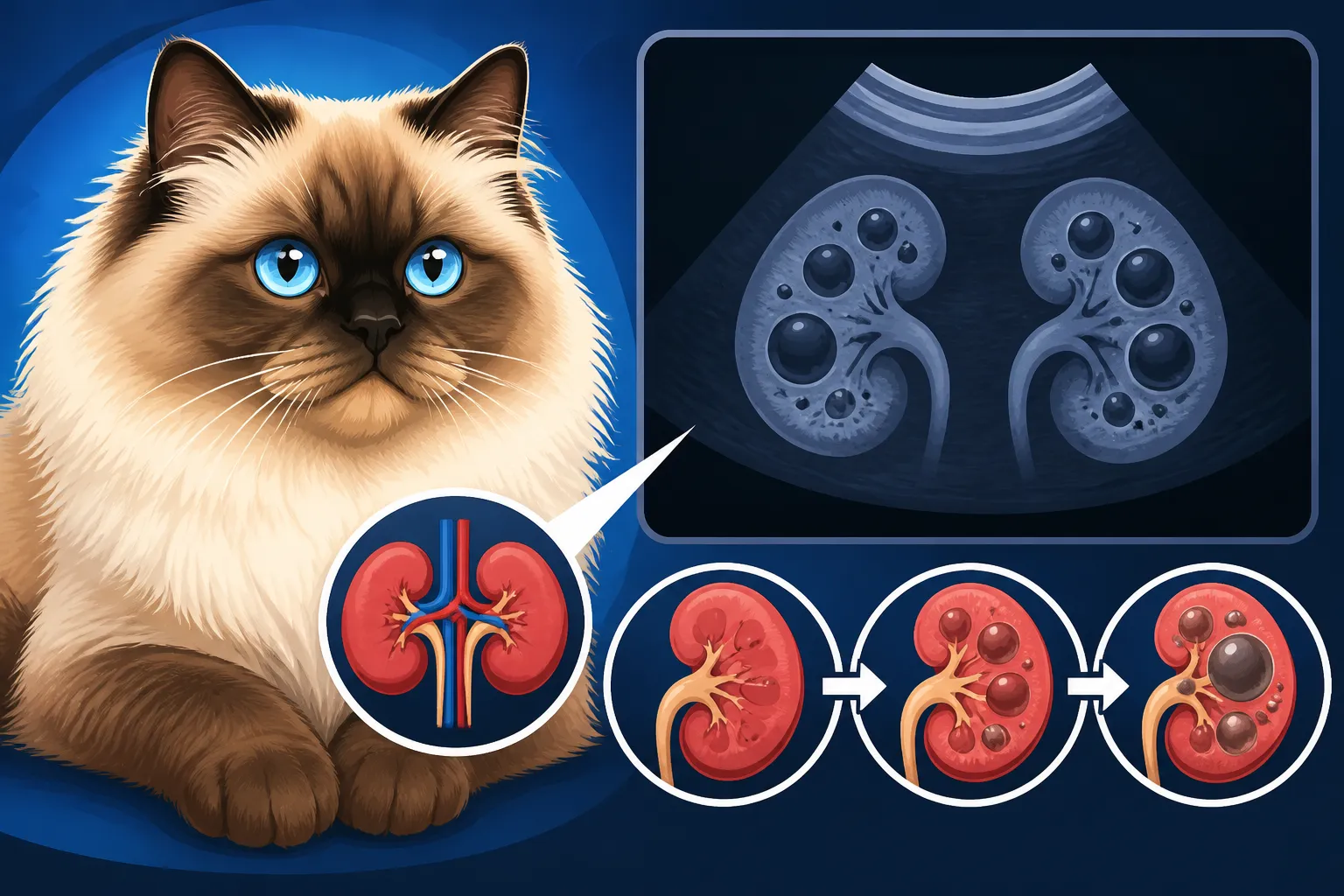
How Kidney Cysts Grow on a Himalayan’s Scan
It’s truly a disheartening moment when your beloved Himalayan, with their soft purr and expressive blue eyes, receives a diagnosis that hints at potential health challenges. We often feel overwhelmed by medical jargon, especially when it concerns something as vital as kidney health. Understanding how polycystic kidney disease (PKD) manifests and how those insidious cysts actually grow on a scan can be incredibly empowering, helping you navigate your cat’s care with confidence and less anxiety. This guide will walk you through what to expect and how to interpret those vet reports.
Understanding Polycystic Kidney Disease (PKD) in Himalayans
For many Himalayan owners, the term "PKD" strikes a familiar chord, often accompanied by a twinge of worry. It's a genetic condition that quietly affects our beautiful felines, primarily due to their Persian heritage. Knowing the ins and outs of this disease is the first step in protecting your furry family member.
The Genetic Basis of PKD in Our Beloved Himalayans
Polycystic Kidney Disease (PKD) is an inherited disorder, meaning it's passed down through a cat's genes. What happens is that cysts, which are essentially fluid-filled sacs, develop within the kidneys. These aren't just any cysts; they’re often present from birth, although they start out incredibly tiny. Over time, they grow, multiply, and eventually replace healthy kidney tissue, leading to kidney dysfunction and, ultimately, kidney failure. The frustrating part is that this disease typically progresses slowly, so affected cats might not show any signs until they are much older, sometimes even into their senior years.
This condition is particularly prevalent in the Persian breed, and since Himalayans are essentially long-haired, colorpoint Persians, they inherited this predisposition. It's a single gene mutation, specifically PKD1, that causes this condition. If a cat inherits even one copy of this faulty gene, they will develop PKD. This is why understanding Why PKD Needs Only One Copy in a Himalayan is so crucial for breeders and owners alike. It means there's no "carrier" status where the cat is healthy but passes it on; if they have the gene, they will get the disease, although the severity can vary widely. The history of PKD in Himalayans really traces back through their Persian ancestors, demonstrating PKD1 Came Down the Persian Side of a Himalayan and highlighting the importance of responsible breeding practices to eradicate this devastating disease.
For any breeder worth their salt, genetic testing is non-negotiable. It's a simple, non-invasive test – often just a cheek swab – that can definitively tell whether a cat carries the PKD1 gene. This is why it's so important to understand How a Himalayan Is Swabbed for the Persian Kidney Gene and to always ask for proof of negative genetic testing before bringing a new kitten into your home. This simple step can save you and your future cat a lifetime of heartache and expensive veterinary care.
Why Early Detection Matters More Than Ever
When we talk about PKD, early detection isn't just a buzzword; it's the cornerstone of effective management and potentially extending your cat's quality of life. As mentioned, these cysts are microscopic at birth. They don't suddenly appear overnight. The insidious nature of the disease means that symptoms like increased thirst, weight loss, or poor coat condition often don't become apparent until a significant portion of the kidney function has already been compromised. This can be incredibly frustrating for owners, who might feel blindsided by a diagnosis when their cat previously seemed perfectly healthy.
However, with advancements in veterinary medicine, particularly genetic testing and ultrasound technology, we have the tools to identify PKD long before clinical signs emerge. Imagine knowing your cat has this predisposition years before they even show a hint of illness. This knowledge allows you to work proactively with your veterinarian to implement strategies that can slow the progression of the disease. This might include dietary adjustments, ensuring optimal hydration, and regular monitoring of kidney values.
The anxiety of waiting for test results, or even the fear of confirming a diagnosis, is completely understandable. No one wants to hear bad news about their beloved pet. But facing it head-on means you can be their strongest advocate. Early intervention doesn't mean a cure, but it means managing the disease rather than reacting to a crisis. It buys you precious time and offers your Himalayan the best possible chance at a comfortable life, even with PKD.
The Journey of Kidney Cyst Growth as Seen on a Scan
An ultrasound scan is often the moment of truth for many Himalayan owners concerned about PKD. It's how these hidden cysts are brought into clear view, allowing veterinarians to assess their presence, size, and quantity. Understanding what your vet is looking for, and what those images mean, can demystify the process significantly.
What an Ultrasound Reveals at Different Stages
The ultrasound is an invaluable tool for diagnosing PKD. It uses sound waves to create real-time images of your cat's internal organs, including their kidneys. For PKD, the vet is looking for anechoic structures – essentially, black, fluid-filled pockets – within the kidney tissue. These are the cysts. When they are very small, they might appear as tiny pinpricks of black. As they grow, they become more distinct, like small marbles embedded in the kidney.
At the earliest stages, especially in very young kittens, these cysts can be exceptionally difficult to spot. They might be just a millimeter or two in size, making their detection highly dependent on the skill of the sonographer and the quality of the ultrasound equipment. Some tiny cysts might even be missed initially, only becoming visible on subsequent scans as they enlarge. This is why, even if an early scan is clear, if there’s a family history of PKD or a positive genetic test, follow-up scans are often recommended. It’s fascinating how early these cysts can show up on a Himalayan's kidney scan, sometimes even before they reach full kittenhood. Knowing At What Age a Himalayan's Cysts Become Visible can help guide when the optimal first scan might be, typically around 8-10 months of age for definitive assessment.
The ultrasound isn't just a "yes/no" test for cysts. It also allows the vet to assess the overall architecture of the kidney. They'll look at the kidney's shape, size, and whether the normal internal structures (like the renal cortex and medulla) are clearly defined or being displaced by growing cysts. It's a comprehensive visual examination that provides a snapshot of your cat's kidney health at that precise moment. In fact, many vets still recommend an ultrasound to Why an Ultrasound Still Backs Up a Himalayan's Gene Test, even if genetic tests are clear, as it offers a complete picture of kidney structure.
Progression from Microscopic to Macroscopic Cysts
The growth of kidney cysts in a Himalayan is typically a slow, relentless process. They don't usually grow rapidly overnight; instead, it's a gradual, insidious expansion that can take years. Initially, these cysts are microscopic, often too small to be detected even by a high-resolution ultrasound. Over time, perhaps a few millimeters each year, they enlarge. Imagine a tiny water balloon inside a sponge; as it inflates, it compresses the surrounding sponge material. This is what happens with kidney cysts. As they grow, they put pressure on and ultimately destroy the surrounding healthy kidney tissue.
What starts as one or two small cysts can, over the years, become multiple, larger cysts. These larger cysts not only displace functional kidney tissue but can also interfere with the kidney's blood supply and drainage systems. The kidneys are crucial for filtering waste products from the blood and maintaining fluid balance in the body. As healthy tissue is replaced by non-functional cysts, the kidneys' ability to perform these vital tasks diminishes. This is when you start seeing clinical signs of kidney disease.
It's important to remember that the number and size of cysts can vary greatly between individual Himalayans, even within the same litter. Some cats might develop only a few small cysts that don't significantly impact kidney function for many years, leading to a long lifespan. Others might develop numerous large cysts at a younger age, leading to earlier onset of symptoms and a more rapid progression of kidney failure. There's not always a linear correlation; sometimes a few strategically placed cysts can cause more trouble than many small ones. However, generally speaking, the more kidney tissue replaced by cysts, the more severe the impact on kidney function will be.
Interpreting the Scan Results: Size, Number, and Location
When your vet discusses the ultrasound findings, they’ll often refer to the size, number, and location of any detected cysts. This information is critical for establishing a baseline and monitoring progression over time.
Here’s a simplified breakdown of what you might hear:
| Cyst Characteristics | Potential Implications |
|---|---|
| Small (1-3 mm) | Often detected in younger cats, may not be clinically significant yet. Requires monitoring. Kidney function likely normal. |
| Medium (4-9 mm) | More easily detectable, indicating progression. Kidney function may still be normal or showing very early subtle changes. Regular monitoring and possibly early dietary considerations recommended. |
| Large (10+ mm) | Can indicate more significant kidney compromise. May start to see clinical signs of kidney disease (e.g., increased thirst, weight loss). Kidney function likely affected, necessitating active management. The sheer volume of kidney tissue replaced by these large cysts becomes a major concern for long-term health and the overall The Nine to Fifteen Years a Himalayan Usually Gets. |
| Few (1-3 cysts) | May have a slower progression, especially if small and not encroaching on critical structures. Less likely to cause early kidney failure, but still requires vigilance. |
| Multiple (>3 cysts) | Indicates a more widespread cystic disease. Higher likelihood of significant kidney damage over time. The cumulative impact on kidney function can be substantial. |
| Location (Cortical) | Cysts in the outer layer of the kidney (cortex) are common. Generally, their impact relates to size and number. |
| Location (Medullary) | Cysts deeper in the kidney (medulla) can sometimes interfere more directly with urine concentration mechanisms. While less common for PKD1, location can influence symptoms. |
| Growth Rate | If successive scans show rapid growth in size or number of cysts, it suggests a more aggressive form of the disease or a faster progression, requiring more proactive intervention. Conversely, slow growth might indicate a more manageable course. |
It's important to understand that a single, small cyst might be an incidental finding and not necessarily indicative of widespread PKD, though for Himalayans, if it's genetically positive for PKD1, that one cyst is just the start. If there are multiple, progressively growing cysts, especially in both kidneys, that's when it becomes a significant concern. Your vet will differentiate between simple cysts, which are typically benign and fluid-filled, and more complex structures that might raise other concerns, though for PKD, we are usually dealing with simple cysts initially. This table is a general guide, and your veterinarian's professional interpretation, combined with other diagnostic tests, is paramount.
Managing Your Himalayan After a Cyst Diagnosis
Receiving a PKD diagnosis can feel daunting, but it’s not a death sentence. With proper management and a proactive approach, many Himalayans with PKD can live fulfilling lives. The key is working closely with your vet and making informed choices about their care.
The Role of Regular Monitoring and Veterinary Care
Once PKD cysts are detected, regular monitoring becomes a cornerstone of your Himalayan's health regimen. This isn't just about scans; it's a holistic approach to tracking their kidney function and overall well-being. Your veterinarian will likely recommend a schedule of follow-up ultrasounds to monitor How Kidney Cysts Grow on a Himalayan's Scan over time. These scans will help track the size and number of cysts, giving an indication of the disease's progression.
Beyond imaging, routine blood work is essential. Your vet will want to keep a close eye on specific kidney values, such as Blood Urea Nitrogen (BUN), creatinine, and Symmetric Dimethylarginine (SDMA). SDMA is particularly valuable as it can detect a decline in kidney function earlier than BUN and creatinine, sometimes when only 25% of kidney function is lost, compared to 60-75% for the traditional markers. Understanding Which Blood Values a Himalayan's Kidney History Demands is empowering for owners, allowing you to have informed discussions with your vet. This monitoring helps you and your vet make timely adjustments to their care plan. These numbers can be tracked from as early as five years old, helping to identify trends and intervene early, as highlighted in How a Himalayan's Kidney Numbers Are Tracked From Five.
Dietary modifications are often one of the first and most impactful interventions. Your vet may recommend a therapeutic renal diet, which is typically lower in protein, phosphorus, and sodium, and sometimes supplemented with omega-3 fatty acids. These diets are specifically formulated to reduce the workload on the kidneys and slow the progression of kidney disease. Ensuring optimal hydration is also critical; encouraging water intake through water fountains, providing wet food, or even adding a little water to their meals can make a significant difference.
It's worth noting that managing a chronic condition like PKD can incur ongoing veterinary costs. This is where pet insurance can be a real lifesaver. Providers like Healthy Paws offer coverage that can help ease the financial burden of these regular check-ups, diagnostic tests, and special diets, allowing you to focus on your cat's health without added stress.
Lifestyle Adjustments for a Himalayan with PKD
Beyond direct medical interventions, certain lifestyle adjustments can significantly contribute to your Himalayan's comfort and well-being when living with PKD. The goal is to minimize stress on their system and support their overall health.
One of the most important aspects is maintaining a stable, low-stress environment. Cats are creatures of habit, and Himalayans especially appreciate a predictable routine. Major changes, loud noises, or disruptions can cause stress, which can indirectly impact their health. Providing a calm, consistent home with plenty of quiet spaces for them to retreat to can make a world of difference.
It's also crucial to be vigilant about any medications your Himalayan might be prescribed for other ailments. Some drugs are nephrotoxic, meaning they can be harmful to the kidneys. Always inform any veterinarian or specialist about your cat's PKD diagnosis before they prescribe new medications, especially common ones like certain NSAIDs. Your vet will ensure that any necessary treatments are kidney-safe or that dosages are adjusted appropriately.
While there's no specific exercise regimen for PKD, keeping your Himalayan at a healthy weight is important. Obesity adds strain to all organs, including the kidneys. Moderate, gentle play that they enjoy, without overexertion, is usually fine. Remember, Himalayans aren't typically high-energy cats anyway; their play sessions are often brief. The focus here is on a good quality of life. This means ensuring they are comfortable, pain-free, and enjoying their interactions with you, even if their kidneys are compromised. Sometimes, in the later stages, the emphasis shifts from aggressive treatment to palliative care, ensuring their remaining time is spent in comfort and dignity.
Proactive Steps for Owners and Breeders
Preventing PKD is always better than managing it, and this starts with responsible breeding practices. For prospective Himalayan owners, the most crucial proactive step you can take is to only purchase kittens from breeders who rigorously genetic test their breeding cats for PKD1. Insist on seeing documented proof of negative test results for both parent cats. A reputable breeder will be transparent and proud to share these certifications with you. This aligns with the imperative that you should always ask for Which Two Certificates a Himalayan Breeder Owes You and Which Two Tests Belong on Every Himalayan Pedigree.
For breeders, the ethical responsibility is paramount. Any cat testing positive for the PKD1 gene should be removed from the breeding program to prevent passing this devastating disease to future generations. Genetic testing has made it possible to eradicate PKD from breeding lines entirely. This commitment to genetic health protects the breed as a whole and ensures healthier kittens for families. Understanding How Many Himalayan Lines Still Carry PKD can give you a perspective on the progress that has been made and where vigilance is still needed.
Knowing your cat's genetic status, even if they've already been diagnosed with PKD, offers invaluable peace of mind because it allows for early, informed intervention. You can tailor their diet, monitor their health closely, and work with your vet to give them the best possible care. And again, having pet insurance from a reputable company like Healthy Paws can provide a financial safety net for the inevitable veterinary costs associated with managing a chronic condition like PKD, allowing you to focus on loving your cat without added financial stress.
Common Questions About PKD Scans and Progression
It's natural to have a myriad of questions when dealing with a condition like PKD, especially concerning diagnostic scans and how the disease progresses. Let’s tackle some of the most frequently asked ones.
Can Cysts Disappear or Shrink?
This is a hopeful question that many owners ask, wishing for a miracle. Unfortunately, the simple answer is no. Once a kidney cyst forms due to PKD, it is permanent. These aren't temporary fluid pockets that can be reabsorbed or shrink with medication. They are true structural changes within the kidney tissue.
The nature of PKD cysts is that they are lined with epithelial cells that continuously secrete fluid, which causes them to grow over time. While the rate of growth can vary significantly between individual cats, the general trajectory is one of expansion, not reduction. There are currently no known medications or treatments that can make PKD cysts disappear or reliably shrink them once they have formed. This is why early detection and management aimed at slowing progression are so critical, rather than hoping for resolution. Understanding this reality helps set realistic expectations for your cat's long-term care.
How Often Should My Himalayan Be Scanned?
The frequency of ultrasound scans for your Himalayan depends on several factors: their age, whether they have a confirmed PKD diagnosis, the size and number of any previously detected cysts, and their overall clinical signs.
- For kittens from PKD-tested clear parents: If both parents are genetically clear of PKD1, your kitten is highly unlikely to develop PKD. A routine wellness exam might include a palpation of the kidneys, but frequent ultrasounds typically aren't necessary unless other symptoms arise.
- For cats with unknown genetic status or family history: If you've adopted a Himalayan with no known history, or if there's a suspicion of PKD, an initial screening ultrasound is highly recommended, usually between 8-10 months of age to definitively see At What Age a Himalayan's Cysts Become Visible. If clear, annual or biennial follow-up scans might be considered, especially as they get older, just to be sure, or if any changes in health occur.
- For cats diagnosed with PKD: If your Himalayan has been diagnosed with PKD and has visible cysts, your veterinarian will likely recommend more frequent monitoring. This could be an ultrasound every 6-12 months, along with regular blood and urine tests. The goal is to track the growth of the cysts and monitor kidney function so that interventions, like dietary changes or medication, can be introduced at the optimal time.
Always follow your specific veterinarian’s recommendations, as they are best equipped to assess your cat's individual needs. Regular scans, while an investment, provide critical information that informs your cat's care plan. Having pet insurance from a trusted provider like Healthy Paws can make these necessary routine diagnostic tests more manageable financially.
What If the Genetic Test is Negative but Cysts are Seen?
This is a rare but important scenario that can sometimes cause confusion. The PKD1 genetic test is highly accurate for detecting the specific gene mutation responsible for autosomal dominant polycystic kidney disease, which is the form most commonly seen in Himalayans and Persians. A negative genetic test typically means your cat does not carry that specific gene and therefore will not develop PKD1.
However, the kidneys are complex organs, and it is possible, though uncommon, for other types of cysts or kidney abnormalities to be present that are not related to PKD1. These could be:
- Simple renal cysts of unknown origin: Sometimes, a single, benign cyst can develop spontaneously, not linked to a genetic disease. These are often less problematic unless they grow to an exceptionally large size or become infected.
- Other cystic kidney diseases: While less common than PKD1 in Himalayans, other, non-hereditary or rarer genetic cystic conditions exist that an ultrasound might detect.
- Acquired cysts: Cysts can sometimes develop as a consequence of kidney injury, infection, or other inflammatory processes.
If your Himalayan has a negative PKD1 genetic test but an ultrasound reveals kidney cysts, your veterinarian will likely recommend further investigation. This might include more advanced imaging, urine analysis, or even biopsy in some cases, to determine the nature and significance of the cysts. It reinforces the idea that while genetic testing is incredibly powerful, it's one piece of the puzzle, and a thorough veterinary examination, including imaging like ultrasound, provides a more complete picture of your cat's overall kidney health.
Disclaimer
This article is for general informational purposes only and does not constitute professional advice. Laws, prices and regulations vary by location and change over time. Consult a qualified professional for guidance on your specific situation.