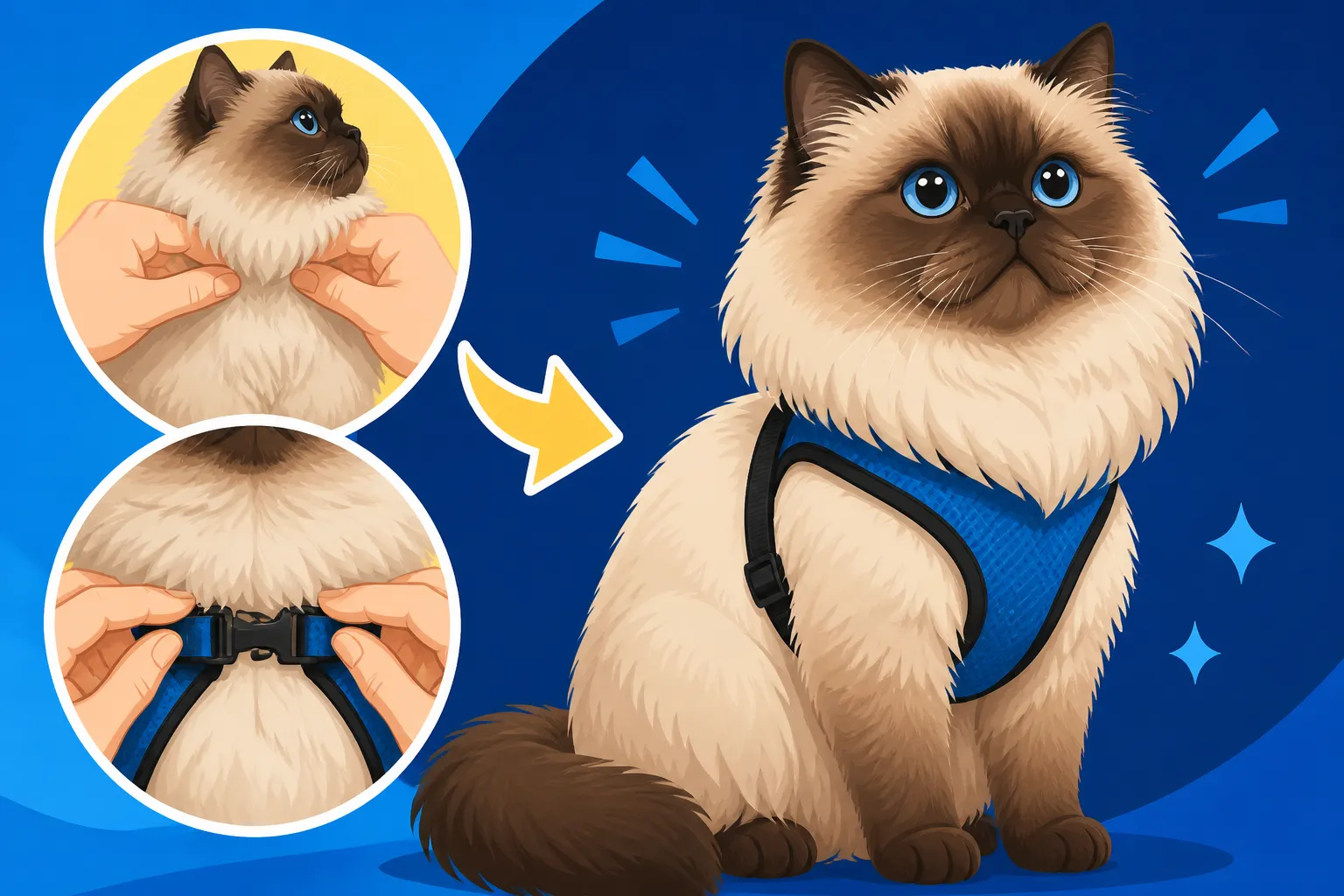
Fitting a Harness Under a Himalayan’s Ruff
Getting a harness to fit snugly and comfortably on your beloved Himalayan can feel like trying to dress a cloud! That gorgeous, luxurious ruff, while undeniably stunning, often becomes an unexpected obstacle when you're trying to secure straps and ensure safety for those rare supervised outdoor adventures or necessary vet trips. This guide will walk you through the nuances of choosing and fitting a harness specifically for your long-haired friend, helping you navigate that magnificent coat with ease and keep your Himalayan safe and happy.
Why a Himalayan's Magnificent Ruff Makes Harness Fitting Tricky
The Himalayan cat, with its stunning Persian coat and unique Siamese points, is known for its plush, dense fur, particularly around the neck and chest, forming what we affectionately call a "ruff." This majestic feature, while beautiful, introduces several challenges when it comes to harness fitting that owners of shorter-haired breeds rarely encounter. It's not just about aesthetics; it's about comfort, safety, and preventing escapes.
The Challenge of Hidden Straps and Pressure Points
One of the most common frustrations Himalayan owners face is that the ruff can completely obscure harness straps. What looks perfectly fitted on a sleek short-haired cat might actually be loose or digging into the fur on a Himalayan, all hidden beneath that voluminous mane. This means you need to be extra diligent in feeling under the fur to ensure the straps are lying flat against the body, not bunched up or pulling the hair.
If the straps aren't positioned correctly, they can create uncomfortable pressure points. Imagine a strap constantly tugging at a clump of fur or pressing unevenly against the skin. This isn't just irritating; it can lead to skin irritation, matting, or even make your cat resent the harness altogether. The goal is to distribute pressure evenly without compressing the ruff excessively. This delicate balance is what makes harness selection and fitting so critical. Why a Himalayan's Coat Hides a Wound for Days is a great reminder of how easily things can be concealed beneath that dense fur.
Escape Artist Extraordinaire: The Loose Ruff Factor
The sheer volume and slipperiness of a Himalayan's ruff can turn an otherwise secure harness into an escape artist's dream. If the harness isn't snug enough against the body underneath the ruff, a determined cat can often wriggle free. They might flatten their fur, pull their head down, and slip out with surprising ease, especially if they're startled or feeling adventurous. This is why a simple collar is rarely recommended for outdoor use; Why a Collar Presses on a Himalayan's Narrow Airway further explains why a harness is always the safer choice.
A harness designed for a standard cat might not account for the extra space created by the ruff, leading to a fit that's too loose despite appearing to sit correctly. This isn't just a nuisance; it's a serious safety concern. An escaped cat, especially one unaccustomed to the outdoors, faces numerous dangers. Therefore, achieving a truly secure fit that goes beyond merely resting on the fur is paramount.
Choosing the Right Harness Type for a Himalayan
Selecting the perfect harness for your Himalayan isn't just about picking a pretty color; it's about understanding which designs work best with their unique body shape and majestic coat. Not all harnesses are created equal, especially when you're dealing with a glorious ruff and a generally cobby, sturdy build.
Vest Harnesses: The Top Contender
For many Himalayan owners, a vest-style harness often proves to be the most successful option. These harnesses distribute pressure more broadly across the chest and back, rather than relying on thin straps that can easily get lost or tangle in the ruff. The wider fabric panels help to keep the harness stable and prevent it from shifting around too much, which can cause discomfort or lead to escapes.
When looking for a vest harness, prioritize soft, breathable materials. Your Himalayan already carries a thick coat, so anything that adds unnecessary bulk or heat can quickly become uncomfortable. Adjustable straps are crucial here, as they allow you to fine-tune the fit both around the neck (above the deepest part of the ruff, but still secure) and around the girth, ensuring it's snug against the body without being restrictive. Many owners find a good selection of quality vest harnesses on Amazon, often with helpful reviews from other long-haired cat parents.
H-Style Harnesses: Proceed with Caution
H-style harnesses, characterized by their two loops (one for the neck, one for the girth) connected by a strip along the back, can sometimes work for Himalayans, but they require extra care in fitting. The key challenge here is the neck loop. It needs to be loose enough to not compress the ruff, but tight enough that your cat can't back out of it. This can be a very fine line to walk.
The narrower straps of an H-style harness are more prone to getting tangled in the long fur or creating localized pressure points if not meticulously adjusted. If you opt for an H-style, look for options with wider, softer webbing for the straps. Also, ensure there are multiple adjustment points – ideally, at least four (two for the neck, two for the girth) – to really tailor the fit. Always double-check under the ruff to make sure the straps are lying flat and not pulling any fur.
The Problem with Step-In Harnesses
While convenient for some cats, step-in harnesses are generally not the best choice for Himalayans. These harnesses typically require the cat to step their front paws through two openings, then the harness is pulled up and fastened over the back. The issue for Himalayans lies in the design, which often lacks sufficient adjustability around the neck and chest area to accommodate their dense ruff and cobby build effectively.
The fixed nature of many step-in harnesses means they're either too loose, allowing for easy escape, or too tight, which can be incredibly uncomfortable and compress that beautiful ruff. Furthermore, the act of asking a cat to step into something can be more challenging for a typically laid-back Himalayan who prefers to be still. For their safety and comfort, it's usually best to steer clear of this style.
Step-by-Step Guide to Fitting a Himalayan's Harness
Once you've chosen a harness type, the real work begins: fitting it properly. This isn't a "one-and-done" task; it often requires patience, careful observation, and a willingness to adjust. Remember, the goal is a secure, comfortable fit that your Himalayan will tolerate.
Measure First, Then Adjust
Before even attempting to put the harness on your cat, take accurate measurements of their neck and girth. The neck measurement should be taken where a collar would naturally sit, typically above the broadest part of the ruff but still on the neck. For the girth, measure just behind their front legs, around the widest part of their rib cage. Add a couple of fingers' width to these measurements to ensure a comfortable, non-restrictive fit. You can find flexible measuring tapes easily on Amazon if you don't already have one.
Once you have your cat's measurements, adjust the harness straps before you put it on them. This pre-adjustment makes the initial fitting less stressful for your cat, as you won't be fumbling with buckles while they're already feeling a bit confined. Aim for a starting point that's slightly on the looser side, knowing you'll tighten it once it's on. How to Find a Himalayan's Ribs Through a Persian Coat can help you get a better sense of their underlying structure for accurate girth measurements.
The Two-Finger Rule: Your Golden Standard
When fitting the harness, the "two-finger rule" is your best friend. Once the harness is on your Himalayan, you should be able to comfortably slip two fingers between any strap and your cat's body. This applies to both the neck and girth straps. If you can fit more than two fingers, it's too loose; if you struggle to fit even one, it's too tight. Crucially, you need to perform this check underneath the ruff and coat, directly against their skin, not just on top of the fur.
For the neck strap, ensure it sits high enough on the neck to prevent them from backing out, but not so high that it presses on their throat or jaw. The girth strap should sit a few inches behind the front legs to avoid chafing their armpits. Take your time, talking calmly to your cat, and offering treats throughout the process.
| Harness Type | Pros for Himalayan | Cons for Himalayan | Fitting Considerations |
|---|---|---|---|
| Vest Harness | Broad pressure distribution, stable | Can be warm in summer, bulkier | Check under ruff for snugness, breathable material |
| H-Style Harness | Lighter, less bulky | Straps can tangle, harder to get correct neck fit | Wider straps preferred, multiple adjustment points are key |
| Step-In Harness | Easy to put on (for some cats) | Limited adjustability, potential for easy escape | Generally not recommended due to poor fit with ruff/build |
Test and Observe: The Real World Check
Once you believe the harness is fitted correctly, it's time for a test run, but not outdoors just yet! Allow your Himalayan to wear the harness for short periods indoors, under your supervision. Watch them closely. Are they walking naturally, or do they seem stiff or uncomfortable? Are they trying desperately to wriggle out? A little initial awkwardness is normal, but persistent attempts to escape or clear signs of distress mean the fit isn't right or they need more gradual acclimatization.
Pay particular attention to how the harness interacts with their ruff. Are there any areas where the fur seems to be pulling or bunching? After they've worn it for a bit, take the harness off and examine their skin and fur for any red marks, irritation, or signs of matting. This observation period is crucial for fine-tuning the fit and ensuring their comfort and safety. Remember that Why a Himalayan's Coat Cannot Survive Outdoors means these test runs are best kept inside until you're absolutely sure of the fit and their comfort.
Making Harness Training a Positive Experience
Fitting the harness is only half the battle; getting your Himalayan to actually wear it willingly is the next step. This requires patience, positive reinforcement, and understanding your cat's unique temperament. Rushing the process will only lead to a negative association and make future attempts even harder.
Start Young, Start Slow
Ideally, harness training begins when your Himalayan is a kitten. Getting a Himalayan Kitten Used to the Comb teaches them to tolerate handling, which is a great foundation. Kittens are generally more adaptable and accepting of new experiences. However, even an adult Himalayan can be successfully harness trained with enough patience. The key is to introduce the harness gradually, in short, positive sessions.
Begin by simply placing the harness near your cat's food bowl or favorite sleeping spot. Let them sniff it, explore it, and get used to its presence. You can even place treats on or near it. The goal is to create a positive association before it even touches their body. This might take a few days or even a week, depending on your cat's personality.
The Power of Positive Reinforcement
Once your Himalayan is comfortable with the harness's presence, move to the next step: brief contact. Gently place the harness on their back for a few seconds, immediately rewarding them with a high-value treat, praise, or a favorite toy. Then remove it. Repeat this several times a day, gradually increasing the duration. The moment they show any sign of discomfort or annoyance, stop the session and try again later.
Slowly work your way up to buckling the harness for a few seconds, then for a minute, then for longer periods. Always associate the harness with positive experiences – treats, gentle petting, calm praise. Never force it, and never use the harness as a form of punishment. Your Himalayan needs to see it as a source of good things, not something to fear. Why Food Is the Only Lever With a Himalayan highlights just how effective treats can be in training.
Short, Supervised Sessions
Once your Himalayan tolerates wearing the harness for a few minutes indoors, attach a lightweight leash and let them drag it around, still under your close supervision. This helps them get used to the feel of the leash. Always ensure the leash is light enough not to pull uncomfortably on the harness. Again, keep sessions short and positive, ending before they get frustrated.
When they are comfortable with the leash, gently pick it up and walk a few steps with them, allowing them to lead. Remember, a harness is for their safety and for supervised outdoor time; Whether a Himalayan Will Walk Outside at All reminds us that they are not like dogs and will explore on their own terms. If you decide to venture outside, choose a quiet, secure area, and keep initial outdoor sessions very brief. A Himalayan can overheat quickly, so Why a Himalayan Overheats Twice as Fast as a Siamese is important information to remember, especially during warm weather. Always carry them back inside the moment they show any signs of stress or overheating.
Disclaimer
This article is for general informational purposes only and does not constitute professional advice. Laws, prices and regulations vary by location and change over time. Consult a qualified professional for guidance on your specific situation.