Getting a Himalayan Kitten Used to the Comb
Bringing home a fluffy Himalayan kitten is an absolute joy, but it also comes with a significant responsibility that many new owners might not fully grasp until those adorable tufts start growing longer. One of the biggest challenges you’ll face, right from day one, is getting your little furball accustomed to its lifelong grooming routine, particularly the daily comb. This guide is here to walk you through how to gently introduce your Himalayan kitten to combing, turning what could be a dreaded chore into a positive bonding experience for both of you.
The Urgent Need for Early Grooming Habits with Your Himalayan Kitten
It's easy to look at a tiny, fluffy Himalayan kitten and think, "Oh, they're so soft and manageable!" But that softness quickly evolves into a luxurious, dense coat that, without daily attention, will become a tangled nightmare. Establishing good grooming habits early isn't just about aesthetics; it's crucial for your kitten's health, comfort, and your sanity down the line.
Why the Himalayan Coat is Different and Demanding
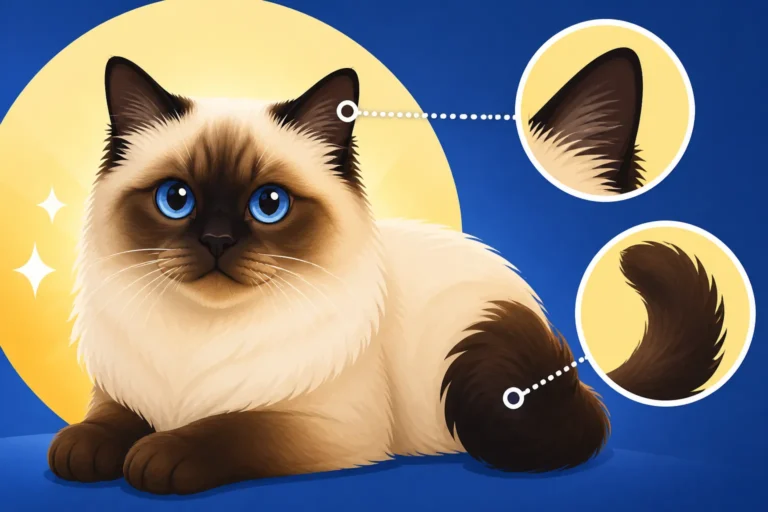
The Himalayan cat, with its stunning color points and placid demeanor, inherits its magnificent long coat primarily from its Persian ancestry. This isn't just a single layer of fur; it's a dense, flowing double coat, often described as having a fine, silky outer layer over a thick, cottony undercoat. Imagine trying to comb through a cloud – that's often what it feels like! This luxurious coat is designed to be stunning, but it's also a magnet for mats.
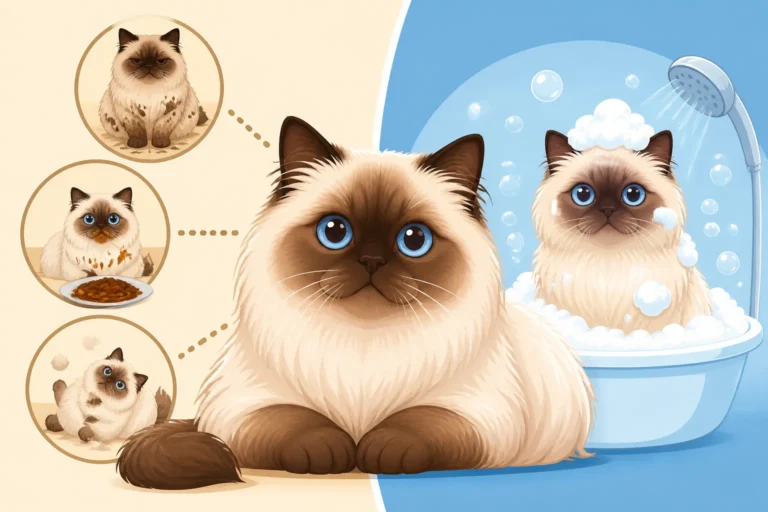
Mats form when loose fur, shed hair, and debris become interwoven and tightly packed. In a Himalayan, this happens incredibly fast, sometimes within a day or two if neglected. These aren't just cosmetic issues; mats can be incredibly painful. They pull on the skin, restricting movement, and can even cause skin infections underneath due to trapped moisture and lack of air circulation. If a mat gets too severe, it can only be removed by shaving, often requiring sedation at the vet, which is stressful and expensive. This is why understanding What a Himalayan's Coat Should Feel Like in the Ring is important for maintenance, even if your cat isn't a show cat.
Starting early conditions your kitten to accept this necessary handling as a normal part of its day, before its coat becomes too challenging and before it develops an aversion to the comb. It teaches them that grooming means comfort, not pain or fear.
Laying the Foundation: Beyond Just the Coat
Beyond the physical necessity, early grooming is a profound lesson in trust and boundaries for your Himalayan kitten. Kittens are highly impressionable, and their early experiences shape their adult behavior. If their first encounters with a comb are gentle, positive, and paired with rewards, they'll grow to tolerate – and perhaps even enjoy – the process. This is especially vital for a breed known for its calm, affectionate nature, as you want to foster that bond, not create a point of contention.
Think of it as behavioral conditioning. You're teaching your kitten that humans are gentle, that handling is safe, and that even slightly uncomfortable experiences (like working out a tiny snag) will be followed by something pleasant. Without this early training, an adult Himalayan, already set in its ways, will likely fight the comb tooth and nail, turning grooming into a battle that neither of you will win. This early foundation also helps with other routine care, such as Getting a Himalayan Kitten Used to the Comb, making vet visits and other necessary handling much easier throughout their The Nine to Fifteen Years a Himalayan Usually Gets.
Assembling Your Grooming Arsenal and Starting the Process
Before you even bring that adorable kitten home, you should have your grooming tools ready. Just like preparing a nursery, a dedicated grooming kit is essential for a Himalayan.
Selecting the Right Tools for a Delicate Kitten Coat
When it comes to Himalayan grooming, not all tools are created equal. Forget the flimsy plastic brushes you might find at a general pet store; your Himalayan's coat demands serious consideration.
First and foremost, you need a high-quality metal comb. Look for one with both wide and fine teeth. The wide-toothed side is excellent for initially separating the fur and working through larger sections, while the finer side helps catch smaller tangles and remove loose undercoat. Many professional groomers swear by a durable stainless steel "greyhound" comb. You can often find excellent options on platforms like Amazon or dedicated pet supply sites like Chewy.
Next, consider a flea comb. While its primary purpose is flea detection, the very fine teeth are surprisingly effective for gently cleaning the delicate fur around your kitten's face, especially to manage Why a Himalayan's Tears Run Onto Its Ruff and prevent tear staining from becoming entrenched.
What to avoid? Slicker brushes, while popular for some long-haired breeds, can be too harsh for a Himalayan's fine undercoat if not used with extreme care, and they often just glide over the top, missing the crucial undercoat where mats form. Also, steer clear of rubber grooming mitts for the primary combing; they're great for a quick surface de-shed on a shorthair, but they won't penetrate the dense Himalayan coat effectively. You need tools that reach through the entire coat, right down to the skin, without scratching or pulling.
Here's a quick guide to kitten grooming tools:
| Tool Type | Purpose | Why it's Essential | Where to Find It |
|---|---|---|---|
| Metal Comb | Detangling, removing loose fur, reaching undercoat | Penetrates dense fur, less static than plastic | Amazon, Chewy |
| Flea Comb | Face grooming, fine detangling, tear stain management | Gentle for delicate areas, good for early tear stain clean | Pet stores, Chewy, Amazon |
| Grooming Wipes | Daily face cleaning, managing tear stains | Quick, easy, less messy than water for daily touch-ups | Pet stores, Amazon |
| High-Value Treats | Positive reinforcement, distraction | Critical for making grooming enjoyable | Pet stores, online retailers |
| Non-Slip Mat | Provides stability for the kitten during grooming | Prevents slips, creates a consistent grooming surface | Any home goods store, Amazon |
Gentle Introductions: The "Pet and Comb" Method
The key to success is patience and positive association. Start when your kitten is calm, perhaps after a nap or a play session.
- Scent Introduction (Day 1-2): Before even touching your kitten with the comb, let them sniff it. Place it on the floor for them to explore. You can even rub the comb on your hands or a favorite blanket so it picks up familiar scents. The goal is to make the comb a neutral, non-threatening object.
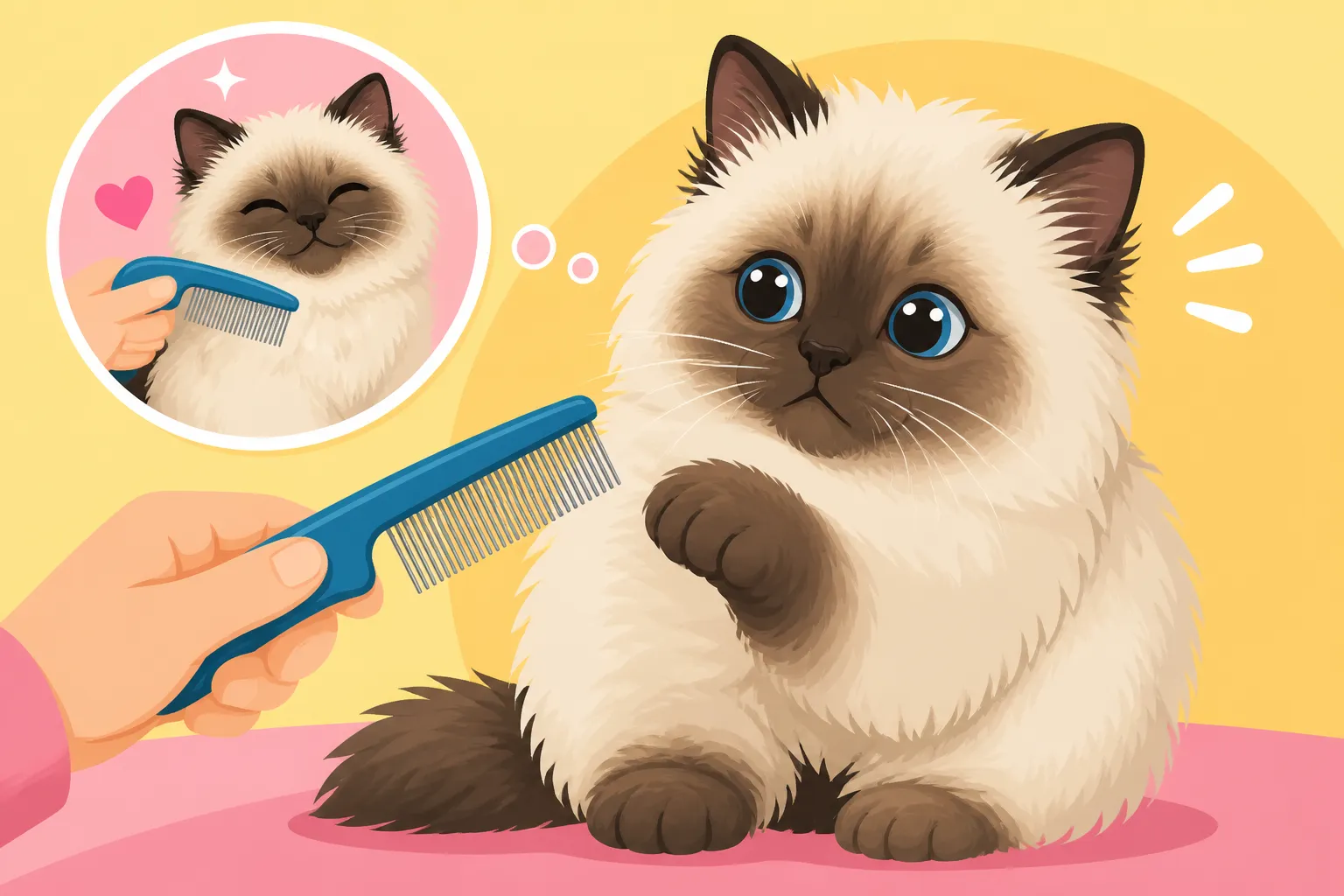
- The Gentle Touch (Day 3-5): Begin by petting your kitten as usual. While you're petting, gently bring the comb near them, letting it lightly touch their fur for a second, then immediately remove it. Praise them softly and offer a small, high-value treat. Repeat this a few times, keeping sessions very short – literally 30 seconds. Don't try to comb yet, just associate the comb with your gentle touch and a reward.
- The First Strokes (Week 1): Once your kitten is comfortable with the comb touching them, try a single, gentle stroke with the wide-toothed side of the comb. Start on an easy-to-reach area, like their back or shoulder, where mats are less likely to form first. Avoid sensitive areas like the belly, armpits, or britches initially. The moment the comb touches, then lifts, offer immediate praise and a treat. If your kitten seems unsettled, stop. The goal is success, however small. Gradually increase to two or three strokes per session.
- Gradual Increase (Weeks 2-4): Over the next few weeks, slowly increase the duration and number of strokes. Aim for just a minute or two at a time. Work your way around their body, paying close attention to their reaction. Always keep it positive. If you encounter a tiny snag, gently try to work it out with your fingers first, or use just the tip of the wide-toothed comb very carefully. Never yank. If it's too much, stop, distract, and try again later. It's better to end on a positive note than to force the issue and create a negative association. Remember that Combing the Points an Old Himalayan No Longer Reaches will become a bigger task, so starting early is vital.
- Focus on Matting Zones: As your kitten becomes more accustomed, you'll need to focus on those tricky areas where mats love to hide: under the armpits, behind the ears, on the tummy, and around the “britches” (the long fur on their hindquarters). These areas require extra patience and a very light touch. Always comb in the direction of hair growth. For the britches, you might find that a trim is eventually necessary, but the comb is your first line of defense.
Consistency is paramount. Even if it’s just 30 seconds every day, stick to it. Little and often beats long, traumatic sessions.
Overcoming Challenges and Building a Lifelong Routine
It won't always be smooth sailing. There will be days your kitten isn't in the mood, or you might hit a stubborn snag. Knowing how to navigate these moments is crucial for long-term success.
When Your Kitten Pushes Back: Handling Resistance
Let's be realistic: not every kitten will be a perfect, purring angel during grooming. You might encounter wriggling, nipping, or even a sudden burst of energy. This isn't your kitten being "bad"; it's often a sign of discomfort, fear, or simply an overload of stimulation.
If your kitten starts to resist aggressively (biting, scratching, or struggling violently), stop immediately. Pushing through will only solidify their negative association with grooming. Take a break. Re-evaluate. Could the comb be pulling too much? Is the session too long? Are you trying to groom them when they're already playful or tired?
Here are some strategies for resistance:
- Identify the Trigger: Is it a specific spot you're trying to comb? Is it the sound of the comb? The length of the session?
- Shorten Sessions Drastically: If you've been trying for two minutes, cut it back to 30 seconds, or even 10 seconds. Focus on just one or two strokes, then reward heavily.
- Change the Environment: Is there too much noise or activity around? Try a quiet room where both of you can focus. A non-slip mat on a table or counter can also help, as it elevates the cat and makes you feel more in control, and them less likely to bolt.
- Increase Reward Value: If kibble isn't cutting it, try soft, meaty treats or a dab of lickable paste. Think of what your kitten absolutely adores.
- Desensitization: If the comb itself is the issue, go back to square one. Let them investigate it, rub it on their face, and reward. Then reintroduce the gentle touch.
- Consult a Vet or Professional Groomer: If resistance is severe and you're struggling to make progress, don't hesitate to seek professional advice. A vet can rule out any underlying pain or skin issues, and a groomer can offer hands-on tips and techniques specific to your kitten. Sometimes, just a few sessions with a professional can help them understand the process is safe, and give you valuable insights. This professional guidance can sometimes make all the difference, preventing a situation where Why a Matted Himalayan Ends Up Clipped Under Sedation.
Remember, never punish your kitten for resisting. It will only make them fear you and the grooming process even more. Patience, understanding, and positive reinforcement are your greatest allies.
Making Grooming a Non-Negotiable Daily Ritual
Once your Himalayan kitten has accepted the comb, the next step is to solidify this into a daily ritual. Consistency is truly the backbone of successful Himalayan grooming.
- Fixed Time, Fixed Place: Cats thrive on routine. Try to groom your kitten at the same time every day, and in the same quiet location. This could be first thing in the morning, or perhaps in the evening when you're relaxing. When they know what to expect, they're less likely to resist.
- Integrate with Other Routines: Pair grooming with something your kitten already enjoys. Maybe a short play session afterward, or right before their favorite meal. The goal is to make it a seamless, expected part of their day.
- End on a High Note: Always try to end the grooming session with praise, a treat, and perhaps a cuddle. Even if you only managed a few strokes, finish positively. This reinforces that grooming is a pleasant experience.
- Regularity is Key: Even if you think your kitten's coat looks fine, commit to a daily comb. Prevention is infinitely easier than trying to detangle mats. A quick five-minute comb today prevents a thirty-minute struggle tomorrow, and helps with How Long a Himalayan's Daily Comb Takes in the long run.
- Observational Learning: Your Himalayan is intelligent and observant. They will quickly learn that this daily ritual is simply "what we do." Over time, they may even come to anticipate it, sometimes even nudging you toward their grooming spot. This kind of consistency is part of Why a Himalayan Runs on Its Own Timetable, but it also means they adapt to your timetable when it's consistent.
By diligently following these steps, you're not just combing a coat; you're building a routine that ensures your Himalayan remains comfortable, healthy, and happy throughout its life.
Long-Term Benefits and What to Expect as They Grow
Investing this time and effort in your Himalayan kitten's early grooming pays dividends that last a lifetime. You're setting them up for a future of good health and a strong bond with you.
The Lifetime Payoff of Early Training
The immediate payoff of consistent early grooming is a kitten who isn't terrified of the comb. But the long-term benefits are truly profound. Imagine an adult Himalayan who calmly lays on your lap, purring softly, as you comb through its magnificent coat. This isn't a fantasy; it's the reality for owners who invested in early, positive conditioning.
- Reduced Stress for Everyone: No more wrestling matches, no more hidden mats discovered too late. Grooming becomes a peaceful, bonding activity rather than a source of stress for both you and your cat.
- Better Coat Health: Regular combing prevents mats from forming, distributes natural skin oils, and helps you identify any skin issues, parasites, or lumps early on. Your Himalayan's coat will remain soft, flowing, and free of painful tangles. This also helps you observe How Tear Staining Marks a Himalayan's Pale Body Coat and take proactive measures.
- Fewer Vet Visits for Mat Removal: Sedated mat removal is not only costly but also carries risks, especially for a flat-faced breed like the Himalayan whose Why a Himalayan Is a Harder Anesthetic Than a Siamese. A well-groomed cat rarely needs this invasive procedure.
- Stronger Bond: The gentle physical contact of daily grooming strengthens the bond between you and your Himalayan. It's a quiet time of mutual trust and affection, solidifying their role as a cherished family member. This is a cat that is truly The Himalayan Is a Lap Cat That Answers Back, and grooming offers another form of conversation.
This early training translates into a happier, healthier cat and a more harmonious household for years to come.
Adapting the Routine as Your Himalayan Matures
As your Himalayan kitten grows into an adult, their coat will continue to develop, often becoming denser and longer. How Long a Himalayan's Coat Actually Grows can vary, but generally, it reaches its full glory around two to three years of age. This means your grooming routine will need to adapt.
What might have been a quick five-minute comb as a kitten could easily become a 15-20 minute daily session for a mature adult, especially during shedding seasons. You might find you need to spend more time on specific areas that become prone to matting as they age, such as their "armpits" and "britches," or around their ruff. Why a Himalayan's Armpits Mat Before Anywhere Else is a common challenge.
The good news is that if you've established those strong, positive habits during kittenhood, adapting to a longer routine will be much easier. Your cat will already associate the comb with comfort and rewards, making them more tolerant of the increased duration. You'll likely develop a keen eye for nascent tangles and know exactly where to focus your efforts. You might even find yourself reaching for a specialized deshedding tool a couple of times a week during heavier shedding periods, though a good metal comb remains the staple.
Even as they get older, the daily routine remains the golden rule. Remember, What Fifteen Years of a Himalayan's Coat and Face Costs is a long-term commitment, but a truly rewarding one when your cat is well-cared for. Continue to use high-value treats and praise, and always be mindful of your cat's comfort. An old Himalayan may also need some adjustments, particularly if When an Old Himalayan Can No Longer Reach Its Back and cannot groom itself as effectively.
By starting early, being consistent, and adapting as your beautiful Himalayan grows, you’re ensuring a lifetime of comfort and good health for your beloved companion, strengthening the incredible bond you share.
Disclaimer
This article is for general informational purposes only and does not constitute professional advice. Laws, prices and regulations vary by location and change over time. Consult a qualified professional for guidance on your specific situation.