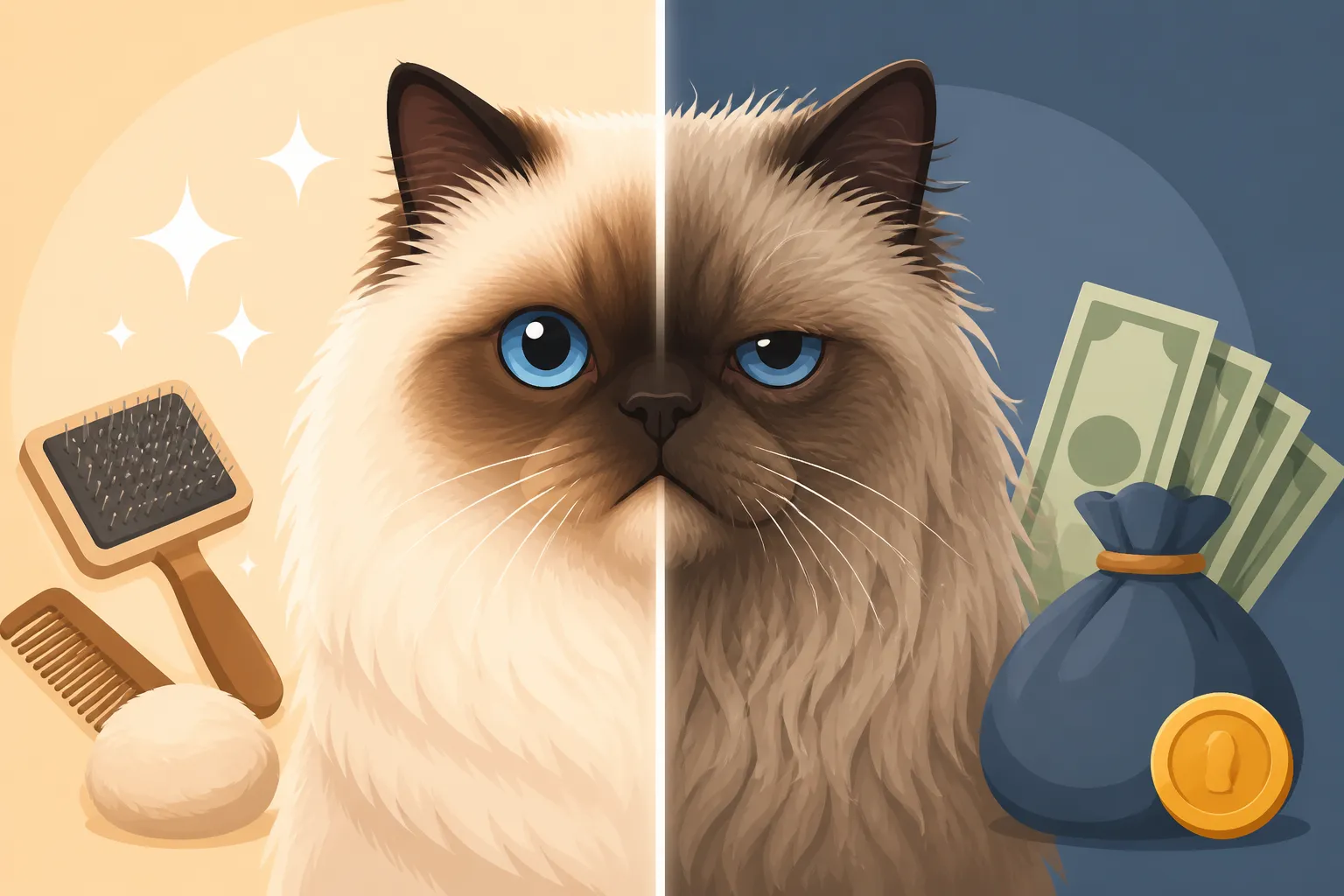
What Fifteen Years of a Himalayan’s Coat and Face Costs
Bringing a gorgeous Himalayan cat into your life is an absolute joy, but many prospective owners don't fully grasp the significant, long-term financial commitment involved, especially when it comes to their truly unique coat and facial features. This isn't just about a cute fluff ball; it's about understanding the fifteen-year journey of dedicated care that these special felines require, ensuring they live their healthiest, happiest lives, and what that journey actually costs.
The Initial Investment: Beyond the Purchase Price
When you first start dreaming of a fluffy, blue-eyed Himalayan joining your family, it’s easy to get caught up in the initial adoption or purchase fee. But I've seen countless times how quickly those initial costs are dwarfed by the ongoing needs, particularly for a breed with such specific grooming and health considerations right from day one. Thinking ahead to the first few months is crucial, as this sets the stage for the next decade and a half.
The Cost of a Well-Bred Himalayan: An Investment in Health
Let's be honest, you might find Himalayans advertised at a range of prices. It can be incredibly tempting to go for the lower-priced kitten, especially if you're on a budget. However, I cannot stress this enough: the "cheap" kitten often comes with the most expensive problems down the line. A reputable breeder invests heavily in the health of their breeding cats, which directly impacts the health of your future kitten.
They perform crucial genetic tests for inherited diseases common in Himalayans and Persians, like Polycystic Kidney Disease (PKD) and progressive retinal atrophy. These tests, along with proper vet care for the breeding cats and kittens, vaccinations, and quality nutrition, add to the initial price tag. But here’s the kicker: paying a little more upfront for a kitten from tested lines can literally save you thousands of dollars in vet bills and heartache over the animal's lifetime. Imagine the relief of knowing your cat's parents were clear of genetic predispositions, reducing the risk of you having to face the emotional and financial strain of chronic illness later. For more on this, consider reading What a Himalayan From a Tested Persian Line Costs.
Initial Supplies and Vet Visits
Beyond the purchase price, that first homecoming is going to involve a shopping spree. And for a Himalayan, some of these items are non-negotiable and specific to their needs. You’ll need a sturdy, well-ventilated carrier – crucial for a flat-faced cat who can overheat easily. Think about a carrier with ample airflow, not just a tiny box. Then there are food and water bowls, and for a Himalayan, not just any bowl will do. Their flattened faces mean they often struggle with deep, narrow bowls, pushing food out or getting their delicate ruffs wet. You'll likely need shallow, wide dishes or even elevated bowls.
Of course, there’s also the litter box situation. A low-sided box is often best because their shorter legs might make getting into a tall box difficult, especially as they age. And then, that all-important first vet visit. Even if your kitten comes with a clean bill of health and initial vaccinations, a thorough check-up with your own vet is a must. This first visit is essential for establishing a baseline, getting them microchipped, and discussing a preventative health plan tailored to their unique breed needs. This initial outlay might feel significant, but it's all part of building a solid foundation for a healthy, happy life.
The Daily Grooming Routine: A Time and Financial Commitment
If you've never owned a long-haired cat, let alone a Himalayan, prepare yourself for a daily ritual that is both bonding and absolutely essential. Their glorious, flowing coats and expressive, often watery, eyes are their most striking features, but they also demand constant attention. Skimping here isn't an option; it's a direct path to mats, skin issues, and costly vet visits.
The Ever-Present Comb: The Essential Daily Ritual
The Himalayan's coat is a thing of beauty, a magnificent double layer of soft, silky fur that can grow incredibly long. But this luxurious coat is also a mat magnet. Unlike some other long-haired breeds, the Persian side of their heritage means their fur is particularly prone to tangling, especially around the "britches" (the long fur on their hind legs), under their armpits, and, of course, that magnificent ruff.
You simply cannot skip a day of combing. I've had owners tell me they thought "once a week" would be enough, only to find themselves frantically trying to untangle painful mats a few days later. A good quality, wide-toothed metal comb and a finer comb for finishing are your best friends. You'll spend anywhere from 15 to 30 minutes every single day gently working through their fur, section by section. This daily commitment not only keeps their coat beautiful and mat-free but also serves as an invaluable bonding experience. It allows you to check for any skin issues, bumps, or parasites that might be hiding beneath that dense fur. Think of it less as a chore and more as a daily spa treatment for your feline companion, saving you from much more expensive and traumatic professional grooming sessions later on. For tips on how to manage this, you might find How Often a Himalayan Must Be Combed helpful.
Managing Tear Stains and Nose Folds
Those beautiful, large blue eyes are another hallmark of the Himalayan, but they often come with a trade-off: tear staining. Due to their brachycephalic (flat) facial structure, their tear ducts can be compressed or angled in such a way that tears don't drain properly into the nasal passage. Instead, they overflow onto the fur around their eyes, leading to those tell-tale rust-colored or brown streaks. This isn't just a cosmetic issue; if left damp, the skin under these tears can become irritated, leading to painful dermatitis or yeast infections. For more on this, see Why a Himalayan's Eyes Water All Day.
Your daily routine, in addition to combing, will need to include gentle face wiping. You’ll need soft, lint-free cloths or cotton pads, and a vet-approved tear stain remover or just plain warm water. This isn't a one-and-done solution; it's a continuous effort to keep the area clean and dry. Some Himalayans also have pronounced nose folds where moisture and debris can accumulate, requiring careful cleaning with a soft swab or wipe to prevent irritation and infection. These supplies, while not exorbitant individually, add up over fifteen years.
The Occasional Bath and Professional Grooming
While daily combing is your frontline defense, there will be times when a full bath is necessary. Perhaps your Himalayan managed to get into something sticky, or their coat simply needs a deep clean to prevent oil buildup and dander. Bathing a Himalayan is not for the faint of heart! It's a lengthy process involving careful wetting, thorough shampooing (using a cat-specific, preferably hypoallergenic shampoo), and even more meticulous drying. Improper drying can lead to matting and skin issues, making a professional blow-dry often necessary.
Some owners, despite their best efforts, find that professional grooming is a necessity, whether it's for a full bath and blow-dry, or a "lion cut" to help manage severe matting or keep them cooler in warmer months. These professional services can be quite costly, often ranging significantly per session depending on the groomer's experience and your cat's temperament and coat condition. Even a regular trimming of their "britches" and paw tufts to prevent litter and debris from sticking can be a professional job if you're not comfortable doing it yourself. So, while you might not need a groomer every month, these occasional expenses are definitely part of the long-term financial picture. It's often debated, but Whether a Himalayan Should Be Lion Cut in Summer can offer more insights into this specific grooming choice.
Specialized Nutritional Needs for a Flat-Faced Feline
Feeding a Himalayan isn't just about pouring kibble into a bowl. Their unique facial structure has a direct impact on how they eat, what they can eat, and even how much they should eat. Understanding these nuances is key to their long-term health and, of course, factors into your overall costs.
Bowl Choices and Eating Habits
Imagine trying to eat dinner with your nose pressed flat against the plate – that's often what it's like for a Himalayan with a traditional deep bowl. Their shortened muzzles mean they struggle to get kibble or wet food into their mouths without pushing it around, getting it stuck on their face, or even spilling it. This isn't just messy; it can lead to frustration and even a reluctance to eat enough.
That's why specialized bowls are so important. Wide, shallow dishes made of ceramic or stainless steel (to prevent chin acne) are often recommended. Even better are elevated bowls that allow them to eat without bending their necks too much, which can be more comfortable for their breathing. Some Himalayans even prefer to scoop food out with their paws, so a feeder designed to accommodate this habit can be helpful. While these bowls might be a bit pricier than your average pet store variety, they prevent waste (less spilled food!) and ensure your cat is eating comfortably and efficiently. Companies like Chewy offer a wide selection of specialized bowls that cater to brachycephalic breeds, making it easier to find the perfect fit.
Diet Considerations for Coat Health and Weight Management
Beyond the mechanics of eating, the actual food you choose for your Himalayan matters immensely. Their magnificent coats require high-quality nutrition to remain healthy, shiny, and less prone to matting. Look for cat foods with excellent protein sources and healthy fats, particularly omega-3 and omega-6 fatty acids, which contribute to skin and coat health. A diet rich in these nutrients can literally make a difference in the manageability of their fur.
Furthermore, Himalayans are not typically highly active cats. They often prefer lounging in a favorite sunbeam or on a cozy lap to scaling cat trees. This lower activity level, combined with their sturdy, “cobby” body type, means they can be prone to weight gain. An overweight Himalayan struggles even more with grooming their extensive coat, leading to mats and potential skin infections, and puts extra strain on their joints and respiratory system. Portion control and a carefully selected diet become incredibly important. A high-quality diet can support both coat health and a healthy weight, though premium options often come at a higher price point. Investing in good quality food now can prevent a host of health problems and associated vet costs in the future. For instance, Why a Cobby Himalayan Gains on a Portion Another Cat Burns highlights this common issue.
Lifelong Veterinary Care: Proactive Health for Unique Features
Owning a Himalayan means committing to proactive veterinary care that specifically addresses the predispositions of their breed. Their distinctive features, while adorable, come with a specific set of potential health challenges that require vigilance and sometimes, specialized medical interventions over their fifteen-year lifespan.
Respiratory and Eye Care: Ongoing Concerns
The very thing that gives a Himalayan its endearing "flat face"—brachycephaly—also puts them at a higher risk for Brachycephalic Airway Syndrome (BAS). This isn't a single condition but a combination of anatomical abnormalities, such as narrowed nostrils (stenotic nares), an elongated soft palate, or a hypoplastic trachea (small windpipe), that obstruct airflow. While some Himalayans breathe relatively easily, others can struggle, leading to snoring, noisy breathing, and an inability to tolerate heat or strenuous play. Regular vet check-ups are essential to monitor their breathing, especially as they age or if they gain weight. In some cases, surgical correction, such as nostril widening (Whether Widening a Himalayan's Nostrils Helps), might be recommended to improve their quality of life, which, as you can imagine, is a significant expense.
Their large, round, often prominent eyes are also prone to various issues. Beyond the tear staining we discussed, Himalayans can be more susceptible to conditions like entropion, where the eyelid rolls inward, causing eyelashes to rub against the cornea and leading to irritation, pain, and potentially ulcers. Regular eye exams by your vet are crucial, and sometimes, surgical correction is needed to prevent permanent damage or discomfort. The delicate nature of their eyes also makes them more vulnerable to injury, meaning any sudden squinting or discharge warrants an immediate vet visit. What Entropion Does to a Himalayan's Blue Eye provides a deeper look into this specific condition.
Dental Health for Crowded Jaws
Another consequence of that charming flat face is a significantly shortened jaw. While the skull size has decreased, the number of teeth has not, leading to a severely crowded mouth. This crowding creates prime hiding spots for food particles and bacteria, making Himalayans particularly susceptible to dental disease, including gingivitis, periodontitis, and even tooth resorption. You might notice their lower canines jutting out, a common sign of this crowding.
Regular dental care, both at home and professionally, is paramount. Daily tooth brushing, while challenging with a flat-faced cat, is the gold standard. However, even with diligent home care, professional dental cleanings under anesthesia are often required more frequently for Himalayans than for many other breeds. These cleanings involve scaling, polishing, and sometimes extractions of diseased teeth. The costs associated with these procedures can be substantial, especially if multiple extractions are needed. Over fifteen years, these dental expenses will be a recurring, essential part of your Himalayan's health budget. Why a Himalayan Needs Dentals Earlier Than a Siamese offers valuable context on this issue.
Managing Polycystic Kidney Disease (PKD) and Retinal Atrophy
While not directly related to their coat or face, it's impossible to discuss the long-term costs and care of a Himalayan without addressing two significant hereditary health concerns that stem from their Persian lineage: Polycystic Kidney Disease (PKD) and Progressive Retinal Atrophy (PRA). Reputable breeders will always screen for these conditions, and it's something you, as an owner, need to be aware of and prepared for.
PKD is a genetic disease that causes fluid-filled cysts to develop in the kidneys, progressively impairing kidney function over time. If you've chosen a kitten from untested lines, or even if your cat is from tested parents but still carries a risk, regular veterinary screenings, including kidney ultrasounds and blood work, become a vital part of their health monitoring, typically starting around five to seven years of age. Managing PKD often involves special renal diets, medications, and supportive care, all of which incur ongoing costs. For more information, you can read Living With a Himalayan That Inherited the Persian Kidney Gene.
Progressive Retinal Atrophy (PRA) is another inherited condition that causes the cells in the retina to degenerate, leading to blindness, usually by the age of five. Again, genetic testing of breeding cats has significantly reduced the incidence of this, but awareness is key. If a Himalayan begins to lose its sight, adapting your home and providing extra care can involve some adjustments, though the direct financial cost is less about treatment and more about proactive management and adapting their environment. Being prepared for these possibilities, even if your cat comes from clear lines, is part of responsible Himalayan ownership. The good news is, for many of these hereditary conditions, early testing of parents can prevent them from occurring in your kitten.
Insurance and Emergency Funds: Planning for the Unexpected
Even with the best breeding, diligent daily care, and regular vet check-ups, life happens. Accidents can occur, or unexpected illnesses can arise, leading to sudden and often substantial veterinary bills. For a breed with specific health predispositions like the Himalayan, planning for these contingencies is not just smart; it's essential for ensuring you can always provide the best care without financial stress.
Pet Insurance: A Smart Investment for Himalayans
Pet insurance can be an absolute lifesaver for Himalayan owners. Given their propensity for certain breed-specific health issues, from respiratory challenges to dental problems and the possibility of kidney disease or eye conditions, a comprehensive pet insurance policy can help offset the costs of diagnostics, treatments, and even emergency surgeries. When choosing a policy, it's crucial to understand what it covers, especially regarding pre-existing conditions and breed-specific ailments. Some policies might have exclusions or higher premiums for brachycephalic breeds due to their higher risk profile for respiratory issues.
Companies like Healthy Paws are often highly rated for their comprehensive coverage, but it's vital to do your research, compare plans, and read the fine print. Start looking into insurance when your Himalayan is a kitten, before any potential health issues develop, as most policies won't cover pre-existing conditions. While it's an ongoing monthly or annual expense, the peace of mind it offers, knowing you can say "yes" to necessary treatment without crippling financial worry, is truly invaluable over a fifteen-year period. You might want to consider Why to Insure a Himalayan Before Its First Kidney Scan.
Building an Emergency Vet Fund
Even with pet insurance, there are often deductibles, co-pays, and limits to coverage. That's where an emergency vet fund comes in. Think of it as a dedicated savings account specifically for those "just in case" moments that aren't fully covered by insurance or arise before your deductible is met. This fund can cover anything from an unexpected foreign object ingestion to a sudden severe illness that requires immediate, expensive diagnostics or hospitalization.
The beauty of an emergency fund is that it gives you immediate access to funds without waiting for insurance claims to process or having to make difficult financial decisions during a stressful time. Start contributing a small, regular amount each month, and let it grow. Over fifteen years, having this financial cushion can make all the difference in providing prompt, comprehensive care for your beloved Himalayan. It removes the added layer of stress when your focus should be entirely on your cat's well-being.
The Cumulative Cost Over Fifteen Years: Adding It All Up
It’s easy to look at the individual costs—a bag of food here, a grooming tool there, a vet visit occasionally—and not fully grasp the cumulative financial impact over a Himalayan's typical nine to fifteen-year lifespan. But when you add up all the daily, monthly, and annual expenses specifically driven by their unique coat and face, the total commitment becomes clear.
Annual Breakdown of Core Expenses
Let's break down some of the recurring expenses you can realistically expect. Remember, these are estimates, and costs vary significantly by location, specific products chosen, and individual veterinary needs.
| Category | Estimated Annual Cost (Low Range) | Estimated Annual Cost (High Range) | Notes |
|---|---|---|---|
| Grooming Supplies | $50 | $150 | Combs, brushes, eye wipes, tear stain remover, shampoo. |
| Professional Grooming | $0 | $400+ | If you handle all grooming; otherwise, 1-2 professional baths/lion cuts annually. |
| Food | $300 | $800+ | High-quality kibble or wet food; specialized diets will be higher. |
| Litter & Supplies | $150 | $300 | Low-dust, clumping litter; specialized litter boxes. |
| Routine Vet Care | $200 | $500 | Annual check-ups, vaccinations, parasite prevention. |
| Dental Care | $0 | $1000+ | Varies greatly; may include regular professional cleanings under anesthesia. |
| Eye/Respiratory Care | $0 | $500+ | If no issues; higher if specialized drops, diagnostics, or surgery needed. |
| Pet Insurance | $300 | $800 | Varies by age, coverage level, and provider (e.g., Healthy Paws). |
| Miscellaneous | $50 | $200 | Toys, beds, treats, new bowls, emergency fund contributions. |
| TOTAL ANNUAL | $1050 | $4650+ | Total for 15 years could range from $15,750 to over $69,750 based on these estimates and individual needs. |
These figures don't even account for major unexpected surgeries, chronic disease management (like advanced PKD or diabetes if it develops), or emergency care that could easily run into thousands of dollars in a single incident. The reality is that the higher end of these estimates, or even exceeding them, is not uncommon for a cat living a full fifteen years, especially when their breed-specific needs are taken into account. It certainly gives you a sense of What a Himalayan Costs From Kitten to Fifteen.
The Emotional Return on Investment
Reading through these costs might feel daunting, and it's certainly a realistic picture of the financial commitment involved. But let's be clear: for those of us who have shared our lives with a Himalayan, the monetary cost, while significant, pales in comparison to the immense emotional return on investment.
These cats are truly special companions. They are often described as "lap cats that answer back," blending the placid, affectionate nature of the Persian with a touch of the vocal, interactive personality of the Siamese. They are devoted, gentle, and utterly charming, bringing a quiet joy and serene presence to a home. Their soft purrs and soulful blue eyes are a daily source of comfort and happiness. The bond you form through those daily grooming sessions, the quiet evenings spent together, and the unconditional love they offer is something that simply cannot be quantified in dollars and cents.
The costs we've discussed are simply the price of ensuring these magnificent creatures live a comfortable, healthy, and long life by your side. It’s an investment in their well-being, which in turn, contributes to your own happiness and the richness of your life. While the coat and face of a Himalayan demand unique financial and time considerations, the reward is a loyal, loving companion whose presence makes every penny worth it.
Disclaimer
This article is for general informational purposes only and does not constitute professional advice. Laws, prices and regulations vary by location and change over time. Consult a qualified professional for guidance on your specific situation.