Working a Mat Out From Under a Himalayan’s Points
Oh, the dread of finding a mat in your beautiful Himalayan's coat! It's a scenario every Himalayan owner eventually faces, and it can feel like a Herculean task, especially when those tangles seem to appear out of nowhere, deep within that luxurious fur. This isn't just a cosmetic issue; mats can be incredibly uncomfortable, even painful, for your beloved cat, leading to skin irritation and worse. This guide is here to walk you through exactly how to safely and gently work those stubborn mats out from under your Himalayan's delicate points, helping you maintain their comfort and stunning appearance.
Understanding Himalayan Mats: Why They Form and Where
Let's be honest, that gorgeous, flowing coat is a double-edged sword, isn't it? We adore its beauty, but we also know the constant battle against tangles and mats that comes with it. Understanding why mats form and where they typically hide is the first step in winning this grooming war.
The Inescapable Double Coat: Undercoat, Guard Hairs, and the Static Trap
The Himalayan boasts a magnificent double coat, a characteristic inherited from its Persian ancestry. This isn't just one layer of fur; it's actually two distinct types working together. You have the soft, dense undercoat, which is fantastic for insulation but terribly prone to tangling. Then, there are the longer, coarser guard hairs that protect the undercoat and give the coat its glossy finish.
The problem starts when shedding undercoat gets trapped within the guard hairs, especially when it's not removed through regular brushing. Add a bit of static electricity, common in drier indoor environments, and those loose hairs start to cling together, forming knots. Over time, if these knots aren't addressed, they tighten and compact, pulling at your cat's skin and creating those dreaded felt-like mats. It's a natural process, but one that requires vigilant intervention on our part.
Matting Hotspots: Where Trouble Usually Brews on a Himalayan
You'll quickly learn that mats don't just pop up randomly all over a Himalayan. There are specific "hotspots" where the combination of friction, movement, and fine fur makes matting almost inevitable without consistent care. These are the areas you need to pay extra attention to during your daily grooming sessions.
Think about where your cat lies, how they move, and where their fur rubs against itself or surfaces. The most common culprits include:
- Behind the Ears: This area sees a lot of friction from head movements and often gets missed during quick brushes.
- Under the Armpits (Axilla): Every time your cat walks, these areas rub, creating perfect conditions for mats. It's also a sensitive spot, so cats often resist grooming here.
- The "Britches" (Behind the Rear Legs): This is another high-friction zone, especially with sitting, jumping, and using the litter box. It’s also where things can get… messy.
- Under the Chin/Ruff: Food, water, and snuggling can easily cause tangles to form in the beautiful, dense ruff.
- The Belly: This area is often overlooked because cats dislike having their bellies touched, but mats here can quickly become large and painful.
- The Tail: While often not as severe as other areas, the tail can still accumulate small tangles, especially near the base.
Knowing these areas allows you to focus your efforts strategically. Catching small tangles in these hotspots early can save you a lot of headache later.
The Vicious Cycle: How Skipping a Day Turns into a Mat
It’s tempting to think, "Oh, I'll just skip the comb today, it'll be fine." But with a Himalayan, that mindset can quickly lead to trouble. Their dense undercoat and long guard hairs are designed to tangle. Each day you skip a thorough grooming session, you're allowing more shed hair to accumulate, more static to build, and existing small tangles to tighten.
Imagine a single strand of hair falling out. If you comb daily, it's easily removed. If you skip a day, ten strands fall out and mingle. Skip a week, and you have hundreds of shed hairs intertwined with the active coat, forming a dense, unyielding knot. What might have been a minor snag that a quick pass of the comb could handle now requires significant effort, patience, and potentially, professional intervention. This is why The Daily Comb a Himalayan Cannot Skip is not just a suggestion, but a crucial part of their care. A small knot ignored today will be a full-blown mat tomorrow, and as you'll see in Why a Missed Day Costs a Himalayan a Mat, the consequences can escalate rapidly.
Assembling Your Mat-Busting Kit: Essential Grooming Tools
You wouldn't try to bake a cake without the right ingredients, and you certainly shouldn't try to tackle Himalayan mats without the proper tools. Having the right arsenal at your disposal can make all the difference between a frustrating struggle and a successful, relatively stress-free grooming session.
The Indispensable Steel Comb: Your First Line of Defense
For a Himalayan, a high-quality steel comb isn't just a tool; it's an extension of your hand in the fight against mats. You'll want a comb with both wide and narrow teeth. The wider teeth are excellent for initial detangling and working through the bulk of the coat, while the narrower teeth are perfect for fine-tuning, getting closer to the skin, and breaking up smaller knots.
When selecting a comb, pay attention to the spacing and the smoothness of the teeth. Rough edges can pull and damage the coat, making the process unpleasant for your cat. A good comb should glide relatively smoothly through the fur, even when encountering minor resistance. Brands like those found on Chewy or Amazon often offer well-regarded steel combs specifically designed for long-haired breeds. Remember, this is about prevention as much as removal; a daily comb is far more effective than trying to untangle a dense mat later. For more details, you might want to read Which Steel Comb a Himalayan's Coat Needs.
Detangling Aids: Sprays, Powders, and Conditioners
Sometimes, a dry comb isn't enough, especially with a particularly stubborn tangle or a large area of matted fur. This is where detangling aids come into play.
- Detangling Sprays: These sprays often contain silicones or other conditioning agents that lubricate the hair, making it slippery and easier for knots to separate. Always choose a cat-specific, non-toxic formula. Spray a small amount directly onto the mat, work it in gently with your fingers, and let it sit for a minute or two before attempting to comb.
- Grooming Powders: Some owners find cornstarch or specialized grooming powders helpful for absorbing excess oil and adding a bit of "slip" to the coat, particularly around minor mats. Apply a tiny bit, work it in, and then gently comb. Be cautious not to use too much, as it can build up.
- Conditioners: For mats that are truly embedded, a wash-out conditioner (used during a rare bath, or as a localized spot treatment wiped off thoroughly) can sometimes soften the mat enough to make it workable. Again, ensure it's cat-safe and rinsed completely to avoid skin irritation.
Always introduce these products slowly and make sure your cat tolerates them well. A little goes a long way, and the goal is to aid removal, not to soak your cat's fur.
Cautionary Tales: When to Use Clippers and Scissors (and When Not To)
This is perhaps the most crucial section regarding mat removal, because improper use of sharp tools can lead to serious injury.
- Scissors: If you must use scissors, they should only be used for very superficial mats that are clearly separated from the skin. Always use blunt-nosed grooming scissors, and crucially, always slide a comb between the mat and the skin before you cut. This creates a barrier and helps prevent you from accidentally snipping skin. Never, ever cut into a mat blindly or without a guard. Even then, only snip into the mat, never across it, to break it into smaller, more manageable pieces you can then comb out.
- Clippers/Shavers: For tight, dense mats that are close to the skin, clippers are often the safest and most humane option. However, this is usually best left to a professional groomer or veterinarian, especially for a Himalayan's delicate, loose skin. Electric clippers can easily grab and cut skin, particularly around armpits, flanks, and the belly where the skin is very thin and mobile. If you choose to use clippers at home, always use a blade designed for pets (typically a #10 blade is safest for most situations) and ensure it's cool. Work slowly, pulling the skin taut above the mat, and always shave under the mat, parallel to the skin, never diving into it. Many owners find themselves in a situation where Why a Neglected Himalayan Ends Up Sedated for Clipping becomes the only solution, precisely because of the risks involved in home clipping.
| Tool Type | Best Use Case | Precautions |
|---|---|---|
| Steel Comb | Daily grooming, detangling small knots, finding mats | Use both wide/narrow teeth, gentle strokes |
| Detangling Spray | Softening small to medium mats, adding slip | Cat-safe formula, apply sparingly, work in before combing |
| Grooming Powder | Absorbing oils, adding slip to minor tangles | Use tiny amounts, brush out thoroughly |
| Blunt-Nosed Scissors | Breaking up very superficial mats, only with comb guard | NEVER cut blindly, always use comb as barrier, snip into mat |
| Electric Clippers | Dense, tight mats close to skin | #10 blade, keep cool, pull skin taut, best left to pros |
Gentle Mat Removal Techniques: Saving Your Himalayan's Coat (and Sanity)
Alright, you've got your tools, you know where to look, and you're ready to tackle those mats. Remember, patience is your greatest ally here. Hurrying will only stress your cat (and you!) and potentially cause pain.
Setting the Scene: Preparing for a Successful Session
Before you even think about touching a mat, set yourself up for success.
- Choose the Right Time: Pick a moment when your Himalayan is relaxed, perhaps after a nap or a meal. Avoid times when they're playful or agitated.
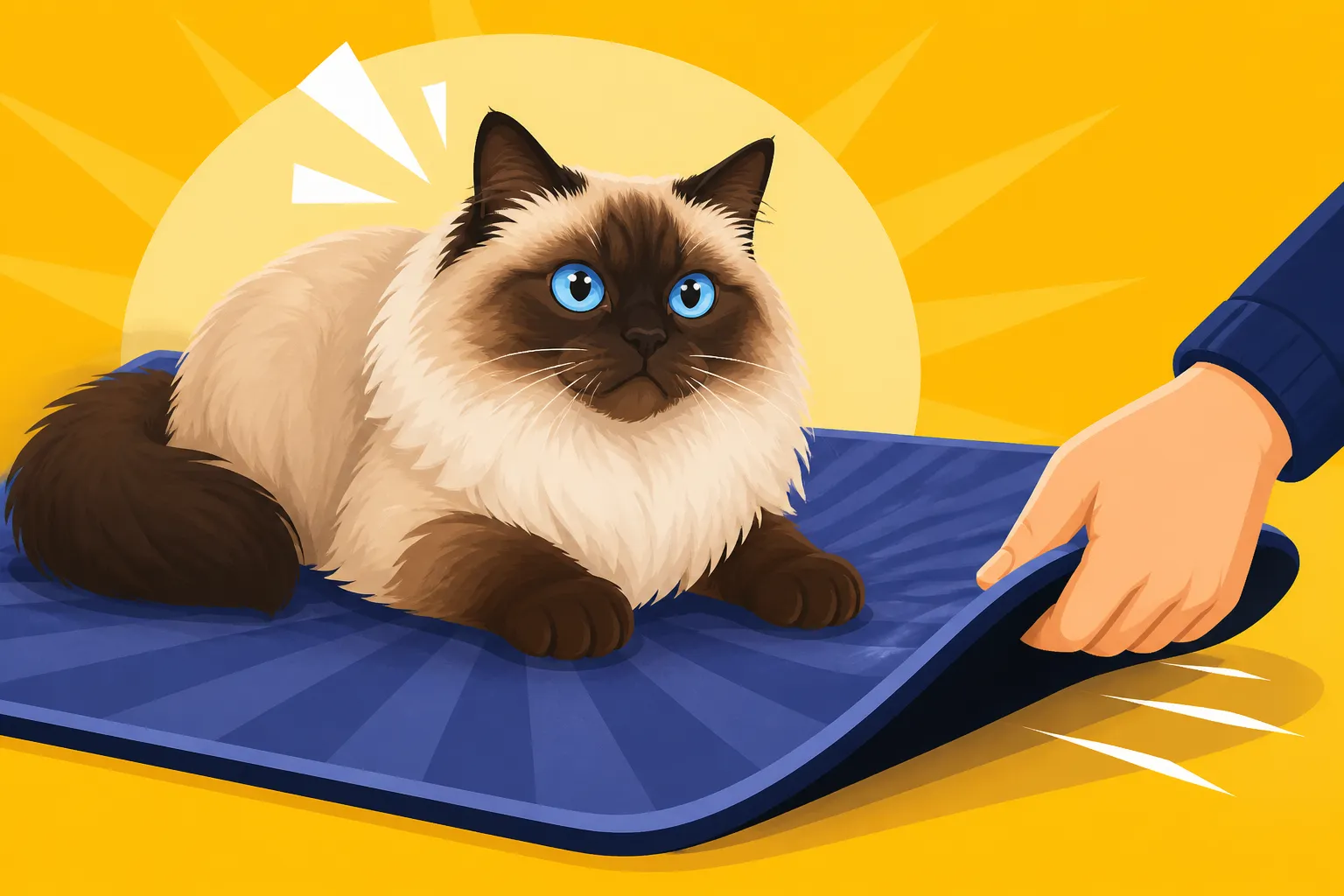
- Create a Calm Environment: Find a quiet room, free from distractions. A raised surface, like a grooming table or even a sturdy kitchen counter with a non-slip mat, can make it easier on your back and keep your cat more contained. Make sure the surface is comfortable for them too.
- Gather Your Supplies: Have your steel comb, detangling spray/powder, a few treats, and maybe a soft towel all within arm's reach. You don't want to be fumbling around mid-session.
- Positive Reinforcement: Keep treats handy! Every little step your cat tolerates deserves a reward. Associate grooming with positive experiences, even if it's just a small head scratch or a tasty bite.
Remember, a distressed cat is a squirming cat, and a squirming cat is much harder (and riskier) to groom. Your calm demeanor will go a long way in reassuring them.
Tackling Smaller, Surface Mats with Patience
For those smaller, less-dense tangles that aren't pulling at the skin, a comb and some patience are usually all you need.
- Isolate the Mat: Gently hold the fur at the base of the mat, close to the skin, with your fingers. This prevents the comb from pulling on the skin, which is what causes pain.
- Apply Detangling Aid (Optional): If the mat feels a bit sticky, a quick spritz of detangling spray can help. Work it into the mat with your fingers.
- Start at the Edge: Using the wide-toothed side of your steel comb, start at the very end of the mat, working only a few strands at a time. Do not try to pull the comb straight through the mat from the top. Instead, use a gentle "picking" motion, working from the outside edges of the mat inwards, and from the tip of the fur towards the skin.
- Work Slowly: As you loosen a few strands, move your fingers closer to the skin to maintain that protective barrier. Continue picking and gently combing, gradually breaking down the mat.
- Reward and Rest: If your cat gets antsy, give them a treat and a break. You don't have to get it all done in one go. Even getting half a mat out is progress! This gradual approach, as detailed in How Long a Himalayan's Daily Comb Takes, can prevent stress for both of you.
The Bigger Battle: Working Through Deep, Packed Mats
When you encounter those truly dense, skin-tight mats, it's a different game. This is where you need to be extra cautious.
- Assess the Mat: Is it truly felted against the skin? Can you clearly see where the mat ends and the skin begins? If not, or if the mat covers a large area, reconsider calling a professional. Working a Comb Through a Himalayan's Ruff can be challenging, but deep mats in the ruff are even tougher.
- Isolate and Protect: Again, pull the surrounding fur away and use your fingers to create a barrier between the mat and the skin. This is absolutely critical.
- Sectioning the Mat (With Caution): If you're using blunt-nosed scissors, remember the rule: slide a comb between the mat and the skin, then snip into the mat. Don't cut across it. This breaks the mat into smaller strips, which are easier to comb out. Think of it like slicing a loaf of bread, not cutting it in half.
- The "Comb Out" Method: Once the mat is sectioned, go back to your steel comb. Work from the outside edges of each small strip, again using that gentle picking motion, a few hairs at a time. The goal is to slowly tease the hairs apart, not rip them. You'll literally be combing out the mat bit by bit, rather than dragging the comb through it.
- Listen to Your Cat: If your Himalayan shows signs of pain (hissing, growling, swatting, excessive tail lashing), stop immediately. Pushing through will only make them fear grooming. It’s better to pause and try again later, or concede that professional help is needed.
The Aftermath: Soothing Skin and Preventing Future Mats
Once the mat is out (phew!), your work isn't quite done.
- Check the Skin: Gently examine the skin where the mat was. It might be red or irritated. You can apply a cat-safe soothing balm or a cool compress if needed. Watch for any signs of infection in the coming days. Remember, Why a Himalayan's Coat Hides a Wound for Days means you need to be thorough in your inspection.
- Thorough Grooming: Now that the big problem is gone, give your cat a thorough, gentle full-body comb, paying special attention to all the matting hotspots. This helps prevent new tangles from forming immediately. For specific areas like the britches, refer to Combing a Himalayan's Britches Without Turning It Over.
- Reinforce Routine: The best way to prevent future mats is consistent daily grooming. Make it a positive experience with treats and praise. The more regularly you comb, the less likely those nightmare mats will return. Consider making your daily session a calming ritual.
Knowing When to Surrender: Professional Help for Persistent Mats
Sometimes, despite our best efforts and intentions, a mat is just too big, too tight, or too close to the skin to safely remove at home. Recognizing when to call in the professionals isn't a failure; it's responsible pet ownership.
Recognizing the Limits of Home Grooming
There are clear indicators that a mat might be beyond your ability to safely tackle:
- Size and Density: If a mat is larger than a quarter, or feels incredibly dense and hard, it's likely too complex for home removal.
- Proximity to Skin: If you can't easily slide a comb or your fingers between the mat and your cat's skin, it's too close for safe scissor or clipper work at home. The risk of cutting the skin is very high.
- Cat's Temperament: If your Himalayan becomes severely agitated, aggressive, or panicky at the sight of the comb or clippers, it's time to stop. Forcing the issue can lead to injury for both of you, and create a lasting fear of grooming.
- Multiple Mats/Large Areas: If your cat has numerous mats or large sections of their body are matted, it's usually best to seek professional help. Attempting to do it all at once can be overwhelming and traumatic for your cat.
- Signs of Skin Issues: If you notice any open sores, scabs, swelling, or foul odor beneath the mat, stop immediately and contact your veterinarian. The mat might be hiding a serious skin infection or injury.
Your Vet or Professional Groomer: Partners in Coat Care
When home grooming isn't enough, you have two excellent resources:
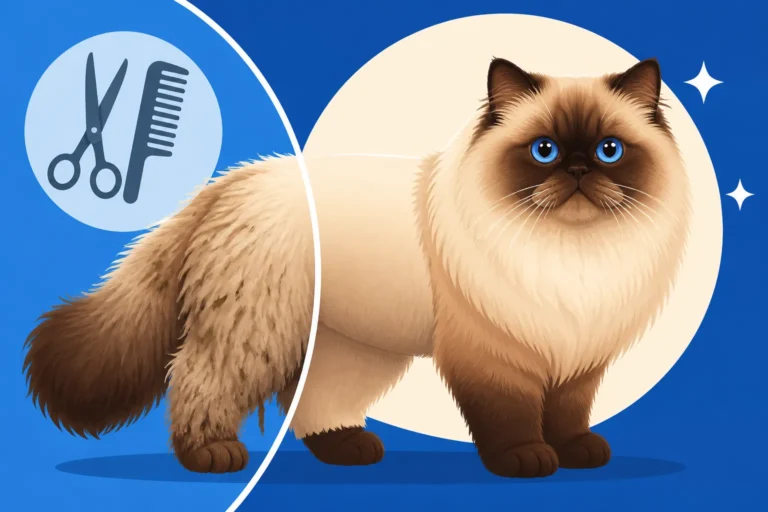
- Professional Groomers: A cat groomer specializing in long-haired breeds will have the experience, specialized tools, and often, the patience to deal with even tough mats. They are skilled at safely using clippers and can sometimes remove mats without needing sedation. They can also offer advice on proper grooming techniques and product recommendations specific to your Himalayan's coat. They might suggest a "lion cut" if the matting is extensive, which can be a huge relief for your cat. When a Lion Cut Is the Right Answer for a Himalayan offers more on this.
- Veterinarians: For extremely severe mats, or when there are underlying skin issues, your vet is the best choice. They can safely sedate your cat if necessary to remove mats without causing pain or undue stress. This is often the safest option for cats who are very nervous or in pain. They can also treat any skin infections or wounds that the mats have caused. Don't be surprised if the vet recommends a full shave, as sometimes it's the only way to get a fresh start and allow the skin to heal properly. It might seem drastic, but your cat's comfort and health come first.
Medical Concerns: When Mats Become More Than Just Tangled Fur
It’s crucial to understand that neglected mats are not just a cosmetic problem; they can become serious medical issues.
- Skin Infections: Mats trap moisture, dirt, and debris against the skin, creating a perfect breeding ground for bacteria and yeast. This can lead to painful skin infections (pyoderma, dermatitis) that require veterinary treatment, including antibiotics or antifungals.
- Parasites: Mats can hide fleas, ticks, and other parasites, making detection and treatment much harder.
- Pain and Discomfort: As mats tighten, they pull on the skin, causing constant discomfort and pain. This can restrict movement, making it hard for your cat to walk, jump, or even lie down comfortably. They might become lethargic or withdrawn due to the pain.
- Circulatory Problems: In severe cases, very tight mats, especially around limbs, can restrict blood flow, leading to swelling and even tissue damage.
- Poor Hygiene: Mats around the anal area or britches can collect feces, leading to severe hygiene issues, skin irritation, and further infection.
So, while working a mat out can be a chore, it's an essential part of keeping your Himalayan healthy and happy. Regular, gentle grooming is truly the best prevention, but knowing when and how to intervene, or when to call for professional help, ensures your fluffy companion lives their best, most comfortable life.
Disclaimer
This article is for general informational purposes only and does not constitute professional advice. Laws, prices and regulations vary by location and change over time. Consult a qualified professional for guidance on your specific situation.