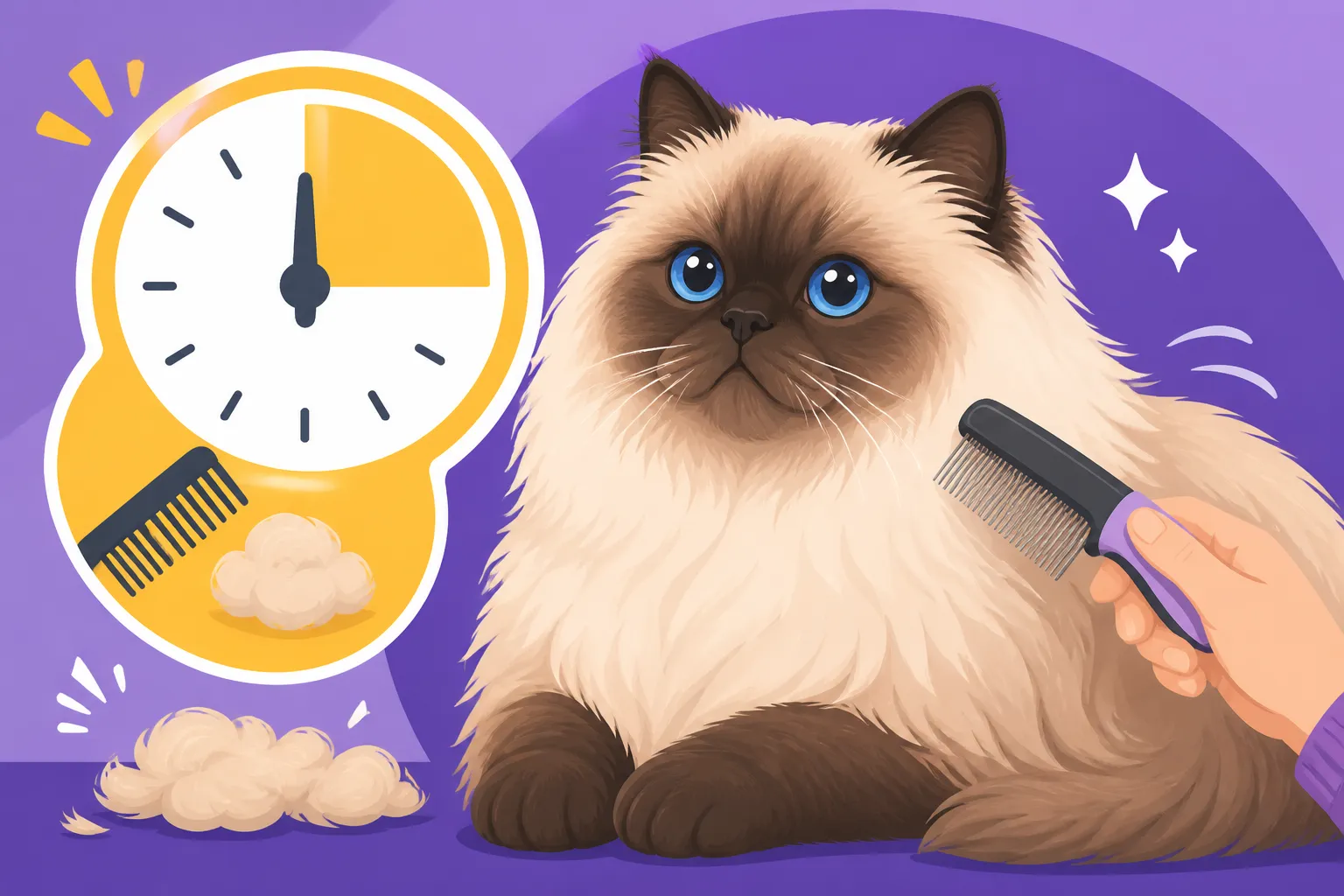
How Long a Himalayan’s Daily Comb Takes
One of the biggest misconceptions about owning a beautiful Himalayan cat is that their luxurious, flowing coats simply maintain themselves. Many prospective owners gaze at those stunning photos and imagine a blissful, low-effort existence. The reality, however, is that maintaining that magnificent Persian-derived coat demands a significant, consistent time commitment, and underestimating it can lead to serious problems for your beloved feline. This guide will walk you through the true time investment required for a Himalayan's daily comb, explore the factors that influence it, and help you establish a realistic grooming routine that keeps your cat healthy and happy.
Understanding the Himalayan Coat: A Foundation for Grooming Time
Before we dive into the actual minutes and hours, it’s crucial to understand what you’re dealing with when it comes to a Himalayan's coat. This isn't just a bit of fluffy fur; it's a complex, dense structure designed for warmth, inherited directly from their Persian ancestors. This unique composition is what dictates the meticulous grooming schedule they require. Without a clear picture of its anatomy, it’s easy to misunderstand why that daily comb is absolutely non-negotiable.
The Double Coat Dilemma: Undercoat vs. Guard Hairs
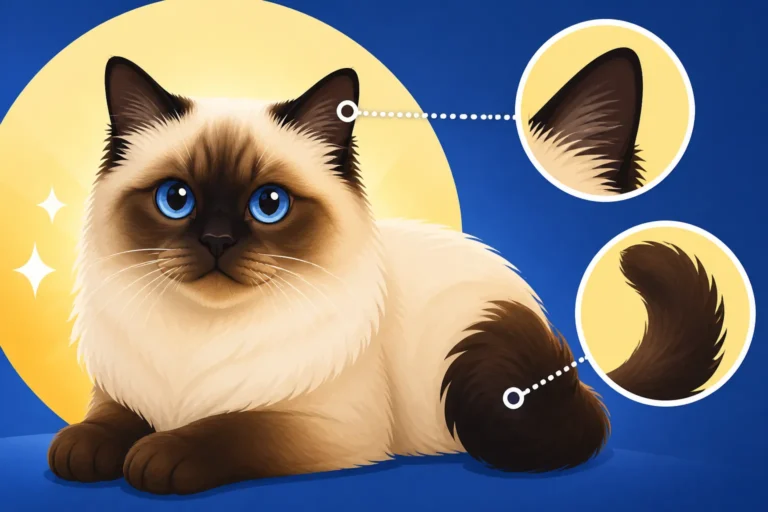
Your Himalayan cat boasts what’s known as a "double coat," a marvel of natural insulation but a challenge for grooming. This means they have two distinct layers of fur working in tandem. The outer layer consists of longer, coarser, and slightly stiffer "guard hairs." These are the hairs that give your cat its lustrous sheen and provide initial protection from elements. They tend to shed less frequently, but they can still tangle.
Beneath this beautiful topcoat lies the real grooming hurdle: the dense, woolly "undercoat." This layer is made up of much finer, softer, and incredibly numerous hairs that provide the bulk of insulation. The undercoat sheds constantly, particularly seasonally, and it's notoriously prone to matting. When these fine hairs shed, they don't always fall out cleanly; instead, they get trapped within the surrounding undercoat and the longer guard hairs. This entanglement is the beginning of a mat, and if left unchecked, these mats can quickly become tight, painful felted clumps. Understanding this dual nature helps explain why a superficial brush-over simply isn't enough; you need to reach that deep undercoat to prevent serious issues.
Why a Himalayan Mats Faster Than a Ragdoll's
It’s often said that long-haired cats require grooming, but not all long-haired coats are created equal. You might look at a Ragdoll or a Maine Coon, for instance, and assume their coats are similar in maintenance to a Himalayan's. However, the texture and density of a Himalayan's coat, inherited from the Persian side of its lineage, make it particularly susceptible to matting, often much faster than breeds like the Ragdoll. While Ragdolls have a semi-longhaired, silky coat that is less prone to extreme matting, the Himalayan's fur is far denser and finer, with a substantial, cotton-like undercoat. This distinct difference is critical.
The fine texture of the Himalayan's undercoat means that individual hairs are more likely to snag and intertwine with each other. When these hairs shed, they effectively weave themselves into the existing coat, creating a dense network that tightens with every movement your cat makes. A Ragdoll's coat tends to be more "self-cleaning" in a way, with loose hairs more easily falling out or being shed without forming tight knots. With a Himalayan, even a single day missed can see the beginnings of mats, especially in high-friction areas. Why a Himalayan Mats Faster Than a Ragdoll's really goes into detail on these distinctions.
The Realities of Daily Combing: How Long It Actually Takes
So, what does a "daily comb" actually entail, and how much time should you genuinely set aside? Many new owners are shocked to discover it's not a quick five-minute affair. It's an investment, not just in your cat's beauty, but in their comfort and health. Skimping on this vital routine is simply not an option for a Himalayan.
The "Ideal" Daily Session: What It Should Look Like
An ideal daily grooming session for a Himalayan isn't just a quick surface brush; it's a thorough, methodical process designed to reach all layers of that dense coat. You should aim for a session that lasts anywhere from 15 to 30 minutes, depending on your cat's cooperation and coat condition. The goal is to detangle and remove loose undercoat before it has a chance to form mats. This means carefully parting the fur and working section by section. Starting from the head, gently comb through the mane, down the back, across the sides, and then move to the crucial "points" – the legs, tail, and britches (the long fur around their hindquarters).
Think of it as a massage mixed with a deep-clean. You want to feel the comb glide smoothly from the tip of the fur right down to the skin, making sure no knots are hidden beneath the surface. Pay extra attention to areas prone to friction and matting, such as behind the ears, in the armpits, and around the belly and inner thighs. This isn't just about aesthetics; it's about preventing painful skin irritation and potential infections that can develop under tight mats.
Factors That Influence the Daily Time Commitment
The 15 to 30-minute estimate is a good baseline, but several factors can significantly swing that number. First, your cat's age plays a huge role. A young, energetic kitten might have less patience, making sessions shorter but more frequent initially. However, Getting a Himalayan Kitten Used to the Comb early on pays dividends in the long run. As they get older, they usually settle into the routine.
Second, the actual condition of the coat is paramount. If you've been diligent, and the coat is relatively free of tangles, your session might be closer to the lower end of the time spectrum. However, if even a couple of days have been missed, or if your cat has been particularly active, rolling around and getting things caught in its fur, you might find yourself needing a full 30 minutes or more to meticulously work through potential knots. Shedding seasons, typically spring and fall, will also demand longer, more thorough sessions as the undercoat comes out in earnest.
A cat's temperament and cooperation are also huge factors. Some Himalayans are veritable "lap sponges," melting into relaxation during grooming, while others are more particular. Introducing treats, calm vocalizations, and gentle handling can improve cooperation. Finally, the tools you use and your own experience with grooming long-haired cats will influence efficiency. Better tools and a practiced hand can make a big difference in the time it takes.
Essential Tools and Techniques for Efficient Grooming
Having the right tools is half the battle when it comes to maintaining a Himalayan's coat. You wouldn't try to sculpt marble with a butter knife, and you shouldn't try to groom a Himalayan with just any old brush. The correct equipment makes the job easier, more effective, and much more comfortable for your cat. Investing in quality tools from reputable brands will save you time and frustration in the long run.
Which Steel Comb a Himalayan's Coat Needs
Forget those flimsy plastic combs or stiff bristle brushes for your Himalayan. What you truly need, the hero of your grooming kit, is a high-quality stainless steel comb. But not just any steel comb; specifically, one with both widely spaced and finer teeth on opposite ends. This dual-purpose design is essential for tackling the different densities of your Himalayan's coat. The wider teeth are perfect for initial passes, gently separating larger sections of fur and easing out minor tangles without pulling. They're great for the body and ruff.
The finer-toothed side comes into play for more detailed work, particularly in areas like the britches, tail, and face, where fur can be exceptionally dense and prone to tighter knots. It allows you to get down to the skin and remove that shedding undercoat effectively. When choosing, look for one that feels sturdy and smooth, with rounded tips on the teeth to prevent scratching your cat's delicate skin. You can find excellent options from pet supply retailers like Chewy or on larger online marketplaces like Amazon, often from brands specializing in grooming tools. Which Steel Comb a Himalayan's Coat Needs provides a deep dive into selecting the perfect comb.
Working a Comb Through a Himalayan's Ruff and Britches
These two areas – the ruff (the magnificent mane around their neck) and the britches (the long fur on their hindquarters) – are often the first to mat and can be the most challenging to groom. Tackling them correctly is key to a successful daily comb. For the ruff, start by gently parting the fur with your fingers, working from the outside edge inwards towards the neck. Use the wider-toothed side of your steel comb. Support the fur as you comb, especially if you encounter any resistance, to avoid pulling the skin. Work in small sections, always combing away from the skin, not directly into it.
The britches are another prime matting zone, especially because your Himalayan's short legs mean this fur often drags on the ground or gets soiled in the litter box. For this area, it's often easiest if your cat is lying on its side or in a relaxed, loaf position. Again, part the fur, and use the wide-toothed side first, moving slowly and methodically. If you hit a snag, don't yank! Gently work around it with your fingers first, trying to loosen the tangle, then return with the comb. You may even need to use a detangling spray designed for cats if the fur is particularly dense or starting to felt. Consistent, gentle strokes are more effective than aggressive pulling, which will only make your cat dread future grooming sessions.
Consequences of Skipping a Daily Grooming Session
It might be tempting, after a long day, to skip your Himalayan's grooming session. "Just one day," you might think. But with a coat like theirs, a single missed day can set off a cascade of problems, making the next session exponentially harder and potentially causing significant discomfort for your cat. This isn't just about a little knot; it's about a fundamental commitment to their well-being.
Why a Missed Day Costs a Himalayan a Mat
The reason Why a Missed Day Costs a Himalayan a Mat is so critical lies in the very nature of their double coat. As mentioned, the fine undercoat sheds continuously. When you skip a day of combing, those loose undercoat hairs don't just disappear. They stay trapped within the existing fur, where they begin to intertwine and bind together. Every movement your cat makes – walking, stretching, even just shifting position – tightens these nascent tangles. What might have been a minor, easily brushed-out knot on day one quickly becomes a small mat on day two, and a larger, tighter, more painful one by day three.
These mats act like anchors, pulling at your cat's skin, restricting movement, and often causing irritation and discomfort. Imagine having a piece of tangled rope pulling at your hair all day; that's what a mat feels like for your cat, but magnified due to the density of their fur and their sensitive skin. Mats also trap moisture and debris, creating a breeding ground for bacteria and yeast, which can lead to painful skin infections underneath the felted fur. It's a vicious cycle where skipping one day leads to more challenging grooming, which in turn makes it easier to skip again.
When a Lion Cut Is the Right Answer for a Himalayan
Sometimes, despite best intentions, life happens. Illness, a busy schedule, or simply underestimating the grooming commitment can lead to a Himalayan's coat becoming severely matted. When mats become widespread, tight, and close to the skin, trying to comb them out is not only incredibly painful for your cat but also often impossible without causing skin damage. In such cases, the kindest and most humane solution is often a professional lion cut.
A lion cut involves shaving off the matted fur, leaving a mane around the head and sometimes tufts on the feet and tail, resembling a miniature lion. While it might seem drastic, it offers immediate relief from the discomfort and pain of matting. This procedure almost always requires sedation, as the mats are often very close to the skin and working around them can be stressful and painful for an unsedated cat. Your veterinarian or a professional groomer experienced with long-haired cats can perform this. Brands like Chewy often have lists of local groomers or vets with grooming services. Why a Neglected Himalayan Ends Up Sedated for Clipping explains the process and necessity in more detail. After a lion cut, you get a clean slate, allowing you to re-establish a diligent daily grooming routine as the fur grows back. It's a temporary solution to a serious problem, and a reminder of the importance of consistent care.
Long-Term Grooming Habits and Their Impact on Time
Establishing good grooming habits isn't just about the comb; it's about a holistic approach to your Himalayan's care. What you do in the early stages of their life, and how you manage other aspects of their well-being, directly impacts the ease and duration of future grooming sessions. Think of it as investing in a smoother, less stressful future for both you and your feline friend.
Getting a Himalayan Kitten Used to the Comb Early
The absolute best thing you can do to minimize future grooming struggles is to start early. A Himalayan kitten's coat is relatively short and manageable compared to an adult's, making it the perfect time to introduce the comb. Begin with very short, gentle sessions – just a minute or two – even before their full coat develops. Use a soft, kitten-friendly brush or the wide-toothed side of your steel comb. Make it a positive experience by offering treats, praise, and gentle strokes.
Consistency is key. Daily, positive interactions with the comb will teach your kitten that grooming is a normal, non-threatening part of their day. Over time, gradually increase the duration and thoroughness of the sessions. By the time their full adult coat comes in, typically around one to two years of age, they will ideally be accustomed to the routine, making those longer, necessary sessions much less of a battle. A cat that resists grooming vehemently will turn a 15-minute task into a much longer, more stressful ordeal for everyone involved, often resulting in less effective grooming and increased matting.
The Link Between Diet and Coat Health
While grooming is primarily mechanical, what goes into your Himalayan can significantly affect the quality and manageability of their coat. A cat's diet plays a crucial role in skin and coat health. A well-nourished cat with a balanced diet, rich in essential fatty acids like Omega-3 and Omega-6, will often have a healthier, shinier coat that is less prone to excessive dryness, breakage, and yes, even matting.
High-quality cat food provides the necessary nutrients to support robust fur growth. If your cat's diet is lacking, their coat might become dull, brittle, and more susceptible to tangles and mats. You might find premium cat foods that emphasize coat health through specific ingredient profiles. While diet alone won't eliminate the need for daily combing, it can certainly contribute to a more resilient and manageable coat, potentially reducing the time spent battling dry, tangled fur. Always ensure your cat has access to fresh water too, as hydration is equally vital for skin and coat health.
Grooming Routine Comparison
To give you a clearer picture, here's a brief comparison of typical grooming needs for a Himalayan versus a few other popular long-haired breeds. This isn't exhaustive, but it highlights why a Himalayan requires such a dedicated approach.
| Breed | Coat Type | Matting Tendency | Recommended Grooming Frequency | Typical Daily Time | Common Problem Areas |
|---|---|---|---|---|---|
| Himalayan | Dense, long double coat; fine, woolly undercoat | Very High | Daily | 15-30 minutes | Armpits, britches, behind ears, belly |
| Ragdoll | Semi-longhaired, silky single/light double coat | Low to Moderate | 2-3 times per week | 5-10 minutes | Inner thighs, collar area |
| Maine Coon | Shaggy, water-resistant double coat | Moderate | Every other day | 10-15 minutes | Neck ruff, britches, belly |
| Persian (Solid) | Dense, long double coat; thick undercoat | Very High | Daily | 20-40 minutes | Same as Himalayan, often more |
This table really drives home the point: the Himalayan's grooming needs are at the higher end of the spectrum for long-haired cats, on par with its Persian parent breed. Ignoring this daily commitment is simply setting yourself up for challenges and discomfort for your beloved cat. The Daily Comb a Himalayan Cannot Skip is not just a suggestion, it's a fundamental part of responsible ownership.
Beyond the Comb: Other Essential Daily Care
While combing takes up the bulk of the daily grooming time, owning a Himalayan involves a few other routine tasks that are equally important, especially due to their unique facial structure. These small but critical additions to your daily care routine contribute significantly to your Himalayan's overall comfort and health. Ignoring them can lead to further complications, proving that the time commitment extends beyond just the fur.
The Morning Face Routine Every Himalayan Needs
One of the most distinctive, and unfortunately, high-maintenance features of many Himalayans is their flattened, brachycephalic face, inherited from the Persian. This adorable "peke-face" or "doll-face" profile often comes with shallow eye sockets and sometimes tear ducts that struggle to drain properly, leading to persistent tearing. This results in "tear stains" – reddish-brown marks that are particularly noticeable on their pale body coats. Beyond aesthetics, this dampness can lead to skin irritation or even infection in the deep folds around their nose.
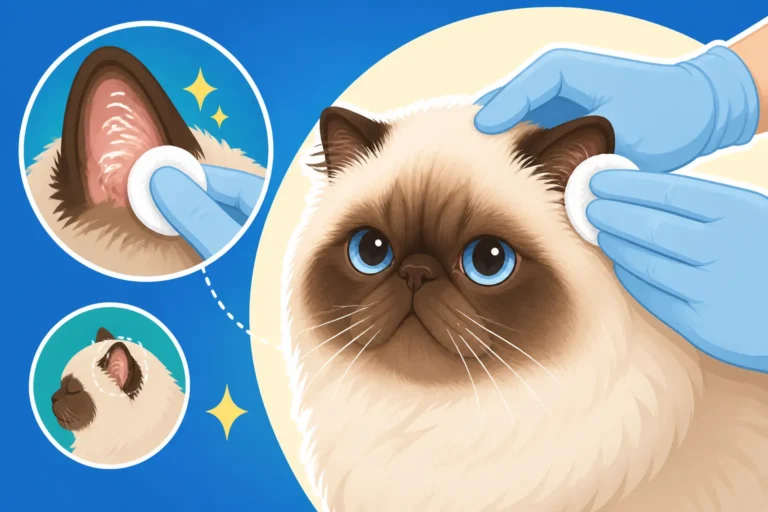
Therefore, a daily morning face routine is absolutely essential. This involves gently wiping around their eyes and nose folds with a soft, damp cloth or a cat-specific eye wipe. You can find these wipes from pet suppliers like Chewy or Amazon. The goal is to remove any discharge and keep the area dry and clean. The Morning Face Routine Every Himalayan Needs details this process thoroughly. It might only take a few minutes, but consistency prevents unsightly staining, bacterial buildup, and potential dermatological issues. Think of it as brushing your own teeth – a small daily habit that prevents bigger problems down the line.
Protecting Delicate Blue Eyes
Himalayans are renowned for their striking blue eyes, a trait inherited from their Siamese ancestry. However, these beautiful eyes, particularly in cats with flatter faces, can be more prone to certain issues. Their slightly recessed position, combined with potential issues like entropion (where the eyelid rolls inward, causing lashes to rub against the cornea) or simply increased tear production, means their eyes require careful, daily attention beyond just wiping away stains.
You should be checking your Himalayan's eyes daily for any signs of redness, excessive discharge beyond normal tearing, squinting, or cloudiness. These could indicate an infection, irritation, or even a corneal ulcer, which can be serious and require immediate veterinary attention. Keeping the fur trimmed around their eyes can also help prevent hairs from irritating the delicate surface. While you might use a gentle eye wash recommended by your vet to keep the eyes clean, the primary focus is observation and prompt action if anything seems amiss. Regular vet check-ups, as outlined in How Often a Himalayan's Eyes Should Be Examined, are also vital for long-term eye health. The few moments you spend observing and cleaning can make a huge difference in preventing discomfort or serious vision problems.
Disclaimer
This article is for general informational purposes only and does not constitute professional advice. Laws, prices and regulations vary by location and change over time. Consult a qualified professional for guidance on your specific situation.