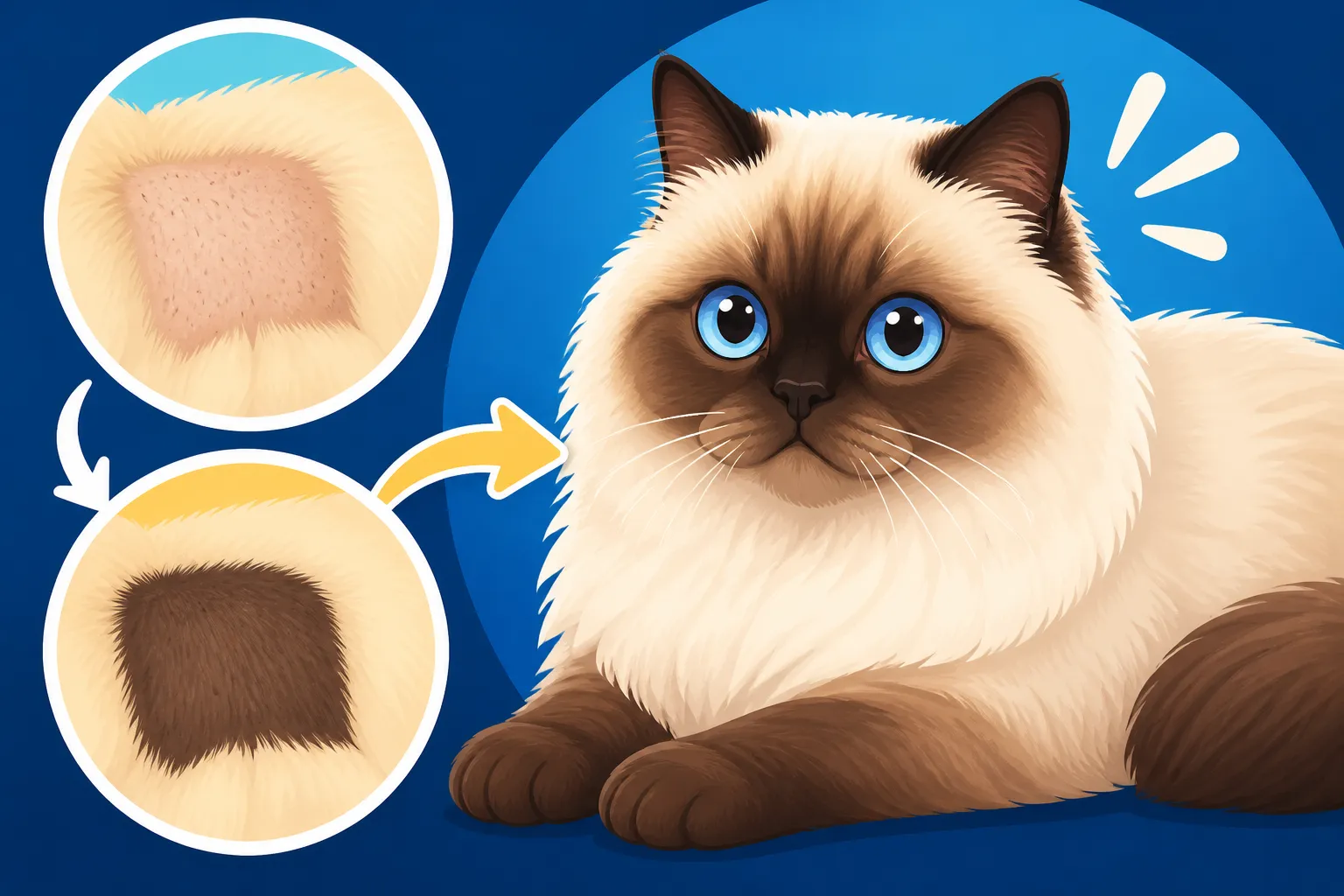
Why a Cut Mat Regrows Dark on a Himalayan
It's a familiar scenario for any Himalayan cat parent: you discover a stubborn mat, tangled deep in that glorious, fluffy coat, and after a moment of dread, you realize it simply has to go. Whether you carefully snip it out yourself or it's removed during a professional grooming session, the relief is immediate. But then, as the fur starts to grow back, you notice something peculiar. That patch where the mat used to be? It's coming in noticeably darker than the surrounding coat. It's not just your imagination – there's a fascinating scientific reason behind this phenomenon, and understanding it can help you manage your Himalayan's coat and avoid future surprises.
This guide will delve into the genetics of your Himalayan's unique coloration, explain why local temperature changes the fur's hue, and offer practical advice on managing regrowth and preventing mats in the first place, ensuring your feline friend's coat stays as beautiful and uniform as possible.
The Science Behind Point Coloration in Himalayans
The distinctive "pointed" pattern of your Himalayan, with darker fur on its ears, face, paws, and tail, and a paler body, is one of its most captivating features. This isn't just a random genetic quirk; it's a specific expression of a gene that's deeply tied to temperature.
Temperature-Sensitive Albinism: A Genetic Marvel
At the heart of your Himalayan's beautiful coloration lies a fascinating genetic trait known as temperature-sensitive albinism. It's not true albinism, which results in a complete lack of pigment, but rather a form of partial albinism. This genetic mutation affects an enzyme called tyrosinase, which is crucial for producing melanin, the pigment responsible for hair color.
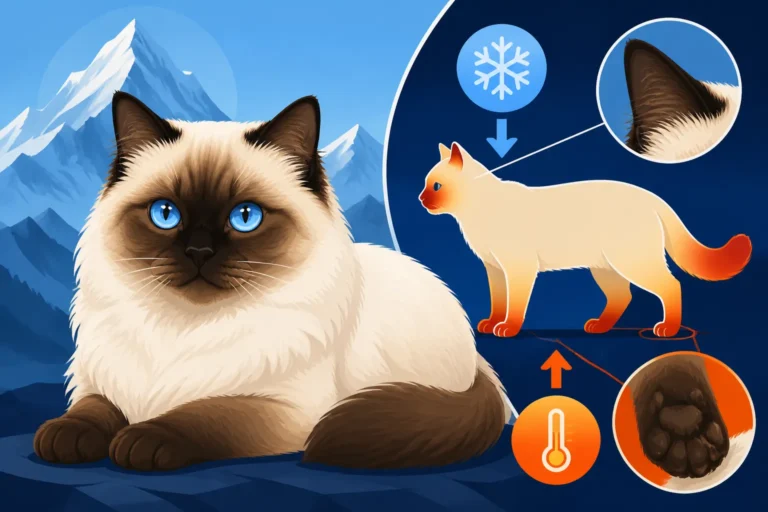
In most cats, this enzyme works efficiently regardless of body temperature. However, in Himalayans (and other pointed breeds like Siamese and Ragdolls), this particular tyrosinase enzyme is heat-sensitive. It functions effectively only within a specific, cooler temperature range. When the body temperature rises above this threshold, the enzyme becomes less active, or even inactive, and melanin production slows down or stops entirely. This means that areas of the cat's body that are cooler will produce pigment, resulting in darker fur, while warmer areas will produce little to no pigment, leading to their creamy or white appearance. This is why A Himalayan's Point Color Is a Record of Where It Sleeps – external temperature plays a huge role.
How Temperature Influences Pigment Production
Think of it like this: your Himalayan's body is like a living thermometer for its fur color. The extremities – the ears, nose, paws, and tail – are naturally cooler than the core of the body. These cooler temperatures allow the temperature-sensitive tyrosinase enzyme to do its job, producing melanin and resulting in the rich, dark points we all adore. This beautifully explains Why the Cold Parts of a Himalayan Grow Dark Fur.
Conversely, the main body trunk, which is kept consistently warm by internal body heat, inhibits the enzyme's activity. This is Why the Warmest Parts of a Himalayan Stay Palest. It's a delicate balance, and any sustained change in local skin temperature can subtly, or not so subtly, alter the color of the fur growing in that spot. This is why you might notice your Himalayan's points deepen slightly in winter or if they spend a lot of time in a cooler room – their whole body's "set point" for color adjusts slightly. Even after surgery, a shaved patch can come in darker because the area was kept cooler.
Why Cutting a Mat Changes Local Skin Temperature
Now that we understand the role of temperature, let's connect it back to that mysteriously dark regrowth after a mat is cut out. It all boils down to how your Himalayan's incredible coat works and what happens when you remove a section of it.
The Insulating Power of a Himalayan's Coat
Your Himalayan's magnificent coat isn't just for show; it's a highly efficient insulator. Comprising a dense undercoat and a longer, softer outer guard coat, it's designed to trap a layer of warm air close to the skin. This thick barrier helps regulate body temperature, keeping your cat warm in cooler environments and protecting the skin from direct exposure to the elements.
This natural insulation means that the skin underneath the fur, even on areas that might seem exposed, remains relatively warm. It's part of why their body stays pale: the constant warmth around the skin inhibits melanin production. The sheer volume of fur, especially How Much Undercoat a Himalayan Carries Under Its Points, is incredibly effective at maintaining a consistent, warm microclimate directly against the skin. When you feel how warm they are right after a good cuddle, you're feeling the effectiveness of that insulation.
The "Microclimate" Effect of Shaving or Clipping
When a mat is cut or shaved off, especially if it's a larger section of fur, you're not just removing hair; you're removing that insulating layer. Suddenly, the skin underneath is exposed directly to the ambient air temperature. Even if your home is a comfortable 70 degrees Fahrenheit, that's significantly cooler than the approximately 100-102 degrees Fahrenheit core body temperature your cat normally maintains.
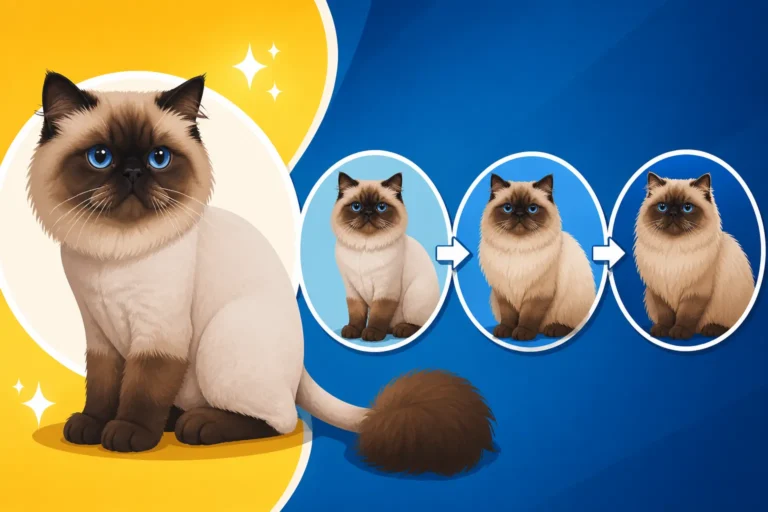
This local reduction in skin temperature has an immediate effect on the temperature-sensitive tyrosinase enzyme in the hair follicles of that specific area. With the cooler "microclimate" established, the enzyme becomes more active. As new hair starts to grow in, it's produced with more melanin, resulting in a darker pigment. This is precisely How a Shaved Patch Regrows Darker on a Himalayan. It's a visual testament to the genetic programming that governs their coat color. It's why a "lion cut" can result in a dramatically darker body coat for a while, as a large portion of their insulating fur has been removed, allowing the skin to cool and pigment to be produced more readily.
The Regrowth Process and What to Expect
So, you've got a dark patch. Don't panic! It's not permanent, but understanding the regrowth process will help you set your expectations and manage your cat's appearance.
Initial Darker Growth and Gradual Fading
When new fur first emerges in the clipped area, it will indeed be darker than the surrounding pale body coat. This darker growth can sometimes be quite pronounced, especially if the mat was large or the cat was in a cooler environment during the initial regrowth phase. Imagine a small, seal-point-colored patch appearing on an otherwise cream-colored body – it can be quite striking!
However, as the fur grows longer, it starts to regain its insulating properties. The skin underneath the regrowing fur slowly warms back up, and the tyrosinase enzyme's activity decreases. This means that subsequent hair growth in that area will gradually return to the lighter, less pigmented body color. The dark hair that has already grown won't change color, but as new, paler hair comes in, it will blend, and the overall patch will begin to fade and match the rest of the coat. This isn't an overnight process; it can take several weeks to a few months for the patch to fully integrate and become unnoticeable, depending on how quickly your individual cat's fur grows and how much contrast there was to begin with.
Managing the Aesthetic and Practicalities During Regrowth
While you wait for the darker patch to blend in, there are a few things you can do. Aesthetically, it's often a matter of patience. You might find yourself giggling a bit at the "racing stripe" or "badge" your cat has acquired, but remember, it's temporary!
From a practical standpoint, it's crucial to be extra diligent about grooming the regrowing fur. Even a small patch of new growth can be prone to matting again if neglected. The shorter hairs are more difficult to comb through, and if another mat forms, you're back to square one. Continue your regular grooming routine, paying close attention to the recovering area. You might find gentle brushing with a soft slicker brush or a fine-toothed comb helpful as the new hair is still quite short.
Also, consider your home's ambient temperature. While you shouldn't overheat your home, maintaining a comfortable, consistent indoor temperature can help prevent the skin from getting too cool, potentially minimizing the darkness of the regrowth. Remember, Whether a Himalayan Kept Warm Stays Paler is a real factor. Brands like Chewy and Amazon offer a range of grooming tools that can help with this, from fine-toothed combs perfect for delicate regrowth to gentle brushes designed for sensitive skin.
Preventing Mats to Avoid the Issue Altogether
The best way to deal with a dark regrowth patch is, of course, to avoid having to cut out mats in the first place! Prevention is key when it comes to a Himalayan's luxuriant coat.
The Daily Grooming Ritual: Essential for Himalayan Coats
Let's be real: owning a Himalayan means committing to a serious grooming routine. Their long, dense, and fine Persian-derived coat is a magnet for tangles and mats. The Daily Comb a Himalayan Cannot Skip is not an exaggeration; it's a fundamental truth of Himalayan ownership. Skipping even a day can quickly lead to trouble. Why a Missed Day Costs a Himalayan a Mat becomes painfully clear when you find a felted lump that wasn't there yesterday.
Here’s a breakdown of a practical daily grooming routine:
| Body Area | Grooming Focus | Recommended Tool(s) | Frequency |
|---|---|---|---|
| Main Body/Back | General detangling, removal of loose undercoat | Wide-toothed steel comb | Daily |
| Ruff/Neck | Prone to tangles from rubbing, drinking | Medium-toothed steel comb | Daily |
| Armpits/Legs | High friction areas, common matting spots | Fine-toothed steel comb | Daily |
| Britches | Collects litter, prone to severe matting | Fine-toothed steel comb | Daily, often twice |
| Tail | Can tangle easily, though less prone to mats | Wide-toothed steel comb | Every other day |
A good quality metal comb, preferably one with both wide and narrow teeth, is your best friend. Start gently, working from the tips of the fur inwards, always with the lay of the coat. Be especially careful around sensitive areas like the armpits and behind the ears, where mats often form. If you encounter a small tangle, try to gently tease it apart with your fingers or the wider teeth of the comb, rather than pulling. If you're a first-time Himalayan owner, it might feel overwhelming, but consistency makes it a calm, bonding experience for both of you. Many pet supply stores, including Chewy and Amazon, carry excellent ranges of grooming tools specifically designed for long-haired breeds.
Environmental Factors and Coat Health
Beyond daily combing, other factors can influence your Himalayan's coat health and susceptibility to matting.
- Diet: A high-quality diet rich in Omega fatty acids can contribute to a healthier, shinier coat that is less prone to tangling. Discuss specific dietary needs with your vet, but many premium cat food brands focus on coat health.
- Humidity: Dry air can make fur more prone to static and matting. In drier climates or during winter when indoor heating is on, consider using a humidifier to add moisture to the air.
- Temperature: As we've discussed, extreme cold can encourage overall darkening of the coat. While you can't control everything, Why a Himalayan in a Cold House Darkens All Over is something to be aware of. Maintaining a consistently warm, but not hot, indoor environment is ideal not just for coat color, but for your Himalayan's overall comfort given their brachycephalic (flat-faced) nature, which makes them prone to overheating.
- Bathing: Himalayans generally don't need frequent bathing, as their thick coats can be difficult to dry completely, leading to skin issues or more matting. When a bath is necessary, use a shampoo specifically designed for cats and ensure the coat is thoroughly rinsed and dried.
Remember, grooming isn't just about appearance; it's a vital part of your cat's health. Neglecting the coat can lead to painful skin infections under mats, discomfort, and in severe cases, even require veterinary intervention for sedation and shaving. Why a Neglected Himalayan Ends Up Sedated for Clipping is a serious consideration, making regular, gentle grooming a non-negotiable act of love for your beautiful companion.
Disclaimer
This article is for general informational purposes only and does not constitute professional advice. Laws, prices and regulations vary by location and change over time. Consult a qualified professional for guidance on your specific situation.