How Judges Score a Himalayan’s Point Contrast
It's incredibly frustrating when you're looking at your beautiful Himalayan, with its stunning color points, and you hear terms like "point contrast" thrown around, especially in show circles, leaving you wondering what exactly that means for your beloved furball. This guide is here to demystify what judges look for in a Himalayan's point contrast, why it matters, and what you can do as an owner to understand and maintain this hallmark of the breed, whether you're stepping into the show ring or just admiring your cat at home.
Understanding the Essence of Himalayan Point Contrast
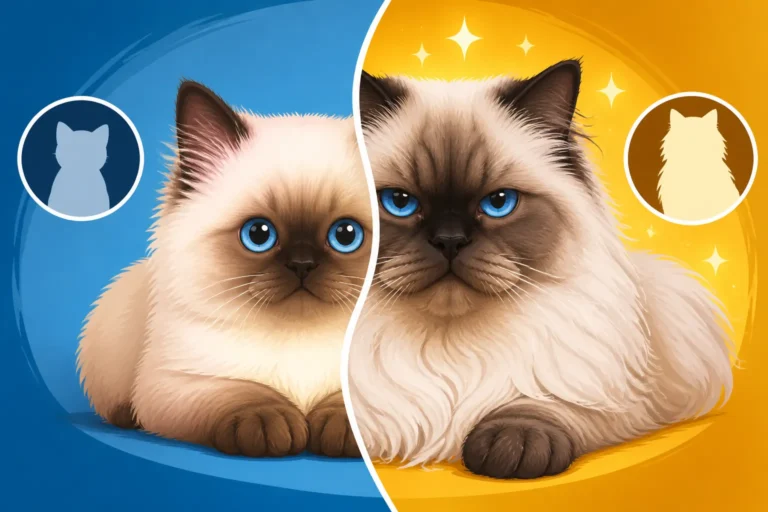
The Himalayan cat is truly a masterpiece of feline genetics, a stunning blend of the elegant Persian and the striking Siamese. One of its most defining characteristics, and certainly a major point of discussion among breeders and judges, is its "point contrast." But what does that actually mean? Simply put, it's the visual difference between the darker colored extremities (the points – face mask, ears, paws, and tail) and the lighter, often creamy or ivory, body coat. A well-contrasted Himalayan isn't just pretty; it's a testament to good breeding, careful care, and adherence to the breed standard.
The Ideal Look: Dark Points, Light Body
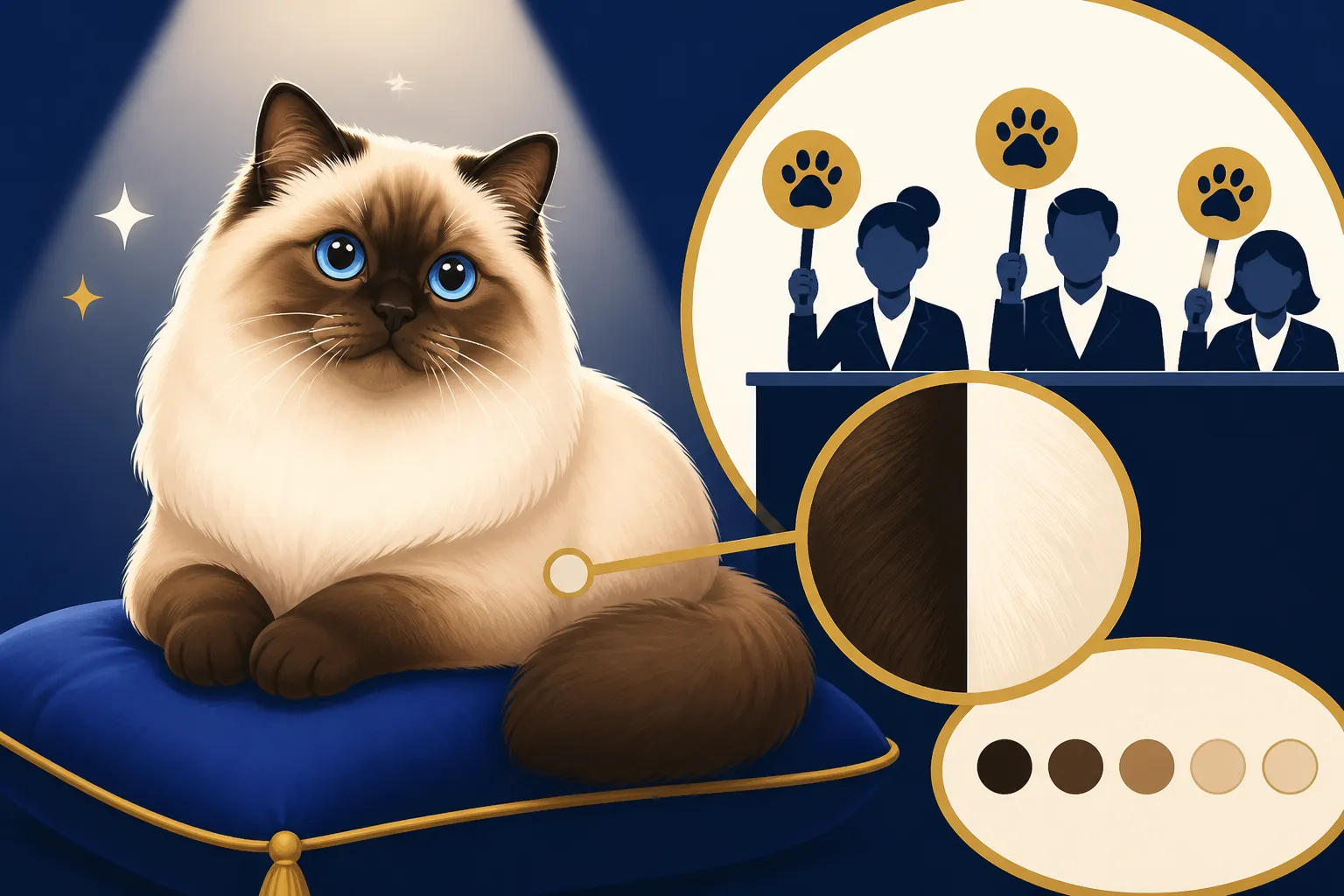
Imagine a perfect canvas. For a Himalayan, that canvas is a body coat that should be as pale and pristine as possible, usually a shade of ivory or cream, sometimes almost white, depending on the specific point color. Against this light canvas, the points should stand out dramatically, rich and deep in color. Whether your cat sports seal, blue, chocolate, lilac, flame, or tortie points, the goal is for those colors to be vibrant and distinct. There should be a clear, almost sharp line where the point color meets the body color, without much blurring or "smudging." This crisp definition is what judges are particularly keen to see. Think of it as a meticulously painted portrait where every line is deliberate and clear.
It’s not just about the depth of the point color, but also the cleanness of the body color. A lovely, dark set of points loses some of its impact if the body coat is muddy or overly shadowed. This is especially critical for lighter point colors, like a lilac point, where the contrast is inherently more subtle and thus, even minor body shading can diminish the overall effect. This delicate balance truly defines the breed's unique aesthetic. Why a Poorly Contrasted Himalayan Loses in the Ring can tell you more about the specifics.
Why Contrast is a Himalayan Hallmark
The reason contrast is such a cornerstone of the Himalayan standard goes back to its genetic heritage. Himalayans carry the "Himalayan gene," also known as the temperature-sensitive albino gene, which is responsible for their unique color pattern. This gene causes pigment to develop only in the cooler parts of the cat's body. The warmer core remains light, while the extremities, being cooler, develop color. When this gene expresses perfectly, you get that stunning, clear contrast.
A strong, clear contrast doesn't just look good; it speaks volumes about the cat's genetic purity and the breeder's dedication to the breed standard. It shows that the cat is expressing its coloration in the most archetypal way possible. It’s also a visual indicator of a cat's health and the care it receives. A cat that is consistently kept in appropriate temperatures and has a healthy coat often exhibits better contrast. For judges, evaluating this contrast is a key part of assessing how well an individual cat embodies the ideal of the breed. It’s a subtle art, really, judging not just the color, but the story the color tells about the cat's lineage and well-being.
The Judge's Eye: What They Scrutinize
When a Himalayan steps onto the judging table, the judge isn't just giving a quick glance. They're performing a thorough, almost clinical, examination of the cat's coat, specifically zeroing in on that point contrast. They're looking for specific details that either elevate the cat to the top of its class or mark it down for falling short of the ideal. It's a precise process, and understanding it can help you appreciate your own cat's unique beauty even more.
Assessing the Body Color
The first thing a judge will meticulously examine is the body color. The standard calls for a body that is as light and clear as possible, free from shading, barring, or smudginess. They'll run their hands through the fur, lifting it to check the undercoat, looking for any hint of point color bleeding into the body. Think of a pristine white sheet; any faint discoloration immediately stands out.
For example, on a Seal Point Himalayan, the body should be a distinct creamy ivory. If there's any brownish or fawn shading creeping up the flanks or across the back, that's considered a fault. Similarly, a Blue Point should have an almost glacial white body, and any greyish wash would detract from its score. The cleaner and clearer the body, the better. This is why Why a Himalayan's Body Coat Should Stay Light is so important. Environmental factors, like prolonged exposure to cooler temperatures, can cause a phenomenon called "smutting," where the body color darkens, reducing that coveted contrast.
Evaluating Point Color Intensity and Definition
Next, the judge will turn their attention to the points themselves: the face mask, ears, legs, and tail. Here, they're looking for intense, rich color that is consistent across all points. The color should be deep and solid, not faded or patchy. For instance, a Flame Point should have a vibrant, fiery orange-red on its points, not a wishy-washy apricot. The color should be uniform, with no lighter patches within the point area.
The definition of the points is equally critical. There should be a clear, distinct line where the point color meets the body color. Judges will pay close attention to the mask, looking for a clear demarcation around the eyes and muzzle, and the legs, ensuring the color doesn't fade unevenly into the body. Any blurring, mottling, or indistinct lines where the point color seems to bleed into the body is a fault. This creates a soft, rather than sharp, transition, which doesn't meet the breed's ideal. It’s like the difference between a finely drawn line and a fuzzy crayon scribble.
The Head-to-Tail Harmony
Finally, the judge steps back to assess the overall harmony and balance of the point contrast from head to tail. They want to see that the depth and clarity of the points are consistent across all areas. The ears shouldn't be significantly darker than the mask, nor should the front paws be lighter than the back paws. This uniformity speaks to a strong genetic expression of the point pattern.
They also consider how the contrast works with the cat's overall structure and coat quality. A magnificent ruff, full and flowing, framing a beautifully contrasted mask, adds to the overall impression. The tail, too, should be richly colored and proportionate. It’s about the whole picture, the complete package. A stunning contrast that flows seamlessly from one point to the next is what truly makes a Himalayan stand out in the show ring. How Judges Score a Himalayan's Point Contrast delves deeper into the minutiae of this scoring.
| Aspect of Point Contrast | Ideal Characteristics | Detracting Factors |
|---|---|---|
| Body Color | Clear, pale ivory/cream, unshaded | Smutting, yellowing, grey wash, barring/streaking |
| Point Intensity | Rich, deep, vibrant, solid color | Faded, patchy, uneven, dull |
| Point Definition | Sharp, distinct lines where points meet body | Blurred, smudged, mottled, indistinct transitions |
| Overall Balance | Uniform color depth across all points, harmonious | Inconsistent shading, uneven point color distribution |
Factors That Influence Point Contrast
The stunning point contrast of a Himalayan cat isn't just a happy accident; it's the result of a delicate interplay of genetics, environment, and daily care. As owners, understanding these factors helps us appreciate the complexity of their beauty and take steps to preserve it. Sometimes, despite our best efforts, nature simply takes its course, but knowing what influences contrast empowers us to do our best for our furry companions.
Genetics: The Foundation of Color
At the very core of a Himalayan's point contrast lies its genetics. These cats carry a specific recessive gene, often referred to as the "Himalayan gene," that dictates their colorpoint pattern. This gene causes an enzyme, tyrosinase, to be temperature-sensitive, meaning it only produces pigment in cooler parts of the body. A cat needs two copies of this gene to display the point coloration. The intensity and clarity of the points, as well as the purity of the body color, are largely predetermined by the specific genetic makeup inherited from their parents.
Breeders work tirelessly to select breeding cats with strong, clear point contrast in their lines to ensure these traits are passed on. A cat from a long line of well-contrasted Himalayans is more likely to exhibit excellent contrast itself. However, even with the best genetics, other factors can still influence the final presentation. Think of it like baking a cake: the recipe (genetics) is crucial, but the oven temperature and ingredients (environment and care) also play a huge role in the final product. Which Genes Make a Himalayan Pointed provides a fascinating look into this genetic marvel.
Environmental Influences: Temperature and Light
One of the most significant external factors affecting a Himalayan's point contrast is temperature. Because their color gene is temperature-sensitive, cooler environments can cause the body coat to darken or "smut," reducing the crispness of the contrast. This is why you often hear anecdotal tales of Himalayans living in colder climates developing darker body coats. The warmer parts of a Himalayan, like its torso, are where the enzyme is inactive, leading to the pale body. Why the Warmest Parts of a Himalayan Stay Palest is directly related to this phenomenon.
Similarly, exposure to sunlight can also play a role, particularly for lighter point colors like Flame or Cream Points, which can fade if exposed to intense sun for prolonged periods. While Himalayans are typically indoor cats, a sunny window perch could potentially impact their point color over time. Maintaining a consistent, comfortable indoor temperature, not too cold, helps support the ideal pale body coat, allowing the points to truly shine.
Age and Health: The Unavoidable Changes
As a Himalayan matures, its point contrast can change. Most Himalayan kittens are born nearly white, with their points gradually developing over weeks and months as they are exposed to cooler temperatures outside the womb. This process continues throughout their first year and sometimes even longer, with points deepening and becoming more defined. However, as cats age into their senior years, it's common for their body coats to naturally darken or "smut" slightly, and points can become less intensely colored. This is a natural part of the aging process and isn't necessarily a sign of poor care. The Age a Himalayan's Points Stop Changing discusses this in more detail.
General health also plays a role. A cat that is unwell or has nutritional deficiencies may exhibit a duller coat overall, which can impact the vibrancy of its points and the clarity of its body color. Stress, certain medications, or even hormonal changes can subtly affect coat color and texture, indirectly influencing contrast. Maintaining your Himalayan's overall health through good nutrition, regular vet check-ups, and a low-stress environment is fundamental to supporting its coat quality and, by extension, its point contrast.
Maintaining Optimal Point Contrast in Your Himalayan
While some aspects of point contrast are genetic and age-related, there's a lot you can do as a dedicated owner to help your Himalayan maintain its stunning coloration. It's not just about aesthetics for the show ring; it’s about good care that supports overall coat health and reflects the breed's unique characteristics.
Diet and Nutrition: Fueling the Coat
A high-quality diet is absolutely paramount for a healthy coat and, by extension, good point contrast. Think of the coat as a reflection of internal health. A diet rich in essential fatty acids, particularly Omega-3 and Omega-6, can contribute to a shiny, healthy coat that is less prone to matting and dullness. High-quality protein sources are also crucial for healthy hair growth.
When selecting food, look for reputable brands that prioritize whole ingredients. You might find that some specialized cat foods, available through retailers like Chewy or Amazon, are formulated specifically for long-haired breeds or coat health, containing ingredients like salmon oil or flaxseed. Even gourmet, human-grade fresh cat food could contribute to a lustrous coat. While no food can change your cat's genetic predisposition for point color, excellent nutrition ensures their coat is at its best, allowing their natural contrast to shine. What Protein Level a Himalayan's Coat Needs further explains nutritional needs for their luxurious fur.
Grooming Regimen: Keeping the Canvas Clean
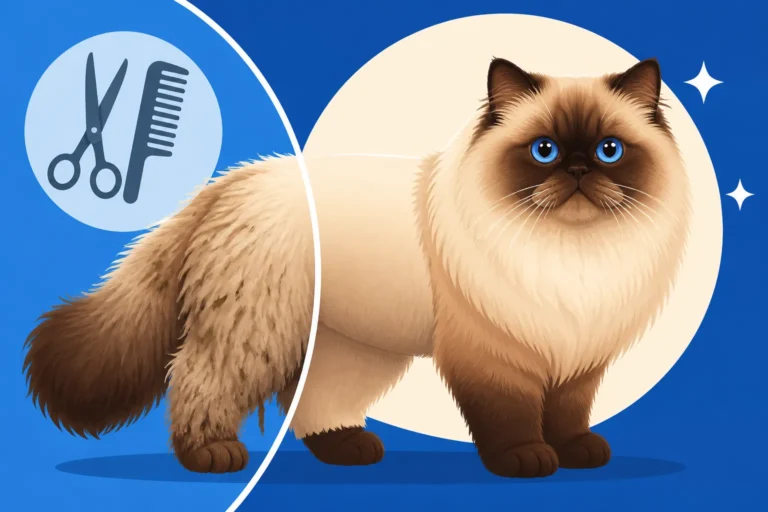
Daily grooming isn't just about preventing mats; it's vital for maintaining point contrast, especially the purity of the body coat. Regular combing removes loose hair, prevents oils and dirt from accumulating, and stimulates blood circulation to the skin, all of which contribute to a healthy, vibrant coat. A clean coat is a light coat.
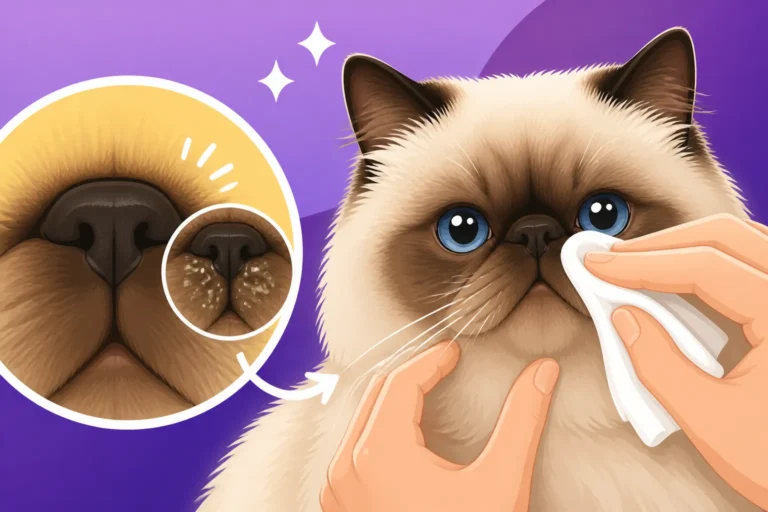
Special attention should be paid to areas prone to yellowing or staining, such as around the face and on the britches. Regular gentle wiping of the face can prevent tear stains from dulling the white fur around the mask, while careful cleaning of the sanitary area prevents discoloration that can creep up the hindquarters. While bathing should be infrequent to avoid stripping natural oils, when necessary, use a gentle, color-enhancing or whitening shampoo designed for cats, followed by thorough rinsing to prevent residue that can dull the coat. How to Keep a Cream Point Himalayan Looking Clean offers practical advice on this.
Environmental Control: The Goldilocks Zone
As we discussed, temperature plays a huge role in a Himalayan's point contrast. Keeping your home at a consistent, comfortable temperature – not too cold – helps prevent the body from darkening or "smutting." Himalayans are inherently indoor cats, and a stable indoor environment supports their unique coloration. Avoid extreme temperature fluctuations if possible.
Consider where your Himalayan sleeps. If they frequently curl up on a cold tile floor or near a drafty window, those areas of their body could become slightly darker over time. Providing warm, soft beds in insulated spots can help. Similarly, while sunbathing is lovely, prolonged, intense sun exposure can sometimes fade point colors, particularly the lighter reds and creams. Offering shaded spots for napping near windows or using window coverings during peak sun hours can be beneficial. It's all about finding that "just right" environment that supports their natural beauty.
The Journey of Point Contrast Through a Himalayan's Life
It's a wonderful thing to watch your Himalayan grow and change, and their point contrast is a living, breathing aspect of that journey. From a tiny, almost white kitten to a stately senior, the colors of a Himalayan cat evolve. Understanding these changes can help set realistic expectations and allow you to appreciate every stage of your cat's unique beauty.
Kittenhood: The Emergence of Color
When a Himalayan kitten is born, they are almost entirely white or a very pale cream. This is one of the most magical aspects of the breed! Their points gradually begin to emerge and darken over the first few weeks and months of their lives. You'll first notice a faint shadow on their ears and tail, then a delicate mask forming on their face, and finally, color developing on their paws. This process is fascinating to observe, a true testament to the temperature-sensitive gene at work.
During this stage, the contrast is developing. A very young kitten might have softer, less defined points, which will sharpen and deepen as they mature. Breeders often monitor this development closely, as it gives them an early indication of the kitten's potential for show quality. By twelve weeks, you'll have a much clearer idea of the kitten's adult point color and the initial promise of their contrast. When a Himalayan Kitten's Points First Appear provides more insights into this early development.
Adulthood: Peak Contrast and Vibrancy
A Himalayan typically reaches its peak point contrast and color vibrancy during its adult years, generally from about one to seven or eight years old. During this period, their points should be deep, rich, and well-defined, with a clear, pale body coat. This is often when they are at their most striking, whether they are destined for the show ring or simply gracing your living room with their regal presence.
Maintaining this peak requires consistent good care: a balanced diet, regular grooming, and a stable indoor environment. This is when the hard work of the breeder, combined with your diligent care, truly pays off in a stunning display of color. It's the period where the ideal of the breed standard is most evident, and the contrast is at its most dramatic and clean.
Senior Years: Natural Fading and Darkening
As Himalayans enter their senior years, typically starting around eight to ten years old, you might notice some natural changes in their point contrast. It's common for the body coat to gradually darken or "smut" with age, losing some of its pristine paleness. This happens because the metabolic rate slows down, and the body temperature might subtly shift, allowing more pigment to develop even in the warmer areas. The points themselves might also become slightly less intense or well-defined.
This is a completely normal part of aging and is not a reflection of poor care. Think of it as your cat earning its silver streaks or developing a richer, more nuanced palette over time. While you can continue with good nutrition and grooming to support overall coat health, expecting the same crisp, dramatic contrast of their youth might not be realistic. Instead, you can appreciate the dignified beauty of their mature coat. What Goes First in a Himalayan Past Twelve often includes subtle changes in coat quality and color.
Disclaimer
This article is for general informational purposes only and does not constitute professional advice. Laws, prices and regulations vary by location and change over time. Consult a qualified professional for guidance on your specific situation.