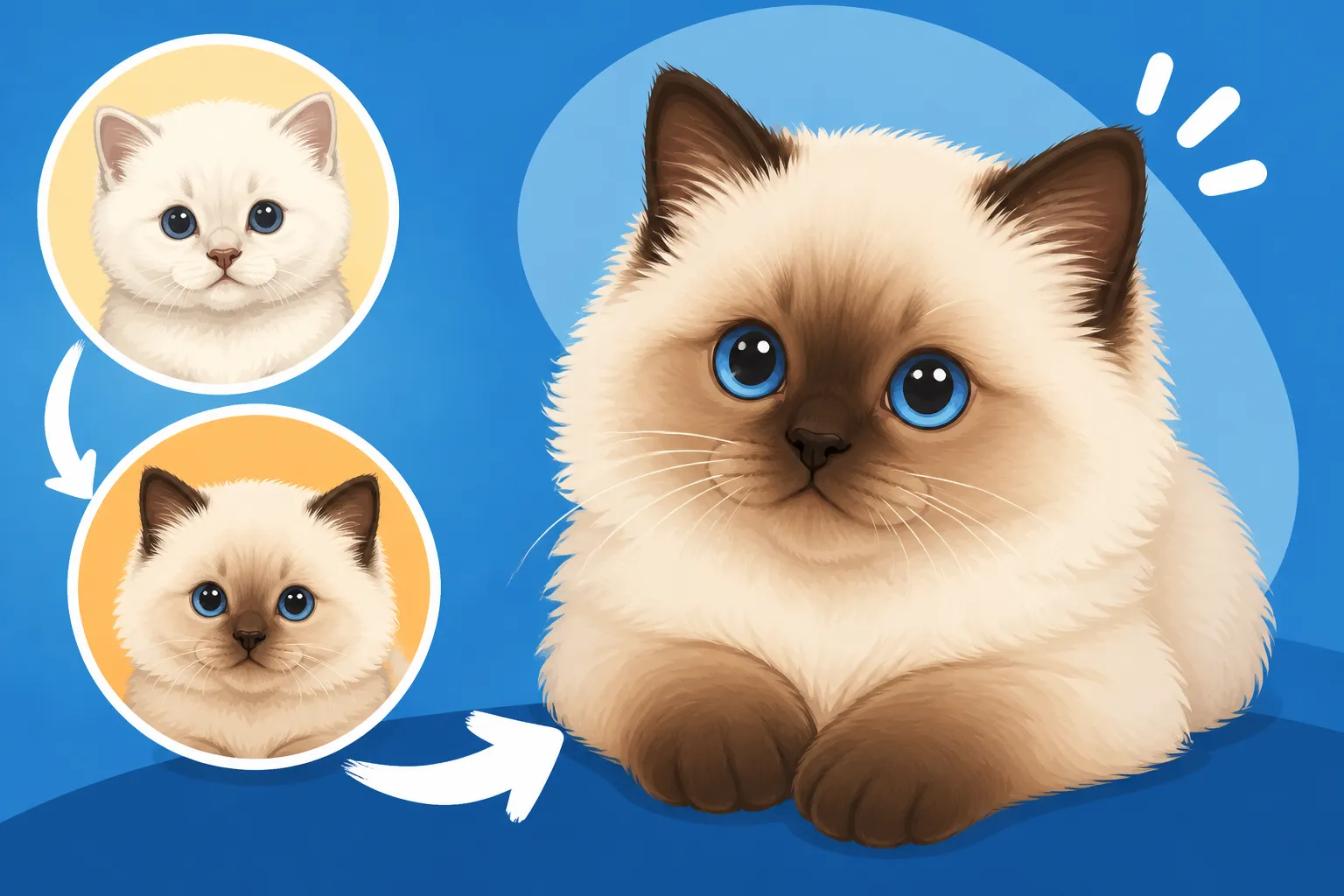
When a Himalayan Kitten’s Points First Appear
One of the most exciting, and let's be honest, slightly baffling, parts of bringing home a Himalayan kitten is watching their unique coloring emerge. You get this adorable fluffball, often almost completely white or cream, and you know there's a beautiful pattern waiting to appear. But when exactly does that happen? And why do they start out so pale? This guide will dive deep into the fascinating process of how and when your Himalayan kitten's distinctive point coloration first makes its grand appearance.
The Genetic Magic Behind Himalayan Points
The striking "pointed" pattern of a Himalayan isn't just a random splash of color; it's a genetic marvel, a visual testament to a very specific, temperature-sensitive enzyme. Understanding this is key to appreciating why your kitten starts off looking like a cloud and gradually transforms.
The Temperature-Sensitive Gene in Action
At the heart of your Himalayan's gorgeous color scheme is a gene that produces a temperature-sensitive variant of the tyrosinase enzyme. Now, that might sound like a mouthful, but think of tyrosinase as the tiny artist responsible for painting the pigment (melanin) onto your cat's fur. In most cats, this enzyme works pretty uniformly across the entire body, leading to a solid color or a tabby pattern. But in Himalayans (and their Siamese ancestors), this particular enzyme is a bit finicky; it only works efficiently in cooler temperatures.
What does this mean for your kitten? Well, the parts of their body that are naturally cooler — the extremities like their ears, nose, paws, and tail — are where this pigment-producing enzyme can do its best work. These are the "points" that will darken over time. The core of their body, which stays warmer, doesn't allow the enzyme to fully activate, resulting in the beautiful, paler body color. It's truly a fascinating biological trick that gives the Himalayan its signature look, a pattern that many other species share, like the Himalayan rabbit itself (see The Himalayan Is Named After a Rabbit). It's a silent, natural process unfolding right before your eyes, creating that lovely contrast we adore.
Born Almost White: A Warm Start
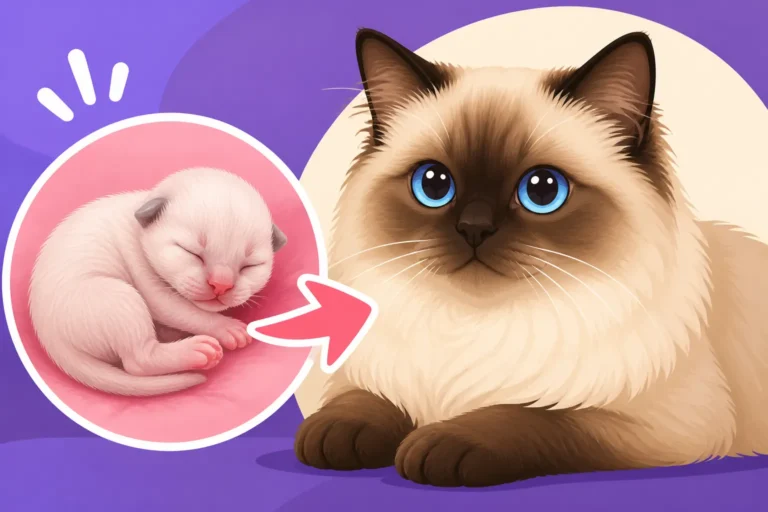
If you've ever seen a newborn Himalayan kitten, you might have done a double-take. They don't arrive with those dramatic dark points already in place! In fact, most Himalayan kittens are born almost entirely white or a very pale cream. This isn't a mystery; it's a direct consequence of that temperature-sensitive gene we just discussed.
Inside their mother's womb, kittens are kept wonderfully warm and cozy. This consistent, higher internal temperature prevents the tyrosinase enzyme from doing its job effectively. There's simply not enough cool real estate for the pigment to develop. So, the melanin production is suppressed across their entire tiny bodies, resulting in that surprisingly pale initial coat. It's a protective, natural incubator that ensures they emerge uncolored. You can learn more about this initial stage in What Color a Himalayan Kitten Is at Birth. It's only once they're out in the world, exposed to normal room temperatures, that their unique genetic blueprint begins to express itself visually, and the magic of their coloration truly starts.
The Timeline of Point Development
Watching a Himalayan kitten's points emerge is like watching a slow-motion painting unfold. It’s not an instant change, but a gradual, beautiful transformation that requires a keen eye and a bit of patience.
First Subtle Hints: Days to Weeks Old
For many new owners, the first few days or even a week can feel like nothing is happening. Your tiny fluffball is still predominantly white, perhaps with the faintest whisper of color on their nose or ear tips. These initial hints are incredibly subtle, often just a slightly darker shadow that you might only notice in perfect lighting. It's not the deep, rich color you expect in an adult Himalayan, but rather an almost translucent darkening, a ghost of what's to come.
These early days are more about observation than dramatic changes. You might catch yourself squinting, wondering if you're imagining it. The first areas to show even the slightest color are almost always the nose leather and the very tips of the ears. This is because these are the parts of a kitten's body that lose heat most readily and are therefore the coolest. It’s a gentle introduction to their future coat, preparing you for the more obvious shifts just around the corner.
Clearer Colors Emerge: 2-4 Weeks On
As your Himalayan kitten approaches two to four weeks of age, the changes become much more distinct and exciting! This is when those faint whispers of color start to solidify into actual, recognizable points. You’ll begin to see definite shading on their tiny nose, the edges of their ears will show more pronounced pigment, and their little paws might start to show a darker tone at the very tips. The tail, too, often begins to show a more noticeable darkening, especially at the tip.
At this stage, the colors are still relatively light compared to what they will be as adults, but there's no mistaking them anymore. If you have a seal point, you’ll see brown. If it’s a blue point, a soft grey will emerge. It’s truly enchanting to witness this daily progression. This is often the time when breeders can confidently identify the kitten's point color, even if it's still quite pale. To get a better grasp of this timing, you might find How Many Weeks Before a Himalayan Kitten's Points Show quite illuminating. It’s a period of rapid and beautiful transformation, a testament to the wonders of feline genetics.
Maturation and Deepening: Months to Years
While you'll see clear points by a month old, it's important to understand that your Himalayan's color journey is far from over. The points will continue to deepen, enrich, and spread over many months, and even years, of their life. Think of it like a fine wine, slowly developing complexity. During their first year, especially through kittenhood and adolescence, the colors will become much more vibrant and intense. A kitten's blue points might transition from a light slate gray to a rich, deep blue, while seal points will go from a milk chocolate to a dark, almost black-brown.
This deepening process isn't just about intensity; the areas covered by the points can also subtly expand. The mask on their face might spread a little further, and the color on their legs might creep up slightly. Some Himalayans don't reach their full, final point depth and spread until they are two or even three years old. It’s a long-term commitment to a visual spectacle! If you're curious about the long game, How Many Years a Himalayan's Points Take to Finish offers a great perspective on this extended development. So, enjoy the daily subtle shifts, but know that the true masterpiece will take its time to fully reveal itself. You'll especially notice these changes as you track How a Himalayan Kitten's Points Darken Month by Month.
Factors Influencing Point Intensity and Timing
Beyond genetics, several environmental and inherent factors play a significant role in how quickly, and how deeply, your Himalayan kitten’s points develop. It’s not just a one-size-fits-all process.
Environmental Temperature and Its Role
This is perhaps the most significant external factor influencing point development. Remember that temperature-sensitive enzyme? It thrives in cooler environments. This means a kitten raised in a generally cooler household will likely develop its points faster and to a darker, richer intensity than a kitten raised in a very warm home. It’s a direct response to their surroundings.
Imagine a Himalayan kitten spending its first few months in an air-conditioned home versus one in a consistently warm, perhaps even humid, environment. The cooler environment literally activates that pigment-producing enzyme more readily and for longer periods each day, allowing more melanin to be deposited in the extremities. This doesn't mean you should keep your kitten in a chilly house (their comfort and health always come first!), but it explains why some Himalayans might look much darker than others even if they are the same age and point color. This phenomenon is why Why a Himalayan in a Cold House Darkens All Over is a real observation, not just an old wives' tale! It also means that a Himalayan who spends some supervised time in a cooler area of the house might see faster point development compared to one who is always nestled in the warmest spot.
Genetic Predisposition and Specific Point Colors
While all Himalayans share the same basic genetic mechanism for their pointed coloration, the specific type of point color they carry also affects the timing and intensity of development. Not all points are created equal in terms of their pigment strength. For example, seal points, which are genetically black, tend to develop quite early and usually achieve a very deep, robust color. They often appear more quickly and dramatically than lighter points. You'll often see breeders proudly showing off their seal point kittens with well-defined dark points early on. These kittens often command a certain price point too, given the clarity of their color, and you can delve into What a Seal Point Himalayan Sells For to understand more.
On the other end of the spectrum, colors like lilac point, which is a dilute chocolate, can take much longer to show up clearly and will always be a paler, softer shade. A lilac point kitten might look almost white for longer, with only the faintest blush of color appearing weeks after a seal point littermate would have distinct markings. The same applies to cream points versus flame points – creams are often much slower to define. The genetic dilution factors mean less pigment is produced overall, and that means a slower, softer display. Understanding this can save you a lot of anxiety if you're waiting for those beautiful, delicate lilac hues to appear, as explained in Why a Lilac Point Himalayan Is the Palest of All. It's all part of the unique genetic tapestry of your individual cat.
Health and Nutrition for Optimal Pigmentation
While genetics and temperature are primary drivers, a kitten's overall health and the quality of their nutrition certainly play a supporting role in the vibrancy and health of their coat, including their points. A kitten who is thriving, receiving a well-balanced diet rich in essential nutrients, vitamins, and minerals, will generally have a healthier, more lustrous coat. This robust health supports all bodily functions, including healthy pigment production.
Conversely, a kitten struggling with health issues or receiving inadequate nutrition might have a duller coat, and its point coloration might not develop with the same intensity or clarity. While nutrition won't change a blue point into a seal point, it will ensure that the blue points develop to their full potential, appearing strong and clear rather than muted or weak. Ensuring your kitten gets a high-quality, species-appropriate diet from the start is fundamental for their overall well-being, which in turn supports a beautiful coat. Many owners turn to reputable brands or specialized, nutrient-dense options to ensure their kittens are getting the best start possible. It's about providing the building blocks for beauty and health from the inside out.
What to Expect as Your Kitten Grows
The journey of your Himalayan's point coloration is truly a lifelong one. It doesn't stop once they're out of kittenhood; instead, it continues to evolve and deepen with age and even seasons.
The Continuous Evolution of Color
It’s crucial to remember that your Himalayan’s points are never truly "finished" in the way a solid-colored cat's coat is. Their coloration is dynamic, a living canvas that subtly changes throughout their entire life. As they transition from kitten to adult, you'll notice the points generally becoming darker and more defined. This is a natural maturation process, as the enzyme has had more time to deposit pigment in those cooler areas. This is particularly noticeable in the facial mask, which can often spread and deepen over the first couple of years.
Beyond this maturation, environmental factors continue to play a role. A Himalayan living in a consistently cooler climate might always have deeper points than one in a warmer region, even if they are littermates. Moreover, seasonal changes can influence point intensity. Some owners report that their Himalayans' points appear slightly lighter in the summer months when ambient temperatures are higher, and then deepen again as winter arrives. It’s a subtle but fascinating shift, and you can explore Whether a Himalayan's Points Fade in Summer for more insights into this phenomenon. As your cat ages, you'll likely observe a general darkening of their entire coat, and their points can become so deep they almost merge with their body color, giving them an almost solid appearance, as detailed in Why an Old Himalayan Looks Almost Solid Colored. It's a testament to the ongoing work of that incredible temperature-sensitive gene!
Noticing Differences in a Litter
If you've ever had the joy of watching a whole litter of Himalayan kittens, you'll quickly realize that point development isn't always uniform, even among siblings. While they all share the same genetic basis for their coloration, individual kittens can show slightly different rates and intensities of point emergence. One kitten might have noticeably darker ears and a more defined mask at three weeks, while another, with the exact same point color, might still be quite pale at the same age.
These variations are completely normal and can be due to a myriad of minor factors, including slight differences in their individual body temperatures, how much time they spend snuggled against a warm littermate versus exploring cooler areas, or even subtle metabolic differences. It's not a cause for concern and simply adds to the charm of each individual kitten. It's like siblings in a human family – they share genes, but each develops and looks unique in their own way. Observing these subtle differences can be one of the most delightful aspects of raising a litter or picking your kitten, as you watch their individual personalities, and colors, unfold.
When to Talk to Your Breeder or Vet
While point development is a natural and usually uneventful process, there are rare occasions when it's good to touch base with your breeder or veterinarian. Reputable breeders are a wealth of knowledge and are often tracking point development closely. If you’re several weeks in and see absolutely no discernible point coloration on your kitten, especially compared to other kittens you’ve seen or photos from the breeder, a quick chat with them can provide reassurance. They know their lines and can tell you if a particular color tends to develop later.
Generally, significant concerns about color development are very rare unless there are other, more serious health issues at play. However, if you notice other symptoms accompanying a lack of point development – such as lethargy, poor appetite, or failure to thrive – then a veterinary visit is absolutely essential. These symptoms are far more indicative of a problem than color alone. For a comprehensive check-up before points are fully defined, consider reviewing What to Check on a Himalayan Kitten Before Its Points Show, which covers broader health indicators. Always prioritize your kitten's overall health and well-being. A healthy kitten will eventually show its true colors, beautifully and brilliantly. For routine supplies for your growing kitten, whether it's special bowls for their developing faces or a new comb for their softening fur, online retailers like Amazon offer a vast selection.
Here's a quick overview of typical point development:
| Age (Approx.) | Observable Point Development | Notes |
|---|---|---|
| Birth – 1 Week | Entirely white or very pale cream. | No visible points due to warm uterine environment. |
| 1 – 2 Weeks | Faint, subtle shading on nose leather and ear tips. | First hints emerge as kitten is exposed to cooler air. Often hard to detect. |
| 2 – 4 Weeks | Clearer definition on nose, ears, paw pads, tail tip. | Points become visibly distinct; specific color (e.g., brown, grey) can be seen. |
| 1 – 6 Months | Points continue to deepen in intensity and spread. | Mask on face begins to fill in more, overall color becomes richer. |
| 6 Months – 2 Years | Full depth and richness of point color achieved. | Colors mature, reaching their adult vibrancy. Can still darken slightly. |
| Beyond 2 Years | Gradual darkening of points and body coat with age. | Environmental factors (temperature) and aging can lead to deeper pigmentation. |
Disclaimer
This article is for general informational purposes only and does not constitute professional advice. Laws, prices and regulations vary by location and change over time. Consult a qualified professional for guidance on your specific situation.