What Color a Himalayan Kitten Is at Birth
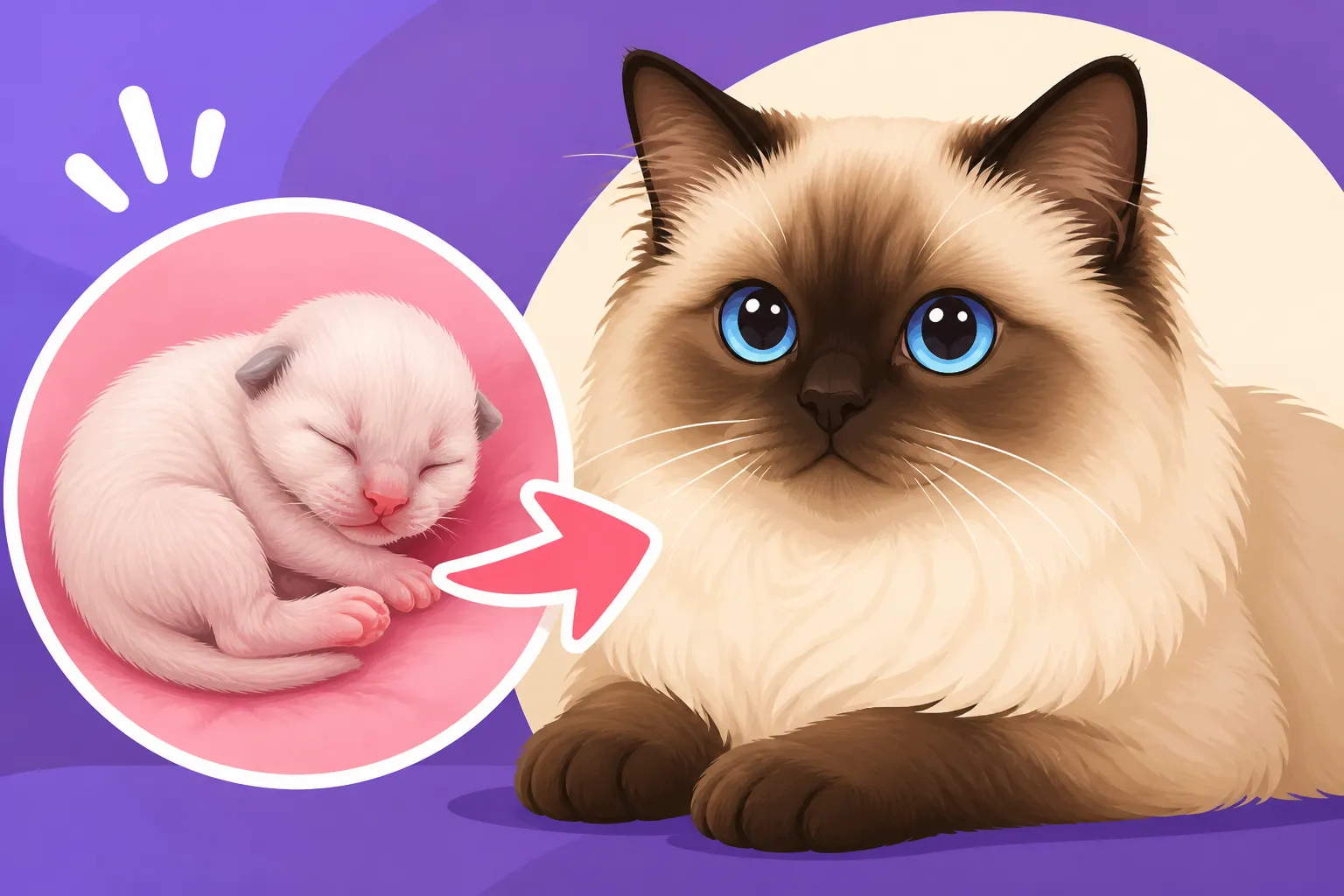
When you first lay eyes on a newborn Himalayan kitten, you might find yourself doing a double-take. Many prospective owners or even new guardians are surprised, sometimes even a little confused, when they see a tiny bundle of fluff that is almost entirely white or a very pale cream. This guide is here to unravel that delightful mystery, explaining precisely why these charming felines enter the world looking so uniformly light, and how their iconic point coloration slowly, almost magically, emerges over time.
The Mystery of the Nearly White Himalayan Newborn
It's a common scene: eager new Himalayan parents peering into the kitten box, expecting to see the distinct dark ears, face, and tail that characterize the breed. Instead, they’re met with a litter that looks, to the untrained eye, like a collection of tiny, pale snowballs. This initial uniform paleness isn't a sign of a bland coat or a "defective" kitten; it's a perfectly normal, fascinating aspect of Himalayan genetics.
The Science Behind the Pointed Pattern
The captivating pointed pattern that defines the Himalayan, with its darker extremities and lighter body, is all thanks to a very special, temperature-sensitive enzyme. This enzyme is crucial for producing melanin, the pigment responsible for fur color. Here's the kicker: this enzyme only really works efficiently in cooler temperatures.
Think of it like a special kind of heat-activated ink. If the ink gets warm, it stays light or clear. If it's cold, it turns dark. For our Himalayan friends, their core body temperature, maintained cozy and warm inside the womb and for the first few days of life, keeps this enzyme mostly inactive. As a result, very little melanin is produced across their entire body. This genetic quirk means that every Himalayan kitten is born without its characteristic points fully developed, a stark contrast to many other breeds whose coat patterns are evident from day one. You might even find it interesting to learn about Which Gene Makes a Himalayan Pointed.
What "Almost White" Really Looks Like
So, when we say "almost white," what exactly does that mean? It's not usually a stark, bleached white, but rather a soft, creamy white, sometimes a pale ivory, or even a very light fawn. It's subtle, beautiful, and utterly charming in its own right. The body is uniformly this light shade, with very little to no visible contrast anywhere.
Even the areas that will eventually become the darkest points—the ears, nose, paws, and tail—are indistinguishable from the rest of their body color at birth. Occasionally, in a particularly chilly environment, a kitten might have the faintest, almost imperceptible whisper of color on the very tips of its ears or tail, but this is rare and truly requires a discerning eye. It’s certainly not the vibrant color you'll see in a few weeks. The key is the sheer lack of distinction; you won't be able to tell a seal point from a blue point, or a chocolate point from a lilac point, based on their initial appearance.
Early Signs of Future Color
While the majority of a Himalayan kitten's body is uniform in color at birth, there are a few extremely subtle indicators that a keen observer might notice. The paw pads and nose leather, for instance, might sometimes carry a slightly darker hue than the surrounding skin, giving the tiniest hint of the color to come. This is especially true for the darker point colors like seal or chocolate. However, it's really important to stress that this is not the actual fur color, but a subtle pigmentation of the skin itself, which often develops just a touch faster.
For the most part, you won't be able to distinguish what specific point color your kitten will be until several weeks pass. It's a waiting game, but a rewarding one! This early stage is all about enjoying the innocent, unblemished paleness of your little one, knowing that the beautiful, contrasting points are just waiting for the right conditions to reveal themselves. Don't worry if your kitten seems uniformly pale; it's simply following its genetic roadmap.
The Gradual Unfolding of Point Color
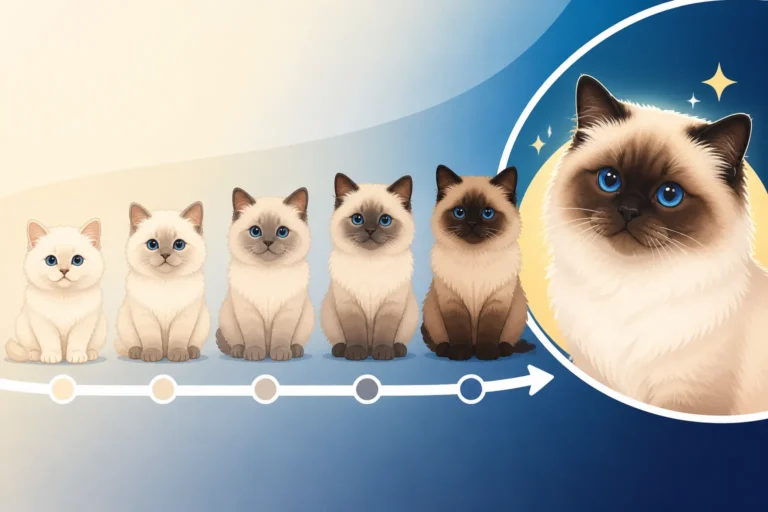
The transformation of a nearly white kitten into a beautifully pointed Himalayan is one of the most exciting parts of watching them grow. It's not an overnight change, but a slow, deliberate unfolding of color, guided by genetics and the environment.
Weeks One to Four: Subtle Hints Emerge
The moment a Himalayan kitten is born, its body temperature begins to normalize to the ambient air around it, rather than the consistent warmth of the womb. This drop in temperature, even by a few degrees at the extremities, is enough to start activating that special melanin-producing enzyme we talked about earlier.
During the first few weeks, the very coolest parts of the kitten's body—the tips of their ears, their tiny nose, the pads of their paws, and the tip of their tail—will begin to show the absolute first, most subtle hints of their genetically determined point color. For a seal point, this might be a very faint, almost smoky graying on the ear tips. A blue point might show a misty, barely-there blue. Flame points could develop a very pale, creamy peach tint on their extremities. These aren't strong, obvious colors yet, but rather gentle washes or shadings. It's a magical time, where you start to glimpse the unique beauty that your kitten will soon display. This is a clear demonstration of Why the Cold Parts of a Himalayan Grow Dark Fur, as these are the first areas to truly cool down. Conversely, the core of their body remains warm, and thus, Why the Warmest Parts of a Himalayan Stay Palest.
Eight to Twelve Weeks: Distinct Points Take Shape
By the time a Himalayan kitten reaches eight to twelve weeks of age, their point colors are usually quite distinct and recognizable. This is the period when most reputable breeders will let kittens go to their new homes, partly because their personalities are emerging, but also because their true colors are now visible. You'll see those ears and the mask on their face becoming more pronounced, the tail developing its darker hue, and the paws showing clear color.
This is when you can confidently identify your kitten as a seal point with its rich, dark brown points, or a blue point with its softer, slate-gray accents. Chocolate points will have warm, milk-chocolate tones, and lilac points will show delicate, pinkish-gray points. Flame points will burst with vibrant orange-red, while cream points will display softer, lighter cream. Even the intricate patterns of a tortie point or lynx point Himalayan will be clearly discernible. It's fascinating to observe How Many Weeks Before a Himalayan Kitten's Points Show and How a Himalayan Kitten's Points Darken Month by Month during this crucial developmental period. This is also why Why a Himalayan Kitten Stays Until Its Points Settle is a common practice among ethical breeders.
Beyond Kittenhood: Deepening and Maturing Colors
The development of a Himalayan's point color doesn't stop at twelve weeks; it's a continuous process throughout their lives. Their points will continue to deepen, enrich, and often spread slightly as they mature. This can take anywhere from one to two years to reach their full, adult coloration, and even then, subtle changes can occur over time. How Many Years a Himalayan's Points Take to Finish really puts into perspective the long game of Himalayan coat development.
Environmental temperature continues to play a significant role. A Himalayan living in a consistently cooler climate or a house with cooler ambient temperatures might develop darker, more intense points than one living in a very warm environment. This phenomenon highlights How Temperature Decides a Himalayan's Point Color. You might even notice that in summer, their points might lighten slightly, only to darken again as the colder months approach. So, Whether a Himalayan's Points Fade in Summer is indeed a real thing! It’s also why older Himalayans often appear much darker overall, sometimes to the point where their body color seems to blend with their points, as elegantly described in Why an Old Himalayan Looks Almost Solid Colored. It's just a beautiful testament to their unique genetic makeup and how they interact with the world around them.
Factors Influencing Point Development
Beyond the initial genetic blueprint, several factors contribute to how and when a Himalayan kitten's points develop their full glory. Understanding these can help you appreciate the nuances of your cat's unique coat.
Genetics: The Blueprint for Color
At the heart of every Himalayan's beautiful coat is its genetic code. The parents pass down the specific genes that determine not just the pointed pattern, but also the color of those points. So, whether your kitten will be a seal point, a blue point, a chocolate point, or any other recognized Himalayan color, is all decided long before they're born. You can't change the base color through diet or environment; those are merely influences on the intensity and expression of the color.
Breeders carefully select parent cats based on their genetic lineage to ensure specific point colors are produced. This also ensures the overall health and conformation of the kittens. It's a delicate balance of art and science, making sure those beautiful, clear blue eyes (a direct result of the same point gene!) accompany the stunning coat. It's truly incredible to think that Why the Point Gene Makes Every Himalayan Blue Eyed is intrinsically linked to their coat color development.
Environmental Temperature: The Catalyst
We've touched on it already, but it bears repeating: temperature is the absolute king when it comes to point development and maintenance in Himalayans. The cooler parts of the body allow the melanin enzyme to work, making the fur darker. The warmer parts inhibit it, keeping the fur light. This is a lifelong phenomenon. If a Himalayan lives in a particularly chilly house, their points might develop to be much darker and more extensive. This illustrates Why a Himalayan in a Cold House Darkens All Over.
An interesting anecdote that really drives this home is what happens after a shaved patch. If your Himalayan ever needs a patch of fur shaved for a medical procedure, you'll often notice that when the fur grows back, it comes in significantly darker than the surrounding body coat. This is because the shaved skin area is cooler without its insulating fur, allowing the enzyme to work overtime. It's a temporary but vivid demonstration of How a Shaved Patch Regrows Darker on a Himalayan. Even something as simple as sleeping position or wearing a harness can slightly influence local fur temperature and thus, color.
Health and Nutrition's Role
While genetics and temperature lay the foundational framework for point color, a kitten's overall health and nutrition play an important supporting role in the vibrancy and quality of their coat. A well-nourished, healthy kitten will generally develop its coat and points as genetically intended, exhibiting rich, clear colors and a luxurious texture.
Conversely, a kitten suffering from poor health, parasites, or nutritional deficiencies might have a duller coat, slower growth, and potentially less vibrant point colors. This isn't to say their genetic color will change, but its optimal expression might be hampered. Ensuring your Himalayan kitten receives a high-quality, balanced diet, appropriate for their age and activity level, is crucial for supporting overall development, including a beautiful coat. Don't underestimate the power of good food for that glossy, well-defined point pattern. Beyond diet, regular veterinary check-ups are key to catching any underlying issues that could affect their coat or general well-being. Keeping a vigilant eye on their health ensures they have the best chance to grow into the magnificent, richly colored adults they are meant to be. This also impacts general well-being, as it’s important to understand What a Himalayan Kitten Has Had Done Before Its Points Set before they come home.
| Point Color (Expected Adult) | Appearance at Birth (Approx.) | First Visible Signs (Weeks) | Clear Recognition (Weeks) | Full Maturity (Years) |
|---|---|---|---|---|
| Seal Point | Creamy white to pale fawn | 1-2 (ears, tail tip) | 6-8 | 1-2+ |
| Blue Point | Off-white to very pale cream | 2-3 (ears, tail tip) | 8-10 | 1-2+ |
| Chocolate Point | Bright white to ivory | 2-4 (ears, nose leather) | 8-12 | 1-2+ |
| Lilac Point | Purest white | 3-5 (faintest hint on ears) | 10-14 | 1-2+ |
| Flame Point | Creamy white with faint pink undertone | 1-3 (ears, tail tip) | 6-9 | 1-2+ |
| Cream Point | Pale cream to buff | 2-4 (ears, tail tip) | 8-11 | 1-2+ |
Disclaimer
This article is for general informational purposes only and does not constitute professional advice. Laws, prices and regulations vary by location and change over time. Consult a qualified professional for guidance on your specific situation.