Why Declawing a Himalayan Solves Nothing
The constant worry about your beautiful Himalayan scratching up your treasured furniture can be incredibly frustrating. You’ve invested so much in creating a comfortable home, only to find claw marks on your sofa, drapes, or even doorframes. It’s easy to feel desperate for a solution, and for some, declawing might seem like the only way to protect both your belongings and your peace of mind. However, this guide will explore why declawing isn't truly a solution for your Himalayan and offer humane, effective alternatives that protect your home without compromising your beloved cat's well-being.
Understanding the Act of Declawing
When we hear the word "declawing," many people picture a simple procedure, perhaps like having a nail removed. The reality, however, is far more significant and impactful, especially for a delicate breed like the Himalayan. It’s crucial to understand exactly what the surgery involves and the profound implications it has for your cat. This isn't just a manicure; it's a major amputation that fundamentally alters your cat's body and, by extension, their behavior and comfort.
More Than Just a Nail Trim: The Reality of the Procedure
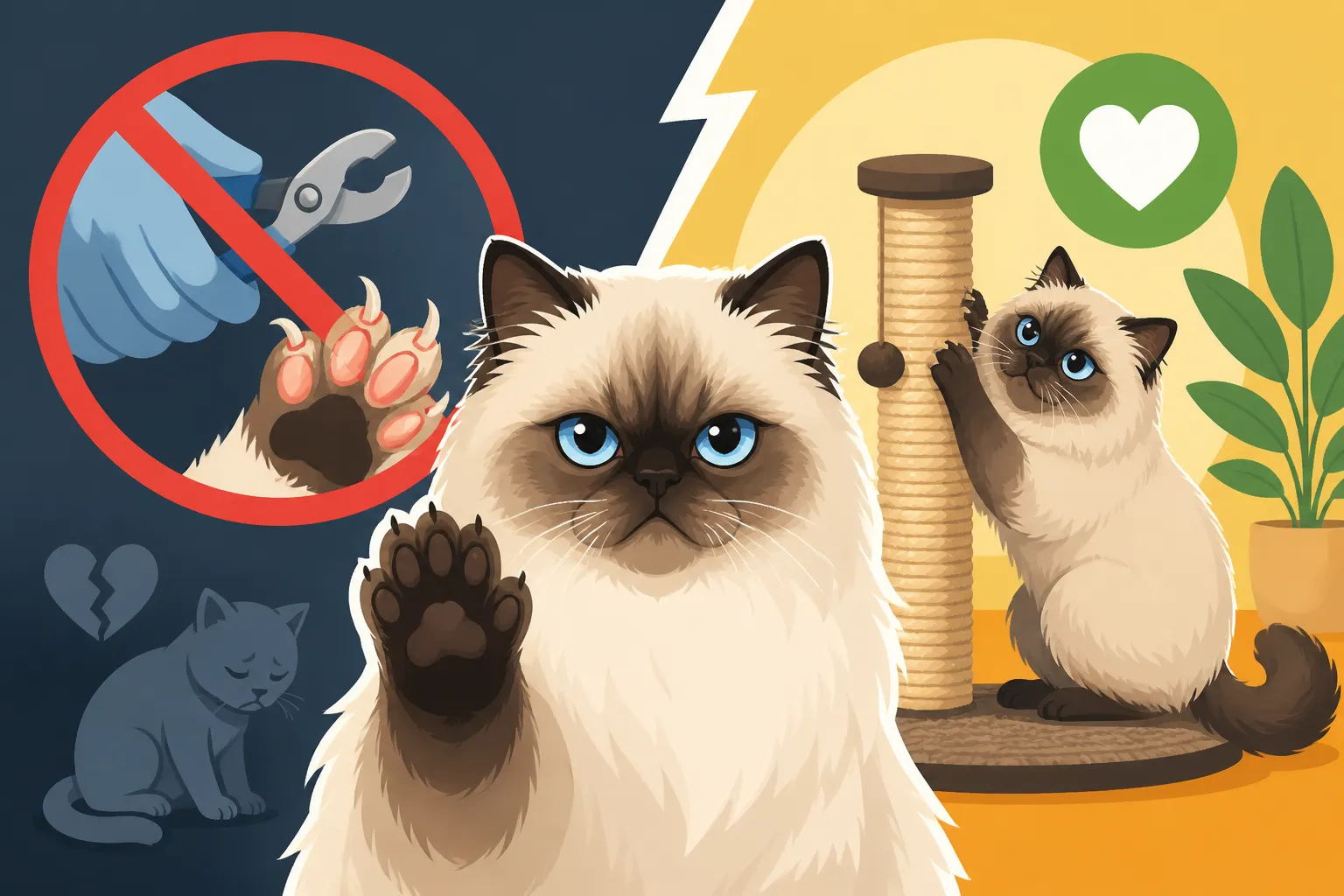
To put it plainly, declawing, or onychectomy, is not merely removing the nail. It involves surgically amputating the last bone of each toe on a cat's paw. Imagine if you had the last knuckle of each of your fingers removed. That’s the equivalent. A cat's claw grows directly from this bone, and to prevent the claw from growing back, the entire bone must be removed. This is often done with a scalpel, a guillotine-like clipper, or even a laser. Each method is an amputation.
The procedure leaves a cat with stubby, tender paws, fundamentally changing how they walk and interact with their environment. The paws are essential for their balance, their ability to jump, and even how they bear weight. Post-surgery, the healing process can be lengthy and painful. There's the immediate surgical pain, but often, phantom pain, nerve damage, or discomfort from improperly healed bone fragments can linger for a lifetime. It’s a permanent alteration with lasting physical consequences that can affect your Himalayan every single day.
The Hidden Toll on a Himalayan's Body and Mind
Beyond the physical amputation, the psychological and behavioral toll on a Himalayan can be significant. Your cat relies on its claws for a multitude of natural behaviors. They use them to stretch and flex muscles, to grip when climbing or jumping, and as their primary means of defense. A declawed cat loses these fundamental tools.
Imagine your gentle Himalayan, often a creature of comfort and routine, suddenly unable to perform these natural actions. This can lead to deep-seated anxiety and stress. They might feel vulnerable, lacking their natural defense mechanism, which can manifest as increased aggression, such as biting, because they can no longer bat or scratch effectively. Their sense of balance and agility, already somewhat compromised by their cobby build and short legs, can be further impaired. This can make them reluctant to jump or even navigate stairs, turning a once confident cat into a hesitant one. The chronic pain, whether visible or not, can also contribute to behavioral changes like irritability or withdrawal, impacting their personality and their bond with you.
Why Declawing Fails to Solve Behavioral Issues
Many people consider declawing out of desperation, hoping it will stop destructive scratching. However, declawing rarely addresses the root cause of the scratching behavior and can often lead to new, even more problematic issues. It's like trying to fix a leaky roof by painting over the water stains inside – it doesn't solve the problem, and new issues will surely appear.
Redirecting Natural Instincts: Scratching as Essential Behavior
Scratching is not a malicious act; it's an absolutely essential and instinctual behavior for cats, including our charming Himalayans. They scratch to shed the outer layers of their claws, keeping them sharp and healthy. This is why you might see bits of shed claw around their favorite scratching post. It's also a vital form of exercise, stretching their back, shoulder, and paw muscles, especially important for a cobby breed that might not be as acrobatic as others.
Furthermore, scratching is a territorial marker. Cats have scent glands in their paws, and when they scratch, they leave both a visual mark and a scent mark, signaling their presence to other cats (or to you!). For a Himalayan, who often prefers its routine and designated spots, this territorial marking can be very important to their sense of security. Taking away this natural outlet doesn't stop the need to scratch; it simply removes the physical ability, forcing the cat to find other ways to cope or express these instincts, often in undesirable ways. A cat that doesn't have appropriate outlets might become frustrated or lethargic.
The Emergence of New Problems: Post-Declaw Behaviors
One of the most disheartening outcomes of declawing is the common appearance of new behavioral problems. Since cats use their claws to dig and cover in the litter box, declawed cats often find the sensation of litter against their tender, surgically altered paws to be deeply painful. This discomfort can lead them to avoid the litter box altogether, preferring softer surfaces like carpets, furniture, or laundry piles. Suddenly, instead of a scratching problem, you have a much more difficult and unsanitary urination or defecation problem to contend with.
Beyond litter box aversion, declawed cats are frequently reported to develop increased biting behavior. Lacking their primary defense mechanism, a cat might resort to using its teeth more readily when feeling threatened, scared, or even during playful interactions that previously involved gentle swatting. This can be a significant concern, especially in homes with children or other pets. The chronic pain mentioned earlier can also lead to a general increase in aggression or a withdrawal from interaction, turning your once sweet and cuddly Himalayan into an anxious or distant pet.
Humane Alternatives for Your Himalayan
The good news is that you absolutely can manage your Himalayan's natural scratching instincts without resorting to a painful and debilitating surgery. It’s all about understanding their needs and providing appropriate outlets and training. With a little patience and consistency, you can redirect their natural behaviors and keep both your cat and your furniture happy.
Providing Appropriate Scratching Outlets
The key to preventing destructive scratching is to offer appealing alternatives. You need to provide a variety of scratching surfaces and orientations to discover what your Himalayan prefers. Some cats love vertical scratchers, like tall sisal posts, while others prefer horizontal cardboard scratchers that lie flat on the floor. Many cats enjoy an angled scratcher as well.
Consider the material. Sisal rope, cardboard, and even carpet remnants are popular choices. Make sure any vertical scratcher is tall and sturdy enough for your Himalayan to stretch out fully without it toppling over. A good quality sisal post, for instance, should be at least 30-36 inches high to allow for a full body stretch. Placement is also crucial: put scratchers in areas where your cat already likes to scratch (perhaps right next to the marked sofa arm) and in prominent locations where they spend a lot of time, like by their favorite napping spot. You can find a fantastic array of sisal scratchers and cardboard options on sites like Amazon or Chewy, offering various designs to suit your home and your cat's preferences. Reinforce positive use with treats and praise, making the scratcher a rewarding experience. Which Clippers Suit a Himalayan's Heavy Persian Claw is also worth considering for overall claw health.
Regular Nail Trimming and Nail Caps
Regular nail trimming is a simple, effective, and humane way to minimize damage from scratching. If your Himalayan's claws are kept short, they are much less likely to snag on fabric or cause deep scratches. This is something that can be incorporated into your regular grooming routine. Many Himalayans, with their docile nature, can be taught to tolerate nail trims from a young age. Start slow, trim only a tiny bit of the tip, and offer plenty of positive reinforcement. If you're unsure, ask your vet or a professional groomer to show you how to do it safely. Handling a Himalayan So It Will Let You Comb It can give you tips on getting your cat used to handling its paws.
Another excellent alternative is soft claw caps. These are vinyl caps that are glued over your cat's existing claws. They effectively blunt the claws, preventing them from doing damage, and typically last 4-6 weeks before they need to be replaced as the cat's nail grows. They come in various colors and sizes, are generally non-toxic, and most cats adapt to them quickly. You can purchase these through pet supply retailers like Chewy or your veterinarian. This is a temporary, harmless solution that saves your furniture while keeping your cat's claws intact.
Environmental Enrichment and Positive Reinforcement
A bored or anxious cat is often a destructive cat. Providing a rich, stimulating environment can significantly reduce undesirable behaviors like excessive scratching. Engage your Himalayan in daily play sessions with wand toys or laser pointers to burn off energy and satisfy their predatory instincts. Himalayans might be more sedate than a Siamese, but they still need mental and physical activity. Consider puzzle feeders that make them work for their food, or cat trees with different levels for them to explore (even if they mostly stick to the lower ones!).
Positive reinforcement is key. Whenever your Himalayan uses an appropriate scratcher, shower them with praise, a favorite treat, or a short play session. Make the designated scratching areas the most rewarding places to be. Conversely, if you catch them scratching inappropriately, gently redirect them to a proper scratcher. Never punish them; punishment can lead to fear, anxiety, and a breakdown of trust, which can exacerbate behavioral problems. Consistency and patience will go a long way in training your Himalayan to use their scratchers. Remember, How Little a Himalayan Asks For in a Day but they do need engaging spaces.
The Unique Needs of a Himalayan's Paws and Coat
When considering any aspect of a Himalayan's care, it's essential to factor in their distinctive physical characteristics. Their luxurious, long coat and often cobby build mean their grooming and health needs, including paw care, are a bit different from other breeds.
Grooming and Claw Health in a Longhaired Cat
A Himalayan's magnificent coat demands daily attention, and their paws are no exception. Their long fur can grow between their paw pads, sometimes forming "toe tufts" that can become matted or collect debris, making walking uncomfortable. Regular grooming of the paws, including trimming these tufts, is crucial. If the fur between the pads gets too long, it can also reduce traction, making them more prone to slipping on smooth floors.
Regular claw checks are also vital. With their thick fur, it can be easy to miss an ingrown claw, which is incredibly painful and can lead to infection. Himalayans often don't climb as much as other cats, which means their claws might not wear down as naturally, necessitating more frequent trimming. Keeping their claws well-maintained is not just about protecting your furniture; it's a fundamental part of their overall health and comfort. Neglecting paw and claw health can lead to various issues, some of which may go unnoticed due to their dense coat, as discussed in Why a Himalayan's Coat Hides a Wound for Days. Regular, gentle handling of their paws during daily combing will also make nail trims much easier.
Protecting Your Furniture Without Pain
Ultimately, the goal is a harmonious home where your beautiful Himalayan thrives, and your furniture remains intact. This balance is absolutely achievable through a combination of thoughtful preparation and consistent routine, rather than drastic surgical measures.
Begin by evaluating your home from your cat's perspective. Are there enough attractive scratching options? Are they placed conveniently? Are they stable? If your cat has a favorite spot to scratch that isn't a designated scratcher, try placing a new, appealing scratcher right in front of that spot. You might also use deterrents on forbidden surfaces, like double-sided sticky tape or aluminum foil, which cats generally dislike. These are temporary measures to redirect them until they consistently use their own scratchers.
| Alternative to Declawing | Description | Pros | Cons |
|---|---|---|---|
| Multiple Scratching Posts | Various types (sisal, cardboard, carpet), orientations (vertical, horizontal), and locations. | Satisfies natural instinct, promotes exercise, relatively inexpensive. | Requires space, some trial and error to find preference. |
| Regular Nail Trimming | Keeping claws short and blunt with clippers. | Inexpensive, can be done at home, no discomfort for cat. | Requires consistent effort, some cats resist initially. |
| Soft Claw Caps | Vinyl caps glued over claws, blunting them. | Highly effective, comfortable for most cats, wide variety available on Amazon. | Needs reapplication every 4-6 weeks, some cats chew them off. |
| Environmental Enrichment | Playtime, puzzle toys, cat trees, safe spaces. | Reduces boredom and anxiety, strengthens bond, no negative physical impact. | Requires owner engagement, initial investment in toys/furniture. |
| Deterrents & Redirection | Double-sided tape, foil, sprays on forbidden areas; positive reinforcement for appropriate scratching. | Inexpensive, non-invasive, trains good habits. | Requires consistency, might not work for all cats, temporary solution. |
Remember, your Himalayan is a creature of comfort and habit, and a consistent approach to their care, including their paw and claw health, will ensure they remain a cherished and well-adjusted member of your family. How Often a Himalayan Must Be Combed also includes paw inspection. By embracing these humane methods, you’re not only protecting your furniture but also honoring your cat’s natural needs and ensuring their long-term health and happiness. The Himalayan Is a Lap Cat That Answers Back, and they deserve to do so with healthy paws.
Disclaimer
This article is for general informational purposes only and does not constitute professional advice. Laws, prices and regulations vary by location and change over time. Consult a qualified professional for guidance on your specific situation.