Where a Himalayan Will Actually Use a Scratching Post
If you're a loving Himalayan cat parent, you've probably noticed that while your fluffy companion has all the cat instincts, their unique physique can sometimes make typical cat furniture feel like it was designed for a different species. Trying to get your beautiful Himalayan to use a standard scratching post can feel like a losing battle, often resulting in them opting for your sofa or carpet instead. This guide is here to help you understand why traditional scratching solutions might not be appealing to your distinctive feline friend and, more importantly, how to choose and place scratching posts that your Himalayan will actually love and use, saving your furniture in the process.
Understanding Your Himalayan's Unique Scratching Needs
Himalayan cats are truly special, inheriting their regal long coat and cobby body from their Persian ancestors, combined with the striking blue eyes and point coloration of the Siamese. While this mix gives them their undeniable charm, it also means they have specific physical traits that influence how they interact with their environment, especially when it comes to scratching. It's not that your Himalayan doesn't want to scratch; it's that the typical scratching post might not be built with their comfort in mind.
The Cobby Build and Short Legs Challenge
One of the most defining characteristics of a Himalayan is their cobby, compact body and relatively short, sturdy legs. This build is adorable, but it fundamentally changes how they approach a vertical scratching surface. A tall, skinny post that a lanky Siamese might effortlessly scale and stretch on can feel like an Olympic challenge for a Himalayan. They simply can't get the same leverage or achieve that deep, satisfying full-body stretch that other cats do when they dig their claws into a standard post. Their center of gravity is lower, and their reach isn't as expansive. This often leads to them feeling unstable, or simply unable to get a good grip and stretch, making the post less appealing. You might notice them attempting a scratch, only to quickly give up and look for a more stable, lower surface.
The Impact of a Luxurious Persian Coat
Let's face it, that magnificent long Persian coat is a commitment, both for you and your cat! While it's beautiful, it can also create practical issues when it comes to scratching. When a Himalayan stretches to scratch, especially on a sisal or carpeted post, their long fur can get easily snagged or pulled. This isn't just uncomfortable; it can be downright painful if a hair gets really tangled. Cats are smart and will quickly associate discomfort with the scratching post, leading them to avoid it. Furthermore, the sheer volume of fur can sometimes make it harder for them to feel the texture of the scratching surface, which is a crucial part of the sensory experience of scratching. They might prefer a surface where their claws can really sink in without their luxurious mane getting in the way. For tips on managing their coat, you might find How Long a Himalayan's Coat Actually Grows helpful.
Temperament and Activity Levels
Himalayans, while possessing a hint of the Siamese's playfulness, are generally more laid-back and less inclined to acrobatic feats than many other breeds. They are often described as quiet, sweet, and content to lounge on your lap or their favorite comfy spot. This means they're less likely to be enticed by a towering cat tree designed for energetic climbing and frantic play. Their scratching is more about nail maintenance, marking territory, and a good stretch, rather than a prelude to a leap onto the highest perch. Understanding their calmer disposition helps us choose scratching solutions that align with their natural tendencies, rather than trying to force them into a more active role than they prefer. How Many Hours a Day a Himalayan Is Actually Awake explores their activity levels in more detail.
Optimal Scratching Post Types and Materials for Himalayans
Given their unique characteristics, selecting the right scratching post for your Himalayan means thinking beyond the typical. We need to focus on stability, appropriate height, and textures that invite scratching without causing discomfort. It’s all about making the experience irresistible for them.
Low and Stable Vertical Posts
For a Himalayan, stability is paramount. A wobbly or easily tipped post will quickly be abandoned. Look for posts with a wide, heavy base that won't budge even when your cobby cat leans into it. The height is also crucial. While other cats might enjoy a 3-foot tall post, your Himalayan will likely prefer something lower, allowing them to stretch fully without having to stand on their hind legs to an uncomfortable degree. A post around 1.5 to 2 feet tall is often ideal, enabling a satisfying stretch while keeping all four paws (or at least three) firmly on the ground or a stable platform. Many pet supply stores, like Chewy, offer a variety of stable, shorter scratching posts designed for larger or less agile cats.
Consider a multi-level cat tree that has built-in scratching surfaces on its lower levels. Even if your Himalayan doesn't scale to the top, those lower platforms can provide excellent, stable scratching opportunities. Some designs even incorporate ramp-like scratching areas, which can be very appealing for cats who prefer a slightly less vertical approach.
Horizontal Scratching Surfaces
Don't underestimate the power of horizontal scratchers for Himalayans! Many cats, especially those who can't get a good vertical stretch, absolutely adore scratching on flat surfaces. Cardboard scratchers are a huge hit, offering a texture that cats love to shred and a disposable nature that makes them easy to replace. You can find large, sturdy cardboard scratchers on Amazon that provide ample space for your Himalayan to lie down and really dig in, getting that full body stretch horizontally.
Beyond cardboard, consider carpeted ramps or even flat scratching pads made from sisal. Placing these strategically on the floor where your cat already likes to lounge or scratch can be incredibly effective. Sometimes, a cat's preference for horizontal scratching is simply because it aligns better with their natural body mechanics and desire for stability.
Preferred Materials: Sisal Fabric vs. Carpet vs. Cardboard
The material of the scratching surface makes a world of difference for a Himalayan.
- Sisal Fabric/Rope: This is generally the gold standard for most cats, and it's often excellent for Himalayans too. The tight weave of sisal fabric or tightly wrapped sisal rope provides a satisfying texture for clawing. It's durable and gives their claws a good grip. Just ensure the rope is very tightly wound, so loose strands don't snag their long fur.
- Carpet: While many scratching posts are covered in carpet, this can be a double-edged sword for Himalayans. If the carpet is too plush or loop-pile, it can easily snag their long hair and be uncomfortable. However, a tightly woven, low-pile carpet can work well, particularly on horizontal scratchers or ramp-style posts, as it offers a different tactile experience that some cats prefer.
- Cardboard: As mentioned, corrugated cardboard scratchers are often a huge success. They offer a unique shreddable texture that many cats find irresistible. The act of tearing and ripping the cardboard can be very satisfying for them, and because it's disposable, you don't have to worry about long-term hygiene or wear. Make sure to get substantial ones that don't fall apart too quickly.
It's often a good idea to offer a variety of textures and styles. You might find your Himalayan prefers one over the others, and by offering choice, you increase the likelihood they'll use something appropriate. Just remember, the goal is comfort and satisfaction for their unique needs.
Strategic Placement: Where Your Himalayan Truly Wants to Scratch
You can have the best scratching post in the world, but if it's hidden away in a corner where your Himalayan never goes, it's not going to get any use. Effective placement is about observing your cat's habits and putting the scratching solution exactly where they need it most. Himalayans are creatures of routine and comfort, so paying attention to their preferred lounging and stretching spots is key.
Near Resting and Sleeping Areas
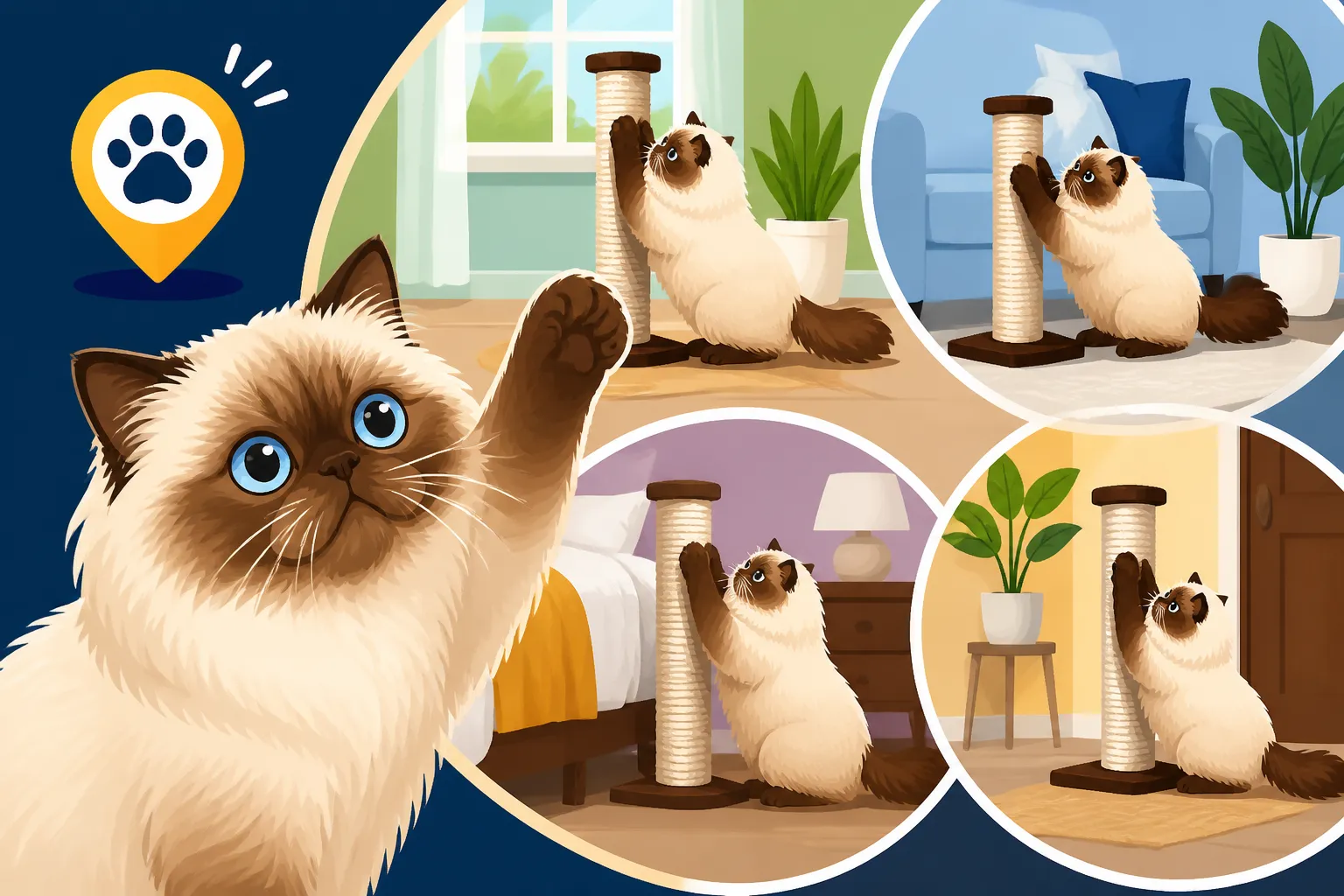
Cats typically love to stretch and scratch right after waking up from a nap. Think about it: they've been curled up for a while, and that full-body stretch combined with a good clawing feels fantastic. For your Himalayan, this means placing scratching posts or pads near their favorite napping spots. Is there a particular sofa cushion they always claim? A sunny spot on the rug they gravitate towards? A comfy cat bed they adore? That's precisely where you want a scratching option. A low-profile horizontal scratcher or a short, stable vertical post placed just a foot or two from their napping area will be a constant, convenient invitation. This capitalizes on their natural post-sleep routine and makes it easy for them to choose the right surface.
If your Himalayan loves to sleep on your bed, you could even consider a small, discreet cardboard scratcher on the floor beside the bed, or a sisal mat. The easier you make it for them to engage in this natural behavior in the places they already frequent, the more likely they are to adopt the designated scratching spot. The Himalayan Is a Lap Cat That Answers Back touches on their preference for comfortable, familiar spots.
Near "Target" Furniture
Let's be honest, if your Himalayan is currently tearing up your favorite armchair or the corner of your rug, that tells you exactly where they want to scratch. Instead of fighting it, strategically place a desirable scratching post directly next to or in front of that "forbidden" furniture. The idea is to make the approved scratching surface even more appealing and accessible than the furniture they're currently damaging.
For example, if they're scratching the arm of the sofa, place a stable vertical post right beside it. If they're going for the carpet, put a flat sisal mat or a large cardboard scratcher on top of that spot. Once they start using the post, you can gradually move it a few inches away from the furniture over time, until it's in a slightly less conspicuous but still accessible location. Patience is key here, and offering a better alternative in their chosen scratching zone is far more effective than simply saying "no."
In High-Traffic Areas (Not Hidden Away)
Scratching is also a territorial marking behavior. Cats have scent glands in their paws, so when they scratch, they're leaving their unique scent, effectively announcing "I live here!" For this reason, cats prefer to scratch in prominent, high-traffic areas where their scent can be noticed. This might go against your aesthetic preferences, but a scratching post hidden away in a spare bedroom or basement will rarely get used by your social Himalayan.
Place scratching posts in your living room, hallways, or any area where your family spends a lot of time. This doesn't mean it has to be front and center, but it should be visible and easily accessible as your cat moves through their daily routine. Think about entryways, exits from rooms, or spots along their preferred "patrol" route. A well-placed scratching post acts as a visual and olfactory marker, fulfilling their innate need to claim their space.
| Scratching Post Type | Ideal Himalayan Feature | Placement Strategy | Material Suggestion |
|---|---|---|---|
| Vertical Post | Good stretch | Near sleep spots, target furniture | Tightly woven sisal fabric |
| Horizontal Scratcher | Stability, full body | Under windows, beside sofas, open floor | Corrugated cardboard |
| Scratching Ramp | Gentle incline | Transition areas, against walls | Low-pile carpet, sisal |
| Cat Tree (lower) | Multi-function | Common living areas, near windows | Sisal fabric on lower levels |
Encouraging Your Himalayan to Use Their New Scratching Post
So, you've invested in the perfect low, stable, sisal-covered scratching post and strategically placed it next to your Himalayan's favorite napping spot. Now comes the exciting part: getting them to actually use it! Sometimes, a new item in their territory can be met with suspicion. But with a little patience and positive reinforcement, you can guide your fluffy friend to their new favorite scratching zone.
The Power of Catnip
Catnip is a cat's best friend, and it can be your secret weapon in introducing a new scratching post. Most Himalayans, like many cats, are susceptible to the delightful effects of catnip. If your cat responds well to it, a generous sprinkle of fresh catnip on or around the new scratching post can work wonders. The enticing aroma will draw them in, encourage them to investigate, and often, stimulate them to roll, rub, and yes, scratch!
Reapply catnip regularly, especially in the first few days or weeks, to keep the novelty and appeal high. You can find catnip sprays and dried catnip in various forms, including larger, value packs on platforms like Amazon, making it easy to keep a fresh supply. The goal is to create a positive association, making the scratching post a place of pleasure and fun.
Enticing with Toys and Treats
Beyond catnip, you can use toys and treats to make the scratching post more attractive. Try dangling a favorite wand toy near the top of a vertical post, encouraging your Himalayan to reach up and swat at it – naturally extending their claws in the process. As they engage with the toy, their paws might inadvertently make contact with the scratching surface, and that's your cue!
For horizontal scratchers, place a few of their favorite treats directly on the surface. As they approach to eat the treat, they might naturally engage their claws with the cardboard. Positive reinforcement is key: whenever you see your Himalayan so much as sniff or brush against the post, offer praise or a tiny treat. This helps them understand that interacting with this new object is a good thing. Which Treats a Himalayan Will Come Off the Sofa For might give you some ideas.
Gentle Guidance (Never Force)
While encouraging, never force your Himalayan to scratch the post. Forcing them or holding their paws to the post can create a negative association and make them fear it. Instead, use gentle methods. You can lightly tap or scratch the post yourself with your fingernails to demonstrate its purpose. The sound and action might pique their curiosity.
If you catch your Himalayan scratching something inappropriate, don't yell or punish them. Instead, gently redirect them. Pick them up (if they allow it without stress) and place them next to the correct scratching post. If they show any interest, even just a sniff, reward them. The idea is to teach them that the scratching post is the acceptable outlet for their natural urge. This method requires consistency and understanding, but it’s far more effective in the long run than punitive measures. Remember, your Himalayan is intelligent and sensitive, and a calm, positive approach works best for building good habits.
This article is for general informational purposes only and does not constitute professional advice. Laws, prices and regulations vary by location and change over time. Consult a qualified professional for guidance on your specific situation.