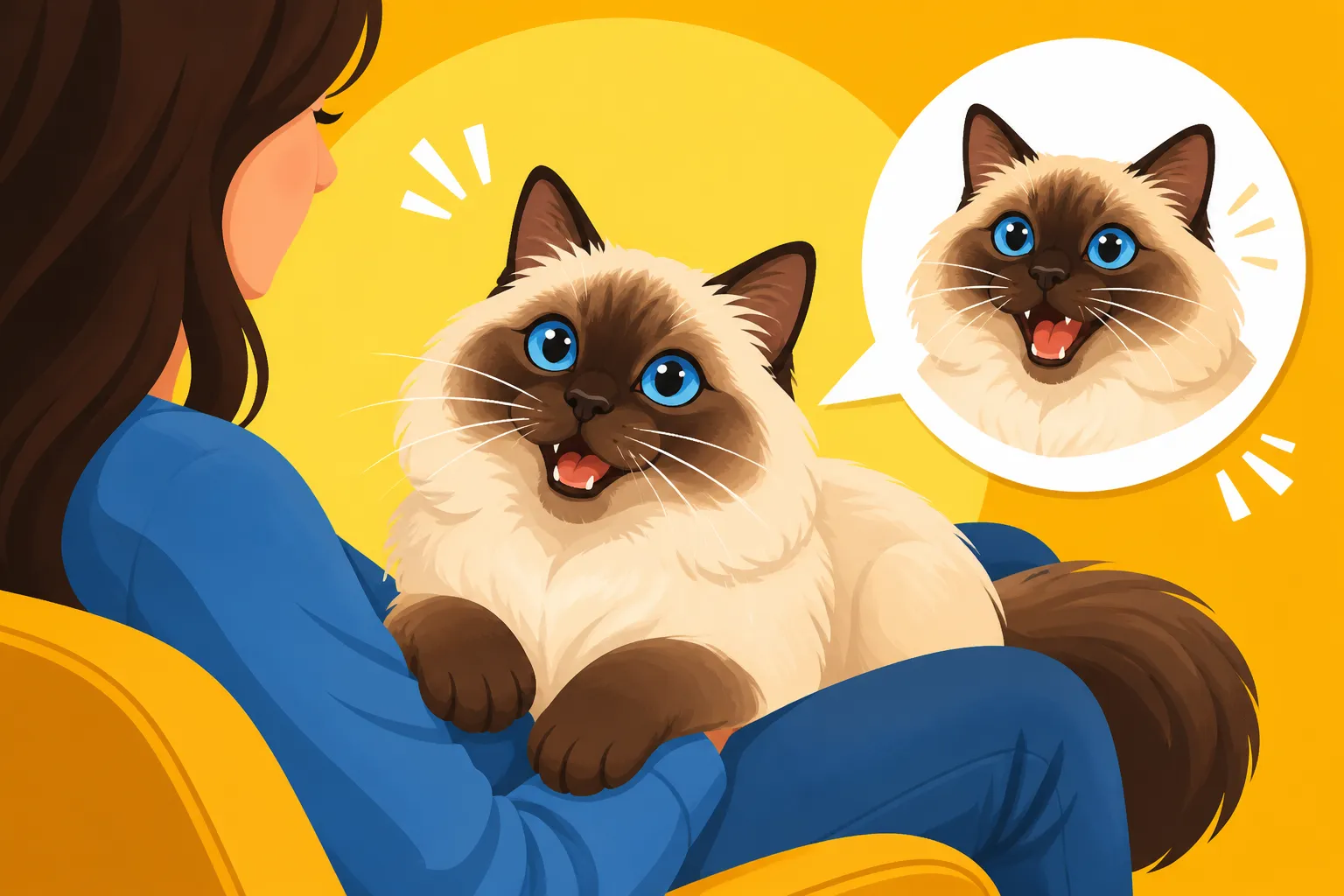
The Himalayan Is a Lap Cat That Answers Back
If you're picturing a Himalayan cat as a silent, decorative fluff ball, you're only seeing half the picture. While they are indeed the ultimate lap warmer, providing endless cuddles and a serene presence, many owners are delightfully surprised by their vocal capabilities. These beautiful cats have a distinct way of communicating, a charming blend of their ancestral voices, making them both a comforting presence and a conversational companion. This guide will delve into the unique personality of the Himalayan, showing you exactly what to expect from these talkative, yet utterly devoted, felines.
The Voice of Two Worlds: How the Himalayan Communicates
It’s an interesting thing, isn’t it? You bring home this gorgeous, plush creature, expecting the quiet dignity often associated with its Persian heritage, and then it opens its mouth and a whole different side emerges. Many Himalayan owners, myself included, have been wonderfully surprised, and sometimes utterly charmed, by the range and frequency of sounds that come from these cats. It's a testament to their unique genetic blend, truly giving them a voice that's all their own.
The Siamese Echo in a Persian Frame
The most common surprise for new Himalayan owners is undoubtedly their vocalization. You see that luxurious coat, the calm, round eyes, and you anticipate a quiet, almost ethereal presence, much like a classic Persian. But then you hear it – a distinct meow, perhaps a chirrup or a trill, and you realize you have a talker on your hands. This is where the Siamese half of their ancestry truly shines through. Where the Persian is known for its quiet, almost unheard "whisper meow," the Himalayan has definitely inherited some of that conversational gene from its Siamese forebears.
It's not usually the incessant, demanding yowl that some Siamese are famous for, mind you. That would be quite a shock! Instead, think of it as a moderated, more melodious version. Imagine a polite but persistent inquiry, rather than an urgent declaration. Your Himalayan might greet you with a series of soft, inquisitive chirps when you enter a room, or offer a gentle trill as they wind around your ankles during dinner prep. It's less of a shout and more of a charming dialogue, full of subtle inflections that communicate their mood and desires. This makes them wonderfully interactive companions, always ready to "chat" about their day or your activities. They absolutely love to communicate with you. For a deeper dive into their vocal history, check out Why a Himalayan Talks More Than the Persian It Descends From.
Decoding Their Conversational Meows
Understanding your Himalayan's vocal repertoire is like learning a new language, but one filled with affection and personality. Their meows aren't just random noises; they're often deliberate, meaningful expressions. You'll quickly learn to distinguish the "I'm hungry, it's two minutes past dinner time!" meow from the "Hello, welcome home, I missed you so much!" chirp. There's the "Let me in this room, please, I must supervise your every move" meow, often accompanied by a gentle head-butt against the door.
They'll use a specific tone to ask for attention, perhaps a drawn-out, questioning sound that perfectly conveys, "Are you quite done with that book? My lap is available for petting." If they want to play, you might hear a series of quick, excited chirps, leading you to their favorite wand toy, perhaps one you picked up on Amazon. It's rarely a harsh or abrasive sound, instead, it’s usually soft, melodic, and often accompanied by intense eye contact, drawing you into their world. Their voice is a key part of their charm, adding another layer to their already captivating presence, transforming them from a beautiful pet into a truly engaging family member.
When Silence Speaks Volumes
While Himalayans certainly enjoy a good chat, it’s equally important to recognize that they also use silence as a powerful form of communication. Don't be fooled by their quiet moments; a Himalayan observing you from its favorite perch is often communicating just as much as one meowing at your feet. They are masters of the slow blink, the deliberate gaze, or the subtle tail twitch, all conveying contentment, trust, or perhaps a gentle request.
One of the common frustrations for new owners, or even experienced ones, is that a Himalayan’s calm demeanor can sometimes mask discomfort or illness. They are not typically cats that cry out loudly when in pain or feeling unwell. Instead, a change in their usual vocal pattern – perhaps becoming unusually quiet, or even more vocal in a distressed way – can be a significant indicator. They might retreat to a quiet corner, or simply gaze at you with slightly narrowed eyes, trying to convey that something isn't right without making a fuss. This is why paying close attention to their subtle body language and shifts in their conversational habits is so crucial. Their periods of quiet observation, interspersed with their charming vocalizations, create a dynamic and rich communicative experience, underscoring the deep bond you build with these intelligent and expressive cats.
Lap Cat Living: The Art of Relaxation
Let’s be honest, one of the biggest draws to the Himalayan breed is their undeniable reputation as the ultimate lap cat. And let me tell you, this isn’t just a myth; it’s their calling! If you’re looking for a furry shadow who loves nothing more than to curl up on you, drape themselves over your legs, or simply sit beside you radiating warmth and comfort, you’ve found your perfect match. They have truly mastered the art of relaxation, and they’re more than happy to share their expertise with you.
The Undisputed Reign of the Lap
There's a reason the phrase "lap cat" almost immediately brings a Himalayan to mind for those in the know. They don't just like laps; they consider them their sovereign territory. From the moment you sit down, you can almost see the gears turning in their beautiful, round little heads: "Ah, human has parked. Optimal napping conditions detected." They will approach with a dignified grace, often giving a soft little head-butt or a gentle rub against your leg before smoothly transitioning onto your lap.
Once settled, it's pure bliss. Their luxurious, dense coat provides an incredibly soft cushion, and their substantial, cobby bodies radiate warmth. They'll knead a few times, perhaps purr like a tiny engine, and then melt into a state of profound relaxation. This isn't just about physical contact; it's about sharing a moment of quiet companionship. They don't need to be actively entertained; their joy comes from simply being near you, a warm, purring presence that instantly lowers your stress levels. This unwavering devotion to the lap is one of the most heartwarming aspects of living with a Himalayan.
Choosing Their Human and Their Chair
While a Himalayan will generally be affectionate with everyone in the household, it's a well-known secret among owners that they often choose "their" person. This isn't to say they'll ignore others, but there's usually one individual whose lap is deemed the most superior, whose pets are the most satisfying, and whose presence is sought out above all else. This special bond is incredibly rewarding and often deepens over time. My own Himalayan, Mittens, would tolerate a brief snuggle from my husband, but the moment I sat down, she’d be off his lap and onto mine with an air of "Ah, this is where I belong."
Beyond their chosen human, Himalayans are also creatures of habit when it comes to their personal space. Every Himalayan seems to have "their" chair or "their" spot on the sofa – a designated throne where they can nap, observe the room, and perhaps politely request attention. This isn't just any chair; it's the one with the best sunbeam, the softest cushion, or the perfect vantage point. If you dare to sit in their chair, expect a look of mild disapproval, followed by a persistent but gentle nudging until you relocate. It's all part of their charmingly assertive personality when it comes to comfort and routine. For more on this charming territoriality, see Why a Himalayan Claims One Chair and Keeps It.
The Gentle Art of Affection
Himalayans express their affection in a manner that perfectly complements their calm, majestic presence. They aren't usually the type to bowl you over with boisterous demands for attention, but rather, they offer a steady stream of gentle, heartwarming gestures that speak volumes. Imagine a soft head-nuzzle against your hand as you walk by, or a slow, deliberate blink from across the room that communicates utter contentment and trust. These are their love languages.
When a Himalayan chooses to settle on your lap, purring deeply, it's a profound display of affection. They might stretch out a paw and gently pat your arm, not with claws, but with a soft, padded touch. They love to be stroked and will often lean into your hand, savoring every scratch behind the ears or along their back. Their affection is a quiet promise of companionship, a warm, consistent presence that fills your home with peace. Unlike some breeds that might be constantly seeking vigorous play or loud interaction, the Himalayan prefers a more understated intimacy, valuing shared tranquility and gentle moments of connection. This makes their displays of affection all the more meaningful, a true testament to their devoted nature.
Playful Moments and Energy Levels
When you think of a Himalayan, you might picture them as a serene, almost statuesque feline, perfectly content to recline on a silk pillow. And while they certainly excel at the art of relaxation, they are far from being completely inactive. The beauty of the Himalayan lies in its wonderful blend of ancestry, which gives them an energy level that is just right – enough playful spark to be engaging, but not so much that they'll be bouncing off the walls.
More Playful Than a Persian, Less Frenetic Than a Siamese
This is where the Himalayan truly embodies its dual heritage. If you've ever owned a Persian, you know they are generally quite content with a luxurious nap, perhaps rousing for a slow, dignified stretch. A Siamese, on the other hand, can be a perpetual motion machine, full of boundless energy and a need for constant engagement. The Himalayan sits beautifully in the middle. They definitely inherited a spark of the Siamese vivacity, making them more inclined to play than their Persian cousins. You’ll see them bat at toys, chase a laser pointer, or engage in a brief, enthusiastic pounce.
However, that play session won’t last for hours on end. They have an internal clock that quickly signals "time for a rest." Unlike a Siamese who might demand another hour of vigorous chasing, a Himalayan will gracefully conclude their play with a leisurely stretch, a deep sigh, and a return to their favorite napping spot. It's the perfect balance for many households – enough playful interaction to be fun and engaging, without the intensity that might overwhelm a quieter home. It’s truly the best of both worlds, providing moments of joyful activity interspersed with ample time for cuddles and calm. Learn more about their energy balance in Why a Himalayan Plays Longer Than a Persian and Less Than a Siamese.
Favorite Toys and Play Styles
Given their moderate energy levels and cobby build, Himalayans tend to favor certain types of toys and play styles. They're not typically the acrobatic jumpers or relentless retrievers of the cat world. Instead, they enjoy games that allow them to bat, stalk, and pounce from a relatively comfortable position. Wand toys, especially those with feathers or ribbons, are often a huge hit. The gentle movement of the lure allows them to engage their hunting instincts without having to expend too much energy in a full-blown chase.
Small, lightweight crinkle balls or soft, stuffed mice are also excellent choices. They love to bat them around, sometimes carrying them triumphantly in their mouths for a short distance before dropping them for another "kill." You can find a fantastic variety of these types of toys on Amazon, perfect for keeping them entertained without overstimulating them. Puzzle feeders, particularly those that are low-profile and easy for their flat faces to access, can also provide mental enrichment without requiring strenuous physical activity. Observing your Himalayan's play will quickly reveal their preferences, often leading to endearing moments of focused concentration as they "hunt" their chosen toy.
Recognizing When Play is Over
For a Himalayan owner, understanding when your cat has had enough play is just as important as knowing what toys they enjoy. Due to their dense Persian coat and brachycephalic (flat) face, Himalayans can overheat more easily than other breeds. This means their play sessions should be shorter and gentler, especially in warmer environments. A common frustration for new owners is pushing playtime too long, leading to a cat that suddenly seems disinterested or even a little grumpy.
Watch for subtle cues: their movements might become slower, they might lie down mid-pounce, or their breathing might become slightly more noticeable. If you see signs like rapid panting or extended periods of stillness, it’s definitely time to cool down. A Himalayan will rarely keep going if they're uncomfortable; they'll simply disengage and seek a cooler, calmer spot. Respecting these signals ensures that play remains a positive and enjoyable experience for your cat, preventing them from becoming overheated or overwhelmed. Ending the session on a good note, before they’re fully exhausted, will leave them feeling satisfied and ready for their next nap. For more on knowing when enough is enough, read When to End a Himalayan's Play Session.
Routine and Environment: The Himalayan's World
Himalayans are creatures of comfort, and a significant part of that comfort comes from predictability. They thrive in an environment where things are generally consistent, where they know what to expect and when to expect it. This isn't to say they can't adapt, but they certainly prefer a stable world where their routines are respected. Understanding this aspect of their personality is key to creating a truly harmonious home for your beautiful feline companion.
The Comfort of Predictability
There's a quiet elegance to how a Himalayan navigates its day, and much of that stems from its deep appreciation for routine. They are creatures of habit, finding immense comfort in knowing when their meals will arrive, when their grooming session will happen, and which lap is likely to be available at what time of day. You'll often find them patiently waiting by their food bowl around the exact time they're usually fed, or gracefully appearing by your side when your evening television show begins, signaling it's prime petting time.
This predictability isn't just about food or attention; it extends to their environment. A consistent schedule helps reduce stress and allows them to feel secure in their surroundings. Imagine their internal clock ticking, anticipating each familiar event. If you deviate too much, you might notice a subtle shift in their demeanor – a little more watchful, perhaps a bit more vocal in asking, "Is it dinner time now?" This preference for consistency validates the effort you put into maintaining a stable home life, as it directly contributes to their overall sense of peace and well-being. Knowing their schedule and sticking to it is one of the best ways to show your Himalayan you care. You can learn more about their mealtime expectations in Why a Himalayan Expects to Be Fed at the Same Hour.
Navigating Changes and New Experiences
While Himalayans appreciate routine, life, of course, isn't always perfectly predictable. How they navigate changes, whether it’s new furniture, house guests, or a shift in your daily schedule, is a hallmark of their personality. They are, first and foremost, keen observers. When something new enters their world, they won't typically rush headlong into it. Instead, they'll often watch from a safe distance, assessing the situation with their intelligent blue eyes.
A new sofa, for instance, might be met with a few days of cautious circling and sniff-tests before it's deemed acceptable for napping. A house full of noisy visitors might send them retreating to "their" chair in a quieter room, only to emerge cautiously once the excitement has died down. This isn't shyness so much as a preference for calm and a need to process new stimuli at their own pace. If you're introducing a significant change, like moving houses or bringing home a new pet, it’s vital to do so slowly, providing them with a secure "base camp" and allowing them ample time to adjust. Their comfort with their environment is paramount, and patience during transitions will be greatly rewarded. How a Himalayan Reacts When Its Routine Breaks offers more insights into their responses to change.
Indoor Life: A Necessity, Not a Choice
This point truly cannot be stressed enough: the Himalayan cat is, by its very nature, an indoor cat. This isn't a preference; it's a fundamental aspect of their health and safety. Their magnificent, long, dense coat, while stunning, is not suited for the rigors of an outdoor environment. It's incredibly prone to matting and picking up debris, turning a beautiful coat into a matted, uncomfortable mess in short order. More critically, their brachycephalic facial structure, while endearing, makes them highly susceptible to overheating, especially in warm climates or during any prolonged physical exertion.
Beyond the challenges of their physical traits, their gentle, placid temperament makes them vulnerable to the numerous dangers outside. They lack the street smarts and aggressive defensive instincts of feral cats, making them easy targets for predators, larger animals, or even careless humans. The risks of traffic, infectious diseases, parasites, and getting lost are simply too high. Providing a safe, enriched indoor environment with plenty of comfortable sleeping spots, stimulating toys, and regular interaction is not just ideal; it’s absolutely essential for a Himalayan’s longevity and well-being. Their health and happiness truly depend on living a sheltered, indoor life. Why a Himalayan Must Never Be an Outdoor Cat delves into this further.
Social Dynamics: People and Other Pets
The social life of a Himalayan is as unique and charming as their appearance. They are often described as deeply devoted companions, forming strong bonds with their human families. While not typically boisterous or demanding, their presence is felt through their quiet loyalty and gentle affection. Understanding how they interact with people and other animals is key to fostering a harmonious multi-pet household.
Gentle Companionship with Humans
Himalayans are renowned for their gentle and loving nature, making them wonderful companions for a variety of households. They typically thrive in homes where they can receive consistent, calm attention. While they might bond most deeply with one person, they generally extend a polite, affectionate demeanor to all family members. They aren’t usually the type to jump onto countertops or demand constant play; their affection is often expressed through quiet proximity, a soft purr while nestled on your lap, or a watchful gaze from their favorite armchair.
This gentle disposition makes them particularly well-suited for families with older children who understand the importance of respectful interaction. A Himalayan will tolerate gentle petting and quiet play, but they appreciate space and quiet. They'll patiently endure a child's adoration for a time, but they're also masters of subtle disengagement, simply walking away if they feel overwhelmed. They are the epitome of a steady, comforting presence, enriching their human lives with quiet devotion and affectionate companionship. For more on their suitability for different family dynamics, read Why a Himalayan Suits a Family With Older Children.
Introducing New Family Members
Bringing a new pet into a household with an existing Himalayan requires patience and a thoughtful approach. While generally placid, Himalayans can be sensitive to changes in their routine and environment, so introductions should always be slow and carefully managed. If you're introducing another cat, choose one with a similarly calm temperament. A highly energetic or aggressive new cat could easily overwhelm a gentle Himalayan. Start with scent swapping, then supervised brief encounters in separate rooms, gradually increasing their time together.
For dogs, the same principles apply. A calm, cat-friendly dog is the best match. Ensure the dog is introduced slowly, always on a leash at first, and that the Himalayan has plenty of high-up escape routes or quiet rooms to retreat to. Himalayans aren't typically inclined to engage in boisterous play with other animals; they prefer a peaceful coexistence. They might ignore a new pet for a while, which can be disconcerting, but it often signifies acceptance rather than hostility. With proper, patient introductions, a Himalayan can learn to share its home, even if it prefers to observe its new companions from the comfort of its favorite spot. For detailed advice on adding another feline, refer to Bringing a Second Cat Home to a Himalayan.
Respecting Their Boundaries
Even the gentlest of cats have their boundaries, and the Himalayan is no exception. While they are incredibly tolerant and rarely resort to aggression, they are adept at communicating when they need space. Learning to recognize these subtle cues is crucial for building a strong, trusting relationship with your Himalayan. A slow tail swish, a slight flattening of the ears, a direct stare that holds your gaze for a moment too long, or simply turning their head away are all polite signals that they've had enough attention or are feeling a little overwhelmed.
They will almost always opt to walk away rather than hiss or swat, embodying a quiet dignity even when expressing displeasure. It’s vital never to force interaction or try to hold a Himalayan that is clearly indicating it wants to be released. Respecting these non-verbal boundaries fosters trust and ensures that your cat feels secure and comfortable in its interactions with you. When they feel their space is respected, they are much more likely to seek out your affection on their own terms, strengthening the bond between you. You can understand more about their subtle communication in How a Himalayan Shows Displeasure Without Moving.
Grooming and Handling: Building Trust
Grooming a Himalayan isn't just about aesthetics; it's a fundamental part of their health and well-being. Their magnificent, long coat requires dedicated daily care, and their unique facial structure demands specific attention. For many owners, this daily ritual becomes a profound bonding experience, a quiet time shared that reinforces trust and affection. However, it also presents its own set of challenges, especially for those new to the breed.
The Daily Grooming Ritual: More Than Just a Chore
Let's not sugarcoat it: a Himalayan's coat is a commitment. Their dense, plush fur, especially the thick undercoat, is prone to matting faster than you can say "furball." Neglecting even a single day can lead to tangles, which quickly turn into tight, painful mats that can pull on their skin and cause discomfort. This is why the daily comb isn't just an option; it's a necessity. It might feel like a chore at times, a non-negotiable item on your daily to-do list, but try to reframe it.
Think of it as your daily one-on-one time, a serene moment of connection. From a young age, it's vital to get them accustomed to being combed and handled. Kittens learn quickly, and positive reinforcement with treats and gentle praise can turn grooming into something they not only tolerate but actually look forward to. Neglected grooming isn't just an inconvenience; severe matting can lead to skin infections, discomfort, and in extreme cases, may even require sedation for shaving by a vet. Investing the time daily ensures their comfort, health, and a beautiful, flowing coat. For guidance on teaching your Himalayan to enjoy grooming, refer to Teaching a Himalayan to Lie Still for Its Daily Comb.
Face Care and Handling Sensitivity
Beyond their luxurious body coat, a Himalayan's distinctive flat face requires special daily attention. Their charmingly round, expressive eyes are prone to tearing, and the folds around their nose can collect moisture and debris, leading to tear stains and potential skin irritation or infections if not kept clean and dry. This means that a morning face-wiping routine is just as important as the daily comb.
You'll need soft, damp cloths or specialized pet wipes (you can often find excellent options on Amazon) to gently clean around their eyes and in their nose folds. This can feel a little intrusive to them at first, so starting young and making it a positive experience with treats and praise is key. Over time, many Himalayans come to tolerate, and even enjoy, their face being gently cleaned, associating it with positive attention. The trick is to be consistent, gentle, and always end on a good note. This routine not only keeps them looking their best but, more importantly, prevents uncomfortable and potentially painful dermatological issues. Understanding how to introduce this care can be found in Getting a Himalayan Used to Having Its Face Wiped.
Vet Visits and Beyond: Preparing for Handling
Regular veterinary check-ups are paramount for a Himalayan, just as they are for any pet. However, their unique combination of a long coat, brachycephalic face, and sometimes stoic nature means that vet visits require a little extra thought and preparation. Their placid demeanor can sometimes hide underlying health issues, as they are not typically cats to loudly complain when unwell. This makes attentive observation at home and thorough vet examinations even more critical. Why a Himalayan Hides Illness Behind an Expressionless Face explains this behavior in detail.
Familiarizing your Himalayan with its carrier from an early age is a must. Leave the carrier out as a comfortable, accessible den, not just something that appears when a scary car ride is imminent. Make car rides short and positive, if possible, building up their tolerance. When at the vet, clearly communicate your cat's specific needs, temperament, and any concerns you have about their breathing or comfort during examination. A good vet and their staff will understand the nuances of handling a flat-faced, long-coated breed, ensuring the experience is as stress-free as possible for your beloved companion.
| Trait | Himalayan | Siamese | Persian |
|---|---|---|---|
| Vocalization Level | Moderate, conversational chirps | High, loud, insistent yowls | Low, soft, infrequent meows |
| Activity Level | Low to Moderate, bursts of play | High, energetic, playful | Low, calm, sedentary |
| Affection Display | Quiet, lap-sitting, gentle nuzzles | Demanding, "in-your-face" | Reserved, prefers proximity |
| Reaction to Change | Cautious, prefers routine | Adaptable but vocal about it | Dislikes change, can be stressed |
| Independence | Moderate, happy to observe | Low, craves constant interaction | High, content alone for periods |
| Curiosity | Moderate, observes from afar | High, explores everything | Low, prefers familiar surroundings |
Disclaimer
This article is for general informational purposes only and does not constitute professional advice. Laws, prices and regulations vary by location and change over time. Consult a qualified professional for guidance on your specific situation.