Why a Himalayan Suits a Family With Older Children
Bringing a new cat into a family dynamic, especially one with children, can be a bit like walking a tightrope. You want a companion that will thrive, not just tolerate, the hustle and bustle of family life, yet won't be overwhelmed or become a source of stress. For many families who have outgrown the toddler stage and now have older children, the Himalayan cat often emerges as a wonderfully serene and surprisingly interactive choice, offering a calm presence that still enjoys engagement without the boisterous demands of some other breeds.
The Himalayan Temperament: Calm and Patient Companions
One of the most defining characteristics of the Himalayan cat, and frankly, what makes them so appealing to many households, is their remarkably calm and placid temperament. These aren't the cats who are constantly scaling your curtains or launching themselves from the highest bookshelf (unless, perhaps, there's a particularly enticing sunbeam up there, and even then, they'll often use steps). They are, by their very nature, quite sedate.
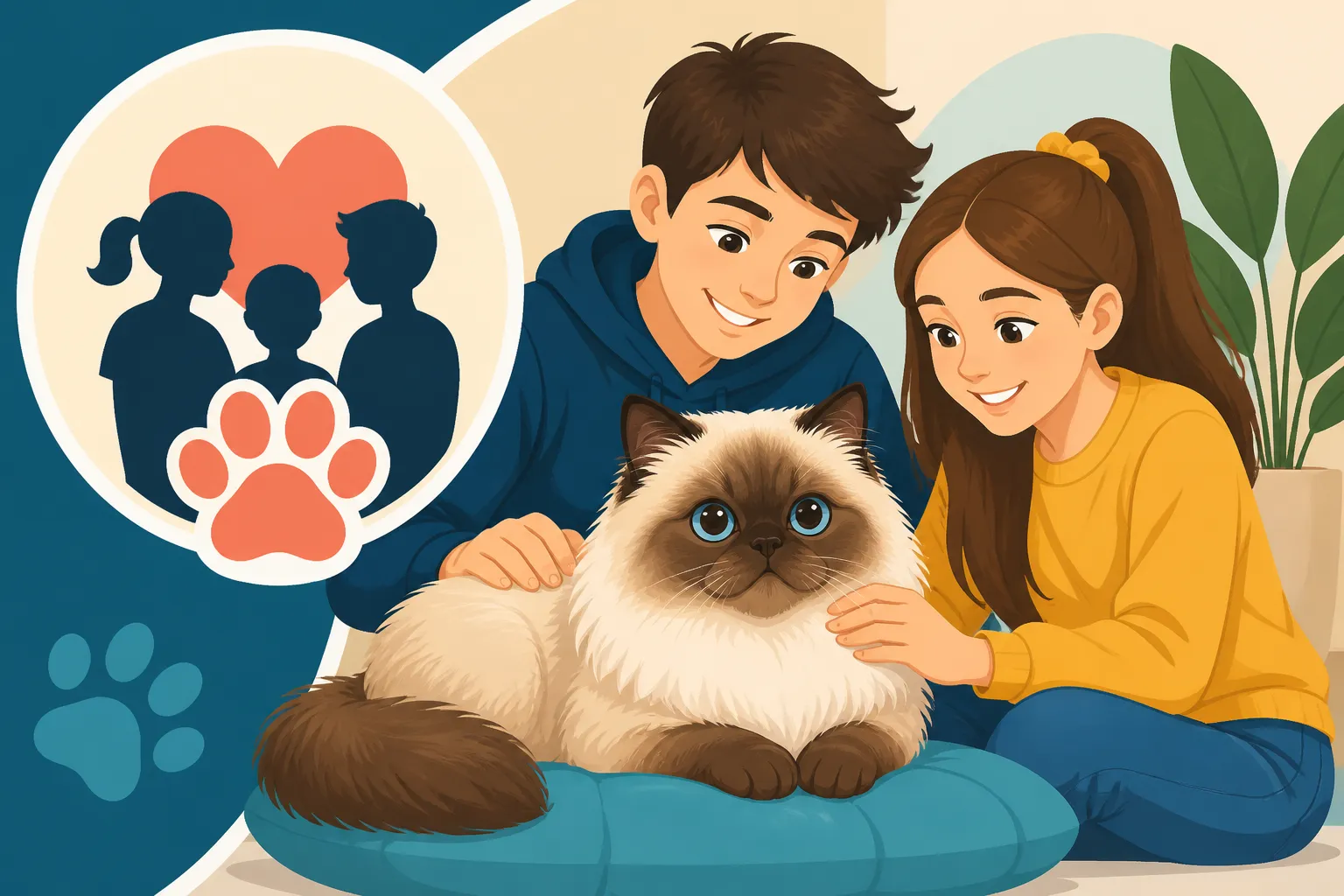
This inherent calmness makes them exceptionally suited to a household where the initial whirlwind of very young children has subsided. Older children, typically in the elementary school years and beyond, possess a greater understanding of boundaries and the concept of gentle interaction. They grasp that a cat isn't a toy to be squeezed or chased relentlessly, but rather a living, feeling creature that appreciates a calm approach. A Himalayan, with its patient demeanor, is far more likely to tolerate the occasional excited shout or sudden movement from an older child than a highly strung, more nervous breed. They often observe the activity around them with a regal, almost indifferent air, choosing to participate only when they feel inclined, or when a quiet lap presents itself. This ability to self-regulate their engagement is a huge plus for families who want a pet that integrates seamlessly without constant demands for attention or needing to be constantly managed.
Think about it: a rambunctious kitten, full of boundless energy, might seem like a natural fit for energetic young kids. However, that high energy can often lead to accidental scratches, overstimulation, and a general mismatch in play styles. A Himalayan, on the other hand, usually prefers a more dignified interaction. They might enjoy a slow, deliberate pat, a gentle grooming session, or simply curling up nearby while a child reads or plays quietly. This isn't to say they are aloof; far from it. Himalayans are known for their affectionate nature, often developing a deep bond with their chosen people, but they express it in a way that aligns beautifully with the maturity of older children. They aren't constantly underfoot, demanding play, but rather offer a comforting, steady presence that respects personal space, a quality often appreciated by both adults and children learning about respectful interaction. You’ll often find that Why a Himalayan Runs on Its Own Timetable, preferring to dictate the terms of their interactions rather than being constantly available for every whim.
Understanding the Himalayan's Activity Level and Play Style
While Himalayans are undeniably calm, they are certainly not inert. They carry a delightful spark of their Siamese ancestry, meaning they do enjoy playtime, but it's typically a more measured and less intense kind of fun than you might expect from a Siamese or even some other Persian varieties. This low to moderate activity level is another reason they fit so well into families with older children.
Their play style often involves chasing a feather wand toy or batting at a crinkly ball, but these sessions are usually shorter and less frenetic. Older children, understanding that their feline friend might not want to run a marathon, can tailor their play to suit the Himalayan's capabilities. They can learn to engage the cat with toys that encourage stalking and pouncing without requiring excessive exertion. This mindful approach to play not only prevents the cat from becoming overheated or overstimulated but also teaches children valuable lessons in empathy and understanding an animal's limits. It's a wonderful opportunity for kids to develop patience and observation skills, learning to read their cat's body language – when it's engaged, when it's had enough, or when it simply prefers to watch from a comfortable perch.
Because of their brachycephalic (flat) faces, Himalayans aren't built for prolonged strenuous activity. Their shortened airways mean they can overheat more quickly and struggle to breathe during intense play. This reality makes them less suitable for households with very young children who might not understand these physical limitations and unintentionally push the cat too hard. With older children, however, this becomes an educational point. They can learn about the cat's unique physiology and how to keep it comfortable and safe. A few minutes of gentle wand play, followed by a quiet cuddle on the sofa, is often a Himalayan's ideal play session. This is Why a Himalayan Plays Longer Than a Persian and Less Than a Siamese but still needs a slower pace.
It's important for children to understand When to End a Himalayan's Play Session to ensure their comfort and health. Simple, engaging toys found easily on platforms like Amazon, such as feather wands or soft, light balls, are perfect. You'll find that Which Wand Toys a Himalayan Can Actually Follow with surprising agility for short bursts, but they won't typically leap across rooms or scale heights. Instead, they might track the toy with their big blue eyes, slowly wind up, and then pounce with a graceful, if somewhat deliberate, motion. This kind of play is less about high-octane action and more about interactive, stimulating engagement, which is perfectly aligned with what older children can offer and appreciate.
Grooming and Care: A Bonding Opportunity, Not a Burden
Let's be realistic: Himalayan cats require significant grooming. Their long, luxurious double coats are stunning but prone to matting, and their flat faces mean daily attention to their eyes and nose folds. For some families, this might seem like a chore, but for a family with older children, it can be transformed into a valuable bonding experience and a lesson in responsibility.
When children are old enough to understand the importance of routine and gentle handling, they can actively participate in the daily care of their Himalayan. Imagine a child sitting on the floor with their cat, slowly and carefully running a steel comb through its ruff or gently wiping its eyes with a soft cloth. This isn't just about keeping the cat clean; it's about nurturing a relationship built on trust and care. Teaching a child how to properly groom a Himalayan instills a sense of responsibility and empathy. They learn that caring for a pet involves commitment and attention to its specific needs. Handling a Himalayan So It Will Let You Comb It is a skill, and it's best taught early, ideally when they are kittens. This means children can grow up learning this crucial interaction.
It's a fact that Why a Himalayan Must Learn to Be Combed Before Twelve Weeks, and integrating older children into this routine from the start can make it a lifelong positive habit for both cat and child. They can assist with daily combing sessions, which don't have to be long – just enough to prevent mats from forming. They can also help with the daily face cleaning, an essential task for these cats. The feeling of being responsible for a living creature, knowing that their actions contribute directly to the cat's comfort and well-being, is incredibly empowering for children. It moves pet ownership beyond just playing and into the realm of true companionship and mutual respect.
The structured nature of Himalayan grooming also resonates with older children who often thrive on routines and clear expectations. It's not a nebulous task; it's a specific set of steps that need to be followed daily. This can be a rewarding way to teach consistency and care. Plus, a beautifully groomed Himalayan is a source of pride for the whole family! For those essential grooming tools, like a good quality steel comb or gentle eye wipes, online retailers like Amazon offer a vast selection, making it easy to keep your grooming kit well-stocked.
The Himalayan's Low-Key Social Needs and Routine
Himalayans are creatures of habit. They thrive on predictability and a stable routine. This trait, combined with their generally serene nature, makes them particularly well-suited to families where the chaos of early childhood has given way to a more structured and predictable daily life. Older children, with their school schedules and established routines, often contribute to this stable environment rather than disrupting it.
A Himalayan isn't typically a cat that demands constant entertainment or gets anxious when left alone for reasonable periods. They are usually content to find their favorite sunny spot or a cozy bed and simply be. They appreciate quiet companionship, often choosing to nap on a nearby armchair or at the foot of a bed rather than constantly seeking active engagement. This means that while older children might be busy with homework, sports, or friends, their Himalayan companion will be quietly enjoying its own space, ready for a gentle interaction when the opportunity arises. This balance is key for busy families who want a pet but don't want to feel guilty about not being able to dedicate every waking moment to its amusement.
While Himalayans are known to bond deeply with one primary caregiver, they are generally affectionate with all family members who treat them gently and respectfully. Older children are better equipped to understand that not every cat wants to be picked up and carried around, and that a gentle stroke or a soft word is often more appreciated. They learn to recognize the cat's cues – a slowly closing eye, a soft purr, a relaxed posture – as signs of contentment, reinforcing positive interactions. This respectful distance and appreciation for routine prevent many of the common stress points that can arise between a cat and very young, unpredictable children.
It's fascinating to observe Why a Himalayan Follows One Person Around the House, often choosing a favorite human to shadow, but they will still seek out gentle attention from others. They might not be the life of the party, and Why a New Baby Unsettles a Himalayan's Routine far more than a teenager arriving home from school, but their presence is a grounding force in the home. They appreciate knowing when their meals will arrive, understanding that Why a Himalayan Expects to Be Fed at the Same Hour. This predictability allows them to feel secure and content within the family unit, contributing to a harmonious household. Learning Teaching a Child to Hold a Cobby Himalayan Properly is also crucial, ensuring comfort for both cat and child. Also, it’s comforting to know that generally, Why a Himalayan Walks Away Rather Than Scratch when displeased, rather than reacting aggressively, which is a major bonus in any family setting.
Himalayan Suitability: Older Children vs. Toddlers
Let's break down some of the key differences in how a Himalayan might interact and thrive with older children compared to toddlers. This isn't to say one is "bad," but rather to highlight where the Himalayan's unique traits truly shine.
| Trait / Factor | With Older Children (5-6+ years) | With Toddlers (1-4 years) |
|---|---|---|
| Temperament | Appreciates calm, gentle interactions; enjoys quiet companionship. | Can be overwhelmed by sudden noises, unpredictable movements, squeezing. |
| Play Style | Enjoys short, gentle sessions with wand toys; less demanding. | Toddlers often lack control, leading to overstimulation or rough play. |
| Grooming Needs | Can participate responsibly in daily brushing/face wiping; bonding. | Unable to assist; may view grooming as an interruption to play. |
| Physical Limitations | Understands the cat's need for breaks due to flat face/coat. | Unaware of physical limits, potentially leading to distress for the cat. |
| Respect for Space | Learns boundaries, understands cat needs quiet time. | May chase, grab, or disturb the cat frequently, causing stress. |
| Routine & Predictability | Contributes to stable home environment; understands consistent care. | Can be unpredictable and disrupt routines, making the cat anxious. |
| Communication | Can learn to read cat's body language; communicates gently. | Lacks nuanced communication skills; actions can be startling or rough. |
Disclaimer
This article is for general informational purposes only and does not constitute professional advice. Laws, prices and regulations vary by location and change over time. Consult a qualified professional for guidance on your specific situation.