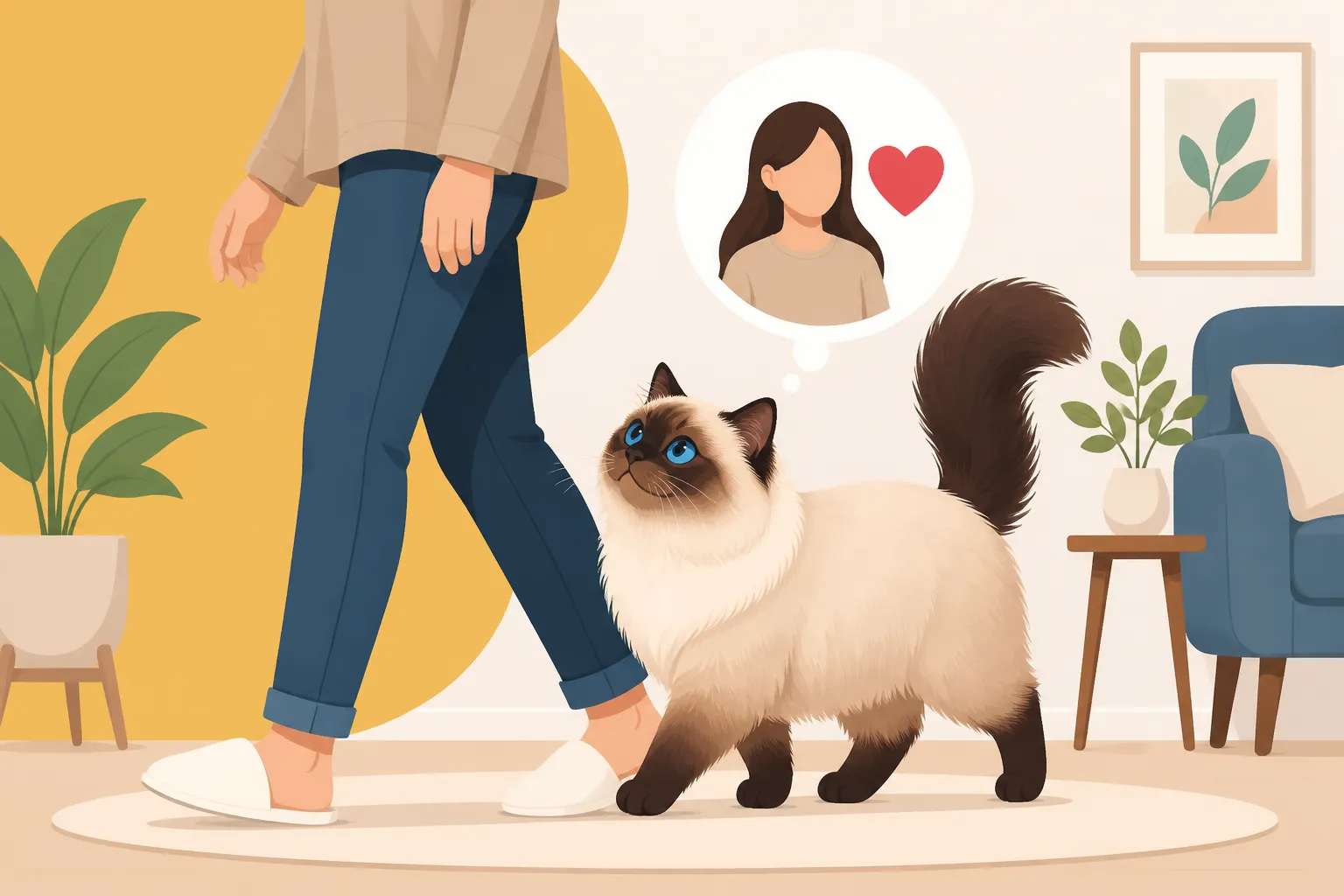
Why a Himalayan Follows One Person Around the House
It's a common, and often heartwarming, experience for Himalayan cat owners to find themselves shadowed throughout the house by their furry companion. While many cats are affectionate, there's a particular intensity to a Himalayan's bond, and it often seems to gravitate towards just one special human. If you've ever wondered why your gorgeous, fluffy friend has chosen you as their personal escort service, this guide will delve into the deep-seated reasons behind this unique behavior and help you understand, nurture, and appreciate the special connection you share.
The Root of Devotion: Why Himalayans Choose Their Person
Himalayan cats are truly unique, a deliberate blend of two distinct feline personalities: the calm, regal Persian and the vocal, intelligent Siamese. This fascinating heritage plays a huge role in why they often pick one primary person and stick to them like glue. They aren't just pretty faces; they're complex creatures with a deep capacity for affection, but they tend to express it in a very specific way.
Tracing Their Ancestry: The Siamese and Persian Blend
Imagine combining the dignified, somewhat reserved nature of a Persian with the chatty, intensely social traits of a Siamese. That's essentially what you get with a Himalayan. From their Persian lineage, they inherited that wonderfully calm demeanor, the desire for a soft lap, and a generally laid-back approach to life. They aren't typically scaling curtains or tearing through the house like a furry whirlwind. This quiet nature means their social interactions, while perhaps fewer in number than a Siamese, are often more concentrated and meaningful when they do occur.
However, the Siamese side brings an undeniable sparkle. This is where their intelligence, their vocalizations, and their strong people-oriented tendencies come from. While they might not be as loud as a purebred Siamese, they absolutely retain that innate desire for connection and interaction with their humans. This blend often results in a cat who is incredibly loyal, but also particular about where they invest that loyalty. They choose wisely, and once they've chosen, they commit. It’s this combination that lays the groundwork for that intense, one-person bond we often observe.
Personality Traits That Foster Deep Bonds
Himalayans are, at their core, gentle, affectionate, and creatures of habit. They thrive on consistency and predictability, and they often find immense comfort in a stable routine. The person who consistently provides their meals, handles their daily grooming, and offers gentle, reassuring interactions becomes their anchor in the world. They are highly observant, taking in everything around them from their favored perch, and they pay close attention to the patterns and movements of their chosen human.
This isn't to say they don't appreciate other family members; many Himalayans are perfectly polite and will accept affection from others. But their deepest trust and comfort are usually reserved for the one who acts as their primary caregiver and emotional touchstone. They’re not demanding in a boisterous way, but rather in a quiet, ever-present manner, often simply wanting to be in the same room, sharing your space and your calm energy. This steadfast presence is one of the most heartwarming aspects of living with a Himalayan. The Himalayan Is a Lap Cat That Answers Back perfectly describes this blend of quiet companionship and occasional vocal charm.
Deciphering the "Follower" Behavior
When your Himalayan trails you from room to room, settling near your feet as you work or watching you from the doorway as you move about, it's more than just idle curiosity. This behavior is a rich tapestry of communication, comfort-seeking, and deep affection. Understanding these cues helps you to better appreciate the unique way your Himalayan connects with you.
More Than Just Seeking Food: The Desire for Presence
It’s easy to assume that if your cat follows you, they’re just waiting for their next meal or a treat. And yes, sometimes that's part of it! Cats are smart, and they associate you with good things. However, for a Himalayan, especially the one who has chosen you, the following behavior often goes far beyond mere sustenance. They are seeking your presence, your proximity, and the comfort that comes from being near their trusted human. Think of it less as a pursuit for food and more as a silent declaration: "I want to be where you are."
This desire for companionship is particularly pronounced in Himalayans dueased to their Siamese heritage, which leans towards strong social bonds. They thrive on knowing you're around, even if you're not actively interacting with them. Many Himalayans will happily nap in the same room as you, content just to be in your orbit. They often divide their day between sleep and being in your lap or near you. How a Himalayan Divides Its Day Between Sleep and Lap gives a great insight into their daily rhythms. It's a quiet, understated loyalty that asks for little more than shared space and occasional gentle acknowledgment.
The Subtle Language of a Himalayan's Affection
Himalayans are not typically boisterous cats, prone to exuberant leaps or loud meows to get your attention. Their expressions of affection are often much more subtle, requiring a keen eye and an understanding heart to fully appreciate. When your Himalayan follows you, they might do so silently, only announcing their presence with a soft "mrrrow" or a gentle head-bunt against your leg when you finally stop. A slow blink from across the room is a profound sign of trust and contentment, a silent "I love you."
They might choose to sit just a few feet away, observing you quietly, or settle directly on your lap, purring softly. Pay attention to how they position themselves – often facing you, even if they're napping, to keep you in their sight. They might use a soft chirp to get your attention, a gentler sound than the more demanding yowls of their Siamese ancestors. Understanding How a Himalayan Asks Without Raising Its Voice can help you recognize these tender requests for interaction or reassurance. This nuanced communication is a hallmark of the breed and a testament to their deep emotional intelligence.
Consistency and Routine: The Pillars of Their Trust
For a Himalayan, routine is everything. These cats find immense comfort in predictability, and the person who consistently upholds that routine becomes the most trusted figure in their world. This means the one who consistently provides meals at the same time, engages in regular gentle play, and performs their essential grooming rituals. The daily comb, in particular, is a prime bonding opportunity. The Daily Comb a Himalayan Cannot Skip is not just about keeping their glorious coat mat-free; it's a ritual of touch, trust, and shared time that profoundly strengthens their bond with you.
When you are the steady hand, the consistent presence that manages their daily needs, you solidify your position as their chosen human. They learn to rely on you, anticipating your actions and finding security in your dependability. This is why if you move from one room to another, your Himalayan will often follow, silently re-establishing their proximity to the person who represents comfort and stability. It's not about being clingy; it's about finding their safe harbor in a predictable world.
Cultivating and Cherishing Your Himalayan's Loyalty
Once your Himalayan has chosen you, it's a truly special bond to nurture. They offer a unique kind of companionship that, while quiet, is incredibly deep. Actively cultivating this relationship ensures a happy, secure cat and a rewarding experience for you.
Establishing Yourself as the Primary Caregiver
To deepen that special bond with your Himalayan, consciously take on the role of primary caregiver whenever possible. This means being the one who feeds them most often, consistently replenishes their water, and is responsible for their daily grooming sessions. When Lifting a Cobby Himalayan Without Straining Its Back, do so gently and reassuringly, making it a positive experience. These repeated, positive interactions create strong associations in their mind, reinforcing your status as their most trusted provider and protector.
Even if there are other people in the household, make sure you carve out specific times when you are the one providing these essential comforts. This consistent attention reinforces their initial choice and builds upon the foundation of trust. It's not about excluding others, but about clearly communicating to your Himalayan that you are their main source of safety and care, which they value above all else.
Creating Shared Rituals and Spaces
Himalayans thrive on routine, and creating shared rituals with your chosen companion can significantly strengthen your bond. This could be something as simple as a morning cuddle session while you have your coffee, a dedicated playtime with a wand toy in the evening, or a quiet moment of petting while you watch TV. Designate special spots where you can relax together, whether it’s a specific armchair or a soft blanket on the sofa. Your Himalayan might even claim "their" chair adjacent to yours, a habit many Himalayans adopt. Why a Himalayan Claims One Chair and Keeps It touches on their territorial but affectionate nature.
Consider enriching their environment with items that encourage interaction with you. A comfortable cat tree near a window where you often sit, or a soft bed right beside your desk, provides them with their own space while still keeping them close to you. You can find a wide variety of comfortable beds and cat trees on Amazon that are perfectly suited for their cobby build and preference for low heights. These shared rituals and spaces tell your Himalayan that they are an integral part of your life and your daily rhythm, deepening their sense of belonging and devotion.
Providing Enrichment That Strengthens the Bond
Enrichment for a Himalayan doesn't always mean high-energy activities. Their play sessions are often shorter and less intense than other breeds, especially due to their Persian-influenced breathing. Engaging them with gentle, interactive toys like a feather wand or soft balls that they can bat around builds positive associations with your presence. Short, consistent bursts of play are more effective than trying to coax them into extended romps. Remember, they enjoy watching and participating in a more relaxed way.
You might find a variety of suitable, less strenuous toys on Amazon that cater to their more sedate play style. Puzzle feeders, if designed for a flat-faced cat to comfortably access, can also offer mental stimulation while associating you with positive rewards. Even just talking to your Himalayan in a soft, reassuring voice throughout the day serves as a form of enrichment, reinforcing your presence and their security. Simple, consistent, and gentle interactions are key to maintaining a strong, loving bond with these devoted felines.
When Devotion Becomes Separation Anxiety
While a Himalayan's intense loyalty is undeniably endearing, there's a fine line between a deep bond and unhealthy over-attachment or separation anxiety. It's crucial for you, as "the chosen one," to recognize these distinctions and take steps to ensure your cat's emotional well-being, even when you're not around.
Recognizing the Signs of Over-Attachment
A healthy bond means your Himalayan is happy to see you and seeks your company, but can also relax and entertain themselves when you're busy or away. True separation anxiety, however, manifests as distress when you're absent. Signs might include excessive vocalization – that distinct Siamese-inherited voice can become a constant, mournful cry. You might notice destructive behaviors, such as inappropriate urination or defecation, or scratching at doors and windows. Changes in appetite or grooming habits (like over-grooming or stopping grooming altogether) can also be red flags.
It's important to differentiate typical Himalayan affection, which might involve them following you to the bathroom or waiting patiently by the door, from genuine panic. If your cat seems genuinely distressed and exhibits these destructive or self-harming behaviors only when you're gone, it's likely more than just missing you; it's anxiety. Whether a Himalayan Suits Someone Working Away can offer more insights into how these cats cope with periods of solitude and whether their temperament aligns with your lifestyle.
Strategies for Fostering Independent Comfort
If you suspect your Himalayan is experiencing separation anxiety, there are steps you can take to help them feel more secure when you're not there. One effective method is gradual desensitization. Start by leaving them alone for very short periods, just a few minutes, and gradually increase the time. Don't make a big fuss when you leave or return; keep it calm and low-key to avoid amplifying their anxiety.
Provide comfort items that carry your scent, like a worn T-shirt or a blanket that smells like you. Create a safe, comfortable space for them in your absence, perhaps a favorite room with their bed, toys, and a diffused calming pheromone. You can find many calming aids, comfortable beds, and interactive toys (like those available on Amazon that dispense treats slowly) to keep them engaged while you're away. Making One Room Comfortable for a Himalayan Left Alone details how to prepare an environment that promotes peace and self-sufficiency for your cat. Consistency in these efforts is paramount to rebuilding their confidence.
Seeking Professional Guidance When Needed
Sometimes, despite your best efforts, separation anxiety can be too profound for home remedies alone. If your Himalayan's distress is severe, impacting their health, or causing significant damage, it's crucial to seek professional help. Your veterinarian can rule out any underlying medical issues that might be contributing to the behavior. They might also suggest behavioral medications or refer you to a certified feline behaviorist.
A behaviorist can provide tailored strategies and work with you to implement a comprehensive plan to alleviate your cat's anxiety. Remember, separation anxiety is a genuine emotional struggle for your cat, not just a behavioral nuisance. Being proactive and seeking expert advice demonstrates your commitment to their well-being and can make a world of difference in helping your devoted companion feel safe and secure, whether you're right beside them or out running errands.
The Joys and Responsibilities of Being "The Chosen One"
Being the singular focus of a Himalayan's affection is a truly rewarding experience, one filled with quiet companionship and unwavering loyalty. It comes with its own set of joys and, of course, responsibilities that are unique to this magnificent breed.
The Unique Rewards of a Himalayan's Bond
Few things compare to the feeling of being "the chosen one" for a Himalayan cat. Their devotion is profound and often expressed in subtle, yet deeply meaningful ways. You become their comfort, their protector, and their most trusted companion. Imagine coming home after a long day to find your beautiful fluffy cat waiting patiently, ready to settle beside you, or waking up to their soft purr as they knead your chest. Why a Himalayan Sleeps on Your Chest is a testament to the depth of their affection and their desire for close contact. This unwavering presence, this quiet companionship, offers a unique kind of unconditional love that can truly enrich your life.
Their gentle nature makes them wonderful confidantes; they're always there, listening without judgment, offering a calming presence. You’ll find immense satisfaction in knowing you provide such a secure and loving environment for a creature that relies on you so completely. It's a special honor to be the recipient of a Himalayan's concentrated affection, making every quiet moment shared a treasured memory.
Managing the Needs of Your Dedicated Companion
With this deep bond comes the responsibility of managing your Himalayan's unique care needs. Their glorious long coat, inherited from their Persian ancestors, demands daily attention to prevent mats and tangles. This isn't just cosmetic; neglect can lead to painful skin issues. Similarly, their flattened faces, while undeniably charming, often require daily cleaning around their eyes and nose folds to prevent tear staining and skin irritation. Regularly wiping their face with a soft cloth or specific wipes (easily found on Amazon) becomes a necessary ritual.
Beyond daily grooming, Himalayans have specific health considerations due to their breed lineage. Regular veterinary check-ups are vital, often including close attention to their dental health due to crowded jaws, and monitoring for conditions like Polycystic Kidney Disease (PKD). The Nine to Fifteen Years a Himalayan Usually Gets means you are committing to a long-term care journey, one that requires attentiveness to their physical health as much as their emotional well-being. Being prepared for these ongoing care requirements ensures your cherished companion lives a healthy, comfortable life.
Ensuring a Lifetime of Happiness for Your Himalayan
Ensuring a lifetime of happiness for your Himalayan means continuing to honor and understand their unique personality and needs as they age. Their consistent nature means they appreciate stability, so maintaining routines, providing plenty of quiet, comfortable spaces, and keeping up with their grooming and health checks are paramount. As they grow older, their needs might shift; they might require easier access to food and water bowls, or more assistance with grooming as they become less flexible.
Cherish every moment of your special bond, for it is a rare and precious thing to be chosen by such a devoted feline. By understanding their history, respecting their temperament, and actively meeting their distinct care requirements, you are guaranteeing a happy, fulfilling life for your Himalayan. Your role as their chosen person is not just a privilege, but a profound commitment to a lifetime of shared affection and steadfast companionship.
Himalayan Attachment Behaviors vs. Separation Anxiety
It's helpful to distinguish between normal, healthy attachment and the distress signals of separation anxiety. Here's a quick guide to help you tell the difference:
| Behavior Aspect | Healthy Attachment (Typical Himalayan Loyalty) | Separation Anxiety (Distress Signal) |
|---|---|---|
| Following You | Gentle shadowing, settling in the same room, quiet observation. | Frantic following, crying when you go to another room, blocking doors. |
| Vocalization | Soft chirps, purrs, occasional gentle meows for attention. | Excessive, mournful meowing, howling, or distressed cries only when you're absent. |
| When You Leave | May watch you go, then settle down for a nap or quiet activity. | Panics, tries to escape, destructive behavior (scratching, chewing). |
| When You Return | Happy greetings, head-bunts, purring, settling on your lap. | Over-the-top, frantic greetings that can last a long time; clings. |
| Alone Time | Content to sleep, play with toys, groom themselves. | Destructive behavior, inappropriate urination/defecation, loss of appetite, excessive grooming. |
| Independence | Will relax alone, self-entertain for periods. | Cannot relax alone, constantly seeks you, seems distressed when not in your sight. |
Disclaimer
This article is for general informational purposes only and does not constitute professional advice. Laws, prices and regulations vary by location and change over time. Consult a qualified professional for guidance on your specific situation.