How Much Livelier the Siamese Half Made the Himalayan
It's a common misconception that all Himalayan cats are just fluffy, immobile cushions, content to nap the day away on the nearest sunbeam. Many new owners, drawn in by their stunning looks and serene reputation, quickly find themselves surprised by a burst of unexpected energy and vocalizations that simply don't fit the quiet Persian mold they might have anticipated. This guide will dive deep into why your gorgeous Himalayan might have more pep in their step than you expected, exploring the fascinating legacy of their Siamese ancestry and how it shaped their unique blend of playful spark and laid-back charm.
The Myth of the Completely Sedentary Himalayan
When you first consider bringing a Himalayan into your home, you might envision a picture of pure tranquility. The image of a fluffy, regal cat draped elegantly over a sofa, barely stirring except for a gentle blink, is certainly powerful. This expectation often comes from their strong ties to the Persian breed, known for its generally calm and somewhat sedentary nature. However, the Himalayan is a delightful blend, and ignoring half of its heritage can lead to some surprises!
Why Persians Are Often Seen as Pure Lap Ornaments
Let's be honest, the Persian cat has cultivated a reputation as the ultimate lap cat, and for good reason. Historically, they've been bred for their luxurious coats, distinctive facial features, and a temperament that leans heavily towards placidity. They often prefer quiet environments, a predictable routine, and a comfortable perch from which to observe their domain. A Persian is typically not the cat you expect to be scaling curtains or tearing through the house at 3 AM. Their elegance and serene demeanor often translate to a low-key lifestyle, making them perfect companions for those who appreciate a calm, undemanding presence. This gentle nature is part of their charm, and it’s why many people fall in love with the breed.
When people think of a Persian, they think of a cat that's happy to be groomed, happy to nap, and generally quite content with a slower pace of life. They're not known for being overly vocal or demanding, preferring soft nudges or a direct gaze to get their point across. It’s a wonderful personality for many households, providing a comforting, albeit sometimes quite independent, companion. So, it's completely understandable why someone looking at a Himalayan, with its unmistakable Persian coat and build, would assume they'd inherited this same, almost entirely tranquil disposition. You wouldn't be wrong to think they’d be content with minimal fuss and maximum napping.
The Unexpected Energy of the Himalayan
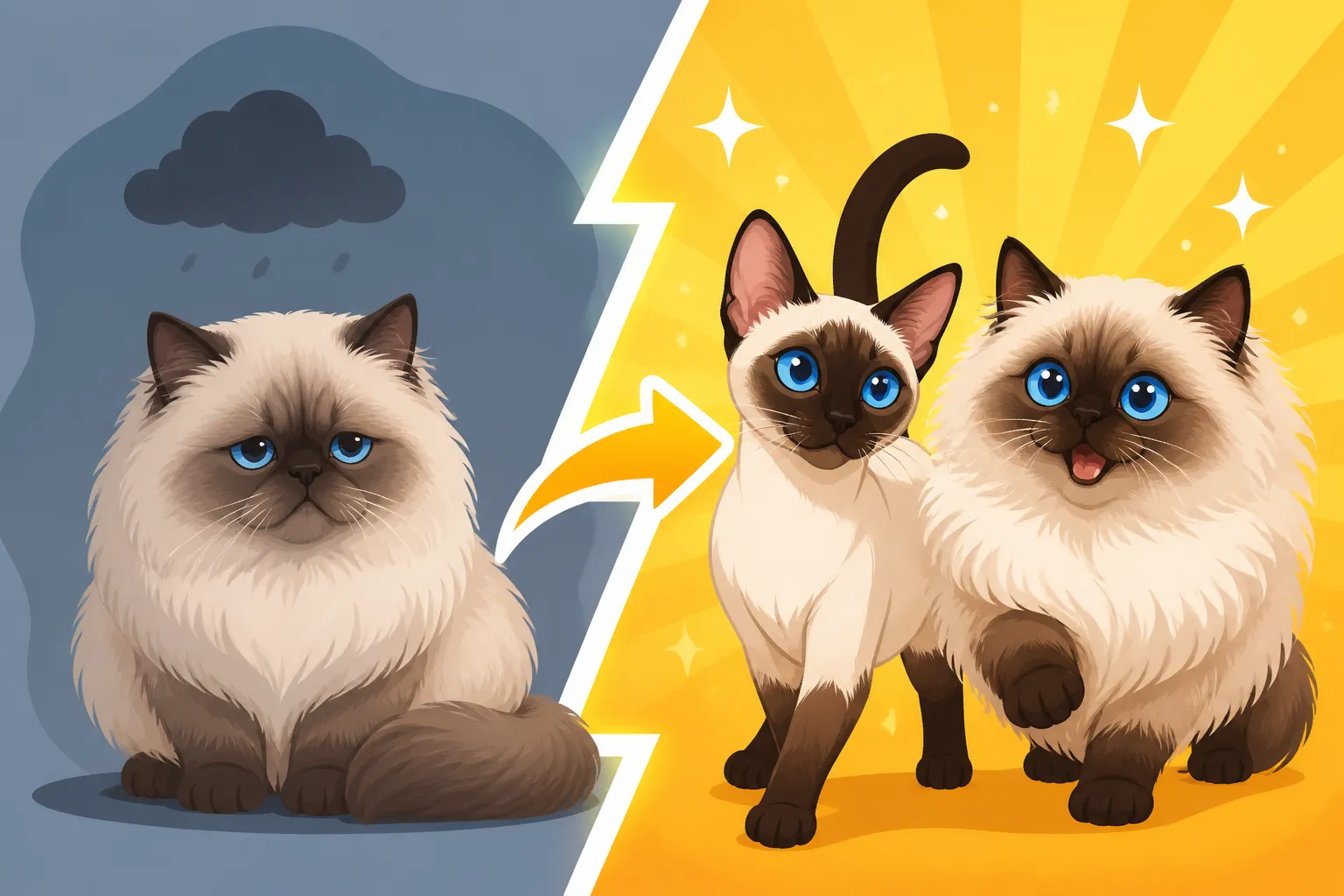
But here's where the plot thickens! While your Himalayan certainly carries that beautiful Persian build and often a love for lounging, they also have a secret weapon: their Siamese lineage. It’s like having a quiet, classical music station playing in one room, and then realizing there's a slightly turned-down jazz station humming in the background from another. That jazz station? That's the Siamese influence, adding a surprising, delightful, and sometimes mischievous spark to their personality.
You might be enjoying a peaceful evening, only for your elegant Himalayan to suddenly launch into a surprisingly vigorous play session, chasing a dust bunny with the intensity of a cheetah on the savannah, or performing gravity-defying leaps off the sofa. They might bring you a toy, drop it at your feet with an expectant look, and then chirp insistently until you engage. This unexpected vivacity can catch owners off guard, especially if they were anticipating a purely decorative, immobile cat. It's a testament to the powerful genetic cocktail that created the breed – combining the regal calm of the Persian with the spirited, interactive nature of the Siamese. They definitely have more active periods than their Persian cousins, even if these bursts are often followed by an equally impressive nap. Don't let their fluffy exterior fool you; there's often a lively spirit waiting for the right moment to emerge. If you're wondering just how much they sleep versus how much they're truly engaged, you might find our article on How Many Hours a Day a Himalayan Is Actually Awake really insightful.
Tracing the Siamese Spark: A Genetic Legacy
The Himalayan isn't just a pretty face; it's a carefully crafted breed that brought together two distinct feline worlds. While the Persian gave them their lush coat, cobby body, and generally relaxed demeanor, it was the Siamese that truly infused them with that unique spark of energy and personality that often surprises first-time Himalayan owners. It's a genetic legacy that runs deep, adding layers of interest to their behavior.
What the Siamese Brought to the Himalayan's Personality
When you think of a Siamese cat, what comes to mind? Often, it's their striking blue eyes, their sleek athleticism, and most notably, their incredibly vocal and interactive nature. Siamese cats are known for "talking" to their owners, for following them from room to room, and for their intense curiosity and intelligence. They thrive on interaction and can become quite bored or even destructive if left without adequate stimulation. This is the genetic blueprint that was subtly woven into the Himalayan.
While a Himalayan won't typically exhibit the full-blown, almost demanding intensity of a purebred Siamese, they absolutely inherited a diluted but definite version of these traits. You'll notice it in their increased vocalizations compared to a Persian – not usually a loud yowl, but distinct chirps, trills, and conversational meows. They have a noticeable curiosity, often observing your activities with keen interest and occasionally participating in a playful way. They bond closely with their chosen humans, often preferring to be in the same room, even if it's just napping nearby. This isn't just a pretty coat cat; it's a cat with a personality that wants to engage, to know what you're up to, and to share your space in a more active way than their Persian ancestors might have. It's a wonderful part of their charm, making them more interactive pets than many initially expect. To learn more about the specific traits they gained, you can explore What the Siamese Side Gave a Himalayan Besides Points.
How the Activity Level Compares to Purebred Siamese
It's important to manage expectations here. While the Siamese contribution undeniably infuses the Himalayan with more energy than a typical Persian, it's crucial to understand that it doesn't transform them into a full-throttle Siamese clone. A purebred Siamese is often a whirlwind of activity, constantly exploring, demanding attention, and needing significant mental and physical stimulation to prevent boredom. They can be incredibly athletic, jumping to high perches and engaging in extended, vigorous play sessions that would leave many other breeds panting.
The Himalayan, on the other hand, is more like a Siamese on a gentle dimmer switch. The intensity is turned down, resulting in a cat that has bursts of playful energy but also cherishes its long periods of rest. They'll engage in enthusiastic play, but usually for shorter durations. Where a Siamese might need an hour-long, high-energy chase session daily, a Himalayan might be perfectly content with several 10-15 minute bursts throughout the day. They still possess that desire for interaction and play, but their cobby build and brachycephalic (flat) face mean they can't sustain the same level of intense physical exertion as their svelte, long-nosed Siamese cousins. So, while they're certainly not the sedentary fluff balls some assume, they're also not going to be bouncing off the walls from dawn till dusk. They occupy a delightful middle ground, offering the best of both worlds: moments of animated play followed by comforting, purring companionship.
Understanding the "On/Off" Switch of Himalayan Play
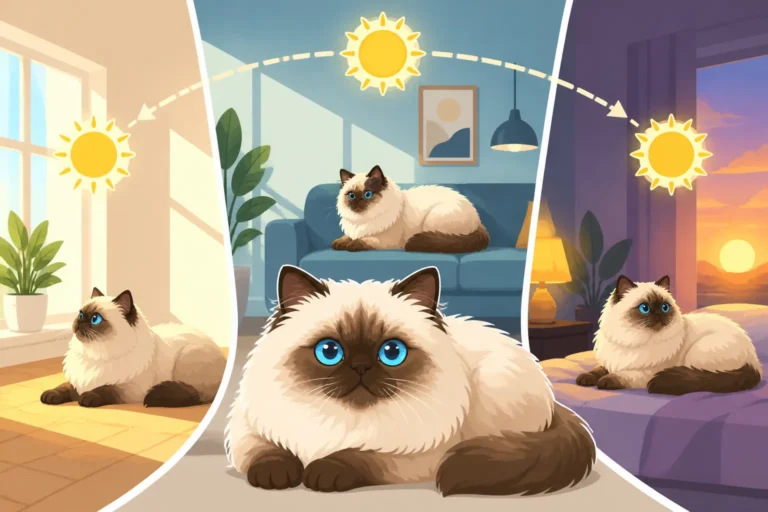
One of the most defining characteristics of a Himalayan's activity level, directly influenced by their blended heritage, is their distinct "on/off" switch when it comes to play. This isn't a cat that slowly winds down or gradually loses interest; they often go from zero to sixty and back to zero in what feels like the blink of an eye. You might be watching your elegant floof dozing peacefully on the sofa, seemingly lost in a dream of endless salmon treats, when suddenly, a stray sunbeam or a wiggling toe sparks an instant transformation.
In a flash, they might be up, pouncing, batting, or even doing a surprising zoomie around the living room, chasing after a favorite wand toy with surprising agility and focus. Their eyes will be wide, their body language entirely engaged, and their purr motor revving high. This can last for anywhere from a few intense minutes to perhaps fifteen minutes of solid, enthusiastic interaction. But just as quickly as it began, you'll notice a subtle shift. Their movements might become a little less frantic, their breathing a little heavier, and then, often with minimal ceremony, they'll simply plop down. One moment they’re a playful dynamo, the next they’re a contented, motionless fluffball, ready for another long nap. It's not a sign of disinterest, but rather their natural rhythm, influenced by both their Persian desire for rest and their physical limitations due to their flat face. It's a charming quirk that keeps you on your toes and ensures that when they do decide to play, they give it their all, albeit briefly.
Playtime Expectations: What a Himalayan Really Wants
Understanding that your Himalayan possesses this unique blend of playful energy and a need for rest is key to keeping them happy and healthy. It means adapting your play strategies to suit their specific personality and physical attributes. They're not going to be scaling the highest cat tree or engaging in marathon chase sessions, but they absolutely do want to play, and they thrive on that interaction.
Preferred Types of Play and Toys
When it comes to toys, Himalayans often lean towards those that encourage interactive play with their human companions rather than solitary endeavors. While they might bat around a small ball or crinkle toy on their own for a few minutes, their true joy often comes from a shared play experience. Think about toys that mimic prey movement, allowing them to engage their hunting instincts in a controlled environment. Wand toys with feathers, ribbons, or small soft toys attached are often a huge hit. These allow you to control the pace and intensity, letting your Himalayan stalk, pounce, and "catch" their prey without overexerting themselves. The unpredictable movement of a feather wand darting across the floor can captivate their attention, sparking those inherited Siamese instincts to life.
Laser pointers can also be engaging, but remember to always end a laser session by letting them "catch" a physical toy to avoid frustration. Soft, lightweight balls they can bat around easily, or crinkly toys that make satisfying noises, are also often favorites. Just ensure any toys are safe and don't have small parts that could be easily swallowed. When you're browsing for these kinds of enrichment tools, Amazon is a fantastic resource, offering a huge variety of interactive wands, plush toys, and crinkly balls that are perfect for getting your Himalayan moving without overdoing it. Remember, it's about quality interaction, not necessarily high-octane acrobatics.
Recognizing When a Himalayan Is Done Playing
One of the most important aspects of playing with a Himalayan is learning to read their signals and knowing when to call it quits. Unlike some more driven breeds that might keep pushing themselves, Himalayans are usually quite good at self-regulating, but it's still up to you to pay attention. Since they don't have the same respiratory efficiency as long-nosed cats, they can become winded more quickly. You might notice their play becoming less enthusiastic, their movements slowing down, or their breathing becoming visibly heavier.
A clear sign that they're ready for a break is when they simply stop. They might sit down mid-pounce, or bat languidly at a toy before simply lying down next to it. Some might even start panting, which in a cat, especially a flat-faced one, is a definite indicator that they're overheated or overexerted and need to rest immediately. Their purr might also quiet, or they might seek out a cooler spot to lie down. It’s never about pushing them to their limits. Respecting these cues ensures that playtime remains a positive and safe experience for them. After all, the goal is enrichment and fun, not exhaustion! Our guide When to End a Himalayan's Play Session offers even more detail on these important signals.
The Importance of Consistent, Short Play Sessions
Given their "on/off" play style and their physical considerations, the most effective approach to play with a Himalayan is to integrate consistent, short sessions into their daily routine. Instead of trying to squeeze in one long, intense play period, aim for several shorter bursts of activity throughout the day. Think of it as a series of mini-adventures rather than one epic journey.
For instance, you might have a 10-15 minute play session in the morning before you start your day, another quick 5-10 minutes during your lunch break if you're home, and then a couple more sessions in the evening. This approach aligns perfectly with their natural tendency for short, vigorous bursts followed by rest. It also helps to prevent them from becoming overly tired or overheated. Consistency is key here; a predictable play schedule can become something they look forward to, building anticipation and strengthening your bond. These regular interactions, even if brief, fulfill their need for engagement and mental stimulation, keeping them both physically active and mentally sharp without putting undue strain on their delicate respiratory system. It’s all about finding that sweet spot where they can express their inner Siamese without compromising their Persian need for calm and comfort.
Mental Enrichment for the Clever Himalayan
While their cobby bodies and luxurious coats might suggest a purely physical being, the Siamese side of your Himalayan contributes a surprising amount of intelligence and a need for mental stimulation. This isn't a cat content to merely exist; they want to engage their minds, solve problems, and communicate with you. Providing outlets for this cleverness is just as important as offering physical play.
Engaging Their Intelligence With Puzzle Toys
You might think a fluffy, flat-faced cat isn't cut out for mental games, but you'd be delightfully wrong! Himalayans, thanks to their Siamese heritage, often possess a keen intelligence and enjoy a good challenge. Puzzle feeders are an excellent way to tap into this innate curiosity and problem-solving ability. These toys require your cat to figure out how to release treats or kibble, stimulating their minds and making mealtime more engaging. Instead of simply eating from a bowl, they have to use their paws or nose to manipulate levers, slide panels, or retrieve hidden morsels.
This kind of mental workout can be incredibly satisfying for them and helps prevent boredom, which can sometimes manifest in less desirable behaviors. When choosing puzzle feeders for a Himalayan, remember their unique facial structure. Look for designs that are shallow, have wide openings, or allow for paw access rather than deep bowls that would be difficult for their flat face to navigate. Snuffle mats, where treats are hidden within fabric strips, can also be a wonderful option. Amazon has a great selection of cat puzzle feeders, and you can often find options specifically designed with flat-faced breeds in mind. Giving them a constructive "job" to do with their brains can be just as tiring and fulfilling as a good play session. For more specific guidance on what works best, check out Which Puzzle Feeder a Himalayan Can Get Its Face Into.
The Vocal Side of a Himalayan's Interaction
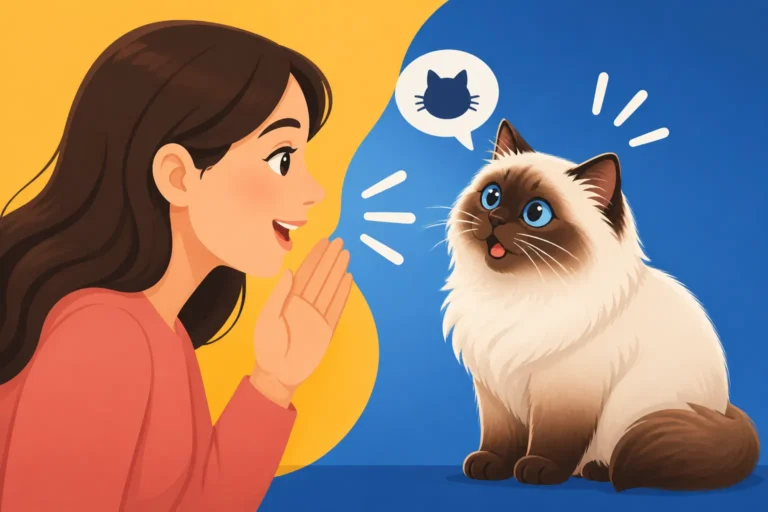
If you've spent any time with a Himalayan, you've likely noticed that they're far from silent. While they might not possess the notoriously loud, demanding "mee-YOW!" of a purebred Siamese, they absolutely inherited a charming vocal repertoire that sets them apart from their quieter Persian relatives. This vocal side is a direct link to their Siamese ancestry and is a key part of how they interact with their world and with you.
You'll hear a variety of sounds: soft chirps when they spot a bird outside the window, inquisitive trills when they're following you around the house, and distinct, conversational meows when they want attention, food, or simply to express their contentment. They often engage in "conversations," responding to your voice with their own gentle replies. It's not uncommon for a Himalayan to greet you at the door with a series of happy chirps or to offer a questioning meow when you enter a room. This vocal expressiveness is a way for them to communicate their needs, their happiness, and their presence. It makes them feel incredibly connected to their human companions, and many owners find this communicative aspect to be one of the most endearing qualities of the breed. Embracing and responding to their unique voice strengthens your bond and acknowledges their intelligent, interactive nature. Our article, How Often a Himalayan Uses the Voice It Inherited, delves further into their vocal habits.
Incorporating Routine and Predictability
For a Himalayan, routine isn't just a preference; it's often a source of deep comfort and a way for their intelligent minds to feel secure and in control of their world. This trait, while beneficial for any cat, seems particularly pronounced in Himalayans, blending the Persian's love for order with the Siamese's keen awareness of their environment. They thrive on predictability, from the time they eat, to when they receive their daily grooming, to your own comings and goings.
A predictable schedule allows them to anticipate events, reducing anxiety and making them feel more settled. They know when to expect playtime, when their meals will arrive, and when they can expect your attention. Deviations from this routine, even small ones, can sometimes be unsettling for them. You might notice them acting a little confused, meowing more, or even seeking out their favorite quiet spot if things are out of sync. This isn't being demanding; it's simply their way of expressing that their well-ordered world has been disrupted. Establishing and maintaining a consistent daily rhythm, with regular feeding times, designated play sessions, and quiet periods, helps to nurture their sense of security and allows their intelligent minds to function optimally without stress. They learn to trust the rhythm of the household, which in turn fosters a calm, happy, and well-adjusted cat.
Managing Their Environment for Optimal Happiness
Creating the right environment for a Himalayan means striking a balance between offering stimulating opportunities for their inner Siamese and providing comfortable, safe havens for their Persian calm. It’s about understanding their physical limitations while still acknowledging their need for mental and physical engagement.
Creating Stimulating Yet Safe Spaces
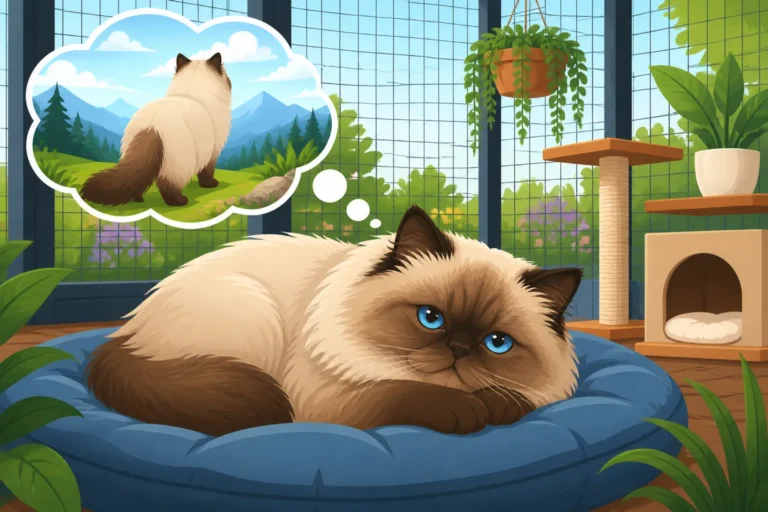
Himalayans, despite their cobby build and occasional bursts of energy, are generally not daredevils when it comes to heights. Unlike their Siamese ancestors who might enjoy scaling the highest bookshelves, Himalayans tend to prefer lower, more accessible perches. This is partly due to their sturdy, less agile physique and partly due to their brachycephalic breathing, which makes sustained climbing or jumping more strenuous. Therefore, when you're thinking about vertical enrichment, focus on waist-high cat trees or sturdy window perches that offer a comfortable view without requiring Herculean efforts. Wide, stable platforms are much more appreciated than narrow, wobbly ones.
Window perches, especially those overlooking a bird feeder or an active outdoor scene, provide invaluable mental stimulation. They can spend hours observing the world outside, satisfying their curiosity without needing to physically exert themselves. Comfortable beds or soft cushions placed in strategic, warm spots around the house will also be highly utilized. Think about their comfort: a soft, plush bed in a quiet corner can be their sanctuary after a vigorous play session. The goal is to create spaces that encourage gentle exploration and observation, allowing them to engage with their surroundings safely and comfortably, rather than forcing them into athletic feats. If you're considering a cat tree, our guide on Why a Himalayan's Cat Tree Should Be Waist High at Most has some practical advice.
The Social Aspect: Companionship and Bonding
One of the most endearing qualities of the Himalayan, inherited from its Siamese side, is their strong desire for companionship and their deep capacity for bonding with their human family. These aren't aloof cats content to live on the periphery of your life. They genuinely crave interaction and thrive on being part of the family unit. Many Himalayans will choose one or two primary humans to bond most closely with, often following them from room to room, settling near their feet, or even requesting lap time.
While they adore human companionship, the question of whether they need another cat is a bit more nuanced. Some Himalayans are perfectly content being the sole feline focus of attention, especially if their humans are home frequently to provide interaction. However, many also appreciate the presence of a calm, slow-moving feline companion. If introducing a second cat, look for breeds or individuals with a similar, gentle temperament that won't overwhelm your Himalayan with overly rambunctious play. A cat that enjoys lounging and gentle interaction would be a better fit than a high-energy, boisterous breed. The key is compatibility: a companion who respects their need for personal space and quiet time, but also offers a gentle presence. Ultimately, their happiness hinges on meaningful connection, whether that comes solely from their human family or also includes a carefully chosen feline friend. For more details on this, our article Whether a Himalayan Wants a Second Cat might be useful.
Recognizing Signs of Boredom or Overstimulation
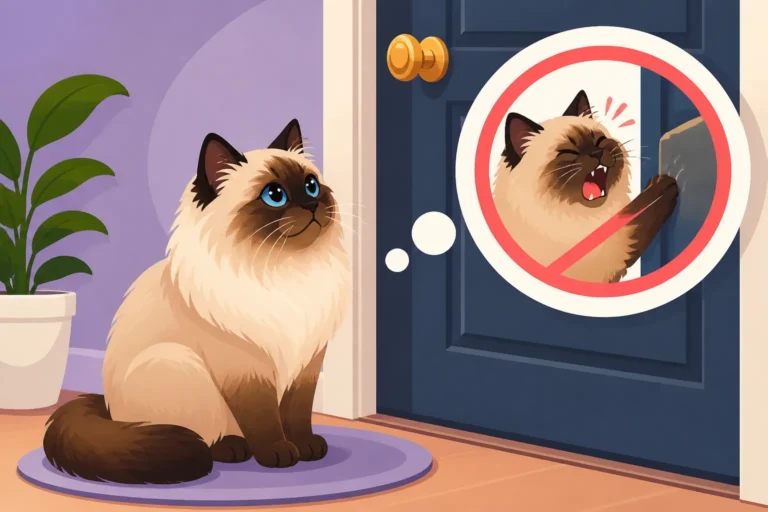
Even with the best intentions, it's possible for your Himalayan to become either bored or, conversely, overstimulated. Recognizing these subtle cues is essential for maintaining their well-being. A bored Himalayan might start displaying behaviors that are out of character: excessive grooming leading to bald patches, increased vocalization (not the conversational kind, but more insistent or plaintive meows), destructive scratching (even if they have scratch posts), or even lethargy and withdrawal. They might seem restless, wandering aimlessly, or staring blankly. These are signs that their intelligent mind and playful spirit aren't being adequately engaged.
On the flip side, an overstimulated Himalayan might exhibit signs of stress or irritation. This could manifest as swatting playfully turning into a nip, tail lashing, flattened ears, or an increased desire to hide. Too much energetic play without adequate rest, or constant noise and activity in the home, can push them past their comfort zone. It's about finding that sweet spot of engagement. If you notice persistent behavioral changes, it’s worth reviewing their environment and routine. Are they getting enough short, interactive play sessions? Are their puzzle feeders being used? Is their environment too chaotic or too quiet? Sometimes, simply adding a new type of wand toy from Amazon or spending a few extra minutes with a gentle brushing session can make a world of difference. Your keen observation skills are their best advocate in ensuring their emotional and mental health.
| Behavior Aspect | Typical Persian | Typical Siamese | Himalayan Blend |
|---|---|---|---|
| Vocalization | Soft, infrequent | Loud, demanding | Moderate chirps, trills, conversational meows |
| Play Intensity | Low, gentle | High, energetic | Moderate bursts, then quickly rests |
| Play Duration | Short, passive | Long, sustained | Short, intense sessions (5-15 min) |
| Social Needs | Independent, calm | High, interactive | Moderate to high, forms strong human bonds |
| Curiosity/Exploration | Low, observant | High, mischievous | Moderate, observant, enjoys puzzle toys |
| Agility/Climbing | Low, ground-based | High, athletic | Low to moderate, prefers low, wide perches |
| Response to Routine | Appreciates | Adapts, seeks novelty | Thrives on predictable routine |
The Physical Limitations and How They Impact Activity
While the Siamese infusion certainly gives Himalayans a lively spirit, their Persian physical traits, particularly their distinctive flat faces and cobby bodies, undeniably place certain limitations on their activity levels. Understanding these physical realities isn't about dampening their spirit, but rather about ensuring their safety and comfort. It means tailoring their environment and play to respect what their bodies can handle.
Breathing Considerations for Flat-Faced Himalayans
The most significant physical limitation for a Himalayan, and one that directly impacts their capacity for sustained activity, is their brachycephalic, or flat, face. This unique facial structure, while aesthetically appealing to many, comes with a compacted airway. Their nostrils can be narrowed, their soft palate elongated, and their trachea sometimes smaller than in long-nosed breeds. All of these factors mean that breathing, especially during exertion, is more challenging for them.
When a Himalayan gets excited or engages in vigorous play, their respiratory system has to work harder to take in enough oxygen and to cool itself down. This is why their play sessions are often characterized by short, intense bursts rather than prolonged activity. You'll quickly notice them panting or breathing heavily after just a few minutes of chasing a wand toy, a clear sign that they need a break. This isn't a flaw in their personality; it's a physical reality that demands careful consideration from their owners. Pushing them too hard can lead to overheating and respiratory distress, which is a serious concern. It's why they tend to be indoor cats, away from extreme temperatures, and why their playtime needs to be carefully monitored. For a deeper dive into their breathing, check out Why a Himalayan Snores Louder Than Its Siamese Ancestors.
Body Type and Agility
Beyond their facial structure, the Himalayan's overall body type—often described as "cobby" and substantial—also plays a role in how they move and what activities they prefer. Their short, thick legs and relatively heavy, rounded body mean they aren't built for the same kind of explosive agility or high-flying acrobatics that a more slender, athletic cat might display. They are sturdy, grounded creatures rather than graceful aerialists.
This body type means they are less likely to be found scaling the highest bookshelf, performing daring leaps from curtain rods, or executing intricate maneuvers mid-air. Their jumps tend to be more deliberate and usually to lower heights, like hopping onto a sofa or a low cat tree platform. They prefer stability and solid ground, finding comfort in sprawling out rather than perching precariously. While they can move with surprising speed during their play bursts, these are typically ground-based chases or pounces, not prolonged high-impact activities. Understanding this helps you appreciate their movements and avoids frustrating them with expectations that don't align with their physical capabilities. They know their limits, and often choose not to exert themselves beyond a certain point. If you’ve ever wondered why they avoid certain heights, our article The Height a Himalayan Decides Is Not Worth It explains it well.
Adapting Enrichment to Their Physical Needs
Knowing your Himalayan's physical limitations doesn't mean you can't provide rich, engaging enrichment; it simply means you need to adapt your approach. The key is to offer stimulating activities that respect their brachycephalic breathing and cobby build. Instead of encouraging jumping and climbing, focus on ground-level play. Wand toys can still be fantastic, but keep the action low to the floor, encouraging pounces and short chases rather than high leaps. Interactive floor toys that roll, wiggle, or have hidden treats are excellent for engaging their minds and bodies without overexertion.
Puzzle feeders, as mentioned earlier, are perfect because they stimulate their intelligence without requiring intense physical activity. Consider rotating their toys regularly to keep things fresh and interesting. Provide comfortable, easily accessible sleeping and lounging spots throughout the house, especially in cooler areas during warmer months, to ensure they can rest and recover whenever needed. If you're looking for toys that specifically cater to ground-level play for a flat-faced cat, Amazon offers a wide array of options, from rolling treat dispensers to battery-operated mice that scurry along the floor. The goal is to maximize their mental and physical engagement within safe and comfortable parameters, ensuring they remain happy, healthy, and celebrated for their unique blend of playful spark and serene beauty.
Disclaimer
This article is for general informational purposes only and does not constitute professional advice. Laws, prices and regulations vary by location and change over time. Consult a qualified professional for guidance on your specific situation.