What a Himalayan Is Saying When It Chirps
It’s a sound that many Himalayan cat parents know well: that distinctive, almost bird-like "chirp" or trill. It’s not quite a meow, not exactly a purr, but something entirely unique and incredibly charming. But what on earth is your fluffy companion trying to tell you when they make that sound? It can be a perplexing noise, leaving you wondering if they're seeing something you can't, expressing pure joy, or perhaps just having a deep, philosophical conversation with the dust bunnies. This guide is here to unravel the mystery of the Himalayan chirp, helping you understand the different meanings behind this delightful vocalization and how to respond in a way that strengthens your bond.
The Unique Voice of the Himalayan: A Legacy of Chirps
Himalayan cats are renowned for their stunning looks, luxurious coats, and often, their somewhat quiet demeanor compared to their more vocal Siamese ancestors. Yet, nestled within their vocal repertoire is this fascinating chirp. Understanding where it comes from and why it persists gives us insight into its purpose.
Tracing the Siamese Influence on Himalayan Vocalizations
The Himalayan breed is a fascinating blend, created by crossing the stoic, quiet Persian with the much more boisterous and conversational Siamese. When the original breeders, back in the 1930s, set out to create a long-haired cat with the striking "pointed" pattern of the Siamese, they inadvertently inherited a little bit of that Siamese vocal charm too. While the volume and sheer quantity of vocalizations were significantly toned down by the Persian influence, some of the more subtle Siamese sounds remained. The chirp, or trill, is one such example. It’s a softer, more nuanced sound than a full-blown Siamese yowl, reflecting the Himalayan's generally more composed personality, but it clearly carries that genetic echo.
Think of it like inheriting a family trait that skips a generation or two in its most obvious form. Your Himalayan might not carry on a full-blown "conversation" with you like a Siamese might, where they seem to respond with direct meows and demands. Instead, they’ll offer these brief, melodic chirps as a more refined form of communication, a little nod to their talkative ancestry without overwhelming the tranquil Persian temperament. This subtle vocalization allows them to express themselves without disrupting the peace and quiet they so often prefer. Where the Himalayan's Voice Came From explores this lineage further.
Why the Chirp Persists in a Generally Quieter Breed
Despite their Persian half often being quite reserved vocally, the chirp has stubbornly remained a staple in the Himalayan's communication toolkit. This isn't just a random sound; it's a functional one. Unlike a loud meow which can demand immediate attention, or a purr which is typically an expression of contentment, the chirp serves a variety of purposes that fit seamlessly into the Himalayan's gentle nature. It's less confrontational, less attention-grabbing in an insistent way, and more of an observational or subtle greeting.
Consider your Himalayan perched elegantly on their favorite Himalayan's Cat Tree Should Be Waist High at Most, observing the world outside the window. A tiny bird lands on the feeder, and you might hear a soft chirp. This isn't a plea for you to open the door, nor is it a desperate cry. It's an instinctive sound, almost a "hunting alert" or an internal expression of excitement. Because it’s a relatively quiet sound, it doesn’t scare off the prey, and it doesn't disturb the serene atmosphere of the home. It’s effective, subtle, and perfectly suited to a cat that prefers to make its point without shouting about it.
The Range of Sounds Beyond the Classic Chirp
While the chirp is distinct, it’s not the only sound your Himalayan might make. Their vocal range, though generally quieter than many breeds, is actually quite varied. You'll hear the classic purr, of course, often a deep, rumbling vibration that signifies profound contentment, especially when they're curled up in your lap or kneading their favorite blanket. Then there are the meows, which might be less frequent but can vary in tone and intensity. A short, sharp meow might be a demand for food, while a drawn-out, questioning meow could signal confusion or a desire for reassurance.
Some Himalayans even retain a hint of that Siamese "yowl," especially if they are feeling particularly distressed, lonely, or insistent. This yowl is rarely as piercing as a purebred Siamese's, but it's unmistakable in its urgency. Understanding this spectrum of sounds helps you place the chirp within its proper context. The chirp is often a bridge between silent observation and a more direct vocalization, a halfway house for expressing interest or gentle acknowledgment.
Decoding the Himalayan Chirp: Common Meanings and Contexts
The magic of the chirp is that it's highly versatile. It can mean different things depending on the situation, your cat's body language, and even their individual personality. Learning to "read" these cues is key to truly understanding your Himalayan.
The "Prey Alert" Chirp: When They Spot a Bird or Bug
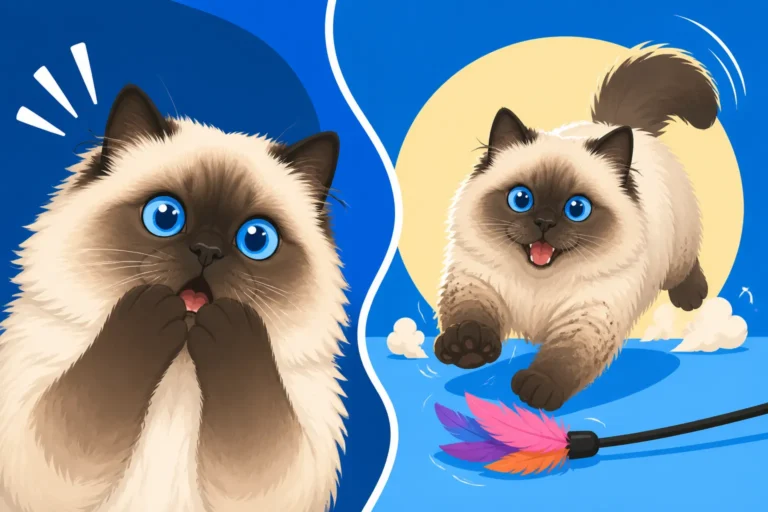
This is perhaps one of the most classic and frequently observed chirp scenarios. You’re sitting quietly, and suddenly your Himalayan, who was previously a picture of feline tranquility, lets out a rapid series of chirps or chittering sounds, often accompanied by wide, focused eyes and a twitching tail. They might be fixated on a bird outside the window, a squirrel scampering up a tree, or even a housefly buzzing around the light fixture.
This particular type of chirp is thought to be an instinctual hunting sound. It's often accompanied by a rapid vibration of the jaw, almost as if they're practicing their "kill bite." It's a combination of excitement, frustration (because they can't actually get to the prey), and perhaps an involuntary expression of their predatory drive. They're not talking to you as much as they are vocalizing at the perceived prey, or simply expressing the intense internal conflict of wanting to hunt but being unable to. If you see this, you know your Himalayan's inner tiger is fully engaged, even if they appear lazy most of the time. Why a Himalayan Watches a Toy Rather Than Chase It delves into their unique play style. You might even find some stimulating toys on Amazon that can trigger this instinct, like a remote-controlled mouse or a feather wand.
The "Hello There!" Chirp: Greetings and Affection
Another common and endearing use of the chirp is as a greeting. You walk into a room, and your Himalayan, who might have been napping or observing from their favorite spot, slowly opens their eyes, gives a luxurious stretch, and then offers a soft, rising-and-falling chirp. This is their way of saying, "Ah, you're back! I acknowledge your presence, and I'm pleased to see you." It’s a gentle, welcoming sound that suggests contentment and affection without being overly demanding.
This greeting chirp can also happen when you approach them for a cuddle. Instead of a direct meow, they might offer a soft trill as you reach down to pet them. It's an invitation, a gentle acknowledgment of your touch, and an expression of comfort. Pay attention to the accompanying body language: a slow blink, a relaxed tail, or even a soft headbutt (or "bunt") against your leg. These all signify a happy, engaged cat who is genuinely pleased by your presence. It's a subtle way they say "I love you" in their own quiet way.
The "Pay Attention to Me!" Chirp: Seeking Interaction
Sometimes, the chirp shifts from a mere observation or greeting to a more direct, albeit still gentle, request for attention. If you're busy on your laptop or reading a book, and your Himalayan decides it's their time, you might hear a series of slightly more insistent chirps. These aren't loud meows, but they have a definite "I'm here!" quality. They might weave around your legs, jump onto the sofa next to you, or simply stare intently and chirp.
This type of chirp is their polite way of nudging you for interaction. They might want a cuddle, a brush, or perhaps a few minutes of play with their favorite Which Wand Toys a Himalayan Can Actually Follow. It’s a less demanding approach than many other breeds might use, perfectly fitting the Himalayan's generally agreeable personality. They aren't trying to dominate your attention with loud cries; they're simply making their presence known and expressing a desire for connection. If you ignore it, the chirps might intensify slightly, or they might try a gentle paw tap, but rarely will they resort to a full-blown caterwaul.
How Himalayan Chirps Differ from Other Vocalizations
Understanding the chirp is also about distinguishing it from the other sounds your Himalayan makes. Each vocalization has its own purpose and context, and the chirp sits in a unique position within their communication repertoire.
Chirps vs. Meows: Understanding the Nuances
The most significant difference between a chirp and a meow lies in intent and sound. A meow, especially a loud or drawn-out one, is usually a more direct communication to you, the human. It's often a request, a complaint, or a direct statement. For example, a demanding meow might mean "Feed me!" or "Let me out of this room!" A distressed meow signals discomfort or fear.
Chirps, on the other hand, are often less direct. As we discussed, they can be internal expressions (the prey alert), or subtle acknowledgments (the greeting). They tend to be softer, more melodic, and almost involuntary compared to the deliberate, often declarative nature of a meow. Think of a meow as a sentence and a chirp as a sigh or a little exclamation. While a meow can be quite insistent, a chirp is generally more gentle and less demanding. A Himalayan might even combine them sometimes, offering a "mrrrow-chirp" which is usually a very happy and chatty greeting. How Much More a Himalayan Talks Than a Persian delves into their conversational tendencies.
The Purr-Chirp: A Blend of Contentment and Engagement
Sometimes, your Himalayan might produce a sound that isn't quite a distinct chirp, nor a pure purr, but a delightful blend of the two. This "purr-chirp" or "trill-purr" often happens when they are in a state of deep contentment but are also actively engaged with you. For instance, if they are purring loudly in your lap while you're stroking their long, luxurious fur, and you stop petting them for a moment, they might give a soft purr-chirp as a gentle reminder or an expression of continued happiness.
It’s a truly charming sound that indicates a high level of comfort and affection. It’s their way of saying, "I'm utterly blissful, and I'd like this moment to continue, please and thank you." This sound is often accompanied by head bunting, slow blinks, or even a gentle reach of a paw towards you. It's a clear signal that you've hit the sweet spot of feline happiness and they're in no hurry for the interaction to end.
When a Chirp Escalates: From Interest to Frustration
While chirps are generally gentle, their tone and intensity can sometimes indicate a shift in your cat's emotional state. What starts as a mild "prey alert" chirp at a bird outside could, if the cat becomes increasingly agitated or frustrated by the barrier, escalate into a more insistent chatter or even a low growl of annoyance. This usually happens when their predatory instincts are highly stimulated, but they are unable to act on them.
Similarly, an attention-seeking chirp might become more urgent or turn into a mild meow if their initial subtle attempts to get your notice are ignored. It's a spectrum, and understanding the subtle shifts in sound and body language is key. A chirping cat with a twitching tail and dilated pupils is expressing a different kind of excitement than a chirping cat with a slow-blinking, relaxed posture. Always observe the whole picture – the sound, the body language, and the context – to get the full message.
Here's a quick comparison of common Himalayan vocalizations:
| Vocalization | Typical Sound | Common Meaning | Accompanying Body Language | Intensity |
|---|---|---|---|---|
| Chirp/Trill | Soft, bird-like, melodic | Greeting, acknowledgement, prey alert, gentle attention-seeking | Focused gaze, relaxed or gently twitching tail, slow blink | Low to Medium |
| Meow | Varied pitches | Request, demand, complaint, greeting, distress | Direct gaze, walking towards you, tail up or tucked | Medium to High |
| Purr | Deep rumble | Contentment, relaxation, sometimes self-soothing (stress) | Kneading, closed eyes, relaxed posture, leaning into touch | Low (vibration) |
| Yowl | Loud, drawn-out, insistent | Distress, loneliness, territorial dispute, heat (female) | Pacing, agitated tail, wide eyes, trying to get attention | High |
| Growl/Hiss | Low rumble, sharp hiss | Warning, fear, aggression | Flattened ears, puffed fur, crouched, direct stare | High |
Responding to Your Himalayan's Chirps: Building Better Communication
Now that you've got a better handle on what those chirps might mean, the next step is knowing how to respond. Your reactions teach your Himalayan whether their communication is effective, strengthening your bond and making them feel understood.
Engaging with Play-Related Chirps
When your Himalayan is chirping at a bird outside the window or chittering at a toy mouse scurrying across the floor, they are in a highly stimulated state. This is a perfect opportunity for interactive play. Grab a wand toy – something with feathers or a string that mimics prey movement – and engage them. Drag it across the floor, hide it, make it dart and pounce. This allows them to fulfill that hunting instinct that the chirp expressed, even if it's just in play. Providing these outlets is crucial for a cat’s mental and physical well-being.
You can find a great selection of engaging Which Wand Toys a Himalayan Can Actually Follow on Amazon that are designed to activate their predatory drive without being overwhelming. Just remember to let them "catch" the toy occasionally to prevent frustration. A good play session will leave them satisfied, often ending with a deep purr and a well-deserved nap. This positive reinforcement teaches them that their "prey alert" chirps can lead to satisfying hunting experiences.
Acknowledging Greeting Chirps
When your Himalayan offers a gentle chirp as you enter a room or approach them, it's a polite greeting. The best response is to acknowledge it warmly. A soft spoken "Hello, sweetie!" or a gentle stroke on their head or along their back will go a long way. This validates their communication and reinforces the idea that their quiet greetings are heard and appreciated. It's a small gesture, but it builds trust and affection.
Sometimes, a slow blink back at your Himalayan can be just as powerful as words. In cat language, a slow blink is a sign of trust and affection, often called a "cat kiss." When they chirp and slow-blink at you, returning the gesture tells them you understand and reciprocate their feelings. This quiet exchange strengthens your bond in a uniquely feline way.
Addressing Attention-Seeking Chirps Effectively
If your Himalayan is chirping for your attention, it's important to respond, but also to teach them appropriate ways to get it. If they chirp and rub against your legs while you're working, take a moment to give them a quick pat and acknowledge their presence. "I hear you, little one, I'll be with you in a minute." This prevents them from escalating their demands out of frustration.
However, if they are incessantly chirping and demanding, it's also important to set boundaries. While you want to be responsive, you don't want to reinforce constant nagging. Acknowledge them, perhaps offer a short play session or a cuddle, but then gently redirect their attention if needed. You could offer a puzzle feeder (making sure it's one a Which Puzzle Feeder a Himalayan Can Get Its Face Into can use) or a new toy to keep them occupied. Consistency is key here. If you always give in to every insistent chirp, they'll learn that constant vocalization is the fastest route to your attention.
What Might Influence a Himalayan's Chirping Habits
Just like humans, cats can have variations in their communication based on their environment, age, health, and individual quirks. Recognizing these factors can help you understand why your Himalayan might be more or less vocal with their chirps.
Environmental Factors and Stimuli
The environment plays a huge role in how much your Himalayan chirps. A household with lots of windows overlooking a busy bird feeder, or one that experiences occasional insect visitors, is likely to hear more "prey alert" chirps. Cats are highly observant, and anything that catches their eye can trigger this vocalization. A change in the household, such as new furniture or even a new routine, can also sometimes increase their vocalizations as they process the changes around them.
Conversely, a very quiet, low-stimulation environment might lead to fewer chirps. If there's nothing exciting to observe, there's less reason for that instinctive vocalization. It’s also worth considering how frequently you interact with them. If you’re often engaging in play or offering cuddles, they might use those greeting and attention-seeking chirps more because they've learned it leads to positive interaction. A Himalayan's Catio Needs More Shade Than Space could also increase chirping due to the increased outdoor stimuli they observe.
Age and Health Considerations
A Himalayan's chirping habits can also change with age. Younger kittens are often more playful and curious, and might chirp more frequently as they explore their world and interact with littermates. As they mature, their chirping might settle into a more predictable pattern. Older cats, on the other hand, might sometimes become more vocal overall, including chirps, especially if their eyesight or hearing begins to decline, or if they are experiencing cognitive changes. They might chirp more to orient themselves or to seek reassurance.
It's crucial to also consider health. While a chirp is generally a positive or neutral sound, any sudden, drastic change in vocalization – becoming much more vocal, or suddenly very quiet – warrants a vet visit. A cat hiding illness might stop chirping, or conversely, a cat in pain or discomfort might vocalize more in general. How a Himalayan Hides Illness Behind an Expressionless Face is important to remember. Always consult your vet if you notice a significant shift in your cat’s usual sounds or behavior, especially alongside other symptoms like changes in appetite or litter box habits.
Personality Differences and Individual Vocal Styles
Finally, remember that every cat is an individual, even within the same breed. While Himalayans generally share certain traits, their personalities vary. Some Himalayans are naturally more chatty and expressive, inheriting a stronger vocal inclination from their Siamese side. They might use chirps, trills, and soft meows frequently to communicate their thoughts and feelings. Others might be almost silent, reserving their chirps for truly exciting moments or very special greetings.
You might have a Himalayan who is a master of the "purr-chirp" and another who only uses the "prey alert" chirp. It all comes down to their unique disposition. Spending time observing your own cat, learning their specific cues and understanding what triggers their various vocalizations, is the most rewarding part of being a cat parent. They're telling you stories, one chirp at a time, and the more you listen, the deeper your connection will become.
Disclaimer
This article is for general informational purposes only and does not constitute professional advice. Laws, prices and regulations vary by location and change over time. Consult a qualified professional for guidance on your specific situation.