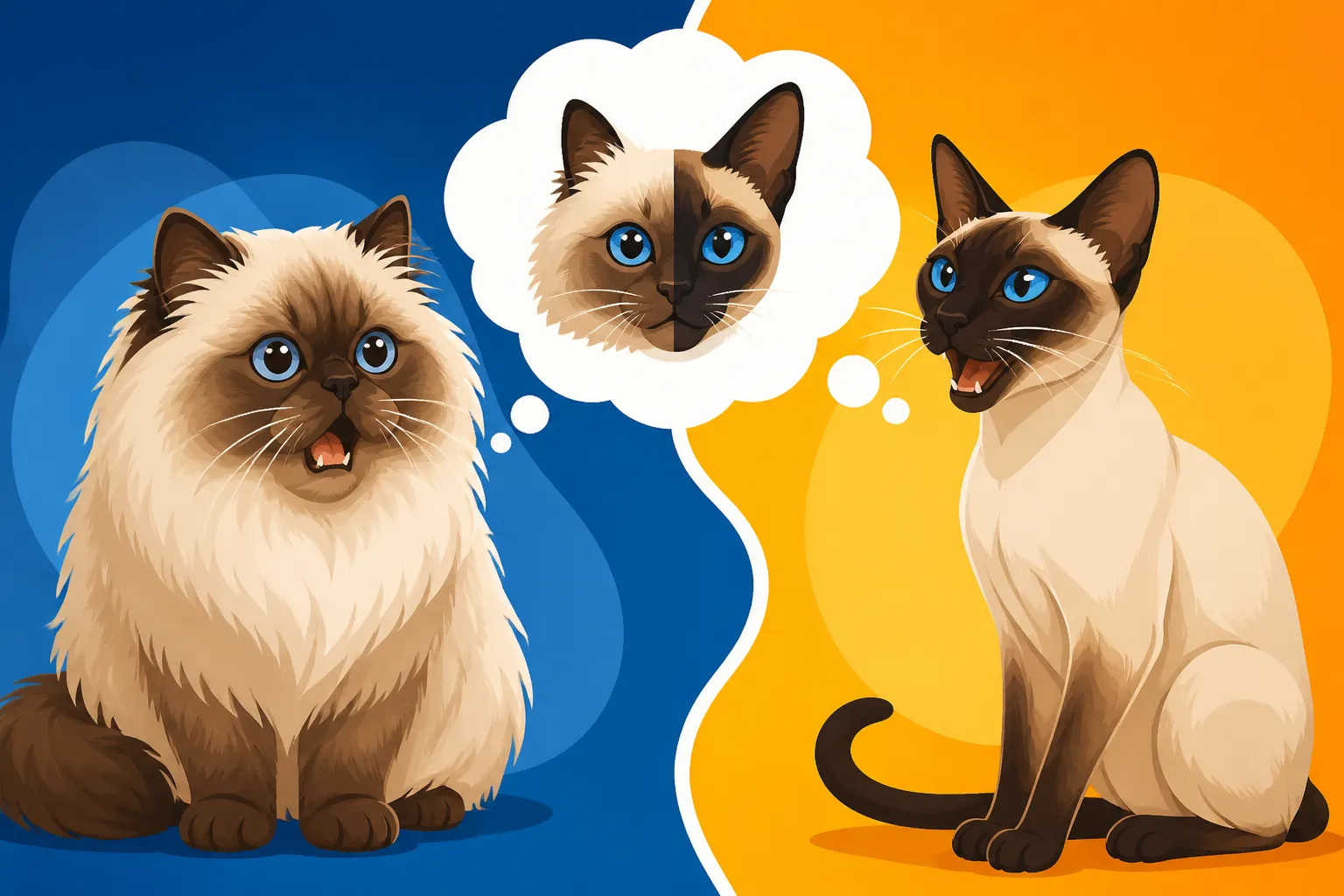
Whether a Himalayan Yowls the Way a Siamese Does
One of the most common questions I get from folks considering a Himalayan is whether they're going to fill their home with the same vibrant, sometimes insistent, vocalizations that their Siamese cousins are famous for. It's a completely fair concern! Nobody wants to adopt a sweet, fluffy companion only to find themselves living with a furry alarm clock. This guide is here to unravel the mystery of the Himalayan voice, exploring its origins, its unique characteristics, and what you can truly expect from your beautiful companion.
The Siamese Legacy: A Loud Introduction to the Family Tree
To truly understand a Himalayan's vocal tendencies, we absolutely have to start with their Siamese heritage. The Siamese cat is, without a doubt, one of the most vocally expressive breeds out there. Their distinctive "yowl" is legendary, a sound that can range from a demanding wail to a chattering plea, and it’s a trait that often sparks both adoration and apprehension in potential owners. It’s hard to ignore, and for many, it's a defining characteristic.
The Loudness and Variety of the Siamese Voice
If you've ever spent time around a Siamese, you know their vocal range is truly something else. It's not just volume; it's the sheer variety of sounds they produce. There's the classic, almost operatic yowl that can carry through an entire house, a sound often associated with their intense communication style. But beyond that, they have a whole repertoire of chirps, trills, meows, and even what some describe as a "baby cry." They use these sounds to express every emotion under the sun – hunger, loneliness, excitement, indignation, and sometimes, it seems, just the pure joy of hearing their own voice. It's a constant dialogue, a running commentary on their world, and they fully expect you to participate. This is often why people worry about the Himalayan; they see that Siamese ancestry and immediately envision a constant serenade.
Why the Siamese Voice is So Distinctive
The intensity of the Siamese voice isn't just a quirk; it's deeply ingrained in their breed characteristics and personality. Siamese are known for being incredibly social, intelligent, and highly communicative. They bond very strongly with their human companions and often express their needs and desires verbally. Some theories suggest that their distinctive vocalizations developed as a way to stand out or communicate effectively within large social groups in their ancestral homes. Unlike many other breeds that might use subtle body language or quiet purrs, the Siamese prefer to leave no room for doubt when they have something to say. Their slender, athletic build and often highly strung temperament seem to contribute to this outgoing, sometimes demanding, vocal nature. It’s a complete package of personality, and their voice is a huge part of it. This is the genetic starting point that the Himalayan inherited, so it’s crucial to acknowledge its powerful presence in the lineage. You can learn more about Where the Himalayan's Voice Came From.
The Persian Influence: Quieting the Roar
Now, let's pivot to the other side of the Himalayan family tree: the Persian. If the Siamese is the boisterous opera singer, the Persian is the quiet, elegant librarian. The introduction of Persian genes into the Siamese line, specifically to create the Himalayan, profoundly impacted many traits, and vocalization was certainly one of them. This crossbreeding wasn't just about achieving the gorgeous long coat and rounder body; it was also about blending temperaments, resulting in a cat that truly embodies a unique middle ground.
The Persian's Generally Reserved Demeanor
Persian cats are renowned for their calm, placid, and serene personalities. They are the epitome of a lap cat, preferring quiet contemplation and gentle affection over boisterous play and loud declarations. Their vocalizations are typically soft, infrequent, and quite demure. You're more likely to hear a gentle chirp or a soft, almost unheard meow from a Persian, usually when they have a specific, urgent need – like a forgotten dinner or an empty water bowl. They aren't typically ones to carry on lengthy conversations or make a grand entrance with a yowl. Their communication often relies more on their expressive eyes and subtle body language. This difference is stark when compared to the Siamese and provides the perfect counterpoint in understanding the Himalayan's voice.
How the Persian's Temperament Affects Vocal Tendencies
The Persian's less vocal nature is inextricably linked to their overall temperament. They are often described as easygoing and adaptable, not prone to the same high energy levels or intense demands as their Siamese counterparts. This relaxed disposition means they generally have less "to say" in a loud, attention-grabbing manner. Their needs are often met with a quiet confidence that their human will understand. When a Persian does vocalize, it's usually a polite request rather than a demand. Their physical structure, too, with a more compact face and shorter muzzle, may also play a minor role in the type of sounds they produce, even if the primary factor is temperament. This genetic contribution from the Persian side is precisely what dials down the volume control inherited from the Siamese, creating the unique vocal profile of the Himalayan.
The Himalayan's Unique Vocal Blend
So, with a parentage split between the vocally prolific Siamese and the serenely quiet Persian, where does the Himalayan land on the spectrum? They truly strike a fascinating balance, leaning more towards the gentle side but still possessing a charming capacity for communication. They certainly don't typically "yowl" in the dramatic, sustained way a purebred Siamese might, much to the relief of many prospective owners!
More Than a Purr: Understanding Himalayan Meows and Chirps
Himalayans definitely have a voice, and it's quite lovely, but it's usually far from the piercing yowl of a Siamese. Their vocalizations are generally softer, sweeter, and more melodic. You'll hear a variety of sounds:
- Soft Meows: These are their primary form of communication. They might offer a gentle "mew" when greeting you at the door, reminding you it's mealtime, or simply asking for some cuddles. It’s a polite and endearing sound.
- Chirps and Trills: These are particularly charming. A Himalayan might chirp when they spot a bird outside the window, or trill as they wind around your legs, inviting you to engage with them. It’s a more delicate, bird-like sound that indicates contentment or playful curiosity. You can often decipher What a Himalayan Is Saying When It Chirps.
- Whispery Sounds: Sometimes, their vocalizations are so soft they're almost whispers, especially if they are sleepy or particularly relaxed. It’s a subtle invitation for interaction rather than a demand.
The volume is notably lower than a Siamese, and the frequency is also much less. They are not typically cats that feel the need to narrate their entire day. They are content to observe and engage when they feel it's necessary or when they genuinely want your attention. They have kept the ability to "talk" from their Siamese ancestors, but with the volume significantly lowered by their Persian genetics. This is why How Much More a Himalayan Talks Than a Persian is quite telling; they communicate more than a Persian, but far less intensely than a Siamese.
The "Conversation Starter" Himalayan: How and When They Choose to Speak Up
Himalayans, while not constant talkers, are certainly not silent cats. They are quite adept at initiating conversations, but on their own terms. They tend to be very purposeful with their vocalizations. They're not just making noise for the sake of it; there's usually a clear message behind their meow or chirp.
For instance, your Himalayan might approach you, look you squarely in the eye, and offer a soft meow, clearly indicating they'd like a scratch behind the ears or perhaps a bit of food. They might use a gentle "mew" to lead you towards their water bowl if it's empty, or subtly hint at playtime by dropping a toy at your feet with a quiet sound. How a Himalayan Asks to Be Let Into a Room often involves a soft, insistent meow at the closed door, rather than a frantic scratching or loud wail.
They are generally not known for the dramatic, attention-seeking yowls of their Siamese forebears. Their communication is more akin to gentle persuasion. They understand that a soft, consistent sound is often more effective in getting their human's attention than an ear-splitting shriek. It’s a testament to their intelligence and their calm, confident nature. While they inherited the ability to be vocal, they also inherited the Persian's preference for a more subdued form of expression, resulting in a cat that speaks when it counts, and does so with charm rather than cacophony.
| Vocal Trait | Siamese Cat | Persian Cat | Himalayan Cat |
|---|---|---|---|
| Volume | High (often loud, piercing) | Low (soft, quiet) | Medium-Low (gentle, melodic) |
| Frequency | Very High (frequent, conversational) | Low (infrequent, reserved) | Medium (purposeful, occasional) |
| Primary Sounds | Yowls, wails, chattering, meows | Soft meows, chirps, purrs | Soft meows, chirps, trills, purrs |
| Purpose | Expresses needs, desires, emotions; seeks constant interaction; narrates daily life | Expresses specific, urgent needs; seeks gentle attention | Expresses specific needs; seeks gentle attention; engages in brief "conversations" |
| Overall Style | Demanding, opinionated, talkative | Reserved, polite, demure | Balanced, polite, charmingly vocal |
When a Himalayan's Voice Changes Pitch
While Himalayans are generally on the quieter side, there are definitely times when their vocalizations might increase in frequency or intensity. It's important for owners to recognize these shifts, as they can be valuable indicators of a deeper issue, whether it's a health concern or an emotional need that isn't being met. An otherwise quiet cat becoming suddenly loud always warrants investigation.
Medical Reasons for Increased Vocalization
Any significant change in your Himalayan's vocal habits should always prompt a visit to your veterinarian, especially if it's accompanied by other unusual behaviors. Cats are masters at hiding illness, and sometimes, a change in vocalization is one of the more noticeable signs that something is amiss.
Here are a few medical reasons why your Himalayan might become more vocal:
- Pain or Discomfort: If your cat is experiencing pain, whether from an injury, arthritis, or an internal issue, they might vocalize more frequently or loudly as a cry for help. This could be a sustained meow, a low growl, or even a sudden yelp when touched. Since Himalayans can be stoic, a vocal cue can be a critical signal. Why a Himalayan Hides Illness Behind an Expressionless Face means you have to be extra vigilant.
- Urinary Tract Issues: Conditions like urinary tract infections or blockages can cause discomfort, leading to increased vocalization, especially in the litter box.
- Hyperthyroidism: Older Himalayans are susceptible to hyperthyroidism, which can manifest as increased appetite, weight loss, and often, increased vocalization, including a more insistent meow.
- Cognitive Dysfunction (Dementia): As Himalayans age, some may develop cognitive decline, leading to disorientation, especially at night. This can cause them to wander and vocalize loudly, seemingly without purpose.
- Deafness: Cats losing their hearing may vocalize more loudly simply because they can't hear themselves. While less common than the other issues, it's something to consider for an older cat.
- Respiratory Issues: A cat struggling to breathe due to a cold, allergies, or even issues related to their brachycephalic (flat) face could vocalize differently or more often as a sign of distress. They might make different noises, too, such as the snoring that might lead you to ask Whether a Snoring Himalayan Should Sleep in the Bedroom.
It’s crucial not to dismiss new, excessive, or unusual vocalizations as "just being dramatic." Your Himalayan is telling you something important.
Environmental and Emotional Triggers
Beyond medical concerns, a Himalayan's increased vocalization can also stem from environmental changes or emotional distress. These are often easier to identify and address once you understand the cat's perspective.
Consider these common triggers:
- Stress or Anxiety: Like any cat, Himalayans can get stressed. Moving to a new home, the introduction of a new pet or person, loud noises, or even a change in your routine can cause anxiety, leading to more vocal communication. They might be trying to express their discomfort or seek reassurance.
- Boredom or Lack of Enrichment: Despite their calm demeanor, Himalayans still need mental and physical stimulation. A bored cat might vocalize to get your attention, signaling that they need playtime or interaction. Ensuring they have toys (perhaps from Amazon that cater to flat-faced breeds), scratching posts, and regular engagement can mitigate this.
- Attention Seeking: Sometimes, your Himalayan simply wants your attention! If they learn that a meow brings you over to pet them or play, they'll use it. This isn't inherently bad, but if it becomes excessive, it's worth evaluating if they're getting enough dedicated interaction.
- Hunger or Thirst: While they aren't as demanding as a Siamese, a truly hungry or thirsty Himalayan will definitely let you know. A persistent meow around mealtime is completely normal.
- Territorial Disputes: If there are other cats in the household, increased vocalization might be a sign of territorial stress, especially if they feel their space or resources are threatened.
- Changes in Routine: Himalayans, like many cats, thrive on routine. A sudden change in your work schedule, feeding times, or even the furniture arrangement can throw them off, causing them to vocalize their confusion or displeasure. What a Himalayan Does When It Is Unsettled often includes increased vocalization as a form of communication.
Observing when your Himalayan vocalizes, and what other behaviors accompany it, will give you critical clues. Are they pacing? Are they hiding? Is it always around the same time of day? These details help you piece together the puzzle.
Managing Vocalization in Himalayans
If your Himalayan is being more vocal than you'd like, or more than is typical for them, don't despair! There are many strategies you can employ to address the issue, always keeping in mind the underlying reason for the change. The goal isn't to silence your cat entirely, but to ensure they are happy, healthy, and communicating in a way that works for everyone.
Meeting Their Needs: Ensuring a Content Himalayan
Often, excessive vocalization is a sign that a cat's needs aren't being fully met. Addressing these foundational elements can often bring about a significant reduction in unwanted noise.
- Consistent Routine: Cats thrive on predictability. Establish a consistent schedule for feeding, playtime, and attention. This can greatly reduce anxiety and the need for your Himalayan to "ask" for things constantly. If your Himalayan knows when to expect dinner, they're less likely to meow insistently at an empty bowl. Why a Himalayan Expects to Be Fed at the Same Hour is a key point here.
- Adequate Playtime and Enrichment: Even though Himalayans are known for being less energetic than some breeds, they still need engaging play. Dedicate 10-15 minutes, two or three times a day, to interactive play using wand toys (many great options are available on Amazon) or laser pointers. Puzzle feeders can also provide mental stimulation and keep them occupied between play sessions, reducing boredom-induced vocalizations.
- Comfort and Security: Ensure your Himalayan has safe, comfortable spots to retreat to, especially in a busy household. This could be a cozy bed in a quiet room, a cat tree (though remember Why a Himalayan's Cat Tree Should Be Waist High at Most due to their cobby build), or even just a designated spot on the sofa. A secure cat feels less need to vocalize distress.
- Fresh Food and Water: This might seem obvious, but always ensure they have access to fresh water and food at appropriate times. A low-sided, wide bowl is ideal for their flat faces to prevent whisker fatigue and make eating more comfortable. You might even find specialized bowls on Amazon designed for brachycephalic breeds.
- Clean Litter Box: A dirty litter box can cause distress and lead to vocal complaints. Keep it scooped regularly, ideally multiple times a day. Himalayans, with their long coats, also benefit from low-tracking litter.
By proactively meeting your Himalayan's needs, you reduce their reasons for feeling the need to vocalize excessively. A content cat is often a quieter cat.
Training and Redirection Techniques
Once you've ruled out medical issues and ensured their basic needs are met, you can start working on training and redirection if the vocalization is purely attention-seeking.
- Ignore Unwanted Vocalizations: This is probably the hardest step, but also one of the most effective. If your Himalayan is meowing incessantly for attention, ignore them. Do not make eye contact, do not speak to them, and do not pet them. The moment they quiet down, then reward them with attention. This teaches them that silence, not noise, gets your desired response. Consistency is absolutely key here.
- Reward Quiet Behavior: Actively seek out moments when your Himalayan is quiet and calm, and reward them with praise, a gentle pet, or a small treat. This reinforces the positive, quiet behavior.
- Redirect Their Attention: If your Himalayan starts to vocalize for attention, try redirecting them with a favorite toy or a quick play session after they've been quiet for a moment. This changes the focus from demanding attention to earning it through appropriate behavior.
- Introduce Calming Aids: For cats prone to anxiety, consider calming diffusers or sprays. Some owners find these beneficial in reducing overall stress levels, which can in turn reduce anxiety-driven vocalization. Always consult with your vet before introducing any new supplement or aid. You might find a range of these products on Amazon.
- Never Punish: It's important to never punish your cat for vocalizing. Yelling at them, spraying them with water, or startling them will only increase their stress and can damage your bond. It might temporarily stop the noise, but it won't address the underlying reason and could lead to other behavioral issues.
Remember, patience is paramount. Changing a cat's behavior takes time and consistency. By understanding the roots of your Himalayan's vocalizations and responding thoughtfully, you can foster a more harmonious and quieter home environment for both of you.
Disclaimer
This article is for general informational purposes only and does not constitute professional advice. Laws, prices and regulations vary by location and change over time. Consult a qualified professional for guidance on your specific situation.