What a Camera Catches a Himalayan Doing All Day
It’s a thought that crosses every dedicated cat parent’s mind: what exactly does my beloved Himalayan get up to when I’m not home? We leave for work, school, or errands, and come back to our fluffy companions seemingly having just woken up, perfectly posed, as if they’ve been waiting for us all day. But surely, there’s more to their day than just that, right? This guide will dive deep into the secret life of a Himalayan, using insights from modern pet cameras to reveal the often-surprising reality of their solo hours. We’ll uncover their routines, their quiet forms of play, and how they truly spend their time when the house is empty.
The Grand Tour (or Lack Thereof)
One of the most common assumptions about cats is that they roam the entire house, exploring every nook and cranny. For a Himalayan, however, a pet camera often reveals a very different story. These beautiful, placid cats, with their distinctive cobby frame and luxuriously thick coats, tend to be creatures of habit and comfort. Their exploration might be less about covering ground and more about finding the perfect sunbeam.
Their Personal Territory Mapping
When you first set up a camera, you might expect to see a feline adventure, with your Himalayan leaping onto counters, scaling bookshelves, or peering out of every window. The reality, for many Himalayan owners, is a revelation in less activity. Himalayans often designate a very specific, limited territory within your home as "theirs" for the daytime hours. This isn't necessarily a sign of boredom or unhappiness; it's just their nature. They thrive on routine and comfort, and once they've found their ideal spot—be it a particular armchair, a sun-drenched rug, or a favorite cat tree with wide platforms—they tend to stick to it. You might observe a short, deliberate stroll from the kitchen to the living room, perhaps to check if their water bowl is still full, but a grand exploration of the upstairs bedrooms might be a rare event indeed. This limited range means that strategically placed cameras, like a pan-and-tilt model you might find on Amazon, can effectively cover their main activity zones.
Why They Stick to the Low Ground
Unlike some of their more athletic cousins, Himalayans aren't typically known for their acrobatic feats or high-flying antics. Their cobby build and relatively short legs, a legacy from their Persian side, mean they’re less inclined to jump to great heights. Watching back camera footage, you'll likely confirm that your Himalayan spends the vast majority of its time on the floor or the sofa. They might use a low-set cat tree, especially if it offers broad, stable platforms and plenty of soft, carpeted surfaces for napping. Why a Himalayan Stays on the Floor and the Sofa delves deeper into this characteristic. Rarely will you catch them attempting to scale tall cabinets or balancing precariously on narrow shelves. This preference for lower surfaces is partly physical, as their build isn't designed for extreme vertical leaps, and partly behavioral, rooted in their calm and unhurried disposition. They prioritize comfort and stability, making them perfect companions for apartment living where vertical space might be limited anyway.
The Art of the Nap: Mastering Relaxation
If there’s one activity a camera will show your Himalayan excelling at, it’s napping. And we're not talking about just a few catnaps; Himalayans are champions of extended, luxurious sleep sessions, often moving only to find a new prime napping location.
The Favorite Sunny Spots
As the sun shifts throughout the day, so too might your Himalayan. A camera often reveals a meticulous tracking of sunbeams across the floor or furniture. They are masters of finding the warmest, coziest patch available, a behavior driven by their dense Persian coat which, paradoxically, can make them sensitive to overheating but also draws them to warmth. You might see them start their morning nap curled up on a sun-drenched rug, then, as the sun moves, they’ll slowly unfurl, stretch languidly, and relocate to a new prime spot on the sofa cushion or a plush pet bed. This solar-powered migration is a silent, unhurried event, often punctuated by a soft sigh or a slow blink. They're simply optimizing their environment for maximum comfort and warmth, without expending unnecessary energy.
Nap Duration and Frequency
The myth of the cat that sleeps all day isn't entirely a myth when it comes to a Himalayan. Your camera footage will likely confirm long stretches of uninterrupted sleep. It's not uncommon to see them settle down for a solid two or three-hour nap, only to stir, stretch, maybe get a drink of water, and then find another spot for another lengthy snooze. These aren't just light dozes; Himalayans can enter a deep, restful sleep. This peaceful demeanor is one of their most endearing qualities, but it does mean their "activity" can look quite minimal on camera. How Many Hours a Day a Himalayan Is Actually Awake explores just how much time they actually spend in slumber. Don't mistake this for lethargy; it's simply how they recharge and manage their energy, fitting perfectly with their calm temperament.
The Adorable, Sometimes Strange, Sleep Positions
Beyond just where they sleep, a camera offers a fascinating glimpse into how they sleep. You’ll witness the full repertoire of adorable, and sometimes amusing, sleep positions. From the classic curled-up "doughnut" with their tail tucked neatly around them, to the sprawling "dead cat" pose where they're completely stretched out on their back, paws limp, looking utterly devoid of worries. You might even catch them in more unusual positions, perhaps draped half off a cushion, or with their head in an odd angle, proving that comfort often trumps elegance. These moments are pure gold for any cat lover, offering a peek into their relaxed and uninhibited state when they feel completely safe and secure in their home environment.
Subtle Communications and Quiet Moments
While Himalayans aren't typically known for being as vocal as their Siamese ancestors, a camera can still pick up on their subtle forms of communication and quiet interactions with their environment, even when no one else is home.
The Quiet Chirp or Trill
If you're lucky enough to have a pet camera with audio recording, you might occasionally catch those soft, almost bird-like chirps or trills that Himalayans sometimes use. What Is Left of the Siamese Voice in a Himalayan describes how their vocalizations differ from their ancestors. These aren't the loud, demanding meows of some breeds, but rather gentle greetings or expressions of mild curiosity. A faint "mew" might be heard when they first wake up, as if stretching their voice box along with their body, or a soft trill when they spot a bird outside the window. These sounds are often so subtle that you might not even notice them unless you're specifically listening to the playback. It’s a quiet acknowledgment of their surroundings, a gentle hum rather than a boisterous song.
Gazing at the World Outside
Even if your Himalayan doesn’t venture far, a window or sliding door can become their personal cinema. Camera footage often shows them perched near a window, not actively hunting, but rather observing the world with a calm, discerning eye. A squirrel scampering up a tree, a bird landing on a feeder, or even just the rustling leaves of a bush can capture their attention for extended periods. This passive observation is a common form of enrichment for indoor cats, and Himalayans are particularly adept at it. They may not twitch their tail or chatter with excitement like some breeds, but their intense gaze and slightly perked ears show a deep engagement with the outdoor drama unfolding before them. It’s a quiet reminder that even the most laid-back cats have a curious streak.
Self-Grooming and Maintenance
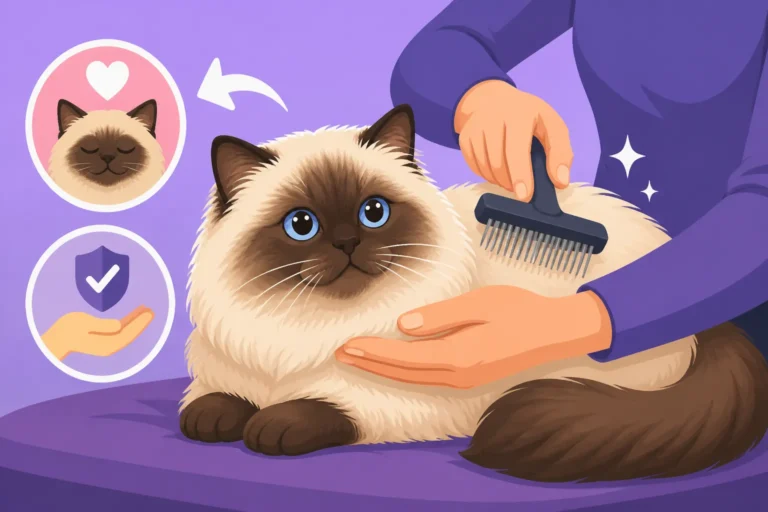
The majestic long coat of a Himalayan demands attention, and a camera will certainly capture plenty of self-grooming sessions. These cats are fastidious, and maintaining their beautiful fur is a significant part of their daily routine. You'll see them meticulously licking their paws, washing their faces, and working their way through their body coat. Sometimes, these sessions are short and sharp, a quick tidy-up after a nap. Other times, especially after a meal where some food might have ended up on their ruff, the grooming can be a prolonged, focused affair. Why a Himalayan Drops Food Onto Its Ruff explains how this happens. This self-care is vital for their hygiene and comfort, but it also highlights the need for human assistance with their dense undercoat. You might notice them struggling to reach certain spots, especially if they have a particularly full ruff or are a bit on the heavier side, underscoring why The Daily Comb a Himalayan Cannot Skip is so crucial.
Solo Playtime and Environmental Engagement
While Himalayans are generally considered less energetic than some breeds, a camera might still catch glimpses of their unique approach to solo play and interaction with their immediate environment. It's often subtle, but it's there.
The Wand Toy Fantasies
Don't expect your Himalayan to be chasing laser pointers across the ceiling for hours on end when you're gone. Their play tends to be more understated. However, a pet camera might reveal them batting at a favorite toy mouse, perhaps one they received from Amazon, with a slow, deliberate paw. You might see them nose-diving into a soft blanket, pretending it's a mighty predator, or subtly pouncing on a crinkly ball. Which Wand Toys a Himalayan Can Actually Follow suggests the type of play they enjoy when you are there, and this often translates to their solo moments as well. Their play sessions are usually shorter, perhaps a few minutes of intense focus followed by a rapid return to napping, especially if they start to feel warm. It's more about mental engagement than physical exertion.
The Unsuspecting Dust Bunny Hunt
Sometimes, the most exciting "prey" for a solo Himalayan can be the most unexpected. A rogue dust bunny floating across the floor, a stray leaf blown in from outside, or even the movement of their own tail can become a temporary fascination. A camera often captures these adorable, impromptu hunting expeditions. They might track the dust bunny with intense concentration, then execute a slow-motion pounce, looking utterly satisfied with their conquest. These moments highlight their innate predatory instincts, albeit in a very relaxed, low-stakes manner. It's a reminder that even in their serene existence, there's a playful spark ready to be ignited by the simplest of stimuli.
Interactive Feeders and Water Fountains
If you've provided enrichment like puzzle feeders or a water fountain, your camera will show you exactly how your Himalayan interacts with them. Some Himalayans, especially those with particularly flat faces, might struggle with certain puzzle feeders. Which Puzzle Feeder a Himalayan Can Get Its Face Into is a helpful read for selecting the right type. You might observe them attempting to extract kibble with their paw, or carefully maneuvering their flat face into a wide, shallow bowl. Their drinking habits can also be interesting; some will meticulously lap from a fountain, while others might prefer a wide, still bowl, carefully avoiding soaking their magnificent ruff. These interactions can be a great way to assess if your chosen enrichment items are truly suitable for their unique physical characteristics.
Daily Routines and Maintenance
Beyond sleeping and quiet observation, a camera provides invaluable insight into your Himalayan's basic daily needs – eating, drinking, and litter box habits – ensuring their well-being even when you're not physically present.
Eating and Drinking Patterns
While you might feed your Himalayan on a schedule, a camera can show if they're a "grazer" or if they devour their meal all at once. If dry food is left out, you might see them taking small, deliberate mouthfuls throughout the day. For wet food, you'd observe if they manage to eat cleanly or if their broad face means a bit of a mess around the bowl. It's crucial to observe their drinking habits too. Himalayans, particularly those from the Persian side, can be prone to kidney issues, so adequate hydration is important. The camera can confirm if they're visiting their water bowls frequently, or if perhaps the bowl type isn't ideal for their facial structure and dense ruff, leading to less frequent drinking. You might even catch them batting at the water, or soaking their chin in it, which can be a sign to switch to a wider, shallower bowl.
Litter Box Visits and Preferences
A camera discreetly placed to observe the general area of their litter box can provide important health insights. You can track the frequency of their visits, which can be an early indicator of urinary tract issues or other health concerns. You might also notice their preferences: do they prefer a specific box if you have multiple? Do they enter and exit easily, or does their cobby body make a high-sided box a challenge? Why a Short Legged Himalayan Needs a Low Sided Box highlights the importance of accessibility. This is also where you might catch them tracking litter out of the box, especially if their fluffy britches pick it up easily, leading to a need for specific types of low-dust litter, readily available on Amazon, that are less prone to clinging to their coat. Observing these routine habits helps you tailor their environment for optimal comfort and hygiene.
Grooming Assistance and Coat Health Checks
While a camera primarily shows self-grooming, it can also highlight areas where your Himalayan struggles to reach. If you notice persistent licking or biting at a specific spot, or if a certain area of their coat consistently looks unkempt despite their efforts, it might signal a burgeoning mat or even a skin irritation. For example, some Himalayans find it difficult to reach their lower back or hindquarters, areas where mats often begin. Why a Matted Himalayan Becomes a Medical Case underscores the seriousness of neglected coats. By reviewing the footage, you can identify these tricky spots and proactively incorporate extra brushing or even a professional grooming session into your routine, preventing small issues from becoming painful, matted disasters that could require sedation at the vet. It’s an early warning system for maintaining their glorious, but demanding, coat.
Here's a quick overview of what your camera might reveal:
| Activity Category | Typical Himalayan Behavior (Observed) | Common Assumption (Before Camera) | Implication for Owners |
|---|---|---|---|
| Movement | Limited roaming, preferring 1-3 established "zones" | Actively exploring all rooms, climbing high | Focus enrichment on primary areas, ensure accessible resources. |
| Sleep | Long, deep naps (2-4 hours), frequent relocation to sunniest spots | Short catnaps, more active periods interspersed | Provide multiple comfy, warm, undisturbed napping spots. |
| Vocalization | Infrequent, soft chirps/trills, quiet observation | Frequent meowing, demanding attention | Appreciate subtle communication; check audio for unusual sounds. |
| Play | Short, deliberate sessions with favorite toys; "hunting" dust bunnies | Energetic chasing, leaping, extended play sessions | Offer simple, engaging toys, consider puzzle feeders suitable for face. |
| Grooming | Frequent self-grooming, especially after meals and naps | Minimal self-grooming, relying on owner | Regular combing is essential, monitor for areas they struggle to reach. |
| Eating/Drinking | Slow grazing, careful approach to bowls, focused hydration | Quick eating, less attention to water intake | Use wide, shallow bowls; monitor water intake; consider diet adjustments. |
Disclaimer
This article is for general informational purposes only and does not constitute professional advice. Laws, prices and regulations vary by location and change over time. Consult a qualified professional for guidance on your specific situation.