Why a Himalayan’s Face Rules Out Most Puzzle Feeders
It's a familiar scene, isn't it? You want to provide your cherished Himalayan with all the mental stimulation and slow-feeding benefits a puzzle feeder promises, but time and again, you find your sweet cat just staring forlornly at the contraption, or worse, making a frustrated mess. The truth is, their uniquely adorable, flat faces, while utterly charming, often present a real challenge when it comes to engaging with the majority of puzzle feeders on the market. This guide is here to unravel why this happens and help you navigate the world of enrichment tools to find solutions that truly work for your special feline.
The Unique Anatomy of a Himalayan's Face and Its Impact on Feeding
Let's be honest, the Himalayan's face is a masterpiece of cuteness – those big, round, blue eyes, the tiny nose, the generally sweet expression. But this very structure, a result of their Persian heritage, is what we call "brachycephalic." In layman's terms, it means their skull is broad and short, leading to that distinctive flattened appearance. While beautiful, this also means their internal oral and nasal structures are compressed, which has a significant impact on how they eat, breathe, and even play.
Think about it from your cat's perspective. Their nose is very short, sometimes almost recessed, and their upper jaw is often shorter than their lower jaw, leading to an "undershot" bite. This isn't just cosmetic; it affects how they can pick up food. They can't easily grab small pieces of kibble with their front teeth like a cat with a more protruding muzzle might. Instead, they often use their tongue to scoop or lap food, or even their paw to move pieces around. Combine this with sometimes crowded teeth, which can make chewing certain shapes of kibble difficult, and you start to see why a standard food bowl can even be a challenge, let alone a complex puzzle.
Their whiskers, those vital sensory tools, also play a role. A Himalayan's whiskers are often shorter and more forward-facing due to their facial structure, and they can be highly sensitive. When a cat has to push its face deep into a narrow bowl or a puzzle feeder with high sides, those whiskers get bent back, which can be an uncomfortable and even disorienting sensation. This "whisker fatigue" can make them avoid eating from certain dishes altogether, preferring to leave food around the edges where their whiskers aren't cramped. It's a subtle but powerful deterrent that many owners overlook.
Why Many Common Puzzle Feeders Just Don't Work for Himalayans
So, with that unique facial structure in mind, it becomes clearer why so many puzzle feeders, designed for the average cat's snout and eating style, simply don't cut it for a Himalayan. The market is flooded with inventive designs, but most unfortunately miss the mark for our flat-faced friends.
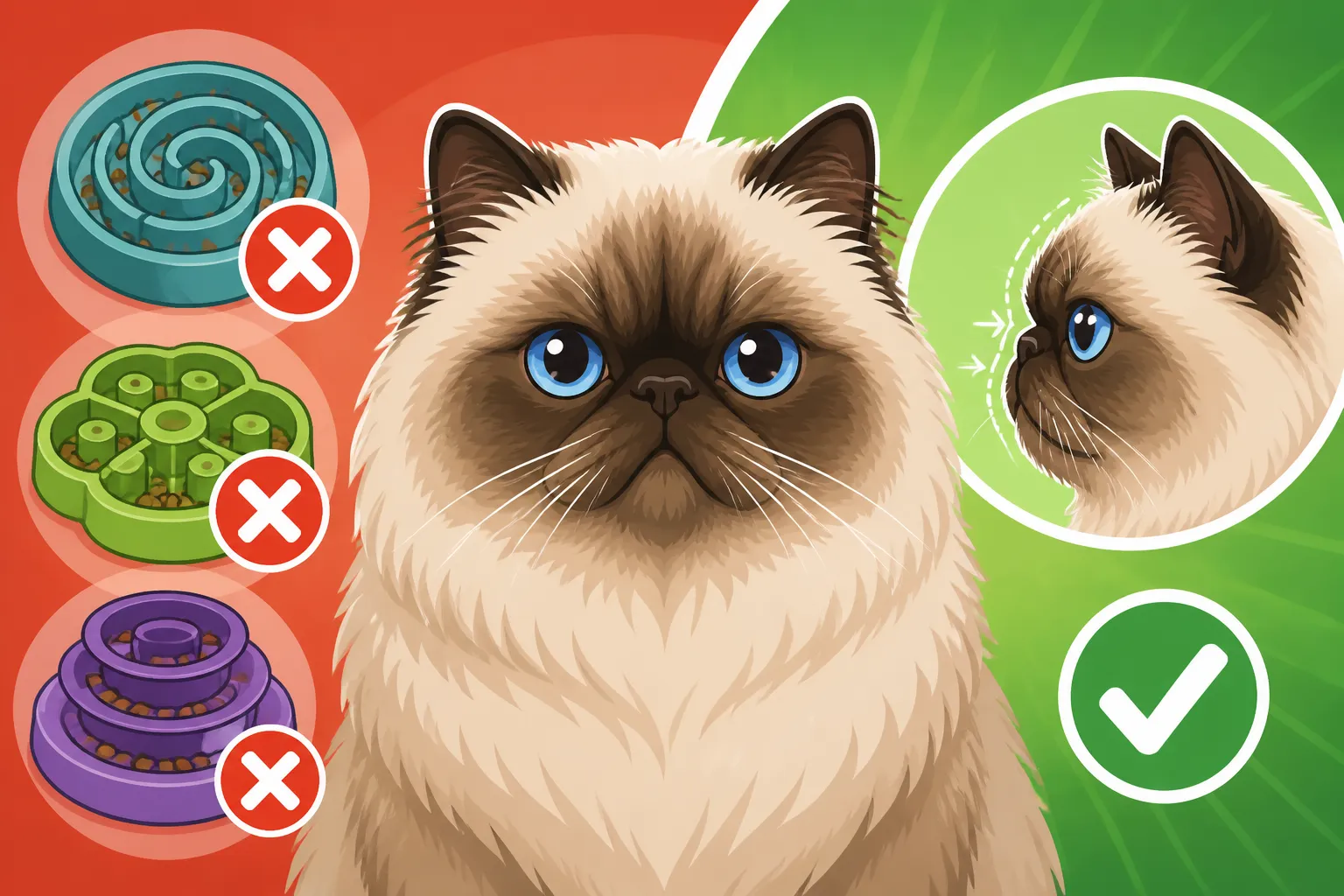
Many popular puzzle feeders feature deep compartments or narrow openings. For a Himalayan, trying to get their mouth, or even just a paw, into a deep crevice to extract a piece of kibble is often an exercise in futility and frustration. Imagine trying to eat soup with a fork – that's often how it feels for them. They simply can't reach the food effectively, and if they do, their short jaw and scooping motion might just push the food further out of reach rather than into their mouth. This leads to them giving up, or worse, becoming stressed around the feeder.
Another common design flaw is the use of small holes or intricate mazes. While great for slowing down a cat that gulps its food, these are often impossible for a Himalayan to navigate. Their little noses can't easily root out kibble from tiny openings, and their tongues aren't designed for precision extraction from tight spaces. Instead, they need feeders that allow for a broader, more open approach. Why a Himalayan's Face Rules Out Most Puzzle Feeders is an issue many owners face, leading to wasted money and frustrated kitties.
Consider the material and stability too. Many puzzle feeders are lightweight plastic, prone to sliding around. A Himalayan, who might rely on nudging the feeder with their face or paw, needs something sturdy. If the feeder moves too much, it just adds to their difficulty and can quickly turn them off the whole idea. Owners often report their Himalayans just batting the feeder around without actually getting to the food, eventually walking away from it.
Choosing the Right Puzzle Feeder: Features for Flat-Faced Felines
The good news is, all hope is not lost! With a better understanding of your Himalayan's needs, you can absolutely find puzzle feeders that they will not only tolerate but genuinely enjoy. The key is to prioritize accessibility and a design that accommodates their unique facial structure.
Look for feeders with broad, shallow trays or wide, open compartments. Think of a "lick mat" style feeder or a flat-disc design with raised ridges rather than deep wells. These allow your Himalayan to use their tongue to scoop and lap at the food without having to push their face into tight spaces or bend their whiskers uncomfortably. Silicon or rubber designs are often great for this, providing enough texture to make them work for their food, but still making it reachable. You might even find some creative solutions on Amazon, where searching for "slow feeder for brachycephalic cats" or "flat cat food mat" can yield surprisingly effective results.
| Feature Type | Unsuitable for Himalayans | Himalayan-Friendly |
|---|---|---|
| Food Access | Deep wells, narrow tunnels, small holes | Broad, shallow trays, wide grooves, open chambers |
| Height of Walls | High sides that obscure food or bend whiskers | Low walls, open design, lick mats |
| Mechanism | Requires delicate paw manipulation, small levers | Simple nudging, pawing, or licking to release |
| Stability | Lightweight plastic, easily pushed around | Heavy base, non-slip bottom, sturdy materials |
| Cleaning | Hard-to-reach crevices | Easy to rinse, smooth surfaces, dishwasher safe |
Feeders that rely on your cat batting a ball or knocking pieces out of an open chute can also be successful. The key here is that the opening where the food dispenses should be wide and easily accessible. Avoid anything that requires a delicate pincer grasp or too much precision. Some cats with How Crowded a Himalayan's Lower Jaw Gets might prefer wet food puzzles, and there are many silicone mats or shallow dishes designed for spreading wet food, which naturally slows them down. These are excellent choices because the food is readily available on the surface, requiring only licking.
When browsing on Amazon or at your local pet store, always visualize your Himalayan's face interacting with the product. Can they easily reach the food? Will their whiskers be squished? Is it stable enough that it won't just slide away when they try to engage with it? Asking these questions will guide you toward suitable options that cater to their unique needs.
Beyond the Bowl: Alternative Enrichment for Your Himalayan
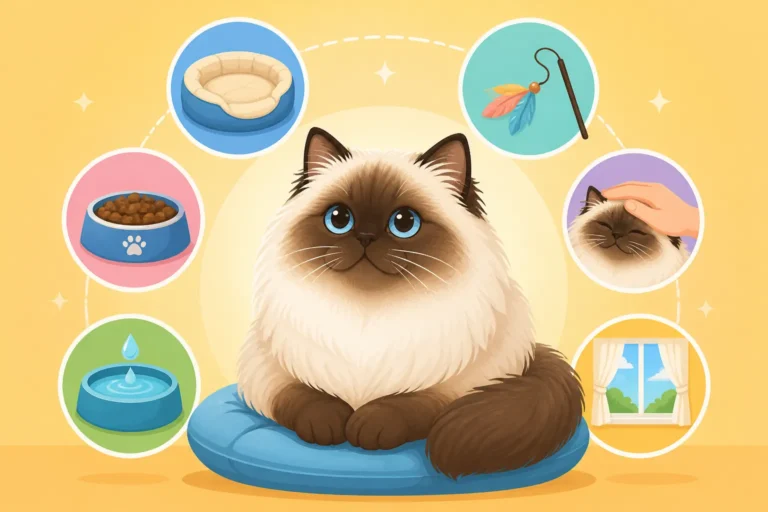
While finding the perfect puzzle feeder can be a rewarding quest, it's important to remember that food-based puzzles are just one piece of the enrichment pie. Your Himalayan, with its generally calm demeanor, still craves mental and physical stimulation, even if their playtime looks a little different from a high-energy Siamese.
Interactive play, even if it's brief, is crucial. Many Himalayans aren't going to be scaling cat trees or leaping across rooms, but they do enjoy chasing wand toys or batting at soft balls. Focus on ground-level play that doesn't require excessive jumping or sustained, strenuous activity, as their brachycephalic nature can make them overheat quickly. Short, frequent play sessions are often more effective than one long one. Why a Himalayan Pants After Five Minutes of Play is a clear signal to stop and let them rest. You might find that simple feather wands or toys that roll gently are much more engaging than anything that needs intense chasing.
Environmental enrichment can also come from observation. Providing a comfortable, low perch near a window where they can watch birds or squirrels can be incredibly stimulating without involving food or complex physical effort. Many Himalayans enjoy simply observing their surroundings from their favorite, often designated, spot. You might notice your cat moving Why a Himalayan Moves Rooms as the Sun Does, following the warmth or a patch of sunlight. This simple act of choosing their spot is a form of self-enrichment.
Finally, never underestimate the power of routine and gentle interaction. Himalayans thrive on predictability, and consistent grooming sessions, gentle petting, and quiet lap time are all forms of enrichment that strengthen your bond and provide comfort. Even a simple session where you're gently wiping their face can be turned into a calm, positive experience with patience and praise. Their needs are specific, but with a little understanding and creativity, you can ensure your flat-faced feline lives a happy, stimulated life.
Disclaimer
This article is for general informational purposes only and does not constitute professional advice. Laws, prices and regulations vary by location and change over time. Consult a qualified professional for guidance on your specific situation.