Why a Himalayan Sits Against You Rather Than On You
It’s a familiar scene for many Himalayan parents: you settle down on the sofa, hoping for that perfect, purring lap cat experience, only to find your beautiful feline friend choosing to sprawl beside you, their ample body a warm, comforting presence just inches away. You might even wonder if they don't love you as much as other cats seem to adore sitting right on their humans. This isn't a slight; it's a wonderfully characteristic quirk of the Himalayan breed, and understanding why they prefer to sit against you rather than directly on you helps deepen your bond and appreciation for their unique ways. This guide will explore the fascinating reasons behind this endearing behavior, diving into their heritage, physical comfort, and subtle communication styles.
Understanding the Himalayan's Affectionate Nature
Himalayan cats are renowned for their sweet, gentle dispositions, often described as affectionate and docile. However, their expression of affection isn't always the overt, clingy type you might see in some other breeds. Their unique blend of Persian tranquility and Siamese engagement shapes how they interact with their human companions, especially when it comes to closeness.
The Persian Influence on Cuddling Habits
One half of the Himalayan's heritage is the dignified Persian, a breed celebrated for its calm demeanor and regal bearing. Persians are known to be affectionate but often prefer to be near their people rather than constantly on them. They enjoy lounging in the same room, perhaps draped across an armchair or nestled on a soft cushion just a paw's reach away. This "proximity affection" is a strong trait passed down to the Himalayan. A Persian-influenced cat appreciates your presence, your warmth, and the secure feeling of being close, but they also value their personal space and comfort. They are not typically the type to climb directly onto your chest and demand attention, preferring a more understated form of companionship. This isn't aloofness; it's a preference for shared space and quiet companionship over direct physical imposition. They are very much The Himalayan Is a Lap Cat That Answers Back, but their "lap" often includes the sofa cushion next to yours.
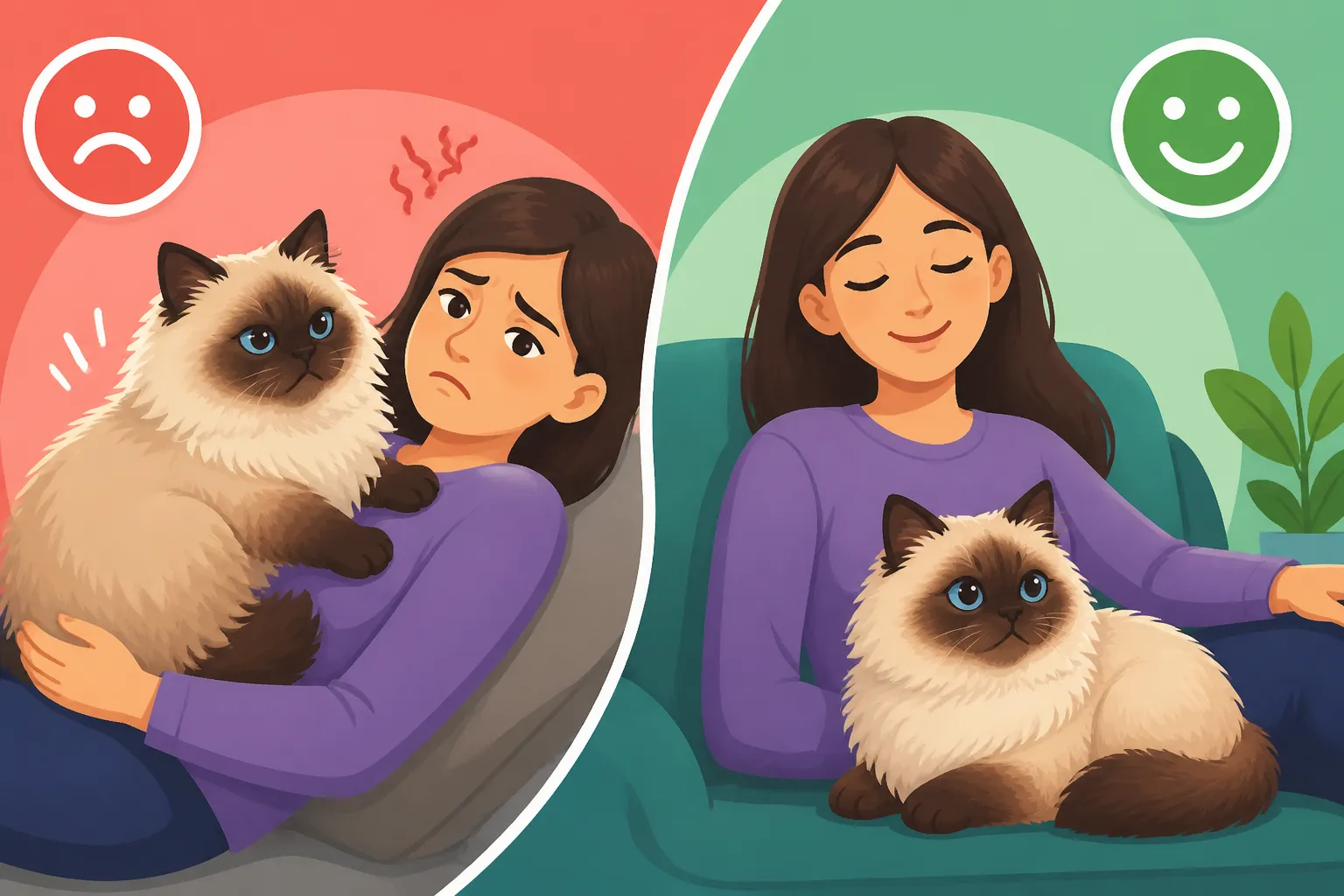
Think of it this way: your Himalayan wants to be part of your world, to feel your reassuring presence, but they might find the direct pressure of your lap a little restrictive or too warm, especially with their magnificent coat. They might sit against your leg, lean into your side, or even stretch out alongside you on the sofa, pressing their body against yours. This is their way of saying, "I love you, and I want to be close," without fully committing to being a living, breathing lap blanket. It’s a subtle yet powerful declaration of attachment, honoring both their desire for connection and their innate comfort preferences.
The Siamese Spark of Closeness
The other half of the Himalayan's lineage, the Siamese, brings a contrasting element to their affectionate nature. Siamese cats are famous for their vocalizations and their intense, almost dog-like devotion to their chosen humans. They are often described as "velcro cats" who thrive on constant interaction and physical contact, enjoying being picked up, carried, and, yes, sitting squarely on laps. While the Himalayan inherited the striking blue eyes and colorpoint pattern from the Siamese, they also gained a measure of that desire for connection, but it's tempered by the Persian's reserved grace.
This means your Himalayan possesses a deeper need for interaction and a stronger desire to be close to you than a purebred Persian might, but they still express it in a more measured way. They might follow you from room to room, settling into a spot nearby rather than directly underfoot. They will engage in conversation, using soft chirps and trills, sometimes even a more pronounced meow to get your attention, a clear echo of their Siamese ancestors. What Is Left of the Siamese Voice in a Himalayan is definitely present. However, when it comes to physical closeness, that Siamese urge to be on you is filtered through the Persian's preference for beside you. They want the warmth, the security, and the bond, but often find a way to achieve it that allows for maximum comfort for both of you, especially given their unique physical characteristics.
The Comfort Factor: Why "Against" Trumps "On"
A significant reason for the Himalayan's preference for sitting against you rather than on you comes down to pure comfort. Their luxurious coat and distinctive body shape play a huge role in how they choose to position themselves for affection.
Body Temperature Regulation and That Glorious Coat
Let's be honest, Himalayans are walking, purring, highly insulated furballs. Their long, dense, double coat, inherited from their Persian side, is absolutely gorgeous but also incredibly effective at trapping heat. While we humans might crave their warmth on a chilly evening, a Himalayan often finds excessive heat quite uncomfortable. They are exquisitely sensitive to temperature, and can Why a Himalayan Overheats Twice as Fast as a Siamese. Sitting directly on a warm human lap, especially for extended periods, can quickly lead to them feeling too hot.
When a Himalayan presses against you, whether on the sofa, in bed, or even just on the floor, they get the benefit of your comforting presence and warmth without becoming completely enveloped and potentially overheated. They can shift easily, move away slightly if they get too warm, or adjust their position to regulate their body temperature more effectively. You might notice them choosing to lie on cooler surfaces, like a tile floor, even if it means being a little further from you, especially during warmer months. This is why you'll often find them Why a Himalayan Lies on the Coldest Tile in the House. Investing in a good cooling mat, easily found on Amazon, can offer them a comfortable alternative that allows them to stay close without overheating. Their long coat also contributes to Why a Himalayan's Coat Hides a Wound for Days, so temperature regulation and avoiding discomfort under their fur is paramount for their overall well-being.
The Cobby Build and Personal Space
Himalayans possess a distinct "cobby" body type – they are stocky, heavily boned, and surprisingly dense for their size, with relatively short legs. While this makes them wonderfully huggable, it also means they don't always perch gracefully or comfortably on a human lap, especially if that lap isn't perfectly flat or still. Their substantial weight, often ranging from 7 to 12 pounds or more, can be quite a load for a human to bear for long periods, and the cat themselves might find it unstable.
When a Himalayan chooses to sit against you, they can spread their weight more evenly across a stable surface like a sofa cushion or the floor. This allows them to relax completely, stretching out their short, strong legs and truly sinking into a state of blissful repose, all while maintaining that desired physical connection. They get the feeling of proximity and warmth without the awkward balancing act or the potential for discomfort if you shift position. This preference for stability and sprawling out means they value their space, even while desiring yours. It's a pragmatic choice for a cat that weighs more than it looks and values its comfort above all else. They are often described as not being particularly interested in heights, preferring to stay grounded, so a stable, flat surface next to you is far more appealing than a precarious lap. Why a Himalayan Rarely Reaches a Counter is part of this grounded nature.
Communication and Connection in Himalayan Cats
Himalayans are subtle communicators. They don't always demand attention with loud meows or incessant rubbing, preferring a more nuanced approach. Understanding these subtle cues helps you appreciate their unique way of connecting and confirms that their "against" behavior is a deep form of affection.
Subtle Gestures of Affection
For a Himalayan, sitting against you is a profound gesture of trust and affection. It signifies that they feel safe, secure, and deeply connected to you. They are offering their presence, their warmth, and their vulnerability. This isn't a lesser form of love; it's simply expressed differently. You might notice them slowly lean into you, eventually pressing their entire flank against your leg or arm. Perhaps they'll stretch out beside you on the sofa, letting their paw gently rest on your thigh or allowing their long tail to brush against you.
These are their ways of saying, "I'm here, I trust you, and I enjoy your company." Pay attention to other non-vocal cues: a slow blink, a gentle purr that vibrates through their body, or even a soft headbutt against your hand if you reach out. These are all high compliments from a Himalayan. They might even knead their paws rhythmically into the cushion beside you, a clear sign of contentment. Whether a Himalayan Kneads Its Chair Before Settling is a common display of their comfort. Recognizing and reciprocating these quiet gestures helps build an even stronger bond, affirming that you understand and respect their unique communication style.
Respecting Their Boundaries and Building Trust
Part of the Himalayan's dignified nature is a subtle sense of personal boundaries. They enjoy affection on their terms, and forcing too much physical interaction can be counterproductive. When your Himalayan chooses to sit against you, they are setting a comfortable boundary that allows for both closeness and individual space. Respecting this choice is crucial for building and maintaining their trust.
Avoid immediately scooping them up or trying to force them onto your lap when they've opted for a "beside" position. Instead, offer gentle pets, speak to them softly, or simply enjoy their warm presence. Allowing them to initiate contact and dictating the terms of their physical interaction reinforces their sense of safety and agency. This trust is invaluable, especially when it comes to necessary grooming routines, such as daily combing. A cat that trusts you implicitly will be far more tolerant of having their magnificent coat maintained. Remember, Getting a Himalayan Kitten Used to the Comb from a young age establishes this trust and tolerance, crucial for a breed with such extensive grooming needs. When they feel respected, their affection will deepen, and you'll find they often choose to be even closer, sometimes even allowing a brief stint on your lap before returning to their preferred "against" position.
Environmental Factors and Preferred Contact
The environment you create for your Himalayan plays a significant role in where and how they choose to express their affection. Providing comfortable, accessible spaces that cater to their unique physical needs will encourage them to be close.
Finding the Ideal Spot
Himalayans are creatures of comfort and habit. They are not known for being highly active or adventurous; instead, they often seek out the warmest, coziest, or most stable spots in the house. You might find them gravitating towards sunbeams, soft blankets, or a particular armchair they've claimed as their own. Why a Himalayan Claims One Chair and Keeps It is a very common observation. When it comes to sitting against you, they are looking for a place where they can combine their love for comfort with their desire for your presence.
This means the "ideal spot" for close contact will often be a wide, stable surface like a sofa, a bed, or even a large, plush cat bed on the floor right next to your favorite chair. These surfaces allow them to spread out their cobby bodies, relax their long fur, and maintain that soothing physical connection without feeling constricted. If you want your Himalayan to be closer, consider enhancing these prime spots with extra blankets or soft pillows. An extra-large, plush cat bed from Amazon, placed strategically beside your usual sitting spot, can become their designated "against you" zone. Ensure these spots are also easily accessible; a Himalayan isn't likely to scale a tall cat tree just for a cuddle, preferring the grounded comfort of the sofa or floor. Why a Himalayan's Cat Tree Should Be Waist High at Most highlights this preference.
Routine and Predictability
Himalayans thrive on routine and predictability. They are creatures of habit and find comfort in knowing what to expect from their day, from meal times to cuddle sessions. When you establish a consistent routine for interaction, your Himalayan will learn when and where to expect your attention, making them more likely to seek out closeness.
For example, if you consistently settle onto the sofa for your evening reading at the same time each day, your Himalayan will likely learn this routine and come to join you, settling against your side. This predictability reduces anxiety and fosters a sense of security, which in turn makes them more open to showing affection. Sudden changes or an unpredictable environment can make them withdraw, seeking solitude rather than company. Why a Himalayan Notices When One Chair Moves illustrates how sensitive they are to environmental shifts. By creating a calm, predictable home life, you invite your Himalayan to express their affectionate nature in the way that feels most natural and comfortable to them – often, that comforting presence right by your side. They truly understand Why a Himalayan Minds Its Routine More Than Its Address.
When "On" Still Happens: Exceptions and Special Bonds
While the "against you" preference is strong, there are certainly times when a Himalayan will choose to sit squarely on your lap or chest. These moments are often particularly special, indicating deep trust, exceptional comfort, or a throwback to their kittenhood instincts.
Kittenhood Cuddles and Early Bonding
Himalayan kittens, like most young felines, often display a more pronounced desire for physical closeness, including sitting directly on laps. In their early weeks, they rely heavily on the warmth and security of their littermates and mother. This instinct for huddling close for comfort and safety often extends to their human caregivers. A tiny Himalayan kitten, with its still-developing coat and smaller size, might find your lap the perfect cozy haven.
These early experiences are crucial for bonding. Regular gentle handling and lap time during kittenhood can help foster a strong sense of security and a lifelong connection. While they may transition to the "against you" preference as they mature and their full, insulating coat develops, those early lap-sitting memories lay the foundation for their trust and affection. If you have a Himalayan kitten, cherish these direct cuddles; they are a fleeting phase before their adult preferences often kick in. What to Check on a Himalayan Kitten Before Its Points Show often includes their comfort with handling, which sets the stage for future closeness. Even then, you might notice them start to find ways to be beside you even as a kitten, showing early signs of their eventual preference.
The Deepest Connections and Trust
For some Himalayans, and with particular individuals they share an extraordinary bond with, sitting on a person's lap or chest does become a regular occurrence. This usually signifies the deepest level of trust, comfort, and affection. These are the cats who might indeed choose to snooze on your chest, purring contentedly, or curl up in a tight ball on your lap for an entire evening. These moments are a testament to a truly exceptional connection, often built over years of consistent love, respect for their boundaries, and mutual understanding.
It's also often observed that older Himalayans, perhaps those who are feeling a bit more vulnerable or whose body temperature regulation isn't quite as efficient, might seek more direct contact for warmth and comfort. An old Himalayan might surprise you by hopping onto your lap more frequently than in their younger years, a poignant sign of their enduring need for closeness and security. What an Old Himalayan Will Still Get Up For often includes the warmth and comfort of a human lap. These cats have effectively decided that the benefits of direct contact outweigh any potential discomfort, a true mark of their profound bond with you. When this happens, consider it the highest compliment from your regal, fluffy companion.
Here’s a quick overview of what your Himalayan's cuddling style might be communicating:
| Behavior | Possible Communication | Why This Preference |
|---|---|---|
| Sitting Against You | "I love you, I trust you, I want to be close and feel safe." | Optimal temperature regulation, stable surface for cobby body, respect for space. |
| Sitting On Your Lap | "I utterly adore you, I feel completely safe and warm with you." | Deep trust, seeking extra warmth (especially when older/younger), strong bond. |
| Following You Room to Room | "I want to be near you and know what you're doing." | Siamese influence for companionship, curiosity, desire for presence. |
| Gentle Head Nuzzles/Bumps | "You are my person, you belong to me, I feel safe with you." | Scent marking, strong affection, feeling secure. |
| Slow Blinks | "I trust you, I am relaxed and comfortable in your presence." | A universal feline sign of deep contentment and trust. |
| Purring Next to You | "I am happy, content, and relaxed because you are here." | Expression of pleasure and comfort, feeling safe. |
Ultimately, whether your Himalayan is snuggled against your side or occasionally perched on your lap, the consistent thread is their desire for connection and affection. Their unique heritage and physical traits simply dictate a different, often more nuanced, way of expressing that love. Embrace their quirks, understand their needs, and you'll find an incredibly devoted companion whose quiet presence speaks volumes.
Disclaimer
This article is for general informational purposes only and does not constitute professional advice. Laws, prices and regulations vary by location and change over time. Consult a qualified professional for guidance on your specific situation.