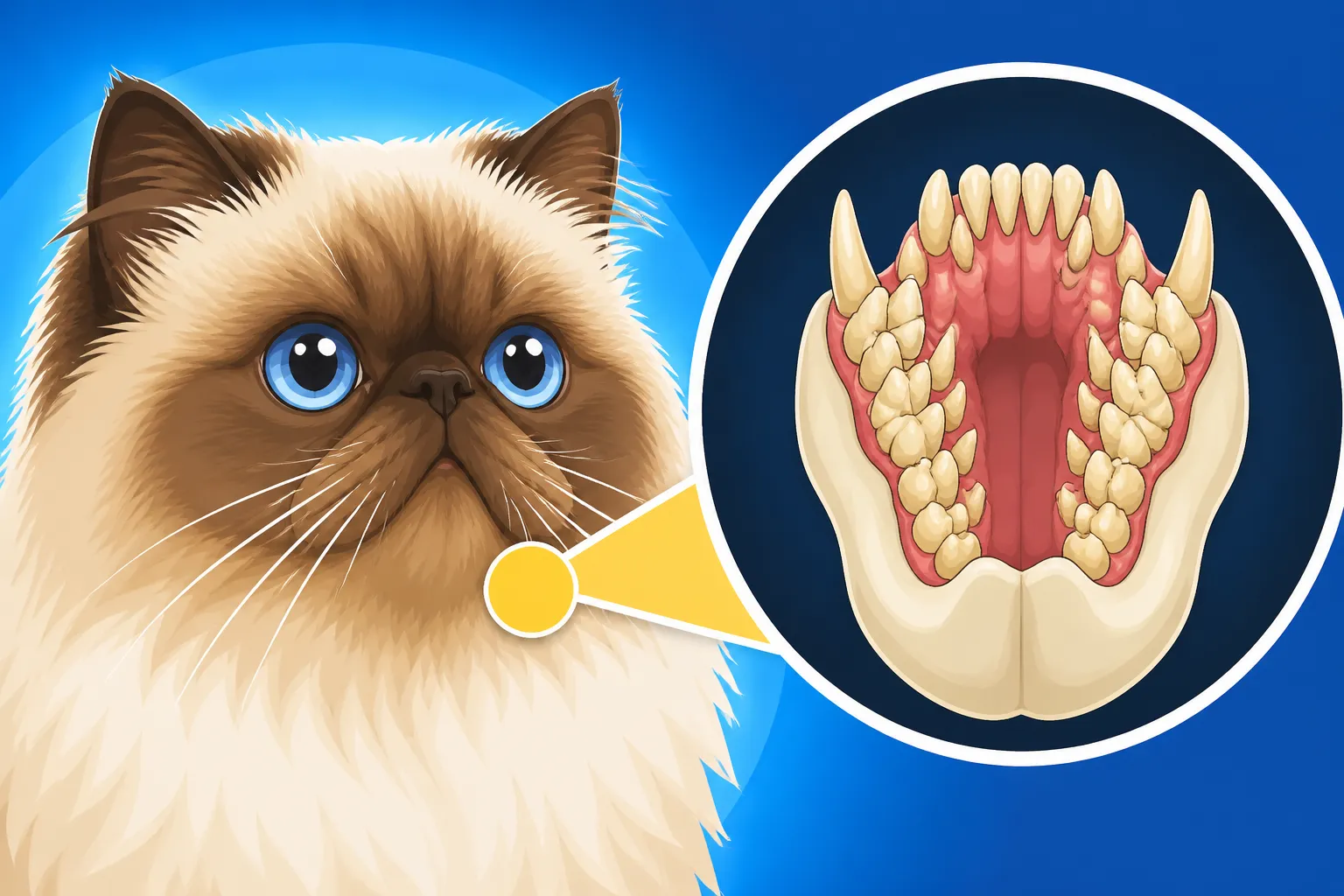
How Crowded a Himalayan’s Lower Jaw Gets
The adorable, distinctive face of a Himalayan cat is undoubtedly one of its most charming features, but beneath that sweet exterior lies a complex anatomical reality. Many owners don't realize that the very characteristics that make their Himalayan so unique can also lead to significant dental challenges, particularly a severely crowded lower jaw that can cause a lifetime of issues if not properly managed. This guide will walk you through the ins and outs of your Himalayan's crowded mouth, explaining why it happens, what problems it can cause, and how you can best support your beloved feline friend.
The Anatomy of a Himalayan's Jaw: A Legacy of Flatness
When you look at your Himalayan's profile, you're seeing generations of careful breeding that emphasized a particular facial structure. This structure, while undeniably cute, comes with a trade-off, especially concerning their oral health.
The Persian Influence on Jaw Structure
It's impossible to talk about a Himalayan's jaw without acknowledging their Persian heritage. Himalayans are essentially long-haired Persian cats with the beautiful colorpoint gene of the Siamese. This means they inherit the characteristic brachycephalic, or "flat-faced," skull structure from their Persian ancestors. Think about it: a standard cat has a nose that extends quite a bit from its face, allowing for a longer, more conventional jawline. A Himalayan's face, on the other hand, is much shorter and flatter.
This dramatically shortened skull means that both the upper jaw (maxilla) and the lower jaw (mandible) are compressed. While the bones themselves are shorter, the number of teeth remains the same as any other cat. Imagine trying to fit the same number of books onto a much smaller shelf; things are bound to get crammed! This is precisely why we see how a shortened jaw crowds a Himalayan's teeth, leading to a cascade of potential issues. The impact isn't just cosmetic; it's a fundamental change in their oral architecture.
The Dental Landscape: More Teeth, Less Space
Cats, like us, are born with deciduous (baby) teeth that eventually get replaced by permanent adult teeth. A typical adult cat has 30 teeth, all designed to fit comfortably within a jaw of appropriate length. In a Himalayan, however, these 30 teeth are forced into a space that is simply too small to accommodate them neatly. This often results in a chaotic arrangement within their mouths.
You'll commonly see teeth that are rotated, overlapping, or even growing at odd angles. The incisors, those tiny teeth at the very front of the mouth, can be so tightly packed they appear fused or uneven. The powerful canine teeth, which are crucial for gripping food, might jut out at unusual angles or appear more prominent than in other breeds, simply because there's nowhere else for them to go. Even the molars and premolars, further back in the jaw, can be twisted or misaligned, creating tiny crevices where food and plaque can easily get trapped. This constant struggle for real estate makes the Himalayan's mouth a unique and challenging dental landscape.
Beyond Aesthetics: Functional Challenges
The issues stemming from a crowded jaw extend far beyond mere appearance. These dental misalignments can lead to significant functional challenges that impact your Himalayan's daily life. One of the most common struggles is with eating. Have you ever noticed your Himalayan having trouble picking up kibble, perhaps pushing it around the bowl with their nose or even using a paw? This isn't just quirky behavior; it's often a direct result of their crowded teeth making it difficult to grasp and chew food effectively.
Hard kibble, especially larger pieces, can be particularly problematic, often causing them to drop food onto their ruff as they try to manage it. This can lead to a messy eating experience, and sometimes even frustration. Beyond eating, grooming can also become a painful chore. Cats are meticulous groomers, but a Himalayan with a severely crowded jaw may find it impossible to properly clean their own teeth and the surrounding gum line with their tongue, leaving them more vulnerable to plaque buildup. All these seemingly small inconveniences can add up to significant discomfort and a reduced quality of life if not addressed.
The Consequences of Dental Crowding in Himalayans
Living with a crowded jaw isn't just about minor inconveniences; it predisposes Himalayans to a host of serious dental and health problems that demand diligent attention from owners.
Increased Risk of Periodontal Disease
Without a doubt, the most prevalent and serious consequence of a crowded jaw in Himalayans is an increased risk of periodontal disease. This is a progressive condition that starts with gingivitis, an inflammation of the gums, and can advance to the destruction of the tissues surrounding and supporting the teeth. When teeth are misaligned and overlapping, it creates an ideal environment for food particles and bacteria to accumulate. These tight spaces are incredibly difficult to clean, even with regular brushing, meaning plaque builds up much faster and more stubbornly than in a cat with well-spaced teeth.
This constant accumulation of plaque quickly hardens into tartar, which is impossible to remove with brushing alone. Tartar then pushes against the gum line, causing inflammation and creating pockets where more bacteria can thrive. Over time, these bacteria attack the structures holding the teeth in place, leading to bone loss, gum recession, and eventually, painful tooth mobility and loss. This is a primary reason why a Himalayan needs dentals earlier than a Siamese, as their dental anatomy significantly accelerates the progression of this disease.
Tooth Resorption and Early Tooth Loss
Beyond periodontal disease, the relentless pressure and unnatural contact between crowded teeth can lead to another painful condition: tooth resorption. Often abbreviated as FORL (Feline Odontoclastic Resorptive Lesions), this occurs when the body's own cells begin to break down and absorb the tooth structure, starting from the root and working their way up. It's a bit like the tooth is slowly dissolving from the inside out, or where the enamel meets the gum line.
These lesions are incredibly painful and can appear as little pink or red spots on the gum line, or be hidden beneath the gums entirely. The crowded nature of the Himalayan's jaw seems to exacerbate this issue, as teeth are constantly pressing against each other and against the bone, which can trigger this destructive process. Without intervention, these resorptive lesions can cause immense pain, leading to the tooth eventually fracturing or falling out. By the time a Himalayan reaches ten years old, it's not uncommon for them to have lost several teeth due to a combination of periodontal disease and tooth resorption. Understanding how many teeth a Himalayan has lost by ten can be a stark reminder of the long-term impact of their unique jaw structure.
Oral Pain and Behavioral Changes
Recognizing oral pain in cats can be tricky because, as masters of disguise, they often hide discomfort until it's quite advanced. However, a Himalayan with a crowded and painful jaw will often exhibit subtle, and sometimes not-so-subtle, behavioral changes. You might notice them drooling more than usual, especially after eating, or developing a persistent bad breath, which is a classic sign of dental disease. They might become pickier about their food, showing a preference for softer textures, or they might outright refuse to eat certain kibbles they once loved.
Sometimes, they'll approach their food bowl, look at it, and then walk away, or try to eat but suddenly stop with a little yelp or head shake. Pawing at their mouth, rubbing their face against furniture, or a reluctance to have their head or mouth touched are all red flags. You might even observe them chewing predominantly on one side of their mouth or tilting their head at an unusual angle while eating. These changes aren't just quirks; they are your cat's way of telling you they are in pain. Prompt veterinary attention is crucial, not only to alleviate suffering but to prevent the progression of more serious health complications.
Managing and Mitigating Crowded Jaw Issues
The good news is that while a crowded jaw is an inherent characteristic of the Himalayan, its negative impacts can be significantly managed with proactive and consistent care. It's all about staying ahead of potential problems.
Proactive Dental Care from a Young Age
The absolute best defense against the dental challenges posed by a Himalayan's crowded jaw is to start a proactive dental care routine when they are young kittens. This means daily brushing, ideally. Yes, daily! It might sound daunting, but consistency is key to preventing plaque and tartar buildup in those hard-to-reach, crowded areas. You'll need specific tools designed for feline mouths, such as a soft-bristled finger brush or a very small, angled toothbrush. Human toothbrushes are too large and abrasive. Use a pet-specific toothpaste, as human toothpaste contains ingredients that are toxic to cats.
Introducing brushing early helps your kitten get accustomed to the routine, making it less of a struggle as they grow older. Even if you can't brush every tooth, focusing on the outer surfaces of the most crowded areas can make a significant difference. Beyond brushing, certain dental diets and treats are marketed to help reduce plaque, but always discuss these with your vet, as their effectiveness can be limited in cases of severe crowding. Regular veterinary check-ups are also non-negotiable. Your vet can monitor their oral health and intervene before minor issues become major ones. It's about setting up a routine now to avoid bigger problems later, understanding how often a Himalayan's crowded mouth needs cleaning truly guides your daily efforts.
The Role of Veterinary Interventions
Despite the best at-home care, due to their unique anatomy, most Himalayans will eventually need professional veterinary dental interventions. These aren't just "cleanings" in the human sense; they are comprehensive oral health procedures performed under general anesthesia. During these procedures, your veterinarian will thoroughly scale and polish your cat's teeth, removing all accumulated plaque and tartar from above and below the gum line.
Crucially, full mouth dental X-rays are essential. These X-rays allow the vet to see what's happening beneath the gum line, identifying issues like root resorption, bone loss, or abscesses that are invisible during a conscious exam. If significant periodontal disease or tooth resorption is found, extractions of diseased or painful teeth may be necessary to alleviate pain and prevent further complications. It's important to understand that procedures involving anesthesia carry inherent risks, and flat-faced breeds like Himalayans can be a harder anesthetic than a Siamese due to their compressed airways. However, the pain relief and health benefits of addressing serious dental issues far outweigh these risks. Discuss a comprehensive insurance plan, perhaps with a provider like Healthy Paws, with your vet to prepare for these potentially costly but necessary procedures. Healthy Paws often provides coverage for unexpected illnesses and accidents, which can certainly include advanced dental care and extractions needed for these breed-specific issues.
Nutritional Adjustments for Easier Eating
Since a crowded jaw can make eating a challenge, adjusting your Himalayan's diet and feeding setup can make a world of difference for their comfort and digestion. Many Himalayans find wet food much easier to manage than hard kibble. The soft texture requires less chewing, reducing strain on potentially painful teeth and gums. If your Himalayan resists wet food, gradually mix it with their usual kibble, slowly increasing the wet food portion over time. Remember that how wet food is easier for a Himalayan to take is a huge benefit to their long-term oral comfort.
Beyond the type of food, consider the feeding bowls. Traditional deep or narrow bowls can be difficult for a flat-faced cat to reach into comfortably without bending their sensitive whiskers or pushing their nose into the sides. Instead, opt for shallow, wide bowls, or even elevated dishes. These allow your Himalayan to eat with a more natural head and neck posture, making it easier to scoop up food and reducing the mess caused by food dropping out of their mouth. You’ll want to choose which bowl shape a flat-faced Himalayan can use to maximize their comfort. Avoid excessively large or unusually shaped kibble, even if you feed dry food. Smaller, more easily crushable pieces will be less frustrating for them to pick up and chew.
Long-Term Outlook and Breeder Responsibility
Living with a Himalayan cat means embracing their unique characteristics, and their jaw structure is certainly one of them. Understanding the long-term outlook and the role of responsible breeding can help both current and prospective owners.
Living with a Crowded Jaw: A Lifelong Commitment
Caring for a Himalayan with a crowded jaw is truly a lifelong commitment. It requires constant vigilance and a proactive approach to their dental health. You'll need to develop a keen eye for subtle signs of discomfort or changes in eating habits, as these are often the first indicators of a problem. Establish a routine of gently examining their mouth regularly, looking for redness, swelling, or any unusual growths. Remember, cats are experts at hiding pain, so even minor shifts in behavior should prompt a closer look.
This commitment extends to adapting their environment. This means ensuring they have appropriate food dishes, and comfortable, safe spaces for eating where they don't feel rushed or stressed. It also means accepting that regular veterinary dental care, potentially including extractions, will likely be a part of their life. View this not as a burden, but as an essential aspect of providing a high quality of life for your unique companion. By staying on top of their oral health, you can ensure your Himalayan remains comfortable and happy for many years. Many owners find themselves on first-name terms with their vet or a specialized feline dentist, making appointments and care a regular part of their budget, much like planning for any other ongoing health needs.
What Responsible Breeding Practices Look Like
The responsibility for minimizing severe crowded jaw issues ultimately falls on ethical breeders. While the flat-faced profile is a hallmark of the breed, responsible breeders strive to select for facial structures that are not so extreme as to cause debilitating health problems. This means prioritizing overall health and welfare alongside aesthetic standards. Instead of solely breeding for the "flattest" face, they consider factors like open nostrils, good bite alignment, and adequate jaw space to accommodate teeth.
A truly responsible breeder will be transparent about the dental health of their breeding lines and provide potential owners with a comprehensive health guarantee. They should also provide documentation that includes critical health screenings, like those for PKD and retinal atrophy, as part of the two certificates a Himalayan breeder owes you. They will also be eager to educate prospective owners about the specific care requirements for a Himalayan, including the importance of daily dental care and potential future veterinary needs. They understand that while a doll face Himalayan commands a premium, the health and well-being of the cat should never be compromised for extreme features. If you're considering getting a Himalayan, ask breeders about their approach to dental health and their breeding goals for facial structure. A breeder who focuses on minimizing extreme traits is investing in the long-term health and happiness of their kittens. They might also suggest that you look into pet insurance options from the start, as Healthy Paws, for example, can be a lifesaver when those inevitable breed-specific health issues arise, including costly dental surgeries.
Here's a quick reference for common dental care tools that can help with your Himalayan's crowded jaw:
| Tool | Description | Best Use | Frequency | Notes |
|---|---|---|---|---|
| Finger Toothbrush | Small, soft bristles on a rubber or silicone finger cot. | Gentle introduction to brushing, good for front teeth/incisors. | Daily | Easier to control, but less effective for back teeth. Use with pet toothpaste. |
| Pet Toothbrush | Small head, soft bristles, often angled for cat mouths. | Most effective for reaching all tooth surfaces, especially back molars. | Daily | Requires more practice to maneuver. Use with pet toothpaste. |
| Dental Wipes | Fabric wipes treated with plaque-reducing enzymes. | Quick daily wipe-down for surface cleaning, useful for easily accessible teeth. | Daily | Not as effective as brushing, but better than nothing. Convenient for travel. |
| Pet Toothpaste | Enzymatic paste, typically chicken or fish flavored, safe for ingestion. | Essential for all brushing methods, helps break down plaque. | Daily | Never use human toothpaste. Flavors can aid acceptance. |
| Dental Sprays/Gels | Applied directly to teeth/gums, works to reduce bacteria and plaque. | Supplemental care, good for cats who won't tolerate brushing. | Daily/As directed | Not a substitute for brushing, but can offer some benefit. |
| Malt Paste/Supplements | Formulated to support oral health and reduce hairballs. | General oral health support, less direct impact on plaque. | Daily/As directed | Check ingredients; consult vet for specific dental benefits. |
Disclaimer
This article is for general informational purposes only and does not constitute professional advice. Laws, prices and regulations vary by location and change over time. Consult a qualified professional for guidance on your specific situation.