Whether a Himalayan Uses a Cat Tree at All
Many Himalayan cat owners find themselves wondering if those towering, multi-level cat trees are really worth the investment when their furry companion seems perfectly content napping on the sofa or a low-lying armchair. It's a valid concern, given their generally relaxed demeanor and distinct physical build. This guide is here to shed light on whether your Himalayan will truly use a cat tree, and more importantly, how to choose or adapt one to perfectly suit their unique needs and preferences, ensuring your investment becomes their cherished personal space.
The Himalayan's Unique Movement Style and Play Habits
Let's be honest, our beloved Himalayans aren't exactly known for their Olympic-level athleticism, are they? If you've ever watched a Siamese cat rocket through the house or scale furniture with graceful ease, you'll know that a Himalayan moves to a different, much more sedate, rhythm. This isn't laziness; it's simply a reflection of their heritage and physical design.
Himalayans inherited their cobby body type and short, sturdy legs from their Persian ancestors. While this gives them that wonderfully round, substantial look we all adore, it doesn't exactly make them agile climbers or high jumpers. You'll often notice your Himalayan preferring to stay grounded, perhaps only venturing onto the sofa or a low bed. They love a good stretch and a bit of a scamper, but true vertical exploration, especially high up, isn't usually in their wheelhouse. Their Persian side truly influences their activity levels, making them less inclined to seek out high perches compared to the more energetic Siamese influence that gave them their vocal tendencies and point coloration. This is why you'll find that your Himalayan tends to be a lap cat that answers back, but probably not one that's going to scale your curtains. In fact, many owners observe that Why a Himalayan Stays on the Floor and the Sofa is a constant truth in their homes.
This preference for lower elevations often leads owners to believe that a cat tree is a wasted purchase. After all, if they don't jump on the kitchen counter – and many Himalayans indeed Why a Himalayan Rarely Reaches a Counter – why would they climb a specialized structure? It's not that they can't climb, but rather that their bodies aren't built for significant vertical leaps, and they often see little benefit in expending the effort. Their idea of a good time is usually more about a leisurely batting at a toy from the comfort of their favorite cushion or following you from room to room with quiet dignity, occasionally offering a gentle chirp.
What Makes a Cat Tree "Himalayan-Friendly"?
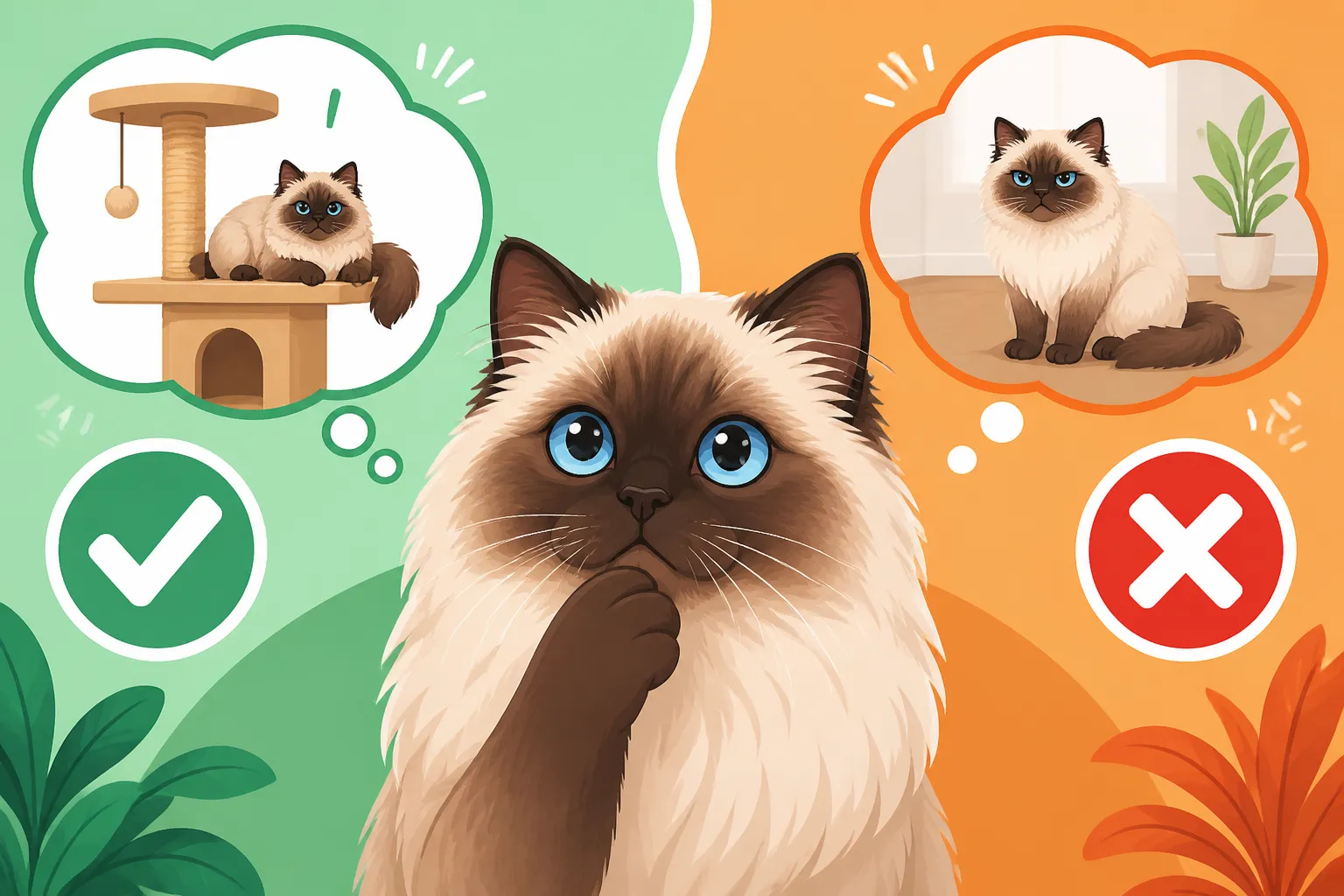
Now, this is where the conversation gets interesting. It's not a question of if your Himalayan will use a cat tree, but which one. Most of the multi-story, condo-style cat trees you see in pet stores are designed with more agile, svelte breeds in mind. For a Himalayan, these can be more like Mount Everest than a cozy retreat. The key is to think about accessibility, stability, and comfort.
First and foremost, stability is paramount. A wobbly cat tree is an immediate deterrent for any cat, but especially for a heavier, cobby breed like a Himalayan. They need to feel secure underfoot. Look for a tree with a wide, heavy base that won't tip or sway as they attempt to climb or settle. Next, consider the height. Forget the six-foot towers. A Himalayan-friendly cat tree is generally lower, perhaps two to three feet tall at its highest point. The focus should be on horizontal space and easy, gradual ascents, rather than sheer verticality.
The platforms themselves are crucial. Standard cat trees often have small, circular perches that are barely big enough for a domestic shorthair, let alone a generously proportioned Himalayan. Our fluffy friends need ample space to stretch out, roll around, and comfortably groom their magnificent coats. This means wide, rectangular, or generously sized oval platforms. If a cat tree has multiple levels, ensure they are staggered or connected by ramps or steps. A Himalayan isn't likely to launch itself from one small perch to another. Instead, they need a gradual incline or easy steps to navigate. This is particularly important because Why a Cobby Himalayan Needs Wide Platforms, Not Tall Ones. You want something that allows them to ascend and descend with minimal strain, embracing their natural preference for lower, more stable surfaces.
Finally, think about comfort and appeal. Himalayans, with their luxurious coats, appreciate soft, plush surfaces. Look for trees covered in thick carpeting, faux fur, or even sisal-wrapped posts that offer a good scratching surface. Some cat trees also incorporate enclosed cubbies or hammocks, which can be incredibly appealing for a Himalayan seeking a snug, private nook. When browsing online retailers like Amazon, you'll find a surprising variety of low-profile cat trees or modular systems that can be adapted to suit these specific needs. Just remember that The Height a Himalayan Decides Is Not Worth It is usually anything that requires a big jump!
Here's a quick comparison of what to look for:
| Feature | Standard Cat Tree (Often Unsuitable) | Himalayan-Friendly Cat Tree (Ideal) |
|---|---|---|
| Height | Tall (5-7+ feet) | Low to Medium (2-4 feet max) |
| Base | Smaller, lighter base | Wide, heavy, stable base |
| Platforms | Small, round, narrow | Large, wide, rectangular/oval, offering ample lounging space |
| Access | Large vertical gaps, direct jumps | Ramps, gentle steps, staggered platforms for easy ascent/descent |
| Materials | Thin carpet, basic fabric | Plush carpet, soft faux fur, sisal for scratching |
| Enclosures | Small cubbies, high perches | Ground-level or low-level cubbies, wide hammocks, open beds |
| Stability | Can be wobbly | Solid, sturdy construction to prevent tipping |
Even if they don't climb the tallest structure, providing a wide, stable perch near a window can offer immense enrichment, giving them a vantage point to survey their kingdom without having to scale the literal walls. And while some cats might enjoy a wall shelf, a Himalayan will rarely use one because of their body shape, making dedicated cat trees a better option for them if you want to provide verticality.
Encouraging Your Himalayan to Embrace Vertical Space
So you've found the perfect Himalayan-friendly cat tree – low, wide, stable, and plush. Now, how do you convince your discerning feline companion to actually use it? Patience, my friend, is key. Himalayans are creatures of comfort and routine, and they won't typically leap into a new experience without careful consideration.
Strategic Placement: The location of the cat tree is perhaps the most critical factor. Think about where your Himalayan already loves to spend time. Do they enjoy sunbathing in a particular spot? Do they love watching birds from a specific window? Place the cat tree there. A window perch, even a low one, can become an instant favorite. If it’s near a window, it provides stimulating views without the need for active play, catering to their observational nature. Another great spot is near your own favorite seating area – remember, Why a Himalayan Follows One Person Around the House, so having their own dedicated, slightly elevated space close to you can be very appealing.
Irresistible Lures: Once the tree is in its prime location, make it incredibly inviting.
- Treats: Scatter a few of their favorite treats on the lower platforms, leading them up the ramps or steps.
- Favorite Toys: Place a familiar toy, like a crinkly ball or a feather wand (the kind that will Which Toys Get a Himalayan Off the Sofa), on the various levels. Engage them in play on the tree, rather than trying to get them to jump to it.
- Familiar Scents: Drape a blanket or towel that smells like them (or you!) on one of the platforms. This instantly makes the new structure feel more secure and familiar.
- Catnip: A sprinkle of catnip can work wonders, encouraging exploration and making the tree feel like a fun zone.
Make it a Safe Retreat: For some Himalayans, the cat tree can become a safe haven, a designated spot where they can observe the household from a slight elevation without being in the thick of the action. This is particularly true if you have a busy household, other pets, or young children. A Himalayan often prefers to watch visitors from its own chair, and a cat tree offers a similar sense of secure observation. Ensure it's not in a high-traffic area where they might feel exposed or startled. Their cautious nature means they appreciate a quiet corner.
Remember, a Himalayan isn't typically going to rush into anything. How Long a Himalayan Goes Before It Comes Looking might be longer than you expect with a new piece of furniture. Offer encouragement, but never force them onto the tree. Let them explore it on their own terms, at their own pace. Eventually, curiosity (and the lure of a sunny spot or a treat) will win them over.
Benefits of a Well-Chosen Cat Tree for Your Himalayan
Even for the most laid-back Himalayan, a thoughtfully selected and strategically placed cat tree offers a surprising number of benefits that contribute to their overall well-being and enrichment. It's not just about climbing; it's about mental stimulation, comfort, and even health.
Mental Enrichment and Observation: Our Himalayans might not be scaling heights, but they are incredibly observant. They love to watch the world go by, whether it's the birds outside the window, the antics of other pets, or the general flow of household life. A cat tree, even a low-rise one, provides an elevated vantage point that satisfies this natural curiosity. It gives them a sense of control over their environment, allowing them to survey their kingdom from a comfortable perch. This simple act of observation is a significant form of mental enrichment, keeping their minds engaged and preventing boredom. It gives them a designated "thinking spot," a place to process all the interesting things happening around them. This is especially beneficial for a breed that finds contentment in quiet contemplation. You'll often find them, like royalty, watching visitors from their favorite chair, and a cat tree provides a similar throne.
Scratching Opportunities and Furniture Protection: Most cat trees come equipped with sisal-wrapped posts, which are perfect for scratching. Providing a designated scratching surface that is tall and sturdy enough for your Himalayan to fully stretch their body while scratching is essential. This not only keeps their claws healthy but also helps to redirect their natural scratching instincts away from your furniture. It's a win-win for both you and your cat! If they're using the tree for scratching, it's a testament to its integration into their daily routine.
A Designated "Safe" Spot: In a multi-pet household or one with active children, a cat tree can serve as an invaluable retreat. Even a low-level platform provides a subtle elevation that can make your Himalayan feel safer and more secure from playful puppies or rambunctious toddlers. They appreciate having a spot that is exclusively theirs, where they can retreat for undisturbed naps or quiet observation. This sense of personal space is vital for their emotional well-being. A cat tree can be a welcome sanctuary for a Himalayan, similar to how Why a Himalayan Lies Down in a Catio Rather Than Explore within an outdoor enclosure; it's about quiet comfort, not daring adventure. Similarly, a cat tree might become their preferred place for rest, even over your lap, as Why a Himalayan Sleeps on Your Chest is a comforting but perhaps too warm position.
Promoting Gentle Movement: While they might not be jumping for joy, the gentle ascent and descent on a ramped or stepped cat tree encourages some mild physical activity. This can be beneficial for maintaining muscle tone, especially as they age. It's a low-impact way for them to stretch and move, which is far better than being completely sedentary. This controlled exercise can also help them maintain a healthy weight, which is particularly important for a cobby breed prone to a more relaxed lifestyle.
In conclusion, investing in a cat tree for your Himalayan is indeed worthwhile, provided you choose one that is tailored to their specific needs. By focusing on stability, wide platforms, low heights, and comfortable materials, you can provide a valuable piece of enrichment furniture that your Himalayan will appreciate for years to come, turning that initially skeptical glance into a contented purr from their new favorite perch.
Disclaimer
This article is for general informational purposes only and does not constitute professional advice. Laws, prices and regulations vary by location and change over time. Consult a qualified professional for guidance on your specific situation.