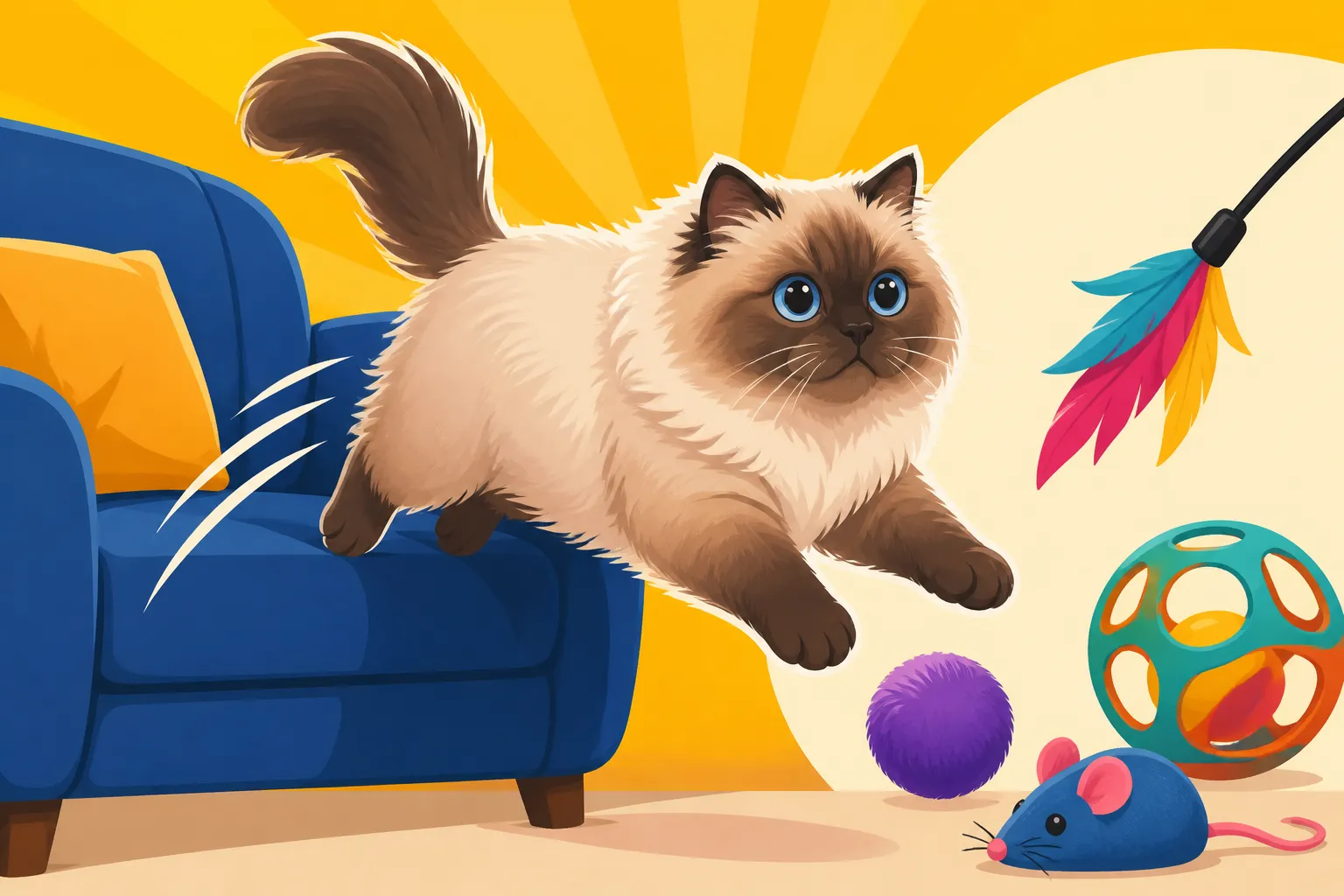
Which Toys Get a Himalayan Off the Sofa
Anyone who has ever lived with a Himalayan knows that these magnificent cats often seem to have a permanent fixture on the sofa. While their luxurious coats and serene expressions are part of their charm, it can sometimes feel like trying to coax a fluffy, purring cloud off its favorite cushion is an impossible task. It's not that they don't enjoy interaction; it's just that their idea of "play" might look a little different from what you'd expect from a more boisterous breed. This guide is here to help you navigate the world of Himalayan play, showing you which toys are most likely to spark their interest and encourage gentle, enriching activity without pushing them beyond their comfortable limits.
Understanding the Himalayan's Activity Level
It's easy to look at a Himalayan and think they're just naturally lazy. While they certainly appreciate a good nap (or ten!), their activity level is a complex blend of their ancestral traits, specifically those inherited from their Persian and Siamese forebears. Understanding this unique combination is key to finding the right toys and play styles that resonate with them.
The Persian-Siamese Balance in Play
The Himalayan cat is a fascinating fusion, essentially a Persian with the striking point coloration and blue eyes of a Siamese. This genetic heritage isn't just skin deep; it influences their personality and, crucially, their approach to play. From their Persian side, Himalayans inherit a generally calm, dignified, and somewhat sedentary nature. They are not typically known for scaling curtains or performing acrobatic feats. They appreciate comfort and a predictable environment. However, their Siamese ancestry provides a subtle, yet undeniable, spark. While they've certainly The Himalayan Kept the Siamese Voice and Lost the Volume, they also retained a measure of that breed's intelligence and desire for interaction, albeit in a much more muted form. This means they do want to engage, but perhaps not with the high-octane energy of a purebred Siamese.
Instead, their play often manifests as focused observation, gentle batting, or a short burst of activity followed by a graceful return to their favored resting spot. They might watch a feather wand intently, tracking its every movement before making one precise, slow pounce, rather than a frantic chase. This blend can be frustrating for owners expecting a typical "cat-like" play session, but once you adjust your expectations, you'll find a delightful, if understated, playmate. They may even Why a Himalayan Plays Longer Than a Persian and Less Than a Siamese.
Why a Himalayan Prefers a Low-Energy Lifestyle
Several factors contribute to a Himalayan's preference for a more laid-back existence. First and foremost is their physical build: the "cobby" body, short legs, and dense, long coat. This combination isn't designed for sustained, high-speed antics. Their heavy bone structure makes jumping and running more of an effort than it would be for a slender, agile cat. Moreover, their luxurious Persian coat, while stunning, acts as a built-in blanket, making them prone to overheating, especially during strenuous activity. Why a Himalayan Overheats Twice as Fast as a Siamese is a critical consideration. A cat that feels uncomfortably warm will naturally seek to conserve energy and rest.
Beyond the physical, there's a certain mental disposition that leans towards comfort. Himalayans thrive on routine and tranquility. A sudden, loud, or overly energetic play session might not be appealing, even if they have a moment of curiosity. They are connoisseurs of comfort, often seeking out the warmest or softest spots in the house. Their play is often a gentle extension of their lounging, a way to interact without expending too much effort or breaking their serene composure.
Signs Your Himalayan Wants to Play (Even if it Doesn't Look Like It)
It's easy to miss the subtle cues a Himalayan gives when it's in the mood for play. They won't usually be bouncing off the walls or directly pestering you with a toy. Instead, look for these quieter signals:
- Tail Twitching: A slight, almost imperceptible twitch of the tail tip, especially when observing something interesting like a bird outside or a toy you're holding. This is often their equivalent of a wiggle-butt.
- Focused Gaze: Their big, blue eyes will lock onto a target, even if their body remains perfectly still. They might track a feather wand with intense concentration.
- Ear Swivels: Their small, low-set ears will turn to pinpoint sounds, indicating they're mentally engaged with their surroundings and potential prey.
- Slow Blink: While a slow blink often means affection, it can also be a sign of contentment and readiness for gentle interaction, signaling they feel safe and receptive.
- Soft Meows or Chirps: Unlike the often loud, demanding vocalizations of a Siamese, a Himalayan's requests are usually soft and endearing. A quiet chirp when you pick up a favored toy is a definite "yes, please!" What a Himalayan Is Saying When It Chirps is often a sign of gentle interest.
- A "Stretch and Yawn" with Purpose: Sometimes, a big stretch and yawn isn't just about waking up; it's their way of limbering up, especially if you're holding a toy they like.
If you see these signs, it's the perfect moment to offer a toy. Don't push them if they decline; just make the offer, and respect their choice to continue their repose.
The Challenges of Engaging a Sedentary Cat
Engaging a Himalayan in play presents its own unique set of challenges. Their specific physical characteristics and personality traits mean that what works for a more agile, high-energy breed simply won't cut it for our fluffy friends. It requires a thoughtful approach, focusing on safety and enjoyment over athleticism.
Overheating and Breathing Concerns During Play
One of the most significant considerations when playing with a Himalayan is their susceptibility to overheating and their unique respiratory challenges. Many Himalayans, especially those with the "Peke-face" or extreme brachycephalic (flat-faced) type, can have shortened nasal passages and a longer soft palate. This makes breathing more difficult, even at rest, and significantly complicates their ability to cool themselves effectively through panting. How a Vet Grades a Himalayan's Nostrils is often an important check-up detail.
During play, even gentle exertion can quickly lead to heavy breathing, panting, and distress. Signs like an open mouth, excessive panting, drooling, or a flushed nose are immediate indicators that your cat is too hot and needs to stop. This isn't just about discomfort; severe overheating can be dangerous. This is why you must always keep play sessions short, especially in warmer environments. Avoid playing during the hottest parts of the day, and ensure they have access to cool spots and fresh water. Engaging in strenuous activity is the last thing you want for a cat that How Soon a Himalayan Kitten Runs Out of Breath or generally struggles with exertion.
Physical Limitations of a Cobby Body and Short Legs
The very structure that makes a Himalayan so adorable – their stocky, "cobby" body, short, powerful legs, and substantial bone structure – also limits their physical prowess. They aren't built for vertical leaps to the top of a bookshelf, nor are they likely to engage in extended sprints across the living room. Their center of gravity is low, and while they can be surprisingly quick over very short distances, sustained running is often uncomfortable and inefficient.
This means that toys that encourage high jumps, long chases, or complex acrobatics are usually not the best fit. A Himalayan might attempt a short, deliberate leap onto a low perch, but anything higher or requiring repeated effort will likely be ignored. Their movement tends to be more deliberate and grounded. This isn't a flaw; it's simply how they're built. We must respect these limitations and choose toys that allow them to engage in natural hunting behaviors (stalking, pouncing, batting) without putting undue strain on their bodies. Why a Himalayan Rarely Reaches a Counter is a good indicator of their preferred height limitations.
The "Too Much Effort" Factor for a Himalayan
Beyond the physical and respiratory limitations, there's a genuine "too much effort" threshold for many Himalayans. They are masters of energy conservation. If a toy requires too much running, too much jumping, or too much sustained attention, they will simply disengage. This isn't laziness in a negative sense; it's a pragmatic approach to life. Why exert oneself when a perfectly comfortable sofa beckons?
This means that successful play often involves you doing most of the work, moving the toy in enticing ways that allow them to remain relatively still. Think of yourself as the puppeteer, bringing the "prey" to them, rather than expecting them to chase it down. Interactive play, where you control a wand toy from a comfortable distance, tends to be far more successful than simply scattering toys on the floor. The goal is to make the reward (the "catch") feel achievable with minimal exertion. They also need When to End a Himalayan's Play Session before they tire out, leaving them wanting more next time.
Toys That Encourage Gentle, Low-Impact Activity
Given their unique needs and preferences, the best toys for a Himalayan are those that encourage gentle, low-impact activity, stimulating their minds and instincts without overexerting their bodies. It's about quality of engagement over quantity of movement.
Wand Toys for the Observational Hunter
Wand toys are arguably the most effective tool for engaging a Himalayan. The key is how you use them. Instead of whipping them around wildly, focus on slow, deliberate movements that mimic prey. Drag the feather or plush attachment slowly along the floor, let it peek out from behind furniture, or hover just within swatting distance. This taps into their natural hunting instincts – the stalking, the observation, the final, decisive pounce – without requiring them to run marathons.
Look for wands with interchangeable attachments. Feathers are always a hit, but small, soft plush toys on a string can also be captivating. The flexibility of the wand allows you to keep the action close to them, enabling them to bat, pounce, and "kill" the toy from a sitting or reclining position. Many pet supply stores and online retailers like Amazon offer a wide variety of durable wand toys. Remember, the goal isn't to make them run, but to engage their eyes and paws. A successful session might involve them tracking the toy for a minute, making one graceful pounce, and then settling back into their sofa spot with the "kill" between their paws. This kind of play honors their preference for quiet observation and bursts of precision. Which Wand Toys a Himalayan Can Actually Follow depends on how you move it, not just the toy itself.
Interactive Puzzle Feeders for Mental Stimulation
While physical activity might be limited, a Himalayan's mind is anything but. They are intelligent cats who benefit greatly from mental stimulation, and puzzle feeders are an excellent way to provide this. These toys require them to use their brains and paws to extract treats or kibble, offering a rewarding challenge without the need for strenuous movement.
Choose puzzle feeders designed for cats, focusing on those with shallow dishes or easily accessible compartments, given their brachycephalic faces. Avoid deep bowls or complex labyrinths that might frustrate them or make it difficult to reach the food. Simple designs where they have to push a slider, bat a ball, or lift a lid are often the most successful. Filling these with a few of their favorite kibble pieces or freeze-dried treats will provide motivation. This kind of activity can be very satisfying for them, engaging their problem-solving skills and predatory drive in a calm, controlled manner. You can find many suitable options by searching for "cat puzzle feeder flat face" on Amazon. Not only does it provide enrichment, but it can also slow down their eating, which is a bonus for those prone to scarfing down meals. Which Puzzle Feeder a Himalayan Can Get Its Face Into is a key consideration here.
Soft, Rollable Toys for Pushing and Patting
Sometimes the simplest toys are the best. Soft, lightweight balls, crinkle toys, or small plush mice are perfect for a Himalayan's more understated play style. These toys are ideal for batting, pushing across the floor with a paw, or carrying in their mouths (if they're inclined). They don't require high-speed chases or dramatic leaps; a gentle pat or a slow roll is often enough to keep them engaged.
The beauty of these toys lies in their accessibility. They can be played with from the comfort of the sofa, a cat bed, or even lying down. A Himalayan might bat a crinkle ball under the sofa, then slowly retrieve it, or simply pat a soft mouse around their paws for several minutes. These are excellent "self-play" toys that they can interact with on their own terms, whenever the mood strikes. They are also relatively quiet, which suits the Himalayan's generally calm demeanor. Just make sure the toys are appropriately sized – large enough not to be swallowed, but small enough to be easily manipulated with their paws. If you’re looking for a good variety pack, Amazon often has mixed bags of soft cat toys that offer different textures and sounds to see what your Himalayan prefers.
Here's a quick comparison of toy types suitable for Himalayans:
| Toy Type | Description | Himalayan Benefit | Considerations |
|---|---|---|---|
| Wand Toys | Feathers, plushies on a string, controlled by owner. | Simulates prey, encourages stalking & pouncing, low impact. | Owner must actively participate, keep movements slow. |
| Puzzle Feeders | Dispense treats/kibble when manipulated. | Mental stimulation, problem-solving, slow eating. | Choose shallow/accessible designs for flat faces. |
| Soft Balls/Mice | Lightweight, crinkly, or plush toys. | Independent play, batting, carrying, low effort. | Ensure appropriate size, check for loose parts. |
| Laser Pointers | Red dot projection on floor/wall. | High engagement, minimal effort for cat. | Always end with a tangible toy to "catch" to prevent frustration. |
| Catnip Toys | Toys infused with catnip. | Can induce bursts of playful energy, relaxation. | Not all Himalayans react to catnip, use sparingly. |
Creating an Engaging Play Environment
Beyond just the toys themselves, the environment in which your Himalayan plays is crucial. It needs to be a space that encourages gentle exploration and interaction, tailored to their unique physical and behavioral traits. Thoughtful setup can make all the difference in getting your beloved furball off the sofa.
Optimizing the Play Space for Comfort and Safety
For a Himalayan, an ideal play space prioritizes comfort, safety, and accessibility. Since they are prone to overheating, keep the play area cool and well-ventilated. Avoid direct sunlight during warmer hours, and consider placing a cooling mat nearby for them to flop onto if they get a little warm. Remember, The Temperature a Himalayan Starts to Struggle At is lower than many other breeds. The surface should be comfortable for their short legs and cobby bodies. Soft rugs or carpeted areas are preferable to hard, slippery floors, which can be challenging for them to navigate during even mild bursts of activity.
Think horizontally, not vertically. Unlike more agile breeds that love to climb high, Himalayans are typically "floor cats." Any cat trees or perches should be low to the ground with wide, stable platforms that are easy for them to get on and off without strenuous jumping. Why a Himalayan's Cat Tree Should Be Waist High at Most is a practical consideration. Ensure there are no precarious ledges or wobbly structures. Clear away clutter to create a safe, open space for their gentle pounces and rolls. This mindful setup reduces stress and encourages them to feel secure enough to engage.
The Importance of Routine and Consistency
Himalayans are creatures of habit, and they thrive on routine. This applies just as much to playtime as it does to meal times. Establishing a consistent play schedule can help them anticipate and look forward to these interactions. For instance, a short, gentle play session in the morning after breakfast and another in the evening before dinner can become a cherished part of their day. They will come to expect it. Why a Himalayan Expects to Be Fed at the Same Hour extends to other predictable activities too.
Consistency isn't just about timing; it's also about the type of play. If you usually use a feather wand for slow, stalking games, stick with that. Introducing too many new toys or vastly different play styles too often might overwhelm or disinterest them. They often prefer familiarity. This predictable approach helps them relax into the activity, knowing what to expect and how to respond. It also helps you understand their subtle cues better over time, as you observe their reactions to the familiar routine. Don't be discouraged if they don't engage immediately; persistence with a consistent, gentle approach will often pay off.
How to Introduce New Toys to a Discerning Himalayan
Introducing new toys to a Himalayan requires a delicate touch. They can be quite discerning, and a new object might initially be viewed with suspicion rather than excitement. Here's a strategy that often works:
- Place it nearby, don't force it: Instead of putting the new toy directly in front of their face, place it a short distance from their favorite napping spot. Let them discover it on their own terms, at their own pace.
- Scent it: Rub the new toy on their bedding or against another favored toy to transfer their scent. Familiar smells can make a new item less intimidating.
- Passive Presence: For the first day or two, simply leave the toy in the environment without actively trying to engage them with it. Let them approach, sniff, and investigate out of curiosity.
- Gentle Introduction: Once they've shown some interest, gently activate the toy (if it's a wand) or place a treat near it (if it's a puzzle feeder). Move it slowly, making it seem less threatening and more enticing.
- Catnip Boost: For certain toys, a sprinkle of fresh catnip can be a powerful motivator. If your Himalayan responds to catnip, it can help them overcome initial apprehension and associate the new toy with positive feelings. You can find high-quality catnip sprays or dry catnip for sprinkling on Amazon.
- Patience is Key: Never force them to play with a new toy. If they walk away, simply try again later. Their curiosity will eventually win out, especially if the toy offers a low-effort, high-reward experience. How Long a Himalayan Goes Before It Comes Looking is often a good indicator of their curious but patient nature.
Toys to Approach with Caution (or Avoid Entirely)
Just as there are ideal toys for Himalayans, there are also those that are less suitable, or even potentially harmful, given their specific physiology and temperament. Knowing what to avoid is just as important as knowing what to embrace.
Toys That Encourage Excessive Running or Jumping
Any toy designed to elicit extended bursts of high-speed running, repetitive jumping, or strenuous climbing should generally be approached with extreme caution, or avoided altogether. This includes toys like laser pointers (if not used with a physical "catch" at the end), spring-loaded toys that launch items high into the air, or even certain types of automated toys that move too quickly or unpredictably. While a laser pointer can be incredibly engaging for many cats, the endless chase without a physical catch can lead to frustration. If you use one, always end the session by directing the laser onto a physical toy they can pounce on and "capture," satisfying their hunting instinct.
The core issue is their brachycephalic airway and cobby body. Excessive exertion leads to rapid overheating and breathing difficulties. Their short legs and heavy frames are not built for agile, high-impact movements. Encouraging such activity could lead to respiratory distress, orthopedic strain, or simply exhaustion and disinterest. It's far better to opt for toys that allow them to engage in slow, deliberate movements, preserving their comfort and long-term health. Why a Himalayan Pants After Five Minutes of Play is a clear warning sign that such toys are not suitable.
Small or Easily Ingestible Toys
Given their long, dense coats and sometimes less-than-graceful eating habits (due to their flattened faces), small or easily ingestible toys pose a significant choking hazard or risk of internal blockage. Items like small plastic balls, tiny toy mice with detached eyes or noses, string, ribbon, tinsel, or elastic hair ties can be dangerous. Himalayans, like all cats, can be drawn to string-like objects, but these can cause severe damage if swallowed, leading to linear foreign bodies in the intestines that require emergency surgery.
Always choose toys that are appropriately sized and durable. If a toy has small parts, ensure they are securely fastened and cannot be chewed off. Regularly inspect all toys for signs of wear and tear, and discard any that are starting to break apart. It's particularly important to be vigilant with items like string or yarn, which might seem innocent but can be incredibly hazardous. If your Himalayan enjoys playing with string, supervise them closely and put the string away immediately after play. This protective approach helps prevent accidental ingestion and ensures their safety during playtime.
Loud or Overstimulating Toys
While some cats thrive on loud, flashing, or highly unpredictable toys, many Himalayans tend to prefer a more serene environment. Their calm disposition often means they are easily startled or overwhelmed by sudden noises or erratic movements. A toy that constantly chirps, squeaks loudly, or moves in a jerky, unpredictable fashion might be more of a stressor than a source of entertainment.
Consider your cat's personality. If they are generally calm and a bit reserved, opt for toys that are quiet and move smoothly. Soft crinkle balls, silent feather wands, or puzzle feeders that make minimal noise as they are manipulated are usually much better choices. The goal is to create a positive, engaging experience, not one that causes anxiety or makes them retreat. Overstimulation can lead to a cat avoiding play altogether, which defeats the purpose. Focus on toys that encourage quiet observation and gentle interaction, aligning with their natural inclination for peace and tranquility. How a Himalayan Behaves When It Is Unsettled often involves retreating to a quiet spot, which is the opposite of what you want during playtime.
Disclaimer
This article is for general informational purposes only and does not constitute professional advice. Laws, prices and regulations vary by location and change over time. Consult a qualified professional for guidance on your specific situation.