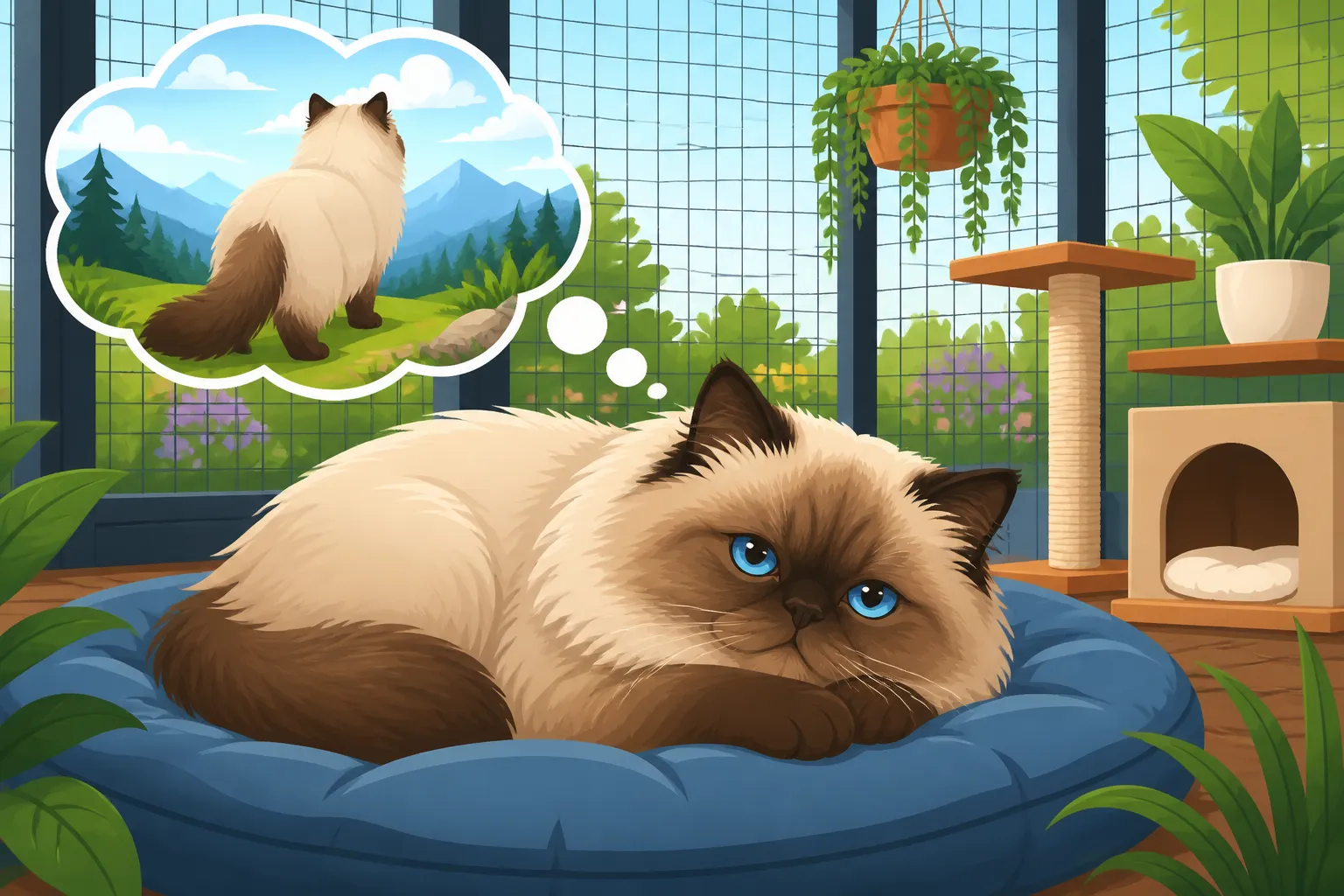
Why a Himalayan Lies Down in a Catio Rather Than Explore
It can be a bit disheartening, can't it? You go to all the effort and expense of building a beautiful catio for your beloved Himalayan, envisioning them leaping and exploring, only to find them mostly sprawled out, perhaps observing a distant bird but not really engaging with all the exciting levels and toys you so carefully placed. It leaves you wondering if all that effort was worth it. This guide is here to shed some light on why your Himalayan cat seems to prefer lounging in their catio rather than exploring it, delving into their unique blend of genetics, physical traits, and how you can tailor their outdoor space to perfectly suit their comfort-loving nature.
Understanding the Himalayan's Innate Nature and Energy Levels
The Himalayan cat, a stunning combination of the dignified Persian and the vocal Siamese, inherits a fascinating blend of traits. While they certainly possess a spark of their Siamese ancestors, the dominant influence of the Persian often guides their activity levels, leaning them firmly towards a more relaxed, contemplative existence, especially when it comes to outdoor exploration.
The Sedentary Persian Influence
At their heart, Himalayans are very much Persians in disguise, sharing the same plush, heavy coat, round head, and cobby body. This Persian heritage brings with it a predisposition for a more sedentary lifestyle. Unlike breeds known for their endless energy and acrobatic feats, a Himalayan is generally content to observe the world from a comfortable perch, or even better, from a luxurious lie-down spot. They aren't typically driven by an urge to scale the highest reaches or dash through intricate tunnels with wild abandon. Their idea of a grand adventure might be shifting from one sunbeam to another or lazily batting at a feather toy while remaining firmly on the floor.
Think about the classic image of a Persian: regal, serene, and often found draped elegantly across a sofa. Your Himalayan carries that same genetic blueprint. They appreciate comfort, routine, and a calm environment. When placed in a catio, their natural inclination isn't to burn off excess energy with vigorous exercise, but rather to soak in the new scents, sounds, and sights without expending too much effort. It's not laziness, it's efficiency – they're processing their surroundings in a way that suits their inherited temperament. For more on their activity levels, you might find How Much More Play a Himalayan Wants Than a Persian an interesting read.
The Siamese Spark, Subdued
Yes, your Himalayan has Siamese blood, and that certainly introduces a playful, curious, and often vocal element into their personality. You might hear them trilling softly, and they definitely enjoy interactive play sessions. However, this Siamese spark is generally quite subdued compared to a purebred Siamese. Instead of long, sustained periods of high-energy exploration or frantic chasing, the Himalayan's play tends to come in shorter, more intense bursts. They might suddenly bat at a dangling toy, pounce on a crinkle ball, or engage in a quick sprint across the living room, but these moments are often followed by an equally sudden return to lounging.
Their physical makeup, particularly their brachycephalic (flat) face, also plays a significant role here. Vigorous activity can quickly lead to heavy breathing and even overheating, making sustained exertion uncomfortable or even risky. This physical limitation means their bodies naturally tell them to conserve energy, especially in an outdoor environment where temperatures can fluctuate. They learn to self-regulate, choosing rest over strenuous activity to stay comfortable and safe. This intrinsic need to manage their breathing and body temperature often dictates their preference for lying down, making it a perfectly sensible choice for them. You'll understand more about their breathing if you read How Soon a Himalayan Kitten Runs Out of Breath.
Physical Realities of the Himalayan Build
Beyond their inherent personality, the very physical structure of a Himalayan cat contributes significantly to their preference for a more laid-back approach to catio enjoyment. Their distinctive build, beautiful coat, and unique facial features all factor into how they interact with their environment.
The Cobby Body and Short Legs
One of the defining physical characteristics of the Himalayan is their "cobby" body – a stocky, short-coupled frame with broad shoulders and chest. Combined with their short, thick legs, this build is not designed for agile climbing, rapid acrobatics, or graceful leaps to great heights. While they can certainly jump, they often prefer not to, finding it less comfortable or simply not worth the effort compared to a lean, long-legged breed.
Imagine trying to navigate an obstacle course built for a marathon runner when you're built like a weightlifter. It's just not going to be as easy or enjoyable. A Himalayan might look up at a high shelf or a multi-tiered cat tree and decide that the effort required simply isn't proportionate to the reward. They'd much rather find a stable, comfortable spot on a low platform or the floor of the catio where they can feel secure and enjoy the fresh air without having to worry about balance or exertion. Their short legs also make navigating uneven surfaces or steep ramps more challenging, reinforcing their inclination to stay grounded.
Flat Faces and Breathing Challenges
The Himalayan's adorable flat face, or brachycephalic structure, is a hallmark of the breed, inherited from their Persian ancestors. While undeniably charming, this facial conformation can lead to significant respiratory challenges. Their shortened nasal passages and sometimes elongated soft palates mean they don't move air as efficiently as cats with longer muzzles. This makes them particularly susceptible to overheating and respiratory distress, especially during physical exertion or in warm environments. This is a common concern; Why a Himalayan Snores Louder Than Its Siamese Ancestors explains more about their unique breathing patterns.
When in a catio, even on a moderately warm day, the effort of exploration – jumping, climbing, or running – can quickly lead to labored breathing and discomfort. Your Himalayan knows this instinctively. They'll often seek out the coolest, most still spot and lie down to minimize their oxygen demand and keep their body temperature stable. It's a survival mechanism, not a lack of interest. They're choosing to prioritize their comfort and health over physical activity, which is a smart move for them. You might notice them panting after even short bursts of play, as explored in How Soon a Himalayan Starts Panting During Play.
Heavy Coat and Heat Sensitivity
That magnificent, flowing Persian coat that makes your Himalayan so beautiful also comes with a built-in insulation system that can be a real challenge in warmer weather. Their dense double coat, consisting of a soft undercoat and longer guard hairs, is fantastic for keeping them warm, but terrible for dissipating heat. This makes Himalayans highly prone to overheating, much more so than many other breeds. The temperature at which a Himalayan starts to struggle is often lower than you'd expect, as highlighted in The Temperature a Himalayan Starts to Struggle At.
In a catio, especially one that receives direct sunlight, the risk of overheating is significant. Even if it doesn't feel stifling hot to you, your Himalayan's fur acts like a heavy winter coat, trapping body heat. Lying down in the shade, or on a cool surface, is their most effective way of trying to regulate their body temperature. They're instinctively seeking relief from the heat that their coat and brachycephalic face make them so vulnerable to. For a deeper dive into this vulnerability, check out Why a Himalayan Overheats Twice as Fast as a Siamese and Why a Himalayan Struggles in a Warm Climate. Their preference for lounging is often a direct response to avoiding heat stress.
Catio Design: Optimizing for a Himalayan's Preferences
Since we know your Himalayan has specific physical and behavioral traits, designing or modifying their catio to suit these needs is key. Instead of trying to encourage them to be something they're not, let's embrace their inner lounge lizard and create an outdoor oasis tailored for optimal comfort and relaxed enjoyment.
Prioritizing Comfort Over Agility
Forget the multi-story climbing towers and intricate rope bridges you might see in catio designs for more athletic breeds. For a Himalayan, comfort is king. Their catio should focus on wide, stable platforms at low heights – think "steps" rather than "ladders." Soft, plush bedding on every surface where they might choose to lie down is essential. Consider outdoor-friendly pet beds, thick blankets, or even memory foam mats.
Think horizontally rather than vertically. Instead of aiming for the tallest structure, aim for broad, accessible ledges that they can easily step onto. A low ramp leading to a slightly elevated sun shelf (with plenty of shade, of course!) would be much more appealing than a precarious climb. The goal is to provide multiple appealing spots for them to sprawl out, observe, and nap, without requiring any strenuous activity. Making sure they have safe, comfortable, and low-effort places to relax will ensure they actually use the catio.
Here's a comparison of catio features for different feline personalities:
| Feature | Ideal for Active/Agile Cats | Ideal for Himalayan Cats |
|---|---|---|
| Vertical Space | Tall, multi-tiered climbing structures, complex pathways | Low, wide, stable platforms; gentle ramps; steps instead of ladders |
| Perches | High shelves, narrow ledges, exposed viewing spots | Broad, low perches; enclosed cubbies; softly padded surfaces |
| Enrichment | Dangling toys, agility courses, scratching posts | Interactive wand toys (from ground), scent stations, cat grass |
| Shade/Cooling | Often overlooked, assuming activity generates heat quickly | Critical: Abundant shade, cooling mats, good airflow |
| Flooring | Durable, easy to clean (e.g., concrete, outdoor carpet) | Soft, comfortable (e.g., outdoor rugs, synthetic turf, cushions) |
Providing Cool Retreats
Given their heavy coats and brachycephalic faces, providing ample opportunities for your Himalayan to stay cool is paramount in their catio. Shade is not just a nice-to-have; it's a non-negotiable requirement. Ensure there are multiple shaded areas throughout the day, whether through solid roofs, shade cloths, strategically placed plants (cat-safe, of course!), or even a small, open-sided dog house for a cozy hideaway.
Beyond shade, think about cooling elements. A shallow, wide bowl of fresh water is a must, perhaps even a pet fountain if they'll use it. You might find specialized cooling mats on Amazon that can make a huge difference in warmer weather, giving them a chilled surface to lie on. For really hot days, a small, quiet fan positioned to create gentle airflow (but not blast them directly) can be a godsend. Remember, the goal is to create an environment where they want to lie down because it's the most comfortable place to be, offering respite from any potential heat. Consider How to Cool a Long Coated Himalayan in Summer for more cooling strategies. Ultimately, Why a Himalayan's Catio Needs More Shade Than Space is a philosophy worth adopting for your catio.
Strategic Placement for Observation
Himalayans, being the observant and rather regal creatures they are, absolutely love to watch the world go by. They might not be chasing butterflies, but they'll spend hours engrossed in watching a bird flutter by, a leaf fall, or even just the subtle shift of sunlight. Their preference for lying down in the catio isn't a sign of boredom but often a perfect position for their preferred activity: observation.
Position your catio where they have interesting, yet low-stress, things to watch. A bird feeder nearby (but not so close that it causes them anxiety), a gentle breeze rustling leaves, or a view of a quiet part of your yard can provide endless entertainment without requiring them to move. Place their favorite lounging spots strategically so they have clear sightlines to these "action zones." They might shift positions occasionally to get a better view, but the core activity remains passive enjoyment. Providing these opportunities will make their lying-down time in the catio truly enriching.
Enriching the Catio Experience for a Lounger
Just because your Himalayan prefers to lounge doesn't mean their catio experience should be boring! Enrichment for a sedentary cat simply means engaging their senses and minds in ways that don't demand a lot of physical output. It's about bringing the stimulation to them, rather than expecting them to seek it out.
Interactive Play, Himalayan Style
Even the most dedicated loungers appreciate a good play session, especially if it's on their terms. For a Himalayan in a catio, this means bringing the play to their comfortable lying spot. Think wand toys with soft feathers or ribbons that you can gently wave and drag across the floor or low platforms right within their reach. They can bat, pounce, and "kill" the toy without having to get up or move much.
Laser pointers can also be a hit, allowing them to track and "hunt" the dot with minimal effort, getting some mental and physical stimulation without overheating. Don't underestimate the simple joy of a crinkle ball or a soft toy infused with catnip that they can bat around and cuddle with while reclined. The key is short, sweet bursts of interaction that end before they get too winded or bored. If you're looking for toy ideas, Which Wand Toys a Himalayan Can Actually Follow offers some great suggestions for toys that suit their play style.
Sensory Enrichment for the Sedentary
A catio offers a wonderful opportunity for sensory enrichment that doesn't require movement. Think about what appeals to a cat's powerful senses of smell, sight, and hearing. Planting cat-safe herbs like catnip, cat grass, or even a little valerian in containers within the catio can provide delightful olfactory stimulation. These are readily available at most garden centers or even on Amazon. They can sniff, nibble, and rub against them at their leisure.
Consider placing a small, battery-operated bird sound machine (again, Amazon has many options!) nearby for auditory interest, or simply ensuring the catio is positioned where they can hear the natural sounds of birds, rustling leaves, and gentle breezes. A soft, rotating mobile with feathers or shiny objects can catch their eye without demanding physical interaction. Some Himalayans even enjoy watching a fish tank inside the house from a window that overlooks the catio, blurring the lines between their indoor comfort and outdoor view. And for a unique perspective on stimulating their senses, you might be interested in Whether Catnip Moves a Himalayan at All.
The Importance of Routine
Himalayans thrive on routine. They are creatures of habit and find comfort in predictability. Establishing a consistent schedule for their catio visits can make the experience even more enjoyable and less stressful for them. This means trying to take them out around the same time each day, for similar durations, especially during cooler parts of the morning or evening.
They will come to anticipate their outdoor time and settle into their preferred lounging spots with ease, knowing what to expect. If you're going to play with them in the catio, try to do it at a regular time. Feed them their favorite treats while they're out there. Consistency builds confidence and helps them feel secure in their outdoor space. If you notice any changes in their behavior, it might be worth considering if their routine has been disrupted, as explored in How Often a Himalayan Notices Anything Has Changed. By integrating the catio into their daily rhythm, you turn it into a cherished part of their day, even if that means mostly lying down and enjoying the calm.
Disclaimer
This article is for general informational purposes only and does not constitute professional advice. Laws, prices and regulations vary by location and change over time. Consult a qualified professional for guidance on your specific situation.