Why a Himalayan Snores Louder Than Its Siamese Ancestors
If you've ever found yourself wondering if there's a tiny bear hibernating in your living room, only to realize it's just your beloved Himalayan cat deeply engrossed in a nap, you're not alone. Many Himalayan owners are charmed, and sometimes a little concerned, by the surprisingly robust snoring that emanates from their otherwise demure feline companions. This guide will delve into the fascinating anatomical reasons behind those noisy slumber sessions, explaining why Himalayans tend to snore louder than their Siamese ancestors and what you can do to ensure their comfort and health.
The Genetic Blueprint for a Louder Purr… or Snore
It's truly a marvel how specific genetic traits can manifest in such distinct physical characteristics, isn't it? When we talk about the Himalayan's propensity for snoring, we're really looking at a direct consequence of its ancestry, specifically the strong influence of the Persian breed.
Unpacking the Persian Skull Structure
The primary reason your Himalayan sounds like a miniature foghorn during sleep can be traced directly to its Persian heritage. Himalayans are a pointed variety of the Persian cat, meaning they've inherited the characteristic brachycephalic (or "flat-faced") skull structure. This isn't just a cosmetic feature; it's a fundamental rearrangement of their facial anatomy that significantly impacts their respiratory system.
Imagine trying to breathe through a very short, somewhat twisted straw. That's a bit like what happens inside a brachycephalic cat's head. The shortening of the facial bones means that all the soft tissues – the nasal passages, the palate, the tongue – are still present, but they're crammed into a much smaller space. This creates a cascade of potential obstructions. The nostrils might be narrower, the nasal passages themselves can be convoluted, and the soft palate, which is the fleshy part at the back of the roof of the mouth, can be disproportionately long, often extending into the throat.
When a Himalayan sleeps, especially if they're lying on their back or in a relaxed position, these compressed airways and soft tissues vibrate. The air, struggling to pass through the narrowed and obstructed pathways, creates the rumbling, snorting, and sometimes even whistling sounds we associate with snoring. It's not a voluntary action; it's simply the physics of airflow meeting resistance in a unique anatomical setup. This is a far cry from the more open, free-flowing airways you'd typically find in cat breeds with more traditional, longer muzzles.
The Siamese Contribution, or Lack Thereof, to Airway Openness
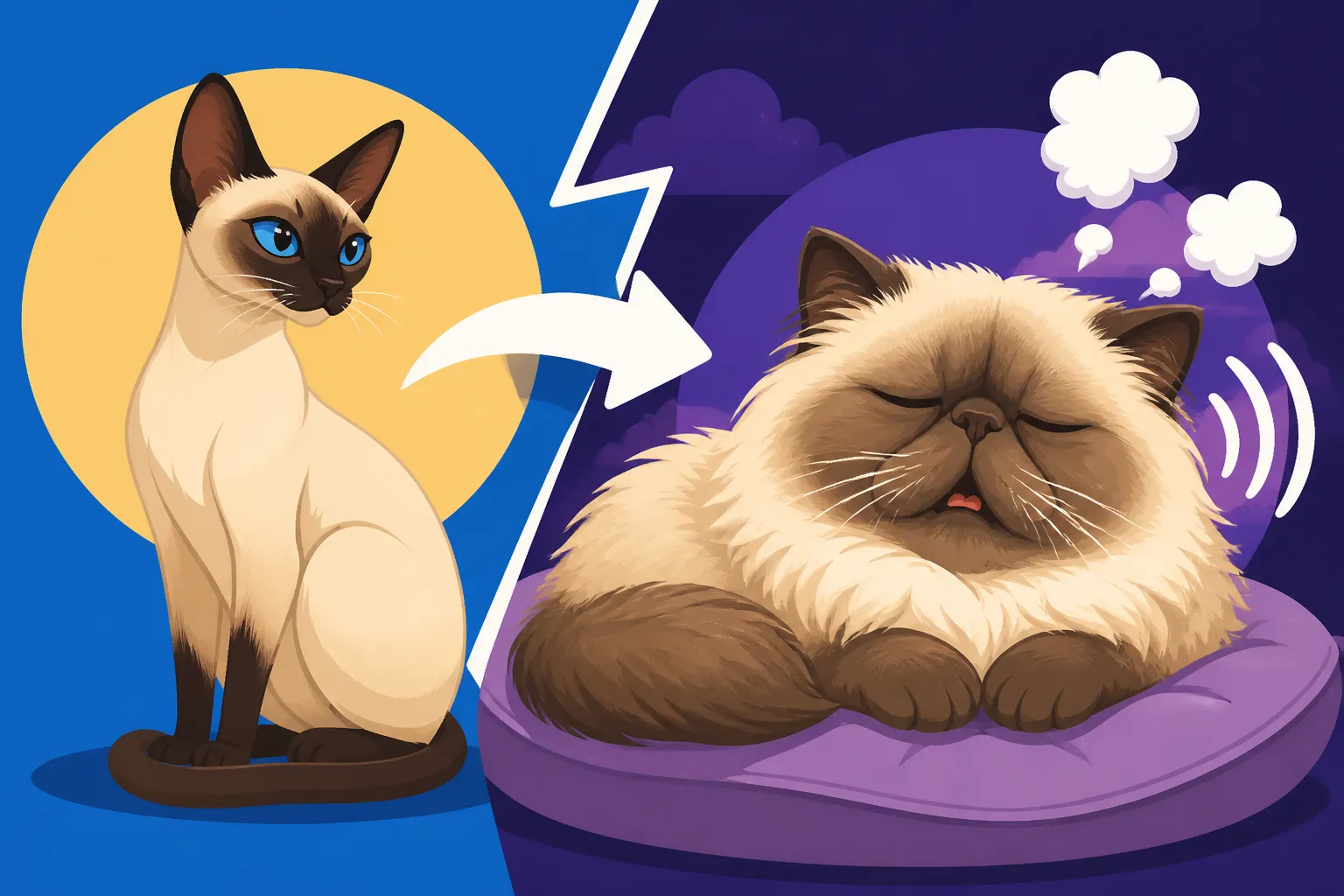
Now, let's consider the other side of the Himalayan's lineage: the Siamese. Siamese cats are renowned for their slender, elegant build, including a distinctively long, wedge-shaped head and a much more open respiratory system. They are generally not known for significant snoring, or at least not the deep, resonating kind you hear from a Himalayan. Their longer muzzles mean their nasal passages are more spacious and their soft palates are typically proportionate, allowing for unhindered airflow.
So, why does a Himalayan snore "louder than its Siamese ancestors?" It's because while the Siamese contributed the stunning point coloration and those captivating blue eyes, it did not contribute its open airway structure to the Himalayan. Instead, the dominant brachycephalic traits from the Persian side took precedence in the Himalayan's facial development. The genetic cross effectively combined the colorpoint gene from the Siamese with the Persian's body and head type. The result is a cat that looks like a Persian but with Siamese coloring, and critically, a breathing apparatus more akin to its Persian parent than its Siamese one.
Therefore, the Himalayan's snoring is louder precisely because it lacks the open, efficient respiratory system of its Siamese forebears. The minor, if any, snoring you might hear from a Siamese is usually a gentle rumble, a stark contrast to the pronounced breathing noises of a Himalayan. It's a testament to how specific genetic combinations can prioritize certain physical traits, even if it means sacrificing some of the quieter attributes of another ancestral line. This is a fundamental aspect to understand when pondering Why a Himalayan Snores Through a Persian Muzzle.
When Anatomy Becomes a Symphony of Snorts and Snores: Brachycephalic Airway Syndrome
While a certain amount of snoring is "normal" for a Himalayan due to their breed characteristics, it's crucial to understand that these same anatomical quirks can sometimes lead to a more serious condition known as Brachycephalic Airway Syndrome (BAS). This isn't just about a cute snore; it's about a spectrum of respiratory challenges that can significantly impact your cat's quality of life.
The Pinch: Stenotic Nares and Restricted Airflow
One of the most common components of BAS in Himalayans is stenotic nares, which simply means their nostrils are too narrow or "pinched." If you look at your Himalayan's nose, you might notice that the openings are quite small and slit-like, rather than wide and open. This seemingly minor detail has a massive impact on their breathing.
Imagine trying to take a deep breath through tiny, almost closed nostrils. It's incredibly difficult and inefficient. For a Himalayan with stenotic nares, every breath requires more effort. They have to pull air in harder, creating increased negative pressure within their airways. This constant struggle for air not only contributes to the loud snoring sounds as air is forced through a constricted opening but also places extra strain on their entire respiratory system.
This restricted airflow can lead to a host of problems. During exercise or even just enthusiastic play, a Himalayan with severely stenotic nares might quickly become winded, panting heavily, and showing signs of distress. It's like running a marathon while breathing through a coffee stirrer. A veterinarian can easily assess the severity of this condition, often grading it on a scale to determine the degree of obstruction. Understanding How a Vet Grades a Himalayan's Nostrils is really important for owners, as early identification can lead to helpful interventions.
The Flap: Elongated Soft Palate and Its Vibrating Role
Another major player in the Himalayan's snoring orchestra, and a key component of BAS, is an elongated soft palate. As we touched on earlier, this is the fleshy tissue at the back of the roof of the mouth. In brachycephalic breeds, due to the shortened skull, this soft palate is often too long for the available space, extending back into the throat (pharynx) or even partially into the opening of the windpipe (larynx).
When your Himalayan breathes, especially during sleep when muscles are relaxed, this excess soft tissue can vibrate against other structures in the throat, creating a distinctive snorting, gurgling, or rattling sound. This is the classic "snorer's symphony" you might hear. However, it's more than just noise. When the soft palate is severely elongated, it can partially or completely block the airway, especially when the cat is excited, overheated, or deeply asleep. This obstruction makes it hard to get enough oxygen, and the cat has to work even harder to breathe.
The constant vibration and obstruction can lead to inflammation and swelling of the soft palate over time, making the problem progressively worse. Cats with an elongated soft palate might also experience gagging, coughing, or even regurgitation, particularly after eating quickly or drinking water. For more severe cases, surgical shortening of the soft palate is a common procedure, and understanding What Soft Palate Surgery Involves for a Himalayan can help owners make informed decisions with their vet, potentially with the aid of pet insurance like Healthy Paws to manage costs.
The Narrow Path: Hypoplastic Trachea and Laryngeal Saccules
Beyond the nose and soft palate, there are other, sometimes more subtle, anatomical issues within the airway that contribute to the Himalayan's breathing challenges and loud snoring. These include hypoplastic trachea and everted laryngeal saccules.
A hypoplastic trachea refers to a windpipe that is narrower than normal for the cat's size. This is a congenital defect, meaning the cat is born with it. While not always present in every brachycephalic cat, it can severely compound the problems caused by stenotic nares and an elongated soft palate. If the main "tube" for air is already narrower than it should be, any additional obstruction further compromises breathing. Air passing through a constricted trachea creates a whistling or harsh breathing sound, which can certainly contribute to the overall volume and quality of your cat's "snore." This condition is often more difficult to correct surgically and requires careful management.
Everted laryngeal saccules are another common finding in Himalayans with BAS. These are small pouches of tissue located just inside the larynx (voice box). Due to the increased negative pressure created by struggling to breathe through narrowed upper airways (like stenotic nares and an elongated soft palate), these saccules can be pulled outwards (everted) or "sucked in," partially blocking the opening to the windpipe. Think of it like a small flap getting caught in a doorway, further hindering passage. This adds another layer of obstruction, increasing the effort needed to breathe and intensifying those snoring sounds. Surgical removal of everted saccules is a relatively straightforward procedure once diagnosed and can significantly improve airflow for affected cats.
These multiple levels of potential obstruction are why Brachycephalic Airway Syndrome is a "syndrome"—it's a combination of issues that, when present, create a significant respiratory challenge for the Himalayan, often resulting in louder, more labored breathing and, inevitably, robust snoring.
Interpreting Your Himalayan's Sleep Sounds: Normal vs. Concerning
It's easy for Himalayan owners to get accustomed to their cat's unique repertoire of snores and snuffles. After all, it's part of their charming personality, right? However, there's a fine line between a quirky snore and a sound that indicates genuine respiratory distress. Learning to differentiate between the two is a critical part of being a responsible Himalayan parent.
Decoding the Range of Himalayan Breathing Noises
Your Himalayan is likely to produce a variety of sounds while sleeping, and even when awake. A gentle, soft rumble that sounds like a tiny purr or a subtle puff of air is often considered within the realm of "normal" for a brachycephalic cat. This is simply the sound of air moving through slightly compacted nasal passages or past a minimally elongated soft palate. They might make these sounds when deeply relaxed, perhaps curled up on your lap or nestled in their favorite sunbeam. This kind of sound is often endearing, a little background music to their peaceful slumber.
However, the spectrum of sounds can range widely. You might hear soft snorts, gentle wheezes, or even a quiet whistling noise. These, too, can often be benign, especially if your cat is otherwise breathing comfortably and not showing any signs of distress. It's often simply the sound of air encountering the unique, flattened architecture of their facial structure. Many owners describe it as a kind of constant, low-level grunting or "piggy" sound, which, while loud compared to a non-brachycephalic cat, might be considered their baseline. Knowing What a Well Built Himalayan's Breathing Sounds Like can give you a better idea of what to expect from a cat with healthy airways for its breed.
The key is to observe the effort involved. Is your cat struggling to produce the sound, or does it seem effortless? Does the sound change dramatically with activity or temperature? A little bit of gentle, consistent snoring that doesn't seem to bother the cat is usually nothing to lose sleep over.
Beyond Snoring: Red Flags That Warrant a Vet Visit
While some snoring is typical, certain sounds and accompanying behaviors are absolute red flags that demand immediate veterinary attention. These indicate that your Himalayan isn't just snoring; they're genuinely struggling to breathe, and this can quickly become a life-threatening situation.
Look out for any of these concerning signs:
- Loud, continuous, or excessively harsh snoring: If the snoring becomes significantly louder, changes in character (e.g., becomes more gasping or distressed), or is constant even when your cat appears to be awake and calm, it's a sign that their airway obstruction is severe.
- Open-mouth breathing, especially at rest: Cats are obligate nasal breathers, meaning they prefer to breathe through their noses. If your Himalayan is routinely breathing with its mouth open, especially when not playing intensely or panting heavily, it means they aren't getting enough air through their nose. This is a clear indicator of respiratory distress. You should never dismiss When a Himalayan's Open Mouth Breathing Needs a Vet.
- Gasping, choking, or gagging: These sounds suggest that the soft palate or other tissues are severely obstructing the airway. You might see your cat stretching their neck out to try and get air.
- Labored breathing: This involves visible effort with each breath. You might see their chest and abdomen moving forcefully, or their flanks heaving. Their nostrils might also flare significantly with each inhale.
- Panting or heavy breathing without exertion: While some panting after vigorous play is normal for Himalayans, excessive panting or panting when they haven't been active is a serious concern. They overheat easily, so panting in a warm environment is also critical to address. For instance, How Soon a Himalayan Starts Panting During Play is a good benchmark, but panting when resting is not.
- Cyanosis (blue or purple gums/tongue): This is an emergency. It indicates a severe lack of oxygen in the blood. If you notice your cat's gums or tongue are anything but a healthy pink, get to an emergency vet immediately.
- Collapse or fainting: Any loss of consciousness or sudden weakness is a critical sign of oxygen deprivation.
If you observe any of these symptoms, do not wait. Prompt veterinary care is essential. Conditions like Brachycephalic Airway Syndrome can be progressive, and early intervention can make a significant difference in your cat's comfort and longevity. Always consult your veterinarian for an accurate diagnosis and treatment plan, and consider how pet insurance, such as a plan from Healthy Paws, can assist with the often unexpected costs of diagnostic tests and potential surgeries.
External Factors Turning Up the Volume on Snoring
While the core reasons for a Himalayan's snoring are rooted in their inherent anatomy, several environmental and lifestyle factors can act as amplifiers, turning a gentle rumble into a roaring snore, or exacerbating already challenging breathing. Being mindful of these can significantly improve your cat's comfort.
The Humidity and Heat Dilemma
Himalayans, with their luxurious long coats and flattened faces, are not built for heat. In fact, they are highly susceptible to overheating, and high temperatures combined with humidity can turn their typical snoring into something far more alarming.
When the ambient temperature rises, cats attempt to cool themselves through various mechanisms, including panting. For a Himalayan, whose respiratory system is already compromised by its brachycephalic structure, panting effectively becomes an uphill battle. The constricted airways make it harder to expel heat efficiently through respiration. This leads to increased swelling of the already crowded soft tissues in their throat and nasal passages. When these tissues swell, they create even more obstruction, causing snoring to become much louder, more labored, and often accompanied by open-mouth breathing and distress.
Humidity exacerbates this issue because it reduces the evaporative cooling effect of panting. If the air is already saturated with moisture, a cat's ability to cool itself through evaporation from its tongue and mucous membranes is severely limited. This creates a dangerous cycle where the cat gets hotter, struggles more to breathe, and the airway swelling worsens. This is precisely Why a Himalayan Overheats Twice as Fast as a Siamese and why owners must be vigilant.
During warmer months or in hot climates, you might notice your Himalayan seeking out the coolest spots in the house – on tile floors, in the bathroom sink, or in front of an air conditioner vent. Providing a cool, calm environment is paramount. This means air conditioning during hot spells, keeping them indoors during the hottest parts of the day, and ensuring they have access to plenty of fresh, cool water. Even a simple cooling mat can make a world of difference for their comfort and respiratory ease.
The Weight of the World: Obesity and Airway Pressure
Just like in humans, extra weight in cats can significantly worsen existing respiratory issues. For a Himalayan, whose airways are already anatomically predisposed to obstruction, carrying even a few extra pounds can turn a moderate snorer into a heavy breather with serious health concerns.
Obesity contributes to increased snoring and breathing difficulties in several ways:
- Fat deposits around the airway: Excess fat can accumulate in the neck and around the throat, externally compressing the already narrowed airways. This acts like a collar that's too tight, reducing the diameter of the windpipe and pharynx.
- Increased intra-abdominal pressure: A larger belly can push against the diaphragm, making it harder for the lungs to fully expand. This reduces lung capacity and forces the cat to work harder to breathe, even when at rest.
- Reduced exercise tolerance: Overweight cats are less active, which further perpetuates the cycle of weight gain. Their reduced mobility also means they're less likely to move to cooler spots or engage in play that might help improve respiratory function (within their limits).
A heavier Himalayan will find it harder to groom itself, particularly around its britches and tail, which can lead to matting and skin issues. More importantly for our topic, it puts extra strain on their cardiovascular system and exacerbates all aspects of Brachycephalic Airway Syndrome. If you've ever wondered Why a Heavy Himalayan Stops Grooming Its Points, weight is often a major factor, which then brings further health complications.
Maintaining a healthy weight for your Himalayan is one of the most impactful things you can do to manage their snoring and overall respiratory health. This involves careful portion control, selecting appropriate cat food, and encouraging gentle play. Your vet can help you determine the ideal weight for your cat's cobby frame, as it's not always obvious under all that magnificent fur. Regularly checking What a Himalayan's Cobby Frame Should Weigh can help guide your feeding decisions.
Navigating Solutions: From Home Comforts to Medical Interventions
Living with a Himalayan means embracing their unique needs, and that certainly extends to managing their noisy breathing. Fortunately, there are many steps you can take, from simple adjustments at home to more advanced veterinary procedures, to help your feline friend breathe easier and snore a little less loudly.
Everyday Strategies for a Quieter Night
While you can't change your Himalayan's underlying anatomy, you can certainly create an environment and routine that supports better breathing and minimizes strain. These simple, at-home measures can make a significant difference.
- Optimal Sleeping Positions: Many Himalayans find relief from snoring if they sleep in certain positions. Encourage them to sleep on their side rather than flat on their back, as this can prevent the soft palate from falling back and obstructing the airway. You might even notice your cat naturally favoring a stretched-out position with their neck extended, which helps to open up their breathing passages. This is a natural instinct, and understanding Why a Himalayan Sleeps With Its Neck Stretched Out can inform how you arrange their sleeping areas. Providing soft, supportive beds that allow them to comfortably maintain these positions can be very helpful.
- Elevated Food and Water Bowls: Eating and drinking from bowls placed on the floor can force a flat-faced cat into an uncomfortable position that further compresses their airways. Elevated bowls allow them to eat and drink with their neck and head in a more natural, upright alignment, reducing the effort and potential for airway obstruction during meals. This also helps minimize the amount of food or water that might get pushed back towards the soft palate.
- Environmental Control: Keeping your home cool and well-ventilated is paramount. As discussed, heat and humidity are major aggravators of brachycephalic breathing issues. Air conditioning during warm weather, fans in rooms (not directly blowing on the cat, but circulating air), and keeping windows open when the air is fresh can all help. Consider using an air purifier if you live in an area with high dust or allergens, as irritants can cause airway inflammation. A humidifier might also be beneficial in very dry environments to keep mucous membranes moist, but ensure it's kept clean to avoid mold.
- Regular Grooming and Weight Management: We already covered the importance of maintaining a healthy weight. Additionally, consistent grooming of their long coat is vital. Mats can pull on the skin, causing discomfort and potentially restricting movement, which in turn can affect breathing positions. A clean, well-maintained coat also contributes to better temperature regulation.
These daily efforts, while seemingly small, contribute significantly to your Himalayan's overall respiratory comfort and can lead to noticeably quieter breathing, particularly during sleep.
Considering Surgical Pathways for Improved Breathing
For Himalayans suffering from more severe forms of Brachycephalic Airway Syndrome, home care alone might not be enough. In such cases, veterinary surgical interventions can offer dramatic improvements in quality of life by directly addressing the anatomical obstructions.
- Stenotic Nares Correction (Rhinoplasty): This is one of the most common and often most effective surgical procedures for Himalayans with pinched nostrils. The surgeon carefully removes a small wedge of tissue from the nostrils, effectively widening the openings. This allows for significantly improved airflow into the nasal passages, reducing the effort required to breathe. Cats often show immediate improvement in their breathing post-surgery. Many owners find their cats are more playful, less prone to panting, and their snoring is dramatically reduced or eliminated. Researching Whether Widening a Himalayan's Nostrils Helps can provide further insight.
- Elongated Soft Palate Resection (Staphylectomy): If an elongated soft palate is causing significant obstruction and contributing to loud snoring, a surgeon can carefully trim the excess tissue from the soft palate, shortening it to a more appropriate length. This prevents the palate from vibrating against the back of the throat or blocking the opening to the windpipe, leading to much quieter and easier breathing. This procedure often complements nares correction for comprehensive airway improvement.
- Everted Laryngeal Saccule Removal: If these small pouches of tissue inside the voice box have everted and are blocking the airway, they can be surgically removed. This is usually done in conjunction with other airway surgeries.
- Other Procedures: In rarer or more complex cases involving a hypoplastic trachea, other, more specialized procedures might be considered, though these are less common and carry higher risks.
It's important to understand that these surgeries are typically performed under general anesthesia, which carries a higher risk for brachycephalic breeds due to their compromised airways. However, with experienced veterinary staff and careful monitoring, the benefits often outweigh the risks. The decision to pursue surgery should always be made in close consultation with your veterinarian, who can assess your cat's specific condition, discuss the potential outcomes, and guide you through the process.
The costs associated with diagnostic tests, pre-surgical evaluations, the surgery itself, and post-operative care can be substantial. This is where pet insurance, such as a comprehensive plan from Healthy Paws, can be incredibly valuable. Healthy Paws can help alleviate the financial burden, allowing you to make the best medical decisions for your Himalayan without being solely driven by cost concerns. Investing in their respiratory health is an investment in their overall happiness and longevity.
A Lifetime of Love and Lung Care for Your Himalayan
Bringing a Himalayan into your home is a joyous occasion, and accepting their unique vocalizations, including their impressive snoring, is part of the package. However, this acceptance comes with a commitment to understanding and actively managing their specific health needs, particularly concerning their respiratory system.
Embracing the Himalayan Way of Life
Himalayans are truly wonderful companions – sweet, gentle, and utterly devoted. Their quirky snores and snuffles are often seen as endearing characteristics, adding to their charm. Embracing the Himalayan way of life means understanding that they are not like other cats when it comes to breathing and temperature regulation. They are indoor cats, through and through, designed for comfort and companionship rather than strenuous activity or harsh outdoor elements.
Part of this acceptance involves patience and a proactive approach to their care. You'll likely become attuned to the subtle changes in their breathing sounds or energy levels, allowing you to catch potential issues early. This means regular veterinary check-ups are even more critical for a Himalayan than for many other breeds. Your vet can monitor their weight, assess their airway health, and provide guidance tailored to your cat's individual needs.
Their relatively sedate nature also means they thrive in calm environments where they can choose their favorite spot for a nap. They might not be scaling cat trees to the ceiling, but they will certainly commandeer the comfiest armchair. Respecting their need for a stable, comfortable, and temperate home environment is key to their happiness and well-being.
Proactive Care for Long-Term Respiratory Wellness
The journey with a Himalayan is a marathon, not a sprint, especially concerning their respiratory health. Proactive care is the cornerstone of ensuring they live a long, comfortable life with minimal breathing difficulties.
- Consistent Monitoring: Continue to monitor your Himalayan's breathing and snoring patterns throughout their life. Notice if their snoring suddenly becomes louder, more gasping, or if they start panting more frequently. Any significant change warrants a call to your vet.
- Weight Management as a Priority: Reiterate the importance of maintaining an ideal body weight. It's truly one of the most effective non-surgical ways to support their breathing. Work with your vet to establish a feeding plan and identify appropriate activity levels.
- Environmental Adjustments, Always: Even as they age, continue to ensure they have access to cool spaces, fresh water, and a low-stress environment. These needs do not diminish over time.
- Regular Veterinary Check-ups: These are not just for vaccines. For a Himalayan, annual (or even bi-annual as they get older) check-ups should include a thorough assessment of their respiratory system. Your vet will listen to their lungs, examine their nostrils, and check their soft palate. Discuss any concerns you have, even if they seem minor. For cats with known BAS, these check-ups are opportunities to monitor progression and discuss potential interventions.
By understanding the unique anatomy that makes your Himalayan such a loud snoozer and by committing to proactive, informed care, you can help them live a full, happy life, even with their charmingly noisy slumber. Remember, a peaceful, healthy cat is the best reward for a dedicated owner, and having a reliable pet insurance partner like Healthy Paws can provide peace of mind for the journey ahead.
Himalayan vs. Siamese Ancestors: Airway Features Comparison
To really highlight why a Himalayan tends to snore louder than its Siamese ancestors, let's look at a direct comparison of some key airway features.
| Feature | Siamese Ancestors | Himalayan (due to Persian influence) | Impact on Snoring & Breathing |
|---|---|---|---|
| Muzzle Length | Long, slender, wedge-shaped | Short, flattened (brachycephalic) | Shorter muzzle means less space for air passages. |
| Nostrils (Nares) | Wide, open | Often stenotic (pinched) | Pinched nostrils restrict initial airflow, increasing effort. |
| Nasal Passages | Relatively straight and open | Compressed, convoluted, narrowed | Air encounters more resistance, leading to louder sounds. |
| Soft Palate | Proportionate to skull length | Often elongated, extending into the throat | Excess tissue vibrates and can obstruct the airway, causing snorts/gurgles. |
| Trachea (Windpipe) | Typically normal diameter | Can be hypoplastic (narrower than normal) | Further restricts air passage, compounding breathing issues. |
| Laryngeal Saccules | Rarely everted | Can be everted (pulled out into the airway) | Adds another layer of obstruction in the voice box area. |
| Breathing Effort | Generally easy, quiet | Can be labored, noisy (grunting, snorting, heavy breathing) | Increased effort, especially with excitement or heat, leads to louder sounds and distress. |
| Susceptibility to BAS | Very low | High | Combination of issues leads to significant breathing challenges and distinct snoring. |
Disclaimer
The information provided in this article is for general informational purposes only and does not constitute veterinary medical advice. Always consult with a qualified veterinarian for any health concerns or before making any decisions about your cat's care, diet, or treatment.