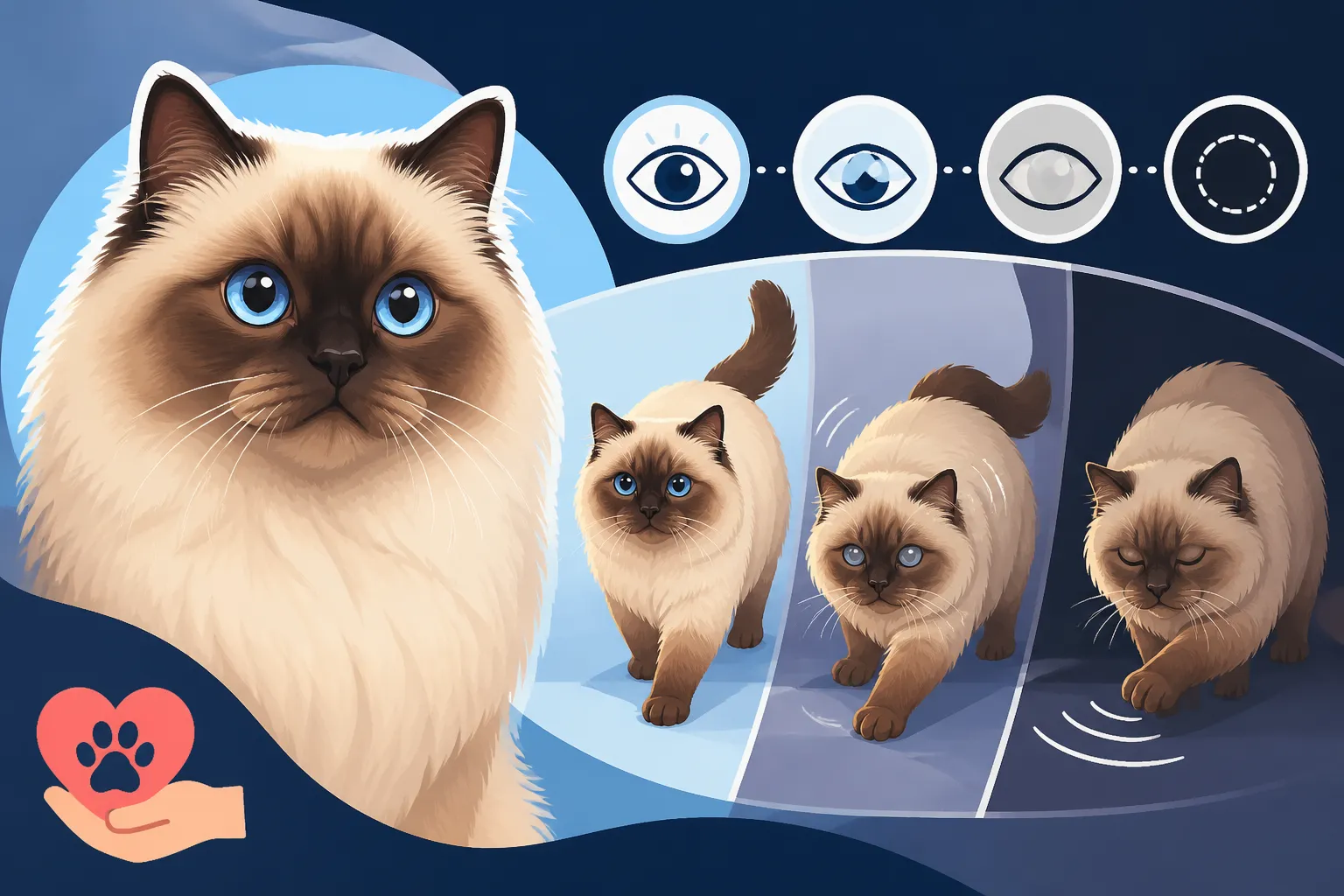
How a Himalayan Behaves as Its Sight Goes
It's incredibly tough to watch our beloved Himalayan companions change as they age, and few changes are as heart-wrenching as the gradual loss of their sight. It can be a confusing time, filled with new behaviors that might make you worry or feel a bit lost on how to help. This guide is here to walk you through the subtle and not-so-subtle ways a Himalayan cat behaves as its vision wanes, helping you understand what's happening and how you can support them every step of the way.
Initial Signs of Vision Loss in Himalayans
Detecting vision loss in cats, especially Himalayans who are often quite placid and creatures of habit, can be a real challenge. They are masters of adapting, relying on their other highly developed senses like hearing and smell to compensate long before we notice anything is truly amiss. Often, by the time an owner realizes something is wrong, their cat might have already lost a significant portion of its vision. It's not uncommon for owners to miss the early, subtle cues, thinking their cat is just getting a bit clumsier or lazier.
One of the first things you might observe is a slight hesitation in familiar environments. Perhaps your Himalayan, usually so confident in navigating your home, starts to walk a little slower, feeling its way with its paws. They might bump into furniture that has always been there, or misjudge a jump onto their favorite armchair. These aren't necessarily signs of sudden blindness, but rather an indication that their depth perception or peripheral vision might be compromised. You might see them blinking more, or their pupils might seem unusually dilated even in bright light, as their eyes try to gather every last bit of available illumination. Early detection can sometimes lead to interventions or management strategies that slow the progression or at least improve quality of life. For an understanding of what is happening on a cellular level, you can read more about What Retinal Atrophy Does Behind a Himalayan's Blue Eyes.
It's also worth paying close attention to their behavior in low light conditions. Cats naturally have excellent night vision, but a Himalayan beginning to lose its sight will struggle significantly more once dusk falls. They might become more reluctant to move around after dark, preferring to stay in one spot. You might notice them walking with their head held lower, almost sniffing the ground as they navigate, using their whiskers and sense of touch to map their surroundings. If they seem startled by your sudden appearance when you thought they were aware of you, it could be that they didn't see you approach. These early changes are often dismissed as "just getting old," but they're important clues that their world is literally starting to darken.
Behavioral Changes as Sight Progresses
As a Himalayan's vision loss becomes more pronounced, their coping mechanisms kick into high gear, and their behavior will continue to shift. They become increasingly reliant on their other senses, leading to noticeable changes in their daily routines and interactions. What might start as a slight hesitation can evolve into a complete reorganization of how they experience their environment.
One of the most striking changes is their increased reliance on sound and smell. They might start reacting more intensely to auditory cues – the crinkle of a treat bag, the jingle of your keys, or even the sound of your footsteps. They might also begin to sniff objects more thoroughly before approaching or interacting with them. Their sense of smell, which is already very acute, becomes their primary tool for identifying people, other pets, and even their food bowl. This heightened sensory reliance can sometimes make them seem more "needy" or prone to startling if approached unexpectedly, as they can't visually confirm who or what is nearby. They might also become more vocal, perhaps using their unique Siamese-inherited voice to call out for you more often, as if to locate you within the house. To understand how they might perceive their altered reality, consider Whether a Blind Himalayan Notices the Change.
Another significant change involves their movement and activity levels. A Himalayan that is losing its sight will naturally become less adventurous. They might stop jumping onto high surfaces or exploring new areas, preferring the safety and familiarity of their established pathways. You might notice them spending more time in their favorite, comfortable spots, perhaps their special chair or a cozy bed, where they feel secure. Their play behavior may also diminish or change, as toys that require visual tracking become less appealing. Instead, they might be more interested in toys that make noise or have strong scents. These changes aren't a sign of depression, but rather a practical adaptation to their changing world. Ensuring their comfort and familiarity in their safe spaces becomes paramount. You might also find them sleeping in different positions or locations, perhaps favoring spots where their whiskers won't be brushed against objects unexpectedly, which can be disorienting.
| Behavioral Sign | Early Vision Loss | Moderate Vision Loss | Advanced Vision Loss |
|---|---|---|---|
| Navigation | Slight hesitation, occasional bumps, slower movement in dim light | Bumps into furniture regularly, reluctance to explore, head held low while walking | Completely relies on memory/scent, freezes if disoriented, difficulty finding food/litter |
| Interaction | Mild startle reflex, stares intently, may misjudge distances during play | Increased vocalization, more reliance on touch/smell for recognition, avoids new people/pets | Disoriented when moved, withdrawal, extreme startle response to unexpected touch |
| Pupils | May appear slightly dilated in normal light | Clearly dilated in most lighting, slower pupillary light reflex | Fixed and dilated, or unresponsive to light |
| Play | Less enthusiastic about fast-moving toys, prefers stationary or noisy toys | Only engages with noisy/scented toys, often plays clumsily | Minimal interest in play, may bat at sounds |
| Grooming | Normal | May miss some areas, especially the back or tail, leading to mats | Significantly reduced self-grooming, increased matting |
| Appetite/Thirst | Normal | May have difficulty locating food/water bowls initially | May struggle to find bowls consistently, leading to dehydration/weight loss |
| Social | Clingier to familiar people, may avoid strangers | Becomes more withdrawn, easily frightened by sudden movements or noises | May hiss or swat if startled, seeks constant reassurance from primary caregiver |
Coping Mechanisms and Owner Support
Living with a Himalayan cat whose sight is fading requires patience, understanding, and a proactive approach to their care and environment. The good news is that cats are incredibly resilient, and with the right support, they can continue to live full, happy lives. Your role as their human companion becomes even more crucial during this transition.
One of the most important things you can do is maintain a consistent environment. Try your best to avoid moving furniture, food bowls, water dishes, or litter boxes. Your cat creates a mental map of their home based on memory, and changing these landmarks can be incredibly disorienting and stressful. If you absolutely must move something, do it gradually and gently guide your cat to the new location repeatedly until they've re-mapped it. Similarly, when you introduce new items to the home, place them strategically so your cat doesn't unexpectedly bump into them. Think about creating pathways that are clear and unobstructed, especially leading to their essential resources. More specific advice on setting up their space can be found in What to Leave Where for a Himalayan Losing Its Sight.
Communication with your cat will also shift. Since they can't see you, relying on your voice becomes vital. Talk to your Himalayan frequently, especially when you enter a room or approach them, so they aren't startled. Use a consistent tone and specific phrases. Gentle touches, starting from their shoulder or back rather than directly on their head, can also provide reassurance. When you pick them up, always speak to them first, letting them know what's happening. Many cats find comfort in routine, so sticking to consistent feeding times, play sessions (with sound-emitting toys), and grooming schedules will help reduce anxiety. Even if their playtime diminishes, remember that What an Old Himalayan Will Still Get Up For might still include interactive games that rely on sound or scent. Regular vet check-ups are also crucial to monitor their overall health and address any secondary issues related to vision loss. A robust pet insurance plan, such as those offered by Healthy Paws, can be incredibly beneficial in covering these ongoing vet expenses, ensuring you can always provide the best care without financial strain.
When to Consult Your Vet
While some degree of vision loss can be a natural part of aging for many cats, including Himalayans, it's always wise to involve your veterinarian early on. There are several reasons why consulting your vet is essential, not just for diagnosis but for managing your cat's overall health and comfort. Early intervention can sometimes identify treatable conditions, or at the very least, help you prepare for and manage progressive vision loss effectively.
Firstly, a vet can help determine the underlying cause of the vision loss. Not all blindness is irreversible; some conditions, like certain eye infections, cataracts, or glaucoma, might be treatable, or their progression can be slowed with medication. For a Himalayan, inherited conditions such as progressive retinal atrophy (PRA), which came down from their Persian ancestry, are a common cause of blindness. While PRA isn't curable, a definitive diagnosis helps you understand what to expect and how to best support your cat. Your vet can perform a thorough eye exam, which might include an ophthalmoscopy, tonometry (to check eye pressure), and even electroretinography (ERG) in specialized cases, to get a clear picture of your cat's ocular health. They can also advise on Which Test Clears a Himalayan's Eyes in the first place, or for breeding cats. Knowing the cause can bring peace of mind and help you tailor your care.
Secondly, your vet can rule out other health issues that might mimic or contribute to changes in behavior associated with vision loss. Sometimes, an underlying systemic disease, such as high blood pressure (hypertension), kidney disease, or diabetes, can affect a cat's vision. For Himalayans, who are prone to certain health concerns, keeping track of What a Himalayan's Yearly Bloods Should Cover After Eight is vital. Regular blood tests can catch these issues early. Your vet can also assess your cat's general physical condition, check for pain (which can make a cat withdrawn or clumsy), and ensure they are otherwise healthy. They can offer advice on pain management, dietary adjustments, and supplements that might support overall well-being. Furthermore, they can discuss options for creating a safer, more accessible home environment, offering tips beyond what you might think of yourself. If you're concerned about the financial aspect of these diagnostics and ongoing care, remember that reputable pet insurance providers like Healthy Paws can often alleviate the burden, allowing you to focus on your cat's health rather than the cost.
Disclaimer
This article is intended for informational purposes only and is not a substitute for professional veterinary advice. Always consult with a qualified veterinarian for any health concerns or before making any decisions about your pet's medical care.