What to Leave Where for a Himalayan Losing Its Sight
Watching your beloved Himalayan start to lose their sight can be incredibly heartbreaking and disorienting for both of you. It's a scary time, filled with questions about how they'll cope and how you can best support them in their daily lives. This guide aims to offer practical, empathetic advice on exactly what to leave where, and how to adapt your home to ensure your visually impaired Himalayan continues to live a full, happy, and safe life.
Recognizing the Subtle Signs of Vision Decline in Your Himalayan
It's natural to feel overwhelmed when you first notice changes in your Himalayan's vision. These intelligent and often placid cats are masters at masking their vulnerabilities, so recognizing the early signs can be a challenge. They might compensate by relying more on their other heightened senses like hearing and smell, making it difficult for us to pinpoint the exact moment their world starts to dim. But catching these subtle clues early can make all the difference in how smoothly you can transition their environment and routine.
Initial Indicators Beyond Bumping Into Things
While bumping into furniture is an obvious sign, it's often not the first. Look for more nuanced behavioral shifts. Your Himalayan might become more hesitant to jump onto a favorite sofa or cat tree, or they might take a moment longer to locate their food bowl even when it's in its usual spot. Perhaps they startle more easily when approached from behind or from a direction they can't clearly see. You might notice them walking more slowly, or sniffing the ground more intently as they navigate. Their pupils might appear dilated more often, or they might seem less interested in tracking moving objects, especially in dim light. Some owners report their cats becoming clingier, following them more closely, or conversely, seeming a bit disoriented or less confident in familiar surroundings, especially if furniture has been moved. They might miss toys they used to bat with precision, or even hesitate at steps or changes in flooring texture that never bothered them before.
The Importance of Early Veterinary Consultation
As soon as you suspect any vision impairment, scheduling a visit to your veterinarian is paramount. This isn't just about confirming vision loss, but identifying the underlying cause. Sometimes, vision issues can be symptoms of other health problems, some of which might be treatable or manageable. Your vet can perform a thorough eye exam, checking for cataracts, glaucoma, or retinal diseases. They might even recommend a specialist veterinary ophthalmologist for a more in-depth assessment. Early diagnosis allows for a proactive approach, whether it's managing a condition to slow its progression or simply preparing your home and routine more effectively. Don't put it off; the sooner you know what you're dealing with, the better you can support your furry family member. Regular check-ups are always vital, and understanding How Often a Himalayan's Eyes Should Be Examined is part of responsible ownership.
Understanding Common Ocular Conditions in Himalayans
Himalayans, due to their Persian lineage, are predisposed to several genetic and breed-specific eye conditions that can lead to vision loss. One of the most significant is Progressive Retinal Atrophy (PRA), particularly the early-onset form. This condition causes the cells in the retina to degenerate, leading to night blindness initially, and eventually complete blindness. You can learn more about What Retinal Atrophy Does Behind a Himalayan's Blue Eyes to understand the mechanisms behind this. Another common issue is inherited primary glaucoma, which increases pressure within the eye and can cause pain and irreversible vision loss if not managed quickly. Cataracts can also develop, causing the lens of the eye to become cloudy, obscuring vision. Less commonly, but still a concern, is entropion, where the eyelid rolls inward, causing eyelashes to rub against the cornea, leading to irritation, ulcers, and potentially affecting vision, though typically it's more about discomfort and secondary damage. Your vet will be looking for signs of these and other issues during their examination.
Strategic Home Modifications for Your Visually Impaired Himalayan
The most important thing you can do for a Himalayan losing its sight is to create an environment that is consistent, safe, and easy to navigate. Think of it as building a mental map for them. Once they learn the layout, it provides a tremendous sense of security and confidence. The biggest frustration for an owner is often feeling helpless, but modifying the home is one area where you have direct control and can make an immediate, positive impact.
Establishing Unchanging Pathways and Familiar Zones
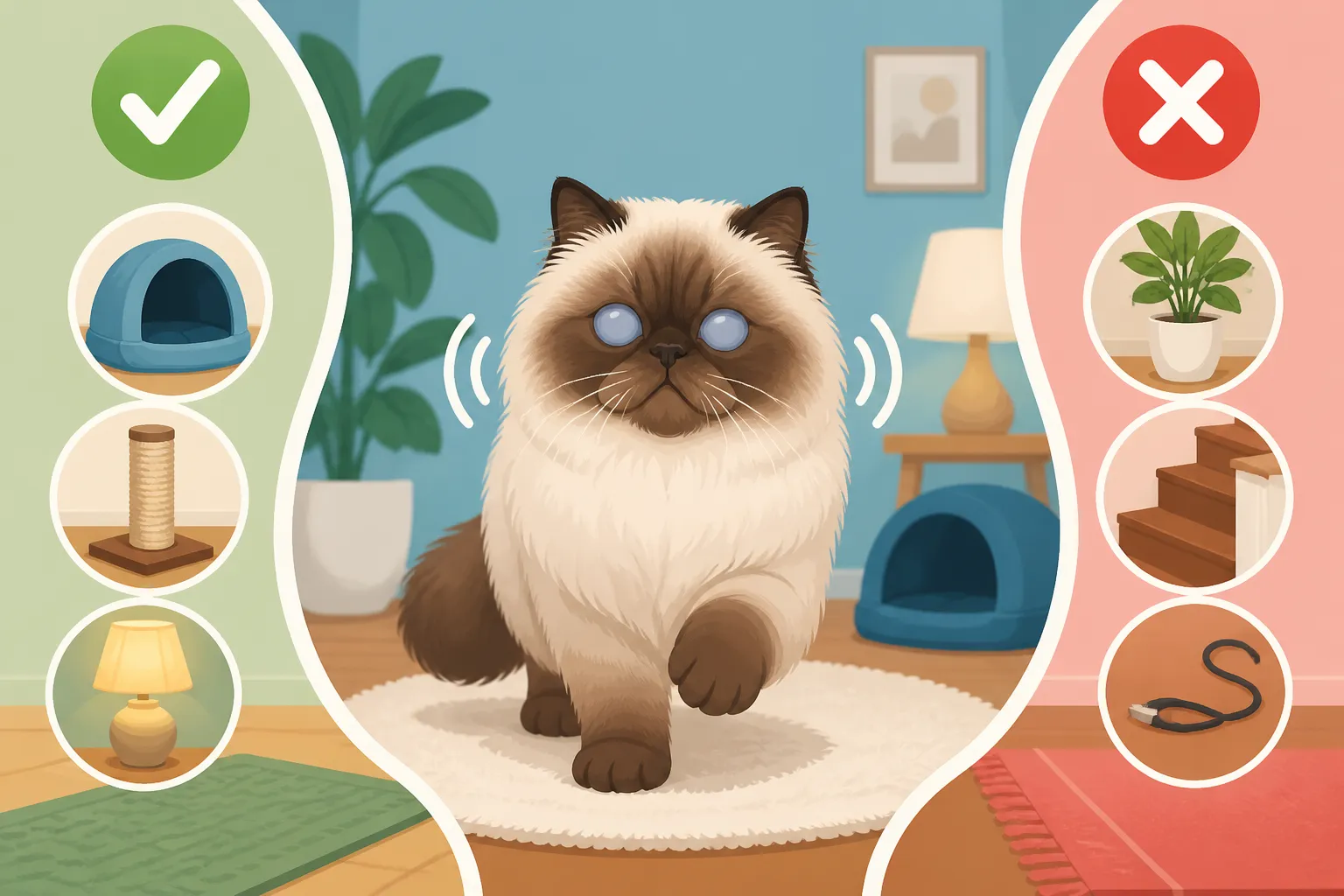
This is the golden rule: once you've set up your home, try not to move furniture. Every piece of furniture, every wall, every doorway becomes a landmark for your visually impaired cat. Moving a chair even slightly can throw off their entire mental map and lead to unnecessary bumps, falls, and stress. Identify the main pathways your Himalayan uses to get to their essential resources – food, water, litter box, favorite sleeping spots – and keep these clear and unobstructed. Consider placing soft rugs or runners along these paths to provide a consistent tactile cue underfoot. These textures can help them orient themselves. If you have steps or stairs, consider blocking them off or installing a baby gate if your cat is still agile enough to try them, or teach them to use a specific, shallow pet ramp if they insist on ascending. You might find that your cat adapts remarkably well, as Why a Blind Himalayan Copes Better Than a Busier Breed explores, but a stable environment is key to this adaptation.
Optimizing Food, Water, and Litter Box Accessibility
These are non-negotiable necessities, and their placement can significantly impact your Himalayan's quality of life.
- Food and Water Bowls: Keep them in the exact same spot every single day. Use heavy, non-slip bowls that won't slide around if your cat bumps them. Elevated bowls can be a real game-changer for Himalayans, whose flat faces can make eating from floor-level bowls a bit awkward even with perfect vision. Consider How High a Himalayan's Dish Should Sit for a Flat Face to ensure comfortable access without bending whiskers or straining their neck. Some cats might benefit from a mat under their bowls to feel the edge of their eating area.
- Litter Boxes: Again, consistent placement is crucial. You might need to add an extra litter box or two in different, easily accessible locations around the house, especially if your cat has to travel far through unfamiliar territory to reach their primary box. Use low-sided litter boxes to make entry and exit effortless for a cat that can't see to step over high edges. A good option is a rectangular storage container with one side cut down. Remember, Why a Himalayan Will Not Cross the House to a Box highlights their preference for convenience, which becomes even more critical with vision loss. Ensure the litter material is consistent, as a sudden change in texture or scent could disorient them.
Creating Sensory Cues and Minimizing Hazards
Beyond keeping things in place, you can actively enhance your Himalayan's environment using their other senses.
- Scent Cues: Cats have an incredible sense of smell. You can use distinct, subtle scents to mark important locations. For example, a drop of vanilla essence on a cloth near their food bowl, a specific air freshener (cat-safe, of course) near their litter box, or even different laundry detergents on their favorite blankets. Just be consistent and ensure the scents aren't overpowering or irritating.
- Textural Cues: Different textures can help your cat map their environment. A shaggy rug leading to their sleeping spot, a smooth tile floor in the kitchen, or a coarse mat by the door. These tactile differences provide valuable information about where they are in the house.
- Auditory Cues: Some owners find gentle, consistent background noise in certain rooms helpful, like a quiet radio or a soft fan, to indicate a safe zone. If your cat wears a collar (breakaway only!), a small, light bell could help you locate them, though some cats might find this irritating.
- Minimizing Hazards: This is vital. Pad sharp corners on furniture. Block off areas with loose wires, open stairs, or precarious decorations. Secure anything that could fall and injure them. Remember that Himalayans, being a cobby breed, aren't typically high jumpers anyway, and Why a Himalayan's Cat Tree Should Be Waist High at Most emphasizes keeping climbing structures low for their safety. Put away small objects on the floor that could be tripping hazards for your cat. Ensure windows are securely closed if they tend to lean against them, or add screens.
| Item/Area | Original Placement (Example) | Adapted Placement/Consideration for Blind Himalayan |
|---|---|---|
| Furniture | Frequently rearranged, varied heights | Fixed positions, clear pathways, soft pads on sharp corners |
| Food/Water Bowls | Anywhere convenient | Consistent, low-profile, non-slip, perhaps elevated for flat faces |
| Litter Boxes | One in a quiet corner | Multiple low-sided boxes in easily accessible, consistent locations |
| Cat Trees | Tall, multi-level | Waist-high or lower, wide platforms, stable, no precarious elements |
| Pathways | Cluttered, uneven | Clear, consistent, marked with textured rugs or runners |
| Stairs/Steps | Unblocked | Blocked or fitted with a secure, shallow ramp (if appropriate) |
| Hazards (wires, etc.) | Exposed | Covered, secured, or removed from accessible areas |
| Sleeping Spots | Variable | Designated, easily found, consistent scent/texture |
Maintaining Routine and Enriching Life for a Blind Himalayan
A consistent daily routine is incredibly comforting for a cat, and even more so for one experiencing vision loss. It provides predictability and reduces anxiety. Your Himalayan will learn the sequence of events, like breakfast, grooming, playtime, and cuddle time, giving them a sense of control and security in their world. This routine, combined with adapted enrichment, ensures their mental and physical well-being remain strong.
Gentle Grooming and Tactile Reassurance
Himalayans are renowned for their magnificent, long coats, which require diligent grooming. As they age or their sight diminishes, they might struggle to groom themselves effectively, especially in hard-to-reach areas like their backs or britches. This is where you step in as their primary groomer and source of tactile reassurance. Make grooming a positive, calming experience. Use a soft, fine-toothed comb and speak to them in a soothing voice. Keep the grooming sessions regular and consistent. This isn't just about preventing mats; it's a vital bonding activity. Touch becomes their window to the world. They will come to associate your gentle strokes and the feel of the comb with comfort and care. If you notice Why an Old Himalayan Stops Washing Its Own Face, it's a clear signal you need to take over more of the grooming duties. Don't forget to regularly check their skin for any irritation or unexpected bumps that they might not notice or reach themselves.
Adapting Playtime and Interaction Methods
Just because your Himalayan can't see doesn't mean they can't play! Their sense of hearing and smell are highly acute, and you can leverage these for engaging playtime.
- Auditory Toys: Jingling balls, crinkly toys, or toys with bells inside are fantastic. Roll them across the floor so your cat can track the sound. Laser pointers are out, but feather wands with bells attached can still be great fun, as they can hear the "prey" moving.
- Scent-Based Play: Catnip-filled toys or toys sprayed with a cat-safe pheromone spray can be highly enticing. Hide treats around a familiar room (but always in the same familiar spots) and let your cat use their nose to hunt them down.
- Interactive Play: Wiggle a soft toy near them, allowing them to feel it with their whiskers before batting. Use your voice to guide them, saying "here it is!" or "good job!" when they interact. Remember to keep play sessions short, as older or visually impaired cats might tire more quickly. Which Games Suit a Himalayan Past Twelve are often gentler and less reliant on high-speed chases. The key is to engage their other senses and maintain that important bond through shared activities.
Navigating the Outdoors and Travel Safely
The general rule for Himalayans, sight or no sight, is that they are indoor cats. Why a Himalayan Has No Business Outdoors at All is a comprehensive guide to why their long coat, docile nature, and brachycephalic (flat) face make them vulnerable to predators, heatstroke, and getting lost. For a visually impaired Himalayan, these risks are amplified exponentially.
- Outdoor Access: If you want your Himalayan to experience fresh air, a secure, escape-proof catio is the safest option. Ensure it's fully enclosed, has plenty of shade, and features easily navigable, low-level platforms or ramps. Even then, supervise them closely.
- Travel: Short car trips to the vet are unavoidable, but minimize other travel. Always use a secure, well-ventilated carrier. Speak to your vet about calming aids if travel causes significant stress. Inside the carrier, a familiar blanket with your scent can provide comfort. When visiting unfamiliar places, even the vet's office, try to keep their carrier covered to reduce overwhelming stimuli.
Emotional Support and Long-Term Care Considerations
The journey of caring for a visually impaired Himalayan is as much about emotional support as it is about practical adjustments. They rely on you for their safety and comfort, and your steady presence and understanding will be their guiding light. This commitment extends to ongoing veterinary care and preparing for any future challenges that may arise as they age.
Building Confidence and Providing Comfort
Your Himalayan's emotional well-being is paramount. Vision loss can be confusing and frightening for them, and they might express this through increased anxiety, clinginess, or even withdrawal.
- Consistent Affection: More than ever, your touch, voice, and presence are critical. Regular petting, gentle cuddles, and soft words reassure them that they are safe and loved.
- Vocal Cues: Always speak to your cat as you approach them, so they know you're there and aren't startled. Use a consistent phrase like "Kitty, I'm here!" before you pick them up or pet them.
- Maintain Routine: We've emphasized this for practical reasons, but it's also a huge source of comfort. Predictability reduces stress.
- Patience and Understanding: There will be moments of frustration – they might bump into something, get disoriented, or vocalize their confusion. Respond with patience, redirect them gently, and offer reassurance. Never scold them for vision-related mishaps. They're doing their best to navigate a world that has fundamentally changed.
The Ongoing Role of Your Veterinarian
Regular veterinary check-ups become even more crucial for a visually impaired Himalayan. These visits are not just for their eyes, but for their overall health. Your vet can monitor for any progression of eye conditions, manage pain if it's present, and address any other age-related health issues that might emerge. Older Himalayans are prone to kidney issues and other ailments, so routine blood work, including What a Himalayan's Yearly Bloods Should Cover After Eight, is essential.
It's also wise to discuss potential mobility issues that might arise with age, as these can compound the challenges of vision loss. Your vet can advise on supplements or treatments for arthritis, for example. Consider pet insurance providers like Healthy Paws, which can help cover the costs of these ongoing treatments, specialists, and unexpected medical needs, providing peace of mind as you care for your aging feline friend. Proactive care can significantly extend The Nine to Fifteen Years a Himalayan Usually Gets, ensuring those years are as comfortable and happy as possible.
Preparing for Future Challenges
As your Himalayan continues to age with vision loss, new challenges might emerge. They might develop other health conditions, and their overall mobility could decrease.
- Holistic Health: Keep a close eye on their appetite, thirst, and litter box habits, as changes can indicate underlying issues.
- Accessibility: Continuously re-evaluate your home for accessibility. What worked when they first lost their sight might need adjustment as they become older and potentially less mobile. You might need more ramps, softer bedding, or even more easily accessible water sources.
- Quality of Life: Regularly assess their quality of life with your veterinarian. Are they still eating well? Are they engaged with their environment? Are they free from pain? These are difficult but necessary conversations to ensure you are providing the best possible care for your entire journey together. When it comes to financial planning for senior pet care, looking into comprehensive plans from providers like Healthy Paws can be incredibly beneficial.
Caring for a visually impaired Himalayan is a profound act of love and commitment. By creating a safe, predictable environment, adapting your routines, and offering unwavering emotional support, you empower your beloved companion to continue living a fulfilling and dignified life, proving that true sight comes from the heart.
Disclaimer
This article is intended for informational purposes only and does not constitute professional veterinary advice. Always consult with a qualified veterinarian for any health concerns or before making any decisions about your pet's medical care.