Why a Himalayan Has No Business Outdoors at All
It’s a common sight: a beautiful cat, perhaps a sleek tabby or a sturdy calico, exploring the great outdoors, chasing butterflies, or simply basking in a sunbeam. Many cat owners dream of giving their feline friends that freedom, imagining them romping through tall grass. However, if you're a Himalayan cat parent, or considering becoming one, you need to understand a fundamental truth: a Himalayan has absolutely no business being an outdoor cat. This guide will walk you through the critical reasons why keeping your beloved Himmie strictly indoors is not just a preference, but a matter of their safety, health, and overall well-being.
The Himalayan's Luxurious Coat Is a Liability Outdoors
The Himalayan cat is renowned for its magnificent, long, flowing coat, a direct inheritance from its Persian ancestry. This breathtaking fur is one of their most defining features, but what makes it beautiful also makes it incredibly unsuitable for an outdoor lifestyle. It's not just about aesthetics; it's about practical, everyday survival.
Mats and Debris: A Constant Battle
Imagine your Himalayan, with its dense undercoat and fine, silky outer layer, venturing outside. Every fallen leaf, every bit of twig, every speck of dirt becomes instantly entangled in that glorious fur. It’s not like a short-haired cat where debris might brush off easily. For a Himalayan, a single outdoor excursion can turn into a nightmare of matting. These mats aren't just unsightly; they pull at the skin, causing pain and irritation. If left untreated, they can restrict movement, hide skin infections, and even cut off circulation. What starts as a little burr can quickly become a large, painful pelt. You’ll be spending hours trying to comb out the mess, and often, professional grooming or even sedation for shaving becomes the only recourse. Why a Matted Himalayan Becomes a Medical Case covers just how serious this can get.
The frustration is real when you spend diligent time grooming them indoors, only for five minutes outside to undo all that hard work. These aren't just "knots"; they're solid clumps that feel like felted wool, trapping moisture against the skin and creating a perfect breeding ground for bacteria. Anyone who has ever tried to de-mat a Himalayan knows it's a monumental task, often requiring specialized tools you might find on Amazon, like a good quality steel comb with both wide and fine teeth. This daily combing is non-negotiable for an indoor Himalayan, and the outdoor environment multiplies the challenge tenfold. How Often a Himalayan Must Be Combed is a vital read for any Himmie owner.
Environmental Damage and Discoloration
Beyond the physical tangles, the outdoor environment actively damages the quality and appearance of a Himalayan’s coat. Direct sunlight can bleach and dull their beautiful point colors, which are meant to be vibrant and distinct against a paler body. Their delicate fur can also become brittle and dry from exposure to wind, rain, and fluctuating temperatures, losing its characteristic softness and luster. This isn't just a superficial concern; a healthy coat is often an indicator of a cat's overall well-being.
Furthermore, outdoor adventures often lead to exposure to various substances that can stain or discolor the coat. Mud, oil, sap, or even certain plant pollens can leave unsightly marks that are incredibly difficult to wash out of such a light-colored, long coat. Think about a cream-bodied Himalayan rolling in damp soil—the stains would be deeply ingrained, requiring baths that these cats often detest and that can strip their natural oils. Maintaining that pristine, elegant look that Himalayans are known for simply isn't feasible if they're constantly exposed to the rigors of the outdoors. You want their points to stand out, not for their whole body to look like a dirty rag. How Tear Staining Marks a Himalayan's Pale Body Coat is another great example of how delicate their coloring can be.
A Flat Face and Dense Fur Mean Heatstroke Risk
Himalayans, with their distinctive brachycephalic (flat-faced) features and dense, insulating double coats, are inherently ill-equipped to regulate their body temperature in warmer climates or even during mild summer days. This makes outdoor exposure, especially when temperatures rise, incredibly dangerous for them.
The Brachycephalic Challenge in the Heat
The flat face of a Himalayan, while undeniably charming, comes with a significant health drawback: it compromises their ability to cool themselves effectively. Cats primarily pant to dissipate heat, much like dogs do. However, a Himalayan’s shortened muzzle, narrow nostrils, and often elongated soft palate make their airway less efficient. They struggle to move air in and out quickly enough to cool their core body temperature, especially when exerted or in warm conditions. This condition, known as Brachycephalic Airway Syndrome (BAS), means they are always working harder to breathe than their long-nosed counterparts. How a Vet Grades a Himalayan's Nostrils reveals just how critical this airway assessment can be.
Putting a Himalayan outdoors, where they might be exposed to direct sun, warm air, or exert themselves even slightly by walking around, dramatically increases their risk of overheating. Their struggle is palpable, often leading to open-mouth breathing, excessive drooling, and obvious distress. This isn't just uncomfortable; it can quickly escalate into a life-threatening emergency. You might notice them panting after even a brief play session indoors; imagine that struggle magnified outdoors. How Soon a Himalayan Starts Panting During Play highlights this inherent challenge.
The Danger of Extreme Temperatures
Their thick, plush coat, while a blessing in colder environments (which few domestic cats genuinely experience outdoors), acts as an oven in anything but cool, controlled indoor temperatures. This combination of an inefficient cooling system and a heavy insulating coat means Himalayans overheat significantly faster than other cat breeds. A sunny afternoon that feels pleasant to you could be a heat trap for your Himmie.
Even seemingly moderate temperatures can be dangerous. What might be a comfortable 70-degree Fahrenheit day for humans, especially with humidity, can push a Himalayan into distress. They don't have the same cooling mechanisms. If they get too hot, they can suffer from heatstroke, which is a medical emergency with severe consequences, including organ damage and death. The Temperature a Himalayan Starts to Struggle At is often lower than owners realize. Leaving them outdoors, even in a fenced yard, exposes them to unpredictable temperature shifts and direct sun without reliable shade, putting their lives at risk.
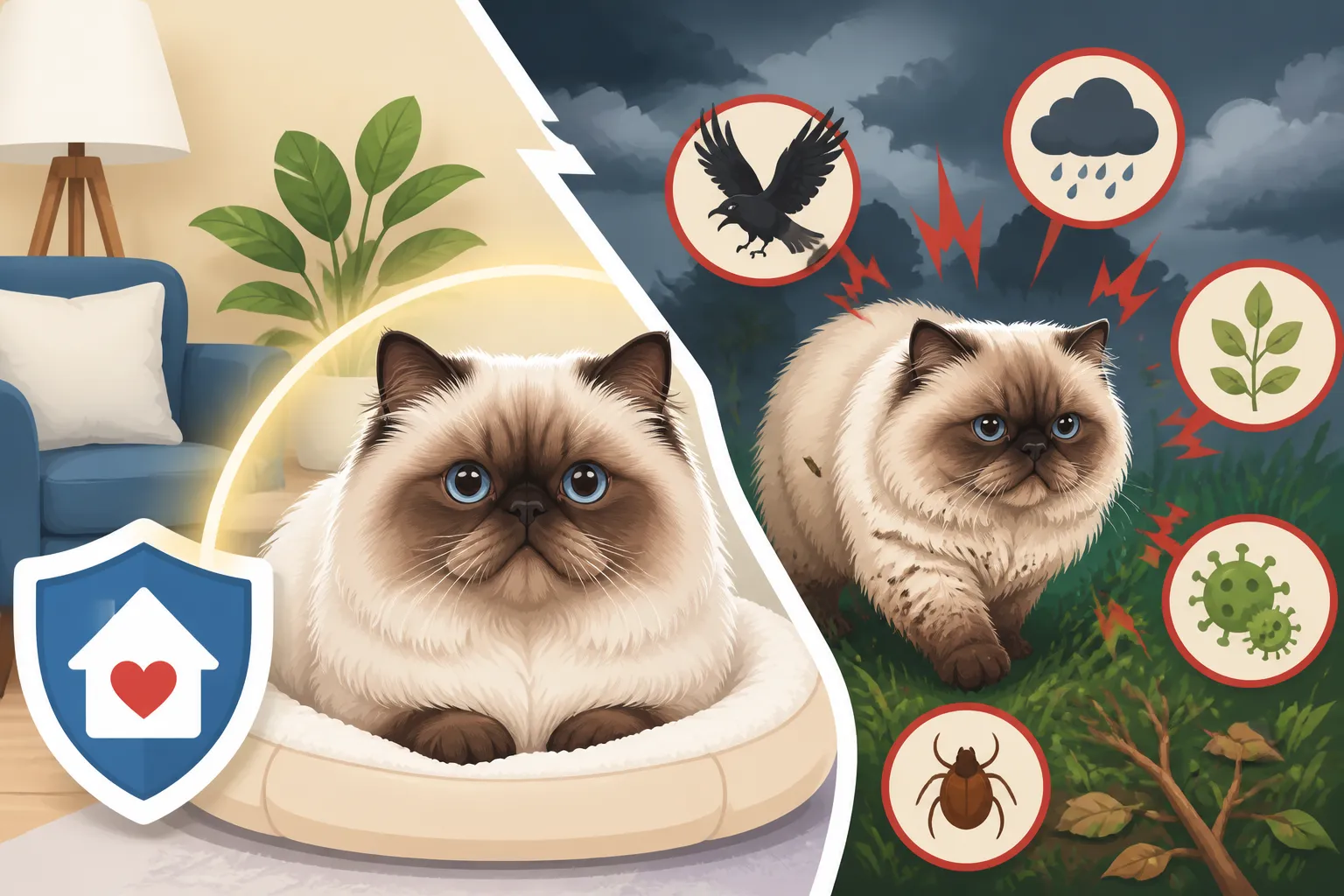
Here's a quick comparison of key challenges for Himalayans indoors vs. outdoors:
| Feature | Indoor Environment | Outdoor Environment |
|---|---|---|
| Coat Care | Manageable daily combing, minimal matting. | Constant matting, debris, environmental damage. |
| Breathing | Controlled temperatures, less exertion, manageable. | High heat/humidity, exertion leads to severe distress. |
| Temperature | Stable, air-conditioned comfort. | Unpredictable, high risk of overheating/heatstroke. |
| Safety | Protected from predators, traffic, toxins. | Exposed to numerous life-threatening hazards. |
| Grooming Needs | Regular brushing, occasional wipe-downs. | Intense daily dematting, frequent baths, vet intervention. |
| Well-being | Content, secure, comfortable, healthy. | Stressed, at risk of injury, illness, or death. |
Vulnerability to the Elements and External Threats
Unlike some feral or semi-feral cat breeds that have evolved to be resourceful and wary outdoors, Himalayans simply lack the instincts and physical attributes to survive safely in an uncontrolled environment. They are essentially indoor-bred pets, completely reliant on human care and protection.
Slow to React: Easy Prey
Himalayans, with their typically docile and somewhat sedentary nature, are not quick, agile hunters or escape artists. They often prefer lounging in a comfortable spot rather than darting around. This calm demeanor, while endearing indoors, translates to extreme vulnerability outdoors. They are not built for speed or intricate evasive maneuvers. Their short legs and cobby bodies, while adorable, make them less nimble than other breeds. Why a Himalayan Stays on the Floor and the Sofa speaks to their preference for low-key environments.
This lack of agility and quick reflexes makes them easy targets for a variety of outdoor threats. Coyotes, foxes, large birds of prey, and even aggressive dogs pose a significant danger. A Himalayan is simply not equipped to outrun or defend itself against a predator, and their long, heavy coat only serves to slow them down further. The heartbreaking reality is that an outdoor Himalayan is a prime target for wildlife encounters that almost always end tragically for the cat.
Hidden Dangers: Toxins and Traffic
Beyond living predators, the modern outdoor environment is rife with unseen dangers. Cars are a primary threat; a Himalayan's slow reaction time and lack of "street smarts" make them highly susceptible to traffic accidents, even on quiet residential streets. They don't understand the concept of a speeding vehicle.
Furthermore, outdoor spaces are often contaminated with substances lethal to cats. Antifreeze, rat poison, slug pellets, herbicides, and insecticides used in gardens are all highly toxic. Cats are meticulous groomers, and even a small amount of these chemicals transferred from their paws or fur into their mouths can lead to severe illness or death. Other cats can carry diseases like Feline Immunodeficiency Virus (FIV) or Feline Leukemia Virus (FeLV), which are transmitted through bites or prolonged contact—risks completely eliminated by an indoor-only lifestyle. Your well-meaning neighbor's garden treatments, or a spilled fluid on the street, could be deadly. Which Vaccines a Himalayan Kept Permanently Indoors Needs still applies, but many outdoor risks are simply unavoidable through vaccination.
The Indoor Sanctuary: Where a Himalayan Truly Thrives
Given their unique needs and vulnerabilities, the indoor environment isn't just a safe alternative for a Himalayan; it's where they genuinely flourish. Providing a secure, stimulating indoor space allows them to live their fullest, healthiest lives.
A Calmer Nature, a Safer Space
Himalayans generally possess a sweet, gentle, and affectionate temperament. They are known for being devoted lap cats, enjoying quiet companionship and a predictable routine. They aren't the adventurous, high-energy explorers that some other breeds might be. This inherent nature aligns perfectly with an indoor lifestyle, where they can relax in comfort without the stresses and dangers of the outside world. They thrive on the warmth of your home, the soft cushions of a favorite chair, and the consistent presence of their human companions. The Himalayan Is a Lap Cat That Answers Back captures their affectionate yet communicative nature, which truly blossoms in a secure home.
Their peaceful disposition means they don't generally suffer from being "cooped up" in the same way a highly energetic or hunting-driven breed might. Their entertainment often comes from observing the world from a sunny windowsill, playing with a favorite wand toy, or simply purring on your lap. They are generally content with lower-intensity activities. Creating an enriching indoor environment with cat trees (even low ones, as Himalayans aren't usually jumpers), interactive toys available on Amazon, and plenty of soft places to nap is far more beneficial than exposing them to outdoor risks.
Tailoring the Indoor Environment
Creating an ideal indoor environment for your Himalayan involves a few key considerations that maximize their comfort and safety. First and foremost, temperature control is vital. Keeping your home at a consistent, comfortable temperature, especially with air conditioning during warmer months, directly addresses their brachycephalic breathing challenges. A cooling mat, easily found on Amazon, can be a lifesaver on a hot day, providing a cool spot for them to rest. How to Cool a Long Coated Himalayan in Summer offers more tips for managing heat.
Secondly, enriching their space doesn't mean building an elaborate outdoor enclosure. It means providing mental stimulation and physical comfort within your home. This can include secure window perches for bird-watching, various scratching posts to maintain their claws and mark their territory, and a rotation of toys to keep them engaged. A low-sided litter box is also a must, as their short legs can make climbing into taller boxes difficult. Remember, their happiness isn't about how much space they have to roam outside, but how safe, loved, and comfortable they feel within the four walls of your home. If you're ever in doubt about their health, or notice changes in breathing or appetite, please reach out to your veterinarian.
Disclaimer
This article is for general informational purposes only and does not constitute professional advice. Laws, prices and regulations vary by location and change over time. Consult a qualified professional for guidance on your specific situation.