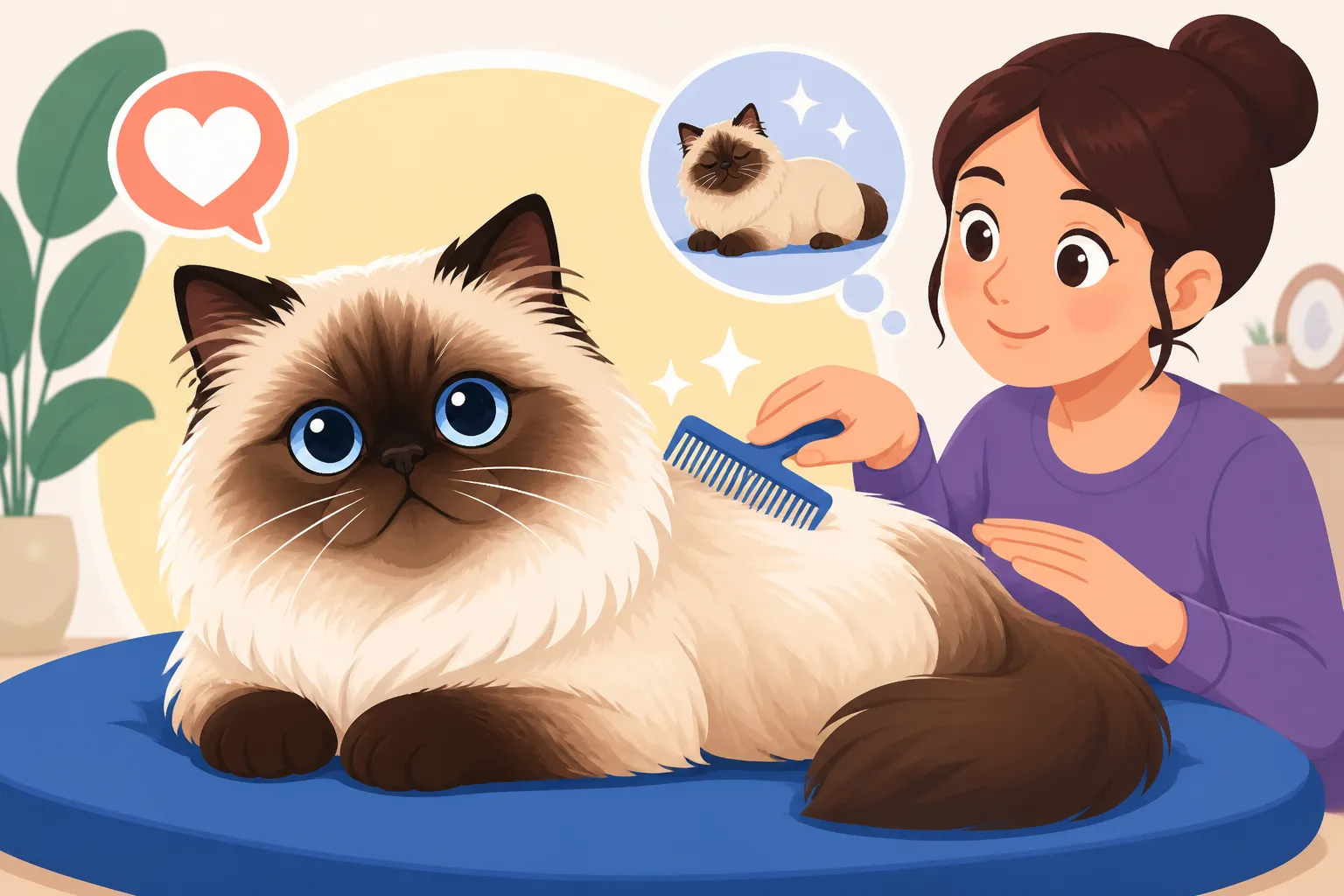
Teaching a Himalayan to Lie Still for Its Daily Comb
We all love our beautiful Himalayan cats, don't we? That luxurious, flowing coat is undeniably part of their charm, but it's also often the source of a daily wrestling match that can leave both you and your feline friend feeling frustrated and defeated. If you've ever found yourself chasing your Himmy around the house with a comb, or worse, discovered a hidden mat that's turned into a solid block of fur, you know the struggle is real. This guide is here to help you turn those stressful grooming sessions into a calm, even enjoyable, part of your daily routine, teaching your Himalayan to lie still and even look forward to their daily comb.
Understanding the Himalayan's Unique Grooming Needs and Challenges
Before we even pick up a comb, it’s crucial to understand why Himalayans demand such a rigorous grooming schedule. It’s not just about aesthetics; it’s about their health and comfort. Their coat is a marvel, yes, but it’s also a magnet for tangles and mats.
The Unforgiving Nature of the Persian Coat
The Himalayan cat, at its heart, is a Persian with a Siamese coat pattern. This means they inherit that magnificent, dense double coat, consisting of a long, silky outer guard hair and a thick, woolly undercoat. It’s this combination that makes their grooming requirements so intense. The undercoat traps loose hairs and shed fur, and if it’s not regularly removed, it quickly becomes compressed and tangled.
Think of it like this: imagine trying to untangle a pile of fine wool that’s been felted together. That’s essentially what happens to a Himalayan’s undercoat if left uncombed for even a day or two. These tangles can rapidly escalate into painful mats that pull at their skin, restrict movement, and can even hide skin infections. It's a common misconception that all long-haired cats need the same amount of grooming, but the Himalayan's Persian heritage truly sets them apart. Why a Himalayan Mats Faster Than a Ragdoll delves deeper into the specifics of this challenge. Without consistent daily attention, these mats aren't just an inconvenience; they become a serious welfare issue.
The Himalayan Temperament and Grooming
Himalayans are generally known for their sweet, placid, and affectionate dispositions. They’re often described as "lap cats" who enjoy nothing more than lounging by your side. This calm demeanor should make them ideal candidates for grooming, right? Well, yes and no. While they might be less prone to wild outbursts than some more energetic breeds, they can also be creatures of habit and sensitive to discomfort.
If a Himalayan wasn't introduced to grooming positively as a kitten, or if past experiences have been painful due to mats being pulled, they can quickly develop an aversion. Their quiet nature means they might not outwardly protest with loud yowls like a Siamese, but they’ll certainly communicate their displeasure through subtle body language, a low growl, or simply by melting away from your grasp. Learning to recognize these subtle cues is paramount to building trust. Sometimes, their quiet chirps are a way of communicating their boundaries, even during grooming. What a Himalayan Is Saying When It Chirps can help you interpret their vocalizations.
Starting Early: The Foundation of a Calm Grooming Routine
The single most effective strategy for teaching your Himalayan to lie still for combing is to start early. Seriously, the earlier, the better.
The Critical Window for Kitten Training
For Himalayan kittens, there's a golden window of opportunity, ideally between 8 and 12 weeks of age, where they are most receptive to new experiences and handling. This is when they're still developing their understanding of the world and forming their expectations of human interaction. If grooming becomes a positive, consistent part of their daily life during this formative period, they'll grow up accepting it, or even enjoying it, as a normal part of their day.
If you bring home an older kitten or an adult Himalayan who hasn't had this early training, don't despair! It will take more patience and consistent effort, but it's certainly not impossible. Just be prepared for a longer journey. The key is to start with very short, positive sessions and gradually increase the duration as their comfort grows. This early exposure helps them associate the comb with comfort and rewards, rather than fear or annoyance. Why a Himalayan Must Learn to Be Combed Before Twelve Weeks really emphasizes this crucial point.
Making the Comb a Positive Experience
The trick here is to make grooming feel less like a chore and more like a pampering session. Start with gentle strokes, perhaps just a few seconds at a time, in a relaxed environment.
- Introduce the Comb Slowly: Let your kitten sniff and bat at the comb. Rub it gently against your own hand first, then against their side, not even touching their fur deeply. The goal is to make it a neutral, then positive, object.
- Pair with High-Value Treats: Every time you touch them with the comb, immediately offer a small, delicious treat. Chicken baby food, tuna flakes, or specialized cat treats work wonders. This creates a strong positive association.
- Use Gentle, Repetitive Strokes: Focus on areas they already enjoy being petted, like their back or sides, initially avoiding sensitive spots like their belly or hindquarters. Keep strokes light and slow.
- Keep Sessions Short: Seriously short. We’re talking 10-20 seconds to start. The moment they show even a flicker of annoyance, stop, give a final treat, and praise them. You want to end on a positive note, leaving them wanting more.
This isn't just about untangling fur; it's about building trust and communication. The more positive experiences you stack up, the easier it will be to extend the duration and cover more challenging areas over time.
Essential Tools and Techniques for Effective Combing
Having the right tools is half the battle when it comes to grooming a Himalayan. Skimping on quality here will only make the process harder for both of you.
Choosing the Right Tools
Forget those flimsy plastic combs or soft bristle brushes. A Himalayan’s coat requires specific, robust tools designed to penetrate their dense fur and reach the undercoat.
- Steel Comb: This is your absolute MVP. Look for a good quality stainless steel comb with both wide and fine teeth. The wide teeth are for initial detangling and general combing, while the finer teeth help catch the undercoat and ensure no small tangles are missed. Brands widely available on Amazon offer excellent options. Which Steel Comb a Himalayan's Coat Needs provides a detailed look at selecting the best one.
- Slicker Brush (Optional, with caution): A slicker brush can be useful for removing loose hair from the topcoat, but it's not effective for penetrating the undercoat. Use it gently, as the wire bristles can scratch their delicate skin if pressed too hard.
- Mat Splitter/Dematter: For the inevitable small mats that pop up, a mat splitter (a tool with razor-sharp blades designed to cut through mats without pulling the skin) can be a lifesaver. Use it with extreme care and always between the mat and the skin.
- Blunt-Tip Scissors: Essential for carefully trimming away small, tight mats close to the skin that can't be combed out, especially around the "britches" or armpits. Again, extreme caution is necessary to avoid nicks.
- Cornstarch or Talc-Free Powder: A light dusting of cornstarch can help loosen a mat, making it easier to comb out. Just apply a tiny amount, work it in, and then gently comb.
- Treats and Praise: These are intangible tools, but perhaps the most powerful. Always have them on hand!
Mastering the Combing Technique
It's not enough to just run a comb over their fur; you need to be thorough and methodical. The goal is to reach the skin with every stroke.
- Section by Section: Don’t try to tackle the entire cat at once. Work in small sections, starting from the head and moving towards the tail. Lift the top layer of fur and comb the undercoat first, then lay the topcoat back down and comb through both.
- Layer Combing: This technique is crucial for Himalayans. Start by parting the fur horizontally with your hand, exposing the skin. Comb a small section of fur from the skin outwards. Then move slightly down, part the fur again, and repeat. This ensures you're clearing the undercoat from the base up.
- Focus on Problem Areas: Pay extra attention to the "hot spots" where mats most frequently form: behind the ears, under the chin, in the armpits, on the belly, and especially the hindquarters (the "britches"). These areas often require extra patience and gentleness. Combing a Himalayan's Britches Without Turning It Over offers specific tips for this tricky area.
- Gentle but Firm: You need enough pressure to get through the thick coat, but never pull. If you encounter a snag, stop, gently work it out with your fingers or the wide-toothed side of your comb, then resume. Never yank.
- The Ruff: The majestic ruff around their neck is a prime matting zone. Carefully comb it in sections, working against the grain slightly to ensure you reach all the dense fur. Working a Comb Through a Himalayan's Ruff details this technique.
Creating a Dedicated Grooming Space
Where you groom your Himalayan can significantly impact their willingness to cooperate. Consistency and comfort are key.
- Choose a Quiet Spot: Avoid high-traffic areas or places with sudden loud noises. A calm, quiet corner of a room is ideal.
- Use a Raised Surface: Grooming on a table, like a sturdy kitchen table or a dedicated grooming table (you can find affordable options on Amazon), can be incredibly helpful. It brings your cat to your level, making it easier on your back, and many cats are calmer and more cooperative when placed on a designated surface for specific activities. Lay a non-slip mat or towel down to make it comfortable and secure.
- Ensure Good Lighting: You need to be able to clearly see what you're doing, especially when dealing with fine tangles or mats close to the skin. Natural light is great, but a good lamp can supplement.
- Keep Tools Organized and Within Reach: You don't want to be fumbling around for a comb or treats while trying to keep your cat still. Have everything ready before you start. This creates a more efficient and less stressful experience for both of you.
Strategies for Encouraging Stillness and Cooperation
Even with the right tools and an early start, coaxing a cat to lie still can feel like an art form. Here are some strategies that truly work.
Positive Reinforcement and Rewards
This is the bedrock of successful animal training, and it's especially effective with Himalayans. They might be quiet, but they are absolutely motivated by food and attention.
- High-Value Treats are Non-Negotiable: Forget the dry kibble they get every day. For grooming, you need something they love and only get during these sessions. Think freeze-dried chicken, salmon paste, or even a tiny dollop of tuna in oil (in moderation!). This scarcity makes the reward even more powerful. What a Himalayan Will Take to Sit Through a Comb highlights the importance of these special treats.
- Verbal Praise and Gentle Affection: Coupled with treats, soft words ("Good girl!", "What a brave boy!") and gentle strokes in areas they enjoy (not necessarily the area you're combing at that moment) reinforce the positive behavior. Your tone of voice can be incredibly soothing.
- The "Lick Mat" Strategy: A lick mat, smeared with a tiny bit of wet food, tuna, or cat-safe peanut butter, can be a fantastic distraction. While they're engrossed in licking, you can quickly comb a section. This keeps their mind occupied and turns grooming into a pleasurable activity for them. You can find excellent lick mats and cat-safe pastes on Amazon.
Short, Frequent Sessions Over Long, Infrequent Ones
This is a common pitfall for many cat owners. We try to do one long, exhaustive grooming session once a week, and it inevitably becomes a battle.
- Daily, Brief Sessions are Superior: For a Himalayan, daily combing is truly non-negotiable. Instead of a weekly marathon, aim for two or three short sessions throughout the day, each lasting just a few minutes. This prevents mats from forming in the first place, making each session less painful and therefore more tolerable for your cat. How Many Minutes a Day a Persian Coat Takes on a Himalayan illustrates how even a short daily commitment can save hours of frustration later.
- Consistency Builds Routine: Cats thrive on routine. If they know that after breakfast, there's a short comb session followed by treats, it becomes predictable and less anxiety-inducing. Break up the body: one session for the back, another for the sides, a quick check of the belly.
- Ending on a High Note: Always, always try to end the session before your cat becomes genuinely annoyed or agitated. Even if you haven't finished everything, stop, reward, and praise. You want their last memory of the session to be positive, reinforcing their cooperation for next time. If you push too far, you risk undoing all your hard work.
Understanding Your Himalayan's Body Language
Himalayans, being quiet and sometimes stoic, don't always give obvious signals that they're stressed or uncomfortable. Learning their subtle cues is vital for successful grooming.
- Watch for Early Warning Signs:
- Tail Twitching/Lashing: A low, slow twitch might just be irritation; a rapid, thumping lash means they're seriously unhappy.
- Ear Position: Flattened ears ("airplane ears") are a clear sign of displeasure or fear.
- Dilated Pupils: Wide eyes or pupils that suddenly enlarge indicate fear or stress.
- Skin Rippling: Their skin may ripple or twitch along their back, a sign of irritation.
- Subtle Shifts: They might shift their weight away from you, try to lean away, or freeze in place.
- Low Growl or Hiss: While less common for a Himmy, any vocalization beyond a polite chirp indicates you've pushed too far.
- Respect Their Boundaries: If you see these signs, it's time to ease up. Slow down, reduce pressure, or, if the signs are strong, end the session. Pushing past these signals teaches them that their protests are ignored, leading to more aggressive resistance in the future.
- Build Trust Through Observation: Over time, you'll learn your individual cat's specific "tells." Some might start kneading their paws, others might simply close their eyes in resignation. Knowing these signs allows you to adjust your approach and maintain their trust.
Addressing Common Grooming Challenges and Resistance
Even with the best intentions and techniques, you'll likely encounter hurdles. Here's how to navigate them without losing your cool (or your cat's patience).
Dealing with Mats and Tangled Fur
Mats are the bane of every Himalayan owner's existence. They are painful for your cat and a nightmare to remove. Prevention is always better than cure, but when they do appear, handle them carefully.
- Never Pull: This is the golden rule. Pulling at a mat will hurt your cat, instantly creating a negative association with grooming.
- Work with Your Fingers First: Try to gently tease apart the outer edges of the mat with your fingers. Sometimes, a mat is just tightly packed fur that can be carefully separated.
- Use Cornstarch: As mentioned earlier, a light sprinkle of cornstarch or talc-free baby powder can help lubricate the fur strands, making it easier to comb through. Work it into the mat with your fingers.
- The Mat Splitter: This tool is designed to cut through a mat, not cut it off. Hold the mat firmly at the base, close to the skin, to prevent pulling. Carefully insert the splitter into the mat and draw it through, effectively slicing the mat into smaller, more manageable sections that can then be combed out. Always use with extreme caution.
- Blunt-Tip Scissors as a Last Resort: For very tight mats that are right against the skin and can't be split, you might need to carefully cut them out. Always slide a comb between the mat and the skin first, creating a barrier to protect your cat's skin. Then, use only the very tips of blunt-nose scissors to snip tiny sections of the mat above the comb. Never point the tips towards the cat's body. This is a technique best learned from a professional groomer or vet. Working a Mat Out From Under a Himalayan's Points offers more specific advice on this.
- When to Call a Professional: If a mat is large, solid, or your cat is in pain, do not hesitate to call a professional groomer or your veterinarian. Trying to tackle a severe mat yourself can cause injury or severe trauma to your cat. A professional can often remove mats safely, sometimes even under light sedation if necessary.
Overcoming Fear and Anxiety
Some Himalayans, especially if they've had bad experiences or weren't socialized to grooming early, can develop significant fear or anxiety around the comb.
- Start with Desensitization: If your cat flees at the sight of the comb, you need to re-introduce it. Leave the comb near their food bowl or sleeping area so they associate it with positive, safe spaces. Let them sniff it. Don't try to use it yet.
- Gradual Exposure: Once they're comfortable with the comb being around, try touching them with the back of the comb (the non-toothed part) while giving treats. Progress to a single, gentle stroke with the comb, then reward. Keep sessions extremely short, just seconds long. The goal is to gradually expose them without triggering a full fear response.
- Calming Aids: For highly anxious cats, consider natural calming aids. Feliway diffusers or sprays, L-theanine supplements, or CBD pet products (always consult your vet first!) can help reduce overall anxiety, making them more receptive to grooming.
- Patience is a Virtue: This process can take weeks or even months. Celebrate every small victory – a single stroke without a flinch, a moment of stillness. Never punish them for being scared; it will only make the fear worse. Remember, your calm demeanor will help your cat feel calmer too.
When Professional Intervention is Needed
There are times when even the most dedicated owner needs to admit defeat and seek professional help. This isn't a failure on your part; it's responsible pet ownership.
- Severe Matting: If your Himalayan has developed extensive, tight mats, especially on the belly or armpits, a professional groomer or veterinary technician is the safest option. They have specialized tools and expertise to remove mats without causing injury or undue stress. Sometimes, a "lion cut" is the kindest solution to start fresh.
- Aggressive Resistance: If your cat is consistently growling, hissing, biting, or scratching during grooming attempts, it's not safe for either of you. A professional can often work with these cats more effectively, or your vet might recommend light sedation for grooming in severe cases. Why a Himalayan That Fights Grooming Ends Up Sedated goes into detail about situations where sedation becomes a necessity.
- Underlying Medical Conditions: Sometimes, a sudden aversion to grooming can indicate an underlying medical issue, such as pain (arthritis, dental problems), skin sensitivities, or even neurological issues. If your cat suddenly becomes resistant, a vet visit is warranted to rule out health problems.
- Maintaining the Grooming Schedule: Don't be ashamed to use a professional groomer for regular maintenance, especially if your cat's coat is particularly challenging or your schedule is packed. Many owners find a monthly or bi-monthly professional groom greatly helps manage the coat, making daily at-home upkeep much easier.
Maintaining the Routine for Long-Term Success
You've put in the hard work, established a routine, and your Himalayan is (mostly) cooperating. Now, the key is to keep it up!
Consistency is Key
This cannot be stressed enough. For a Himalayan, "daily" truly means daily. Missing even a day or two can mean the start of new tangles, and if you miss a week, you're likely dealing with mats.
- Build It Into Your Schedule: Just like feeding them or scooping the litter box, make grooming a non-negotiable part of your daily routine. Perhaps first thing in the morning, or while you're watching your favorite show in the evening. The predictability helps your cat accept it. How Often a Himalayan Must Be Combed explains why this frequency is so vital.
- Don't Skip "Good Days": It's tempting on days when their coat looks perfect to think, "Oh, I can skip today." Resist that urge! Regular, gentle combing even on good days reinforces the positive habit and keeps the undercoat clear, preventing those insidious mats from forming unseen.
- Enlist Family Members: If you have other members in the household, ensure they understand the importance of the daily routine and how to properly comb. Consistency from everyone will make the process smoother for your cat.
Adapting the Routine as Your Himalayan Ages
A Himalayan’s grooming needs can evolve over their lifespan. What worked for a spry young adult might not be appropriate for a senior cat.
- Reduced Flexibility and Mobility: As Himalayans age, they can develop arthritis or other mobility issues that make it difficult for them to position themselves comfortably for grooming, or even to groom themselves effectively. You might notice them struggling to reach their hindquarters or their back.
- Increased Sensitivity: Older cats might become more sensitive to touch or pressure. You'll need to be extra gentle and mindful of any signs of discomfort. They might also have thinner, more delicate skin.
- More Frequent, Shorter Sessions: You might need to break up the daily session into even shorter, more frequent bursts throughout the day to accommodate their comfort levels. Focus on one small area at a time.
- Professional Help Becomes More Important: An aging Himalayan may benefit significantly from more frequent professional grooming, especially if they can no longer keep themselves clean or if mats become a constant battle. A skilled groomer can gently manage their coat, trim sensitive areas, and even give them a "lion cut" if it improves their comfort and hygiene. What an Old Himalayan Needs Once Its Coat Starts Matting provides further insights into these age-related grooming challenges.
- Vet Check-ups: Regular vet check-ups are essential for senior Himalayans to address any pain or medical conditions that might be impacting their comfort during grooming. Your vet can recommend pain management or other strategies to make their later years more comfortable.
Teaching your Himalayan to lie still for its daily comb is a journey of patience, consistency, and positive reinforcement. It’s about building trust and understanding your cat's unique needs. While it requires dedication, the reward is a healthy, happy cat with a beautiful, tangle-free coat, and a deeper bond between the two of you.
| Grooming Training Phase | Focus | Key Actions | Tools & Rewards |
|---|---|---|---|
| Phase 1: Introduction (Kitten/New Cat) | Positive Association & Comfort | Let cat investigate comb. Gentle touch with comb (backside first). Very short sessions (5-10 seconds). End on positive note. | Comb, high-value treats (e.g., lick mat), soft voice, quiet space. |
| Phase 2: Gentle Combing | Accepting light contact | Introduce actual comb strokes in non-sensitive areas (back). Increase session length slowly (15-30 seconds). | Steel comb (wide teeth), treats, verbal praise, non-slip surface. |
| Phase 3: Expanding Areas | Tolerating more body parts | Gradually move to sides, chest, then sensitive areas (belly, armpits) for brief moments. Still short sessions. | Steel comb (wide & fine), mat splitter (if needed), cornstarch, lots of treats. |
| Phase 4: Routine Integration | Daily acceptance & stillness | Consistent daily sessions covering all body parts. Cat understands the routine and expects rewards. | Full grooming kit, favorite treats, designated grooming spot. |
| Phase 5: Maintenance & Ageing | Adapting to changing needs | Continue daily combing. Adjust for age-related stiffness/sensitivity. Professional help for severe mats or special needs. | All tools, vet consultations, professional groomer if needed. |
Disclaimer
This article is for general informational purposes only and does not constitute professional advice. Laws, prices and regulations vary by location and change over time. Consult a qualified professional for guidance on your specific situation.