How a Himalayan Shows Displeasure Without Moving
Himalayan cats, with their famously calm and dignified demeanor, can sometimes be absolute masters at internalizing their feelings. You know your beloved fluffy companion is off, but pinning down why can feel like trying to catch smoke, especially when they're not meowing or lashing out. This guide will walk you through the incredibly subtle cues and silent signals your Himalayan might be giving when they're feeling unhappy or displeased, helping you become a more attuned and understanding companion to your quiet, expressive cat.
The Himalayan's Quiet Temperament and Emotional Subtlety
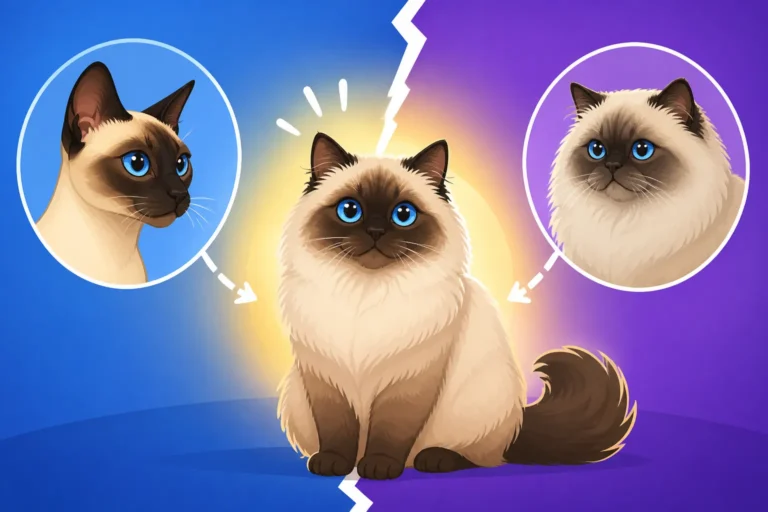
Himalayans, being a cross between the placid Persian and the vocal Siamese, often inherit a wonderful blend of traits – but their Persian lineage frequently wins out when it comes to expressing discomfort. They're renowned for their tranquil, almost regal presence, content to lounge in a favorite sunny spot or gracefully drape themselves over your lap. This peaceful disposition, while incredibly charming and a huge part of their appeal, can unfortunately make it incredibly challenging for us devoted owners to detect when something is genuinely bothering them. They don't have the dramatic flair of a Siamese, nor the overt protests of some other breeds. Instead, their displeasure tends to manifest in microscopic shifts in their behavior, almost imperceptible unless you're truly attuned to their unique language.
It’s a frustration many Himalayan owners share: you get that gut feeling something isn't right, but your cat isn't giving you obvious clues. They won't usually pace, yowl incessantly, or refuse food in a dramatic fashion unless they are severely distressed or unwell. This means we have to look beyond what might be considered "typical" cat behavior. Their beautiful, plush faces, while adorable, can also mask a lot of emotion, making it harder to read their mood compared to a cat with a more animated facial structure. As we've explored in Why a Himalayan Hides Illness Behind an Expressionless Face, their ability to conceal their internal state extends to physical ailments as well, so it stands to reason they're just as subtle with emotional discomfort. Cultivating an understanding of their normal, happy baseline is absolutely critical to spotting these quiet deviations when they're not feeling quite themselves.
Decoding Micro-Expressions and Body Language
Because Himalayans aren't ones for grand gestures, learning to read their displeasure means paying close attention to the tiniest details in their posture, facial features, and overall demeanor. It’s like learning a secret language that only the most observant can truly understand.
Subtle Eye Changes
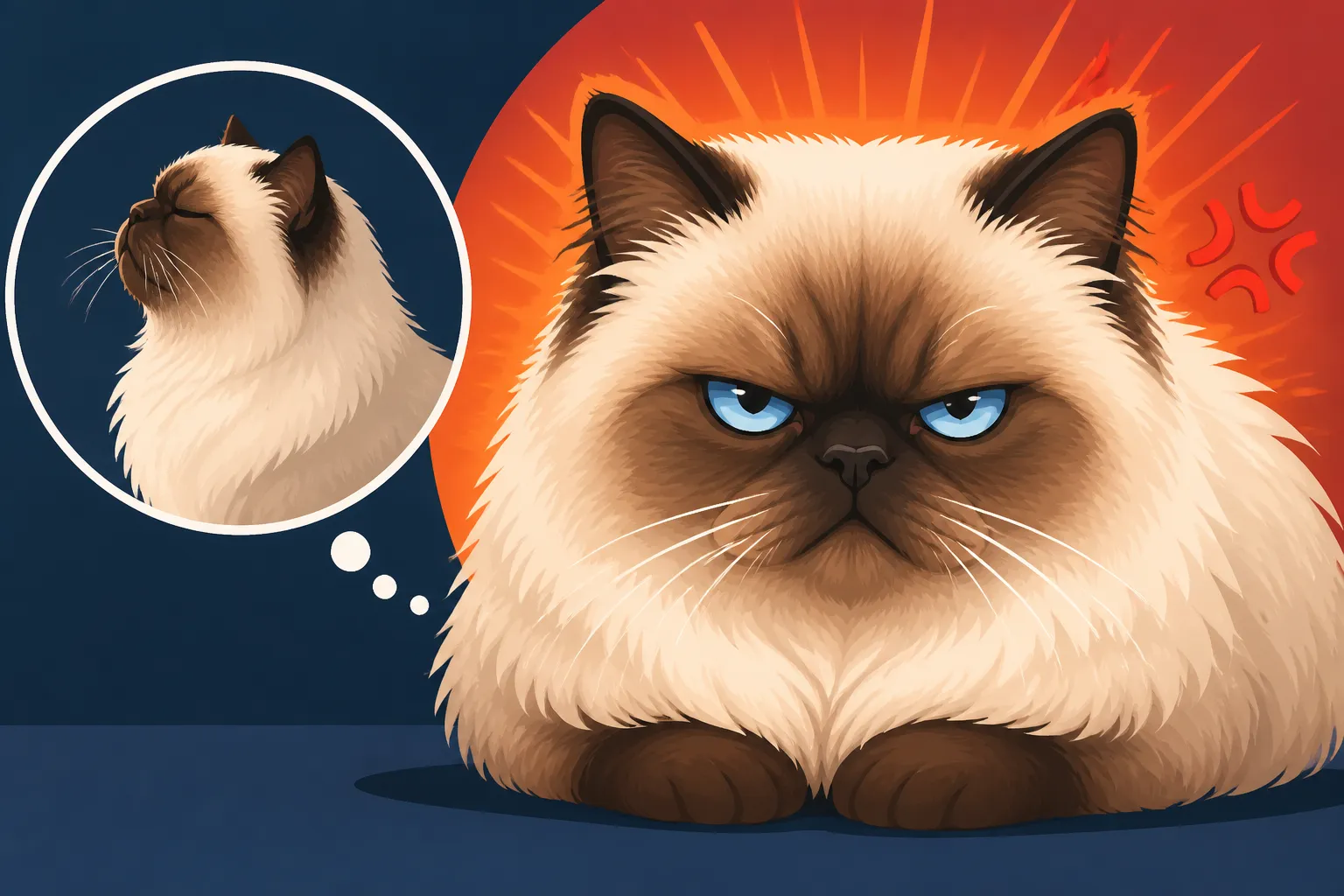
Your Himalayan's large, round, intensely blue eyes are often considered a hallmark of their beauty, but they are also incredibly communicative – even when your cat is trying to hide their feelings. While they might not squint or glare in a way that's immediately obvious, watch for subtler signs. You might notice a slight tensing around the eyes, perhaps a hint of what's often called "hard eye," where the pupils are slightly dilated and the gaze is fixed and unwavering, rather than soft, relaxed, and blinking slowly. If your cat typically makes gentle eye contact but suddenly starts avoiding your gaze or turns their head away more frequently, that's a signal. Reduced blinking or the brief, more frequent appearance of their third eyelid (the nictitating membrane) can also indicate that they're stressed or unhappy. It’s a silent withdrawal of warmth from their expression.
Ear Positions Speak Volumes
Himalayans typically have small, rather low-set ears, which don't have the dramatic swivel range of a more alert or active cat breed. However, even a marginal shift in their ear position can tell you a great deal about their emotional state. When displeased or anxious, their ears might be slightly flattened to the sides of their head, a posture often affectionately (or ruefully) called "airplane ears." It's not usually an aggressive flattening, but rather a cautious, withdrawn posture that clearly says, "I'm feeling uncomfortable or unsure." Sometimes, it's just a subtle stiffening, a lack of the usual relaxed forward orientation, indicating they’re on edge and processing something they don't like.
Whisker and Mouth Tension
The whiskers of a contented Himalayan usually fan out gracefully from their muzzle, appearing soft and relaxed. When they're feeling unhappy or stressed, you might observe their whiskers being pulled back slightly, flattening against their face, or held rigidly forward in a tense manner. Their mouth, too, can display subtle signs of displeasure. It might not be an obvious snarl or open-mouthed grimace, but a subtle tightening of the lips, perhaps with the corners pulled back just a fraction. This "tight-lipped" look, combined with the often-flat facial structure of a Himalayan, can be particularly difficult to spot, but it is there if you look very closely. While they rarely hiss as a first resort, a tense, closed-mouth expression is often their silent protest.
Posture and Position
A Himalayan is a creature of comfort and elegance, often found lounging in what appears to be a state of utter bliss. When they're feeling unhappy, their overall body language shifts from fluid relaxation to subtle tension or rigidity. They might appear more hunched or less stretched out than usual, possibly curling into a tighter ball, as if trying to make themselves physically smaller or less noticeable. Instead of their usual favored sleeping spots, you might find them retreating to a new, less exposed area, signaling a desire to withdraw from a perceived stressor. For instance, if your Himalayan usually loves their Why a Himalayan Picks the Sofa Over the Windowsill, but suddenly prefers a hidden spot under a chair, it’s a strong indicator. They might also refuse to move from a spot they feel safe in, even if it's inconvenient for you, holding their ground as a silent act of defiance or anxiety.
Tail Flicks and Stillness
The tail of a relaxed Himalayan typically rests gracefully, perhaps with a gentle, slow, almost imperceptible sway. While a rapid, low-swaying tail can indicate agitation or conflict, displeasure in a Himalayan often manifests as a subtle stiffening or holding their tail very close to their body, almost tucked between their legs or tightly wrapped around themselves. Sometimes, the most telling sign of displeasure is not movement, but absolute stillness – a tail that usually has some gentle motion now lying perfectly motionless, rigid, and unresponsive. It's a sign of a cat trying to disappear into itself.
Environmental Clues and Routine Deviations
Beyond the subtle physical cues, a Himalayan's unhappiness can often be observed through changes in their daily habits and how they interact with their environment. These deviations from their normal routine are loud messages, even if your cat is silent.
Withdrawal and Hiding
One of the clearest and most heartbreaking signs that a Himalayan is unhappy or stressed is a sudden increase in withdrawal. They might begin spending significantly more time in secluded areas, like under the bed, deep inside a closet, or in a rarely used room that isn't their usual peaceful retreat. This isn't just seeking quiet; it's an active disengagement from the family and their usual surroundings. Himalayans are creatures of comfort and habit, so any marked departure from their established routine or preferred lounging spots is a significant red flag. What a Himalayan Does When It Is Unsettled delves into this behavior, emphasizing that a change in their chosen sanctuary often points to underlying distress. They are trying to create space from whatever is bothering them.
Changes in Appetite or Litter Box Habits
While these changes can certainly be indicators of underlying medical issues and should always prompt a vet visit, a sudden shift in eating habits or litter box use without any other obvious physical symptoms can also strongly signal stress or displeasure. Your cat might eat less, pick at their food, or even completely refuse their favorite treats or meals. Similarly, if your usually fastidious Himalayan starts urinating or defecating outside their litter box, especially if the box is clean and accessible, it's a profound cry for help regarding emotional distress. Ensure their litter box is always impeccably clean and consider a low-sided box, easily found on Amazon, which can be more comfortable for older or less agile Himalayans to enter and exit.
Altered Grooming Routines
Himalayans are typically meticulous groomers, dedicating a significant portion of their day to keeping their luxurious, long coats pristine. If you observe a sudden, noticeable decrease in grooming, or, conversely, an obsessive over-grooming in one specific area (which can be a sign of anxiety or discomfort), it's a strong indication that something is amiss. An unhappy cat might let their coat become slightly unkempt, or you might even start to notice small mats forming, particularly in hard-to-reach areas like their armpits or britches. Why an Old Himalayan Stops Washing Its Own Face touches upon how grooming changes with age, but any sudden change in an adult cat's routine is a key indicator to watch for.
Reduced Interaction or Play
While Himalayans aren't typically known for being boisterous, high-energy players, they do enjoy gentle interaction, quiet play sessions, and affectionate moments with their human companions. If your cat suddenly seems completely uninterested in their favorite wand toy, ignores your attempts to engage them, or avoids coming to you for a cuddle when they normally would, it's a clear sign they're not feeling their emotional best. They might just sit and observe the activity from a distance rather than participating, offering a quiet, non-confrontational protest to their internal state.
Providing Comfort and Understanding
Once you've tuned into these subtle signs of displeasure, the next crucial step is to act on them. Your Himalayan is counting on you to understand their unspoken language.
Identifying the Stressor
The first and often hardest part is figuring out why your Himalayan is displeased. This requires putting yourself in their paws and looking at your shared world from their perspective. Has there been a recent change in the household, no matter how small it seems to you? A new piece of furniture, a different cleaning product being used, a guest staying over, or even an alteration in your own daily schedule? Himalayans are sensitive souls. Why a Himalayan Notices When One Chair Moves illustrates just how attuned they are to their environment, and Why a New Baby Unsettles a Himalayan's Routine highlights their sensitivity to major life changes. Reflect carefully on any recent events or shifts that might have impacted their sense of security or routine.
Creating a Calming Environment
Once you have a suspicion about the stressor, or even if you don't, providing an extra layer of comfort and predictability is vital. Ensure your Himalayan has plenty of safe, quiet spaces to retreat to. This might mean adding an extra cat tree with wide, stable platforms (many excellent options are available on Amazon), or a cozy, covered bed in a less-trafficked room where they can feel secure and unbothered. Maintaining a predictable, consistent routine for feeding, play, and grooming can work wonders in reducing anxiety. Remember, Why a Himalayan Runs on Its Own Timetable – consistency is paramount for their peace of mind and sense of stability. Consider using feline pheromone diffusers, like Feliway, which are readily available on Amazon and can help create a more reassuring atmosphere.
Gentle Reassurance and Patience
Approach your displeased Himalayan with a calm, gentle, and respectful demeanor. Resist the urge to force interaction or pull them out of their hiding spot. Instead, offer opportunities for connection without pressure. Sit quietly near them, speak in a soft, reassuring tone, and let them initiate contact. A slow blink, a classic feline gesture of trust and affection, can be a wonderful way to communicate that you mean no harm. Sometimes, simply acknowledging their discomfort by giving them the space they crave is the most loving and effective thing you can do. Patience is a virtue when dealing with a quietly unhappy cat, as it may take time for them to feel secure again.
When to Consult a Vet
It cannot be stressed enough: always rule out a medical issue first. Many subtle behavioral changes, including withdrawal, changes in appetite, or altered grooming, can be symptoms of underlying health problems that only a veterinarian can diagnose. If these changes persist, worsen, or are accompanied by any other physical symptoms, a vet visit is absolutely essential. Even if it turns out to be purely behavioral, your veterinarian can offer valuable insights, recommend further strategies, or refer you to a qualified feline behaviorist. Understanding your Himalayan's health predispositions, as discussed in What Kills a Himalayan Whose Line Was Never Tested, is also crucial for their overall well-being.
By learning to interpret these subtle, non-verbal cues, you'll be able to quickly identify when your dignified Himalayan is feeling displeased, and then take proactive steps to restore their comfort and happiness.
| Sign of Displeasure | Contrast with Contentment |
|---|---|
| Eyes | Tense, hard gaze, avoiding eye contact, less blinking |
| Ears | Slightly flattened, stiff, "airplane ears" |
| Whiskers | Pulled back against face, or rigid/forward |
| Mouth | Tight-lipped, subtle tension |
| Posture | Hunched, rigid, tucked in, making self smaller |
| Tail | Stiff, held close to body, motionless |
| Location | Hiding, isolated, unusual spots |
| Grooming | Decreased, matted, or excessive licking |
| Interaction | Avoidant, uninterested in play/cuddles |
Disclaimer
This article is for general informational purposes only and does not constitute professional advice. Laws, prices and regulations vary by location and change over time. Consult a qualified professional for guidance on your specific situation.