Getting a Toothbrush Into a Himalayan’s Crowded Mouth
Many Himalayan cat owners find themselves struggling with a common dilemma: how on earth do you effectively clean the teeth of a cat with such a unique facial structure? Their charming flat faces, while adorable, come with a notoriously crowded mouth, making dental hygiene a real challenge. This comprehensive guide is here to walk you through practical strategies for successfully getting a toothbrush into your Himalayan's crowded mouth, ensuring their oral health stays pristine.
The Unique Oral Landscape of a Himalayan Cat
The truth is, brushing a Himalayan's teeth isn't just a matter of technique; it's also about understanding their anatomy. Our beautiful Himis, with their distinctive flattened faces, carry a genetic legacy that impacts their entire oral structure. This isn't a flaw, but rather a characteristic that requires a little extra attention and care, especially when it comes to their dental health. If you've ever felt like you're trying to navigate a tiny, intricate maze with a toothbrush, you're not alone – it's a very common frustration!
Understanding the Shortened Jaw and Its Implications
Himalayans, much like their Persian ancestors, are considered a brachycephalic breed. This fancy term simply means they have a shortened skull and a flatter face. While undeniably cute, this characteristic isn't just skin deep; it extends to their jaw structure. Their upper and lower jaws are shorter than those of a typical cat, but here's the catch: they still have the same number of teeth! Imagine trying to fit all your furniture into a much smaller room – things are going to get cramped, right?
This anatomical reality creates a unique set of challenges. The shortened jaw means there's simply less physical space for all 30 adult teeth to sit comfortably in perfect alignment. Instead, they often end up crowded, rotated, or overlapping. This isn't just an aesthetic issue; it has significant implications for how easily food particles, plaque, and eventually tartar can accumulate in their mouths. Owners often tell me their Himis are prone to bad breath, and this jaw structure is a major contributing factor.
The shape of their face can also make it difficult for their tongues to effectively clean their own teeth, unlike many other cat breeds that can naturally sweep away some debris. Combine that with their tendency to be less active than some breeds, meaning they might not chew on toys as vigorously, and you have a recipe for potential dental issues. It’s not their fault, of course, but it places the responsibility squarely on us as their caregivers to step in with consistent dental care.
The Crowding Effect on Teeth
As mentioned, a standard feline dentition of 30 teeth is packed into a jaw designed for a more pronounced muzzle. This results in teeth that are often angled incorrectly, rotated in their sockets, or even overlapping one another. If you've ever peered into your Himalayan's mouth, you might notice that some teeth seem a bit squished or not perfectly straight. This isn't just cosmetic; these tight spaces are prime breeding grounds for bacteria and food debris.
Think of it like trying to clean between books jammed tightly on a shelf – it's incredibly difficult to get into every crevice. These overcrowded areas become traps where plaque can rapidly build up and harden into tartar. Once tartar forms, it's far more difficult to remove with just brushing and often requires professional attention. It's a silent threat that can lead to a host of problems if not addressed proactively. For a deeper dive into this, you might find How Crowded a Himalayan's Lower Jaw Gets really helpful.
The way their teeth meet, or fail to meet, can also be affected. Instead of a perfect scissor bite where the upper teeth slightly overlap the lower ones, Himalayans might have an underbite or an overbite. This abnormal occlusion can cause certain teeth to wear down unevenly or make chewing less efficient, further contributing to food accumulation and dental problems. It's a delicate balance, and their adorable flat face is the very reason we need to be extra vigilant.
Why Dental Hygiene is Crucial for Himalayans
Given their unique oral anatomy, regular dental hygiene for Himalayans isn't just a recommendation; it's an absolute necessity. Without consistent home care, these cats are at a significantly higher risk of developing periodontal disease, which is an infection and inflammation of the tissues surrounding their teeth. This condition starts with plaque and tartar buildup and can progress to gingivitis, and eventually to periodontitis, leading to pain, tooth loss, and even systemic health issues.
It's not an exaggeration to say that neglecting your Himalayan's dental health can impact their overall well-being and lifespan. Oral infections can send bacteria into the bloodstream, affecting vital organs like the heart, kidneys, and liver. I know it sounds serious, and it is, but the good news is that much of this can be prevented with a consistent routine. This is why many vets will tell you that Himalayans, along with other brachycephalic breeds, need regular dental checks and care much earlier in life than some other cats. You can learn more about this specific concern by reading Why a Himalayan Needs Dentals Earlier Than a Siamese.
Beyond the serious health risks, think about your cat's comfort. A mouth full of painful, infected teeth isn't a happy mouth. Cats are incredibly stoic, and they often hide their pain until it's quite advanced. By the time you notice bad breath or a reluctance to eat, the problem has likely been brewing for a while. Establishing a dental routine from kittenhood, or as soon as possible, is truly one of the most loving and responsible things you can do for your Himalayan.
Gathering Your Arsenal: Tools and Preparation for Success
Okay, now that we understand why it's so important, let's talk about the how. You wouldn't try to build a house without the right tools, and the same goes for tackling your Himalayan's dental care. Having the correct equipment and preparing both yourself and your cat will make the process infinitely smoother and more successful. Forget using a human toothbrush; it's simply not designed for a cat's mouth, let alone a Himalayan's.
Selecting the Right Toothbrush for a Flat-Faced Feline
When it comes to toothbrushes for Himalayans, size truly matters. You need a brush head that is small enough to fit into their compact mouths and navigate around those crowded teeth without causing discomfort. Large, bulky brushes are a non-starter and will only lead to frustration for both of you.
Here are the main types to consider:
- Finger Brushes: These slip over your fingertip, allowing for direct contact and a good feel for where you're brushing. They're excellent for starting out, especially with kittens or highly sensitive cats, as they are less intimidating. However, they may not reach the very back molars effectively.
- Small-Headed Cat Toothbrushes: These look like miniature human toothbrushes, but with much softer bristles and a tiny head specifically designed for a cat's mouth. Many pet supply stores, or even online retailers like Amazon, offer a variety of these. Look for ones with an angled head, which can help reach those tricky spots.
- Angled or Multi-Angled Toothbrushes: Some brushes are designed with specific angles or multiple brush heads to clean several surfaces of the tooth at once. While potentially efficient, ensure the overall size isn't too large for your Himalayan's mouth.
The key is softness and smallness. Hard bristles can damage gums, and a large head simply won't fit where it needs to go. Don't be afraid to try a few different types to see what works best for your specific cat and your hands. For more details on choosing the ideal brush, check out Which Brush Head Fits a Himalayan's Shortened Jaw.
| Toothbrush Type | Description | Pros for Himalayans | Cons for Himalayans |
|---|---|---|---|
| Finger Brush | A small, thimble-like brush head that slips over your finger. | Very gentle, allows direct tactile feedback, good for initial acclimation and sensitive gums. | Limited reach into very back molars; can be bitten if cat is not cooperative. |
| Small-Headed Cat Toothbrush | Standard toothbrush design with an extra-small head and soft bristles. | Excellent reach for back teeth, good leverage, ergonomic handle for the owner. | Can be intimidating initially; requires more precision and a calm cat. |
| Angled/Multi-Angled Toothbrush | Designed with specific angles or multiple heads to clean various tooth surfaces. | Optimized for cleaning multiple tooth surfaces at once; potentially more efficient. | Might be too large for some Himalayan mouths; can feel awkward to maneuver. |
| Dental Wipe/Gauze Pad | A textured wipe or simple gauze wrapped around your finger. | Easiest starting point for kittens or highly resistant cats; removes surface plaque. | Does not provide deep cleaning; limited abrasion; won't effectively reach all crevices. |
Selecting a Palatable and Safe Toothpaste
This is a non-negotiable point: NEVER use human toothpaste on your cat. Human toothpastes contain ingredients like fluoride and xylitol that are toxic to felines if ingested. Always opt for a toothpaste specifically formulated for cats. These are enzyme-based, which means they help break down plaque even if your brushing technique isn't perfect, and they come in flavors cats typically enjoy.
Chicken, seafood, or malt flavors are common, and often, the taste alone is enough to encourage cooperation. Many reputable pet brands offer these toothpastes, and you can easily find them in most pet stores or online, including on Amazon. It's often a process of trial and error to find the flavor your Himalayan tolerates, or even enjoys!
Before you even introduce the toothbrush, let your cat taste the toothpaste. Put a tiny dab on your finger and let them lick it off. If they seem to like it, that's half the battle won. Some cats will even look forward to "toothpaste time" as a treat! Understanding what your cat will tolerate in terms of taste is crucial for consistent brushing. For more insights on finding the right one, consider reading Which Toothpaste a Himalayan Will Tolerate.
Setting the Stage: Environment and Acclimation
Preparation isn't just about the tools; it's about the psychological aspect for both you and your Himalayan. Choose a calm, quiet time of day when your cat is relaxed, perhaps after a nap or before a meal. Avoid times when the house is busy, or they're feeling particularly playful or agitated. Consistency in timing also helps, as cats thrive on routine.
The process of introducing brushing should be gradual and positive. Don't just dive in with a brush. Start by gently touching their face and mouth area, rewarding them with praise and treats. Once they're comfortable with that, introduce a tiny bit of cat toothpaste on your finger, allowing them to lick it. Gradually, you can start gently rubbing your finger along their gums.
Once they're okay with your finger, you can introduce the finger brush, and then eventually the small-headed toothbrush. Keep sessions very short – literally just a few seconds initially – and always end on a positive note with a treat and lots of praise. This slow, patient acclimation builds trust and makes the entire process less stressful for everyone involved. Remember, force will only create resistance and make future attempts harder.
The Brushing Technique: Navigating the Crowded Mouth
Alright, you've got your tools, your cat is somewhat acclimated, and you're ready to actually brush. This is where the real skill comes in, especially with a Himalayan's unique oral challenges. The goal isn't perfection from day one, but consistent, gentle effort. Remember, even a little bit of brushing is significantly better than none at all.
Gentle Approach and Positioning
First things first, find a comfortable position. Some owners prefer to hold their Himalayan in their lap, gently cradling their head. Others find placing their cat on a table at waist height easier, as it allows for better access and control. The key is to make sure your cat feels secure and isn't squirming excessively. Speak to them in a soft, reassuring voice throughout the process.
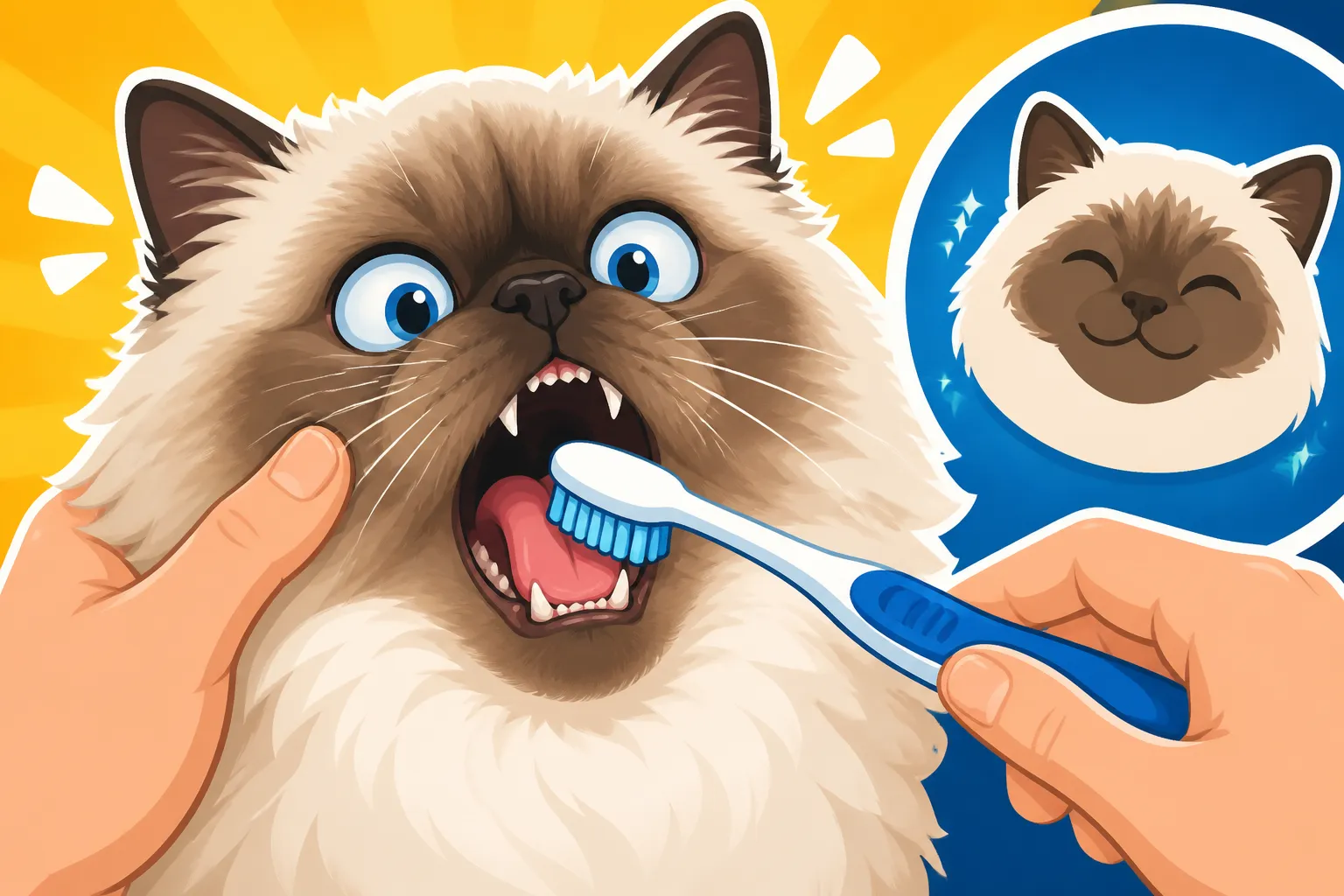
To access their teeth, gently lift their lips on one side, exposing the outer surfaces of their teeth and gums. Don't try to pry their mouth open wide; for brushing the outside surfaces, you don't need to. Focus on the gumline, as this is where plaque and tartar accumulate most rapidly. Start with the teeth that are easiest to reach, often the canines or the front incisors, before moving to the more challenging back molars.
Maintain a light, confident touch. If you're hesitant, your cat will pick up on that energy. A confident yet gentle approach will make them feel safer. Remember, this isn't a wrestling match; it's a calm, cooperative activity. If your cat shows signs of significant stress – tail lashing, growling, struggling – take a break and try again later, or shorten the session.
Reaching Every Nook and Cranny
This is the tricky part with Himalayans. Their crowded mouths mean that teeth aren't always neatly aligned, creating hidden pockets where plaque loves to hide. When you introduce the toothbrush, aim the bristles at a 45-degree angle to the gumline, gently sweeping them away from the gums. This technique helps to dislodge plaque both on the tooth surface and just under the gumline.
Pay special attention to the large premolars and molars at the back of their mouth, as these are often the hardest to reach and tend to accumulate the most plaque. You might need to gently manipulate their cheek or lip to get the brush head back there. Don't forget the inside surfaces of the teeth if your cat will tolerate it, though the outer surfaces are the most critical for consistent cleaning. You may notice how their particular jaw structure affects this. For more specific insights on how their bite functions, take a look at What a Persian Jaw Does to a Himalayan's Bite.
With crowded or overlapping teeth, gently try to work the bristles into those tighter spaces. You won't be able to achieve a perfect clean every time, and that's okay. The goal is consistent disruption of plaque. Focus on spending a few seconds on each section of their mouth – upper right, upper left, lower right, lower left. Even a quick pass on the most critical areas is beneficial.
Duration and Frequency for Optimal Results
Ideally, you should aim to brush your Himalayan's teeth daily. Just like with humans, daily brushing is the most effective way to prevent plaque from hardening into tartar. If daily isn't feasible, aiming for at least three to four times a week will still make a significant difference. Consistency is far more important than intensity.
Each brushing session doesn't need to be long; 30 seconds to a minute is a realistic and effective goal for most cats. If you can only manage 15-20 seconds on their most problematic areas (usually the back molars and gumline), that's still a win! The routine itself is what truly helps. Immediately after brushing, reward your Himalayan with a special treat, a favorite toy, or some loving praise. This reinforces the positive association and makes them more likely to cooperate next time. Regular cleaning is absolutely vital for this breed. To understand the recommended frequency, refer to How Often a Himalayan's Crowded Mouth Needs Cleaning.
Remember, building this routine takes time and patience. Don't get discouraged if progress is slow. Celebrate small victories, like managing to brush for ten seconds without a struggle. Over time, your Himalayan will become more accustomed to the process, and it will become a natural part of their daily care.
Overcoming Obstacles and Maintaining Long-Term Oral Health
Even with the best intentions and the right techniques, you might still encounter some bumps in the road. Himalayans can be particular, and dental care might not be their favorite activity. It’s important to have strategies for when things don't go perfectly, and to understand that home care is just one piece of the larger dental health puzzle.
Strategies for Reluctant Brushers
If your Himalayan is still putting up a fight despite your gentle efforts, it's easy to feel defeated. But don't give up! There are supplementary tools that can help, though they shouldn't entirely replace brushing if possible. Dental wipes or gauze pads wrapped around your finger can be a good intermediate step, offering some mechanical abrasion, even if less thorough than a brush.
Water additives designed to reduce plaque and freshen breath can also be helpful, but they work best as an adjunct to brushing, not a standalone solution. The same goes for dental treats; while some can help reduce tartar, especially those approved by veterinary oral health councils, they rarely provide the comprehensive cleaning that brushing does, particularly in a crowded mouth. Consider adding them to your Amazon cart if they seem appealing to your Himmy.
The most important strategy for a reluctant brusher is to go back to basics with acclimation. Slow down even further. Focus on just touching their face, then their gums, then introducing the toothpaste on your finger, all while showering them with praise and irresistible treats. Sometimes, a change in toothbrush type (e.g., from a standard brush to a finger brush) can make a difference. Consistency, even if it's just a few seconds of acceptable interaction, is key.
Recognizing Signs of Dental Trouble
Even with diligent home care, it's crucial to be aware of the signs that your Himalayan might be developing dental problems. Remember, cats are masters at hiding pain, so you need to be observant.
Keep an eye out for these indicators:
- Bad Breath (Halitosis): While some cat breath isn't exactly pleasant, truly foul odor is a strong indicator of bacterial overgrowth and dental disease. This is a primary sign that something is amiss. You might want to refer to Why Bad Breath in a Crowded Himalayan Jaw Means Trouble for more detailed information.
- Red, Swollen, or Bleeding Gums: These are classic signs of gingivitis and inflammation.
- Difficulty Eating or Dropping Food: Your cat might approach their bowl eagerly but then hesitate, chew on one side of their mouth, or drop bits of food.
- Paw at the Mouth or Rubbing Face: These actions suggest discomfort or pain.
- Changes in Behavior: Hiding, irritability, decreased grooming, or less playfulness can all be subtle signs of pain, including dental pain.
- Visible Tartar Buildup: Yellow or brownish deposits on the teeth, especially near the gumline, indicate hardening plaque.
If you notice any of these signs, don't wait. Schedule an appointment with your veterinarian promptly. Early intervention can prevent minor issues from becoming major, painful problems.
The Role of Professional Veterinary Care
As committed as we are to home dental care, it's simply not enough on its own for most Himalayans. Regular veterinary check-ups are paramount, where your vet can assess their oral health and recommend professional dental cleanings under anesthesia when necessary. These cleanings allow the vet to thoroughly examine each tooth, scale away hardened tartar both above and below the gumline, and polish the teeth to reduce future plaque adhesion.
Sometimes, despite our best efforts, extractions become necessary due to severe crowding, advanced periodontal disease, or damaged teeth. It's never an easy decision, but removing a painful, infected tooth is often the kindest thing you can do for your cat. Don't be surprised if your Himalayan loses some teeth by the time they are senior; it's a common outcome of their crowded mouths. For details on this, you might find How Many Teeth a Himalayan Has Lost by Ten enlightening.
It's also important to discuss pre-anesthetic bloodwork with your vet, especially for brachycephalic breeds like Himalayans. They can sometimes have a harder time with anesthesia due to their unique airway structure, so careful monitoring and screening are essential to ensure their safety. You can learn more about this by reading Why a Himalayan's Anesthetic Needs a Longer Recovery. These professional cleanings, while an investment, are a critical component of your Himalayan's long-term health plan and work hand-in-hand with your home brushing routine. Understanding the frequency of these procedures is also important, so check out How Often a Himalayan's Crowded Jaw Needs Anesthetic.
Disclaimer
This article is for general informational purposes only and does not constitute professional advice. Laws, prices and regulations vary by location and change over time. Consult a qualified professional for guidance on your specific situation.