What Soft Palate Surgery Involves for a Himalayan
It’s truly distressing to witness your beloved Himalayan cat struggling for breath, often panting after minimal exertion or snoring so loudly it sounds like a small freight train. These aren't just quirky traits; they can be signs of a serious underlying issue like an elongated soft palate, which can severely impact their quality of life. This comprehensive guide will walk you through what soft palate surgery, also known as staphylectomy, involves for a Himalayan, helping you understand the procedure, recovery, and what it means for your furry family member.
The Unique Breathing Challenges of a Himalayan Cat
Himalayan cats, with their distinctive flat faces, are undeniably charming. Their sweet, round eyes and plush coats are irresistible. However, this adorable facial structure, a hallmark of their Persian heritage, comes with a unique set of anatomical challenges, especially concerning their respiratory system. Unlike cats with longer muzzles, Himalayans are a brachycephalic breed, meaning their skull is shorter and wider than average. This compact design often leads to a condition known as Brachycephalic Obstructive Airway Syndrome (BOAS), a complex of upper airway abnormalities that can make breathing a daily struggle.
Why Their Facial Structure Affects Airflow
The shortened skull doesn't mean their soft tissues are also proportionally shorter; often, they're not. This leads to a crowding of structures within the smaller space. Imagine trying to fit the same amount of furniture into a much smaller room – things get squished! For Himalayans, this can mean narrowed nostrils (stenotic nares), an overly long soft palate, an everted laryngeal saccules, and a hypoplastic trachea (narrow windpipe). Each of these components can contribute to restricted airflow, making every breath an effort. It’s no wonder that a cat with an elongated soft palate often sounds like they are working overtime just to pull air in, and you might notice Why a Himalayan Snores Louder Than Its Siamese Ancestors or even snort when they get excited.
Recognizing the Signs of Respiratory Distress
It can be hard for owners to differentiate between "normal" breed sounds and genuine distress. Many assume the snorting and snoring are just "Himalayan things." However, if your cat is consistently breathing with an open mouth, especially when not overheated or stressed, it's a significant red flag. You might notice they tire quickly during play, panting heavily after only a few minutes, which is a clear sign that When a Himalayan's Open Mouth Breathing Needs a Vet is critical. Other symptoms include gagging or retching, especially after eating or drinking, coughing, and even collapsing in severe cases. They may also struggle more in warm weather, as their compromised airways make it difficult for them to cool down effectively, meaning Why a Himalayan Overheats Twice as Fast as a Siamese becomes a real concern.
Understanding Soft Palate Elongation in Himalayans
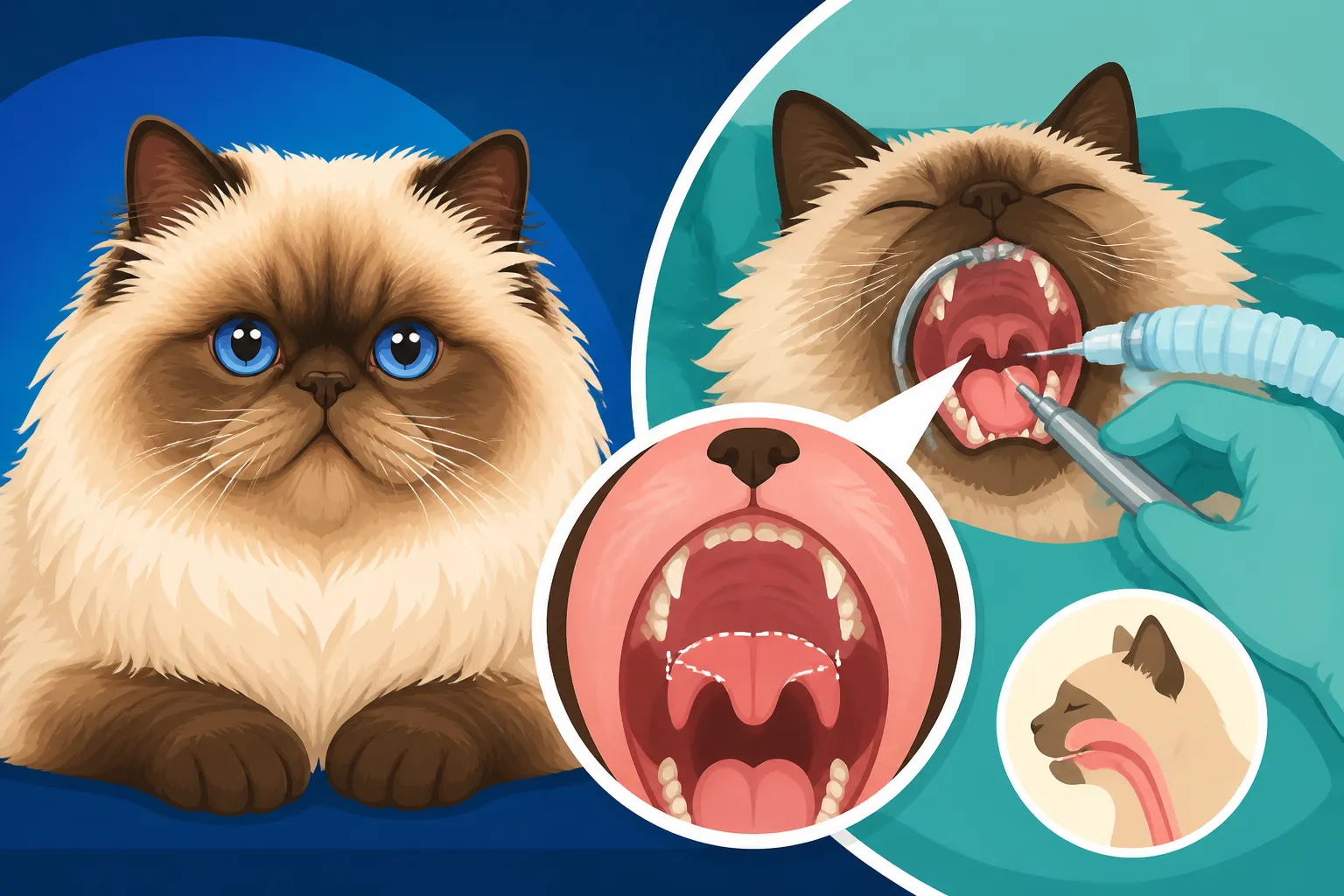
The soft palate is the fleshy, soft tissue at the back of the roof of your cat’s mouth, separating the oral cavity from the nasal cavity. In a Himalayan with an elongated soft palate, this tissue extends too far backward, often into the larynx (voice box), obstructing the opening of the trachea (windpipe). This acts like a curtain, partially blocking the air as your cat tries to inhale.
What an Elongated Soft Palate Actually Means for Breathing
When the soft palate is too long, it literally dangles into the airway. Every time your cat breathes in, the suction created by their effort pulls this excess tissue deeper into the throat, further narrowing the passage. This turbulent airflow causes the characteristic snoring, snorting, and sometimes even a distinct raspy sound. Over time, the constant rubbing and irritation can lead to inflammation and swelling of the soft palate and surrounding tissues, exacerbating the problem and potentially leading to other issues like everted laryngeal saccules, where small pouches of tissue near the vocal cords get pulled outward and block the airway even more.
Symptoms That Point to a Problem
Beyond the obvious noisy breathing, there are several subtle and not-so-subtle signs that your Himalayan might be struggling with an elongated soft palate:
- Loud, Strenuous Breathing: This is often the first thing owners notice. It’s not just cute snoring; it’s loud, labored breathing, especially during sleep or excitement.
- Open-Mouth Breathing: If your cat is consistently breathing through their mouth when at rest, or even after minimal activity, it's a strong indicator of respiratory distress. Cats are obligate nasal breathers, so mouth breathing is abnormal.
- Exercise Intolerance: They might not want to play as much, or they tire very quickly after a short burst of activity. What used to be a fun chase might now result in heavy panting and immediate rest.
- Gagging, Retching, or Vomiting: The elongated soft palate can irritate the back of the throat, leading to gagging or even vomiting, particularly after eating or drinking quickly.
- Heat Intolerance: As mentioned, their compromised airways make it harder to regulate body temperature, so they become overheated much faster and recover slower.
- Cyanosis (Blue Gums/Tongue): In severe cases, lack of oxygen can cause their gums and tongue to turn a bluish tint. This is an emergency and requires immediate veterinary attention.
- Restless Sleep or Unusual Sleeping Positions: Cats with breathing issues might try to sleep with their head and neck stretched out to open their airway, or they may wake up gasping. You might notice Why a Himalayan Sleeps With Its Neck Stretched Out becomes a common posture.
When Soft Palate Surgery Becomes Necessary
Deciding on surgery for your beloved pet is a significant step, filled with apprehension and questions. For a Himalayan with an elongated soft palate, surgery becomes a strong consideration when their quality of life is severely impacted by their breathing difficulties. It’s not a decision to take lightly, but often, it's the best path to providing them with a more comfortable existence.
The Decision Point: Quality of Life and Veterinary Guidance
Your veterinarian will be your best guide in determining if and when surgery is appropriate. They’ll assess the severity of your cat’s BOAS symptoms, taking into account their age, overall health, and the specific anatomical issues present. If your Himalayan is struggling to breathe, having frequent gagging episodes, shows significant exercise intolerance, or has episodes of collapse, surgery is usually recommended to improve their comfort and long-term health. It's about proactive intervention to prevent more severe, irreversible changes to their airways over time. Early intervention can make a significant difference.
Pre-Surgical Assessment: A Thorough Health Check
Before any brachycephalic cat undergoes surgery, a comprehensive pre-surgical workup is absolutely essential. This is even more crucial for Himalayans due to their unique anatomical considerations and potential anesthetic risks. Your vet will perform:
- Full Physical Examination: This includes assessing their breathing patterns, heart and lung sounds, and general body condition. They will also meticulously evaluate their nasal passages; it's common for a veterinarian to assess How a Vet Grades a Himalayan's Nostrils because stenotic nares often accompany an elongated soft palate and may require surgery simultaneously.
- Blood Work: Pre-anesthetic blood tests are crucial to ensure organ function is healthy enough to handle anesthesia. This usually includes a complete blood count (CBC) and a biochemistry panel.
- Chest X-rays: These help evaluate the lungs and heart for any pre-existing conditions that could complicate anesthesia or recovery.
- Cardiac Screening: Sometimes, an echocardiogram (ultrasound of the heart) may be recommended, especially if a heart murmur is detected, as some Persians and Himalayans can be predisposed to cardiac issues.
- Oral Examination Under Light Sedation: To get a clear view of the soft palate and larynx, your vet might perform a brief exam under light sedation or anesthesia to properly visualize the extent of the elongation and any other associated issues, such as everted laryngeal saccules. This is often done immediately prior to the surgical procedure itself.
Given the breed's sensitivity to anesthesia, particularly their compromised airways, careful planning and monitoring are paramount. Your vet will likely discuss Why a Himalayan's Anesthetic Needs a Longer Recovery and the specialized protocols involved for brachycephalic breeds.
The Surgical Procedure: Staphylectomy Explained
Once the decision for surgery has been made, understanding the actual procedure can help alleviate some of your worries. The surgery to correct an elongated soft palate is called a staphylectomy, and it's a common and generally safe procedure when performed by an experienced veterinary surgeon, often a specialist.
What Happens During the Surgery
The primary goal of a staphylectomy is to carefully trim the excess length of the soft palate, preventing it from obstructing the airway. Here’s a general overview of what happens:
- Anesthesia and Airway Management: Your Himalayan will be placed under general anesthesia. Because of their compromised airways, the veterinary team will pay extra close attention to How a Vet Manages a Himalayan Under Anesthetic, often using specialized techniques to intubate them (insert a breathing tube) carefully and monitor their oxygenation and breathing throughout the procedure. They'll likely be pre-oxygenated, and their intubation tube will be left in place for as long as safely possible during recovery.
- Positioning and Access: Your cat will be positioned on their back, and the surgeon will gain access to the back of the mouth.
- Assessment and Resection: The surgeon will carefully visualize the soft palate and determine the appropriate amount of tissue to remove. The goal is to shorten the palate just enough so that it no longer extends into the larynx, without making it too short, which could lead to other issues. The excess tissue is then precisely cut away. This can be done using a scalpel and sutures, a CO2 laser, or electrocautery, each method having its own advantages regarding precision and minimizing bleeding.
- Suturing: If a scalpel is used, the edges of the remaining soft palate are meticulously sutured together to promote healing and minimize post-operative swelling and bleeding. Laser or electrocautery methods often seal blood vessels as they cut, reducing the need for extensive suturing.
- Addressing Concurrent Issues: It's common for Himalayans to have other BOAS components. If stenotic nares (narrow nostrils) are present, a separate procedure to widen them (alar fold resection) is usually performed at the same time. If everted laryngeal saccules are present, these small pockets of tissue are also excised. Addressing all components simultaneously often yields the best outcome.
Potential Risks and Complications
While staphylectomy is generally safe, as with any surgery, there are potential risks:
- Anesthetic Complications: Brachycephalic cats have a higher risk of anesthetic complications due to their airway issues. This is why meticulous monitoring and specialized protocols are crucial.
- Post-Operative Swelling: Swelling of the surgical site is common and can temporarily worsen breathing. Anti-inflammatory medications are used to manage this. In rare, severe cases, a temporary tracheostomy (creating an opening in the windpipe) might be needed, though this is uncommon.
- Bleeding: Though measures are taken to control it, some post-operative bleeding can occur.
- Infection: As with any surgical site, there’s a risk of infection, which is managed with antibiotics if necessary.
- Regurgitation/Aspiration Pneumonia: If the cat regurgitates food or water while the throat is still swollen or numb, it could accidentally inhale some into the lungs, leading to aspiration pneumonia. Careful feeding protocols post-op help prevent this.
- Suture Dehiscence (Sutures Coming Apart): This is rare but can happen if the cat is too active or gags excessively.
- Recurrence: In some cases, scar tissue can form, or the soft palate might still be considered somewhat long, requiring further intervention down the line, though this is less common with skilled surgical technique.
Post-Operative Care and Recovery
Bringing your Himalayan home after surgery can feel daunting, but with careful attention and following your vet's instructions, you can ensure a smooth recovery. The first few days are the most critical for managing swelling and discomfort.
Immediate Post-Op: What to Expect at Home
Your cat will likely be monitored at the veterinary clinic for at least 24 hours, often longer for brachycephalic breeds, to ensure stable breathing and recovery from anesthesia. When they come home, they'll likely still be a bit groggy and possibly uncomfortable.
- Pain Management: Your vet will prescribe pain medication, typically an anti-inflammatory and an opioid, to keep your cat comfortable. Administer these exactly as directed.
- Monitoring Breathing: Continue to monitor their breathing closely. While improvements should be noticeable, some snoring or noisy breathing might persist due to post-surgical swelling. Any signs of severe difficulty, persistent gagging, or blue gums warrant an immediate call to your vet.
- Restricted Activity: Limit activity for at least 10-14 days. No jumping, running, or strenuous play. A quiet, calm environment is essential. This helps prevent bleeding, swelling, and stress on the surgical site.
- Dietary Adjustments: Your vet will recommend a soft food diet for the first week or two. This prevents hard kibble from irritating the healing surgical site. Ensure they have easy access to fresh water. You might want to review Why a Himalayan Drops Food Onto Its Ruff for tips on managing their eating habits with their facial structure, especially during this sensitive time.
- Hydration: Ensure your cat is drinking enough water. A wide, shallow bowl is always best for Himalayans to avoid bending their whiskers and making drinking easier.
- Isolation (if other pets): If you have other pets, it might be wise to keep your recovering Himalayan in a separate, quiet room to prevent accidental jostling or stress.
The Recovery Timeline
Recovery typically involves gradual improvement over a few weeks:
- First Few Days (Day 1-3): Your cat will be resting a lot. Swelling will be at its peak, so breathing might still be a bit noisy. Pain management is crucial. Watch for any refusal to eat or drink.
- First Week (Day 4-7): Swelling should start to subside, and breathing will become noticeably easier. Your cat should be more active and comfortable. Continue soft food and restricted activity.
- Second Week (Day 8-14): Most of the healing of the soft palate tissue will occur. Your vet will likely want to see your cat for a follow-up appointment to check the surgical site. You can gradually reintroduce normal kibble if cleared by your vet. Continue to keep activity moderate.
- Beyond Two Weeks: By now, your Himalayan should be well on their way to a full recovery, with significantly improved breathing. You can gradually return to normal activity levels.
Throughout this period, if you have any concerns, don't hesitate to reach out to your veterinary team. They are there to support you and your cat through the recovery process.
Long-Term Outlook and Management
Successfully navigating soft palate surgery is a huge step toward improving your Himalayan's respiratory health and overall quality of life. While the immediate recovery is crucial, understanding the long-term outlook and ongoing management is just as important.
Expected Improvements and Continued Vigilance
Most Himalayans show significant improvement in their breathing post-staphylectomy. Owners report less snoring, reduced panting, increased energy levels, and a greater ability to tolerate exercise and warmer temperatures. It's truly wonderful to see them breathe freely and enjoy life more.
However, it's vital to remember that soft palate surgery addresses only one component of BOAS. If your cat also had stenotic nares corrected or everted laryngeal saccules removed, these combined procedures provide the most comprehensive relief. Even so, if your Himalayan also has a hypoplastic trachea (narrow windpipe), this is a structural issue that cannot be surgically corrected, and they may still have some degree of noisy breathing or exercise intolerance. The goal of surgery is improvement, not necessarily a complete elimination of all brachycephalic sounds.
You should continue to be vigilant for any return of severe breathing difficulties, though this is uncommon with a successful surgery. Regular check-ups with your vet will help monitor their long-term respiratory health.
Lifestyle Adjustments for a Brachycephalic Life
Even after successful surgery, some lifestyle adjustments will always benefit your brachycephalic Himalayan:
- Weight Management: Keeping your Himalayan at a healthy weight is paramount. Excess weight puts additional strain on their respiratory system. If you're concerned about their weight, especially given their typically sedate nature, read What a Himalayan's Cobby Frame Should Weigh and discuss a diet plan with your vet.
- Avoid Heat Stress: While their heat tolerance will improve, Himalayans will always be more susceptible to overheating than longer-nosed breeds. Keep them in cool, air-conditioned environments during hot weather, avoid strenuous play during the hottest parts of the day, and always ensure access to fresh, cool water.
- Stress Reduction: Stress can exacerbate breathing issues. Maintain a calm, predictable environment for your cat.
- Harness Over Collar: If you ever need to walk your Himalayan on a leash (though many are happy indoor cats), always use a harness instead of a collar to avoid putting pressure on their sensitive airway.
- Regular Vet Check-ups: Consistent veterinary care, including monitoring their breathing and overall health, is essential.
Financial Considerations and Pet Insurance
The cost of specialized veterinary care, especially surgery, can be a major concern for pet owners. Soft palate surgery for a Himalayan cat can be a significant investment, but it’s one that often dramatically improves their quality of life.
Understanding the Costs Involved
The total cost of soft palate surgery can vary widely depending on your geographic location, the veterinary clinic (general practice versus a specialist surgical center), the complexity of the case, and whether other BOAS procedures (like nostril widening or saccule removal) are performed concurrently.
Costs typically include:
- Pre-surgical Diagnostics: Blood work, X-rays, cardiac screening, and consultation fees.
- Anesthesia: This is a major component, especially for brachycephalic breeds requiring advanced monitoring.
- Surgical Fees: The surgeon's fee for the staphylectomy and any additional procedures.
- Hospitalization: Post-operative care, including overnight stays, medications, and nursing care.
- Medications: Pain relief and anti-inflammatories for home use.
- Follow-up Appointments: Post-operative rechecks.
Roughly, you could expect the total cost to range anywhere from $1,500 to $5,000 or more, especially if a specialist surgeon is involved or complications arise.
How Pet Insurance Can Help
This is where pet insurance can be a real lifeline. Policies like those offered by Healthy Paws or other reputable providers are designed to help cover unexpected veterinary expenses, including many surgeries and chronic conditions. If you have pet insurance, it's crucial to understand your policy's specifics:
- Coverage for Congenital/Hereditary Conditions: Ensure your policy covers congenital or hereditary conditions, as BOAS is often considered one. Many policies have waiting periods before these conditions are covered.
- Deductibles and Reimbursement Rates: Familiarize yourself with your deductible (the amount you pay before coverage kicks in) and your reimbursement rate (the percentage of the vet bill your insurer will pay).
- Pre-existing Conditions: Generally, pet insurance does not cover pre-existing conditions. This is why it’s always best to enroll your cat in a policy when they are young and healthy, ideally before any signs of brachycephalic syndrome are noted. If your cat already shows symptoms of an elongated soft palate before you get insurance, it might be considered pre-existing.
If you are considering getting a Himalayan kitten, researching pet insurance options like Healthy Paws early on can provide immense peace of mind. While it won't cover things that are already happening, it can protect you from future unexpected health challenges and make crucial medical decisions much easier.
Table: Common BOAS Symptoms and Surgical Outcomes
This table offers a snapshot of typical symptoms associated with an elongated soft palate and the general improvements you might expect after successful staphylectomy surgery.
| Symptom Before Surgery | Severity Level | Expected Outcome After Surgery |
|---|---|---|
| Loud snoring/noisy breathing (inspiratory stridor) | Moderate to Severe | Significantly reduced or eliminated noisy breathing |
| Open-mouth breathing at rest | Moderate to Severe | Rare to non-existent, unless very hot or stressed |
| Exercise intolerance/quick fatigue | Mild to Moderate | Increased stamina, more willingness to play |
| Gagging/retching after eating/drinking | Mild to Moderate | Greatly reduced or eliminated gagging |
| Heat intolerance | Moderate | Improved ability to regulate body temperature |
| Restless sleep/unusual sleeping positions | Mild to Moderate | More comfortable and quiet sleep |
| Cyanosis (blue gums/tongue) | Severe (Emergency) | Eliminated, indicating proper oxygenation |
| Persistent coughing | Mild | Reduced frequency, less irritation in the throat |
Disclaimer
The information provided in this guide is intended for educational purposes only and should not be considered a substitute for professional veterinary advice. Always consult with a qualified veterinarian for any health concerns or before making any decisions about your pet's medical care.