Turning a Carrier Into Another of a Himalayan’s Chairs
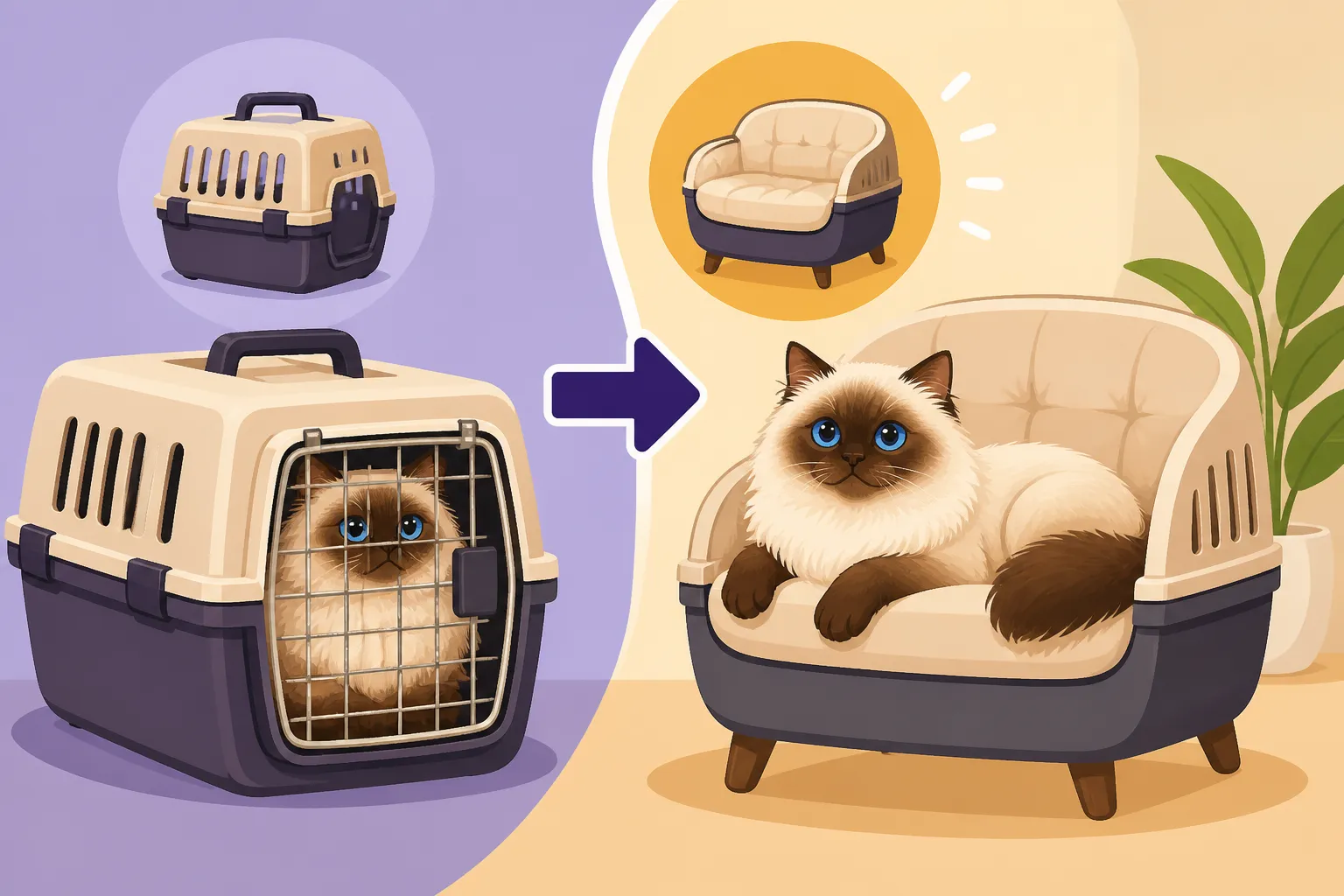
The moment that carrier comes out from storage, many Himalayan owners feel a familiar pang of dread. Our lovely, placid cats often transform into stressed, yowling bundles of fur, making vet visits or any travel a truly harrowing experience for everyone involved. This guide is all about transforming that scary "cat box" into a cozy, familiar "chair" that your Himalayan will actually choose to relax in, making future outings far less traumatic.
The Himalayan's Unique Relationship with Carriers
Let's be honest, for many cats, a carrier is a symbol of unpleasantness. It usually means a trip to the vet, a loud car ride, or some other disruption to their carefully curated routine. For a Himalayan, however, this aversion can be amplified due to several breed-specific traits that make traditional carriers less than ideal and stressful experiences more profound.
Why Carriers Are Often Stressful for Himalayans
First and foremost, our beautiful Himalayans are creatures of comfort and routine. They thrive on predictability, preferring their designated cozy spots and a quiet environment. Why a Himalayan Runs on Its Own Timetable explains just how much routine matters to these cats. A carrier, by its very nature, represents an abrupt break from this cherished predictability. It's a small, enclosed space that often feels alien and perhaps even threatening, especially if it only appears when something unsettling is about to happen.
Beyond the psychological aspect, there are physical considerations unique to Himalayans. Their luxurious, dense coats mean they overheat quickly, particularly in enclosed spaces with poor ventilation. Combine this with their often-present brachycephalic (flat-faced) respiratory challenges, and a carrier can quickly become uncomfortably warm and even compromise their breathing. Imagine being cooped up in a stuffy box when you already snore louder than some humans! Why a Himalayan Snores Louder Than Its Siamese Ancestors sheds more light on their unique breathing. The small openings in many carriers simply don't provide enough airflow for a cat that struggles to cool itself efficiently.
The Impact of Routine and Temperament
Himalayans, as part of their generally calm and affectionate temperament, are often perceived as less resilient to change than some other breeds. While they are wonderfully adaptable once settled, unexpected events or changes to their environment can cause significant stress. A carrier appearing out of the blue, even if it's just for a minute, can signal impending upheaval. You might see subtle signs of distress that are easy to miss because Why a Himalayan Hides Illness Behind an Expressionless Face. They might flatten their ears slightly, hold their tail low, or simply disappear the moment the carrier is sighted.
This makes their initial experiences with the carrier absolutely critical. If their first few encounters are negative – loud, jarring car rides or unpleasant vet visits – they will quickly associate the carrier with these stressful events. This negative conditioning is powerful and can be incredibly difficult to undo. Many owners fall into the trap of only bringing out the carrier when it's strictly necessary, inadvertently reinforcing this negative association every single time. We've all been there, chasing a frantic cat around the house, trying to coax them into the dreaded box, only to feel awful about it afterward.
Shifting Perception: From Dreaded Box to Cozy Nook
The key to turning the tide of carrier aversion is to fundamentally change your Himalayan's perception of it. We want it to be a place of safety, comfort, and positive associations, not a harbinger of doom. This requires patience, consistency, and a little bit of creative thinking.
The Power of Positive Association
The goal is to make the carrier a neutral, or even positive, part of your cat's everyday environment. This is achieved through a process called classical conditioning. Think of it like this: if every time the carrier appears, something wonderful happens (treats, playtime, cuddles), your Himalayan will start to associate the carrier with those good things. Conversely, if it only appears for bad things, the association will be negative.
Start by leaving the carrier out in a visible, easily accessible spot in your home, not tucked away in the closet until the last minute. This familiarizes your cat with its presence. Make sure the door is always open and secured so it doesn't accidentally swing shut and startle them. Placing it in a quiet corner of the living room or bedroom, perhaps near their favorite sunny spot, is ideal. Remember that Why a Himalayan Claims One Chair and Keeps It and they often appreciate having their own dedicated spaces.
Choosing the Right Carrier for Your Himalayan
Before you even begin the training, make sure you have the right carrier. For a Himalayan, this isn't just about size; it's about comfort and safety. Which Carrier Gives a Himalayan Enough Air is paramount. A carrier should be roomy enough for your cat to stand up, turn around comfortably, and lie down fully stretched out. This is especially important for our cobby Himalayans with their dense coats. Look for carriers with ample ventilation on multiple sides – mesh windows, not just a few small holes.
Consider a carrier that offers multiple entry points. Top-loading carriers can be a godsend for a cat that's hesitant to walk into a front-opening one. Soft-sided carriers, often found on Amazon, can be less intimidating than hard plastic ones for home use, though hard-sided ones are usually better for airline travel or maximum safety in a car. Some popular choices offer removable fleece bedding, which can be easily washed and replaced, keeping the space fresh and inviting.
| Feature | Ideal for Himalayan | Why It Matters |
|---|---|---|
| Size | Large enough to stand, turn, and stretch | Prevents overheating, reduces feelings of confinement, accommodates cobby build |
| Ventilation | Mesh on multiple sides (at least 3) | Crucial for airflow, helps prevent overheating and respiratory distress |
| Entry Points | Top-loading and front-opening options | Offers flexibility for getting hesitant cats in, less stressful for vets to access |
| Material | Sturdy plastic or durable soft-sided fabric | Safety for travel, soft sides can be less intimidating at home |
| Bedding | Removable, washable, soft fleece pad | Comfort, absorbs accidents, familiar scent can be added, easy to clean |
| Security | Secure latches, seatbelt loops, crash-tested if possible | Ensures safety during travel, prevents escape |
Step-by-Step: Making the Carrier a Himalayan's Haven
This isn't a quick fix; it's a gradual process that requires patience and consistency. The goal is to build a positive history with the carrier, brick by delicious, comfortable brick.
Phase 1: Passive Acceptance and Exploration
- Introduce the Carrier: Place the carrier in a high-traffic, yet quiet, area of your home. Leave the door wide open. Don't force your cat into it.
- Make it Comfy: Line the carrier with a soft blanket or towel that smells like home and your cat. An old t-shirt of yours can be a great option. Sprinkle some irresistible treats (like freeze-dried chicken, which you can find on Amazon) inside the carrier, just near the entrance at first. Don't put them so deep that your cat has to fully enter to get them.
- Catnip and Toys: If your Himalayan responds to catnip, a pinch inside the carrier can encourage exploration. Small, favorite toys can also be placed inside.
- Regular Reinforcement: Every time you walk by, toss a treat into the carrier. Do this multiple times a day, every day. The idea is for your cat to discover these goodies on their own, associating the carrier with pleasant surprises. Your cat will soon start poking their head in, then a paw, and eventually, their whole body.
Phase 2: Encouraging Entry and Short Stays
- Deeper Treats: Once your Himalayan is routinely entering the carrier to retrieve treats, start placing them further back inside, encouraging them to fully enter and turn around.
- Mealtime Inside: If your cat is comfortable, try placing their meal dish just inside the carrier, or even fully inside. This creates a very strong positive association. Always leave the door open.
- Positive Attention: When your cat is inside the carrier, offer gentle praise, soft petting (if they enjoy it), or a favorite toy. Keep these sessions short and positive. Don't close the door yet.
- Naptime Haven: Himalayans love to nap! If you notice your cat starting to nap in the carrier, that's a huge win. The carrier is now a preferred spot. How Little a Himalayan Asks For in a Day but a safe spot to nap is high on the list!
Phase 3: Closing the Door and Short Periods of Confinement
- Short Closures: Once your Himalayan is comfortable eating and napping in the carrier with the door open, try gently closing the door for just a few seconds while they are inside. Immediately open it, offer a treat, and praise them.
- Gradual Increase: Slowly increase the duration of the door closure. Go from seconds to a minute, then five minutes, always offering a treat and praise when the door reopens. Stay nearby the entire time.
- Moving the Carrier: Once your cat tolerates being confined for a few minutes, try lifting the carrier a short distance (e.g., across the room) and setting it down again. Immediately open the door and reward.
- Short Rides: Progress to taking the carrier for very short car rides – perhaps just backing out of the driveway and pulling back in. Keep it calm, offer treats, and then bring them back inside immediately. Make sure the carrier is secured in the car to prevent jostling.
Phase 4: Maintaining the Carrier as a "Chair"
Even after your Himalayan is comfortable with the carrier, it's crucial to maintain its positive association. Don't just put it away until the next vet visit.
- Regular "Chair" Time: Keep the carrier out as a regular piece of furniture. Continue to toss treats inside occasionally. Let your cat nap in it if they choose.
- Random Positive Experiences: Occasionally, use the carrier for a "fake" vet visit. Put your cat in, carry them to the car, give them a treat, and bring them right back inside. This prevents the carrier from only being associated with actual vet visits.
- Familiar Scents: Always have a familiar blanket or towel inside the carrier. The scent of home is incredibly comforting for cats. If you need to wash it, replace it quickly with another familiar item.
- Minimize Stress During Actual Trips: When you do need to use the carrier for a real trip, try to minimize other stressors. Keep the car ride as quiet and smooth as possible. You might even use a calming spray inside the carrier an hour beforehand – many such products are available on Amazon. Keeping a Himalayan Calm When It Panics is a crucial skill for any owner.
- Be Prepared for the Vet: When you get to the vet, resist the urge to immediately pull your cat out of the carrier. Often, vets prefer to examine cats in the carrier initially, or let them emerge on their own terms. Keeping them secure in the carrier can actually help them feel safer in a strange environment. How a Himalayan Behaves in a Vet Waiting Room can vary, but a familiar carrier can make a world of difference.
By consistently reinforcing the carrier as a safe, comfortable, and even rewarding space, you'll find that future trips become much less stressful for both you and your beloved Himalayan. It takes time, yes, but the peace of mind – and a less frantic cat – is absolutely worth it.
Disclaimer
This article is for general informational purposes only and does not constitute professional advice. Laws, prices and regulations vary by location and change over time. Consult a qualified professional for guidance on your specific situation.