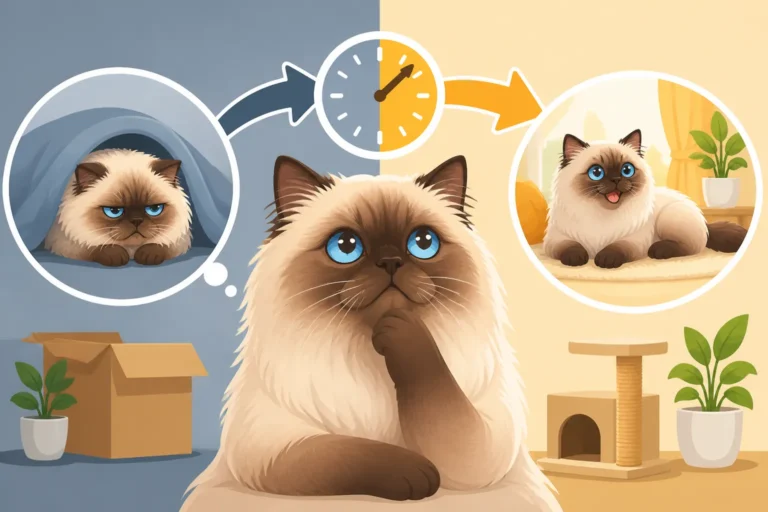
Keeping a Himalayan Calm When It Panics
When your beautiful Himalayan suddenly bolts under the sofa, wide-eyed and trembling, it's heartbreaking. You know something has deeply unsettled them, and that helpless feeling of not knowing how to bring them back to their calm, purring self can be incredibly frustrating. These moments of intense fear aren't just distressing for your beloved feline; they highlight a deep vulnerability that requires understanding and a gentle, informed response. This guide is all about understanding what makes these gentle giants panic and, more importantly, how you can lovingly guide them back to a state of peace and security, ensuring their well-being and strengthening your bond.
Understanding the Himalayan's Unique Sensitivity to Panic
Himalayan cats, with their stunning blue eyes and luxurious coats, are often seen as the epitome of serene, quiet companionship. And while they certainly have a reputation for being laid-back lap cats, it's a common misconception that their calm demeanor means they're impervious to stress or fear. In fact, Himalayans possess a unique blend of sensitivities inherited from their parent breeds, the Persian and the Siamese, which can make them surprisingly prone to panic when their world is disrupted.
Their Persian lineage imbues them with a love for routine, stability, and a tranquil environment. Persians are creatures of habit, often preferring a predictable daily schedule and a quiet household where they can nap in peace. Any sudden deviation from this norm can be profoundly unsettling. Imagine a quiet afternoon suddenly interrupted by unexpected loud noises or a stranger entering their territory – what might be a minor inconvenience for another cat can feel like a genuine threat to a Himalayan. Their deep sense of security is easily shaken, leading to anxiety.
On the other hand, the Siamese influence, while often toned down in volume, brings a keen intelligence and a certain emotional depth. While a Himalayan is certainly quieter than its Siamese ancestors—you won't often hear the piercing yowls associated with a purebred Siamese—they still possess a heightened awareness of their surroundings and the emotions within their human family. This means they can pick up on subtle changes in your mood, household tension, or even atmospheric shifts that might signal impending disruption. They may not vocalize their anxiety with the same intensity as a Siamese, but their internal alarm bells can ring just as loudly. This combination of a need for predictable tranquility and an acute sensitivity makes understanding their triggers paramount. How Much More a Himalayan Talks Than a Persian explores their vocalizations further, but remember that silence in a Himalayan can often speak volumes.
The Impact of Routine and Predictability
For a Himalayan, routine isn't just a preference; it's a foundational pillar of their emotional well-being. These cats thrive on knowing what to expect, when to expect it, and where their comfort zones are. A consistent feeding schedule, regular grooming times, predictable play sessions, and even the established placement of their favorite sleeping spots all contribute to a sense of order in their world. When this order is suddenly broken, it can dismantle their sense of safety.
Think of it from their perspective: if dinner is usually at 6 PM, and suddenly it's delayed or served in a different spot, it's not just a minor inconvenience; it can be perceived as a breakdown in the system they rely on. This uncertainty can escalate into anxiety, and if multiple routines are disrupted, that anxiety can tip over into outright panic. New furniture, moving litter boxes, or even just rearranging a room significantly can be disorienting. How Long a Himalayan Takes to Accept a Change delves into their adaptability, or lack thereof, when faced with alterations to their environment. Their placid exterior often hides a deeply rooted need for things to simply stay the same.
Physical Comfort and Environmental Stability
Beyond routine, the physical environment plays an enormous role in a Himalayan's emotional state. Their thick, long Persian coats mean they are highly sensitive to temperature changes and can overheat quickly. A room that feels perfectly comfortable to you might be stifling for them, leading to physical distress that can manifest as anxiety or even panic if they feel trapped. Keeping their core temperature stable is crucial for their overall comfort.
Furthermore, their brachycephalic (flat) faces can sometimes lead to breathing difficulties, especially when stressed. A Himalayan who is struggling to breathe due to excitement, fear, or heat will naturally panic more easily. Ensuring good air circulation and a consistently cool environment is vital. Their cobby build and relatively short legs also mean they aren't agile jumpers or climbers like some other breeds, preferring to stay on the floor or low furniture. If they feel unable to escape a perceived threat because they can't easily reach a safe perch, their panic can intensify. Why a Himalayan Stays on the Floor and the Sofa explains their preference for lower elevations.
Identifying Common Triggers for Panic in Himalayans
Understanding what specifically can set off a Himalayan's panic response is the first step in preventing it. These cats, while generally calm, can be startled by a surprising array of everyday occurrences. It’s not always the obvious loud noises; sometimes, it’s a subtle shift that throws them off balance.
One of the most frequent culprits is sudden, loud noises. This could be anything from a dropped pan in the kitchen, a sudden clap of thunder during a storm, fireworks going off unexpectedly, or even a door slamming shut. Unlike some cats who might just flinch and then resume their activities, a Himalayan can be deeply affected. Their sensitive hearing, combined with their preference for quiet, can make these abrupt sounds feel like an invasion of their peaceful world, triggering an instant flight response.
Another significant trigger is the presence of unfamiliar people or animals. Himalayans often bond strongly with their core family and can be quite reserved around strangers. A new visitor, especially one who is loud or moves quickly, can easily send them scurrying for cover. Similarly, introducing a new pet, even another cat, requires immense patience and a very gradual approach. Their established territory feels threatened, and this perceived intrusion can lead to intense anxiety and panic. This is why Bringing a Second Cat Home to a Himalayan emphasizes slow introductions.
Changes to Their Environment or Routine
As we've touched upon, Himalayans are creatures of habit. Any significant change to their environment or daily routine can be a major source of stress. This doesn't just mean moving house, which is a monumental event for any cat, but also smaller, seemingly innocuous changes. A new piece of furniture, redecorating a room, or even simply moving their food bowl to a different spot can be enough to unsettle them. They rely on their spatial memory and the predictability of their surroundings.
Furthermore, disruptions to their daily schedule, such as changes in feeding times, altered play routines, or even your own work schedule shifting, can cause anxiety. If you're suddenly gone for longer periods or at different times, your Himalayan might feel a sense of abandonment or confusion, escalating their emotional distress. They are very tuned into your presence and your daily rhythms. Why a Himalayan Minds Its Routine More Than Its Address truly highlights this deep need for consistency.
Unpleasant or Painful Experiences
Any experience that causes discomfort or pain can understandably trigger a panic response in a Himalayan. Grooming, while essential for their long coat, can be a particularly stressful event if not introduced gently and consistently from a young age. Matting is a serious issue for them, and if an owner tries to yank out a mat or if a groomer is rough, the cat can become fearful of the comb. Why a Himalayan That Fights Grooming Ends Up Sedated illustrates the extreme measures sometimes needed when grooming becomes too traumatic. Even things like nail trims or administering medication can be triggers if handled poorly.
Beyond routine care, health issues can also manifest as panic. A cat in pain, even subtle pain, might become withdrawn, aggressive, or suddenly panicked. If your Himalayan is suddenly acting fearful without an obvious external trigger, it's always wise to consider a veterinary check-up. They might be hiding an underlying discomfort or illness. For example, Why a Himalayan Hides Illness Behind an Expressionless Face is a crucial read to understand their stoic nature in the face of illness. Even something as simple as bladder discomfort or dental pain can be a major source of internal stress that spills over into outward panic.
| Panic Behavior | Potential Triggers | Immediate Action | Long-Term Strategy |
|---|---|---|---|
| Hiding | Loud noises, strangers, new pets | Provide safe retreat, quiet space | Introduce changes slowly, desensitization |
| Trembling | Fear, cold, pain | Warm blanket, calm voice, vet check | Maintain stable environment, regular vet visits |
| Dilated pupils | Acute fear, stress | Reduce sensory input, speak softly | Identify and minimize triggers |
| Excessive grooming/licking | Stress, anxiety | Gentle distraction, calm presence | Enrichment, Feliway diffusers |
| Urinating/Defecating outside box | Extreme stress, health issue | Clean thoroughly, vet check | Ensure clean, accessible litter, reduce stress |
| Aggression (hissing, swatting) | Feeling trapped, overstimulated | Give space, avoid confrontation | Build trust, positive reinforcement |
| Panting/Open mouth breathing | Overheating, severe stress, pain | Cool environment, vet check immediately | Ensure good air circulation, monitor for illness |
Creating a Safe and Predictable Environment
The best defense against a panicked Himalayan is a well-designed offense: creating an environment that minimizes stress and maximizes their sense of security. This means not just reacting when they're scared, but proactively shaping their world to be a sanctuary.
One of the most fundamental aspects is providing dedicated safe spaces. Every Himalayan needs a retreat, a place where they can feel completely unbothered and untouchable. This could be a cat cave, a high-sided bed tucked away in a quiet corner, a carrier left open with a soft blanket inside, or even just a designated spot under a piece of furniture. The key is that this space belongs to them and is respected by everyone in the household. It's not a place for punishment, nor is it a place for you to reach in and grab them without warning. When they are in their safe space, they are left alone to decompress. Having multiple such spots throughout the house can be even better, giving them options depending on where the perceived threat might be. Making One Room Comfortable for a Himalayan Left Alone gives excellent tips on setting up such sanctuaries.
Beyond safe havens, establishing a consistent daily routine is paramount. Himalayans thrive on predictability. Try to feed them at the same times each day, engage in play sessions around the same hours, and maintain a consistent grooming schedule. Even small rituals, like how you greet them in the morning or the specific sequence of cuddles before bedtime, can become comforting anchors in their day. When unavoidable changes arise, try to introduce them gradually, giving your cat time to adjust.
Enrichment and Gentle Stimulation
While Himalayans are known for their calm demeanor, they still require mental and physical enrichment to prevent boredom and pent-up energy from leading to anxiety. However, their enrichment needs differ significantly from more active breeds. They won't typically scale tall cat trees or engage in high-octane chase games for extended periods. Instead, focus on low-impact, stimulating activities.
Interactive toys that mimic prey movement, like wand toys, can be great for short bursts of play. Remember that their flat faces can make eating from certain puzzle feeders difficult, so opt for wide, shallow designs if you're using them. Also, consider passive enrichment like a sunny windowsill for bird watching (from indoors, of course, as Himalayans are strictly indoor cats) or a comfortable perch near a fish tank. Gentle interaction from you, such as quiet petting and soft murmurs, is often the most cherished form of enrichment for these affectionate cats. Which Toys Get a Himalayan Off the Sofa offers some great ideas to pique their interest.
Managing Sensory Input
Himalayans are highly sensitive to their surroundings, so managing sensory input is crucial for their well-being. This means controlling noise levels, light, and even scents in their environment. Keep household noises to a minimum, especially during their prime resting hours. If you anticipate loud events like parties or construction, provide extra safe spaces and consider using a white noise machine or calming music in their designated retreat area.
Chemical diffusers, such as those containing synthetic feline pheromones (like Feliway), can be incredibly helpful. These products mimic the natural calming pheromones cats use to mark their territory as safe and secure. Plugged into an outlet in rooms where your Himalayan spends a lot of time, they can create an overarching sense of calm and reduce general anxiety. They can be a godsend during periods of stress, like a house move or the introduction of a new pet. You can often find these types of diffusers easily on platforms like Amazon.
Immediate Steps to Calm a Panicked Himalayan
When your Himalayan is in the throes of a panic attack, your immediate response can either escalate their fear or begin to bring them back to a state of calm. It's crucial to act deliberately, gently, and without adding to their distress.
First and foremost, remain calm yourself. Cats are incredibly attuned to human emotions, and if you become anxious or frantic, it will only reinforce their fear. Speak in a soft, soothing voice, or better yet, don't speak at all initially. Loud voices, even if well-intentioned, can be perceived as an additional threat. Move slowly and deliberately, avoiding sudden movements that might startle them further. Your calm demeanor acts as a signal to them that while something might be scary, you are not part of the threat.
Next, create immediate distance from the trigger, if possible. If the panic is due to a loud noise, gently move them to a quieter room. If it's a new person, ask the person to give the cat space or, again, move your cat to a safe, quiet room away from the commotion. Never force them out of a hiding spot. If they've bolted under a bed or behind a sofa, respect their need for cover. This is their chosen safety zone. Instead of reaching for them, try to create a barrier between them and the stressor.
Gentle Reassurance and Space
Once the immediate threat is removed or minimized, the most effective approach is often a combination of gentle reassurance and providing space. Sit quietly nearby, perhaps a few feet away from their hiding spot, and speak in a very soft, low voice. You can try calling their name or making comforting sounds. Don't stare directly at them, as this can be perceived as threatening; instead, use soft blinks and keep your gaze slightly averted.
Offer a favorite blanket or a piece of your clothing with your scent on it, placing it near their hiding spot without forcing it upon them. Sometimes, simply knowing you are there, present but not intrusive, is enough to start the calming process. Avoid trying to pick them up or cuddle them when they are actively panicking, as this can feel like restraint and intensify their fear. Allow them to come out of hiding on their own terms, when they feel safe enough. Why a Himalayan Sits Against You Rather Than On You underscores their preference for subtle closeness rather than overwhelming physical contact, which applies even more so during distress.
Using Calming Aids in the Moment
In acute panic situations, certain calming aids can be incredibly helpful. As mentioned, synthetic feline pheromone sprays can be used directly on a blanket or carrier (never directly on the cat) to provide an immediate sense of security. Always allow a few minutes for the spray to dry and for the alcohol carrier to dissipate before placing it near your cat. These sprays can be particularly useful if you need to transport your panicked cat to a quieter room or to the vet. Products from brands like Feliway are often available and widely recommended by veterinarians.
Another option can be specific calming treats or supplements. Many brands offer treats containing ingredients like L-Tryptophan or Zylkene (a milk protein derivative), which can have a mild calming effect. While these are usually more effective for general anxiety management rather than acute panic, having them on hand for situations where you anticipate stress (like a vet visit) can be beneficial. Always discuss any supplements with your veterinarian before introducing them, especially if your cat has other health conditions. A little trick is to have a stash of these in a cupboard, ready for purchase at your favorite online pet supply retailer, like Amazon, should the need arise.
Finally, ensure they have access to their basic needs – a fresh, low-sided bowl of water and their litter box – in a quiet location. Sometimes, a cat will panic and then emerge feeling thirsty or needing to use the litter box, and having these readily available in a calm spot can further help them feel secure as they recover. Over time, with consistent management of their environment and careful responses during moments of panic, your Himalayan will learn to trust that you are their safe harbor, always ready to guide them back to peace.
Disclaimer
This article is for general informational purposes only and does not constitute professional advice. Laws, prices and regulations vary by location and change over time. Consult a qualified professional for guidance on your specific situation.