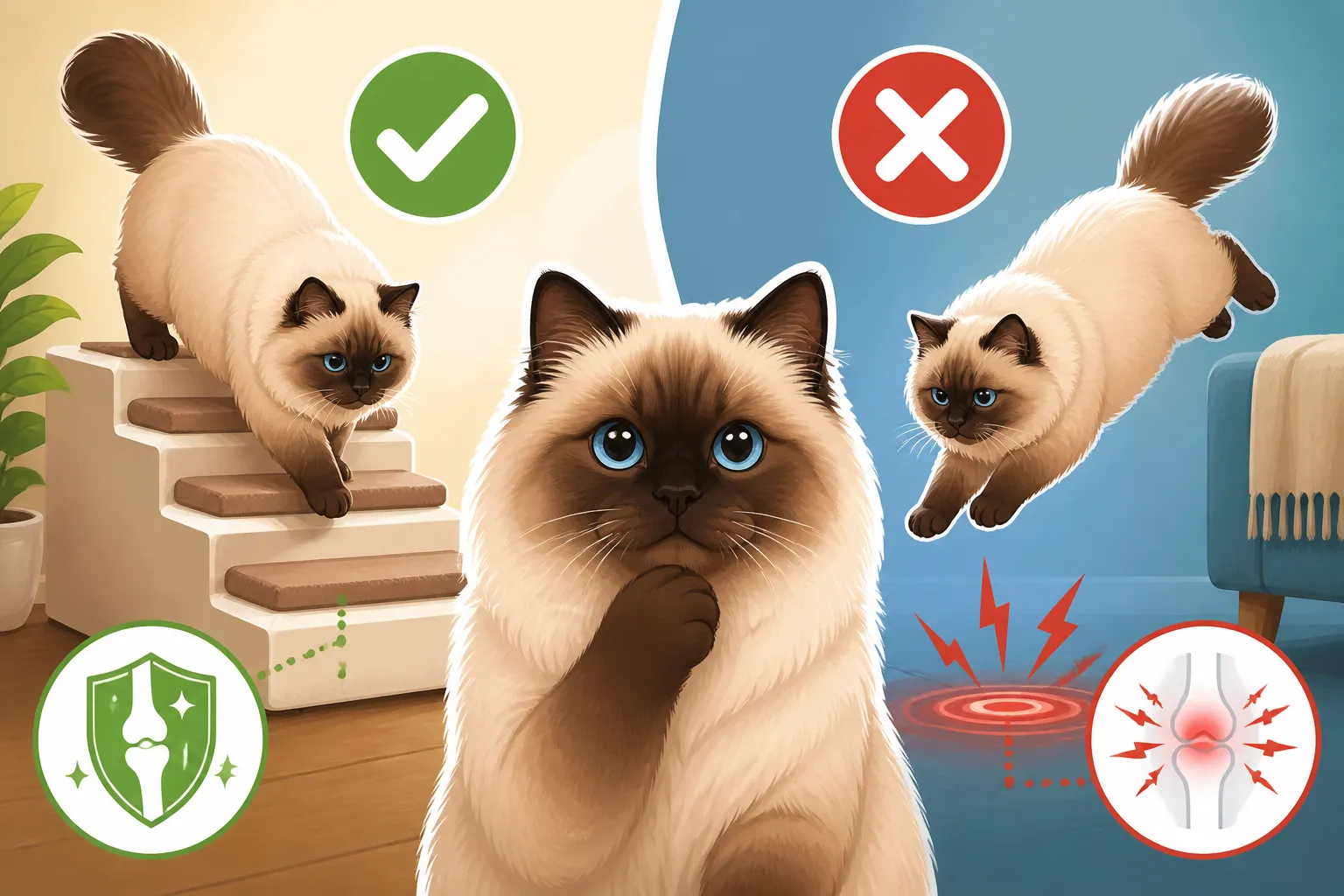
Why a Himalayan Uses Steps Rather Than Jump
Many Himalayan cat parents notice their beautiful felines prefer a gradual incline over a dramatic leap, opting for steps or even a slightly lower piece of furniture instead of effortlessly springing onto higher surfaces. It can be a little puzzling, especially if you're used to more agile cat breeds. This guide will delve into the fascinating reasons behind your Himalayan's unique approach to vertical movement, rooted in their specific physical traits and inherent behaviors, and offer practical ways to ensure their comfort and safety around your home.
The Himalayan Physique: Built for the Ground, Not the Air
Himalayans are simply not built like your average athletic, tree-climbing domestic cat. Their unique body structure, largely inherited from their Persian lineage, predisposes them to a more grounded existence. It's not a flaw; it's just who they are, and it profoundly influences how they navigate their world, especially when it comes to getting up high.
The Cobby Body and Short Legs
One of the most defining characteristics of a Himalayan is their "cobby" body type. This means they are compact, well-rounded, and rather sturdy, with a broad chest and a substantial bone structure. Combine this with their notably short, thick legs, and you have a feline athlete built more for stability than for soaring. Imagine trying to perform a high jump with shorter, stockier legs – it's just not as efficient or comfortable. Their center of gravity is lower, making them excellent at being a fluffy, warm lap ornament, but less adept at explosive vertical leaps. This physical reality is often a surprise to new owners who expect typical cat agility. Why a Himalayan Is Described as Cobby
They simply don't have the same spring in their step as, say, a Siamese or even a more moderately built domestic shorthair. Their musculature and bone structure are designed for a more horizontal plane of movement. While they can and do jump, especially when they're younger and more energetic, it's rarely a graceful, effortless arc. Instead, you'll often see them gather themselves, making a more deliberate, almost ponderous, effort. This physical predisposition often leads them to seek out easier, less strenuous alternatives, like using furniture as stepping stones. It’s not laziness; it’s an intelligent adaptation to their specific physical design.
The Impact of a Dense Coat and Weight
Adding to their cobby build is the luxurious, dense double coat they possess. While incredibly beautiful, this long, thick fur adds bulk and a bit of extra weight, which can make powerful jumps more challenging. It’s like wearing a heavy winter coat while trying to sprint – it’s certainly doable, but it requires more effort and can lead to overheating faster. This is particularly true for older Himalayans or those who are perhaps a little overweight, which can happen easily given their less active nature. What a Himalayan's Cobby Frame Should Weigh
The sheer volume of their fur, especially around their ruff and britches, can also slightly impede their range of motion, making fluid, agile movements just a touch more difficult. It's a contributing factor to why they prefer a steady ascent over a sudden jump, where a miscalculation could lead to an awkward landing or an entangled paw. They instinctively understand their own physical limitations and choose the path of least resistance, which is often much safer for their joints and overall comfort in the long run. Regular grooming is important not just for aesthetics, but also for keeping their coat from adding unnecessary drag.
A Measured Pace: Himalayan Energy Levels and Play Styles
It's easy to look at a Himalayan and assume they're just lazy, but it's more nuanced than that. Their energy levels and preferred play styles are distinctly different from many other breeds, and these factors play a significant role in their aversion to constant jumping. They aren't wired for high-octane acrobatics, but rather for quiet companionship and bursts of playful engagement.
Built for Comfort, Not Speed
Unlike their Siamese ancestors who were renowned for their boundless energy and athletic prowess, Himalayans inherited a good deal of the Persian's placid, calm temperament. This means they are generally less inclined to engage in frantic, vertical play. You're far more likely to find your Himalayan lounging on a comfortable sofa cushion, observing the world with serene dignity, than scaling your bookshelves. How Many Hours a Day a Himalayan Is Actually Awake
Their idea of a good time often involves a gentle batting at a toy, a slow stalk across the floor, or perhaps a brief, playful wrestle with a favorite toy mouse. High-flying leaps and daring acrobatics just aren't usually on their agenda. This isn't to say they never jump; they certainly can and will, especially if motivated by food or a particularly enticing feathered wand. But it's usually a calculated move, not an impulsive burst of energy. Their play is often more observational, preferring to watch a toy dangle rather than chase it relentlessly.
Quick to Tire and Overheat
Another crucial factor is their tendency to tire relatively quickly and, more importantly, to overheat. With their dense Persian coat and sometimes a more brachycephalic (flat-faced) structure, Himalayans are not efficient at regulating their body temperature. Intense physical exertion, like repeated jumping, can quickly lead to heavy panting and discomfort. They learn early on to conserve their energy and avoid activities that make them overly warm or out of breath. Why a Himalayan Overheats Twice as Fast as a Siamese
You might notice that a short play session, even just a few minutes of chasing a laser pointer, can leave them sprawled out, recovering. This inherent physiological limit means they'll naturally opt for less strenuous ways to get from point A to point B, especially if "point B" is a little higher up. Providing ramps or steps is not just a convenience for them; it's often a necessary accommodation for their physical well-being. It’s a clear signal from them that they prefer to take it easy.
Crafting a Home for the Grounded Himalayan
Understanding your Himalayan's physical and behavioral inclinations means you can create a home environment that not only respects their nature but actively supports their comfort and well-being. It's about meeting them where they are, rather than expecting them to conform to the typical image of an agile cat.
Strategic Placement of Steps and Ramps
One of the simplest yet most effective ways to accommodate your Himalayan is to strategically place steps or ramps around your home. Think about all the places your cat might want to access: the sofa, your bed, a favorite armchair, or a sunny windowsill. Instead of forcing them to jump up and down, provide them with a gentle incline. Pet stairs, readily available on platforms like Amazon, are perfect for this. Look for sturdy, wide steps with a non-slip surface, as their cobby bodies appreciate stability.
It’s not just about getting up; it’s about getting down safely too. Repeated jarring landings from jumps can put strain on their joints over time, especially their short legs and cobby spines. Steps mitigate this impact, making vertical movement a much smoother experience. This is particularly important as they age, helping to prevent potential arthritis or discomfort down the line. This is precisely Why a Himalayan Uses Steps Rather Than Jump, because it's a gentler way to navigate their world.
Low-Level Furniture and Accessible Perches
Consider your furniture arrangement through your Himalayan's eyes. Are there enough comfortable, low-level spots for them to relax and observe? A low-profile cat tree with wide, easily accessible platforms is often preferred over tall, multi-level structures designed for more acrobatic breeds. They still enjoy a good vantage point, but they want one they can reach with minimal effort. Why a Himalayan's Cat Tree Should Be Waist High at Most
Think about investing in cat beds or small pet ottomans that sit just below window height, allowing them to enjoy the view without needing to jump onto a narrow sill. Even a sturdy, low side table can become a prized resting spot if it's easy to access. The goal is to eliminate unnecessary jumping, transforming potential obstacles into comfortable, inviting spaces they'll adore. Making these simple changes shows how much you value their comfort.
Safe and Stable Resting Spots
Given their preference for solid ground and stable surfaces, ensuring their favorite resting spots are secure is paramount. A wobbly chair or a precarious stack of cushions won't appeal to a Himalayan looking for a tranquil nap spot. They want to feel safe and supported, especially when they're settling in for one of their many snoozes. This attention to stability extends to their feeding and watering areas too.
| Feature | Benefit for Himalayan Cats |
|---|---|
| Pet Steps/Ramps | Reduces strain on joints, easier access to furniture and beds |
| Low Cat Trees | Safe, accessible vantage points, accommodates cobby build |
| Shallow/Elevated Bowls | Easier to eat/drink with a flat face, less mess in their ruff |
| Wide Litter Boxes | Easy entry/exit for short legs, reduces coat contamination |
| Cooling Mats/Beds | Helps regulate temperature due to dense coat, prevents overheating |
You can find excellent options for wide, stable pet bowls or elevated feeders that bring the food up to their face level, again reducing strain and making mealtime more comfortable. Many specialized cat product lines available on Amazon offer unique designs that cater to the particular needs of brachycephalic or cobby breeds. Remember, every little modification to your home that respects their unique physical makeup contributes to a happier, healthier Himalayan.
Beyond the Jump: Other Movement Peculiarities
While the preference for steps over jumps is a significant trait, a Himalayan's overall approach to movement extends to other aspects of their daily lives. Their cautious, deliberate nature influences how they interact with their environment, even when not dealing with vertical challenges.
Deliberate and Measured Movements
Unlike some cats that dart and weave through a room with lightning speed, a Himalayan tends to move with a more deliberate, almost regal pace. They are not prone to sudden, uncontrolled bursts of activity. When they decide to move from the sofa to their food bowl, it's usually a stately progression rather than a mad dash. This unhurried approach is part of their charm, reflecting their calm and composed temperament. How Often a Himalayan Notices Anything Has Changed
This deliberation isn't just about temperament; it's also a practical response to their body type and coat. Quick, sudden movements can sometimes lead to getting tangled in their own long fur or losing balance. By moving with purpose, they maintain better control and reduce the risk of mishaps. It’s a subtle but important adaptation that ensures their comfort and safety in a world not always designed for a long-haired, cobby cat. They value stability and predictability in their environment.
Indifference to Great Heights
While most cats possess an inherent desire to scale heights, often seeking out the highest points in a room, Himalayans tend to be more indifferent to extreme elevation. They appreciate a good perch, especially one that offers a view of their human companions or a sunny spot, but they rarely feel the urge to conquer the highest shelf or the top of a towering bookcase. Their preferred "high ground" is typically more modest – the back of a sofa, a sturdy armchair, or a specially designed cat perch that isn't too far off the ground.
This isn't to say they are afraid of heights; rather, the effort required to reach those extreme elevations simply doesn't outweigh the perceived benefit for them. Their energy is better spent on a gentle play session or a long nap in a sunbeam. This preference for lower, more easily accessible vantage points is another reason why steps and low-level furniture become so important in a Himalayan-friendly home. The Height a Himalayan Decides Is Not Worth It They just don't see the point in all that extra exertion.
Avoiding Precarious Situations
Due to their less agile nature and dense coat, Himalayans tend to be quite adept at self-preservation, often avoiding situations that might be precarious or require swift, complex movements. You won't often see them walking along narrow ledges or attempting risky jumps between furniture pieces. They inherently understand their own capabilities and limitations, choosing safety and comfort over daring feats.
This caution extends to their exploration habits. While curious, they are generally less adventurous than other breeds when it comes to exploring tight spaces or unstable structures. They prefer clear paths and reliable surfaces. This pragmatic approach to navigation is ultimately beneficial for their long-term health, as it reduces the likelihood of falls or injuries that could strain their joints or cause discomfort. Thinking about what your Himalayan truly needs from their environment will guide your choices in pet supplies, and browsing reliable retailers like Amazon can help you find products specifically designed for less agile cats, ensuring they have a safe and comfortable world to explore at their own pace.
Disclaimer
This article is for general informational purposes only and does not constitute professional advice. Laws, prices and regulations vary by location and change over time. Consult a qualified professional for guidance on your specific situation.