Which Feeders a Flat Faced Himalayan Can Physically Use
It's a common, heartbreaking sight for many of us who share our homes with those gorgeous, fluffy Himalayan cats: watching them struggle at their food bowl. Their beautiful, flat faces and short snouts, while undeniably endearing, present a very real challenge when it comes to simply eating a meal. They push food around, struggle to pick up kibble, get their ruffs absolutely soaked, and often end up with more food around the bowl than in them. This guide is all about finding the right feeding solutions, practical tips, and the best types of bowls and feeders that truly cater to the unique anatomy of your flat-faced Himalayan, making mealtime a comfortable and dignified experience for them.
Understanding the Unique Challenges of a Flat-Faced Himalayan's Anatomy
Before we dive into specific feeder recommendations, it's crucial to understand why Himalayans often have trouble with standard pet bowls. It’s not just about their cute, smushed faces; it’s about a combination of anatomical features that make eating a much more complex task for them than for, say, a domestic shorthair. These are precious creatures, and their comfort is paramount.
The Shortened Jaw and Crowded Teeth
One of the most significant challenges for a flat-faced Himalayan lies in their brachycephalic (flat-faced) skull structure. This means their upper and lower jaws are significantly shortened compared to other cat breeds. While their jaw itself is shorter, they still have the same number of teeth as any other cat. Imagine trying to fit all 30 teeth into a much smaller space! This leads to overcrowding, misaligned bites, and often, teeth that don't quite meet properly. This dental arrangement makes it difficult for them to grasp and hold onto kibble, and even wet food can be a messy affair as they attempt to scoop it up. Their lower canines might even protrude slightly, adding to the awkwardness of getting food into their mouth. We often talk about How Crowded a Himalayan's Lower Jaw Gets, and it's a very real concern that impacts their eating ability.
When their teeth are crowded, they might find it hard to crunch down on larger pieces of kibble, leading to frustration or simply giving up on eating certain foods. You might notice them using their tongue more than their teeth to try and push food into their mouth, or attempting to use their paws as a makeshift fork. This isn't laziness; it's a genuine physical limitation. They're doing their best with the mouth they have, and it’s up to us to provide tools that assist them rather than hinder them.
Whiskers and Facial Sensitivity
Another factor often overlooked is the sensitivity of a Himalayan's whiskers. Whiskers are incredibly important sensory organs, helping cats navigate, judge spaces, and even detect air currents. When a cat eats from a narrow, deep bowl, their whiskers are constantly pressed against the sides. This constant pressure, known as "whisker fatigue" or "whisker stress," can be incredibly uncomfortable and even painful for them. It’s like us having to wear a tight hat that constantly rubs our temples while we’re trying to enjoy a meal.
A Himalayan's face is already broad, meaning their whiskers spread out further than those of a cat with a more pointed muzzle. A typical cylindrical bowl can feel like a claustrophobic tunnel to them, forcing their whiskers to bend backwards. This discomfort can lead to them refusing to eat, or resorting to pawing food out of the bowl to eat it from the floor, simply to avoid the unpleasant sensation. They are not being picky; they are responding to a physical irritation. This sensitivity extends to their overall face, which can be prone to tear staining around their delicate blue eyes, and having their face constantly pushed into a deep bowl only exacerbates these issues, turning mealtime into a messy and uncomfortable ordeal.
Breathing Considerations
The flat-faced structure also means that Himalayans, like their Persian cousins, can have some degree of Brachycephalic Obstructive Airway Syndrome (BOAS). While the severity varies greatly from cat to cat, many Himalayans have somewhat narrowed nostrils and elongated soft palates. This makes breathing more of an effort, especially during activities like eating, which requires coordination of breathing and chewing.
When a Himalayan has to crouch low over a bowl and push their face into it, it can further restrict their already compromised airways. This isn't just about discomfort; it can lead to snorting, heavy breathing, or even mild panting during or immediately after eating. Imagine trying to eat your dinner while holding your breath or struggling to get enough air. It makes the experience stressful and can deter them from finishing their meal. A feeder that allows them to maintain a more open posture while eating can significantly alleviate this issue, making each breath a little easier and mealtime less taxing on their respiratory system.
Traditional Bowls and Why They Often Fail Himalayans
Most cat bowls on the market are designed with the average cat in mind, which, unfortunately, doesn't account for the specialized needs of a flat-faced breed like the Himalayan. These conventional designs, while perfectly fine for many cats, can actually create more problems than they solve for our long-haired, brachycephalic friends. Understanding these pitfalls is the first step toward finding a better solution.
Deep Bowls and Food Access Issues
The vast majority of cat food bowls you'll find are relatively deep. For a cat with a longer snout, this depth allows them to comfortably reach the food without their whiskers pressing against the sides. However, for a flat-faced Himalayan, a deep bowl is a genuine impediment. Their short muzzles mean they can't reach the bottom of a deep bowl without almost burying their entire face. This forces them into an awkward, head-down posture, which exacerbates breathing difficulties and presses their sensitive whiskers.
When they try to get to the food at the bottom or along the edges, they often end up pushing it around rather than scooping it into their mouth. This leads to a lot of wasted food and a frustrated feline. You might observe them attempting to eat from the side of their mouth, or even pawing individual pieces of kibble out onto the floor to eat them from a flatter surface. It’s not a preference for eating off the floor; it’s a necessity born out of the physical limitations imposed by the bowl's design. This struggle is precisely why we need to rethink the standard deep dish for our flat-faced companions.
Round Bowls and Food Spillage
Beyond depth, the typical round shape of most cat bowls also presents a problem for Himalayans. When a flat-faced cat tries to eat from a round bowl, their broad face and shortened jaw make it difficult to efficiently gather food. They often push kibble or wet food from the center towards the curved edges, where it becomes practically impossible to pick up. Imagine trying to eat soup with a fork from a perfectly round bowl – some of it just keeps slipping away. Why a Himalayan Pushes Food Out of a Round Bowl is a question many owners grapple with, and it comes down to the mechanics of their facial structure.
This constant pushing and struggling leads to significant food spillage. Bits of kibble end up scattered around the bowl, or worse, wet food smears the floor, creating a messy eating area and potentially attracting pests. It also means your Himalayan isn't getting all the nutrition they need, as a substantial portion of their meal might be left behind simply because they can't access it. This isn't just a minor inconvenience; it's a daily battle for them, and it can contribute to a less fulfilling mealtime experience and even incomplete nutrition if left unaddressed.
The Hygiene Headache: Food on Fur
Perhaps one of the most visible and frustrating consequences of traditional bowls for Himalayan owners is the mess on their cat's glorious long fur. Himalayans boast a magnificent, thick coat, especially around their neck and chest (their ruff). When they have to bury their face into a deep or round bowl, their fur inevitably gets wet, soiled with food particles, or both.
Wet food, in particular, becomes matted and stuck in the fur, creating a sticky, uncomfortable mess that is difficult for the cat to clean themselves and even harder for us to brush out without causing discomfort. This can lead to unsightly stains, especially on paler points, and can even contribute to skin irritation if left uncleaned. It also means more frequent grooming and cleaning of their faces, which, while essential, can be a time-consuming chore. Think about How Wet Food Ends Up in a Himalayan's Ruff – it’s a constant battle. This isn't just about aesthetics; it’s about maintaining their comfort and preventing potential skin issues underneath that thick coat.
Optimal Feeder Designs for Flat-Faced Himalayans
So, if traditional bowls are problematic, what does work? The good news is that there are several thoughtful feeder designs available today that directly address the unique needs of a flat-faced Himalayan. These designs aim to reduce strain on their neck and jaw, prevent whisker fatigue, improve breathing, and keep their beautiful fur cleaner.
Shallow, Wide Bowls: The Gold Standard
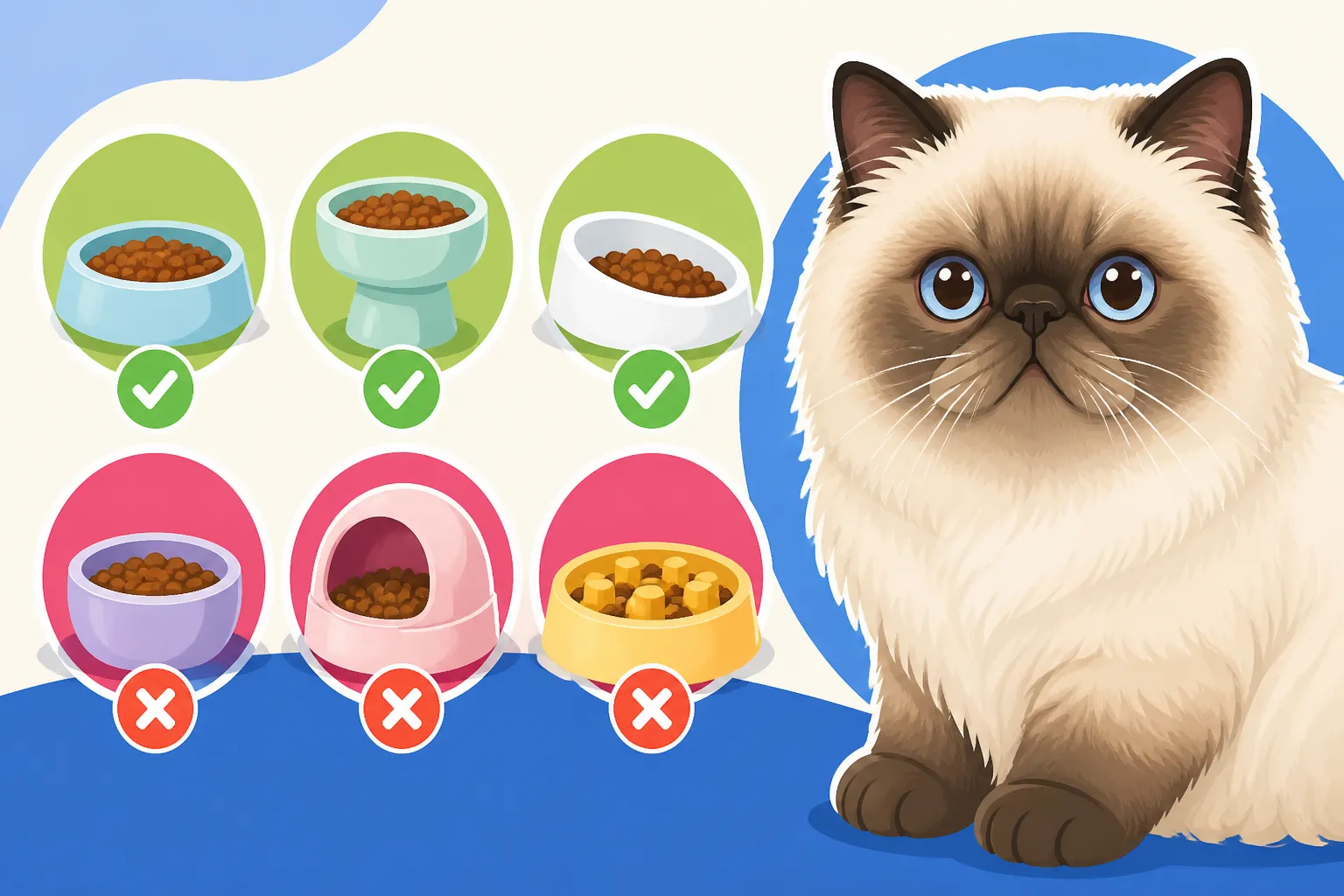
For most flat-faced Himalayans, the absolute best solution is a shallow, wide bowl. This design directly counters the issues of deep and narrow bowls. The shallow depth means your cat doesn't have to push their face too far down, making it easier to reach their food without undue strain on their neck or breathing. The wide diameter ensures that their sensitive whiskers don't touch the sides of the bowl while they're eating, eliminating whisker fatigue and promoting a more relaxed mealtime. Many owners find these bowls readily available on platforms like Amazon, often marketed specifically for brachycephalic breeds.
When evaluating shallow, wide bowls, look for ones that have a very low rim, almost like a plate with slightly raised edges. This allows your Himalayan to approach the food head-on, scoop it up with their tongue and teeth more effectively, and reduces the likelihood of food being pushed into unreachable corners. It's a simple change that makes a world of difference for their comfort and eating efficiency. This also ties into Which Bowl Shape a Flat Faced Himalayan Can Use, as the wide, open design is truly paramount.
Tilted and Angled Bowls for Easier Access
Another excellent option that complements the shallow and wide design is a tilted or angled bowl. These bowls are designed with one side lower than the other, creating a natural slope that funnels food towards the front. This angle makes it even easier for a flat-faced cat to access their food without having to crane their neck or bend down excessively. The tilt essentially brings the food closer to their mouth, requiring less effort on their part.
Tilted bowls often come with a raised base, which further enhances their ergonomic benefits. They can be particularly helpful for cats who tend to push food away from themselves or for those who have a harder time bending down due to age or joint issues. When combined with a shallow and wide design, a tilted bowl becomes a powerhouse for improving a Himalayan's eating experience, minimizing mess, and maximizing comfort. It’s about meeting them where they are, physically.
Raised Feeders: A Boon for Posture
Raised feeders, which elevate the food bowl a few inches off the ground, are another fantastic consideration for Himalayans. While the primary benefit often cited is improved digestion by promoting a more natural posture, for a flat-faced cat, the impact on their breathing and neck strain is even more pronounced. How High a Himalayan's Dish Should Sit for a Flat Face isn't just about comfort; it's about making breathing easier during meals.
When a bowl is raised, your Himalayan doesn't have to bend their neck as far down, which can significantly reduce pressure on their trachea and make breathing more comfortable. This is especially beneficial for cats who might exhibit heavy breathing or snorting during meals when eating from floor-level bowls. Raised feeders often come as a stand with two bowls (one for food, one for water), or as individual elevated dishes. Ensure the height is appropriate – too high, and it can be just as awkward; generally, a few inches off the ground is ideal, allowing them to eat with their head level with or slightly below their shoulders.
Material Matters: Choosing the Right Bowl for Health and Durability
Beyond the shape and elevation of the feeder, the material it's made from plays a crucial role in your Himalayan's health, hygiene, and the longevity of the bowl itself. Each material comes with its own set of pros and cons, and understanding them will help you make the best choice for your furry friend.
Ceramic: Heavy, Stable, and Easy to Clean
Ceramic bowls are a very popular choice among cat owners, and for good reason. Their primary advantage is their weight; ceramic bowls are heavy and sturdy, which means they are much less likely to tip over during a vigorous mealtime, especially if your Himalayan tends to push food around or eat with gusto. This stability is a huge plus, preventing spills and reducing frustration for both cat and owner.
Furthermore, ceramic is non-porous when properly glazed, making it exceptionally easy to clean. Food residue doesn't stick as readily, and bacteria are less likely to harbor in microscopic scratches, unlike some plastics. Most ceramic bowls are dishwasher-safe, offering a convenient and hygienic cleaning solution. However, there are a couple of downsides: ceramic can be brittle and prone to chipping or breaking if dropped. Chipped ceramic can harbor bacteria and also present sharp edges, so any damaged bowls should be replaced immediately. Despite this, for many, the stability and ease of cleaning make ceramic a top contender.
Stainless Steel: Durable, Hygienic, and Non-Porous
Stainless steel is arguably the most hygienic and durable material for pet bowls. It’s non-porous, meaning bacteria can't easily penetrate its surface, making it incredibly easy to clean and sterilize. Unlike plastic, stainless steel won't develop micro-scratches where bacteria can hide, nor will it leach chemicals into your cat's food or water. It's also resistant to rust and corrosion, ensuring a long lifespan.
The durability of stainless steel means it can withstand accidental drops and bumps without cracking or breaking, making it a robust option for even the most enthusiastic eaters. For owners concerned about "whisker acne" or general hygiene, stainless steel is often recommended by veterinarians. The main drawback for some cats is that the bowls can be lightweight and prone to sliding if not placed on a non-slip mat or within a sturdy stand. However, many stainless steel bowls now come with rubberized bottoms to prevent this. You'll find a wide variety of shallow, wide, or tilted stainless steel bowls on Amazon, often in sets with non-slip bases.
Plastic: Convenience vs. Potential Issues
Plastic bowls are often the most affordable and lightweight option, making them convenient for travel or as temporary solutions. However, they come with a significant number of caveats, especially for long-term daily use with a Himalayan. The biggest concern with plastic is its tendency to develop tiny scratches over time, even with regular washing. These microscopic crevices become breeding grounds for bacteria, which can be difficult to eliminate even with thorough cleaning. This bacterial buildup can contribute to chin acne in cats, an irritating skin condition that presents as small blackheads or pimples on their chin.
Beyond hygiene, some cats can have sensitivities to certain plastics, and there's a theoretical risk of chemicals leaching into food or water, especially if the plastic is not food-grade or is exposed to heat. While convenient, the potential health and hygiene risks, coupled with their lack of durability compared to ceramic or stainless steel, often make plastic bowls a less ideal choice for your Himalayan's everyday feeding. If you must use plastic, ensure it's food-grade, BPA-free, and replace it frequently, especially if you notice any scratches or discoloration.
Addressing Specific Feeding Scenarios
Understanding the right feeder design and material is a fantastic start, but mealtime for a Himalayan can involve a few more nuances. From the type of food they eat to how quickly they consume it, these factors also influence the best choice of feeder.
Wet Food vs. Dry Kibble Considerations
Whether your Himalayan primarily eats wet food, dry kibble, or a combination of both will certainly influence your feeder choice.
For Dry Kibble:
A shallow, wide bowl, ideally with a slight tilt or elevation, is paramount. Kibble tends to scatter easily, and a broad, low-rimmed surface helps keep it contained while allowing your Himalayan to scoop it up with their short jaw. The design helps prevent them from pushing pieces to the edges where they can't reach. It also makes it easier for them to manage Which Kibble a Himalayan's Shortened Jaw Can Lift, as they won't have to angle their head unnaturally. If your cat tends to be a fast eater, you might even consider a slow feeder designed for brachycephalic cats, which we'll discuss next.
For Wet Food:
Wet food presents a different set of challenges, mainly concerning mess. Because it's soft and sticky, it easily gets smeared onto a Himalayan's ruff and face, making hygiene a bigger concern. For wet food, a shallow, wide, and smooth surface is key. Ceramic or stainless steel are ideal as they are non-porous and incredibly easy to wipe clean after each meal. Tilted bowls are particularly beneficial here as they pool the wet food towards the front, making it more accessible and reducing the need for your cat to dig their face deep into the bowl. Having a dedicated wet food bowl that can be easily washed after every meal is a must to prevent bacterial growth and maintain cleanliness. Remember, even with the best bowls, some mess is inevitable with these beautiful long-haired cats, so be prepared for a quick post-meal face wipe!
Slow Feeders for the Enthusiastic Eater
Does your Himalayan gobble their food down faster than you can blink? While some cats take their sweet time, others are champion speed eaters, which can lead to indigestion, vomiting, or simply not enjoying their meal properly. For these enthusiastic eaters, a slow feeder can be a game-changer.
However, traditional slow feeders, with their intricate maze-like designs and deep compartments, are often entirely unsuitable for flat-faced cats. The very features designed to slow eating down can become insurmountable obstacles for a Himalayan's short snout and broad face. Instead, look for slow feeders specifically designed for brachycephalic breeds. These typically feature shallower, wider designs with fewer, broader "bumps" or ridges. The goal is to create just enough gentle obstruction to make them work a little for their food, without causing frustration or whisker fatigue. Some are more like raised plates with small, scattered obstacles rather than deep grooves. You might find a good selection of these on Amazon, often labeled as "anti-gulping" or "brachycephalic" slow feeders.
Automatic Feeders and Flat Faces
Automatic feeders can be a blessing for busy owners, ensuring meals are dispensed regularly even when you're not home. For Himalayans, the crucial consideration is the design of the dispensing bowl itself. Many automatic feeders have a standard, often deep and somewhat narrow, tray or bowl where the food lands. This can immediately negate all your efforts in choosing a specially designed bowl.
When selecting an automatic feeder for a flat-faced Himalayan, look for models that either:
- Have a very shallow, wide dispensing tray built-in. These are becoming more common as manufacturers recognize the needs of brachycephalic breeds.
- Allow you to easily attach or place your own shallow, wide bowl underneath the dispenser. Some feeders are designed with an open chute, letting you use a separate, appropriate bowl that catches the food as it drops.
Always prioritize the actual eating surface over the automation features. An automatic feeder that still forces your Himalayan to eat from a problematic bowl isn't doing them any favors. Also, consider models with portion control to help manage your Himalayan's weight, as What a Himalayan's Cobby Frame Should Weigh is important for their overall health.
Beyond the Bowl: Creating an Optimal Eating Environment
Choosing the right feeder is a huge step, but the eating environment itself also plays a significant role in your Himalayan's comfort and willingness to eat. A thoughtful setup can minimize stress, reduce mess, and ensure your beloved cat enjoys every meal.
Placement and Accessibility
Where you place your Himalayan's food and water bowls can make a big difference. First and foremost, choose a quiet, low-traffic area where your cat feels safe and undisturbed while eating. Himalayans, being generally calm and preferring their routines, don't appreciate commotion during mealtime. A busy hallway or a spot right next to a noisy appliance might deter them from eating comfortably.
Consider placing the bowls away from their litter box. Cats are fastidious creatures, and they naturally don't like to eat where they eliminate. Ensure the area is easily accessible for your Himalayan, especially if they are older or have mobility issues. A flat-faced cat might not appreciate having to navigate tight corners or climb over obstacles to get to their food. Keep water bowls separate from food bowls, but still within a reasonable distance, to encourage hydration. Remember that flat-faced cats can sometimes make a bit of a mess, so a non-slip mat underneath the bowls can catch spills and keep the area tidy, preventing their food from sliding across the floor.
Keeping It Clean: The Daily Routine
Hygiene is absolutely critical when it comes to feeding a Himalayan, not just for preventing chin acne but also for their overall health. Their facial structure and long fur mean they are more prone to getting food and moisture trapped around their mouth and on their ruff.
Daily Bowl Cleaning: Food and water bowls should be washed daily with warm, soapy water. Even stainless steel and ceramic bowls need this consistent attention. For wet food, which can quickly grow bacteria, washing immediately after each meal is ideal. Don't just rinse them; a proper scrub is essential to remove any oily residue or bacterial film.
Face Wiping: This is a non-negotiable part of owning a flat-faced Himalayan. After every meal, gently wipe your cat's face, especially around their mouth, nose folds, and eyes. Use a soft, damp cloth or a pet-safe wipe. This removes food particles, saliva, and moisture that can lead to skin irritation, tear stains, or bacterial infections. Why a Himalayan's Eyes Water All Day means paying extra attention to that area. This simple routine prevents long-term problems and keeps your cat comfortable.
Area Cleaning: Regularly clean the area around their bowls. A non-slip mat can catch most spills, but crumbs and wet spots can still accumulate. Wiping down the floor or mat daily prevents pests and maintains a fresh environment for your meticulous feline.
Monitoring Eating Habits and Health
Even with the perfect feeder and a pristine environment, vigilance is key. Pay attention to your Himalayan's eating habits. Any sudden changes – a decrease in appetite, increased messiness, or signs of discomfort during eating – warrant investigation. It could signal a dental issue, a change in health, or even a subtle aversion to the food or bowl.
Weight Management: Himalayans have a cobby body type and can be prone to weight gain if their caloric intake isn't carefully managed. How Many Calories an Adult Himalayan Burns a Day is usually less than you'd think, as they are not the most active cats. Regularly assess their body condition and adjust food portions as needed. Obesity can worsen breathing problems and put strain on their joints.
Dental Health: Due to their crowded jaws, Himalayans are particularly susceptible to dental issues. Regular veterinary check-ups are essential, and your vet may recommend specific dental care routines or products. Issues with eating could be a sign of painful teeth.
Hydration: Ensure your Himalayan has constant access to fresh, clean water in an appropriate bowl (shallow, wide, and stable). Hydration is vital for kidney health, especially as they age, and is often checked during vet visits as Why a Himalayan's Kidneys Are Checked Before Sedation is standard procedure. A flat-faced cat might find a wide, shallow water dish more comfortable to drink from, too.
By being observant and proactive, you can ensure your Himalayan not only eats comfortably but also maintains optimal health throughout their beautiful life.
Comparison of Himalayan-Friendly Feeder Types
To help summarize your options, here's a quick comparison of the most suitable feeder types for your flat-faced Himalayan:
| Feeder Type | Key Features | Pros | Cons | Ideal For |
|---|---|---|---|---|
| Shallow, Wide Bowl | Low rim, broad eating surface | Reduces whisker fatigue, easy food access, less face-in-bowl | May still allow food to be pushed to edges | Everyday feeding for most Himalayans (dry or wet food) |
| Tilted Bowl | Angled surface, often with a raised base | Brings food closer, aids digestion, reduces neck strain, minimizes mess | Can sometimes be less stable than a flat-bottomed bowl if not weighted | Cats who push food, those with neck strain, wet food eaters |
| Raised Feeder | Elevates bowl off the ground, various heights | Improves posture, aids breathing, reduces neck/back strain | Too high can be awkward, stand may take up more space | Older cats, cats with breathing issues, those needing better posture |
| Brachycephalic Slow Feeder | Shallow design with gentle obstacles | Slows eating without frustration, aids digestion | Limited options specifically for flat-faced cats | Fast eaters, cats prone to vomiting or indigestion |
| Automatic Feeder (Adaptable) | Dispenses food at set times, allows custom bowl | Convenience, consistent feeding schedule | Many built-in bowls are unsuitable, requires careful selection | Busy owners, managing portion control, ensuring regular meals |
The world of pet products can sometimes feel overwhelming, but when it comes to your flat-faced Himalayan's mealtime, a little thoughtful investment in the right feeder can make a world of difference. It transforms a potentially frustrating and messy experience into a comfortable, dignified, and hygienic one for your beloved cat. By understanding their unique needs and choosing feeders that genuinely accommodate their anatomy, you're not just buying a bowl; you're enhancing their quality of life.
Disclaimer
This article is for general informational purposes only and does not constitute professional advice. Laws, prices and regulations vary by location and change over time. Consult a qualified professional for guidance on your specific situation.