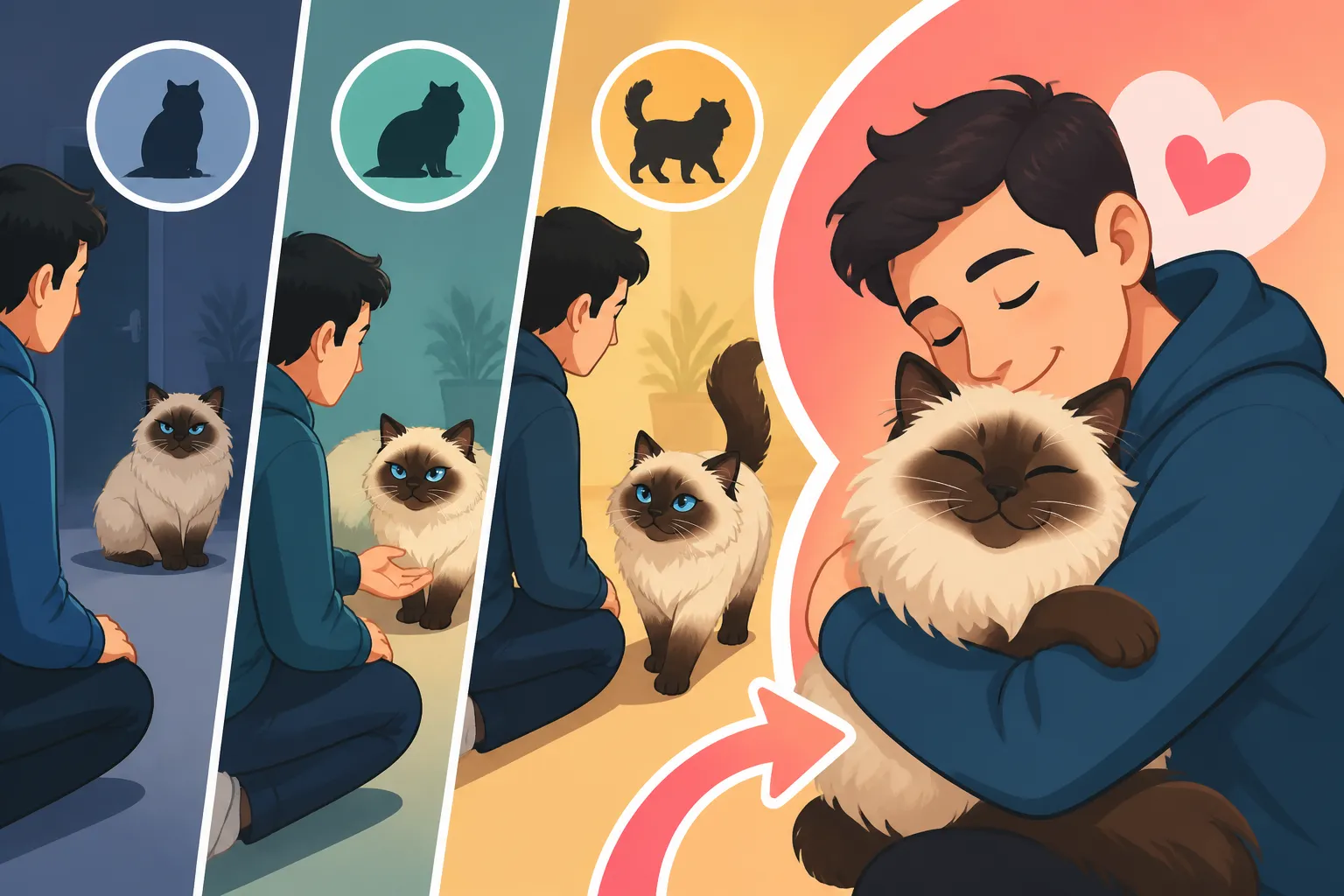
How Many Visits Before a Himalayan Accepts Someone
It can be truly puzzling and even a little disheartening when your beloved Himalayan cat seems to give the cold shoulder to your friends and family. You want them to love your visitors as much as you do, but Himalayans aren't always quick to embrace new faces. This guide will delve into the unique temperament of the Himalayan cat, explaining why they take their sweet time getting to know people, and offer practical strategies to help your precious floof eventually accept – and perhaps even adore – your guests over a series of visits.
Understanding the Himalayan Temperament Around Strangers
Himalayans are truly unique cats, a charming blend of the laid-back Persian and the more vocal, intelligent Siamese. This heritage means their approach to strangers isn't always what people expect from a cuddly, long-haired cat. It’s not that they’re unfriendly; it’s more that they operate on their own distinct timeline and protocol.
Inherited Traits: Persian Calm, Siamese Reserve
When a new person walks into a room, a Himalayan isn't likely to greet them with enthusiastic purrs and leg rubs right away. They've inherited the Persian's serene, often unruffled calm, which means they won't typically panic or flee dramatically. Instead, they'll often observe from a distance, perhaps from the safe haven of their favorite armchair or under a bed. This calm exterior can sometimes be misinterpreted as aloofness or indifference, which can be a source of frustration for guests hoping for immediate feline affection.
However, beneath that calm, they also possess a touch of the Siamese's more reserved and selective nature. While a Siamese might vocalize their curiosity or displeasure, a Himalayan expresses it through quiet observation. They are assessing the new person's energy, scent, and movements. They're not aloof in the sense of not caring; rather, they are discerning. They're trying to figure out if this new human fits into their carefully constructed world. It’s less about being rude and more about being prudent. They just aren't the type to throw caution to the wind, and they certainly don't feel the need to rush any social interaction.
The Importance of Routine and Environment
For a Himalayan, routine isn't just a preference; it's practically a way of life. These cats thrive on predictability. Their day might revolve around specific feeding times, nap spots, and playtime sessions, all of which contribute to their sense of security. When a stranger enters their home, even if it's just for an hour, it can disrupt this delicate balance. There's a new scent, an unfamiliar voice, and a different energy circulating in their space. This isn't inherently bad, but it is different, and for a Himalayan, different often equates to "proceed with caution."
Think about it from their perspective: their world is usually a calm, familiar sanctuary. Then, suddenly, there's a new person making sounds, moving around, and maybe even sitting in their favorite sunbeam spot. This can make them feel a little unsettled, even if the guest is perfectly lovely. They might retreat to their preferred "safe zone" – perhaps a bedroom, a high shelf, or their very own designated chair. This isn't a sign of aggression or deep unhappiness; it's simply their way of managing a new situation and processing the change. They need to understand that this disruption is temporary and non-threatening. It's why a sudden, boisterous new presence can throw them off, whereas a quiet, predictable guest is far more likely to eventually gain their approval. You might even notice that a Why a Himalayan Claims One Chair and Keeps It and will actively choose to observe from there.
Reading a Himalayan's Signals of Discomfort
It's easy to miss the subtle cues a Himalayan gives when they're feeling uneasy or simply not ready to interact. They aren't generally a breed to hiss or lash out immediately. Instead, their discomfort is often expressed through quiet retreat and body language. If your Himalayan suddenly disappears under the bed or behind the sofa the moment a guest arrives, that's their primary signal. They're not being rude; they're creating distance and seeking security.
Other signs of apprehension might include flattened ears, wide eyes, a tail tucked tightly against their body, or a low, crouched posture. They might also engage in excessive grooming or suddenly become very still, observing the scene intently. It's crucial not to interpret these as invitations for closer interaction. If you or a guest try to coax them out or force interaction when they're displaying these signs, it will only increase their anxiety and set back any progress you might have made. Respecting their need for space is paramount. A Himalayan that feels cornered or overwhelmed will simply dig their heels in deeper and take even longer to trust. Understanding What a Himalayan Does When It Is Unsettled is key to fostering a positive relationship with visitors. Learning to read these quiet signals is far more valuable than trying to push for an interaction they're not ready for.
The Gradual Process of Acceptance: It's Not a One-Visit Deal
If you're expecting your Himalayan to be best friends with a new visitor after just one afternoon, you might be setting yourself up for disappointment. For these discerning felines, acceptance is almost always a multi-stage process, built on consistent, positive, and non-threatening exposure. They aren't quick to offer their trust, but once they do, it's a bond worth cherishing.
The "Observation Period": First Impressions
The initial few visits from a new person are, for your Himalayan, almost entirely an observation period. During this time, they are essentially gathering data. They're taking in the new person's unique scent, the pitch and tone of their voice, their general energy, and how they move within the home. They'll likely do this from a safe distance, perhaps peeking from behind a curtain, from a different room, or simply from their designated "safe spot."
Guests, during these early stages, should be advised to manage their expectations. The goal isn't interaction; it's simply for the cat to become accustomed to the new presence without feeling threatened. This means no reaching out, no loud greetings, and definitely no chasing. The less attention paid to the cat, the better. This allows the Himalayan to observe at their own pace, processing the new information in a low-pressure environment. It's like they're taking mental notes, building a profile of this new entity in their world. They're noting if the person is loud or quiet, fast or slow, and most importantly, if they pose any perceived threat to their peaceful existence. This quiet, non-intrusive observation phase can last for several visits.
Consistent, Calm Presence Over Time
True acceptance in a Himalayan largely stems from consistent, calm exposure. It's less about intense, singular interactions and more about repeated, uneventful encounters. When a guest visits regularly and behaves predictably, the Himalayan gradually learns that this person is not a threat to their routine or territory. Each calm visit chips away at their initial wariness. They begin to associate the guest's presence with peace and quiet, rather than disruption or anxiety.
Encourage your guests to maintain a low profile around your cat. This means sitting quietly, perhaps reading a book, working on a laptop, or having a hushed conversation. The key is to be present without being demanding. The cat needs to see this new person as a stable, non-intrusive part of the environment, not a source of unpredictable stimuli. This steady, reassuring presence allows your Himalayan to slowly drop their guard. It’s about building a narrative over time that says, "This person comes and goes, they don't bother me, and my world remains safe." The more often they experience this, the quicker they'll move towards tolerance and, eventually, a cautious form of acceptance. For some Himalayans, especially those who How Often a Himalayan Notices Anything Has Changed, consistency is paramount.
The Role of Scent and Sound Familiarity
Cats are incredibly reliant on their senses, and for a Himalayan, scent and sound play enormous roles in establishing comfort and familiarity. Every time a guest visits, they bring with them their unique scent signature. In the early stages, this new scent can be a source of curiosity mixed with caution. Over multiple visits, however, this scent becomes less alien and more a recognizable part of the household ambiance. It's no longer a strange invasion but a familiar marker.
Similarly, the sound of a guest's voice, their particular cadence, and even their footsteps become recognizable. The cat learns to associate these auditory cues with a non-threatening presence. This is why quick, infrequent visits don't yield the same results as regular, even short, visits. Each repeated exposure reinforces the familiarity. It’s like a puzzle being slowly put together; each visit adds another piece of sensory information that confirms "this person is okay." This gradual build-up of sensory familiarity is crucial for a breed that values comfort and security above all else. This process is very similar to How Many Weeks a Himalayan Takes to Accept a New House, where repeated positive exposures solidify their comfort.
Strategies to Encourage Acceptance (Without Forcing It)
You can't force a Himalayan to like someone, but you can certainly create an environment and set the stage for acceptance. The trick is to be subtle, patient, and to always respect their boundaries. It’s a dance, and your cat will lead.
The Power of Positive Association
One of the most effective ways to win over a cautious Himalayan is through positive association, and that often means food and gentle play. Ask your guest, during their visits, to quietly offer small, high-value treats. The key here is "quietly" and "offer." The guest should hold the treat out in an open palm and let the cat come to them, or even place it gently on the floor nearby. Never try to push the treat into the cat's face or chase them with it. The cat needs to initiate the approach. For options, many cats love soft salmon treats or even a tiny piece of cooked chicken. You can often find a variety of suitable treats on platforms like Amazon.
Interactive wand toys can also work wonders, as they allow for engagement without direct physical contact. The guest can gently wave a feather wand or a toy mouse from their seated position, letting the cat observe or even bat at the toy from a safe distance. This kind of play simulates hunting, which is a natural, positive outlet for cats. The goal is for your Himalayan to associate the guest's presence with good things – tasty treats or engaging play – rather than stress. Remember, even if the cat doesn't take the treat directly or play enthusiastically at first, the mere act of the guest offering it in a non-threatening manner builds positive mental links over time. Which Treats a Himalayan Will Come Off the Sofa For can be a huge factor here.
Respecting Boundaries and Space
This cannot be stressed enough: a Himalayan's trust is built on respect for their personal space. If your cat retreats, let them. If they're hiding, leave them be. Never chase, corner, or physically force them into an interaction. Doing so will only teach them that new people are a source of stress and fear, making future acceptance much harder. Instead, create safe zones in your home where your cat can retreat if they feel overwhelmed – a cat tree, a cozy bed under a table, or even just another room.
Advise your guests to avoid direct eye contact, especially at first, as this can be perceived as a challenge in the feline world. A "slow blink" – slowly closing and opening your eyes – is a universal cat signal for "I trust you and mean no harm." Encourage guests to try this if the cat is observing them from a distance. The aim is to make the cat feel completely in control of the interaction. They decide when, if, and how they want to engage. A Himalayan will only truly relax and become receptive when they feel absolutely secure in their environment and their interactions.
The "Slow Blink" and Indirect Interaction
The slow blink is a powerful, non-verbal communication tool in the cat world, and it's something your guests can easily adopt. When your Himalayan is observing a guest from afar, suggest the guest slowly close their eyes almost completely, hold it for a moment, and then slowly open them again. This communicates "I trust you and I'm not a threat." Many cats will respond by returning a slow blink, signaling a moment of shared calm. It's a beautiful way to build rapport without a single touch or spoken word.
Beyond the slow blink, indirect interaction is key. Instead of actively trying to engage the cat, guests should simply exist peacefully in the same space. This means sitting quietly, reading, or gently talking to you, the owner. Let the cat approach on their own terms. If the cat chooses to come into the room and sit a few feet away, that's a massive victory. This non-demanding approach is incredibly effective for Himalayans, who appreciate the freedom to assess situations on their own timetable. Observing your cat from a distance without forcing interaction is the best way to encourage them to become comfortable. This aligns perfectly with Why a Himalayan Watches Visitors From Its Own Chair.
How Long Does it Really Take? Setting Realistic Expectations
There's no single answer to "how many visits?" because every Himalayan is an individual with their own personality, history, and comfort levels. However, we can establish some realistic expectations and discuss the factors that influence this timeline.
Factors Influencing Acceptance Time
Several elements play into how quickly a Himalayan will accept a new person:
- Individual Personality: Just like people, some Himalayans are naturally bolder and more curious than others, while some are inherently more shy and cautious. A particularly gregarious Himalayan might tolerate a new person in a few visits, while a deeply introverted one might take months.
- Early Socialization: Himalayans who were well-socialized as kittens, exposed to various people, sounds, and experiences in a positive way, tend to be more adaptable to strangers as adults. Those with limited early exposure might be more fearful.
- Previous Experiences: If your Himalayan had negative experiences with strangers in the past (e.g., loud noises, rough handling), they will naturally be more wary. Conversely, consistently positive past interactions can make them more open.
- Guest's Demeanor: A calm, quiet, and predictable guest will always be accepted faster than someone loud, boisterous, or who tries to force interaction. The energy a guest brings into the home significantly impacts the cat's comfort.
- Frequency and Duration of Visits: More frequent, even short, visits generally lead to faster acceptance than infrequent, long visits. Consistency helps build familiarity. A cat who rarely sees strangers will naturally react more strongly.
- The Home Environment: A chaotic, noisy home might make a Himalayan more anxious around strangers, whereas a calm, predictable home provides a secure base from which to assess new people.
Given these variables, it’s not uncommon for a Himalayan to take anywhere from 5 to 10 low-key visits to merely tolerate a new person's presence in the same room without hiding. True, relaxed acceptance, where they might choose to approach the guest, could take 10 to 20 visits or more. For some deeply shy individuals, forming an affectionate bond might take many months or even years of consistent, gentle interaction.
The Spectrum of "Acceptance": From Tolerance to Affection
It’s important to understand that "acceptance" isn't a single destination; it's a spectrum. For many Himalayans, acceptance might simply mean tolerating a guest's presence in the same room without hiding, perhaps observing them from their favorite perch. This is a significant achievement and should be celebrated! They might choose to share a space, but not necessarily a lap.
Further along the spectrum, acceptance might involve allowing the guest to be in close proximity, perhaps even accepting a treat directly from their hand, or brushing against their legs. True affection, where a Himalayan might jump onto a guest's lap, purr loudly, or head-butt them for attention, is a deeper level of trust that only some Himalayans will ever reach with non-primary caregivers. This level of intimacy is a testament to extraordinary patience and consistent, positive experiences. It's vital not to push for more than your cat is willing to give. Every cat expresses affection and trust differently, and a quiet presence in the same room can be just as valid a sign of acceptance as a full-on cuddle session. Understanding that How Little a Himalayan Asks For in a Day can help manage expectations.
Patience is the Ultimate Virtue
Ultimately, patience is the most crucial ingredient when introducing your Himalayan to new people. Rushing the process, forcing interactions, or getting frustrated will only backfire and extend the timeline for acceptance. Celebrate every small victory: the first time your cat stays in the room instead of hiding, the first time they eat a treat offered by a guest, or the first time they respond to a slow blink.
Remember, a Himalayan's trust, once earned, is a deep and genuine bond. It might take longer than with other, more outwardly gregarious breeds, but it is incredibly rewarding. Their discerning nature means that when they do accept someone, it's a true sign of comfort and security. Embrace the slow pace, respect their personality, and you'll find that your Himalayan will eventually open their heart, perhaps not to everyone, but certainly to those who demonstrate consistent kindness and understanding. Your Himalayan values consistency deeply, so be mindful that Why a Himalayan Minds Its Routine More Than Its Address and any break in that can slow their acceptance.
| Visit Number | Expected Himalayan Reaction (Typical) | Guest Strategy | Owner's Role |
|---|---|---|---|
| 1-2 | Hides, observes from afar (another room, under furniture), may retreat. | Ignore the cat, speak softly, avoid direct eye contact. Allow cat to observe from a distance. | Provide safe hiding spots. Reassure the cat with calm voice if visible. Keep household calm. |
| 3-5 | May observe from closer distance, might peek out more. May scent-mark furniture guest uses. | Maintain calm presence, occasional slow blink. Place treats on floor if cat is visible but distant. No direct approach. | Continue calm environment. Talk to your cat in a reassuring tone, using the guest's name positively. |
| 6-10 | May allow closer proximity in the same room, perhaps a quick sniff of a dropped item. Might accept a treat from the floor nearby. | Remain still and quiet. Gently offer a small treat in an open palm, letting the cat approach. Only pet if cat initiates contact. | Praise calm behavior. Ensure guest understands cat's body language. Offer positive reinforcement for cat's bravery. |
| 10+ / Regular | May rub against legs, head-butt, sit in the same room (even on an adjacent sofa). Could eventually jump onto lap if confident. | Continue gentle interactions. Offer treats. Gentle pets if offered (e.g., cat rubs head on hand). Allow cat to control all physical contact. | Continue to facilitate positive, unforced interactions. Recognize and celebrate small steps of trust and affection. |
| Months/Years (for shy cats) | Deep trust and affection: seeking out guest, sleeping nearby, consistent purring, direct lap time. | Continue building positive associations. Respect all boundaries. Be a consistent source of comfort and treats. | Reinforce positive behaviors. Understand this level of trust is rare and precious, a testament to true patience. |
Disclaimer
This article is for general informational purposes only and does not constitute professional advice. Laws, prices and regulations vary by location and change over time. Consult a qualified professional for guidance on your specific situation.