Which Kibble a Himalayan’s Shortened Jaw Can Lift
If you've ever watched your sweet Himalayan struggle with their food bowl, pushing kibble around with their nose, or even scooping it out with a paw just to get a bite, you know the unique frustration this can cause. Their adorable, flattened faces, while undeniably charming, present some real challenges when it comes to something as fundamental as eating dry food. This guide is here to break down exactly why some kibbles are a struggle and how to choose the right kind to make mealtime a breeze for your beloved flat-faced feline.
Understanding the Himalayan's Unique Jaw Structure
The Himalayan cat, with its distinctive "Peke-face" or "doll-face" profile, is a true marvel of selective breeding. However, this charming aesthetic comes with a physical reality that impacts their daily life, particularly when it comes to eating. Their brachycephalic, or shortened, skull shape isn't just about a cute nose; it fundamentally alters the structure of their mouth.
The Brachycephalic Challenge
Unlike most cats who have a more elongated muzzle, a Himalayan's jaw is significantly compacted. Imagine taking a regular cat's face and gently pushing it inwards – that's essentially the structural change. This means their upper and lower jaws often don't align perfectly. Their teeth, which are still the same number as any other cat's, are crammed into a much smaller space. This crowding can lead to teeth growing in at odd angles, overlapping, or even rotating, creating a less-than-ideal surface for grasping and chewing. How Crowded a Himalayan's Lower Jaw Gets goes into more detail about this.
Their nose, which is often much higher set and flatter, can also impede the mouth opening, making it hard for them to get a good seal around food. They might have a recessed chin or an underbite, further complicating the mechanics of picking up small, hard pieces of food. It's not just about aesthetics; these are fundamental anatomical differences that directly affect how they interact with their meals.
How a Himalayan Eats
Because of this unique facial structure, a Himalayan often can't simply open their mouth wide and bite down on a piece of kibble the way a cat with a longer muzzle might. Their primary tools for eating become less about direct biting and more about scooping, licking, and manipulating the food. You'll frequently observe them using their tongue like a tiny shovel, trying to push kibble onto it, or even using their bottom jaw to scoop pieces into their mouth.
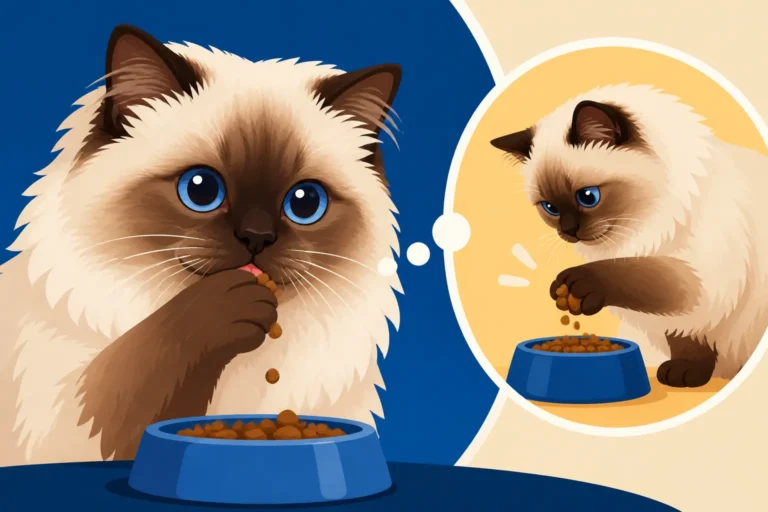
The most common technique, and one that often causes owners to chuckle (and then clean up), is the "paw-scoop" method. Your Himalayan might use a front paw to sweep kibble towards their mouth or even pick up individual pieces and deposit them directly. This isn't laziness or a quirky habit; it's a clever adaptation to a physical limitation. If you've ever seen your cat drop bits of food onto their ruff or the floor, it’s often because they couldn't quite get a grip on it or maneuvered it poorly with their tongue. This is why Why a Himalayan Drops Food Onto Its Ruff is such a common phenomenon. It's a testament to their determination, but it also highlights the need for kibble that's easier for them to manage.
Ideal Kibble Characteristics for Himalayans
Choosing the right kibble for your Himalayan isn't just about nutrition; it's about making sure they can actually eat that nutrition without undue stress or mess. The physical properties of the kibble itself play a huge role in their success at mealtime.
Shape Matters
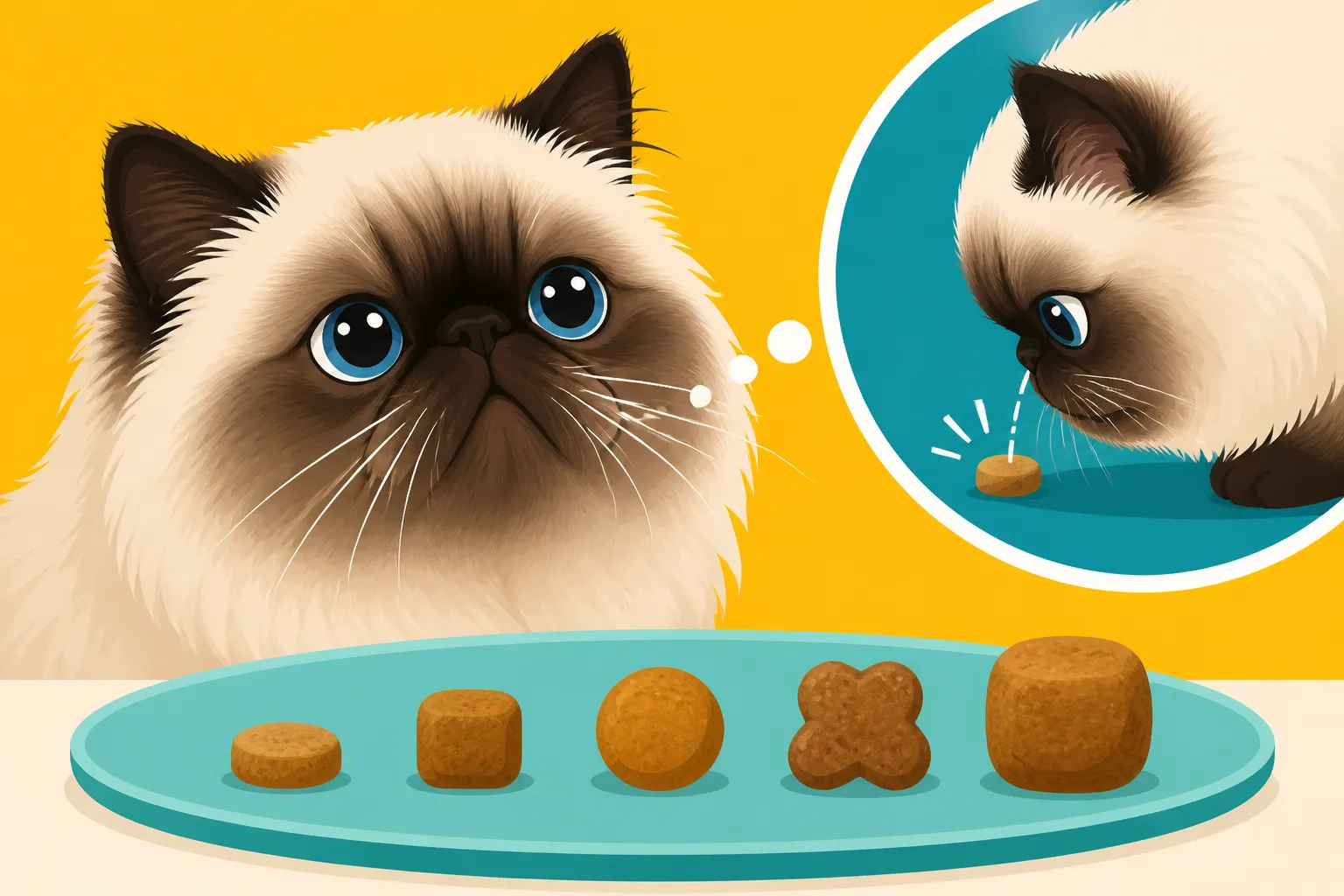
When it comes to kibble, shape is perhaps the most critical factor for a Himalayan. Avoid perfectly round or spherical pieces at all costs. These are incredibly difficult for a flat face to grasp, as they tend to roll away or slip out of their mouth. Think about trying to pick up a pea with your chin!
Instead, look for kibble with specific shapes designed to be more manageable. Flat, disc-shaped pieces are often excellent because they present a larger surface area for the tongue to scoop or for the cat to wedge against their teeth. Crescent shapes, small squares, or flat, irregular triangles can also work well. The goal is a shape that can be easily picked up, either by the tongue, pressed against the roof of the mouth, or even held between the tongue and the lower jaw without rolling away. Many premium cat food brands now offer "brachycephalic-friendly" kibble, specifically designed with these cats in mind, featuring shapes like those described.
Size and Density
Size is the next important consideration. Kibble that's too large can be impossible for their small, crowded mouth to accommodate, leading to choking hazards or just outright rejection. Conversely, kibble that's too small can be just as frustrating, as it's hard to isolate and pick up individual pieces, leading to a lot of ineffective licking and chasing. A medium size, generally around 5-9mm across, tends to be a good starting point, but every cat is an individual, so observation is key.
The density of the kibble also plays a subtle but important role. Very hard, dense kibble can be difficult for their crowded and sometimes misaligned teeth to break apart. A slightly less dense, perhaps a bit more porous, kibble might be easier for them to chew once they finally get it into their mouth. Always observe how your Himalayan is managing the kibble. Are they crunching it, or swallowing it whole? If they're struggling to crunch, a softer, less dense option might be better.
Texture and Palatability
Texture isn't just about crunch; it's also about how easily the kibble can be grasped and held. A very smooth, slick kibble can be harder to pick up with the tongue or paw. A slightly rougher, more porous surface can offer a bit more grip.
Palatability and scent are always important for cats, but perhaps even more so for a Himalayan who might be expending more effort just to eat. If the kibble isn't appealing, they might not bother with the struggle. Strong, appealing scents can draw them in and encourage them to persist. Look for foods with high-quality protein sources that are naturally enticing to cats. While not directly related to jaw mechanics, a highly palatable food makes the effort worthwhile for your cat.
Practical Tips for Feeding a Himalayan Kibble
Beyond the kibble itself, how you present the food can make a world of difference for your Himalayan. Small adjustments to their feeding setup can turn a frustrating meal into a comfortable one.
Choosing the Right Bowl
This is a game-changer for many Himalayan owners. Standard cat bowls, particularly those with deep sides or narrow openings, are a nightmare for a flat-faced cat. Their whiskers get bent and stressed, and they simply can't reach the food without smashing their face into the bowl.
Instead, invest in wide, shallow bowls or flat plates. These allow your Himalayan to eat without their whiskers touching the sides and make it much easier for them to scoop food without it getting stuck in corners or against deep edges. Ceramic or stainless steel options are great for hygiene. Elevated bowls can also be beneficial, as they reduce the need for your cat to bend their neck down uncomfortably, which can sometimes aid in easier breathing and swallowing. You can learn more about this in Which Bowl Shape a Flat Faced Himalayan Can Use. If you've ever seen your cat try to eat from a regular bowl, only to push food over the edge because they can't get a proper angle, you know exactly why Why a Himalayan Pushes Food Out of a Round Bowl is such a common issue.
The Paw-Scoop Method
As we discussed, the paw-scoop is a legitimate and often necessary eating strategy for Himalayans. Embrace it! If your cat is using their paw, ensure their dining area is easy to clean. Place a mat under their bowl to catch any stray kibble. Some cats even prefer to eat from a completely flat surface, like a saucer, where they can easily push pieces around with their paw or nose before finally scooping them up. Patience is key here; don't rush them, and accept that their eating style might look a little different from other cats.
Mixing Kibble with Wet Food
Sometimes, even with the perfect kibble and bowl, your Himalayan might still struggle, or you might worry about their hydration if they're not drinking enough. Mixing a small amount of wet food with their kibble can be a fantastic solution. The wet food can soften the kibble slightly, making it easier to chew, and the moisture content is a huge bonus. It also provides a more enticing aroma and texture, encouraging them to eat more readily.
You can mix it all together, or simply place a dollop of wet food on top of the kibble to encourage them to start eating. This can also be a good strategy to ensure they get enough fluid, as flat-faced cats can sometimes struggle with drinking deeply from bowls without wetting their chins and leading to skin irritation. Why Wet Food Is Easier for a Himalayan to Take delves into this further.
Brands and Products to Consider
Finding the right products for your Himalayan can sometimes feel like a treasure hunt, but thankfully, the pet industry has become much more aware of the specific needs of brachycephalic breeds.
When it comes to kibble, look for brands that specifically market their formulas for "brachycephalic breeds" or "flat-faced cats." These formulations often feature the specially shaped kibble that Himalayans need. While I can't recommend specific products or make claims about current stock or pricing, you'll find a wide selection of cat food brands on large online retailers like Chewy and Amazon that cater to various dietary needs and kibble shapes. It's always a good idea to read reviews from other owners of brachycephalic cats to see what has worked for them.
For specialized bowls, you can also browse platforms like Amazon for shallow, wide, or elevated ceramic and stainless steel dishes. Many brands offer designs specifically for flat-faced pets that prevent whisker fatigue and make eating more accessible. Fresh, human-grade wet food can also be an excellent alternative for Himalayans if you're exploring beyond kibble. The key is to examine the product details for descriptions that indicate suitability for cats with facial structure challenges.
When Kibble Isn't Enough: Considering Alternatives
Despite all your best efforts with kibble, some Himalayans will still struggle or simply thrive better on different diets. It's important to be open to alternatives to ensure your cat is getting adequate nutrition and comfort at mealtime.
Wet Food and Raw Diets
For many flat-faced cats, wet food is a godsend. It's inherently easier to eat because it doesn't require the same grasping or crunching mechanics as dry kibble. The soft texture allows them to lap it up without difficulty, reducing strain on their jaws and teeth. Wet food also provides crucial hydration, which is vital for overall health, especially for cats who might not drink enough water due to their facial structure.
Raw or homemade diets, when properly balanced and prepared under veterinary guidance, can also be excellent options. These diets often consist of minced or finely ground meats, which are highly palatable and easy for a Himalayan to consume. However, embarking on a raw or homemade diet requires careful research and professional consultation to ensure nutritional completeness and safety.
Dental Health Considerations
Regardless of your chosen diet, a Himalayan's crowded jaw makes them particularly prone to dental issues. The close proximity of their teeth can lead to faster plaque and tartar buildup, gum disease, and even tooth resorption. Even if they manage kibble well, it's crucial not to rely on dry food alone for dental hygiene, as the "scrubbing" action is often minimal for cats, especially those who swallow pieces whole.
Regular veterinary check-ups that include a thorough dental examination are paramount. Your vet might recommend regular dental cleanings under anesthesia to prevent painful conditions. Daily home dental care, such as brushing with a cat-specific toothbrush and toothpaste (if your cat tolerates it), can also help. Remember, a comfortable eating experience goes hand-in-hand with good dental health, and a struggling cat might have an underlying dental issue compounding the kibble challenge. This is why How Often a Himalayan's Crowded Mouth Needs Cleaning is such a vital topic for these cats.
Disclaimer
This article is for general informational purposes only and does not constitute professional advice. Laws, prices and regulations vary by location and change over time. Consult a qualified professional for guidance on your specific situation.