Why the Himalayan Is Described as Cobby
A Himalayan can look enormous beneath its flowing coat, yet much of that impression comes from fur rather than body size. “Cobby” describes a compact, sturdy build: a broad chest, short legs, and a solid body—not an excuse for excess weight. This guide explains what the term means, how to recognize healthy proportions, and how coat and weight can confuse the picture.
What cobby means in a Himalayan cat
A compact, sturdy body rather than a tall, lean one
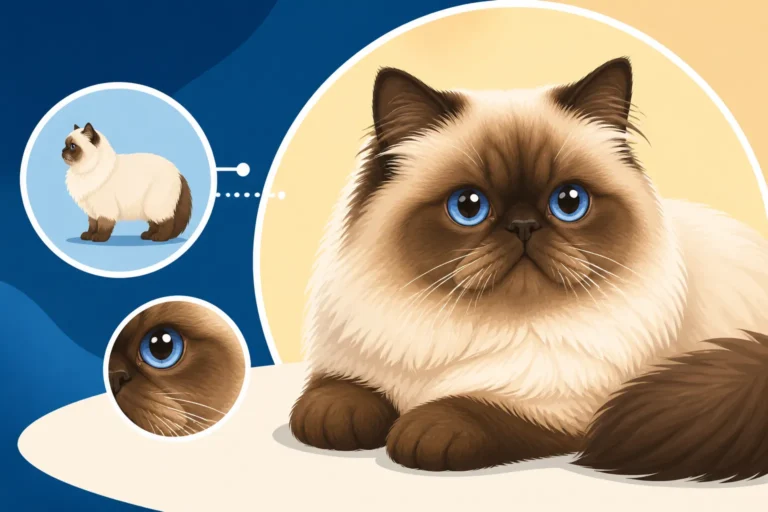
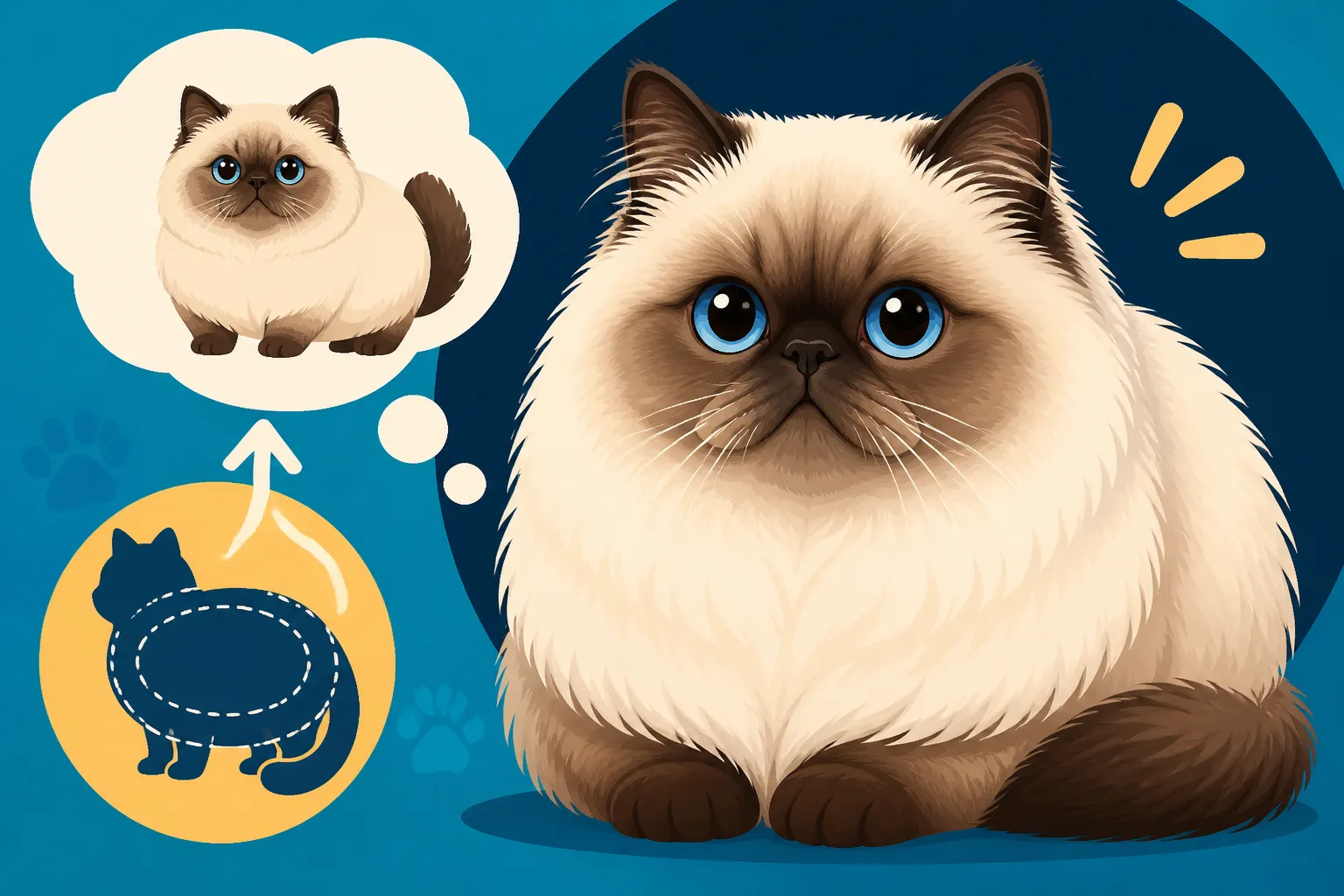
In cat descriptions, cobby refers to a body that looks compact and substantial. A cobby Himalayan typically has a broad chest, a short back, sturdy legs, and a rounded outline. Its body is meant to look solid in proportion, not long and narrow or fine-boned. The legs are relatively short, and the paws are rounded and firm.
That description can be tricky to interpret if you are used to judging a cat by height or apparent bulk. A Himalayan may sit low to the floor and look broad from the front, while still being a healthy size. The word describes the cat’s overall shape and proportions, not a particular number on the scale.
Himalayans share much of their build with Persians. The pointed coat pattern sets them apart visually, but their body type is closely connected to the Persian side of their ancestry. That is why discussions of their shape often refer to a rounded, substantial frame rather than the longer, more athletic outline people may picture when they think of a Siamese.
The features that create the cobby outline
Look at the cat as a whole rather than focusing on one feature. A broad chest, a short and sturdy body, and legs that appear in proportion to that body all contribute to a cobby outline. The head and coat can make the cat look even rounder, but a healthy frame should still have a recognizable body shape beneath the fur.
A Himalayan’s legs are not supposed to make it look tall and leggy. They help create a low-set, grounded appearance. For more context on the breed’s proportions, see How Short a Himalayan’s Legs Should Be. Short legs alone, though, do not tell you whether a cat is healthy; overall movement, comfort, and body condition matter too.
The breed’s coat also affects what you see. A full ruff, dense body coat, and fluffy britches can blur the outlines of the shoulders, waist, and hindquarters. A cat that looks round in a photograph may have a very different shape when you gently feel through the coat. That is one reason a visual impression is not a reliable substitute for hands-on assessment.
Cobby does not mean overweight
How to distinguish sturdy proportions from extra body fat
A naturally broad frame can make a Himalayan look heavier than a more finely built cat of similar weight. But there is an important difference between a sturdy structure and excess fat. A cobby cat has a compact underlying shape; an overweight cat has body fat that may soften or obscure the waist and make movement or grooming more difficult.
Because the fur can hide the outline, use your hands as well as your eyes. With gentle pressure, you should generally be able to feel the ribs beneath the coat without pressing hard. You are not trying to count every rib from across the room; you are checking whether the body feels covered but not padded by a thick layer of fat. Your veterinarian can show you how to assess this safely and consistently.
A helpful related guide is How to Feel a Himalayan’s Spine Through Its Ruff. The coat can make a spine difficult to see, and that is normal; the goal is to understand what the body feels like underneath, not to expect a visibly bony back. If you are unsure whether your cat’s build is appropriate, ask your veterinarian to assess body condition during a routine visit.
Why the scale alone can mislead
Weight is useful when tracked over time, but one number cannot describe a cat’s build by itself. Two healthy Himalayans can differ in size, frame, and muscle. A reading that is typical for one cat may not be a sensible target for another, so a generic breed weight should not replace an individual assessment.
For example, imagine a cat whose weight has stayed fairly steady but whose waist has become harder to feel and who no longer reaches its hindquarters to groom. That change deserves attention even if the scale number seems familiar. Conversely, a naturally broad cat may weigh more than a slender cat without being overweight. The direction of change and the body condition together tell a clearer story.
A regular weigh-in can help you notice gradual gains that disappear beneath a long coat. Why a Cobby Himalayan Is Weighed at Every Visit explains why routine tracking can be useful. Keep a simple record of the date, weight, and any relevant changes in appetite, activity, or grooming; bring it to your vet rather than trying to set a target based only on a chart.
| What you notice | What it may reflect | A useful next step |
|---|---|---|
| Broad chest and short, sturdy legs | Typical cobby proportions | Consider the whole body, not one feature |
| Full-looking sides under a long coat | Coat volume, body fat, or both | Gently feel the ribs and ask your vet to demonstrate |
| Waist difficult to see | Coat obscuring the outline or excess weight | Assess by touch and compare with the cat’s usual condition |
| A change in weight over time | A change in intake, activity, health, or growth | Record the trend and discuss it with your vet |
| New trouble grooming or moving | Possible weight, pain, or mobility concern | Arrange a veterinary assessment |
How the Himalayan’s coat changes what you see
Fur adds visual bulk without changing the frame
A Himalayan’s coat can make its shoulders, belly, and hindquarters appear wider. The ruff may look like a thick collar, and the coat along the sides can hide the transition from chest to waist. A recent bath, seasonal shedding, or grooming can also change how large the cat appears without changing its underlying body.
This is especially confusing when comparing a Himalayan with a shorthaired cat. The shorthaired cat’s outline is easier to read, while the Himalayan’s fur can create a rounded silhouette. It is possible for a healthy, lean cat to look plush and broad; it is also possible for a cat carrying excess weight to have that change concealed by its coat.
The coat is not the only reason a Himalayan may appear larger. Body structure, muscle, posture, and the way the cat is sitting all affect the impression. For a fuller explanation of how coat volume alters the silhouette, see Why a Persian Coat Makes a Himalayan Look Heavier. When you are evaluating shape, use the same gentle touch each time rather than relying on a flattering or unflattering snapshot.
Grooming reveals changes, but it is not a weight test
Regular combing helps prevent mats and gives you opportunities to notice changes in the body. When you part the coat, you may be able to see the skin and feel the outline more clearly. That does not make grooming a substitute for a weight or health check, but it can help you notice a new lump, tenderness, skin irritation, or a change in how your cat reacts to being handled.
Make the routine calm and brief enough that your cat can tolerate it. Work through small sections, especially where tangles commonly form, and stop if the cat becomes distressed. A comb should not be dragged through a tight mat; pulling can hurt, and severe matting may need professional help. If your Himalayan resists handling in a new way, consider whether pain or discomfort could be contributing.
If you need to replace grooming supplies, a retailer such as Chewy may be one place to look for combs and other basic cat-care items. Choose tools suited to a long, dense coat, and ask a groomer or veterinary professional to show you safe technique if you are uncertain. The important point is not the brand of comb, but being able to groom without tugging or making the cat dread the session.
What cobby proportions mean for everyday care
Make movement comfortable and accessible
A compact body and relatively short legs can affect how a Himalayan uses its environment. Some cats prefer a low step to a high jump, especially as they age or if they are carrying extra weight. That preference does not automatically mean something is wrong. However, a new reluctance to jump, climb onto a familiar chair, or walk comfortably should not be dismissed as simply part of being cobby.
Set up resting spots and necessities so your cat does not have to make a difficult leap to reach them. Stable steps or low platforms can offer an easier route to a favorite sofa. Keep food, water, and litter accessible, particularly if the home has multiple floors. For ideas on choosing supportive resting and climbing surfaces, see Why a Cobby Himalayan Needs Wide Platforms, Not Tall Ones.
A wide, stable surface is often more useful than a tall, narrow perch for a cat that prefers staying close to the ground. If you shop through Chewy or another pet retailer, check the platform’s stability, width, and ease of access rather than choosing based on height alone. The best setup is the one your cat actually uses safely and comfortably.
Keep feeding and body checks individual
Himalayans can be relatively sedentary compared with more athletic breeds, but activity varies from cat to cat. Portion needs also depend on age, health, activity, and the food being fed. Avoid using the breed’s cobby description as a reason to offer extra food or to put a cat on a restrictive diet without veterinary guidance.
If you are concerned about weight, make one change at a time and discuss an appropriate plan with your veterinarian. Weigh measured portions rather than estimating by eye, and keep treats in the overall picture. A wide, shallow dish may also be easier for a flat-faced cat to use than a deep bowl. Chewy carries different feeding and grooming supplies, but product choice cannot replace a meal plan based on your individual cat’s needs.
Watch for changes in appetite, water intake, energy, grooming, and mobility alongside changes in weight. A Himalayan that suddenly stops grooming its coat, seems uncomfortable when picked up, or avoids a usual step may need an examination—not simply a smaller meal. Routine veterinary visits help distinguish ordinary variation in build from a change that deserves attention.
A practical way to judge your Himalayan’s build
Use a consistent check rather than judging by appearance
Try to assess your cat under similar conditions each time. Use the same scale if possible, record the date and weight, and gently feel through the coat for the ribs and waist. Avoid drawing conclusions from a single photo or from comparing your cat with a Himalayan of a different age or frame.
Keep notes about what you observe. For instance, you might record that the ribs feel easier to locate than they did last month, or that your cat now takes a step to reach the sofa. These details can help your vet understand the change. If you are unsure how to assess body condition, ask for a demonstration at the next appointment rather than pressing harder or guessing.
Breed references can provide context, but they should not dictate a target for every individual cat. How Heavy a Full Grown Himalayan Gets offers a related look at adult size, while an examination is the better way to interpret your own cat’s weight and condition.
Know when to ask for veterinary help
A sturdy, low-set appearance can be normal for a Himalayan. A sudden change is different. Contact your veterinarian if your cat gains or loses weight unexpectedly, has difficulty walking or jumping, stops grooming, seems painful when handled, or shows a marked change in appetite or energy. Those signs can have causes beyond body fat, so a diet change alone may miss the real issue.
It is also worth asking for help before a small concern becomes a larger one. A veterinarian can assess the cat’s frame, body condition, teeth, joints, and overall health, then help you decide whether changes to food, activity, grooming, or home setup are appropriate. The goal is not to make a cobby cat look slender; it is to support a comfortable, healthy body beneath the coat.
Understanding “cobby” is ultimately about seeing the difference between a naturally compact shape and a change in condition. The Himalayan’s broad frame, short legs, and generous coat can make that distinction harder to judge at a glance. Gentle hands-on checks, a record of weight trends, and regular veterinary guidance offer a much clearer picture than appearance alone.
Disclaimer
This article is for general informational purposes only and does not constitute professional advice. Laws, prices and regulations vary by location and change over time. Consult a qualified professional for guidance on your specific situation.