Brian Sterling Webb and the British Himalayan
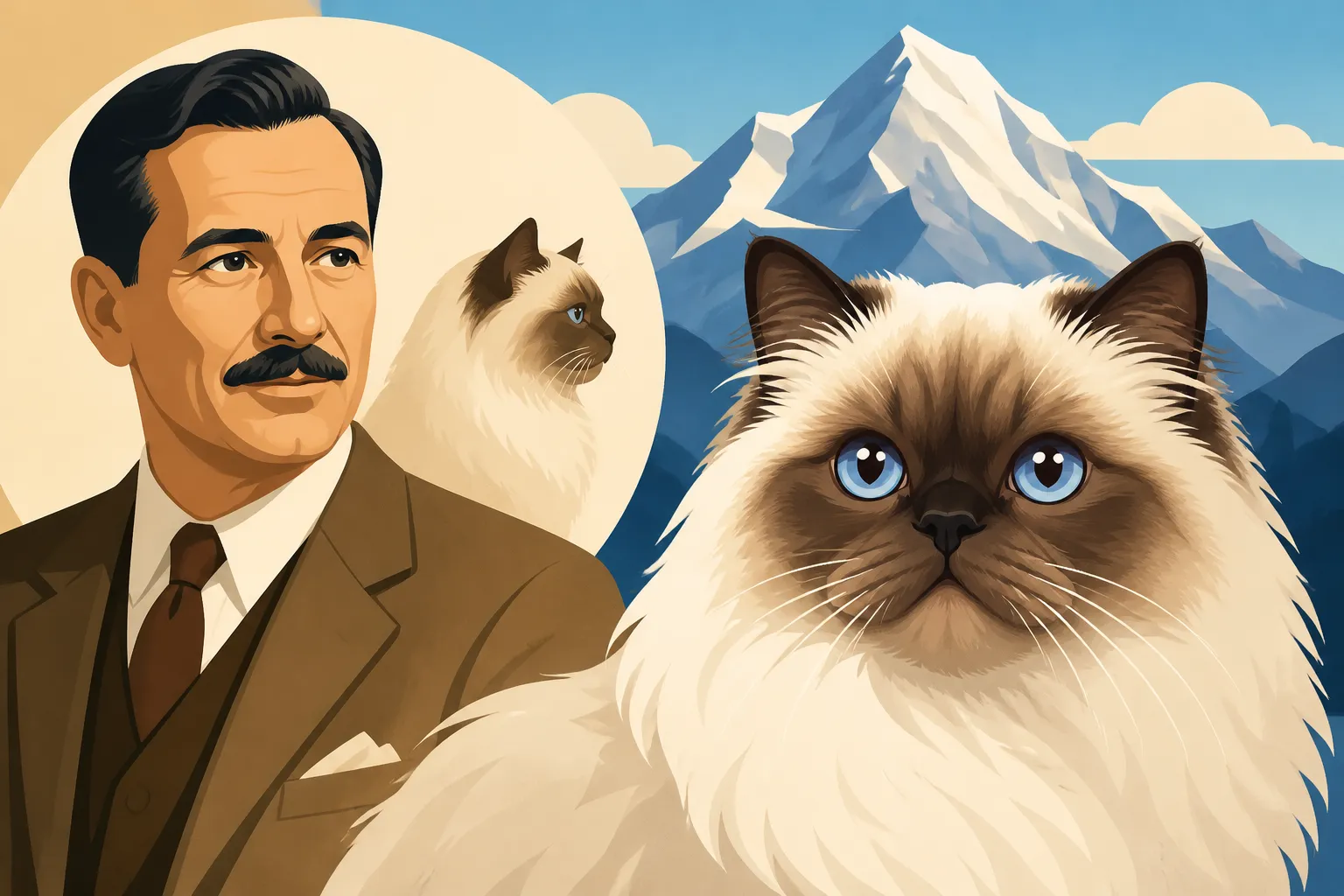
When you first dive into the fascinating world of Himalayan cats, you quickly discover that their history isn't just one straightforward tale, but a rich tapestry woven by passionate breeders across continents. One name that often comes up in the European story, particularly if you're exploring the roots of this magnificent breed in the UK, is Brian Sterling Webb. Many prospective owners get really confused when they hear terms like "Colorpoint Persian" instead of "Himalayan" in British circles, and they wonder how the cat they adore got such different names and developmental paths. This guide will take you through the pivotal role Brian Sterling Webb played in establishing the Himalayan cat in Britain, unraveling the distinct journey the breed took across the Atlantic, and explaining why its identity became so uniquely British.
The Dawn of the British Himalayan: Brian Sterling Webb's Vision
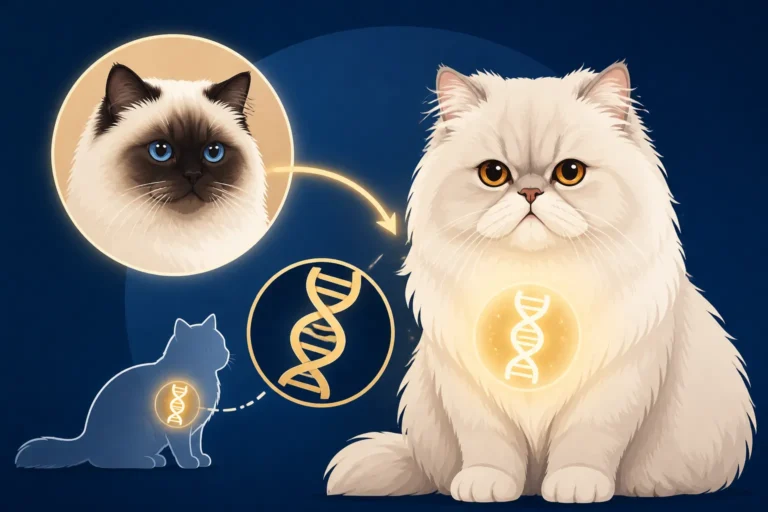
Imagine a time when the stunning contrast of a Persian's luxurious coat with the striking blue eyes and point coloration of a Siamese was just a genetic possibility, a breeder's dream. In the United States, pioneers like Virginia Cobb and Clyde Keeler were already making strides, laying the scientific groundwork at Harvard in the 1930s. But across the pond, another dedicated individual, Brian Sterling Webb, was independently captivated by the same vision. He didn't just want to see this beautiful combination; he wanted to bring it to life and establish it as a recognized breed in Britain. This wasn't a simple task, as cat breeding back then involved a lot of patience, careful record-keeping, and often, dealing with skepticism from established fanciers.
The Initial Crossings and Early Efforts
Sterling Webb's journey began in the early 1950s, driven by a profound interest in genetics and a deep admiration for both the Persian's regal demeanor and the Siamese's elegant points. He understood that achieving the Himalayan look required a careful, multi-generational breeding program. His strategy involved crossing purebred Persians with Siamese cats, a step that initially produced short-haired, non-pointed offspring. This is where many aspiring breeders might lose heart, seeing only "ordinary" cats, but Sterling Webb knew this was just the first stage of a complex genetic puzzle. He patiently bred these first-generation offspring back to Persians, slowly working to reintroduce the long coat while retaining the colorpoint gene. It was a true labor of love, requiring meticulous selection and an unwavering commitment to his goal.
These early crossings were fraught with challenges. Genetic recessives can be tricky, and ensuring the long coat returned while maintaining the precise point coloration was a delicate balance. Breeders often found themselves producing kittens that didn't quite meet the ideal, or perhaps had a less intense point color than desired. It was a process of trial and error, where every litter brought new lessons and every successful pairing was a triumph. The commitment to such a long-term project speaks volumes about the passion of these early pioneers. They weren't just creating pretty cats; they were crafting a new lineage, pushing the boundaries of what was possible in feline genetics.
Charting a Course Separate from the American Experience
While Sterling Webb was busy bringing the Colorpoint Persian to life in Britain, a similar effort was unfolding in the United States, albeit with slightly different approaches and ultimately, different names. The American journey, documented in articles like The 1936 Paper That Started the Himalayan, often started with a more scientific, academic approach before breeders like Marguerita Goforth took up the mantle. Sterling Webb's path, however, felt more like a personal quest driven by intuition and a deep understanding of practical breeding. He wasn't relying on university labs, but on his own cattery and keen observation. This independent development meant that while the genetic goal was similar, the specific lines and the challenges faced were distinctly British.
The separate development paths also led to slight variations in type. While the overall goal was a Persian body with Siamese points, subtle differences in desired head shape, body type, and coat texture could emerge based on the local Persian and Siamese lines used. For example, some early American lines might have emphasized a particular aspect of the Persian head, while British lines leaned into another. These nuances, though seemingly small, contributed to the unique character of the British Colorpoint Persian as it began to take shape, distinguishing it from its American counterpart. It really highlights how a breed's early development can be influenced by local preferences and available stock.
The Early Challenges of Establishing the Breed
Establishing any new breed is a marathon, not a sprint, and the British Himalayan, or Colorpoint Persian as it was to be known, faced its share of hurdles. Beyond the genetic complexities, there was the task of gaining acceptance from the established cat fancy. Many traditional Persian breeders were initially resistant to introducing Siamese genetics, fearing it might "dilute" the pure Persian lines they had worked so hard to perfect. This kind of conservatism is common in the world of purebred animals, where tradition holds a strong sway. Sterling Webb had to not only breed beautiful cats but also advocate tirelessly for their recognition.
He spent considerable time educating other breeders and judges about the distinct qualities and genetic integrity of his Colorpoint Persians. It was about proving that these cats weren't just a "crossbreed," but a legitimate new variety with its own standard and future. This advocacy wasn't just about showing off pretty cats; it involved explaining the genetic principles, showcasing the consistency of the breed, and demonstrating that the introduction of Siamese genes hadn't compromised the Persian type, but rather enhanced it with a stunning new color pattern. Think of the sheer dedication required to convince a whole community to embrace something new and different!
Naming Conventions Across the Atlantic: "Colorpoint Persian" vs. "Himalayan"
One of the most striking differences in the Himalayan's history on either side of the Atlantic is its name. In the United States, the name "Himalayan" stuck, becoming widely recognized and beloved. However, in Britain, a different nomenclature took hold: "Colorpoint Persian." This wasn't just a casual choice; it reflected a fundamental difference in how the breed was perceived and categorized within the existing cat registries and the cultural context of the British cat fancy. It's a prime example of how history and tradition can shape a breed's identity.
Why Britain Opted for "Colorpoint Persian"
In Britain, the cat fancy traditionally preferred to classify new varieties as divisions or specific color patterns within an existing breed, especially if the new cat retained the core characteristics of that parent breed. Since the goal was always to achieve a cat that was fundamentally Persian in type – with the same cobby body, round head, luxurious long coat, and sweet expression – but with the distinct Siamese-like points, it made logical sense to consider it a "Colorpoint Persian." This approach emphasized its Persian heritage first and foremost, rather than seeing it as an entirely separate breed.
This decision also had practical implications for breeders and show circuits. By being a division of the Persian, the Colorpoint Persian could be judged against the Persian standard, with specific allowances made only for the color and eye color. This avoided the complexities of creating an entirely new breed standard from scratch and allowed the cats to compete alongside their solid-colored Persian cousins, albeit in a separate class. It was a way to integrate the new variety smoothly into the existing framework, maintaining the strong identity of the Persian breed while celebrating the innovative new coloration. You can find more about this in What Britain Called the Himalayan.
The American Influence and Diverging Paths
While Britain solidified its "Colorpoint Persian" designation, across the ocean, the American cat fancy, particularly the Cat Fanciers' Association (CFA), initially recognized the Himalayan as a distinct breed. This was a significant divergence, leading to two separate identities for essentially the same cat. The American breeders, influenced by the unique genetic creation and perhaps a desire for a fresh identity, pushed for a new breed status, celebrating the distinct combination as a novel entity. This is why you see titles like The Himalayan Was Made at Harvard in the 1930s when discussing its origins in the US.
The difference in approach created interesting conversations and occasional confusion among international breeders and enthusiasts. A cat that was a "Himalayan" in New York might be a "Colorpoint Persian" in London. This wasn't about the cats themselves being different species, but about how human organizations chose to categorize them. It's a reminder that breed definitions can sometimes be more about administrative decisions and historical precedent than about intrinsic biological differences. For a long time, if you spoke to a British breeder, they simply wouldn't use the word "Himalayan" in the same way an American might.
Impact on Recognition and Breed Identity
The divergent naming conventions had a lasting impact on how the breed was perceived and registered. For breeders in the UK, registering a "Colorpoint Persian" meant aligning with the established Persian standard, which defined everything from body type to head shape. This emphasis ensured that the British lines maintained a strong connection to the traditional Persian phenotype. The focus was on producing an excellent Persian, plus the points. This is different from breeds that are judged entirely on their own, new standard.
Ultimately, even in the United States, the CFA eventually folded the Himalayan into the Persian breed in 1984, creating the "Himalayan Division" of the Persian. This move, discussed in Why CFA Folded the Himalayan Into the Persian in 1984, essentially brought the American and British approaches closer, acknowledging the fundamental Persian nature of the cat. However, many other registries, like TICA, continue to register the Himalayan as a standalone breed. This complex history underscores that even for a well-loved breed, its official identity can be a topic of ongoing discussion and administrative adjustments. It's a journey, not a fixed point.
Key Characteristics and the British Standard
When we talk about the British Colorpoint Persian, or the Himalayan as many lovingly call them, we're really talking about a cat designed to embody the very best of both its parent breeds: the sturdy, plush elegance of the Persian and the striking color and intense blue eyes of the Siamese. Brian Sterling Webb and his contemporaries worked diligently to establish a standard that would guide breeders in producing cats that consistently met this ideal. It wasn't enough to just have a pointed longhair; it had to be a Persian longhair with points.
Emphasizing the Persian Body Type and Coat
The British standard for the Colorpoint Persian, much like the general Persian standard, places immense importance on the physical attributes inherited from the Persian side. This means a cobby body – short, thick, and well-muscled, giving a feeling of robust substance. Imagine a solid, low-slung powerhouse that exudes calm confidence. The legs are short and thick, supporting the substantial body, and the paws are large and round, often with prominent tufts of fur between the toes. This is the foundation upon which the beautiful coat sits.
And what a coat it is! The Persian half blesses the Himalayan with a long, flowing, dense coat that requires significant care. We're talking about a full ruff around the neck, britches on the hind legs, and a magnificent plume of a tail. This coat isn't just long; it has a specific texture – fine, soft, and glossy, flowing smoothly over the body. It's truly a sight to behold, but it does mean a serious commitment to daily grooming. Anyone who owns one will tell you that a steel comb is their best friend, and skipping a day can quickly lead to painful mats, a topic explored in depth in The Daily Comb a Himalayan Cannot Skip. This dense coat is also why How to Find a Himalayan's Ribs Through a Persian Coat can be a challenge for even experienced owners!
The Importance of Siamese Pointing and Blue Eyes
While the body and coat are unmistakably Persian, the magic of the Himalayan lies in its Siamese influence: the points and those mesmerizing blue eyes. The "points" refer to the darker coloration on the extremities – the mask on the face, the ears, paws, and tail – which contrasts dramatically with the lighter body color. This unique color pattern is a form of temperature-sensitive albinism, meaning the cooler parts of the body develop pigment while warmer areas remain pale. This genetic quirk is precisely What the Siamese Side Gave a Himalayan Besides Points.
The standard demands clear, well-defined points, meaning the contrast between the darker extremities and the lighter body should be distinct and appealing. Common point colors include seal, blue, chocolate, lilac, flame, and tortie, each with its own specific hue and depth. And then there are the eyes: large, round, full, and intensely blue. This vivid blue eye color is a mandatory trait, directly linked to the point gene. It adds an ethereal quality to the otherwise earthy Persian look. There are no other acceptable eye colors for a Himalayan, and rightly so, as that piercing blue is part of its iconic appeal, as discussed in Why a Himalayan's Required Blue Eyes Carry No Penalty.
Grooming and Care Considerations for the British Line
Living with a Colorpoint Persian means accepting a routine that prioritizes its coat and unique facial structure. That long, flowing Persian coat, while stunning, is a magnet for tangles and mats. Daily combing is not optional; it's essential. Without it, the coat can quickly become matted, causing discomfort and even skin problems for your cat. Many owners find specialized grooming tools from retailers like Chewy to be indispensable for keeping that magnificent coat in pristine condition. Regular trimming of the fur around the britches is also often necessary to maintain hygiene, as litter can easily cling to the long hairs.
Beyond the coat, the facial structure, often quite flat or "peke-faced," brings its own set of care requirements. Tear staining around the eyes is common due to the conformation of the tear ducts, and daily wiping with a damp cloth or specialized eye wipes (easily found on Chewy) is crucial to prevent irritation and unsightly discoloration. Why Tear Stains Are Worse on a Cream Bodied Himalayan highlights how this issue is particularly noticeable on lighter-colored cats. Furthermore, their flattened noses can sometimes lead to breathing difficulties, meaning they are more susceptible to overheating and require a cool, calm environment. All these considerations are part and parcel of owning and loving a British Colorpoint Persian.
Brian Sterling Webb's Legacy and Lasting Influence
Brian Sterling Webb's contribution to the Himalayan breed, or Colorpoint Persian as he knew it, cannot be overstated. His dedication, foresight, and perseverance laid the groundwork for the breed's establishment in the UK, creating a lineage that has charmed cat lovers for decades. His influence extended beyond just the initial crosses; he shaped the very identity and direction of the breed in Britain.
The Foundation of British Breeding Programs
Sterling Webb didn't just create a few beautiful cats; he developed robust breeding lines that would become the foundation for countless British Colorpoint Persian catteries. His meticulous record-keeping and understanding of genetics allowed him to consistently produce healthy, typey cats with excellent points and classic Persian conformation. These early lines were crucial for ensuring genetic diversity and establishing the desired traits within the British population. Any breeder working with Colorpoint Persians in the UK today can trace their lines back to the pioneering efforts of individuals like Sterling Webb.
His work also inspired other British breeders to take up the mantle, leading to a flourishing community dedicated to the Colorpoint Persian. He essentially created a blueprint, a standard of excellence that future generations could aspire to. Without his initial drive and successful efforts, it's quite possible that the breed might have taken a much longer time to gain traction in the UK, or even developed in a significantly different way. His legacy is etched into the pedigrees of countless cats, ensuring that his vision continues to thrive.
Advocating for Health and Soundness
Beyond aesthetics, Sterling Webb understood the importance of breeding for health and soundness. As a responsible breeder, he would have been keenly aware of potential genetic issues that could arise when working with established breeds like Persians, particularly those related to kidney health, a topic extensively covered in articles like PKD1 Came Down the Persian Side of a Himalayan. His efforts would have focused on selecting healthy breeding stock and advocating for responsible breeding practices, ensuring that the beautiful cats he created were also robust and long-lived.
This focus on health is critical in any breeding program, but especially so for breeds that combine distinct genetic lines. Ensuring good health was a foundational principle, aiming to produce cats that would not only win ribbons but also live full, happy lives as cherished companions. This commitment to wellness, alongside beauty, is a testament to the integrity of his approach and serves as an important reminder for today's breeders looking to maintain the health of their lines. You'll find many breeders today who emphasize health testing, often using resources like Chewy for specialized diets or supplements once a cat reaches its senior years and requires kidney monitoring, for instance.
His Place in Himalayan Breed History
Brian Sterling Webb holds a revered place in the history of the Himalayan cat, particularly in the UK. He is recognized as a key figure who independently, yet successfully, brought the vision of the Colorpoint Persian to fruition in Britain. His name stands alongside American pioneers like Virginia Cobb and Marguerita Goforth as someone whose passion and scientific curiosity reshaped the feline landscape. The story of the Himalayan isn't complete without acknowledging the distinct, yet parallel, developments that occurred under his guidance.
He helped cement the breed's identity as a Persian variant in Britain, a legacy that continues to define its official status in many British cat registries. His dedication ensured that British cat lovers could enjoy these uniquely beautiful felines, enriching the tapestry of the cat fancy. His work highlights the global enthusiasm for this breed, proving that a great idea, when pursued with dedication, can flourish in different contexts and leave a lasting mark for generations to come.
Living with a British Himalayan: What to Expect
Bringing a British Colorpoint Persian into your home is an absolute delight, but it also comes with certain responsibilities that stem directly from their unique heritage. These cats are more than just pretty faces; they have distinct personalities and care needs that prospective owners should be fully prepared for.
Temperament and Personality Traits
One of the most appealing aspects of the British Colorpoint Persian is their wonderful temperament. They tend to be exceptionally sweet, gentle, and affectionate, often described as "lap cats" par excellence. Imagine a calm, dignified companion who loves to be near you, perhaps draped elegantly across your lap while you read or watch TV. They thrive on companionship and will often follow their favorite person from room to room, though usually at a sedate pace. While they possess a quieter version of the Siamese voice, they are generally less vocal than their Siamese ancestors, preferring soft chirps and purrs to demanding meows. This makes them a more serene presence in the home compared to some other oriental breeds. The Himalayan Is a Lap Cat That Answers Back perfectly captures this blend of affection and gentle communication.
However, don't mistake their calm demeanor for a lack of personality. They are intelligent and observant, enjoying quiet play sessions with wand toys or crinkly balls, often preferring to stalk and pounce from a comfortable perch rather than engage in frantic acrobatics. They are generally good with respectful children and other calm pets, provided they are introduced properly. Their ideal home is often a peaceful one where they can enjoy consistent routines and plenty of human interaction. They might not be scaling your bookshelves, as explored in Why a Himalayan Stays on the Floor and the Sofa, but they will certainly be commanding the softest cushion.
Daily Care and Maintenance for These Beauties
As we've touched upon, the luxurious Persian coat requires daily attention. This isn't a "brush once a week" kind of cat; it truly is a "brush every single day" commitment. A good quality metal comb is your primary tool, and you'll need to learn how to work through that dense undercoat to prevent mats from forming, especially in friction areas like armpits, behind the ears, and in the "britches." Many owners find that setting aside 15-20 minutes each day for grooming, perhaps while relaxing in the evening, makes it a pleasant bonding experience rather than a chore. Missing even a couple of days can lead to stubborn tangles that are difficult and painful to remove. For those tough spots or extra preventative care, special detangling sprays or conditioning foams, available on Chewy, can be very helpful.
Beyond the coat, their distinctive facial structure necessitates daily cleaning of their eyes and nose fold. Tear stains are almost a given for some, so gentle wiping with a damp cloth or pet-safe eye wipes will keep them looking pristine and prevent skin irritation. Ensure the nose fold is kept dry to avoid dermatitis. Their crowded mouths, a common trait of flat-faced breeds, also mean dental care is crucial. Regular tooth brushing, ideally daily, can help prevent periodontal disease, and routine veterinary check-ups should always include a thorough dental exam. These routine tasks are not just about aesthetics; they are vital for your cat's health and comfort.
Finding Reputable British Breeders
If you're considering bringing a British Colorpoint Persian into your life, finding a reputable breeder is paramount. A good breeder will prioritize the health and temperament of their cats above all else. They should be transparent about their breeding practices, openly discuss any health testing done on their breeding stock (such as for Polycystic Kidney Disease, or PKD), and provide you with detailed information about the kitten's parentage and health history. Don't be shy about asking to see health certificates for the parents, particularly for genetic conditions common in Persians. Which Two Certificates a Himalayan Breeder Owes You details what to look for.
A responsible breeder will also be keen to interview you, ensuring that you understand the commitment involved in owning a Colorpoint Persian and that your home is a suitable environment. They'll ask about your lifestyle, your experience with cats, and how you plan to manage their grooming and care needs. They should be a lifelong resource, ready to answer questions and offer support even after you've taken your kitten home. Visiting the cattery (or at least having a virtual tour) to see the living conditions and interact with the kittens and their parents is always a good idea. This helps ensure you're getting a well-socialized, healthy kitten from someone who truly cares about the breed.
| Trait / Aspect | British Colorpoint Persian (Himalayan) | Traditional Persian | Siamese |
|---|---|---|---|
| Body Type | Cobby, substantial, low-slung | Cobby, substantial, low-slung | Svelte, lithe, elegant, muscular |
| Coat Length | Long, flowing, dense | Long, flowing, dense | Short, fine, close-lying |
| Color Pattern | Pointed (mask, ears, paws, tail dark) | Solid, parti-color, tabby, shaded | Pointed (mask, ears, paws, tail dark) |
| Eye Color | Brilliant blue | Copper, green, blue depending on color | Vivid blue |
| Voice | Soft, melodious, chirps | Quiet, soft purr, rarely vocal | Loud, demanding, distinctive yowls |
| Activity Level | Calm, sedentary, enjoys quiet play | Calm, extremely sedentary | Active, playful, energetic |
| Grooming Needs | High (daily combing, face wiping) | High (daily combing, face wiping) | Low (minimal brushing) |
| Facial Structure | Flat/Peke-faced common | Flat/Peke-faced common | Wedge-shaped, oriental |
Disclaimer
This article is for general informational purposes only and does not constitute professional advice. Laws, prices and regulations vary by location and change over time. Consult a qualified professional for guidance on your specific situation.