Why Only Blue Eyes Are Allowed on a Himalayan
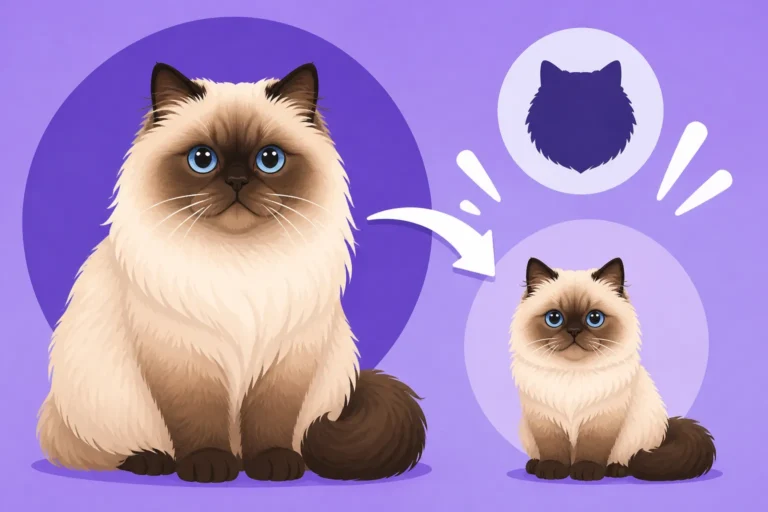
One of the most striking features of a Himalayan cat is, without a doubt, those absolutely captivating blue eyes. If you’ve ever wondered why you never see a Himalayan with green or gold eyes, it’s not just a preference; it’s actually written into their very DNA and the core of their breed standard. This guide is going to take a deep dive into the fascinating genetics behind those piercing blue gazes and explain why this specific eye color is not just beautiful, but an essential part of what makes a Himalayan, well, a Himalayan.
The Himalayan's Signature Blue Gaze: A Breed Defining Trait
When you look at a Himalayan cat, the first thing that often captures your attention (after that incredible coat, of course!) is that intense, sapphire blue stare. It's a hallmark of the breed, as iconic as their plush fur and distinct 'points' of color. But this isn't just a happy coincidence of breeding; it's a direct result of the specific genes that create their colorpoint pattern. Without those genes, you simply wouldn't have a Himalayan as we know it.
The Siamese Ancestry and the Point Gene
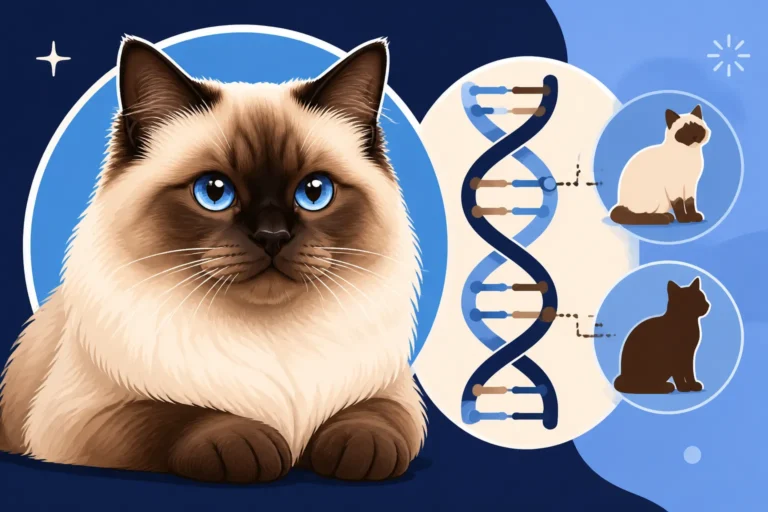
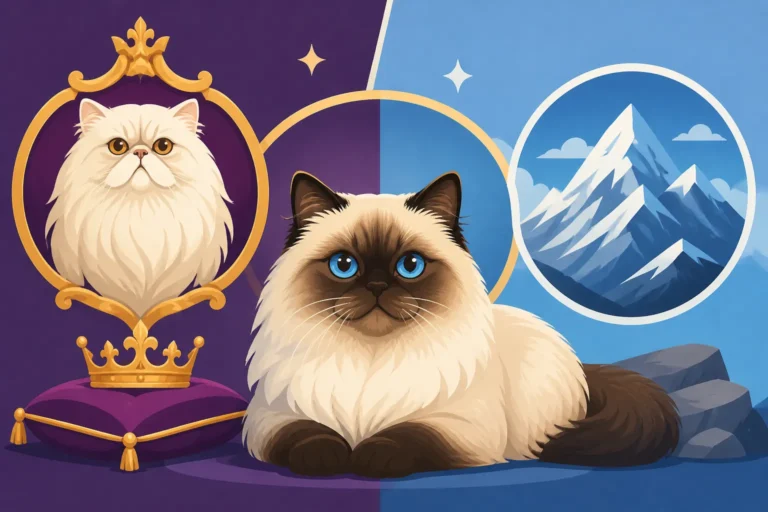
To understand the Himalayan's blue eyes, we first have to talk about their ancestry. Himalayans are a glorious blend of Persian and Siamese genetics. The Siamese contribution brought not just the distinctive "pointed" coat pattern – darker coloration on the cooler extremities like the face, ears, paws, and tail – but also the gene responsible for their blue eyes. This gene is often referred to as the Himalayan gene or the colorpoint gene. It’s a temperature-sensitive enzyme that affects the production of melanin, which is the pigment responsible for both coat and eye color. It's quite remarkable how precisely this genetic inheritance manifests in every single Himalayan. You can learn more about this connection in What the Siamese Side Gave a Himalayan Besides Points.
This specific gene, a recessive allele of the C (color) gene, is what dictates that a Himalayan must have blue eyes. Unlike other breeds where eye color can be quite varied, the genetic mechanism at play here essentially prevents the development of other eye colors. It's not a preference; it's a direct consequence of their genetic makeup. When a cat inherits two copies of this particular recessive gene, the pigment in their irises is limited in such a way that only blue light is reflected, giving them that characteristic blue hue.
How Temperature Influences Pigment and Eye Color
The colorpoint gene is famously temperature-sensitive. This is why Himalayan kittens are born almost entirely white, with their points gradually darkening as they are exposed to cooler temperatures outside the womb. The enzyme responsible for producing pigment (melanin) only functions effectively in cooler parts of the body. In the warmer core, the enzyme is inactive, leading to the pale body coat, while in the cooler extremities like the nose, ears, paws, and tail, the enzyme becomes active, allowing pigment to develop.
This temperature sensitivity extends to the eyes as well, albeit in a slightly different way. The same gene that restricts pigment in the fur also restricts it in the irises. Melanin is also the pigment that creates greens, golds, and browns in cat eyes. With the enzyme largely inhibited in the eyes due to this specific genetic mutation, there isn't enough pigment present to produce any color other than blue. It’s a beautiful dance between genetics and environment that shapes the entire look of our beloved Himalayans. You can see this fascinating interplay in action by reading How Temperature Decides a Himalayan's Point Color.
The Genetic Connection to Albinism
While Himalayans aren't true albinos, their blue eyes and colorpoint pattern share a fascinating genetic link to partial albinism. The colorpoint gene (c^s) is actually a form of partial albinism. True albinos lack all pigment, resulting in white fur and pinkish-red eyes due to the blood vessels showing through. In Himalayans, the c^s gene produces a modified enzyme that is temperature-sensitive. This means pigment is produced, but only in cooler areas of the body.
Because the enzyme is less active in the warmer environment of the developing eye, there's very little melanin deposited in the iris. The structure of the cat's eye, specifically the scattering of light by the collagen fibers in the iris, combined with the low pigment levels, results in the reflection of blue light. This isn't a "blue pigment" in the traditional sense; rather, it's the absence of other pigments that allows the blue wavelengths to become visible. It's a similar phenomenon to why the sky appears blue – the scattering of light by particles. This partial inhibition of pigment is what sets the Himalayan apart, giving them their unique beauty without the full health complications often associated with complete albinism.
Decoding the Himalayan Point Gene (C/c^s)
Understanding the genetic blueprint of the Himalayan cat is like peering into a fascinating puzzle where every piece fits perfectly to create their distinct look. The colorpoint gene, often denoted as c^s (for Siamese color restriction), is central to this. It's not just about the beautiful points; it's fundamentally tied to those mesmerizing blue eyes that we all adore.
Understanding Recessive Genes in Cat Genetics
In the world of genetics, genes come in pairs, one from each parent. Some genes are dominant, meaning only one copy is needed for that trait to show up. Others are recessive, and for a recessive trait to be expressed, the cat needs to inherit two copies of that gene—one from its mother and one from its father. The colorpoint gene (c^s) is a recessive gene. This means that a cat must have the genotype c^s/c^s to display the pointed pattern and, by extension, the blue eyes.
A cat could carry one copy of the c^s gene and one copy of the dominant C (full color) gene, making them a carrier. They would look like a fully colored cat (e.g., a solid Persian) but could pass the colorpoint gene to their offspring. This is incredibly important for breeders who are working with Himalayan lines, as they need to ensure both parents carry the correct genetic information to produce those coveted blue-eyed, pointed kittens. Knowing the genetics helps prevent unexpected color outcomes in litters and maintains the integrity of the breed standard.
Why Two Copies Mean Blue Eyes and Pointed Coats
So, as we've discussed, it takes two copies of the c^s gene for a Himalayan to have both its signature points and its striking blue eyes. When a kitten inherits c^s from both parents, that temperature-sensitive enzyme is effectively "turned on," but only in the cooler regions of the body. This means that the pigment production is inhibited everywhere else, including the irises of the eyes. Without enough pigment, the true color potential that might otherwise create green or gold eyes simply isn't there.
This is a beautiful example of pleiotropy, where a single gene affects multiple traits. The c^s gene simultaneously dictates the pattern of the coat coloration (the points) and the absence of full pigment in the eyes, leading to that characteristic blue. It's a package deal, really. You won't find a Himalayan with the pointed coat pattern but with green eyes, because the very gene that creates the points also restricts the pigment in the eyes to blue. This is a fundamental aspect of their breed identity.
The Lack of Pigment in the Iris
The blue color we see in a Himalayan's eyes isn't due to blue pigment, which is a common misconception. Instead, it's a structural color, similar to how the sky appears blue. The iris of the eye contains very little melanin pigment due to the effect of the c^s gene. When light enters the eye, it's scattered by the tiny, colorless collagen fibers within the stroma (the outermost layer) of the iris.
Because there are no other pigments to absorb or reflect different wavelengths of light, the blue wavelengths are scattered and reflected back out more efficiently than other colors. This phenomenon, known as Rayleigh scattering, is what gives the eyes their blue appearance. The deeper the blue, the more uniform or dense the scattering elements might be, or simply the way the light hits them. This also explains why the shade of blue can sometimes appear to shift slightly depending on the lighting conditions, adding another layer of mystique to their already enchanting gaze.
| Genetic Trait | Genotype | Eye Color | Coat Pattern |
|---|---|---|---|
| Full Color | CC or Cc^s | Green, Gold, Copper | Solid, Tabby, Bicolor |
| Himalayan/Colorpoint | c^s c^s | Blue Only | Pointed (dark extremities) |
Breed Standards: Why Blue is the Only Accepted Color
For any purebred cat, breed standards are the blueprint that defines what that cat should look like, down to the smallest detail. For Himalayans, these standards are particularly strict regarding eye color. It's not just a suggestion; it's a mandatory characteristic that breeders strive to maintain and judges uphold in the show ring.
CFA and TICA's Strict Eye Color Requirements
Major cat registries like the Cat Fanciers' Association (CFA) and The International Cat Association (TICA) are unequivocal: a Himalayan cat must have blue eyes. In the CFA, where Himalayans are a division of the Persian breed (often called Colorpoint Persians), the standard specifically calls for "Brilliant deep blue eyes" with "no other color acceptable." TICA, which recognizes the Himalayan as its own distinct breed, also mandates "brilliant blue" eyes. Any other eye color, whether it's green, gold, or even a pale aqua that isn't distinctly blue, is considered a disqualifying fault in the show ring.
This strict adherence to blue eyes isn't arbitrary. It directly reflects the genetic purity of the breed and its origins. The Siamese contribution, which brought the colorpoint gene, inherently links the pointed pattern with blue eyes. If a cat has a pointed coat but non-blue eyes, it's a strong indication that it's not a purebred Himalayan or Colorpoint Persian according to the breed's established lineage and genetic traits. This standard helps ensure the integrity and consistent appearance of the breed for future generations.
The Impact on Show Cats and Breeding Programs
For breeders of show-quality Himalayans, eye color is paramount. A cat might have the perfect cobby body, a luxurious long coat, and beautifully balanced facial features, but if its eyes aren't the correct shade of blue, it simply won't place well in competition. Judges meticulously evaluate the depth and brilliance of the blue, looking for that rich, intense hue that defines the breed. This creates a significant incentive for breeders to select breeding pairs that consistently produce kittens with excellent eye color.
Breeding programs often focus on maintaining not just the presence of blue eyes, but the quality of the blue. Pale, watery, or greenish-blue eyes are less desirable than a deep, vivid sapphire. This dedication ensures that the iconic look of the Himalayan is preserved. It’s a constant effort to breed for health, temperament, and adherence to these stringent aesthetic standards. Breeders pay close attention to the genetic lines to avoid any dilution or variation from the prescribed blue. How Large and Round a Himalayan's Blue Eyes Should Be delves into more detail about these specific requirements.
Distinguishing a True Himalayan from a Mix
Given the popularity of Himalayans, it's not uncommon to find mixed-breed cats advertised as Himalayans, especially if they have some elements of the pointed pattern. However, one of the easiest and most definitive ways to distinguish a true Himalayan from a mix is by their eye color. If a cat has a colorpoint pattern but doesn't have blue eyes, it's highly unlikely to be a purebred Himalayan.
For instance, a cat might have some Siamese or Persian ancestry and exhibit a partial pointed pattern, but if its eyes are green, yellow, or even a diluted amber, it suggests other genes are at play, indicating a mixed heritage. This is a crucial piece of information for potential owners who want to ensure they are getting a genuine Himalayan. Reputable breeders will always provide documentation and pedigree information that traces the cat's purebred lineage and confirms its genetic makeup, including the necessary c^s/c^s genotype for those brilliant blue eyes. Which Two Certificates a Himalayan Breeder Owes You can help you understand what to ask for.
The Spectrum of Blue: From Pale Sky to Deep Sapphire
While "blue eyes" is the unwavering standard for Himalayans, it's not a monolithic color. Just like with human eye colors, there's a fascinating range within the blue spectrum. You'll see everything from a lighter, almost sky-blue shade to an incredibly deep, piercing sapphire. These variations are normal and part of the breed's beauty, though certain depths of color are often preferred in the show ring.
Factors Affecting the Shade of Blue
Several subtle factors can influence the exact shade of blue in a Himalayan's eyes. While the c^s gene dictates that the eyes will be blue, the intensity and depth can vary. One factor is simply individual genetic variation; even within the same litter, kittens can have slightly different shades of blue, just as siblings in a human family can have different hair colors. The density and arrangement of the collagen fibers in the iris, which scatter the light, can subtly alter how the blue appears.
Another less scientific but often observed factor is the surrounding lighting. A Himalayan's eyes might look lighter in bright sunlight and appear a deeper, richer blue in softer, indoor lighting. Their overall coat color contrast can also play a trick on the eyes; a very pale-bodied cat might make its blue eyes seem more striking, while a cat with darker points might offer a different perception of the blue's intensity. Breeders often aim for the deepest blue possible, as this is typically favored in the show ring for its striking appearance.
Why Eye Color Can Seem to Change
It's common for new Himalayan owners to wonder if their kitten's eye color is changing as they grow. While the fundamental blue color is set by their genetics, the perception of that blue can indeed evolve. Himalayan kittens are born with very light blue eyes, often appearing almost grayish-blue. As they mature, the eye color typically deepens and becomes more intense. This is often due to the gradual development and stabilization of the iris structure and the density of the light-scattering collagen fibers.
Environmental factors, as mentioned, also play a role in how we perceive the color. A cat’s mood can even influence it slightly – dilated pupils in a playful or alert cat can make the surrounding blue appear more concentrated. It's not a true color change, but rather a maturation process and an interaction with light that can make the blue seem richer and more profound as your Himalayan grows from a fluffy kitten into a magnificent adult. Rest assured, if their eyes were blue as a kitten, they'll remain blue, just possibly a more vibrant shade.
Blue Eyes and Vision in Himalayans
A common misconception about blue-eyed cats, particularly those with pointed patterns, is that they might have poorer vision, especially in low light. While it's true that blue eyes, due to their lower pigment levels, can sometimes be more sensitive to bright light, there's generally no evidence to suggest that Himalayans have impaired vision because of their eye color. Their eyes are structurally sound, and their vision is typically excellent.
However, like all cats, Himalayans can be prone to certain eye conditions. Their large, round, often prominent eyes, inherited from their Persian lineage, can make them more susceptible to issues like excessive tearing or conjunctivitis. It's crucial for Himalayan owners to be vigilant about eye health and to provide regular care. This doesn't stem from the blue color itself, but rather the overall structure of their eyes. If you ever notice cloudiness, excessive redness, or discharge from your Himalayan's beautiful blue eyes, a vet visit is always in order. Your vet can recommend specific eye washes or drops, which you can often find readily available from online retailers like Chewy.
Caring for a Blue-Eyed Beauty: Unique Considerations
Owning a Himalayan cat means embracing their unique characteristics, and those gorgeous blue eyes are definitely part of the package. While their eye color doesn't typically cause vision problems, their ocular structure and the surrounding facial features do require some specific care to keep them healthy and looking their best.
Protecting Sensitive Blue Eyes
Due to the lack of significant pigment, blue eyes can sometimes be a bit more sensitive to very bright light, similar to how fair-skinned people might be more sensitive to the sun. While this doesn't usually impact indoor life, if your Himalayan has access to a very bright sunbeam or a secure, shaded catio, ensure they have plenty of opportunities to retreat to dimmer areas.
Furthermore, the Persian influence in Himalayans often results in a flatter face (brachycephalic structure) and larger, rounder eyes. These prominent eyes can be more exposed to dust, debris, and irritants in the air. Regularly checking your cat's eyes for any foreign particles, redness, or signs of irritation is a good practice. If you notice persistent squinting, excessive tearing, or any discomfort, it's always best to consult your veterinarian. They might recommend specific ophthalmic solutions or eye wipes, which you can often stock up on from pet supply sites like Chewy.
Addressing Tear Staining in Pale-Coated Himalayans
One of the most common cosmetic concerns for Himalayan owners is tear staining, especially pronounced on their pale body coats. Those beautiful blue eyes, coupled with the flatter face structure, can lead to tear ducts that are slightly more prone to overflowing or becoming blocked. The tears, when exposed to air and certain bacteria, can oxidize and leave reddish-brown stains down the fur from the inner corner of the eye. This is especially visible on lighter point colors, like a cream point or blue point.
Daily maintenance is key to managing tear stains. Gently wiping the area around the eyes with a soft, damp cloth or a specialized pet eye wipe every morning can make a huge difference. For stubborn stains, there are also various tear stain removers available, but always choose products specifically formulated for cats and use them with caution around the eyes. Keeping the fur around the eyes trimmed can also help reduce the surface area for stains to cling to. Regular grooming, like what you’d find recommended on Chewy’s grooming guides, can also contribute to a clean face. Dive deeper into this topic with Why a Himalayan's Eyes Water All Day and How Tear Staining Marks a Himalayan's Pale Body Coat.
Regular Vet Checks for Eye Health
Because of their unique facial structure and eye characteristics, regular veterinary check-ups are incredibly important for Himalayans. Your vet will not only examine their general health but also pay close attention to their eyes during these visits. They can check for any signs of entropion (where the eyelid rolls inward, irritating the eye), corneal ulcers (which can be more serious on prominent eyes), or other conditions that might affect their vision or comfort.
Early detection of any eye issue is crucial. What might seem like a minor irritation could, if left untreated, develop into something more serious. Your vet might also discuss diet and supplements, as good nutrition can support overall health, including eye health. Ensuring your Himalayan receives proper care for its eyes, in addition to its magnificent coat, is part of being a responsible and loving owner. Never hesitate to bring up any concerns about your cat's eyes with your trusted veterinarian. How Often a Himalayan's Eyes Should Be Examined highlights the importance of these routine checks.
Disclaimer
This article is for general informational purposes only and does not constitute professional advice. Laws, prices and regulations vary by location and change over time. Consult a qualified professional for guidance on your specific situation.