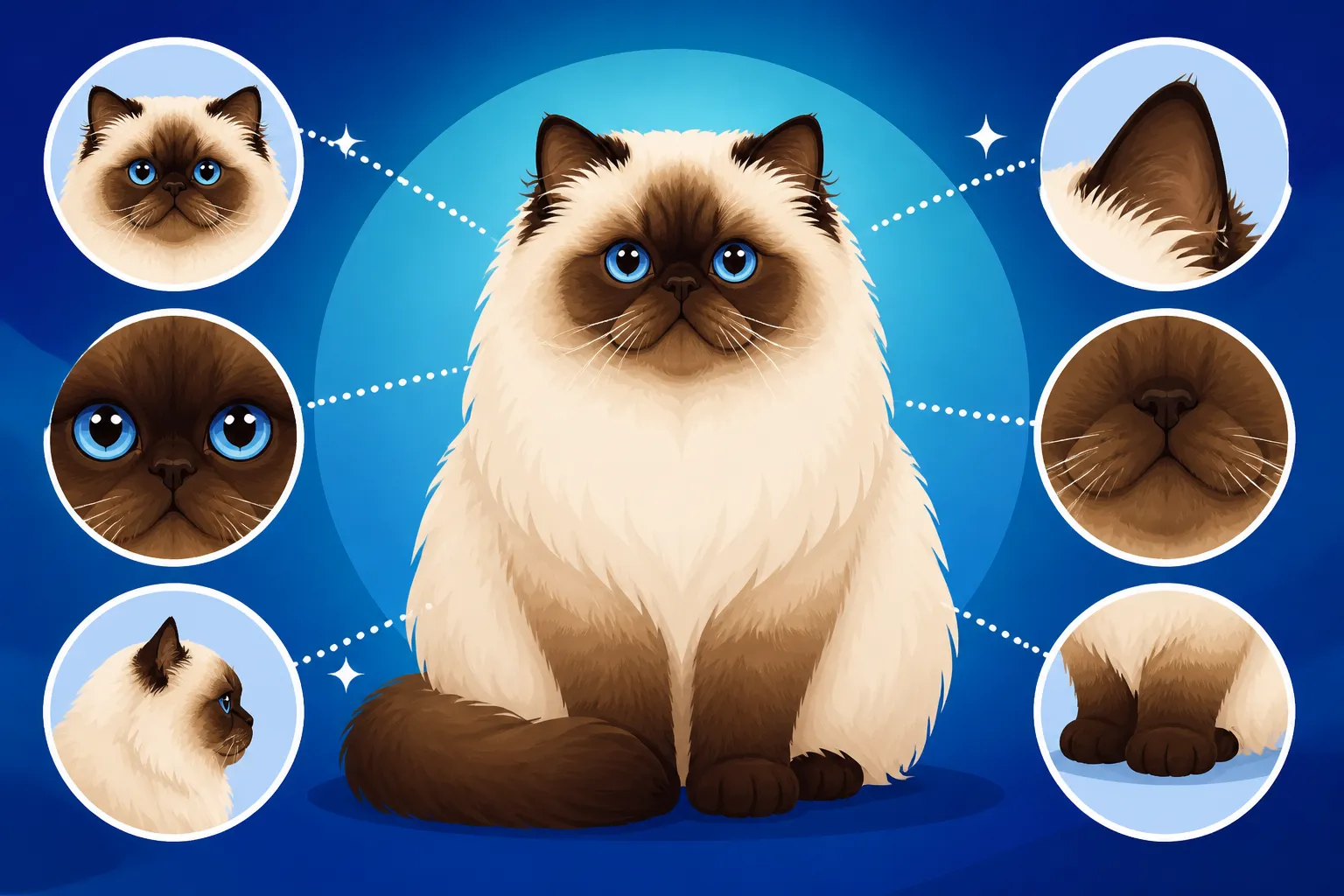
How a Himalayan’s Points Are Judged
It can be incredibly frustrating to look at your beautiful Himalayan and wonder if their unique markings are "perfect" by show standards, or even just how to appreciate what you see beyond "pretty." Many new Himalayan parents, and even some seasoned ones, feel a bit lost in the nuanced world of point judging. This comprehensive guide is here to demystify exactly how a Himalayan's distinctive points are evaluated, helping you understand the intricacies of this gorgeous breed's coloration.
Understanding the Himalayan Point Pattern
The Himalayan cat, with its stunning colorpoint pattern, often leaves people in awe. But what exactly are these "points" that judges scrutinize, and what makes them stand out? It's more than just dark ears and a tail; it's a fascinating genetic expression that defines the breed.
What Exactly Are "Points" on a Himalayan?
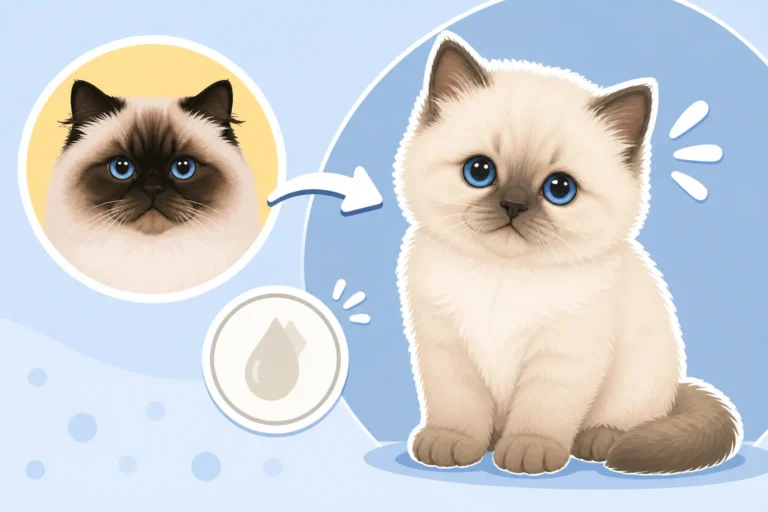
When we talk about a Himalayan's "points," we're referring to the darker coloration found on specific, cooler extremities of the cat's body: the mask (face), ears, paws, and tail. This distinctive pattern is a form of partial albinism, a temperature-sensitive gene inherited from their Siamese ancestors. Essentially, the gene responsible for the color is only active in cooler parts of the cat's body. The main body of a Himalayan, being warmer, remains a much lighter shade, creating that striking contrast we all adore. It’s truly a marvel of genetics, and it’s why every Himalayan kitten is born almost entirely white; their body temperature in the womb is uniformly warm, preventing the color from developing until they are exposed to cooler air after birth.
As your Himalayan grows, you'll see these points gradually deepen in color. This process isn't instant; it takes time and is a direct result of their body temperature regulating outside the womb. The colder a Himalayan is kept, within reason, the darker its points can become, and this darkening continues subtly throughout their life. It’s a common sight to see the points deepen and spread a bit year after year, giving older Himalayans a richer, sometimes almost solid appearance over time, especially if they enjoy a cooler household.
The Ideal Color and Contrast for Himalayan Points
The ideal Himalayan boasts a clear, distinct contrast between its body color and its points. Think of it like a perfectly painted canvas: crisp lines, vibrant colors, and no smudges. The body should be a very pale, even shade – typically ivory, cream, or glacial white – that provides a stark background for the rich, deep color of the points. Judges are looking for this clean break, where the point color starts abruptly and does not "bleed" or fade into the body. How Judges Score a Himalayan's Point Contrast is a whole art in itself, and it focuses heavily on this clear delineation.
The points themselves should be solid and even in color, without mottling or white patches. Whether you have a Seal Point with its deep, espresso-like brown, a Blue Point with its soft, slate gray, or a Flame Point with its fiery orange-red, the color should be uniform across all the pointed areas. A well-bred Himalayan will have consistency in color across its mask, ears, legs, and tail. Any hint of "smut" or uneven shading on the body coat, which can sometimes appear as a grayish haze, is considered undesirable as it diminishes that sought-after contrast.
The Critical Elements of Point Judging
When a Himalayan steps onto the show bench, a judge isn't just giving a cursory glance. They're meticulously examining several key aspects of the point pattern, each contributing to the overall impression and adherence to the breed standard. This level of detail ensures that only the most exemplary examples of the breed receive top honors.
Depth and Evenness of Point Color
One of the first things a judge evaluates is the depth and evenness of the point color. Imagine a rich, luxurious velvet fabric – that’s the kind of intensity they want to see. The color should be dense and saturated across all the points: the mask, ears, legs, and tail. There shouldn’t be any patchiness, faded areas, or lighter streaks within the points themselves. For instance, a Seal Point should have a deep, dark brown everywhere the points are, not a lighter brown on its paws and a darker one on its ears. This evenness speaks to the genetic quality and consistent temperature regulation throughout the cat's life.
Another aspect is the color intensity. The darker point colors, like Seal and Chocolate, should be truly rich and profound. Lighter points, such as Lilac or Cream, should still be clearly defined and not appear washed out. A beautiful Himalayan will display a vibrancy in its point color that makes them truly pop against their pale body. If the color seems weak or diluted, it can suggest genetic inconsistencies or environmental factors that haven't allowed the full expression of the colorpoint gene.
Contrast Between Points and Body Color
Perhaps the most visually striking element, and certainly one of the most important in judging, is the contrast between the points and the body color. This is where the magic of the Himalayan pattern truly shines. The body should be a distinct, light shade – ideally, a creamy ivory, pure white, or a very pale, clear fawn, depending on the point color. This light body color allows the points to stand out in sharp relief. Why a Himalayan's Body Coat Should Stay Light is fundamental to the breed's aesthetic.
Judges are looking for a sharp, clear line where the point color begins and the body color ends. There should be no blurring, smudging, or gradual shading. Any "ticking" (speckles of color) or "smut" (a general grayish or yellowish cast) on the body coat is a serious fault, as it compromises this vital contrast. A perfect Himalayan looks almost as if it's wearing a perfectly tailored, brightly colored suit over a crisp white shirt. The clearer this distinction, the higher the score. This is why Why a Poor Contrast Himalayan Loses Points is so critical in the show ring.
Point Locations and Markings
Beyond color and contrast, judges meticulously inspect the exact locations and markings of the points. The standard dictates precisely where the points should appear.
- Mask: The facial mask should cover the entire face, including the nose and whisker pads, and extend above the eyes. It should be symmetrical and well-defined, not lop-sided or patchy.
- Ears: The ears should be deeply colored and extend down to the base. There should be no lighter patches or "frosting" on the tips.
- Paws and Legs: All four paws should be uniformly colored, extending up the legs to meet the body color clearly. White toes or "socks" are considered serious faults, as they disrupt the expected pattern.
- Tail: The tail should be fully and evenly colored from base to tip, with no lighter rings or areas.
- Nose Leather and Paw Pads: These are often overlooked but are crucial indicators. The nose leather and paw pads should match the point color. For a Seal Point, these would be a deep brown. For a Blue Point, slate gray. Any deviation, like pink nose leather on a Seal Point, indicates an inconsistency.
Every single one of these areas is scrutinized for its adherence to the precise pattern. Even a seemingly small detail like a white spot on a paw pad can be a disqualifying fault in a show-quality cat. These detailed expectations ensure that the overall impression of a show Himalayan is one of perfect, genetic symmetry and vibrancy.
Common Faults and Imperfections in Pointing
Even the most beautiful Himalayans can sometimes present with minor imperfections in their point coloration. Understanding these common faults is key to appreciating the challenges breeders face and the standards judges uphold. These aren't necessarily signs of an unhealthy cat, but rather deviations from the ideal aesthetic.
"Smut" and "Ticking" on the Body
One of the most frequently encountered issues that can dock points in the show ring is the presence of "smut" or "ticking" on the body. Smut refers to a general, undesirable dark or dingy shading on the otherwise pale body coat. Instead of a crisp, clear ivory or white, the body might appear somewhat grayish, yellowish, or even slightly brown. This dulls the overall appearance and, critically, reduces the sharp contrast between the body and the points. Imagine trying to see a dark object against a slightly darker background – it just doesn't pop. This can be caused by various factors, including genetics, environment (a cat kept in a colder home might develop more overall body shading, as discussed in Why a Himalayan in a Cold House Darkens All Over), or even poor grooming.
Ticking, on the other hand, describes small, individual colored hairs scattered throughout the body coat. Instead of a solid, uniform pale body, you might see flecks of the point color appearing on the back or flanks. Both smut and ticking are considered faults because they break up the clean canvas of the body, making the points appear less distinct and the cat's overall coloration less refined. Breeders work incredibly hard to produce Himalayans with exceptionally clear body coats, free from these distracting marks, which is a testament to careful genetic selection. Maintaining a pristine coat also means diligent grooming, ensuring no external factors like dirt or environmental stains contribute to this lack of clarity.
Fading or "Washing Out" of Points
Just as some Himalayans can develop unwanted darkening on their body, others can experience the opposite problem: their points might appear "faded" or "washed out." This means the color isn't as deep, rich, or intense as it should be according to the breed standard. Instead of a vibrant Seal Point, you might see a dull, lighter brown. A brilliant Flame Point might look more like a pale cream with a hint of orange. This can significantly detract from the cat's visual appeal and will certainly be noted by a judge.
Several factors contribute to point fading. Age is a natural one; while points generally deepen over years, sometimes a very old cat's overall pigment can lighten. However, environmental temperature plays a huge role; a Himalayan kept in a consistently warm environment might not develop as dark points as one in a cooler home, as the enzyme responsible for color production is heat-sensitive. This explains How Temperature Decides a Himalayan's Point Color. Genetics, of course, are also a factor; some lines naturally produce less intense point colors. Even certain dietary deficiencies or medications could potentially impact coat quality and color depth, though this is less common. For owners concerned about their Himalayan's points, ensuring a balanced diet from a reputable brand like Chewy and a consistent, somewhat cooler ambient temperature can sometimes help optimize color expression.
Misplaced or Incomplete Points
Beyond the quality of the color, the placement and completeness of the points are equally important. Misplaced points or incomplete markings are specific deviations that indicate a departure from the breed standard.
One common example is "white toes" or "mittens," where white fur extends onto the paws instead of being fully covered by the point color. This is a disqualifying fault in most show registries. Similarly, an incomplete mask might mean the color doesn't extend fully around the eyes, or symmetrically across the nose and whisker pads. You might see a "broken" mask, where the color is patchy, or doesn't join properly.
Another example can be an uneven tail, where the coloration is not uniform from base to tip, or where rings of lighter fur are visible. Any areas that should be fully pointed but show patches of lighter, body-colored fur, or conversely, areas that should be clear but show unexpected darker patches (like on the chest or belly, which are warm areas), are considered faults. These issues often point to genetic factors, indicating that the colorpoint gene isn't expressing itself perfectly or uniformly throughout the cat's extremities. While it doesn't affect the cat's health, it’s a significant deviation from the desired aesthetic in a show-quality Himalayan.
How Environmental Factors Influence Point Expression
It’s easy to think of a cat's appearance as purely genetic, but with Himalayans, the environment plays a starring role, particularly when it comes to their striking point coloration. Understanding these influences can help owners maintain their cat's beautiful coat and appreciate why their points might look different at various times.
Temperature's Role in Point Development
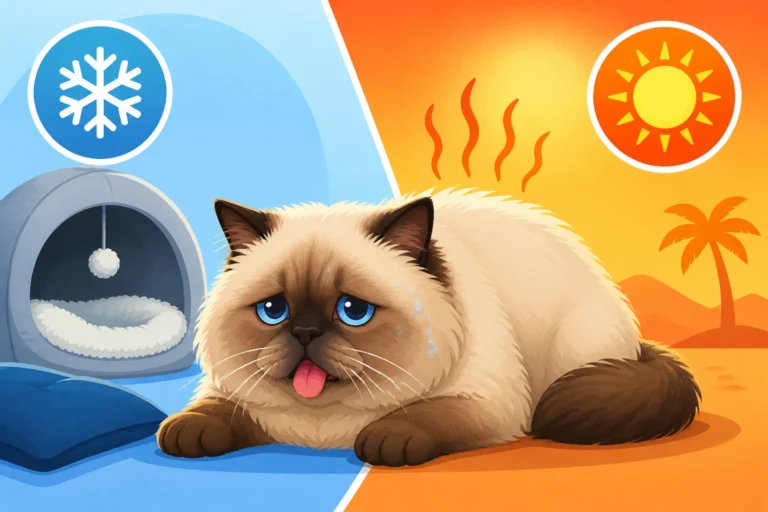
The single most significant environmental factor affecting a Himalayan's point color is temperature. Their unique colorpoint gene is thermosensitive, meaning it only activates and produces pigment in cooler parts of the body. This is why a Himalayan kitten is born white – their entire body is warm in the womb. As they grow and are exposed to the ambient temperature of their surroundings, the cooler extremities (ears, nose, paws, tail) develop their darker coloration.
Think about a cat living in a house kept quite cool versus one in a very warm climate. The cat in the cooler home will generally develop deeper, richer, and often more expansive points. Their body might also show slightly more overall shading or "smut" because larger areas of their body are cool enough for some pigment to activate. Conversely, a Himalayan in a warm environment might have lighter, less intense points and a clearer, whiter body. This phenomenon is even seen if a cat has an injury or surgery that requires shaving a patch of fur: when the fur grows back, it will often be darker than the surrounding body coat because the shaved area was cooler while the fur was regrowing. This perfectly illustrates Why a Shaved Patch Grows Back Dark on a Himalayan. It's a constant balancing act, and even subtle changes in your home's temperature can influence how your Himalayan's coat looks over time.
Diet and Grooming's Impact on Point Quality
While genetics and temperature are primary, diet and grooming also play a supportive, albeit indirect, role in maintaining the quality and appearance of a Himalayan's points. A healthy cat, on a balanced diet, will naturally have a healthier coat, which in turn can display its color and contrast more effectively.
A high-quality diet, rich in essential fatty acids and appropriate proteins, contributes to a luxurious, shiny, and strong coat. A dull, dry, or brittle coat, often a sign of nutritional deficiencies, might make the point colors appear less vibrant or the contrast less sharp. While diet doesn't directly change the shade of the points, it absolutely affects the quality of the fur that carries that color. Think of it like a canvas – even if the paint is the right color, if the canvas is poor, the overall effect is diminished. Many premium cat food brands, including options available at Chewy, focus on skin and coat health with added omega fatty acids, which can enhance the natural luster of your cat's fur.
Grooming is equally vital, especially for a long-haired breed like the Himalayan. Regular combing prevents matting, which can hide the true color and even create pressure points that might affect localized temperature and thus, color expression. Furthermore, meticulous face cleaning is critical, especially for the flatter-faced Himalayans. Tear stains, which can be particularly pronounced on cream-bodied Himalayans Why Tear Stains Are Worse on a Cream Bodied Himalayan, can leave rust-colored marks on the mask. These stains detract from the clarity and crispness of the point color on the face, making it appear less distinct and less appealing to a judge. Daily wiping of the face, especially around the eyes and nose, is essential to keep the mask clean and showcase its true color.
The Judge's Perspective: What They Look For
When a Himalayan is presented for judging, it's not just a casual glance. Judges are highly trained individuals with a deep understanding of the breed standard, meticulously evaluating each cat against a set of exacting criteria. Their perspective is crucial, as they are looking for the embodiment of the ideal Himalayan.
Holistic Evaluation of the Point Pattern
A judge doesn't simply look at the color of the ears in isolation. They perform a holistic evaluation of the entire point pattern, assessing how all the elements work together to create a harmonious and balanced appearance. This means looking at the symmetry of the mask, the evenness of the leg coloration, the depth of the tail color, and, most importantly, the overall contrast with the body.
They're looking for a "whole picture" where the points are well-defined, rich in color, and beautifully frame the cat's pale body. Does the mask flow smoothly into the ear color? Are the legs evenly colored, or do they appear patchy? Is the tail consistently dark from top to bottom? Any inconsistencies or lack of balance across these areas can detract from the overall impression. For example, if a cat has incredibly dark ears but a much paler, less defined mask, it creates an imbalance that a judge will notice. The goal is a uniform and cohesive expression of the colorpoint gene across all designated areas, creating a truly striking visual impact.
The Importance of Breed Standard Adherence
At the heart of every judge's decision is strict adherence to the breed standard. Each major cat registry, such as the Cat Fanciers' Association (CFA) or The International Cat Association (TICA), publishes detailed standards that describe the ideal characteristics of each recognized breed. For Himalayans, these standards include precise descriptions of point colors, acceptable body colors, and the desired contrast. What the Persian Standard Asks of a Himalayan (as Himalayans are often judged as a division of Persians in CFA) provides very specific guidelines.
Judges are trained to interpret and apply these standards rigorously. They're not just looking for a pretty cat; they're looking for a cat that embodies the written ideal. This means understanding exactly Which Point Colors the Standard Lists for a Himalayan and recognizing the nuances of each. For instance, a "Seal Point" should be a specific shade of dark brown, not black, and a "Blue Point" should be a distinct slate gray, not a washed-out silver. Any deviation from these specified colors or the expected clarity and contrast is considered a fault. The judge's job is to objectively measure each cat against this perfect blueprint, awarding points for how closely it matches the ideal and deducting for any deviations. This ensures consistency in the breed and guides breeders in their efforts to produce show-quality Himalayans.
Comparing Ideal Points to Common Faults
To really grasp what judges are looking for, it's helpful to see a direct comparison between the ideal characteristics and the common faults we've discussed. This table highlights the critical differences, helping you identify what makes a Himalayan's points truly stand out.
| Characteristic | Ideal Himalayan Points | Common Faults | Impact on Judging |
|---|---|---|---|
| Point Color | Deep, rich, saturated, and uniform throughout the points. | Faded, washed-out, patchy, or inconsistent color intensity. | Significant deductions for lack of vibrancy and definition. |
| Body Color | Clear, pale (ivory, cream, glacial white), free of shading. | "Smut" (dingy, dark shading) or "ticking" (scattered colored hairs). | Reduces contrast, lowers overall score for clarity. |
| Contrast | Sharp, distinct line between points and body. | Blurry, gradual transition, or bleeding of color. | Major deductions; blurs the defining feature of the breed. |
| Point Location | Mask, ears, legs, tail fully and evenly colored. | White toes/mittens, incomplete/asymmetrical mask, patchy tail. | Serious faults, often disqualifying in the show ring. |
| Nose/Paw Pads | Matches point color (e.g., brown for Seal Point). | Incorrect color (e.g., pink nose on a Seal Point). | Deduction for deviation from standard. |
| Overall Balance | Harmonious distribution and intensity across all points. | Imbalance (e.g., dark ears, pale mask), uneven appearance. | Affects the cat's overall aesthetic appeal and total score. |
Understanding these distinctions is essential whether you're a potential owner trying to assess a kitten's quality, or a seasoned breeder aiming for the pinnacle of the show ring. The beauty of the Himalayan truly lies in the meticulous details of its point coloration. How Many Point Colors the Himalayan Division Recognizes also plays a role, as the specific ideal shade differs for each recognized color.
Ultimately, judging a Himalayan's points is a detailed art form, steeped in the breed's genetic heritage and specific standards. While it can seem complex, learning about these criteria helps you appreciate the incredible beauty and careful breeding behind every exquisite Himalayan cat. From the perfect contrast to the deep, even coloration, every element contributes to the stunning aesthetic that makes these cats so beloved. Keep an eye on your Himalayan’s coat over time, because Why a Himalayan's Points Deepen Every Year It Lives means they’re constantly evolving! And remember, even if your beloved companion isn't a show champion, understanding these aspects deepens your appreciation for their unique charm.
Disclaimer
This article is for general informational purposes only and does not constitute professional advice. Laws, prices and regulations vary by location and change over time. Consult a qualified professional for guidance on your specific situation.