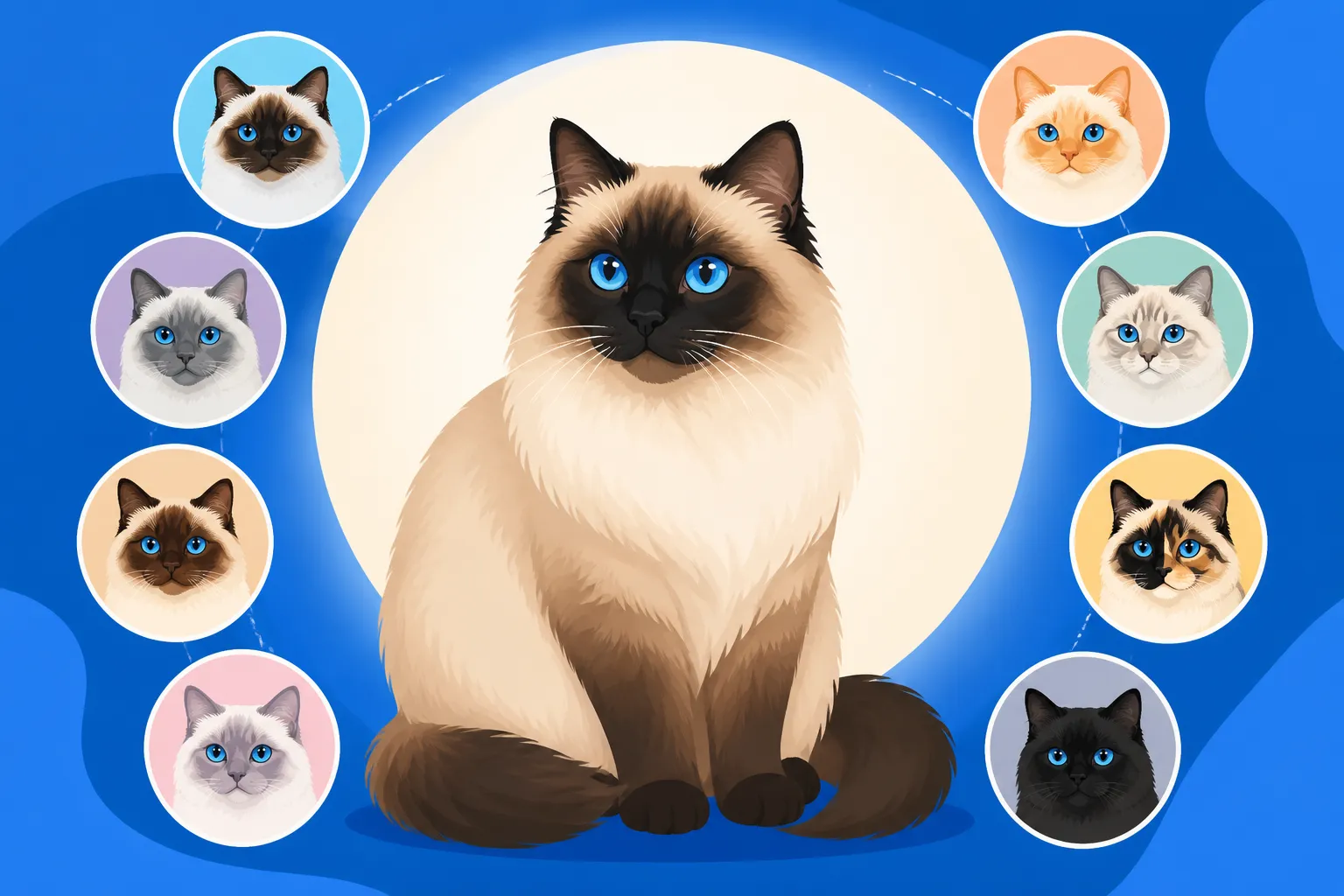
How Many Point Colors the Himalayan Division Recognizes
It can be incredibly confusing when you first start looking into Himalayan cats, especially when you hear breeders and enthusiasts tossing around terms like "seal point," "blue cream," or "lynx point." You might be picturing a cat with wildly different hues, only to find they all share that iconic pointed pattern. This guide will walk you through the officially recognized point colors for Himalayans, helping you understand the genetic artistry behind their stunning coats and what makes each one unique according to breed standards.
The Foundation of Himalayan Point Colors: A Genetic Marvel
The stunning color palette of a Himalayan cat isn't just skin deep; it's a fascinating display of genetics at play, deeply rooted in their heritage. Understanding why they have points is just as important as knowing what those points look like. It all comes down to a clever little gene that reacts to temperature, painting their extremities in darker hues while keeping their core body light.
The Temperature-Sensitive Gene: Why Points Appear
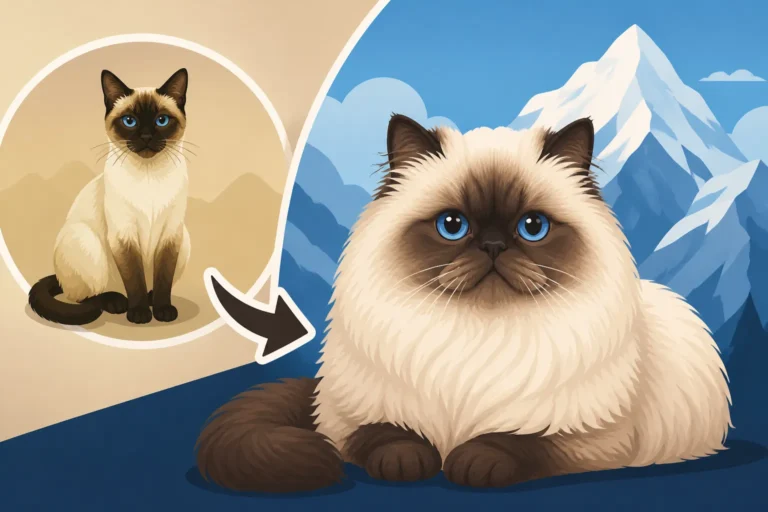
At the heart of every Himalayan's distinctive coat lies a fascinating genetic trait: a temperature-sensitive enzyme. This enzyme is responsible for producing pigment, but it only functions effectively in cooler temperatures. Think of it as a tiny internal artist, but one whose paint only dries properly in certain conditions! This is the fundamental reason why a Himalayan develops darker coloration on its cooler "points" – its face, ears, paws, tail, and sometimes even the legs. The warmer core of its body, protected by its internal temperature, produces less pigment, resulting in the creamy or frosty lighter body color we all adore. You can learn more about this specific gene in Which Gene Makes a Himalayan Pointed.
This genetic marvel means that every Himalayan kitten is born almost entirely white or a very pale cream. Inside the queen's womb, the ambient temperature is uniformly warm, preventing the pigment-producing enzyme from activating. It's only after birth, when the kitten is exposed to the cooler outside world, that the enzyme begins to "turn on" in the extremities. It’s a slow, enchanting reveal, like watching a photograph develop in a darkroom. The tips of their ears, tiny noses, and little paws will be the first areas to hint at the color that will eventually define them.
As weeks turn into months, you'll see the points gradually deepen. This process isn't instant; it's a continuous development throughout the cat's early life. The ears will usually show the first signs of color, followed by the nose leather and paw pads, then the tail and eventually the mask on the face. This gradual emergence is why judging a kitten's adult point color can be a bit of a guessing game for breeders and owners, especially in the earliest weeks. The final, rich saturation of their points can even take a year or two to fully settle, sometimes even longer, which we'll discuss later in When a Himalayan Kitten's Points First Appear.
The Siamese Influence: More Than Just Blue Eyes
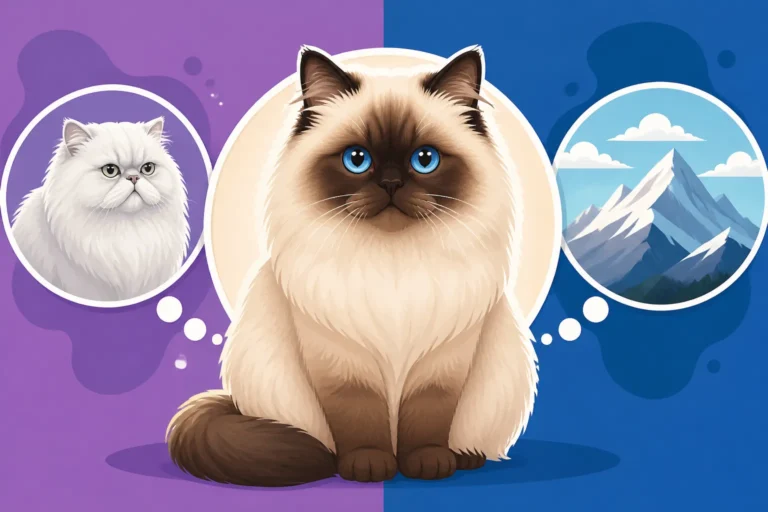
While the Persian side of the Himalayan lineage provided the luxurious long coat and stocky "cobby" body, it was undoubtedly the Siamese ancestry that contributed the mesmerizing point coloration and, importantly, those captivating blue eyes. The Himalayan breed was essentially created by crossing Persians with Siamese to introduce this very specific coat pattern and eye color into the long-haired Persian type. It's a testament to selective breeding that these traits became so integral to the Himalayan identity. This specific combination is detailed further in What the Siamese Side Gave a Himalayan Besides Points.
The gene responsible for the Himalayan's pointed pattern is directly linked to the gene that dictates their eye color. This is why every single Himalayan cat, regardless of its point color, will have striking, vivid blue eyes. There are no exceptions to this rule in a true Himalayan; if a cat has point coloration but doesn't have blue eyes, it's not a Himalayan. The intensity and shade of blue can vary, from a pale sky blue to a deep sapphire, but blue they will always be. This consistent eye color is a hallmark of the breed and a key identifier.
For breed standards, the intensity and brilliance of these blue eyes are often judged. Deeper, more vibrant blue eyes are generally preferred, contributing to the overall beauty and exotic look of the cat. A pale, washed-out blue might be considered less desirable in the show ring, but it certainly doesn't detract from the cat's charm as a beloved pet. The fact that the blue eye color carries no penalty in the show ring is a great thing, as it's such an integral part of their look, something you can delve into further in Why a Himalayan's Required Blue Eyes Carry No Penalty. The depth of the blue is truly mesmerizing, and contributes greatly to their unique appeal.
Understanding Cat Fancy Associations and Their Standards
The world of cat fancy can be a bit like navigating different countries, each with its own set of rules and definitions. When it comes to the Himalayan cat, this is particularly true regarding how its point colors are recognized. The major cat associations, such as the Cat Fanciers' Association (CFA) and The International Cat Association (TICA), have differing views on the Himalayan's breed status, which in turn influences how they classify and recognize its array of beautiful point colors. It's not just about the cat itself, but about the paperwork and the history behind it.
The CFA Perspective: Himalayan as a Persian Division
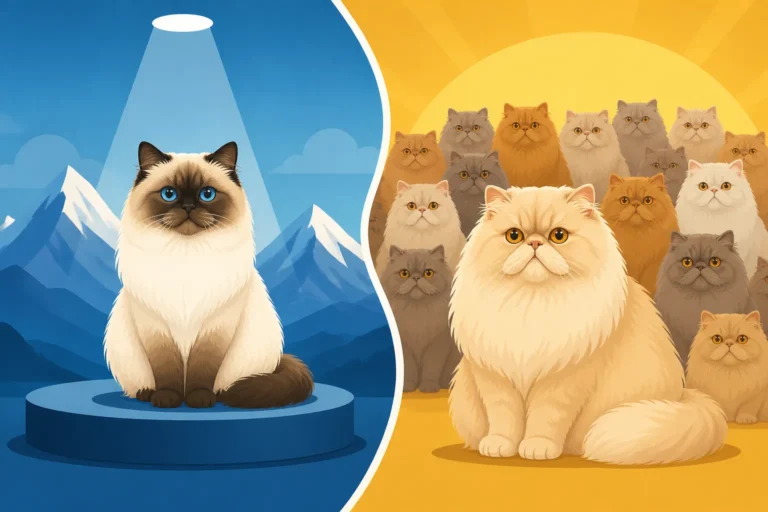
For many long-time cat enthusiasts, especially in North America, the Cat Fanciers' Association (CFA) holds significant sway. Within CFA, the Himalayan is not recognized as a standalone breed. Instead, it is classified as a "Colorpoint Persian." This means that Himalayans compete and are judged under the Persian breed standard, with the only distinguishing factor being their pointed coat pattern and blue eyes. This decision was made in 1984, integrating the Himalayan fully into the Persian breed group, a move that stirred quite a bit of discussion at the time and continues to be a point of interest for many prospective owners. You can read more about this historic decision in Why CFA Folded the Himalayan Into the Persian in 1984.
When a Himalayan is registered with CFA, its papers will literally say "Persian" with "Himalayan Division" or "Colorpoint Persian" noted. This classification means that the cat must conform to the full Persian standard in terms of body type, head shape, eye size and placement, ear set, and coat length and texture. The only divergence is the color. Therefore, when CFA recognizes point colors for Himalayans, they are essentially recognizing the acceptable point variations within the Persian breed's Himalayan Division. This rigid adherence to the Persian standard ensures a consistent look beyond just the color. As such, A CFA Himalayan Is a Persian on Its Own Paperwork isn't just a statement, it's a foundational truth for owners and breeders operating under the CFA umbrella.
Within this framework, CFA officially recognizes a specific set of point colors. These are generally the classic solid points and the tabby (lynx) points, as well as the patched (tortie) points. For a color to be recognized, it must be consistently breedable and meet the established genetic criteria. This strict approach ensures that the integrity of the breed standard, as defined by the Persian, is maintained while celebrating the unique point coloration. If you're buying a Himalayan with CFA papers, understanding this distinction is crucial for what you can expect in terms of conformation and color recognition, particularly if you plan on showing your cat.
TICA and Other Registries: Himalayan as a Standalone Breed
In stark contrast to CFA, The International Cat Association (TICA) recognizes the Himalayan as its own distinct breed. This approach appeals to many breeders and enthusiasts who feel the Himalayan has unique qualities that warrant independent breed status, stemming from its Siamese origins combined with Persian traits. TICA's philosophy often embraces a broader range of genetic diversity and sometimes recognizes newer color variations or patterns more readily than older, more conservative associations. This difference in classification is a significant point of divergence in the cat fancy world and can influence everything from breeding programs to show entries. For those looking at a Himalayan with TICA papers, TICA Still Registers the Himalayan as a Breed of Its Own means a different pedigree interpretation.
Beyond TICA, there are various other cat registries and associations around the globe, each with their own standards and recognition policies for the Himalayan. For instance, in some parts of the world, the Himalayan might be known as the "Colorpoint Longhair" or "Colourpoint Persian," reflecting the varied nomenclature and classification systems. These organizations often align more closely with TICA's independent breed recognition, celebrating the Himalayan's unique blend of Siamese patterning and Persian type as a distinct entity rather than a subdivision. This can sometimes lead to slight differences in which specific point colors or patterns are officially accepted, and the exact nuances of their descriptions.
For prospective Himalayan owners, understanding these distinctions is vital. If you're passionate about a particular, less common point color, it might be recognized by one association but not another. This discrepancy can affect eligibility for show competitions or even the perceived value or "purity" of a bloodline, depending on your goals. When researching breeders, it's always a good idea to ask which registries they work with and to familiarize yourself with that registry's specific Himalayan standard. This helps ensure that the kitten you choose aligns with your expectations, whether you're looking for a show champion or simply a beloved family pet with a specific look. The registry split means that Whether the Registry Split Affects a Himalayan Buyer is a very real concern for many.
The Classic Point Colors: The Foundation of the Himalayan Palette
When most people picture a Himalayan, they often think of the foundational point colors – those that first established the breed's iconic look and continue to be incredibly popular today. These are the classics, the colors that showcase the dramatic contrast between the darker extremities and the pale body coat, truly embodying the essence of the Himalayan pattern. They are the benchmarks against which all other colors are measured and appreciated.
Seal Point: The Original and Most Intense
The Seal Point is arguably the most recognizable and, for many, the quintessential Himalayan. These cats boast points of a deep, rich brown that is so dark it often appears black. Imagine the deepest espresso or dark chocolate, and you're close to the intensity of a well-defined Seal Point. This striking dark brown coloration contrasts beautifully with a creamy, pale body, creating a dramatic and elegant appearance. The nose leather and paw pads of a Seal Point will also be dark brown, complementing their rich point color. How Dark a Seal Point Himalayan's Mask Runs is a key indicator of a good quality Seal Point.
The intensity of the Seal Point's coloration develops over time, with kittens starting much lighter and gradually darkening as they mature. In the show ring, a strong contrast between the dark points and the light body is highly prized. Judges look for clear, distinct lines where the point color meets the body, without smudging or excessive shading on the torso. This crisp definition highlights the unique beauty of the pattern and demonstrates good genetic quality. A Seal Point with excellent contrast truly stands out. Conversely, a Himalayan whose points don't sharply contrast with their body can lose points in a show. Why a Poorly Contrasted Himalayan Loses Points speaks to this critical element of the breed standard.
Seal Points have a timeless appeal and remain a favorite among enthusiasts. Their rich, warm tones give them a luxurious presence, and their dark points create a captivating gaze with those piercing blue eyes. Whether lounging on a sofa or making an appearance in the show ring, a well-marked Seal Point Himalayan is always a head-turner. Their robust coloring makes them a staple in many breeding programs, ensuring the continuation of this classic look for generations to come.
Blue Point: The Softer, Muted Classic
Following closely in popularity, the Blue Point Himalayan offers a softer, more ethereal alternative to the bold Seal Point. Instead of deep brown, the Blue Point features points that are a cool, delicate slate gray. This beautiful, muted tone evokes a sense of calm and elegance, often described as a stormy sky or a soft pewter. The body coat of a Blue Point is typically a glacial white or a very pale, cool cream, providing a lovely, subtle contrast to their points. Their nose leather and paw pads will also be a blue-gray, harmonizing with their overall coloration. How a Blue Point Himalayan's Body Coat Reads highlights the importance of this pale, cool body tone.
Genetically, the Blue Point is a dilute version of the Seal Point. The same gene that produces the rich dark brown in a Seal Point is present, but another gene acts as a "diluter," lightening the pigment to the soft blue-gray. This genetic magic results in the unique and appealing pastel quality of the Blue Point's coloration. Just like Seal Points, Blue Point kittens are born white, and their blue points slowly emerge and deepen over the first few months and year of their lives.
For many, the aesthetic appeal of the Blue Point lies in its delicate and refined appearance. The softer contrast can give these cats a particularly gentle and angelic look. While the contrast is less dramatic than in a Seal Point, it is still crucial for it to be clear and distinct according to breed standards. A well-bred Blue Point will have points that are evenly colored and distinctly separate from the pale body coat, creating a harmonious and enchanting overall impression. They're a truly captivating variation of the Himalayan, offering beauty without overwhelming intensity.
Dilute and Derived Point Colors: Expanding the Spectrum
Beyond the classic Seal and Blue, the Himalayan color spectrum broadens with dilute and derived point colors. These shades introduce new complexities and beautiful nuances, often requiring more specialized breeding knowledge to achieve. They offer a rich tapestry of colors for discerning enthusiasts, showcasing the incredible genetic potential within the breed.
Chocolate Point and Lilac Point: The Rare and Refined
Moving into the realm of rarer and more refined point colors, we find the exquisite Chocolate Point and Lilac Point Himalayans. These colors are not as commonly seen as the Seal or Blue, partly because they require a specific genetic combination that breeders must meticulously track. A Chocolate Point Himalayan displays rich, warm, milk-chocolate brown points. This isn't just a lighter version of a Seal Point; it's a distinct, red-based brown with a lovely, warm undertone, often compared to melted cocoa. Their body color is typically a pale ivory or cream, providing a beautiful backdrop for their warm points. The nose leather and paw pads are cinnamon or pinkish-chocolate. Breeding for this color requires careful planning, as Why a Chocolate Point Himalayan Is Hard to Breed often means it takes more generations to achieve.
The Lilac Point is the dilute version of the Chocolate Point, and it is truly one of the most delicate and ethereal colors in the Himalayan palette. Lilac points are a pale, frosty gray with a distinct pinkish or lavender cast, often described as dove grey or parchment. This almost iridescent quality makes them truly unique. The body coat of a Lilac Point is usually an off-white or even whiter than a Cream Point, creating a stunningly soft contrast. Their nose leather and paw pads will be a pale lavender-pink. Lilac Points are the palest of all the Himalayan point colors, and their subtle beauty is highly prized. Why a Lilac Point Himalayan Is the Palest of All emphasizes their unique, almost translucent quality.
Both Chocolate and Lilac Points are considered more challenging to breed for consistent, clear coloration. Breeders must ensure that both parent cats carry the recessive genes for chocolate and dilution respectively, a process that can take several generations of careful selection. The resulting kittens are often highly sought after due to their rarity and sophisticated beauty. These colors appeal to those who appreciate subtlety and uniqueness, showcasing a different facet of the Himalayan's charm. Achieving a perfectly colored Lilac point, with its delicate balance of grey and pink, can be a particularly long and rewarding journey for a breeder. Indeed, Which Himalayan Point Color Takes Longest to Breed is often a question with Lilac Point as the answer.
Flame Point (Red Point) and Cream Point: Fiery Hues
For those who love warmth and vibrancy, the Flame Point Himalayan (also commonly known as Red Point) offers a truly fiery splash of color. These Himalayans exhibit points that are a striking orange-red, ranging from a pale apricot to a deep, rich reddish-gold. Their body color is typically a warm cream or ivory, which perfectly complements the fiery tones of their points. Unlike the solid black-based colors, the red pigment can sometimes cause a slight mottling or barring on the points, even in solid-colored cats, adding to their unique charm. What a Flame Point Himalayan Looks Like will often show this vibrant range of hues.
The Cream Point is the dilute version of the Flame Point, offering a softer, more pastel rendition of the red coloration. Cream points are a delicate, buff-cream or pale apricot, with a very light, almost invisible shading on the body. The contrast between the points and the body is much softer in a Cream Point compared to a Flame, creating a truly gentle and dreamy appearance. Their nose leather and paw pads will be a pinkish-cream. These colors bring a sunny disposition to the Himalayan family, quite literally, with their warm, inviting tones.
It's interesting to note that the gene for red coloration in cats is X-linked, meaning it's carried on the X chromosome. This genetic reality means that Flame Point Himalayans are predominantly male. While female Flame Points do exist, they are less common and typically require specific genetic combinations. For example, a female Flame Point would need to inherit the red gene from both parents. This genetic quirk adds another layer of fascination to these warm-toned Himalayans. Whether it's the bold statement of a Flame Point or the subtle elegance of a Cream Point, these cats offer a delightful departure from the traditional black-based colors.
Patterned and Overlay Point Colors: Adding Complexity
Just when you thought the Himalayan color palette couldn't get more interesting, along come the patterned and overlay point colors. These variations introduce stripes and patches, adding a layer of intricate detail to the classic pointed pattern. They showcase the incredible genetic diversity that can be found within the breed, offering truly unique and visually captivating cats.
Lynx Point: The Tabby Overlay
The Lynx Point Himalayan is a truly striking variation, characterized by the presence of tabby stripes (also known as "bars" or "ticking") on its points. This isn't just a solid color; it's a full tabby pattern overlaid onto the pointed areas of the cat. You'll see distinct "M" markings on their forehead, eyeliner-like stripes around their eyes, and often striped rings on their legs and tail. The ears usually have a thumbprint pattern on the back, another hallmark of tabby markings. This intricate detailing gives the Lynx Point a wilder, more exotic look, reminiscent of their jungle cat ancestors. What a Lynx Point Himalayan Looks Like shows off these beautiful markings.
Lynx Points can come in all the base point colors, creating a fascinating array of combinations:
- Seal Lynx Point: Dark brown tabby stripes on cream points.
- Blue Lynx Point: Slate gray tabby stripes on bluish-white points.
- Chocolate Lynx Point: Warm brown tabby stripes on ivory points.
- Lilac Lynx Point: Frosty gray-pink tabby stripes on off-white points.
- Flame Lynx Point (Red Lynx Point): Orange-red tabby stripes on cream points.
- Cream Lynx Point: Buff-cream tabby stripes on pale cream points.
Each of these variations offers its own unique charm, combining the classic pointed elegance with the playful stripes of a tabby. The tabby gene is a dominant gene, meaning only one copy is needed for the pattern to be expressed. This makes Lynx Points a relatively common and popular variation among Himalayan enthusiasts. For show purposes, the clarity and definition of the tabby markings are important; judges look for distinct stripes that are well-separated, enhancing the beauty of the overall pattern.
Tortie Point: A Kaleidoscope of Color
For those who love a cat that wears its unique personality on its fur, the Tortie Point Himalayan is an absolute showstopper. A Tortie Point is characterized by patches of red or cream (or both) intertwined with another solid or dilute point color. This creates a beautiful, mosaic-like pattern on their points, often resembling a tiny kaleidoscope. For example, a Seal Tortie Point will have patches of deep brown (seal) mixed with patches of red or cream on its face, ears, paws, and tail. Similarly, a Blue Cream Point will display patches of blue-gray and cream. These random, asymmetrical patches ensure that no two Tortie Points are ever exactly alike, making each one truly one-of-a-kind. Why a Tortie Point Himalayan Is Always Female reveals a fascinating genetic truth.
The reason Tortie Points are almost exclusively female lies in cat genetics. The gene for red/orange color in cats is located on the X chromosome. Females have two X chromosomes (XX), while males have one X and one Y chromosome (XY). For a female to be a Tortie, she needs to inherit one X chromosome carrying the non-red color gene (e.g., black or dilute) and one X chromosome carrying the red color gene. The random inactivation of one X chromosome in each cell during development results in the patchwork pattern. A male cat, having only one X chromosome, can only express either red or non-red color, not both simultaneously in patches. Very rarely, a male Tortie can occur due to a genetic anomaly (Klinefelter syndrome, XXY), but these cats are typically sterile.
Like Lynx Points, Tortie Points can come in various base point colors, leading to delightful combinations:
- Seal Tortie Point: Seal patches with red/cream patches.
- Blue-Cream Point: Blue patches with cream patches.
- Chocolate Tortie Point: Chocolate patches with red/cream patches.
- Lilac-Cream Point: Lilac patches with cream patches.
These cats are celebrated for their vibrant, often unpredictable beauty and add a touch of playful artistry to the Himalayan breed. Their unique coloring makes them incredibly distinctive and highly cherished by their owners.
The Nuance of Recognition: What Counts and What Doesn't
When delving into the official recognition of Himalayan point colors, it's not just about naming the shades; it's also about understanding the crucial details that elevate a cat's appearance in the eyes of breed standards. There are specific criteria that govern what makes a "good" point color, and factors that can either enhance or detract from a Himalayan's overall presentation. This nuanced understanding is particularly important for breeders and those interested in showing their cats.
Body Color and Point Contrast: Crucial to the Standard
One of the most defining characteristics of the Himalayan cat, beyond the specific hue of its points, is the stark contrast between its darker extremities and its much lighter body coat. The ideal Himalayan standard calls for a pale, almost uniform body color that clearly differentiates from the rich, deep color of the points. This dramatic contrast is what truly highlights the pointed pattern and makes the Himalayan so visually stunning. Think of it as a beautifully framed piece of art, where the frame (the points) perfectly complements and draws attention to the masterpiece (the pale body). This contrast is a key metric for judges. How Judges Score a Himalayan's Point Contrast is a thorough explanation of this.
However, maintaining this crisp contrast can be a challenge. Several factors can influence a Himalayan's body color and point depth throughout its life. Environmental temperature plays a significant role; a Himalayan kept in a cooler environment may develop a darker overall body coat, reducing the desired contrast. Age is another factor, as many Himalayans tend to darken with age, with their body coat slowly developing a creamier or more shaded appearance. Even diet, stress, or certain medications can potentially affect coat color. Therefore, breeders often aim for lines that genetically carry excellent contrast, making it easier for owners to maintain. Why a Himalayan's Body Coat Should Stay Light is essential for achieving the breed standard.
When a Himalayan's body coat starts to show too much shading or becomes too dark, it's often referred to as "poor contrast." This can be a fault in the show ring, as it dilutes the distinctive beauty of the pointed pattern. For instance, a Seal Point Himalayan with a dark beige body rather than a creamy white one would be penalized. While it doesn't diminish the cat's health or personality, it does impact its conformation to the breed standard. Owners of older Himalayans, or those living in colder climates, may find their cat's points have gone dark, something discussed in Caring for a Himalayan Whose Points Have Gone Dark. Ensuring a clear, vibrant contrast is a continuous effort for dedicated Himalayan owners and breeders alike.
Emerging and Unrecognized Colors: The Breeder's Frontier
The world of cat breeding is dynamic, with dedicated breeders constantly exploring new genetic combinations and striving to introduce novel traits or enhance existing ones. This innovative spirit means that there are sometimes "emerging" or "unrecognized" colors that appear in Himalayan lines. These might be new dilute versions of existing colors, combinations of patterns not yet officially codified, or even entirely new genetic mutations that result in a different hue. For instance, some breeders might be working with genes that produce silver or smoke effects on the points, or attempting to introduce other distinct patterns.
However, the journey from an "emerging" color to an "officially recognized" color by a major cat fancy association is often a long and arduous one. It typically involves several generations of consistent breeding to prove that the color is genetically stable, repeatable, and does not carry any undesirable health traits. Breeders must demonstrate that the new color adheres to the overall type and temperament of the breed, and that there's sufficient interest and support within the cat community for its recognition. This process can take many years, requiring extensive documentation, presentation of cats at shows, and lobbying with breed councils and association boards. It's a testament to the patience and dedication of breeders.
For prospective owners, it's important to be aware of the distinction between officially recognized colors and those that are not. While an unrecognized color might be beautiful and unique, a cat with such a color would not be eligible to compete in championship classes in most major cat shows. If your primary goal is to have a show-quality cat, then adhering to officially recognized colors is paramount. If you're simply looking for a beloved pet and are drawn to a unique color, then recognition might be less of a concern. Always ask breeders about the recognition status of any non-standard color they might be working with, and understand the implications for registration and showing.
The Journey of Color: From Kittenhood to Adulthood
One of the most enchanting aspects of owning a Himalayan is witnessing the gradual transformation of their coat color. It's not a "what you see is what you get" scenario from day one. Instead, it's a living canvas, constantly evolving and deepening, telling the story of their genetics and their environment. Understanding this journey is key to appreciating the subtle shifts and knowing what to expect as your little white fluffball grows into a majestic, color-pointed adult.
Kitten Color Development: The Magic Unfurls
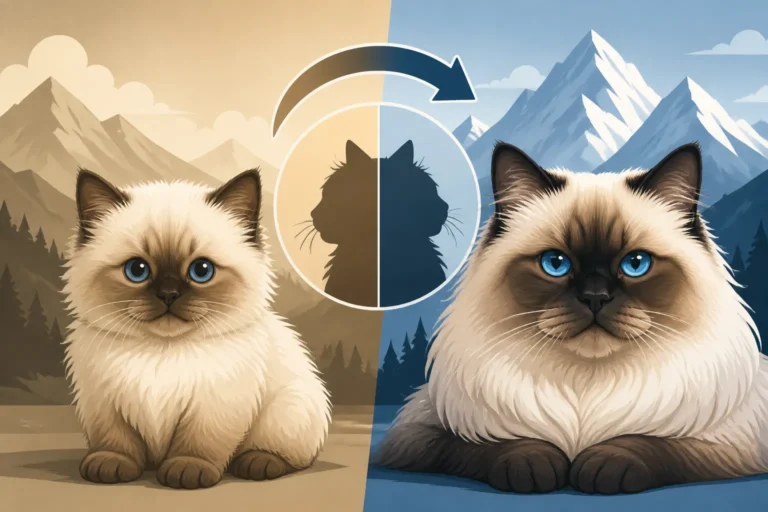
As mentioned earlier, all Himalayan kittens are born practically white. It's an amazing sight to behold! Their little bodies are uniformly pale, with maybe the faintest hint of color on their tiny ears or nose, if you look very closely. The reason for this is purely biological; the warmth inside the mother's womb prevents the temperature-sensitive pigment enzyme from activating. It's only upon entering the cooler outside world that the magic truly begins to unfold. Over the first few weeks, usually between 1-3 weeks, you'll start to see faint smudges of color appear on their ear tips, nose leather, and paw pads. This is the first exciting hint of their future point color. When a Himalayan Kitten's Points First Appear is a truly special time for breeders and new owners.
From there, the points continue to darken and spread. By about 6-8 weeks, the ear color will be much more defined, and you'll likely see clearer color on their little noses and tails. The body color, however, remains remarkably pale, accentuating the developing points. As they grow through kittenhood, their points will continue to saturate, becoming richer and more distinct. It’s a process that continues for many months. By the time a kitten is ready to go to its new home, typically around 12-16 weeks, its point color should be clearly identifiable, though it will still deepen further. You can track this fascinating process in How a Himalayan Kitten's Points Darken Month by Month.
It's this slow reveal that often adds a layer of excitement and sometimes, a little suspense, for prospective owners. When reserving a kitten from a litter, especially if a specific point color is desired, breeders will often make an educated guess based on parental genetics and the early hints of color. However, the final depth and clarity won't be fully apparent until much later. This developmental period is also why a Himalayan kitten might stay with the breeder a little longer than some other breeds, allowing their points to settle enough for accurate assessment and ensuring they are robust before moving to a new environment. This uncertainty is why Why a Himalayan Deposit Is Taken Before the Points Show often has a slight caveat.
Environmental Factors and Color Changes Over Time
The temperature-sensitive gene governing Himalayan coloration means that environmental factors, particularly temperature, continue to play a role throughout a cat's entire life, not just in kittenhood. A Himalayan kept in a consistently cool environment might develop darker, more extensive points and a slightly darker body coat than a cat of the same genetics living in a warmer climate. Conversely, a Himalayan that spends a lot of time in a very warm house or a particularly hot summer might see its points lighten slightly, or its body coat remain exceptionally pale. It's a fascinating interaction between nature and nurture, always resulting in subtle shifts. How Temperature Decides a Himalayan's Point Color is a fundamental aspect of their unique appearance.
Beyond environmental temperature, age is another significant factor in a Himalayan's color journey. As Himalayans mature and grow older, it's very common for their body coat to gradually darken and become more shaded. What started as a pristine creamy white might mellow into a pale beige or even a light taupe over the years. Their points also tend to deepen and spread, often leading to less stark contrast between the body and points in very senior cats. This is a natural process and part of the charm of an aging Himalayan. Why an Old Himalayan Looks Almost Solid Colored illustrates this natural phenomenon perfectly.
While these changes are natural, some owners like to encourage optimal contrast. This can involve keeping the cat in a comfortable, consistent indoor temperature to prevent extreme darkening, or ensuring they have access to cool spots during warm weather. Special care for older cats, like gentle grooming and maintaining a healthy diet, can also contribute to the overall condition and appearance of their coat, even if some darkening is inevitable. Ultimately, these shifts are just another testament to the living, breathing beauty of the Himalayan, whose coat literally tells the story of its life and environment.
Here is a table summarizing the officially recognized point colors for Himalayans in major registries, along with their key characteristics:
| Point Color | Description | Body Color typically | Paw Pad/Nose Leather Color | Notes |
|---|---|---|---|---|
| Seal Point | Deep, rich dark brown, almost black | Cream to fawn | Dark brown | The classic, original point color. Strong contrast. |
| Blue Point | Soft, cool slate gray | Bluish white to cream | Slate gray | Dilute of Seal Point, offering a more delicate contrast. |
| Chocolate Point | Warm, milk-chocolate brown | Ivory to cream | Cinnamon pink | Rarer, genetically distinct brown with warm undertones. Requires specific breeding. |
| Lilac Point | Pale, frosty gray with a pinkish or lavender cast | Off-white to glacial white | Lavender pink | Dilute of Chocolate Point, the palest and most ethereal point color. Very rare. |
| Flame Point | Vibrant orange-red, ranging from apricot to deep red | Cream to ivory | Pink | Also called Red Point. Often shows slight mottling. Predominantly male. |
| Cream Point | Soft, buff-cream or pale apricot | Pale cream | Pink | Dilute of Flame Point, very subtle contrast. |
| Seal Lynx Point | Seal points with distinct dark brown tabby stripes | Cream to fawn | Dark brown | Tabby pattern overlaid on Seal Point. "M" on forehead. |
| Blue Lynx Point | Blue points with distinct slate gray tabby stripes | Bluish white to cream | Slate gray | Tabby pattern overlaid on Blue Point. |
| Chocolate Lynx Pt | Chocolate points with distinct warm brown tabby stripes | Ivory to cream | Cinnamon pink | Tabby pattern overlaid on Chocolate Point. |
| Lilac Lynx Point | Lilac points with distinct frosty gray-pink tabby stripes | Off-white to glacial white | Lavender pink | Tabby pattern overlaid on Lilac Point. |
| Flame Lynx Point | Flame points with distinct orange-red tabby stripes | Cream to ivory | Pink | Tabby pattern overlaid on Flame Point. |
| Cream Lynx Point | Cream points with distinct buff-cream tabby stripes | Pale cream | Pink | Tabby pattern overlaid on Cream Point. |
| Seal Tortie Point | Seal patches mixed with red or cream patches on points | Cream to fawn | Dark brown / pink mottled | Patched coloration. Almost exclusively female. |
| Blue-Cream Point | Blue patches mixed with cream patches on points | Bluish white to cream | Slate gray / pink mottled | Patched coloration. Almost exclusively female. |
| Chocolate Tortie Pt | Chocolate patches mixed with red or cream patches on points | Ivory to cream | Cinnamon pink / pink mottled | Patched coloration. Almost exclusively female. |
| Lilac-Cream Point | Lilac patches mixed with cream patches on points | Off-white to glacial white | Lavender pink / pink mottled | Patched coloration. Almost exclusively female. |
When considering accessories for your Himalayan, such as specialized food bowls that are wide and shallow to accommodate their flattened faces, or grooming tools like steel combs for their long coats, you might find a great selection on Chewy. They often stock items tailored for breeds with unique needs, making it easier to care for your uniquely colored companion. Grooming, especially, is crucial for keeping their coat in top condition and showing off those beautiful points. You'll find a sturdy steel comb on Chewy that makes daily combing much easier and prevents mats from forming in their dense undercoat. When feeding your Himalayan, look for flat-faced bowls on Chewy, designed to reduce whisker fatigue and allow them to eat comfortably without making a mess on their beautiful ruff.
Caring for your Himalayan and preserving their distinct color and coat is a rewarding experience. Whether your feline friend is a classic Seal Point or a rare Lilac Lynx, their unique beauty is truly something to celebrate. From understanding their genetic origins to appreciating the intricate patterns and the evolving nature of their coats, every aspect of a Himalayan's color is a testament to the artistry of nature and selective breeding. Investing in quality products, perhaps from a reputable supplier like Chewy, ensures they have the best tools for their well-being.
Disclaimer
This article is for general informational purposes only and does not constitute professional advice. Laws, prices and regulations vary by location and change over time. Consult a qualified professional for guidance on your specific situation.