What a Lynx Point Himalayan Looks Like
One of the most delightful (and sometimes confusing!) aspects of loving Himalayan cats is delving into their incredible array of point colors. Many folks know the classic Seal or Blue Point, but then they hear whispers of a "Lynx Point" and wonder, "What on earth does that even look like?" It’s not just a point color; it's a pattern that adds a whole new dimension of beauty to our beloved long-haired companions. This guide is here to unravel the mystery and show you exactly what makes a Lynx Point Himalayan so distinct and captivating.
Understanding Himalayan Point Colors: A Quick Primer
Before we dive specifically into the Lynx Point, it's helpful to remember what "points" even mean for a Himalayan. It's a genetic trait they inherited from their Siamese ancestors, which dictates that pigment (color) only fully develops in the cooler extremities of the body – the face, ears, legs, and tail. The rest of their body, which is warmer, remains a much paler shade. This fascinating genetic quirk is why every Himalayan kitten is born almost entirely white, and their points gradually emerge as they grow and are exposed to cooler temperatures. You can learn more about this in How Many Weeks Before a Himalayan Kitten's Points Show.
The Science Behind the "Points"
At its heart, the Himalayan's color pattern is a form of temperature-sensitive albinism. A specific enzyme responsible for producing pigment can only function effectively below a certain temperature. Think of it like a printer that only works in a chilly room! This is why a cat kept in a particularly cold environment might have darker points, or even a slightly darker body coat overall, compared to one living in a warmer home. Conversely, a Himalayan that gets a patch of fur shaved for surgery might see that new fur grow back temporarily darker because the skin underneath was exposed to cooler air.
The Classic Himalayan Point Colors
Most people are familiar with the "solid" point colors, where the extremities are a uniform shade. These include:
- Seal Point: A rich, dark brown, almost black, on the points.
- Blue Point: A soft, slate grey.
- Chocolate Point: A warm, milky brown, often difficult to distinguish from Seal without a clear genetic background.
- Lilac Point: A delicate, frosty grey with a pinkish undertone, the palest of the cool-toned points.
- Flame (Red) Point: A vibrant orange-red.
- Cream Point: A softer, paler version of the Flame Point, often appearing like diluted orange.
- Tortie Point: A mix of red/cream and a solid color (like Seal or Blue), creating mottled patches of color on the points, and always found on females.
Each of these has its own charm, but the Lynx Point adds an entirely different level of detail with its striped, tabby pattern.
The Distinctive Beauty of the Lynx Point Himalayan
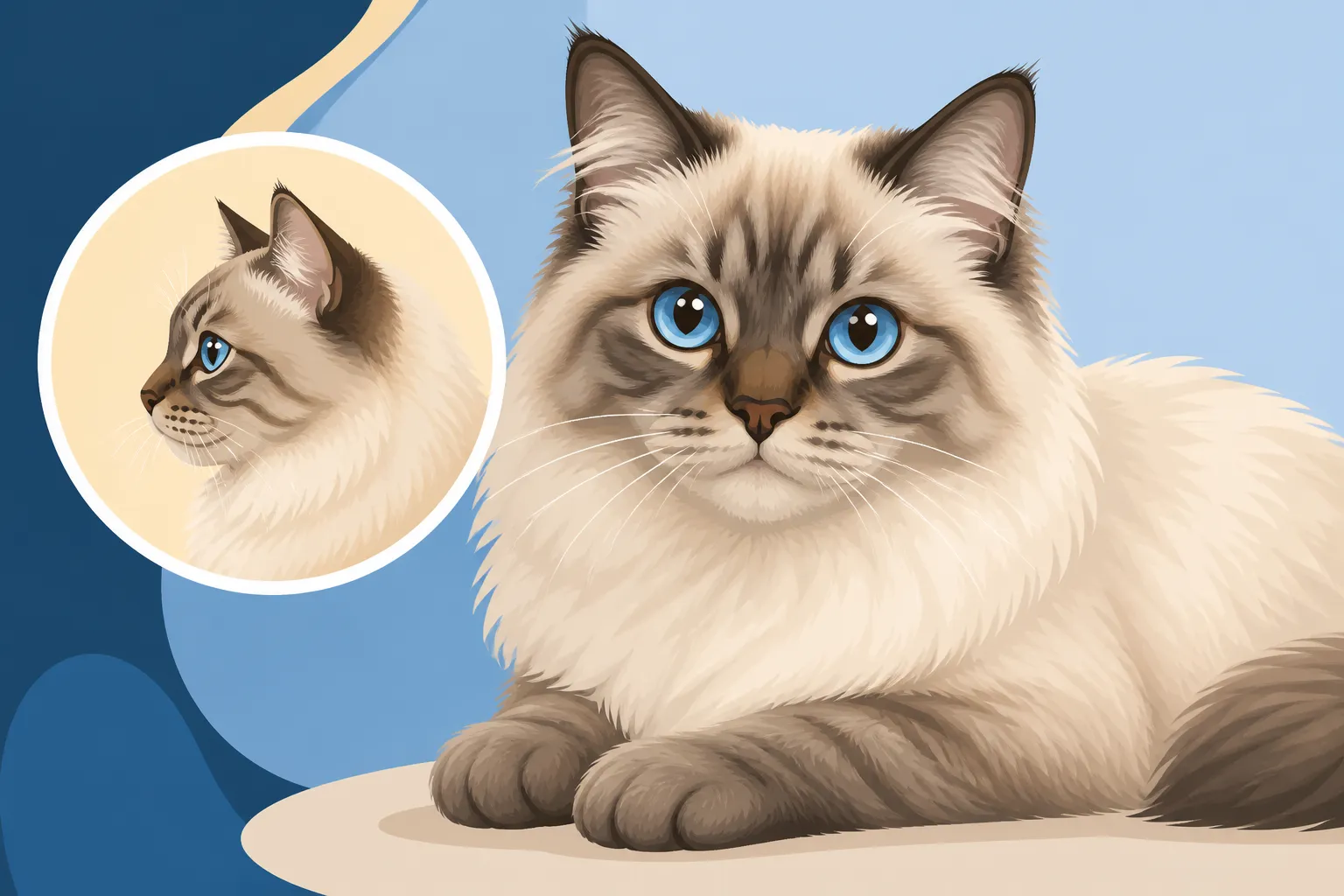
When you encounter a Lynx Point Himalayan, the first thing that strikes you is that their "points" aren't solid blocks of color at all. Instead, they are striped, just like a classic tabby cat. It's truly a sight to behold, combining the luxurious long coat and cobby body of a Persian with the captivating point coloration and the wilder, intricate patterns of a tabby.
What Defines a Lynx Point Pattern
A Lynx Point Himalayan essentially carries the tabby gene alongside the colorpoint gene. This means that instead of solid color on the ears, face, legs, and tail, you'll see clear, distinct tabby stripes and markings. Imagine a miniature tiger pattern meticulously etched onto the traditional Himalayan points. These stripes are what give them their unique and often more "wild" or "exotic" appearance, a lovely contrast to the serene, gentle nature they're known for. The markings should be well-defined and dense, showing a clear contrast between the stripes and the lighter background color of the point.
The "M" on the Forehead and Ringed Tail
Two of the most telling signs that you're looking at a Lynx Point are the classic tabby "M" marking clearly visible on their forehead and their tail, which will be distinctly ringed with alternating dark and light bands. This isn't just a faint shadow; it should be an undeniable pattern. You'll also typically see "pencil lines" tracing from the corners of their eyes, and often dark cheek stripes. Their legs will usually have bracelets of tabby stripes, and their ears might even have a faint "thumbprint" of lighter fur on the back, another hallmark of tabby patterns. This intricate detail on the face is a key indicator, distinguishing them from their solid-pointed cousins.
Body Color and Contrast
Despite the striking tabby markings on their points, the body coat of a Lynx Point Himalayan still adheres to the general rule of all Himalayans: it should be much paler than the points. The goal is a clear contrast, though some Lynx Points might have faint tabby ghosting on their body, especially when they are kittens or if their body coat darkens with age or colder living conditions. However, the body stripes should never be as strong or defined as those on the points. The ideal is a clear, light body that allows the distinct point pattern to truly pop. Grooming with a good steel comb, like those available at Chewy, can help maintain the coat's condition and contrast.
Eye Color
Just like all Himalayans, regardless of their point color or pattern, Lynx Points are genetically required to have striking blue eyes. This vibrant blue hue is intrinsically linked to the colorpoint gene itself and is a non-negotiable trait for the breed. The intensity of the blue can vary from a deep sapphire to a lighter sky blue, but it should always be distinctly blue. Why a Himalayan's Required Blue Eyes Carry No Penalty explains more about this beautiful trait.
Common Lynx Point Color Variations
Just as there are various solid point colors, the tabby pattern can overlay any of the standard point colors, creating different "flavors" of Lynx Point Himalayans. Each variation has its own subtle beauty.
Seal Lynx Point
The Seal Lynx Point is arguably the most common and recognizable Lynx Point variation. Here, the tabby stripes on the points are a rich, dark seal brown, contrasting beautifully with the paler background of the point color. Their body coat will typically be a cream or fawn color. The "M" on the forehead and the tail rings will be very distinct and dark, making for a truly striking appearance. These are the ones that often evoke that "miniature wildcat" look most strongly.
Blue Lynx Point
A Blue Lynx Point Himalayan features slate-grey tabby stripes on its points, with a lighter greyish-white background. The body coat is usually an icy white or very pale grey. The contrast can be a bit softer than a Seal Lynx Point, but the tabby markings are still very much present and defined. They have an ethereal, almost silvery quality that is quite elegant.
Flame (Red) Lynx Point
These cats are absolute showstoppers! A Flame Lynx Point Himalayan has vibrant orange-red tabby stripes on its points, often with a paler cream background within the point itself. Their body color is usually cream or white. The "M" on their forehead will be red, and their tail rings will be alternating shades of red and cream. What a Flame Point Himalayan Looks Like goes into more detail about this stunning color. This particular variation brings a warmth and brightness that is truly captivating.
Cream Lynx Point
Similar to the Flame Lynx Point but softer, the Cream Lynx Point displays cream-colored tabby stripes on its points. The overall effect is very delicate and pastel, with a creamy white body coat. The tabby markings can be a bit more subtle than in darker Lynx Point variations, but upon closer inspection, the "M" and the tail rings will still be clear. They offer a softer, more subtle beauty.
Other Rarer Lynx Point Combinations
While Seal, Blue, Flame, and Cream Lynx Points are the most frequently seen, you can also find Chocolate Lynx Points and Lilac Lynx Points. These are rarer because the underlying Chocolate and Lilac genes themselves are recessive and less common to start with.
- Chocolate Lynx Point: Features warm, milky chocolate tabby stripes on the points.
- Lilac Lynx Point: Displays delicate, frosty grey-pink tabby stripes on the points, with an overall very pale appearance.
Each of these variations adds to the incredible diversity within the Himalayan breed, and part of the joy of owning one is watching their points develop over their first year. The Age a Himalayan's Points Stop Changing delves into how their coloration deepens as they mature.
Telling a Lynx Point Apart: What to Look For
With so many beautiful point colors and patterns, it's easy to get a little lost. But once you know what to look for, distinguishing a Lynx Point from other Himalayans becomes second nature. It's all about those distinct tabby markings on the extremities.
Lynx Point vs. Other Pointed Himalayans
The key differentiator is simple: stripes versus no stripes on the points.
- A Seal Point Himalayan will have solid, unpatterned dark brown points.
- A Blue Point will have solid, unpatterned grey points.
- A Tortie Point will have mottled patches of color (e.g., black and red or blue and cream) on its points, but no distinct tabby stripes. It's more of a patchwork effect than a striped pattern.
- A Lynx Point will always have those tell-tale tabby stripes, the "M" on the forehead, and the ringed tail. This is the visual cue you can't miss.
When looking at a Himalayan kitten, these markings can be fainter, but they should still be discernible. A good breeder will be able to tell you definitively.
Lynx Point vs. Other Tabby Breeds
This distinction is also quite clear. A Himalayan, including a Lynx Point, is fundamentally a long-haired cat with a cobby (stocky) body and a relatively short, broad face, depending on whether it's a Doll Face or Peke Face Is the Himalayan Buyer's Real Decision. The Lynx Point combines the tabby pattern with the Himalayan/Persian phenotype and the colorpoint gene.
Other tabby breeds, like Maine Coons or American Shorthairs, will have tabby patterns over their entire body, not just restricted to the cooler points. They also won't have the distinct blue eyes that are characteristic of the Himalayan. So, while a Lynx Point has tabby markings, it is still very much a Himalayan in its overall appearance, structure, and temperament.
Observing the Kitten Stage
When choosing a Himalayan kitten, especially if you're set on a Lynx Point, pay close attention to the development of their points. While all kittens are born pale, the tabby markings on a Lynx Point kitten should start to emerge within a few weeks, often becoming clearly visible by 8-12 weeks. Look for the faint "M" on the forehead and any hint of stripes on their little tails and legs. A reputable breeder will also be able to show you photos of the parents, which can give you a good indication of the adult appearance of their offspring.
Remember, a kitten's full point development takes time, sometimes up to two years, as discussed in How Many Years a Himalayan's Points Take to Finish. But the tabby pattern for a Lynx Point should be evident much earlier.
Here's a quick comparison of common Lynx Point variations:
| Lynx Point Type | Point Color | Body Color | Distinctive Features |
|---|---|---|---|
| Seal Lynx Point | Dark Brown | Cream/Fawn | Strong, dark brown tabby stripes, high contrast. |
| Blue Lynx Point | Slate Grey | Icy White/Pale Grey | Softer grey tabby stripes, elegant contrast. |
| Flame (Red) Lynx Point | Orange-Red | Cream/White | Vibrant red/orange tabby stripes, warm tones. |
| Cream Lynx Point | Cream | Creamy White | Subtle cream tabby stripes, delicate appearance. |
| Chocolate Lynx Point | Warm Brown | Cream/Ivory | Milk chocolate tabby stripes, warm brown undertones. |
| Lilac Lynx Point | Frosty Grey-Pink | Pure White/Off-White | Very pale, delicate grey-pink tabby stripes, subtle contrast. |
No matter which specific color variation, a Lynx Point Himalayan is a truly stunning cat, combining elegance with a touch of the wild. They bring a unique aesthetic to the Himalayan family that is adored by many. Caring for their dense, long coat is a must, and good nutrition can help support coat health, but the daily comb is essential for all Himalayans. Ensuring they have a balanced diet can also support a healthy coat and overall well-being, which you can find guidance on from resources like Chewy.
Just like any purebred cat, it's wise to consider pet insurance for unexpected health issues, and providers like Healthy Paws can offer peace of mind. While Lynx Points don't have unique health concerns specifically related to their pattern, they share the general health considerations of all Himalayans, such as potential for PKD1 Came Down the Persian Side of a Himalayan and Retinal Atrophy Reached the Himalayan From the Persian Too. Always ensure your breeder provides health testing certificates.
Disclaimer
This article is for general informational purposes only and does not constitute professional advice. Laws, prices and regulations vary by location and change over time. Consult a qualified professional for guidance on your specific situation.